

It’s impossible to walk through downtown Chicago and not look up.
The city is a living museum of iconic skyscrapers and world-famous buildings.
But most people only ever see the big picture.
They admire the massive scale of the skyline, but they completely miss the tiny, fascinating secrets hiding in plain sight right at eye level.
We’re talking about fragments of ancient wonders, hidden symbols, and architectural ghost stories carved directly into the stone.
Even if you’ve lived here your whole life, you’ve probably walked past these details a thousand times without ever noticing them.
Of course, the absolute best way to get the full story is on the legendary Chicago Architecture River Cruise.
But if you want to go on your own architectural scavenger hunt, we’ve put together the ultimate guide.
Here are 10 hidden architectural details that separate the casual tourists from the true Chicago explorers.
1. The Ancient Relics Hiding on the Tribune Tower
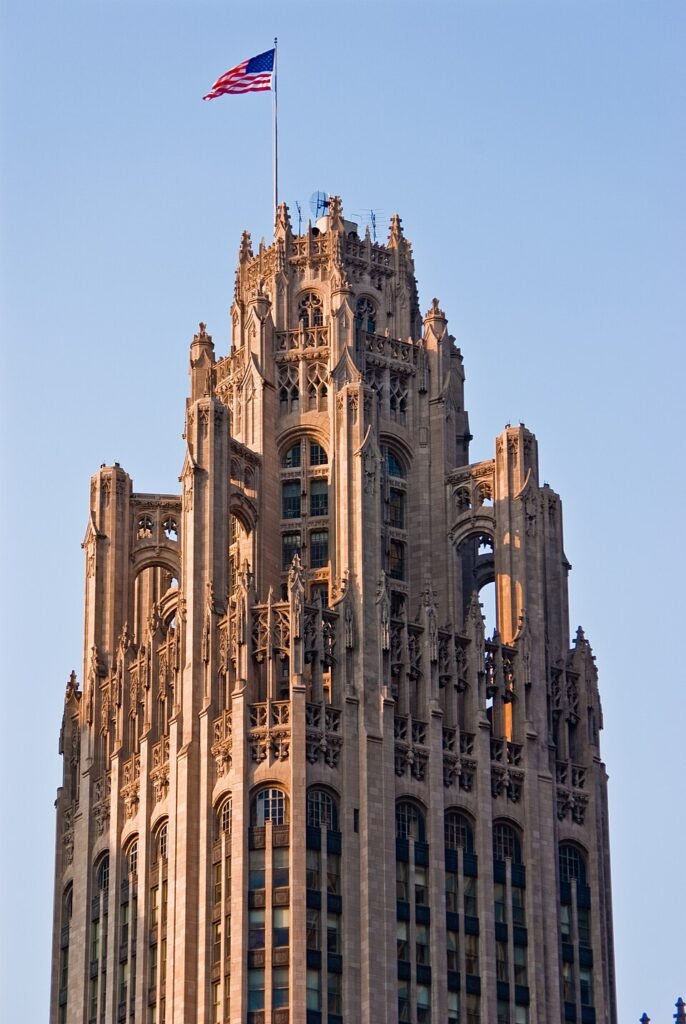
Right at the foot of the Magnificent Mile sits the Tribune Tower, a stunning, 36-story Gothic Revival skyscraper.
Before it was converted into luxury condos, it was the home of the Chicago Tribune newspaper.
The tower’s original owner, Colonel Robert R. McCormick, was a passionate historian and world traveler.
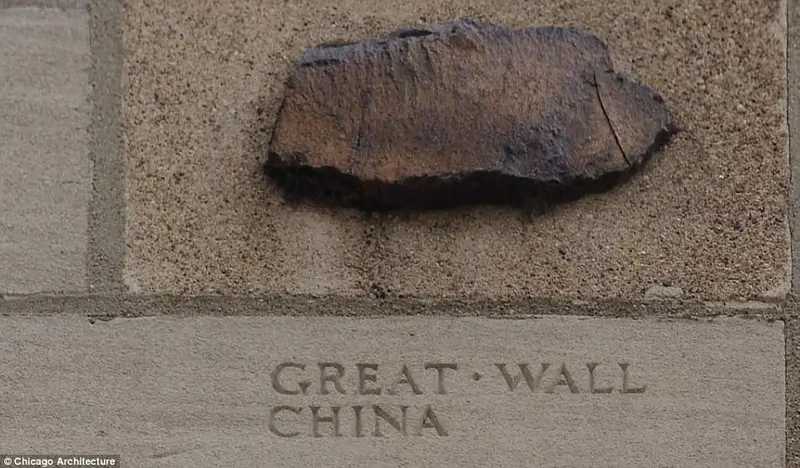
As the tower was being built in the 1920s, he had his reporters bring back fragments from famous historical sites all around the globe.
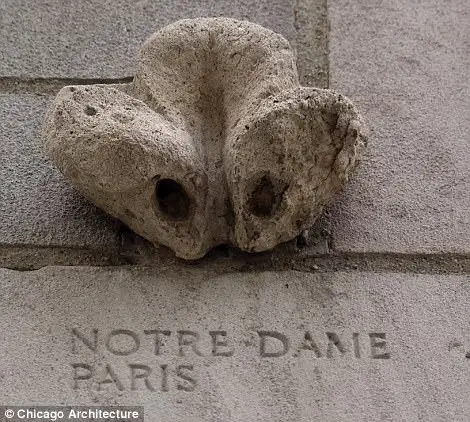
You can literally reach out and touch a piece of the Great Wall of China, a gargoyle from Notre Dame Cathedral in Paris, a stone from the Alamo, a brick from the Taj Mahal, and over 140 other historical fragments.
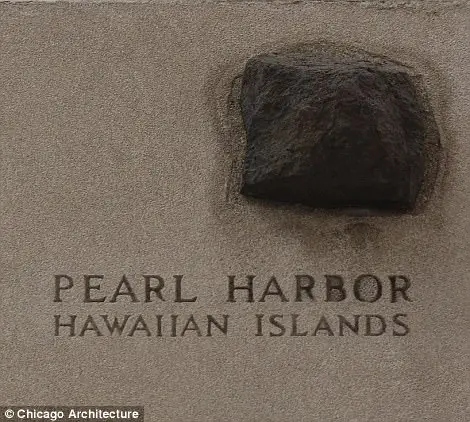
It is the world’s strangest (and coolest) architectural scavenger hunt, hiding in plain sight.
Just walk along the base of the building on Michigan Avenue and Pioneer Court, and look for the carved labels next to each stone.
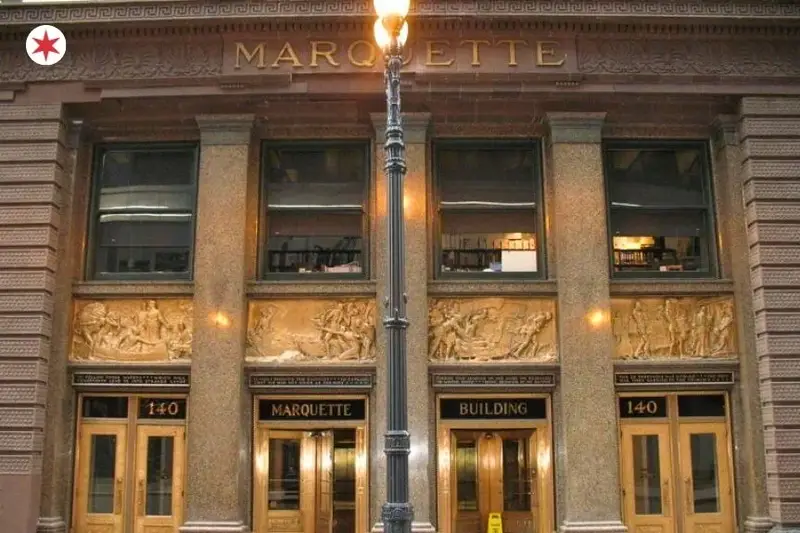
2. The “Death Lintel” on the Marquette Building
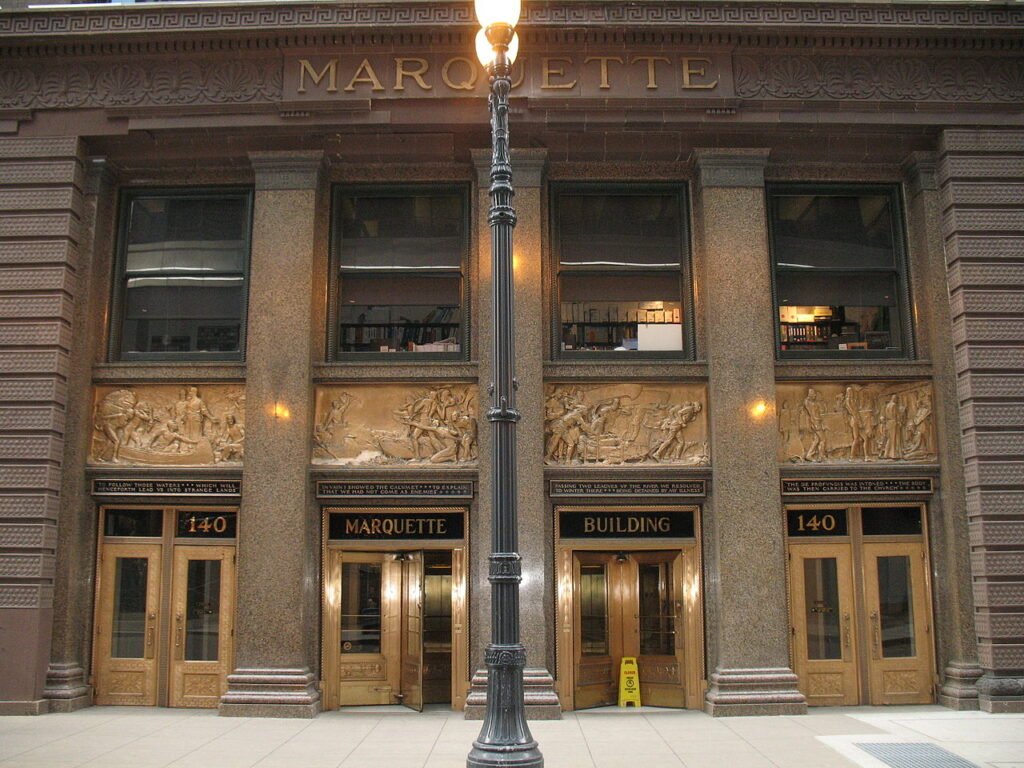
The Marquette Building on Dearborn Street is famous for its stunning, ornate lobby filled with incredible Tiffany mosaics.
But before you even walk inside, stop on the sidewalk and look up.
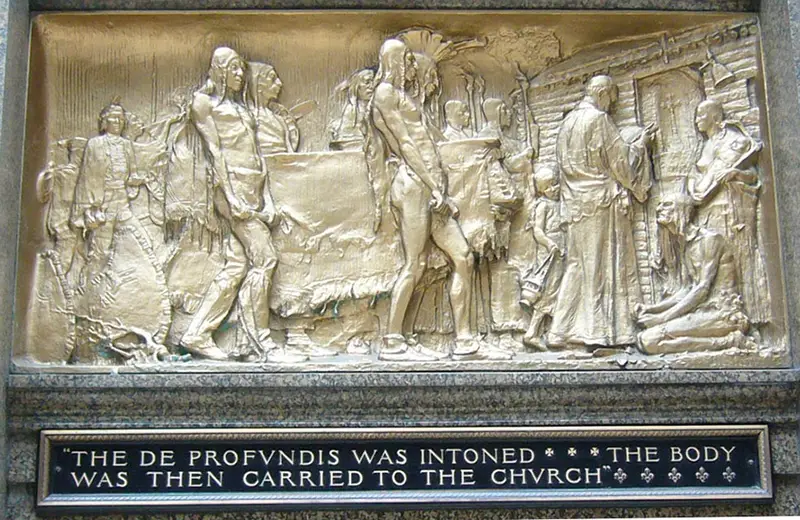
The massive stone panel carved directly above the main entrance doors doesn’t show a generic historical scene—it shows the death of the building’s namesake, Father Jacques Marquette.
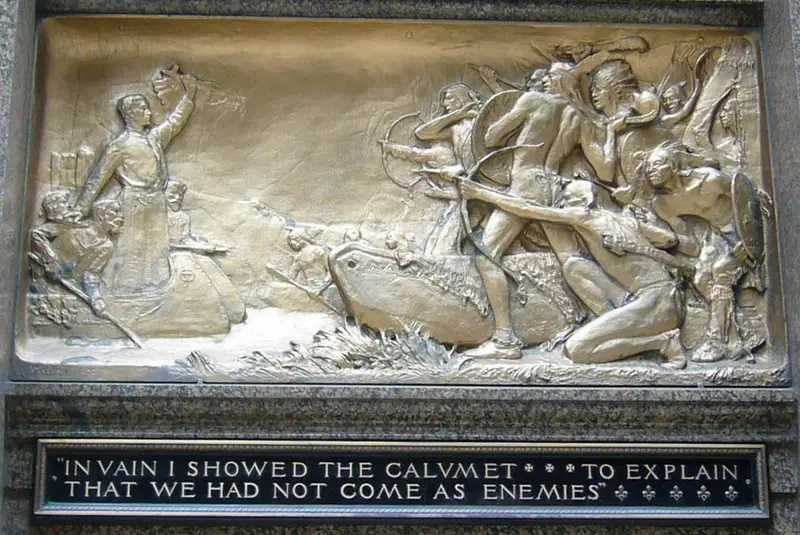
The carving depicts his Native American guides finding his body along the shores of Lake Michigan in 1675.
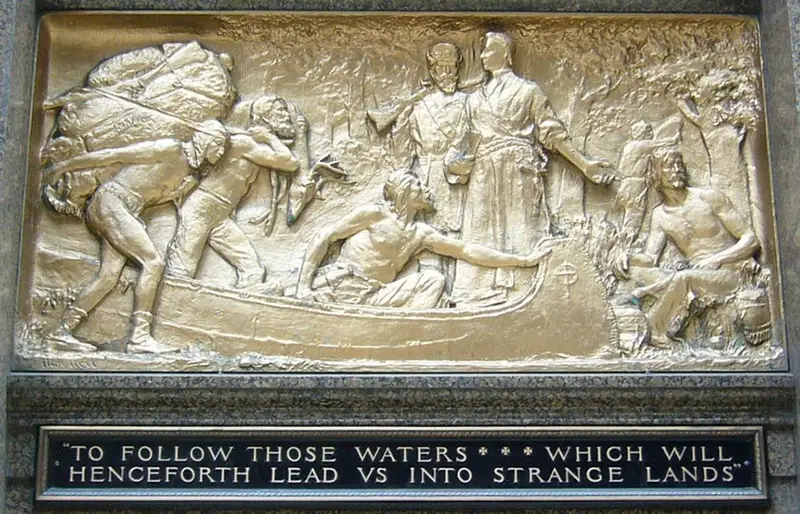
It’s a surprisingly morbid and dramatic piece of art that serves as a monument to the early European explorers of Illinois, and most people walk right underneath it without ever looking up.
3. The Secret Marina Underneath Marina City
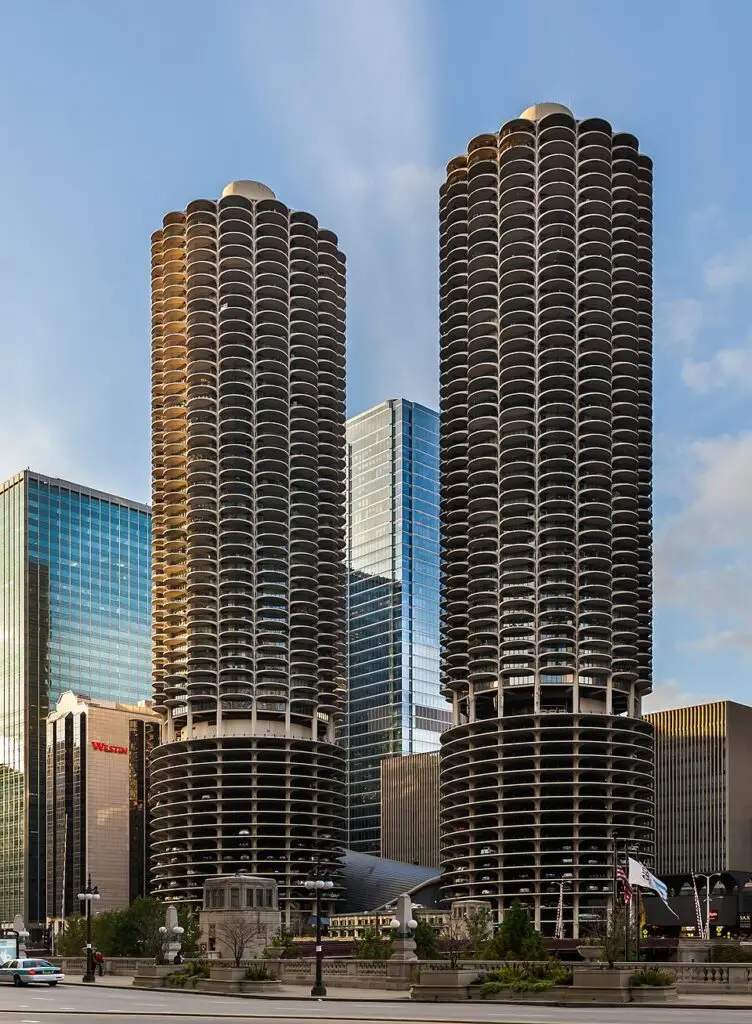
Everyone knows the iconic “Corn Cob” towers of Marina City.
The wild, circular parking garage has been featured in dozens of movies, and the unique, pie-slice-shaped apartments are legendary.
But what most tourists (and even some locals) don’t realize is that the name “Marina City” is completely literal.
Architect Bertrand Goldberg’s original vision in the 1960s was to create a “city within a city,” where you could literally park your boat at the base of the building and take an elevator straight up to your apartment.
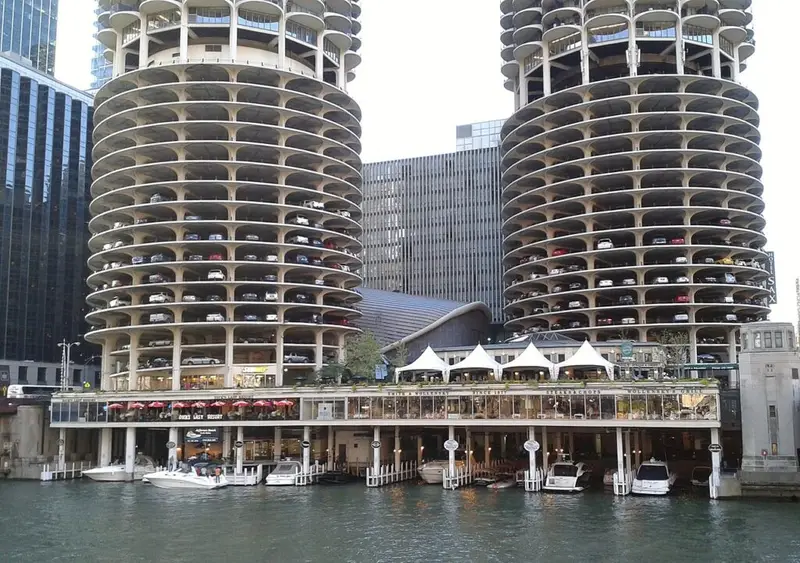
Walk along the Riverwalk on the north side of the river, right between the State Street and Dearborn Street bridges. Look down, and you’ll see the boats bobbing in the water in a fully functional marina, tucked right under the towers.
4. The Hidden Cow Path at 100 W. Monroe
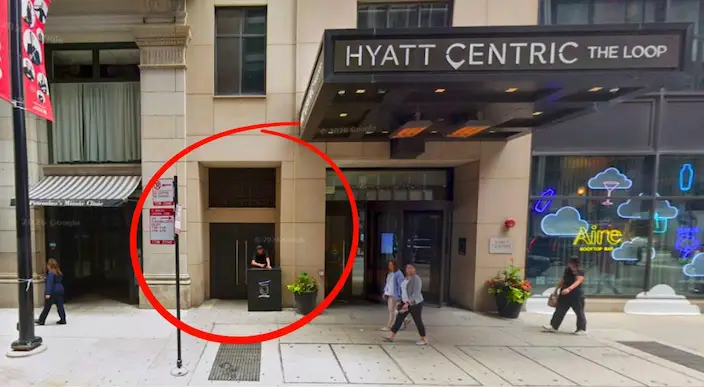
If you walk past the skyscraper at 100 West Monroe Street, you will see a small, unassuming brick alleyway cutting right through the ground floor of the building.
It looks like a simple maintenance tunnel or a back entrance.
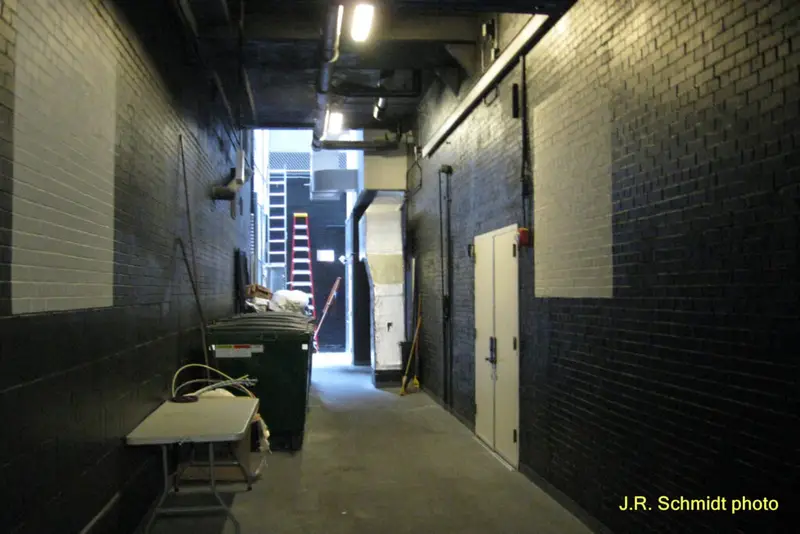
But legally? It’s a 180-year-old Cow Path.
Back in the 1840s, a farmer named Willard Jones sold off his land but wrote a bizarre, ironclad clause into the deed: a 10-foot-wide path had to be kept open forever so he could herd his cows through the area.
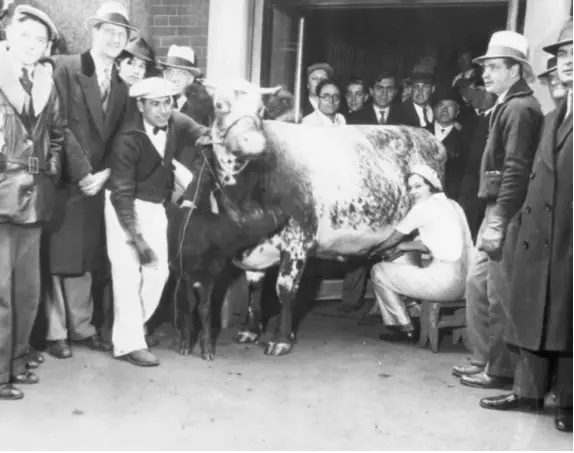
Because of that contract, every single developer who has ever built on that lot—including the current high-rise—has been legally forced to build their skyscraper around this phantom livestock trail.
It’s a bizarre, hilarious piece of Chicago’s legal history hiding right in the heart of the Loop.
5. The Monadnock Building’s Massive Walls
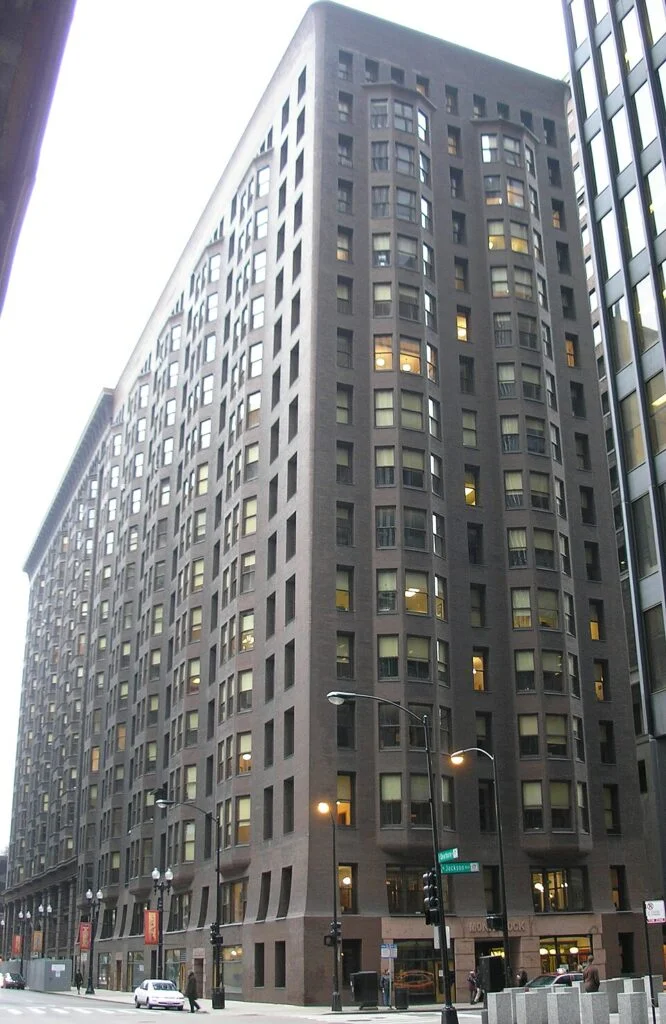
From a distance, the Monadnock Building on Jackson Boulevard might look like just another dark, old skyscraper.
But this building is actually a world-famous architectural marvel.
Built in 1893, the northern half of the building is the tallest load-bearing brick structure ever constructed.
Because it has no steel skeleton to support it, the building is held up entirely by the thickness of its own brick walls.
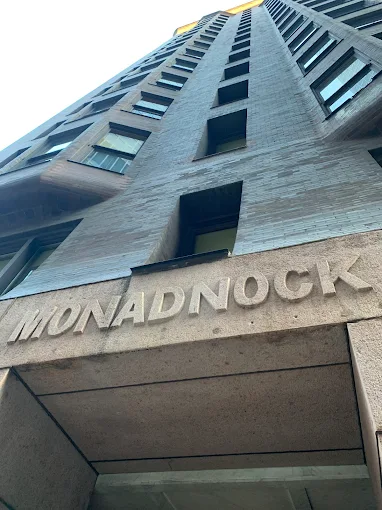
When you are standing on the sidewalk, lean in and look at the base of the building. The walls on the ground floor are an incredible six feet thick just to support the weight of the 16 stories above them.
6. The Rookery Building’s Secret Staircase
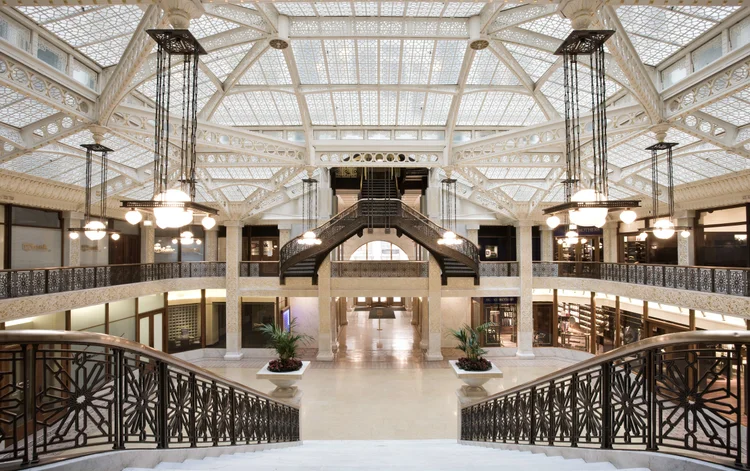
If you walk into the lobby of The Rookery on LaSalle Street, you will be immediately blown away by the stunning, light-filled atrium that was remodeled by the legendary Frank Lloyd Wright in 1905.
Most tourists take a photo of the grand staircase in the lobby and leave.
But they completely miss the building’s best-kept secret.
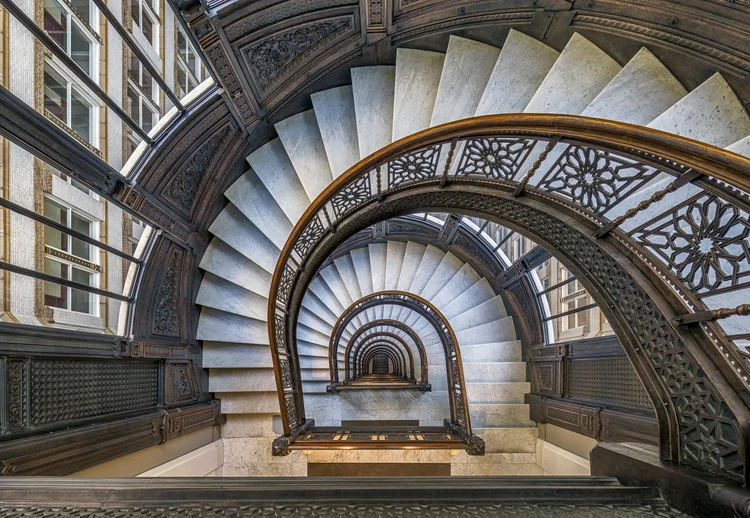
It winds all the way up the building’s central light court, creating a dizzying, spectacular view that is completely hidden from the main lobby.
Tucked away in the back corner of the building is a jaw-dropping, gold-laced, spiral staircase known as the “Oriel” staircase.
You usually need to be on a guided tour to access it, but sometimes if you ask the security guard nicely, they will let you take a quick peek.
7. The Tiffany Dome at the Chicago Cultural Center
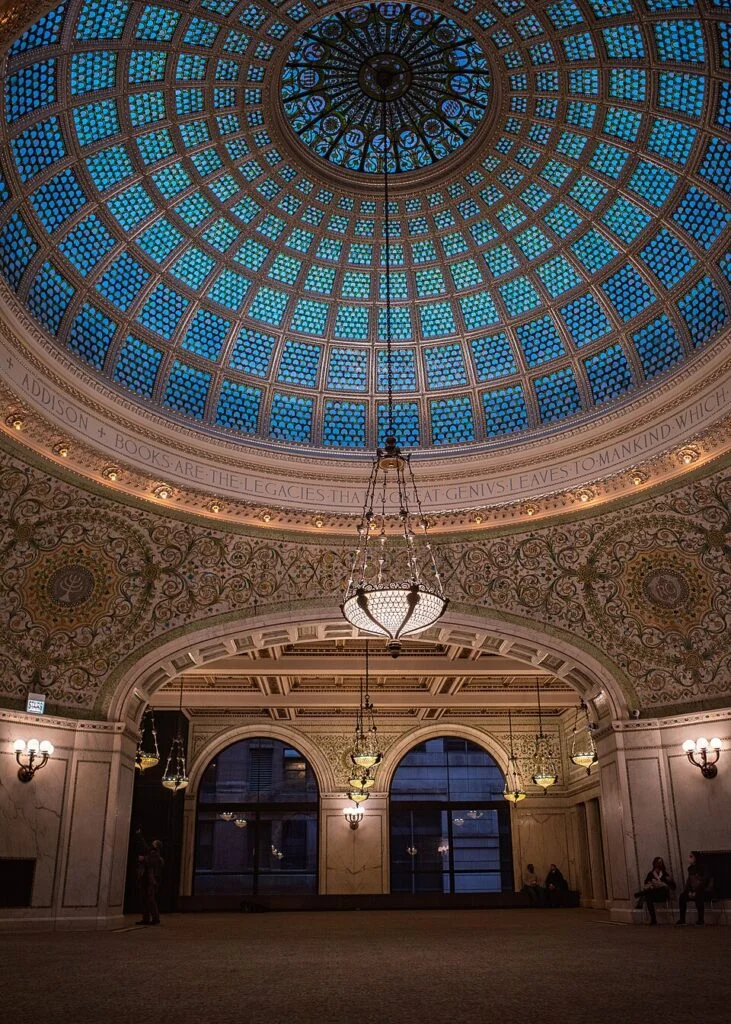
Most tourists walk right past the Chicago Cultural Center on Michigan Avenue on their way to Millennium Park, completely unaware of the treasure hiding inside.
Walk in the Washington Street entrance, climb the grand staircase to the third floor, and look up.
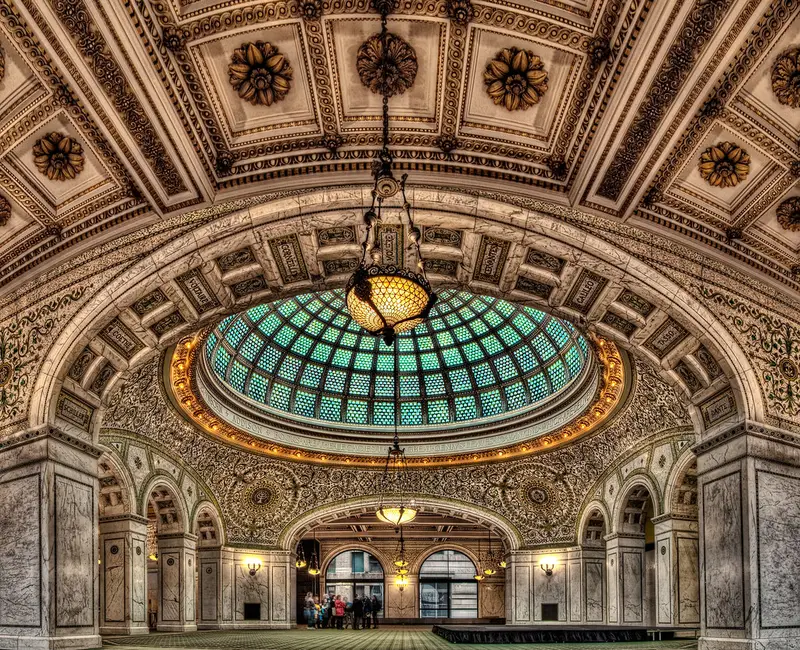
You will be standing directly under the largest Tiffany stained-glass dome in the entire world.
Completed in 1897, this absolutely breathtaking masterpiece is 38 feet in diameter and contains over 30,000 individual pieces of glass.
Best of all? It is completely free to visit.
8. The Carbide & Carbon Building’s Champagne Bottle
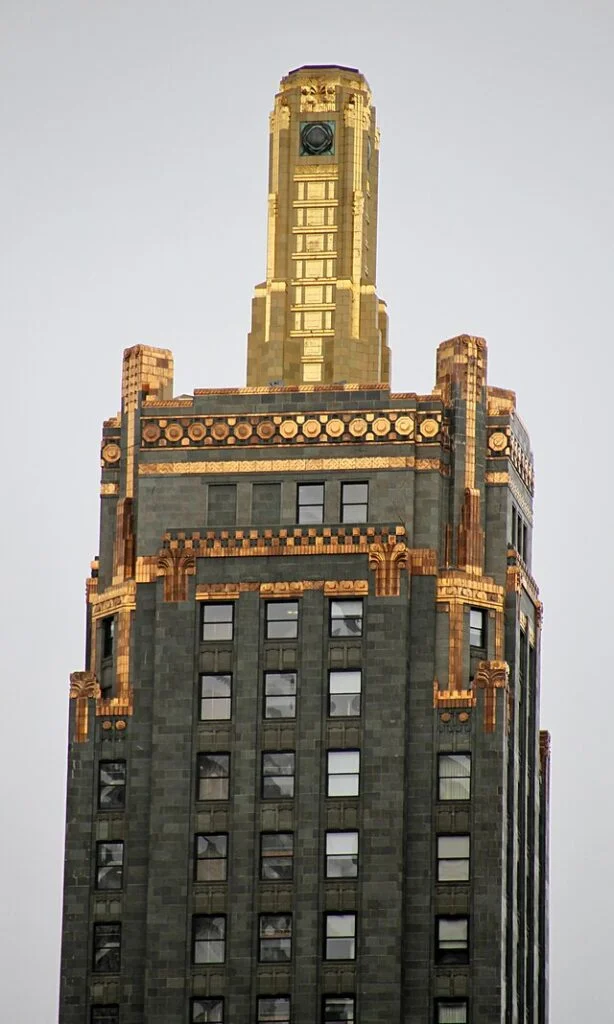
The Carbide & Carbon Building on Michigan Avenue is one of the most unique and beautiful Art Deco skyscrapers in the city.
It features a striking dark green terra cotta facade with real, 24-karat gold accents at the very top.
The local legend has always been that the architects designed the building to look like a dark green champagne bottle with a gold foil top.
It was rumored to be a giant, flashy “middle finger” to Prohibition, which was in full effect when the building was being designed in the 1920s.
9. The Chicago Temple’s “Sky Chapel”
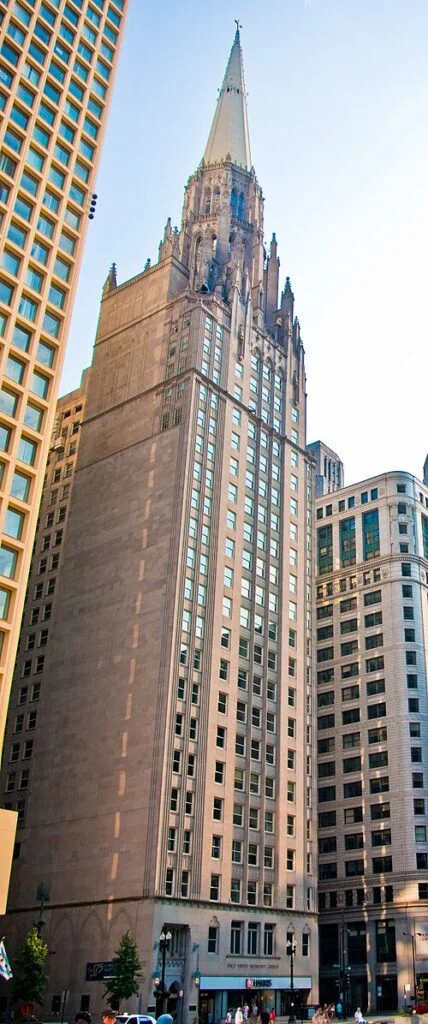
The First United Methodist Church of Chicago, also known as the Chicago Temple, is the oldest skyscraper in the Loop.
From the street, you can see the stunning, neo-gothic spire towering 568 feet over the city.
But what you can’t see is the secret hiding at the very top.
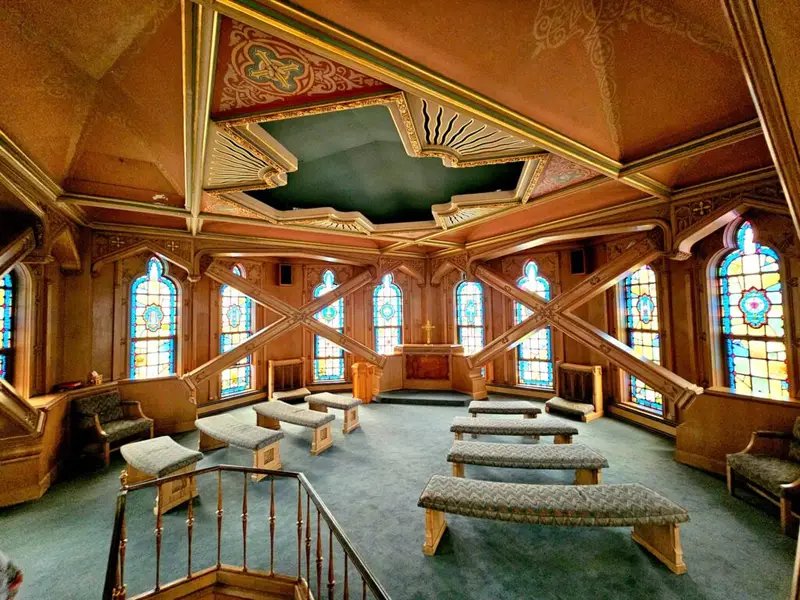
Tucked away at the base of the spire is the “Sky Chapel,” a tiny, 30-seat sanctuary that is officially the highest place of worship in the entire world.
While it is not always open to the public, they do offer tours a few times a week, allowing you to visit one of Chicago’s most serene and hidden-away sacred spaces.
10. The Windowless Monoliths Hiding in Plain Sight
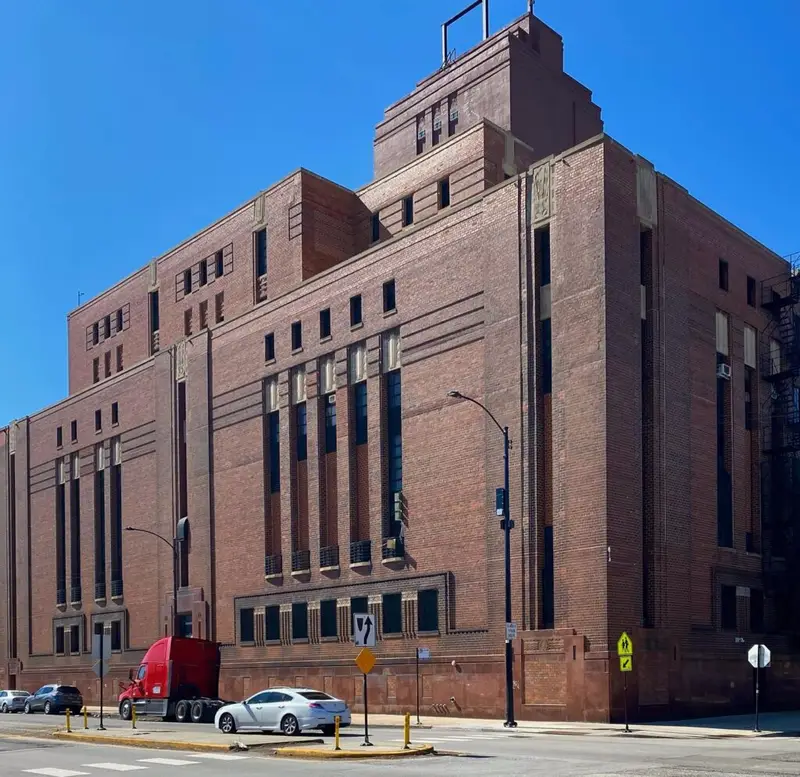
As you walk through the Loop, you might notice a few bizarre, imposing buildings that don’t seem to fit in.
They have no windows, no visible main entrance, and often look like giant, brutalist concrete boxes.
These aren’t abandoned buildings or forgotten parking garages. They are windowless monoliths, built to house and protect the city’s most critical infrastructure.
Buildings like the Commonwealth Edison Substation at 119 N. Dearborn St. use surprisingly ornate facades to disguise massive electrical transformers and other industrial equipment needed to power the entire downtown area.
But some of these structures have an even more shocking secret.
The famous, windowless AT&T Long Lines Building at 311 W. Washington St. was built during the Cold War to be incredibly durable. It is rumored to be a nuclear-radiation-resistant structure, designed to keep the nation’s communication lines running even in the event of an attack.
The next time you walk past one of these silent, imposing giants, know that you aren’t just looking at a weird building—you’re looking at a secret piece of Chicago’s industrial and Cold War history.
11. The Secret London Street Hiding in Lakeview
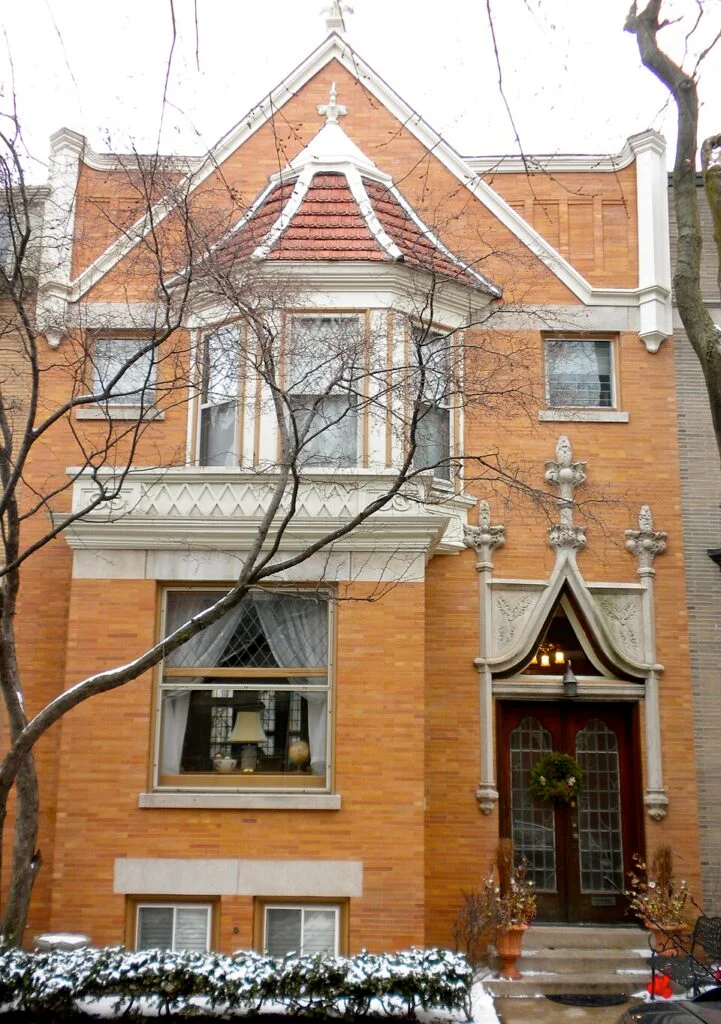
Tucked away just a few blocks from the chaos of Wrigley Field is one of Chicago’s most charming and architecturally unusual streets.
Welcome to Alta Vista Terrace.
Built in 1904, this single, tree-lined block was designed by developer Samuel Eberly Gross to be a perfect, picturesque replica of a London street, inspired by his travels in Europe.
At first glance, it just looks like a beautiful row of historic homes. But there’s a hidden architectural pattern at play.
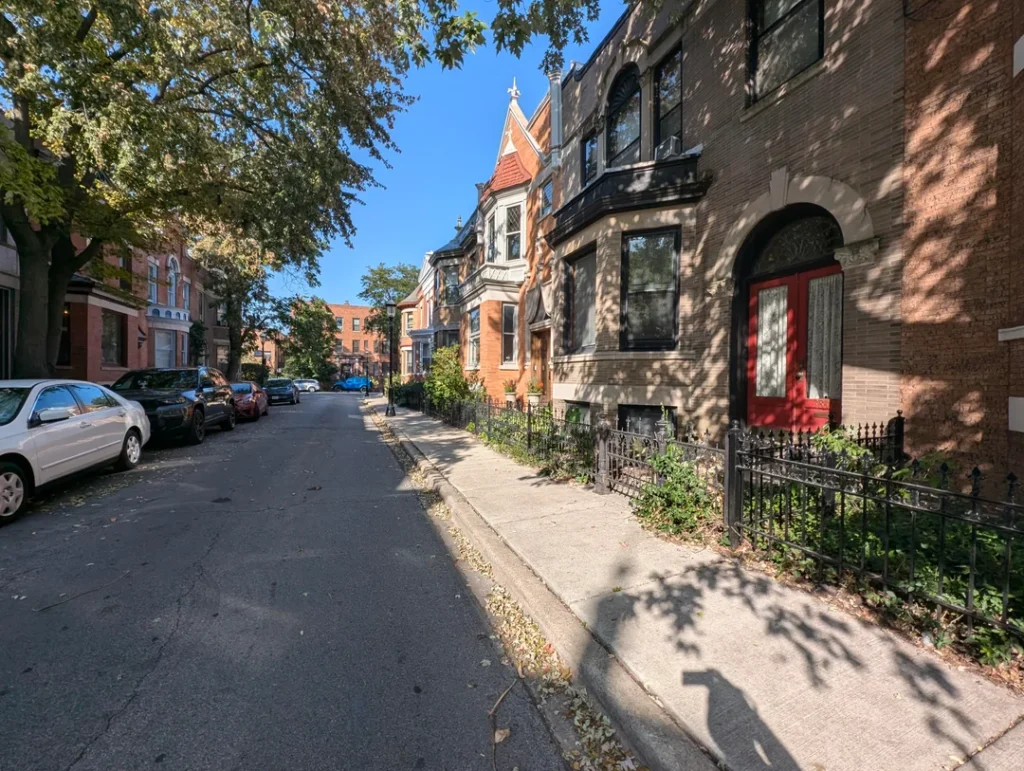
The block features 40 row houses, and nearly every single home has a near-duplicate copy located on the diagonal side of the street from it.
This creates a stunning visual rhythm as you walk down the block, with different architectural styles echoing each other from corner to corner.
It’s so unique that the entire block was designated a Chicago Landmark Historic District, preserving this secret slice of London right in the heart of Lakeview.
12. The Robotic Library Hiding Under a Glass Dome
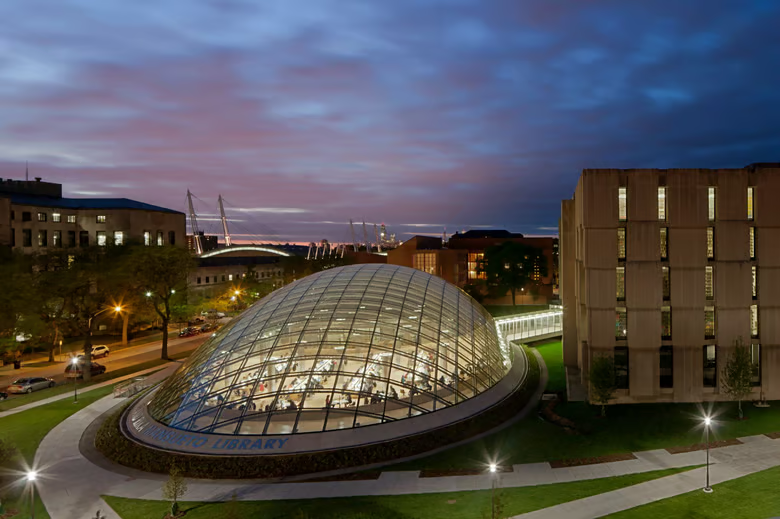
On the University of Chicago’s campus in Hyde Park sits one of the most futuristic and visually stunning libraries in the world.
From the outside, the Mansueto Library is a breathtaking, 40-foot-tall elliptical glass dome designed by the legendary architect Helmut Jahn.
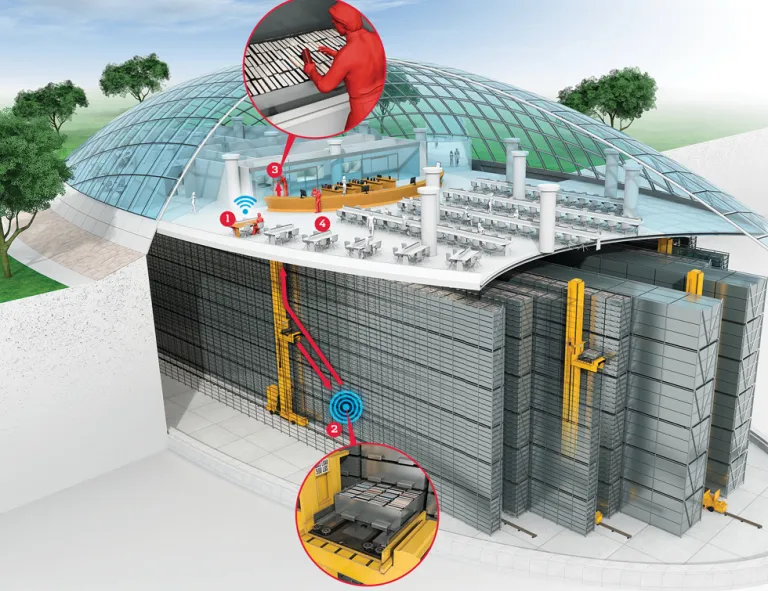
Students read and study in the sun-drenched grand reading room right under the glass.
But the real secret of the library isn’t what’s in the dome—it’s what’s hiding underneath.
The library stashes over 3.5 million books in a massive, climate-controlled storage facility 50 feet underground.
You can’t browse the shelves yourself. Instead, when a student requests a book, a massive, automated robotic crane system springs to life. The cranes travel down the dark, 50-foot-tall aisles, retrieve the exact book from millions of options, and deliver it to the circulation desk in about five minutes.
It’s a spectacular piece of hidden engineering that protects rare books while students work in the light-filled dome above.
Now Go Explore Chicago’s Hidden Secrets
Chicago’s architecture isn’t just about massive skyscrapers—it’s about the tiny, human-sized stories hiding on every corner.
Now that you know where to look, you can walk through the Loop like a true architectural detective, spotting the hidden details that thousands of people miss every single day.
If this scavenger hunt has inspired you to dive even deeper into the city’s incredible building history, you absolutely have to see it all from the water.
🎟️ Pro-Tip: The best tours sell out fast, especially on summer weekends. You can check ticket prices and book the top-rated [Chicago Architecture River Cruise right here].
And if you’re planning a trip to see these architectural wonders in person, make sure you stay in a hotel that is just as historic and beautiful as the buildings on this list. Use the interactive map below to find the best deals on hotels and vacation rentals right in the heart of downtown Chicago.

Nice article, I learned a couple new things!
Thank you for bringing all of this architectural history to light! I’m a lifelong Chicagoan and take a lot of pride in what makes this city a world-class destination.