
For decades, Chicago’s most powerful politicians and mobsters ate matzo ball soup in a dining room that violently shook every three minutes from the CTA elevated tracks overhead.
This deafening power-broker sanctuary was absolutely real, not some Hollywood mafia myth.
Today, you know this exact spot at 201 N. State Street as the modern footprint of theWit Hotel, sitting directly across the intersection from the ABC7 Chicago broadcast studio.
But before modern real estate took over, a catastrophic fire and shifting Loop economics killed the city’s greatest culinary crossroads.
For generations of Chicagoans, dining out wasn’t just about food.
It was a high-stakes theatrical performance steeped in heavy pours, legal loopholes, and backroom deals.
The Flaming Swords of the Gold Coast
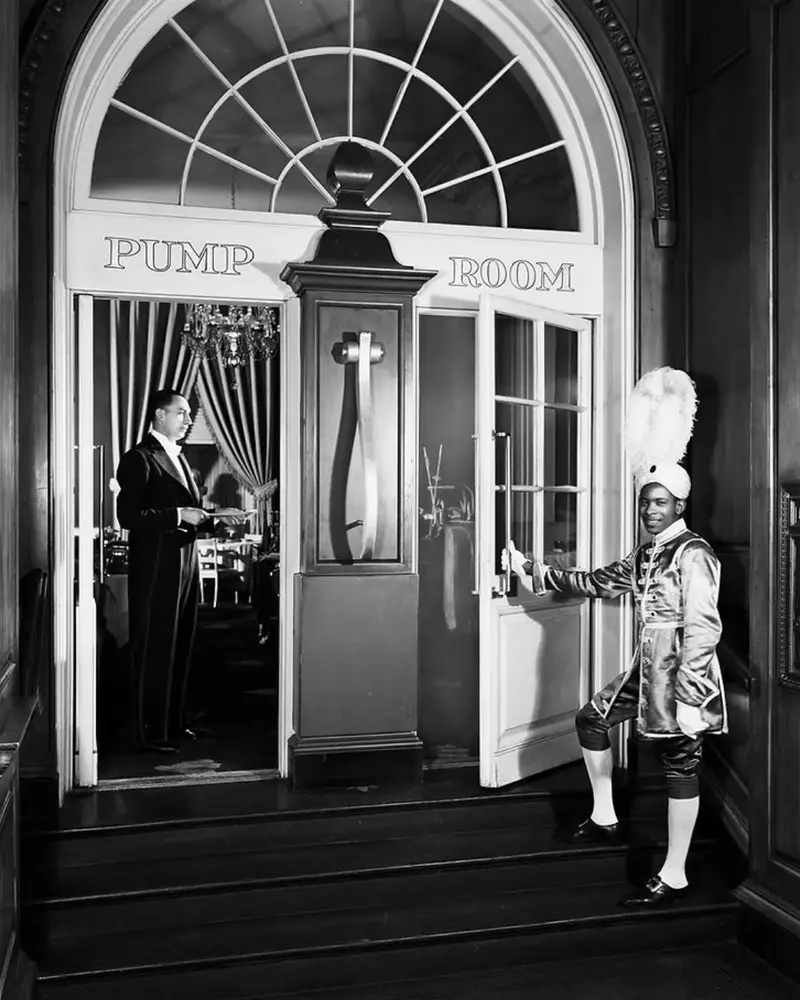
At the Ambassador East Hotel, hotelier Ernie Byfield openly admitted his food wasn’t the main attraction.
When The Pump Room opened on October 1, 1938, Byfield prioritized pure stagecraft over cuisine.
Waiters in satin knee-breeches and feathered hats carried 24-inch skewers dripping with burning, alcohol-soaked meat.
These flaming swords routinely singed the low-hanging silk lampshades while waitstaff navigated the crowded floor.
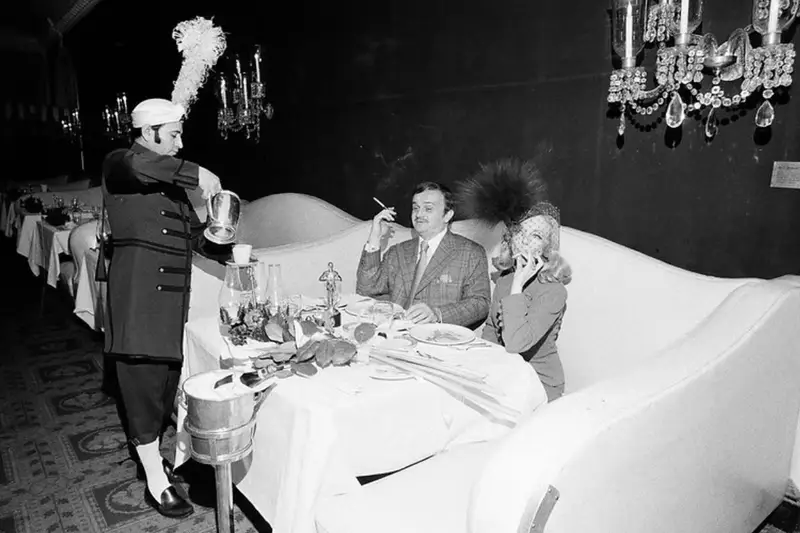
The ultimate status symbol was Booth One, where diners received fake “urgent” calls on a dedicated rotary landline.
But the theater couldn’t survive modern real estate economics.
In 2010, the property was sold, and the vintage assets were liquidated at public auction.
Despite a brief revival attempt, the legendary room permanently transitioned into private banquet space by June 2019.
The Matzo Ball Mob Under the Tracks
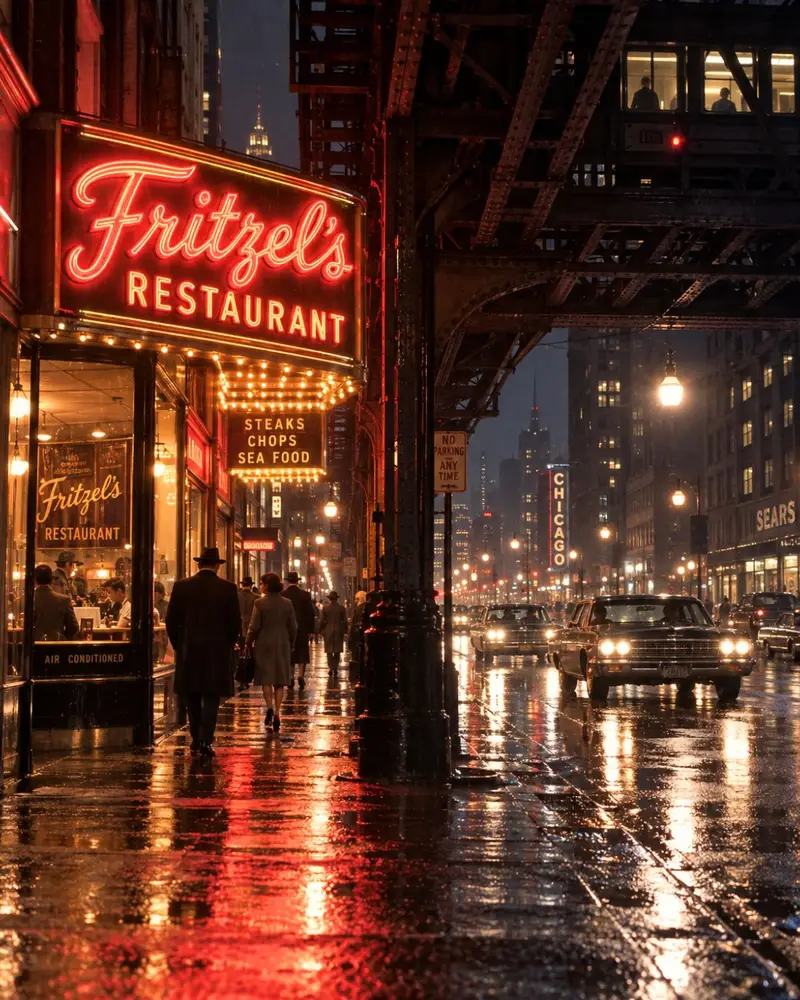
Down in The Loop, Fritzel’s operated as the undisputed daytime capitol of Chicago political dealmaking.
Owner Joe Jacobson stubbornly maintained an absurdly sprawling 100-item menu against all economic sense.
Kitchen staff begged him to cut the menu to double their margins.
Jacobson refused, insisting regulars must never be denied pickled herring or prime sirloin at 1:00 AM.
Gossip columnist Irv Kupcinet operated out of a corner booth equipped with his own dedicated phone line.
Meanwhile, Mayor Richard J. Daley huddled at tables adjacent to mob-tied operators and New York Yankees players.
The downfall began on January 16, 1967, when the catastrophic fire at McCormick Place destroyed the city’s trade-show infrastructure.
Convention dining dried up, and Fritzel’s bled money until it permanently shuttered in June 1972.
The financial bleeding was worsened by a 1974 class-action lawsuit against the Chicago Restaurant Association.
Courts ruled that the traditional $0.25 cover charge for bread and ice water was a deceptive pricing mechanism.
Stripped of those hidden quarters, old-school establishments lost their safety net.
They could no longer offset the massive costs of sprawling menus and expensive union waitstaff.
The Great Union Bust of 2006
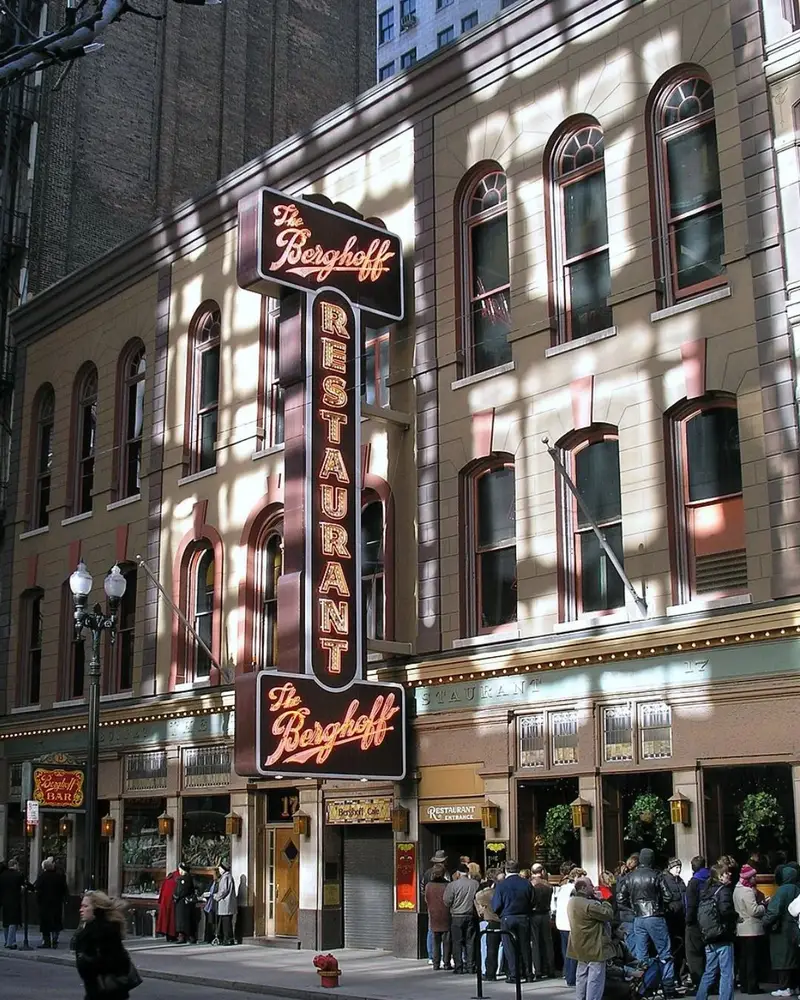
No closure sparked more collective outrage than the sudden demise of The Berghoff.
On December 28, 2005, the third-generation owners announced the restaurant was shutting down forever after 107 continuous years.
Chicagoans stood in sub-zero February blizzards for up to four hours to get one last taste of sauerbraten.
The dining room was a thick olfactory wall of rye bread, hot vinegar, and stale draft beer.
But the mourning was entirely premature.
Barely eight weeks after the emotional “last supper” on February 28, 2006, the restaurant quietly reopened.
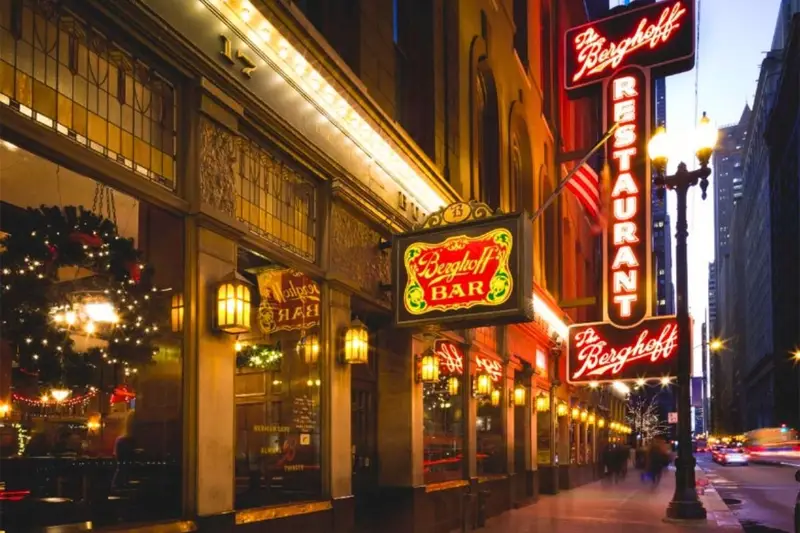
The brief closure effectively dissolved the legacy unionized collective bargaining agreements with veteran servers.
When the space re-emerged under a new catering entity, it operated strictly under non-union status.
The sudden retirement announcement generated bitter accusations among longtime labor advocates.
They argued the historic closure was primarily an exit strategy to escape grandfathered pension contracts.
The Sausage King’s Ultimate Mic Drop
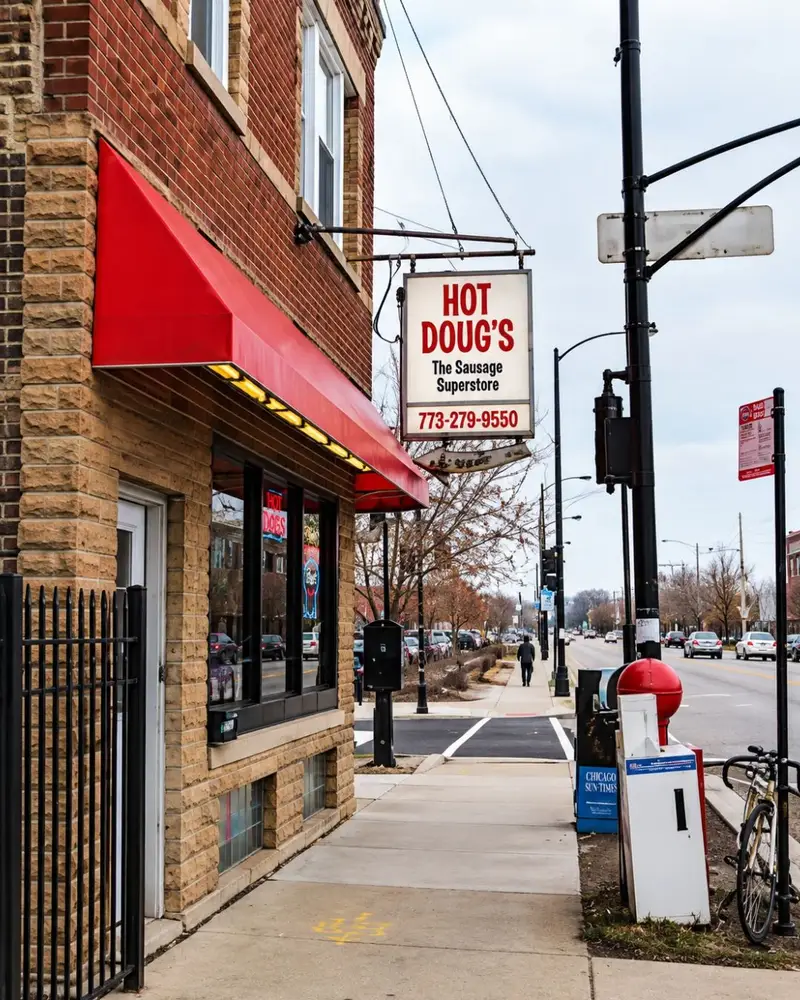
Not every legendary closure was driven by bankruptcy or labor disputes.
Hot Doug’s closed strictly on founder Doug Sohn’s own terms at the absolute height of global renown.
Sohn became a folk hero in 2007 when he defied the Chicago City Council ban on foie gras.
He took a $250 fine from health inspectors rather than remove his signature duck sausage from the menu.
He also offered free food for life to anyone who got a permanent tattoo of the Hot Doug’s logo.
When Sohn announced his permanent vacation in May 2014, the city lost its collective mind.
On the final day of operation, the line stretched over half a mile down California Avenue.
The very first diner waited more than 24 hours on the sidewalk just to order one last Celebrity Dog.
Staff had to place the “Line Ends Here” sign at 6:45 AM.
That was more than three hours before the doors even opened for the final lunch service.
The Ghost Kitchen Walking Guide
Want to pay your respects to these vanished culinary institutions?
Here is exactly where to find their physical remnants today.
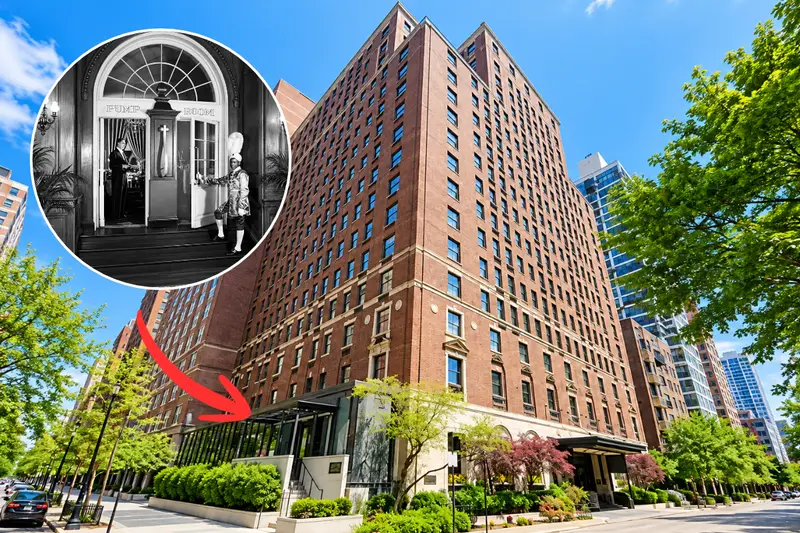
The Pump Room Site: Head to 1301 N. State Parkway in the Gold Coast. The original celebrity photos now live in the Chicago History Museum archives.
Fritzel’s Ground Zero: Stand at the northeast corner of State and Lake Streets (201 N. State St). While the ABC7 Chicago broadcast studio is across the street, the actual ground zero where Fritzel’s stood is now occupied by theWit Hotel.
The Berghoff: Take the Red Line to Jackson and head to 17 W. Adams Street. You can still see Chicago Liquor License #1 hanging on the wall.
The Hot Doug’s Shrine: Drive up to 3324 N. California Avenue in Avondale. The brick exterior remains a popular photo op for nostalgic encased meat pilgrims.
The Cape Cod Room Bar: Step inside the Drake Hotel (140 E. Walton Place). You can still find the initials “MM & JD” carved by Marilyn Monroe and Joe DiMaggio in 1953.