

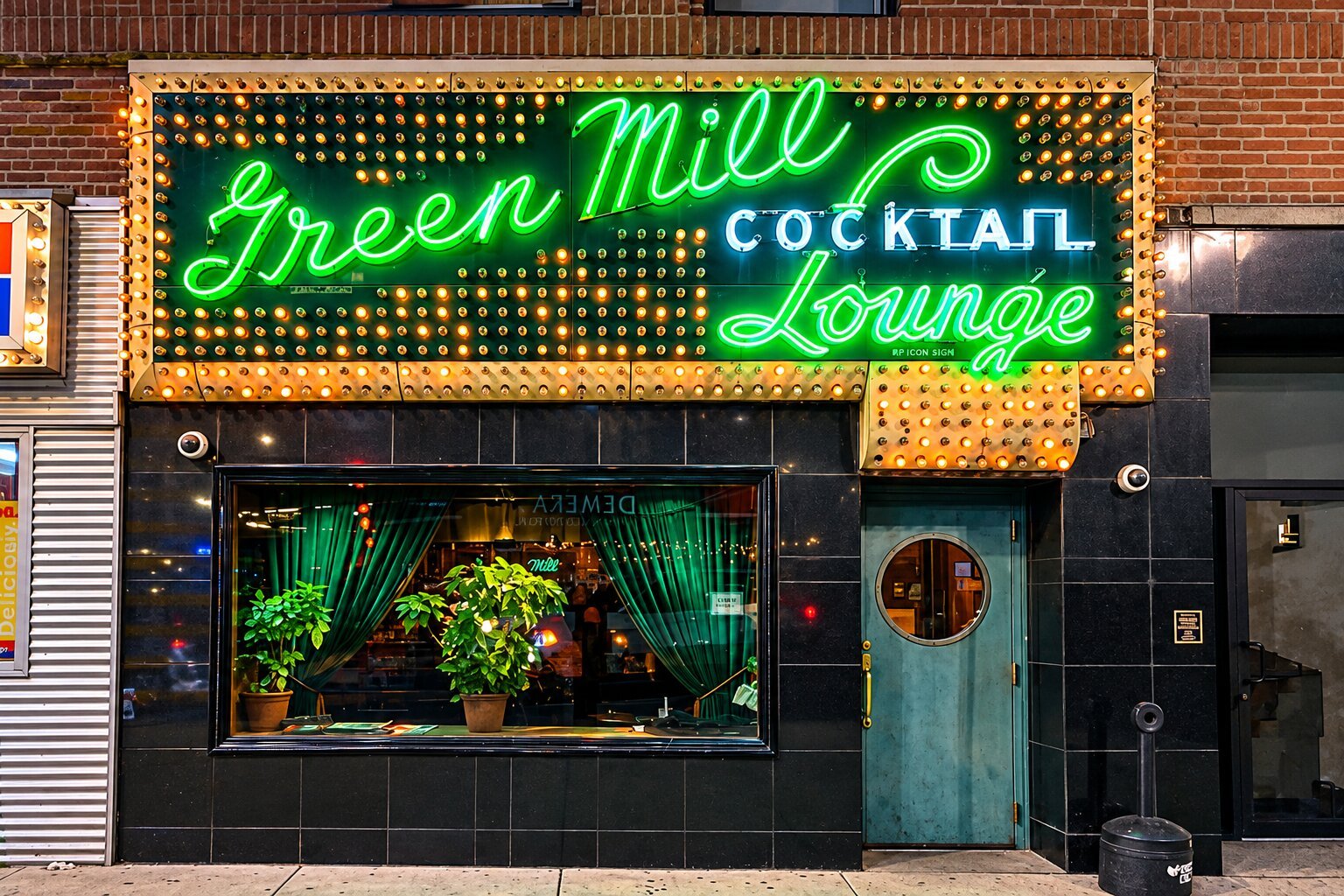
A legendary Chicago jazz club is actually sitting on top of a subterranean bootlegging labyrinth carved out for coal transport.
This is 100% real history, documented by federal injunctions and a bloody mob hit.
You can still order a stiff drink directly above the basement trapdoor today at 4802 N. Broadway in Uptown.
But surviving the 1920s meant dodging federal dry agents, paying off precinct cops, and surviving the wrath of the Chicago Outfit.
The Trapdoor Beneath Booth Number Three
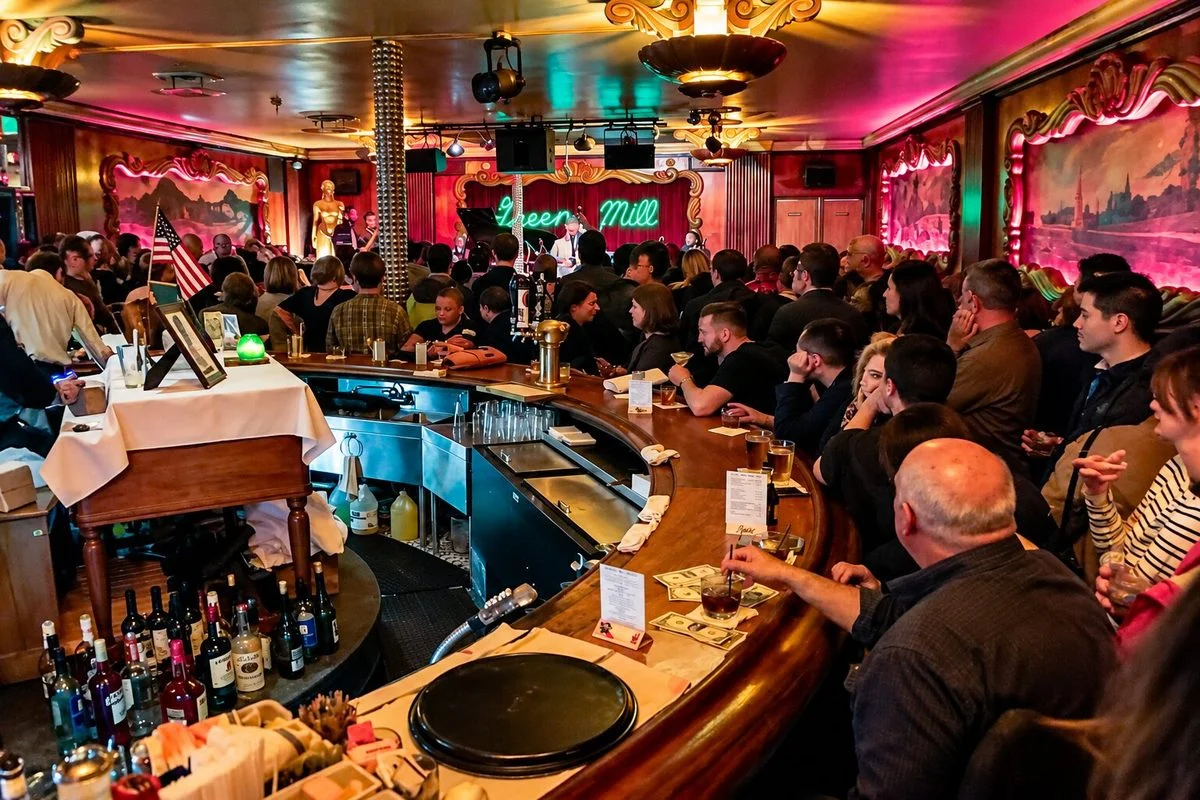
When the Volstead Act hammered down on January 16, 1920, the Green Mill Cocktail Lounge didn’t blink. Outfit lieutenant “Machine Gun” Jack McGurn held a 25% silent interest in the Uptown club.
Al Capone kept a reserved leather booth facing both the main entrance and the back service escape. Today, the bar occupies just the former lobby of what was once a massive 1,000-seat ballroom next door.
Behind the mahogany bar sits an authentic trapdoor leading into a sub-basement. This hidden drop connected to a freight tunnel running under Broadway and Lawrence Avenue.
Mobsters used it to roll bootleg barrels off rail sidings and smuggle patrons out during federal raids. But the underground booze came with a brutal price tag.
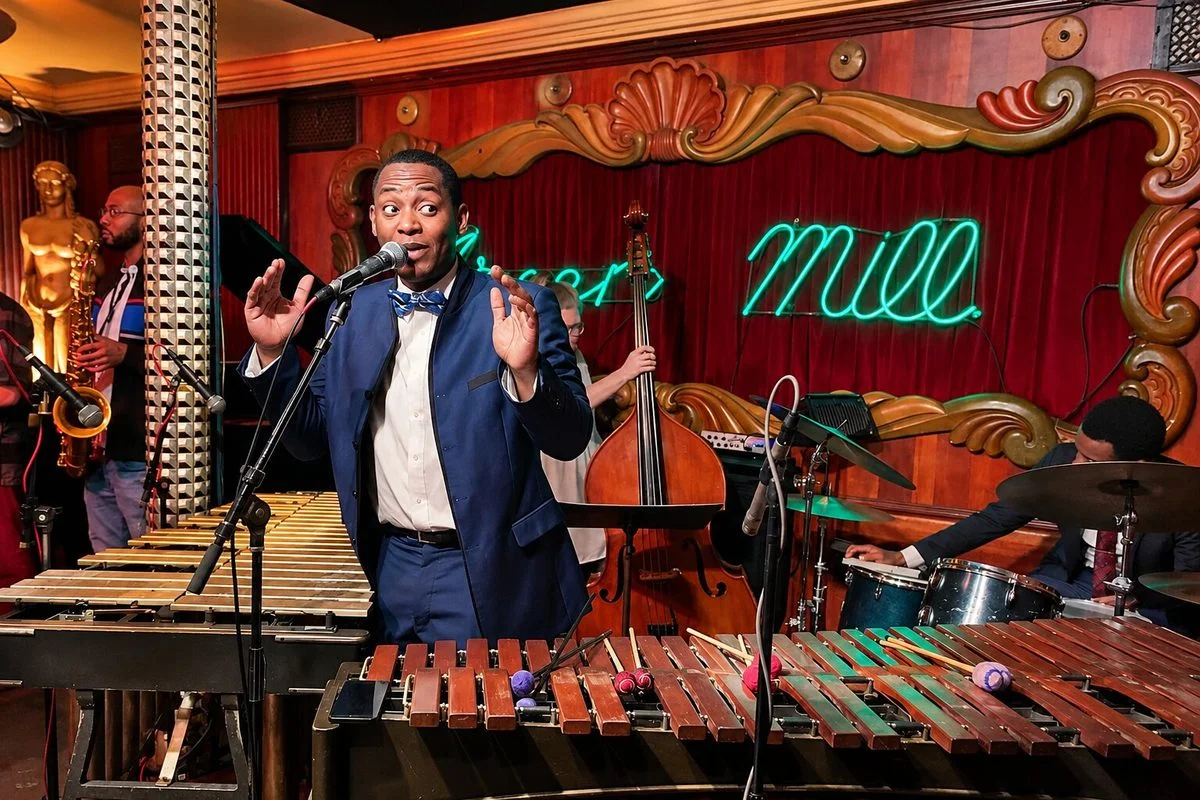
In 1927, resident crooner Joe E. Lewis broke his Green Mill contract for a $1,000-a-week gig at a rival club. On the morning of November 9, 1927, three Outfit enforcers cornered Lewis inside Room 524 at the Commonwealth Hotel.
They fractured his skull with a revolver butt and slit his throat from ear to ear. Lewis miraculously survived the hit.
Capone, enraged that his favorite singer was touched, quietly sent an envelope stuffed with $10,000 cash to cover the medical bills.
The Four-Degree Structural Defiance
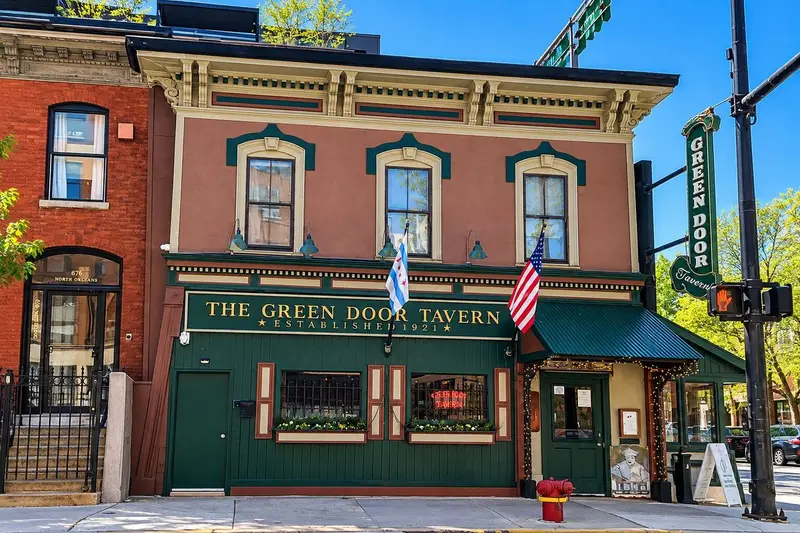
Down in River North, another joint survived the feds by hiding in plain sight. The Green Door Tavern at 678 N. Orleans St. is a physical impossibility.
Constructed in 1872 just after the Great Chicago Fire, the wood-frame building blatantly violated the city’s new masonry-only fire ordinance. Today, the entire structure has a visible westward list of over 4 degrees off plumb.
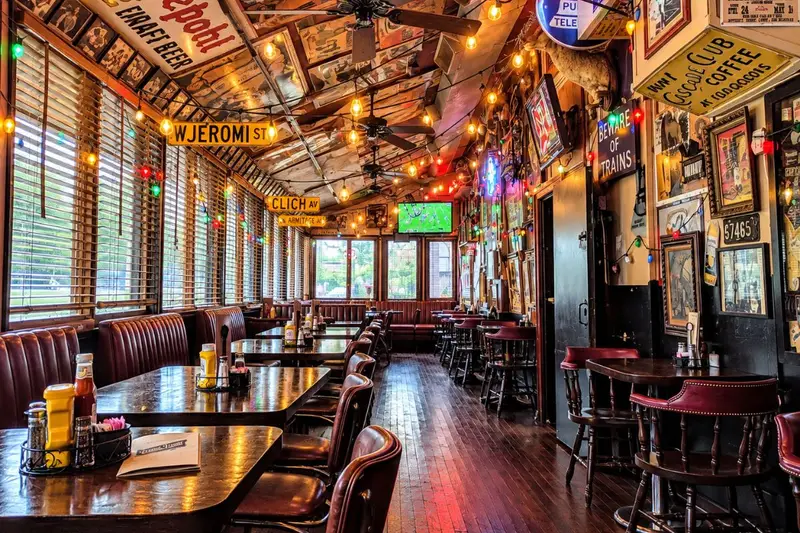
During Prohibition, the ground floor operated as a legitimate grocery store run by Vito Giacomoni. Thirsty locals knew to look for the basement door painted bright emerald green.
For generations of Chicagoans, that specific color was the universal underground code for an open taproom. Giacomoni’s sons hid cases of illicit liquor behind false basement brickwork that still exists today.
The Shadow Bank of Andersonville
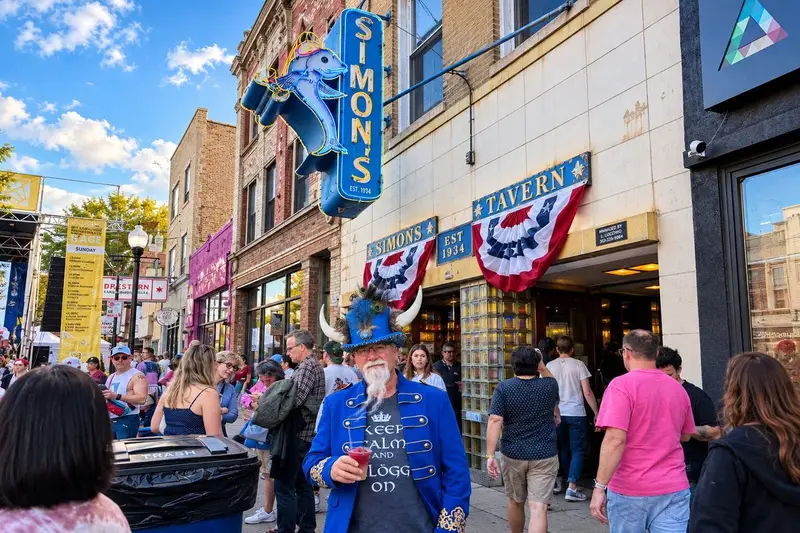
Up on the North Side, Simon’s Tavern operated a brilliant legal loophole at 5210 N. Clark St. Swedish immigrant Simon Lundberg ran a squeaky-clean coffee shop on the street level.
Hidden in the basement was a high-volume speakeasy labeled only as the “N.N. Club — Members Only.” The “No Name” moniker was a calculated defense strategy.
If police intercepted a drunken patron and demanded to know where they bought the booze, replying “I was at the No Name Club” sounded like a refusal to snitch. Lundberg bought his wholesale whiskey directly from Capone’s South Side syndicate.
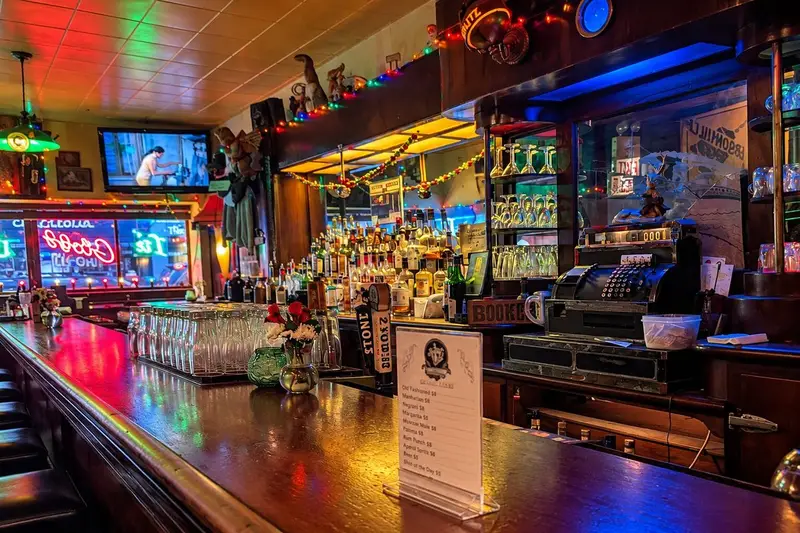
He ran the basement not just as a bar, but as a shadow bank for Swedish bricklayers. Immigrant laborers without bank accounts brought their payroll checks to Simon, who cashed them for free.
The men would then instantly spend their cash wages on his whiskey and spiked glögg.
The Erased Woman on the Wall
Simon’s Prohibition profits funded a massive post-repeal renovation in 1934. He installed a massive 60-foot solid mahogany bar designed to mimic the S.S. Normandie ocean liner.
But the tavern holds a devastating family tragedy hidden right on the walls. In the 1950s, a local artist painted a sprawling mural depicting neighborhood patrons as forest animals.
Decades later, current owner Scott Martin found 1960s 8mm film showing a beautiful blonde woman painted in the mural. Today, that woman’s face is physically hacked out of the actual tavern wall.
Simon’s son, Roy, had entered a forbidden romance with her that ended in a fatal car crash. To stop a catastrophic lawsuit from her grieving family, Simon was forced to liquidate six other bars.
Consumed by grief, Roy took a blade to the plaster to erase her memory from the room. The ghosts of that era are literally built into the architecture.
During a recent basement renovation, workers found a perfectly intact, unopened bottle of 12-year-old Scotch from the 1920s hidden inside the ceiling joists.
The Cops Drinking in the Alley
Not every speakeasy had to dodge the Chicago Police Department. At 1655 N. Sedgwick St., the building now known as Twin Anchors operated as “Tante Lee Soft Drinks.”
From 1919 through 1932, they served bootleg liquor poured from unlabeled ceramic medicine jugs. Local police officers simply parked their wagons down the block.
They would walk through the residential back alley to purchase their daily beer behind the confectionery counter. The current wooden bar, donated by the Schlitz Brewing Company during World War I, survived the entire 13-year federal ban.
The 1920s Speakeasy Visitor Guide
The Green Mill Cocktail Lounge: Located at 4802 N. Broadway in Uptown. Take the CTA Red Line to the Lawrence station. Bring cash, as they do not accept credit cards.
Simon’s Tavern: Find the neon Viking fish sign at 5210 N. Clark St. in Andersonville. Take the CTA 22 Clark bus directly to the Foster Avenue stop.
Green Door Tavern: Located at 678 N. Orleans St. in River North. Look for the leaning wood-frame building two blocks west of the CTA Brown Line Chicago station.
Twin Anchors Restaurant & Tavern: Tucked into the Old Town Triangle at 1655 N. Sedgwick St. Walk three blocks west from the Sedgwick Brown Line station.