We promise we didn’t make any of these up. Chicago just really is this extraordinary.
Every city has its history. But Chicago has something different — a collection of facts so strange, so audacious, and so completely real that most people hear them and immediately assume someone is pulling their leg.
A city that lifted itself ten feet into the air. A river that flows backwards. A cemetery that became a park with the bodies still in it. A mayor who destroyed an entire airport in the middle of the night with bulldozers.
All of it true. All of it Chicago.
Here are the facts about this city that sound completely made up — but aren’t.
1. Lincoln Park Used to Be a Cemetery — And the Bodies Are Still There
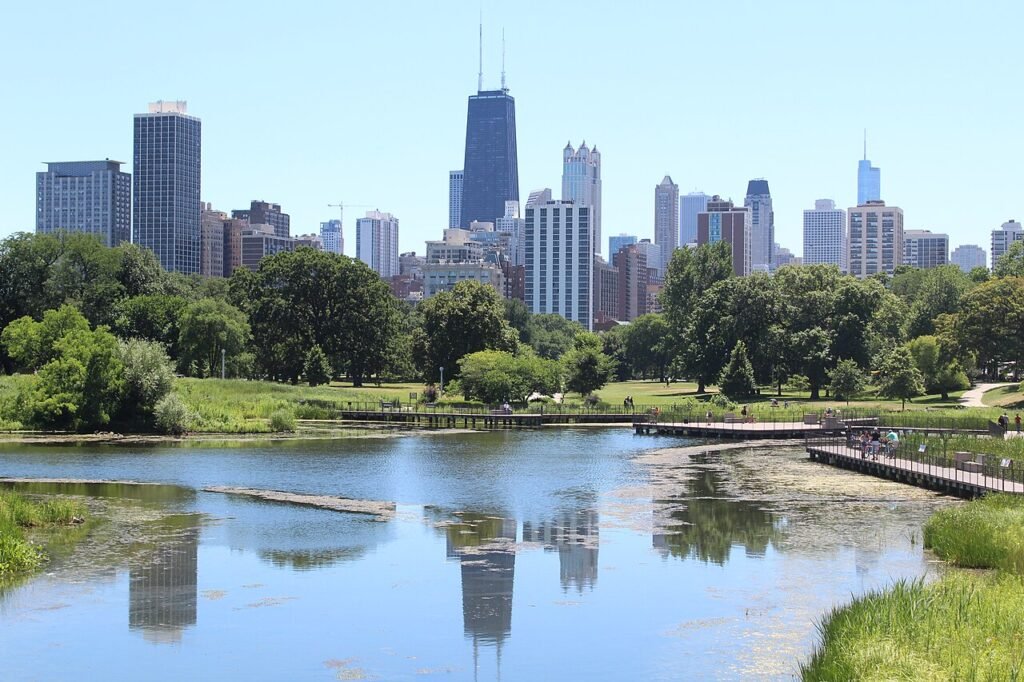
Lincoln Park is one of the most beloved green spaces in America. Millions of people jog, picnic, and visit the zoo there every year.
Almost none of them know they’re walking on top of a graveyard.
Before it became a park, the land was Chicago’s main municipal cemetery. When the city decided to convert it to recreational space in the 1860s, they moved most of the bodies — but not all of them. The wealthier plots were relocated to other cemeteries across the city. The potter’s field, where the poor were buried in unmarked mass graves, was largely left alone. The thinking was simple and brutal: nobody was coming to claim them, so why bother.
Work crews doing improvements in the park still occasionally uncover remains to this day. There is a coffin underneath the concrete foundation of the zoo’s red barn that nobody has ever moved — because nobody could agree on what to do with it, so they just built over it.
The two graves that were left above ground belong to Ira Couch, a hotel owner wealthy enough that his family successfully fought to keep his tomb in place. It still stands near the Chicago History Museum, completely intact, in the middle of one of the busiest parks in the city.
So next time you’re having a picnic in Lincoln Park — you’re probably sitting on someone.
The kicker: The baseball diamonds in the park sit on what was the potter’s field. The remains of Chicago’s poorest citizens are directly underneath the infield.
2. The Entire City of Chicago Was Physically Lifted Ten Feet Into the Air
In the 1850s Chicago had a problem. The city had been built on flat, swampy land with almost no natural drainage, which meant the streets were essentially open sewers. Disease was rampant. Something had to be done.
The solution was to build a proper underground sewer system. The problem was that the city already existed — thousands of buildings, streets, and infrastructure sitting exactly where the sewers needed to go.
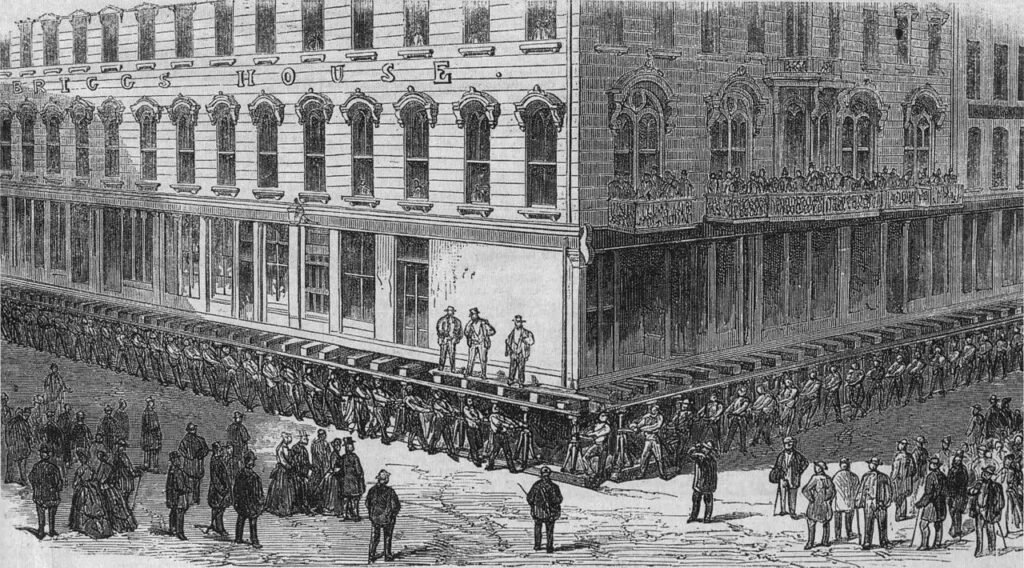
So Chicago did something that had never been attempted before or since at this scale. They raised the entire city.
Using thousands of jackscrews operated by hundreds of men working in coordination, entire city blocks were lifted — buildings, hotels, stores, and all — sometimes several feet at a time, while people continued to work and live inside them. The Tremont Hotel, a six-storey brick building, was raised eight feet without a single guest being asked to leave. People ate breakfast, slept in their rooms, and conducted business while the building was physically moving upward underneath them.
The project took years and was considered one of the greatest engineering achievements of the 19th century.
The kicker: You can still see evidence of this today. In neighbourhoods like Pilsen and Bridgeport, some buildings were never raised to match the new street level — leaving the front door several feet below the sidewalk in what became known as garden apartments. They’re everywhere once you know to look for them.
3. Chicago Reversed the Flow of Its Own River — And St. Louis Sued and Lost
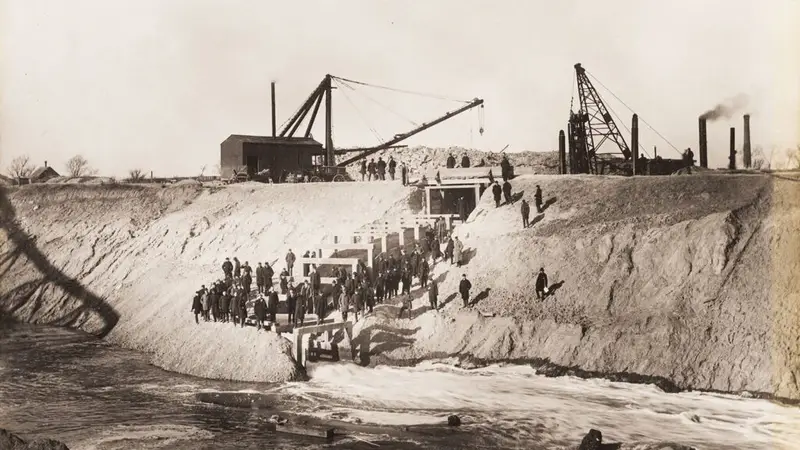
The Chicago River naturally flowed into Lake Michigan — which was also the source of the city’s drinking water. As Chicago grew into one of the largest cities in America, the river became essentially an open sewer emptying directly into the water supply. Cholera and typhoid outbreaks killed thousands.
The solution Chicago came up with was, by any measure, one of the most audacious engineering projects in human history. They would simply reverse the flow of an entire river.
Using a system of canals and locks completed in 1900, Chicago turned the river around. Instead of flowing into Lake Michigan it now flows away from it — south toward the Illinois River and eventually into the Mississippi. The drinking water was saved. The sewage went somewhere else.
That somewhere else was downstream. Specifically, toward St. Louis.
St. Louis was not pleased about a literal river of Chicago sewage heading their way and immediately filed a lawsuit to stop the project. The case went all the way to the Supreme Court.
Chicago won.
The project is still considered one of the greatest engineering achievements in American history. The fact that it was completed before St. Louis’s lawsuit arrived in court — meaning the reversal was already done by the time anyone could legally stop it — is about as Chicago as anything this city has ever done.
The kicker: St. Louis’s revenge? They bottle the Mississippi water downstream and sell it back to Chicago as Budweiser
4. A Mayor Destroyed an Entire Airport in the Middle of the Night With Bulldozers
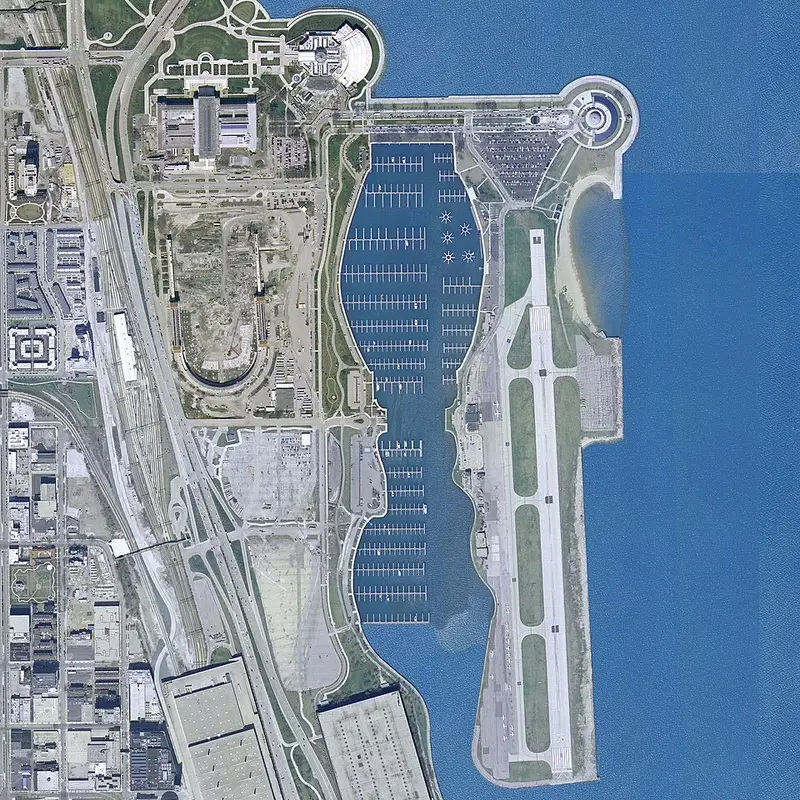
Meigs Field was a small single-runway airport on Northerly Island, right on the lakefront just south of downtown. It had operated since 1948 and was beloved by private pilots, commuters to Springfield, and anyone who wanted the experience of landing a plane with the Chicago skyline filling the windshield.
Mayor Richard M. Daley wanted to turn Northerly Island into a park. The FAA and the federal government disagreed. Negotiations went nowhere for years.
So on the night of March 30, 2003, Daley sent in bulldozers.
Without any warning, without FAA approval, without notifying the pilots whose planes were parked on the runway, city crews cut giant X shapes into the tarmac in the middle of the night rendering the runway completely unusable. By the time anyone woke up the next morning the airport was gone.
Sixteen planes were stranded on the island with no way to take off. They eventually had to use the taxiway as a makeshift runway to get out. The city was fined $33,000 by the FAA — a sum that everyone agreed was essentially nothing to a city the size of Chicago.
Daley cited September 11th security concerns as justification. Almost nobody believed him. The park he wanted was eventually built — it’s the same Northerly Island nature trail that appears on Hey Chicago’s list of peaceful waterfront escapes.
The kicker: An Uber driver’s theory — that the real reason was because Daley’s mother didn’t like the noise — has never been officially confirmed or denied.
5. The Eastland Disaster Killed More People Than the Great Chicago Fire
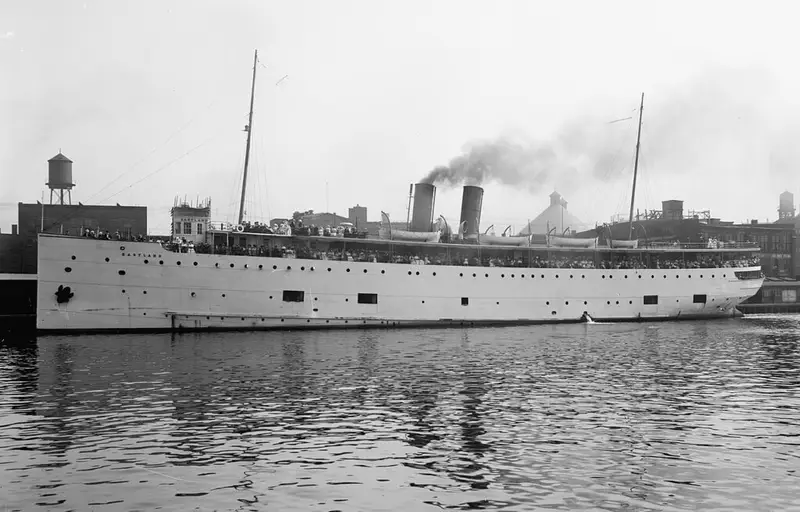
Ask most people about Chicago’s worst disaster and they’ll say the Great Chicago Fire of 1871. They’re wrong.
On July 24, 1915, a passenger steamship called the Eastland was docked in the Chicago River between Clark and LaSalle Streets, loading passengers for a Western Electric employee picnic cruise across Lake Michigan. The ship was at capacity — over 2,500 people on board, mostly immigrant factory workers and their families dressed in their best clothes for a rare day off.
The ship never left the dock.
The Eastland was notoriously top-heavy and had a history of stability problems that its owners had repeatedly ignored. As passengers crowded to one side of the boat to wave at people on the dock, the ship began to list. Within minutes it rolled completely onto its side in just 20 feet of water, right there in the river in the middle of downtown Chicago.
844 people died. Many were trapped inside the hull. The victims included 22 entire families — every member gone. The average age of the dead was just 26 years old.
The makeshift morgue set up to handle the bodies was a large building on the riverbank. That building later became a theatre. That theatre was later renovated and became the home of Harpo Studios — where Oprah filmed her show for decades.
The kicker: George Halas, founder of the Chicago Bears, was supposed to be on the Eastland that morning. He was running late. His name appeared on the list of the missing before his family confirmed he was alive.
6. The Site of Mrs. O’Leary’s Barn Is Now a Fire Station They Deliberately Set on Fire
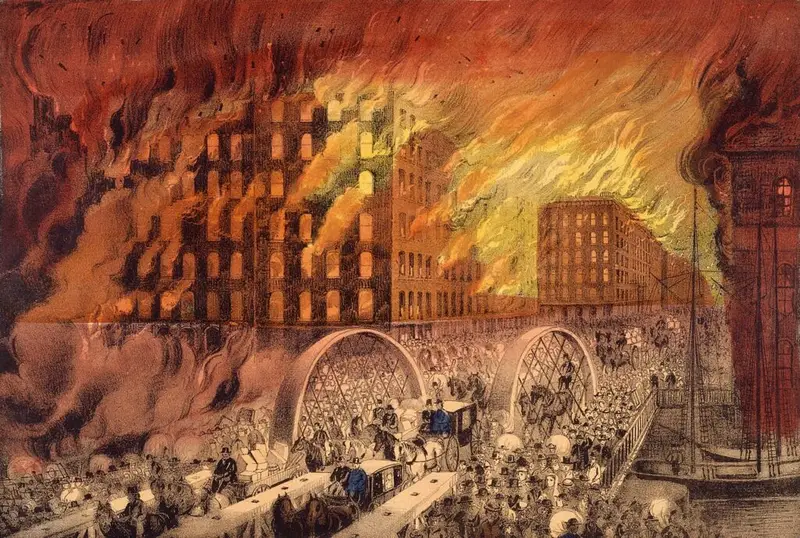
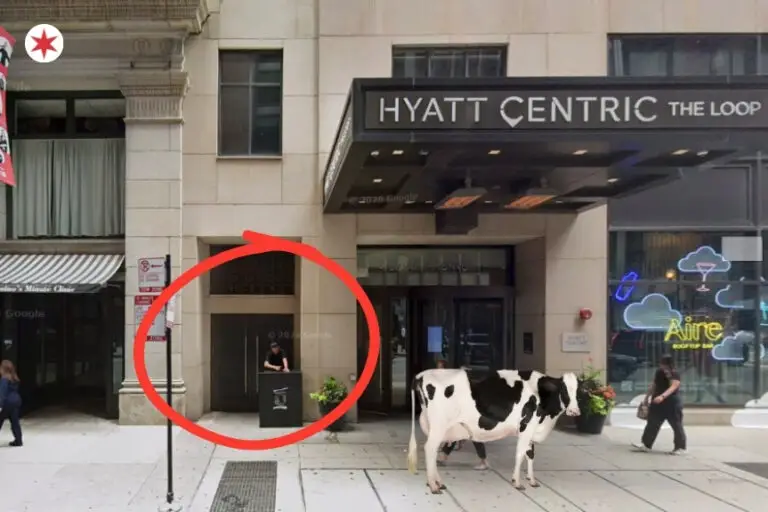
The Great Chicago Fire of 1871 started — allegedly — when Catherine O’Leary’s cow kicked over a lantern in a barn on the city’s west side. The cow story was almost certainly invented by a reporter who later admitted he made it up. Catherine O’Leary was largely exonerated by history. But the address stuck.
The barn is long gone. The O’Leary house is long gone. The entire neighbourhood that burned that night is long gone.
What sits on that exact spot today is the Chicago Fire Academy — the training facility for the Chicago Fire Department. It was built there deliberately, on the site where the fire started, as a kind of civic statement.
And because Chicago has a particular sense of humour about its own history, the Fire Academy is a facility where they regularly and deliberately set things on fire.
Firefighters train there by fighting actual fires in controlled burn structures on the same ground where one of the most destructive urban fires in American history began. There is a sculpture out front called “Pillar of Fire” marking the exact spot where the blaze is believed to have started.
Most people drive past it without having any idea what they’re looking at.
The kicker: The sculpture marking the spot where the fire started was itself damaged by fire during installation. Of course it was. This is Chicago.
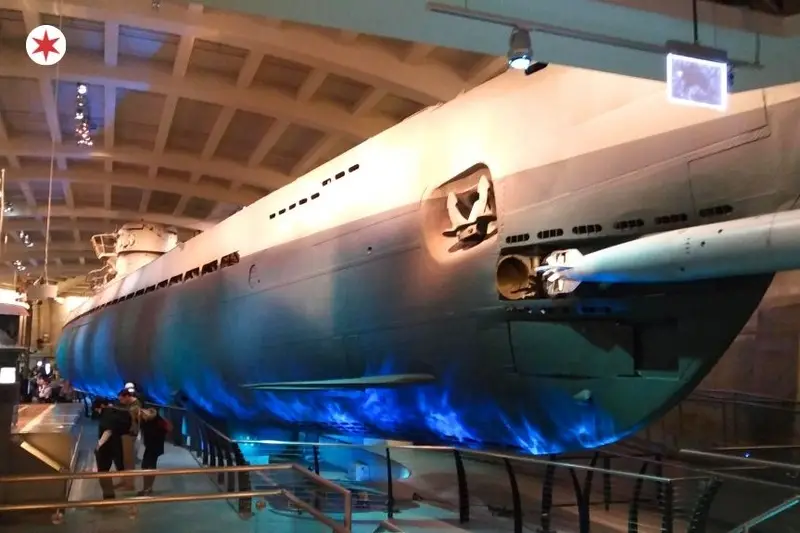
7. A Nazi Submarine Sits in a Museum on the South Side — And the Captain Shot Himself Inside It
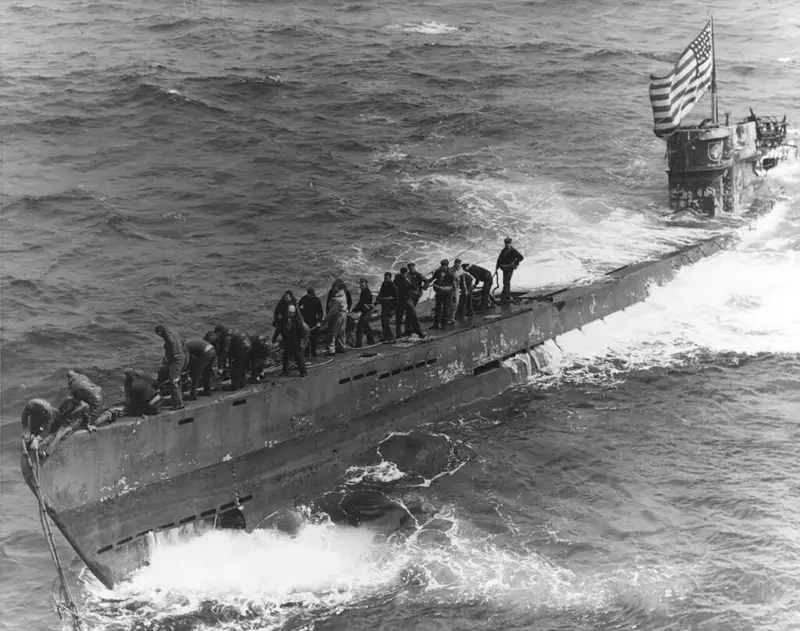
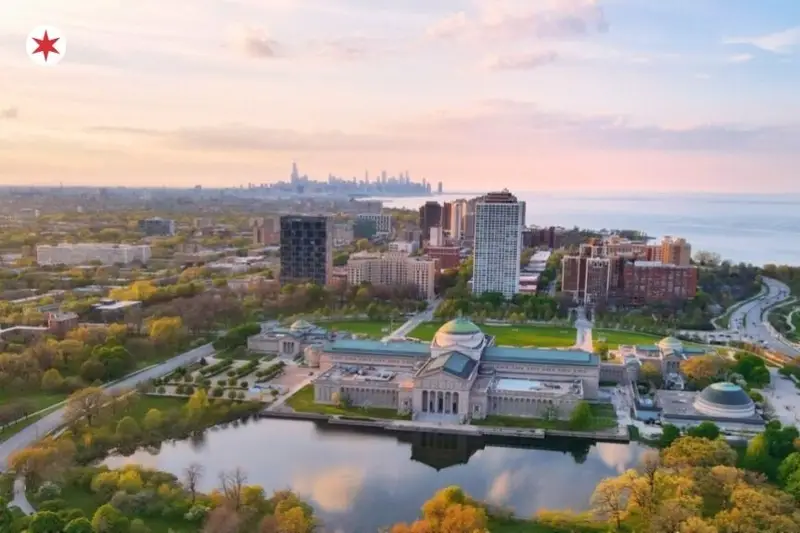
The Museum of Science and Industry on the south side of Chicago has one of the most extraordinary exhibits in any museum in America. Sitting in a purpose-built underground gallery is a real German U-boat — the U-505 — captured during World War II and shipped to Chicago where it has been on display since 1954.
Most visitors know the basic story. American naval forces captured the submarine in the Atlantic in 1944 — the first enemy vessel boarded and captured on the high seas by the US Navy since the War of 1812. The crew abandoned ship. The Americans boarded, stopped the scuttling charges, and towed the vessel to safety. It was a remarkable feat of naval warfare.
What the official tour doesn’t mention — at least not loudly — is what happened inside that submarine before the capture.
The U-505 had a troubled service record. After a series of failed patrols and mounting losses, the previous captain took his own life inside the control room near the periscope. The crew witnessed it. The submarine continued in service under a new commander.
If you ask a tour guide quietly where it happened, they will tell you. They just don’t announce it.
The kicker: One visitor who asked about it reported feeling dizzy and claustrophobic when the guide turned on the realistic running lights and sound effects near that spot — and quietly vomited a few feet from where it happened. They still rated the tour 10 out of 10.
8. Chicago Sold Malört as Medicine During Prohibition — Because Nobody Could Believe Anyone Would Drink It for Fun
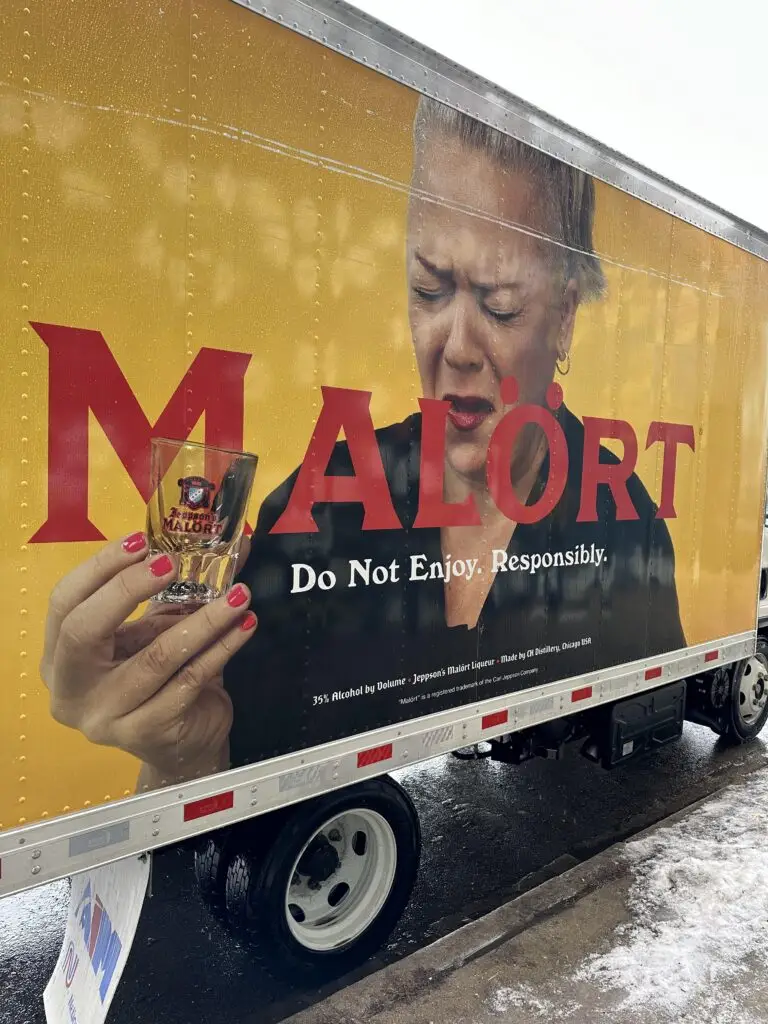
If you’ve spent any time in Chicago you’ve encountered Malört. It’s a bitter, intensely unpleasant Swedish-style liqueur that has become the city’s unofficial hazing ritual — the drink you buy for out-of-town friends to watch their face do something involuntary.
Descriptions of the taste include: nail polish remover, earwax with a hint of grapefruit, driving through Gary Indiana with your mouth open, and being punched in the mouth with a fist made of something you don’t want to think about.
During Prohibition, when the sale of alcohol was illegal across the United States, a Swedish immigrant named Carl Jeppson continued selling Malört out of the back of his truck. When police stopped him and accused him of selling liquor he had a simple defence.
He would hand them a bottle and tell them to taste it.
They would taste it.
Then they would agree that nobody — absolutely nobody — would ever drink this voluntarily for recreational purposes. It had to be medicine.
It worked every time.
Malört was classified as a medicinal bitters and continued to be sold legally throughout Prohibition while every other spirit in the city went underground. The Chicago Police Department’s collective palate essentially saved the entire operation.
The kicker: Malört’s own marketing has leaned into this ever since. Official slogans have included “Kick your mouth in the balls,” “When you need to unfriend someone in person,” and “It can’t kill COVID-19 but it tastes like it can.”
9. John Dillinger Was Shot Dead in an Alley That Most People Walk Past Every Day
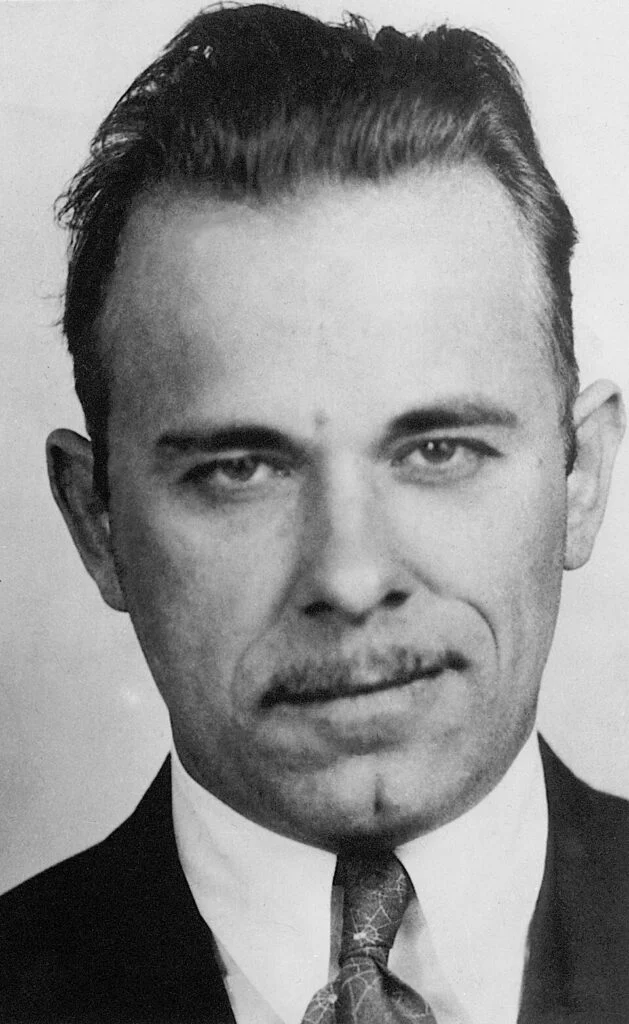
On the evening of July 22, 1934, America’s most wanted man went to the movies.
John Dillinger — bank robber, FBI public enemy number one, a man who had escaped from jail twice and become something of a folk hero during the Depression — decided to see a film at the Biograph Theater on Lincoln Avenue in Lincoln Park. The movie was Manhattan Melodrama starring Clark Gable. He went with two women, one of whom had already tipped off the FBI about his whereabouts.
Federal agents and local police surrounded the theatre and waited.
When Dillinger walked out after the film and turned into the alley alongside the building, the agents moved in. Dillinger reached for his gun. He was shot three times and died in the alley within minutes.
The Biograph Theater still stands on Lincoln Avenue. It’s now a theatre called the Victory Gardens. The alley where Dillinger died is right next to it, unmarked except for a mural that most people walk past without a second glance.
Locals who know the story still point it out to visitors. Most visitors have no idea they’re standing in one of the most famous crime scenes in American history.
The kicker: The woman who tipped off the FBI — Anna Sage, known in the press as “The Woman in Red” — was a Romanian immigrant who had been promised her deportation would be cancelled in exchange for the information. The FBI took Dillinger and deported her anyway.
10. Bronzeville Is Built on Top of a Civil War Prison Camp
If you walk through Chicago’s Bronzeville neighbourhood today, past the Lake Meadows apartments, the shops on Cottage Grove, the families out on Martin Luther King Drive, nothing tells you what happened here. There’s a single bronze plaque at 32nd and King Drive. That’s it.
This was Camp Douglas.
During the Civil War, roughly 60 acres between 31st Street and 33rd Place, from Cottage Grove Avenue to what is now Martin Luther King Drive, held one of the largest Union prisoner-of-war camps in the country. At its peak the camp crammed around 12,000 Confederate prisoners into a space designed for 8,000. Over the course of the war, nearly 30,000 prisoners passed through.
Conditions were savage. Typhoid, smallpox, cholera, and scurvy ripped through overcrowded barracks. The camp earned the nickname “the North’s Andersonville” after the infamous Confederate prison in Georgia. The official death toll sits around 4,454, but historians believe the true number is higher. One in every seven prisoners held there never left alive.
The dead were initially buried at Chicago’s City Cemetery, which sat on land that is now the southern end of Lincoln Park. (Yes, that Lincoln Park. The one with the zoo, the joggers, and 20 million visitors a year. There are potentially thousands of bodies still beneath those baseball fields. But that’s a whole other story.)
When the war ended the camp was dismantled. The bodies were later relocated to Confederate Mound at Oak Woods Cemetery at 67th and Cottage Grove, which is believed to be the largest mass grave in the Western Hemisphere. Around 4,275 names are listed on the monument. Researchers estimate the true number buried there is closer to 6,000.
Then came the Great Migration. Hundreds of thousands of Black Americans moved north on the same Illinois Central Railroad that had once transported Confederate prisoners to Camp Douglas. They settled in the area around the former camp and built Bronzeville, a neighbourhood that became the centre of Black culture, business, and music in Chicago. The last thing on anyone’s mind was the history of a Confederate prison buried beneath their streets.
The Camp Douglas Restoration Foundation has been running archaeological digs at the site since 2012, and they keep finding things. Building foundations, tools, military artefacts. The camp is still down there, under the apartments and the pavement and the park.
So here’s the kicker: a neighbourhood built by Black Americans who came north seeking freedom sits directly on top of a prison camp where men fought to keep them enslaved. That history is still in the ground. Nobody put up a museum. There’s barely a sign. And most Chicagoans have never heard of it.
11. The 1992 Loop Flood — And Nobody Noticed Until It Was Too Late
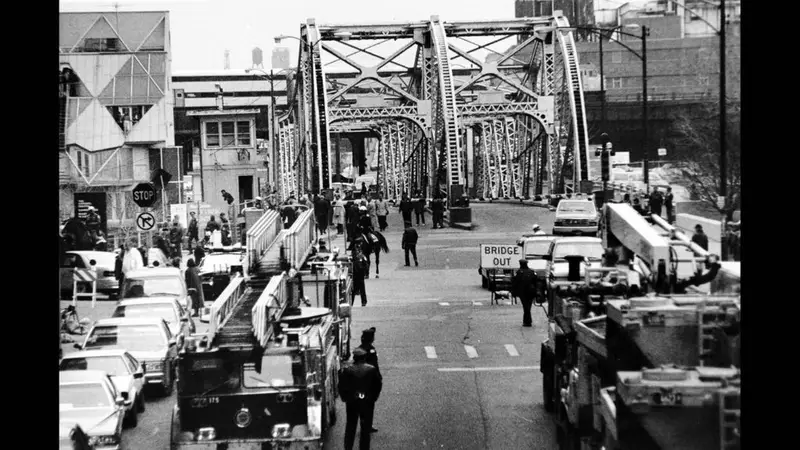
On April 13, 1992, the basements and underground spaces of nearly every major building in the Chicago Loop began filling with water. Trading floors at the Chicago Board of Trade and the Mercantile Exchange flooded. Electrical systems failed. Billions of dollars worth of equipment was destroyed or damaged. The entire underground infrastructure of one of the most important business districts in America was underwater.
The cause was a tunnel that most Chicagoans didn’t even know existed.
Beneath the Loop runs a network of old freight tunnels — 60 miles of narrow underground passages built in the early 1900s to deliver coal and goods to downtown businesses. The tunnels had been largely forgotten and unused for decades. When contractors driving wooden pilings into the Chicago River near the Kinzie Street Bridge accidentally punctured the tunnel wall, water began pouring in.
The leak was discovered and reported to city officials weeks before the flood. Nothing was done.
By the time anyone realised what was happening the tunnels were completely full and water was rising into basements across the Loop. The subway lines shut down. Power was cut to prevent electrocution. Mayor Daley was in Japan on a trade mission.
It took weeks to pump out the water and months to repair the damage. The total cost ran to nearly a billion dollars.
The kicker: The city was warned. A contractor noticed the damage to the tunnel wall in April and reported it to the city. The repair estimate was $10,000. The city delayed. The flood that followed cost close to a billion dollars to fix.
12. Chicago Had an Entire Secret Underground Railroad — For Cargo
Most Chicagoans have never heard of the Chicago Tunnel Company. Which is exactly how it was designed.
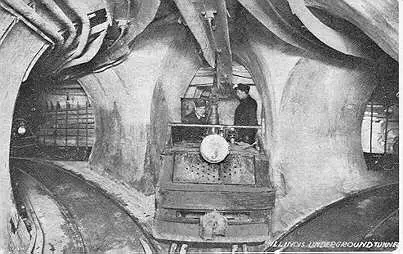
Beginning in 1899, a private company quietly dug a network of narrow freight tunnels beneath the entire Loop — 60 miles of underground passages running 40 feet below street level, connecting nearly every major building in the downtown area. The tunnels were just six feet tall and used small electric trains to deliver coal, remove ash and waste, transport mail, and move goods between buildings and railway freight cars without ever appearing on the street above.
At its peak the system had over 150 small electric locomotives and thousands of freight cars moving through the tunnels 24 hours a day. Department stores, office buildings, hotels, and businesses received deliveries entirely underground. The streets above had no idea any of it was happening.
The system operated for decades before trucks made it economically unviable and it was shut down in 1959. The tunnels were sealed and largely forgotten.
Until 1992 when a contractor accidentally punctured one of them and flooded the entire Loop.
The tunnels still exist today, running beneath the streets of downtown Chicago, sealed and silent. Some have been used for fiber optic cables. Most are just sitting there in the dark, completely intact, underneath the feet of millions of people who have no idea they’re there.
The kicker: The tunnel system was dug entirely in secret. The company obtained permits to install telephone conduits — which were technically true — and simply didn’t mention the part about building a full underground railroad beneath the entire city.
13. Chicago Had a Mothman — And It Was Witnessed by Dozens of People
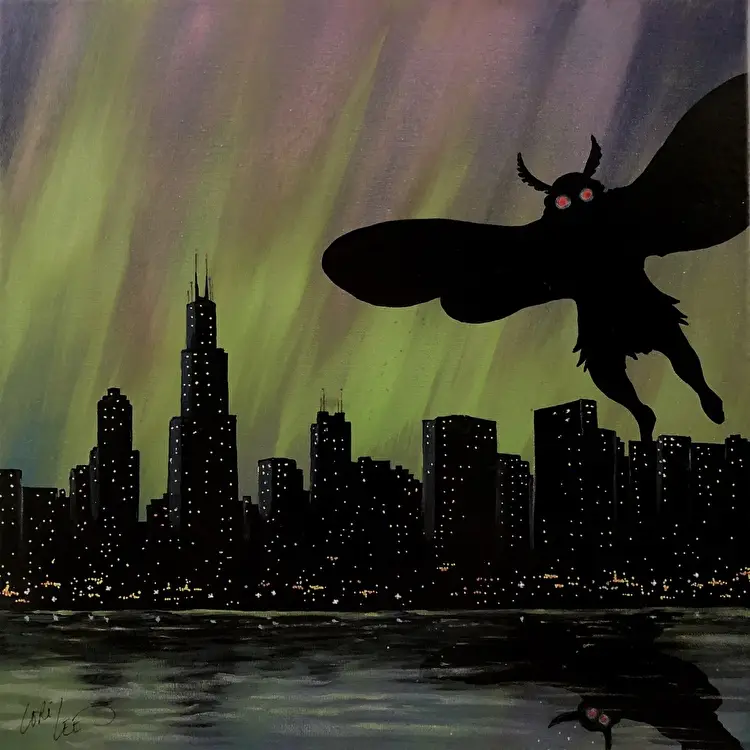
Most people associate the Mothman with Point Pleasant, West Virginia. The winged creature that allegedly appeared before the collapse of the Silver Bridge in 1967 became one of America’s most famous cryptid legends.
But in 2017 Chicago had its own Mothman sighting. Then another. Then another.
Between April and October of 2017 over 55 separate reports came in from across the city describing the same thing — a large winged humanoid creature, black or dark grey, standing between six and eight feet tall with a wingspan of up to fifteen feet and glowing red eyes. Sightings came from the lakefront, Millennium Park, the suburbs, and multiple Chicago neighbourhoods. Witnesses included security guards, teachers, a traffic reporter, and a Chicago police officer.
The reports were credible enough and numerous enough that they were investigated by researchers from the Mutual UFO Network and covered by the Chicago Tribune, NPR, and outlets across the country.
Nobody ever identified what people were seeing. Theories ranged from a large owl to a misidentified great blue heron to something significantly harder to explain. The sightings stopped as suddenly as they started.
The city has never officially acknowledged any of it.
The kicker: The sightings clustered around the Pilsen and Bridgeport neighbourhoods on the south side, and along the lakefront near Montrose. If you know anyone who was in Chicago in the summer of 2017 and spends a lot of time outdoors — ask them if they saw anything unusual. You might be surprised.
14. A Man Crashed His Boat, Claimed an Entire Neighbourhood as His Own Country — and Won
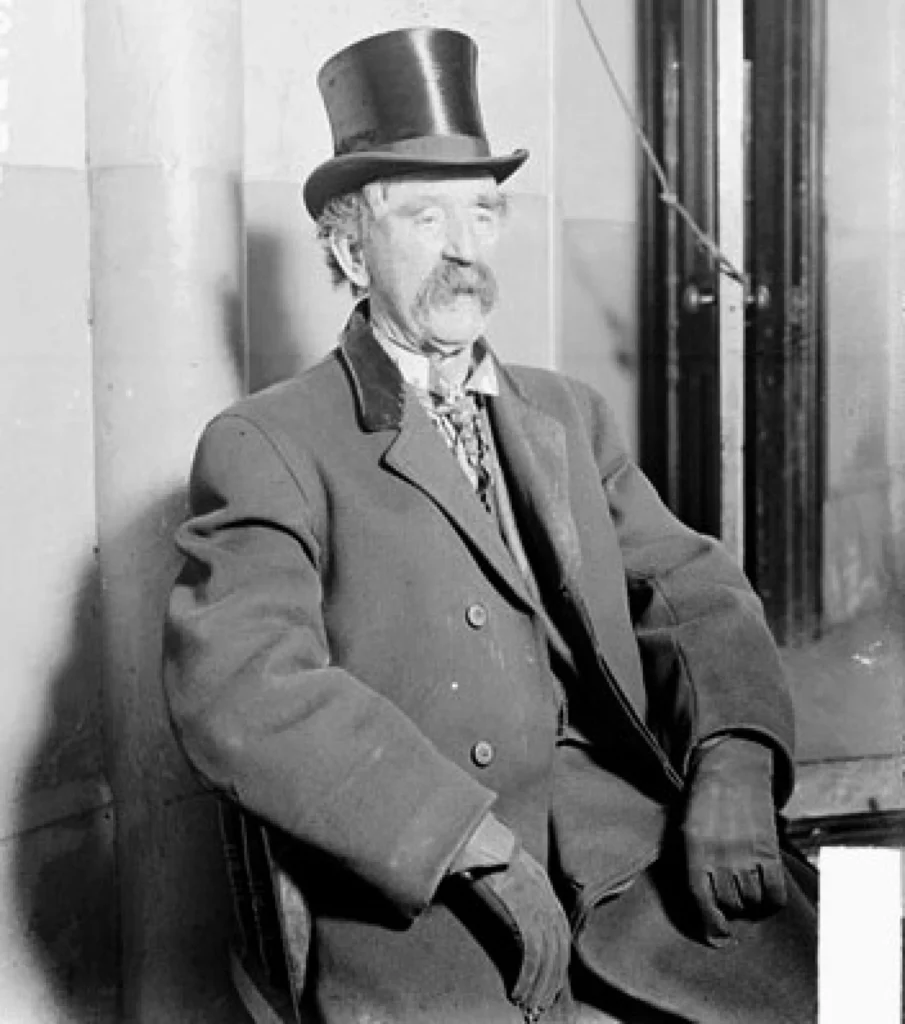
In 1886 a man named George Wellington Streeter was sailing his steamboat on Lake Michigan when he ran aground on a sandbar just off the shore near what is now Chicago’s Gold Coast neighbourhood. Unable to free the boat, Streeter did what any reasonable person would do in that situation.
He declared the sandbar a sovereign territory independent of both Chicago and the state of Illinois, named it the District of Lake Michigan, and appointed himself Military Governor.
Then he started charging rent.
As rubble and landfill from construction projects across the city was dumped around his grounded boat over the following years, the sandbar grew into a substantial piece of land. Streeter sold plots to settlers, established his own legal system, and refused to recognise the authority of Chicago police who came to remove him.
He fought off eviction attempts for over 30 years. There were gunfights. There were legal battles that went on for decades. Streeter was arrested multiple times and simply came back. His wife Ma Streeter was arguably more formidable than he was — she once fought off a sheriff’s deputy with a frying pan.
Streeter eventually lost his battle for the land in the courts. But he won something more lasting.
The entire neighbourhood built on that landfill — one of the most expensive pieces of real estate in Chicago — is called Streeterville to this day. Named after a man who had absolutely no legal claim to any of it.
The kicker: The man who actually owned the land and spent decades fighting Streeter in court — Kellogg Fairbanks — got a single street named after him. Streeter, who owned nothing, got an entire neighbourhood.
15. Lincoln Park Zoo Is One of the Last Free Zoos in America — And Almost Nobody Knows Why
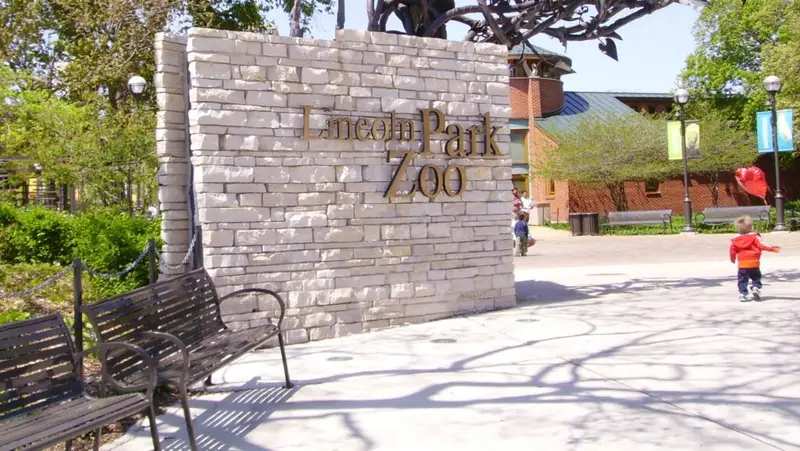
Lincoln Park Zoo has been open since 1868, making it one of the oldest zoos in America. It sits on some of the most valuable real estate in the entire country — prime Lincoln Park lakefront land that would be worth an almost incomprehensible amount of money if it were ever sold or developed.
And it has been free to enter every single day since it opened.
Not free with a suggested donation. Not free for members. Free. No ticket required. No reservation needed. Walk in, see the animals, walk out. Has been that way for over 150 years.
The reason comes down to the original 1869 agreement under which the zoo was established — the land was designated as public parkland in perpetuity, and the zoo was built on the understanding that it would remain accessible to all Chicagoans regardless of income. That founding principle has held through two world wars, the Great Depression, multiple recessions, and every budget crisis the city has ever faced.
Chicago has quietly maintained one of the great democratic institutions in American urban life — a world class zoo in the middle of one of its most expensive neighbourhoods, completely free, every single day — and most visitors from out of town simply assume there must be a catch.
There isn’t.
The kicker: The zoo receives no government funding for its operating budget. It is entirely funded by donations, memberships, and revenue from events. It chooses to remain free. Every single day.
Chicago: The City That Sounds Made Up
Every city has its history. But Chicago has something different — a particular genius for doing things that shouldn’t be possible, surviving things that shouldn’t be survivable, and then quietly getting on with it like nothing happened.
A city that lifted itself into the air. That reversed a river. That built a secret underground railroad beneath its own streets and forgot about it until it flooded everything. That had a Mothman. That gave an entire neighbourhood to a man who owned none of it.
And through all of it — the fires, the floods, the mayors with bulldozers, the submarines, the bodies under the park — the zoo stayed free.
If you’ve lived here your whole life, none of this surprises you. If you’re visiting for the first time, welcome. It’s always like this.