
Look out your window.
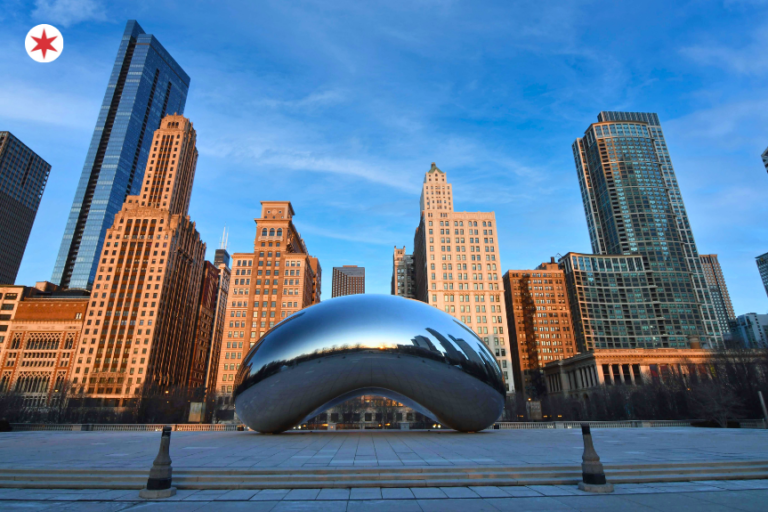
If you live here, you already know we have the best skyline in the world. New York can keep its pencil towers, and Dubai can keep its desert monoliths. We invented the skyscraper, and nobody does it better than us.
But if you thought our skyline was “finished,” you are in for a massive surprise.
Over the next few years, the architectural heartbeat of our city is getting a multi-billion-dollar facelift. If you’ve been stuck in traffic on the Kennedy recently, you’ve probably seen the cranes dominating the clouds. Entire neighborhoods are being built from scratch.
Here is the kicker: We aren’t just talking about a few new luxury condos in River North.
We are talking about new Chicago skyscrapers that will scrape the stratosphere, massive tech hubs, and the long-awaited redemption of the most infamous “hole in the ground” in Chicago history.
Later in this article, I am going to reveal the jaw-dropping $7 billion megaproject that is about to completely erase the massive sea of parking lots on the West Side.
But first, we need to talk about the lakefront.
If you want to know exactly what those cranes in the sky are building right now, keep reading. Let’s dive deep into the most incredible megaprojects currently rising across Chicago.
1. 400 Lake Shore: The Redemption of the Spire
If you have lived in Chicago for more than a decade, you know the legend of the Chicago Spire.
It was supposed to be a 2,000-foot twisting marvel. Instead, the 2008 financial crisis turned it into a giant, embarrassing, 76-foot-deep hole in the ground right off LSD.
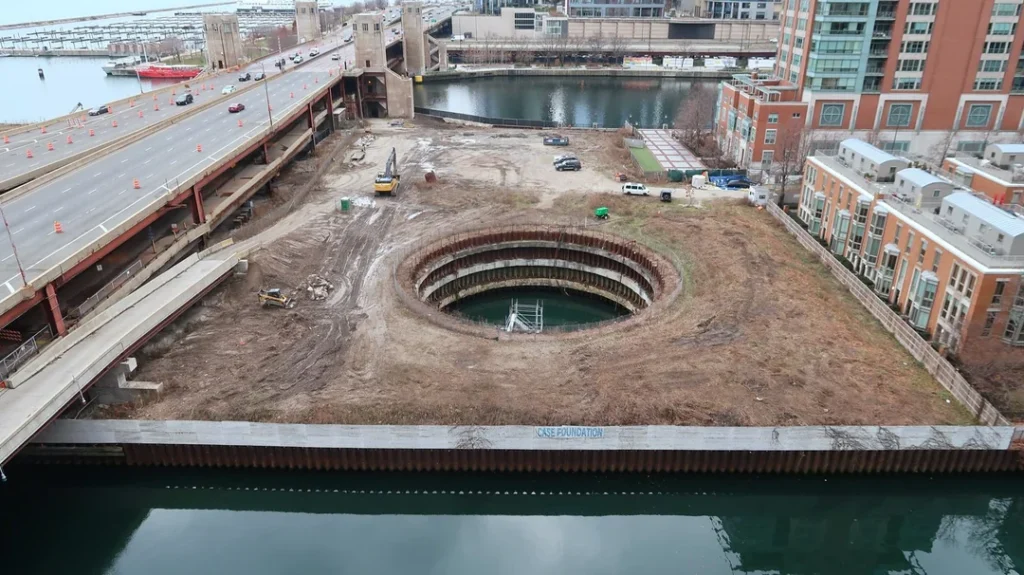
For years, it just sat there. We all looked at it. We all made jokes about it.
But not anymore.
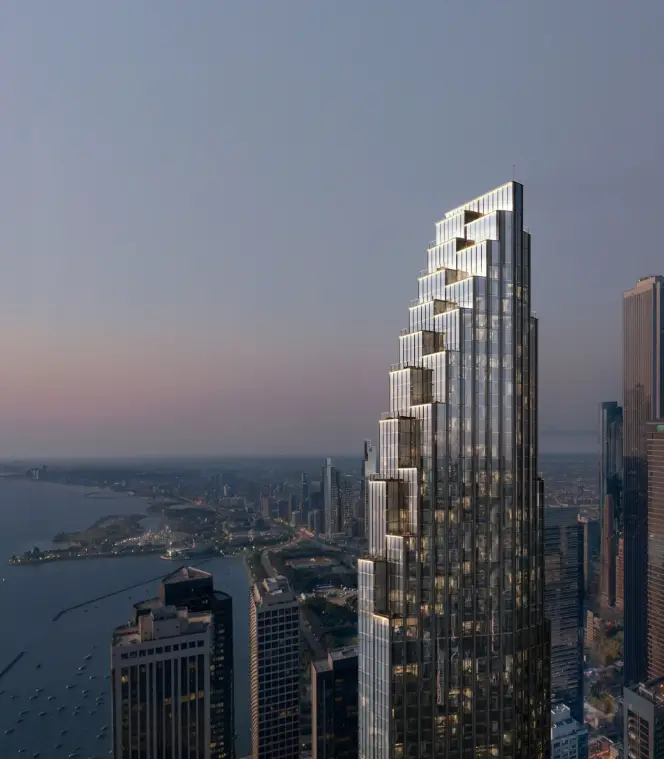
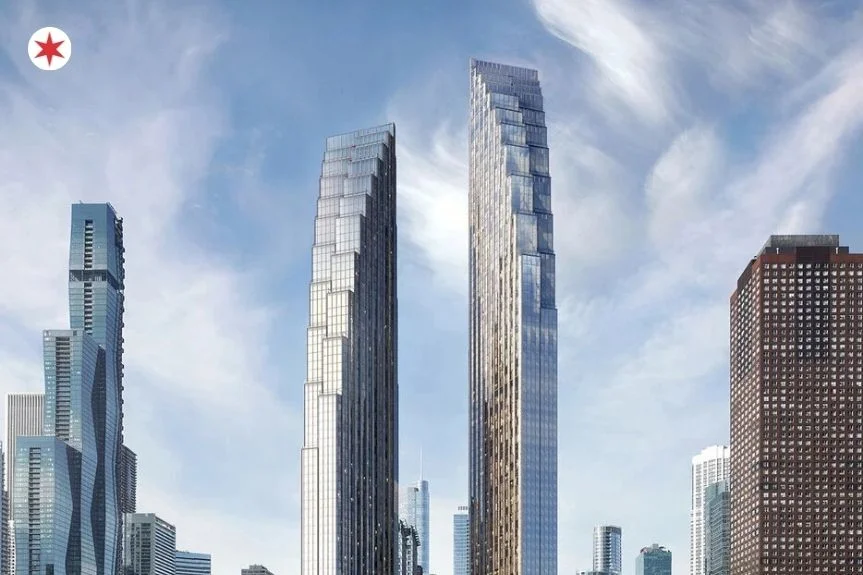
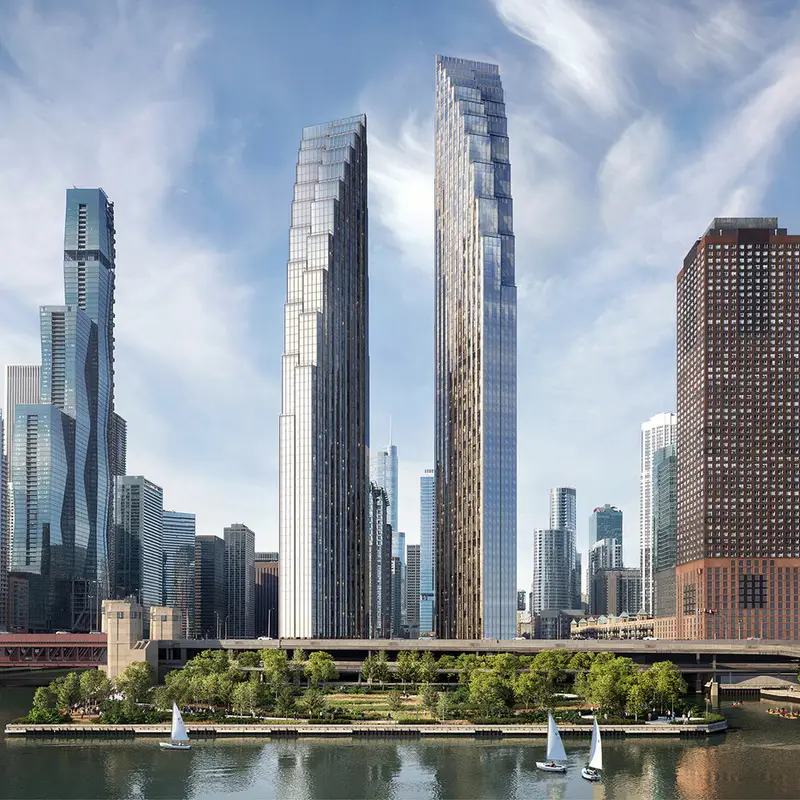
Rising from the ashes of that failed project is 400 Lake Shore. Developed by Related Midwest and designed by SOM (the same local legends behind the Sears Tower and the Hancock), this is the luxury development our lakefront deserves.
Let me explain what is happening right now.
If you drive down Lake Shore Drive today, you can see the North Tower absolutely rocketing into the sky. Crews are pouring concrete high into the skyline, and that stunning glass curtain wall is following right behind it.
What you need to know about the North Tower:
- The Height: It is soaring toward its final height of 72 stories (roughly 858 feet).
- The Look: It features a breathtaking, tapering facade with cascading setbacks designed to look like a waterfall.
- The Vibe: It will house 635 apartments, world-class amenities, and sprawling outdoor terraces.
But wait, what about the actual ground level?
Great question. The developers aren’t just building a tower; they are building a massive public amenity. Construction includes the long-awaited 3.3-acre DuSable Park, which will finally connect the Riverwalk all the way to Lake Michigan.
The North Tower is expected to welcome its first residents in 2027. The Spire hole is finally history.
2. Google’s Thompson Center: Saving the Spaceship
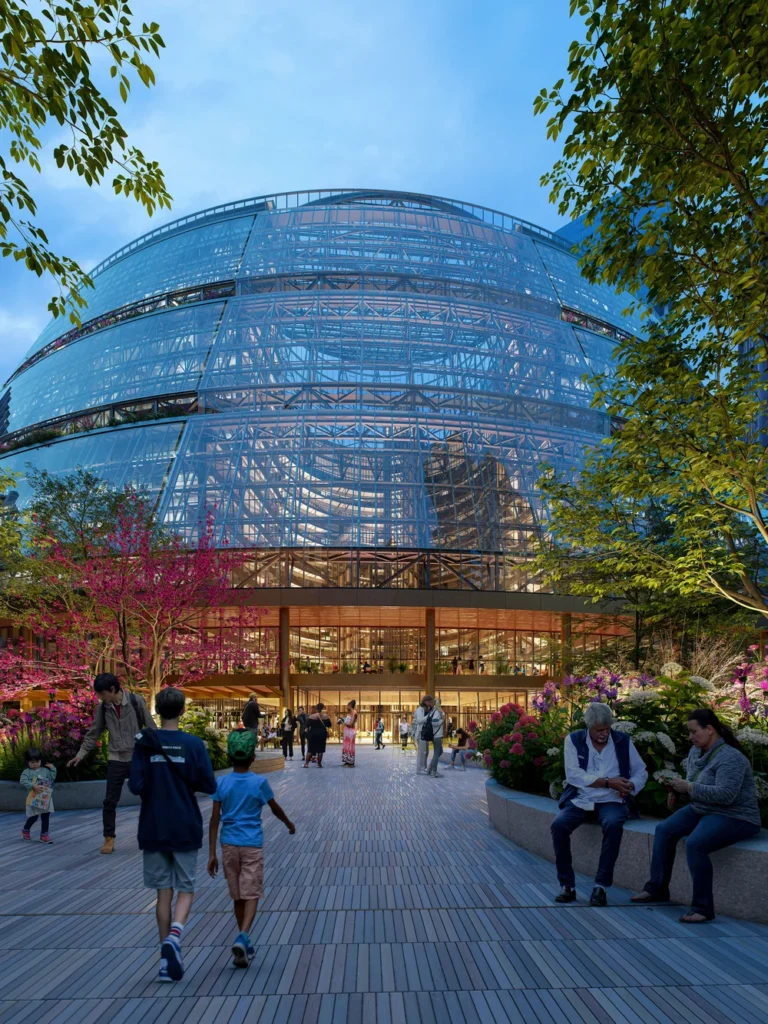
Meanwhile, right in the heart of the Loop, a historic rescue mission is underway.
We all know the James R. Thompson Center. It’s the giant, retro, spaceship-looking building at Clark and Lake.
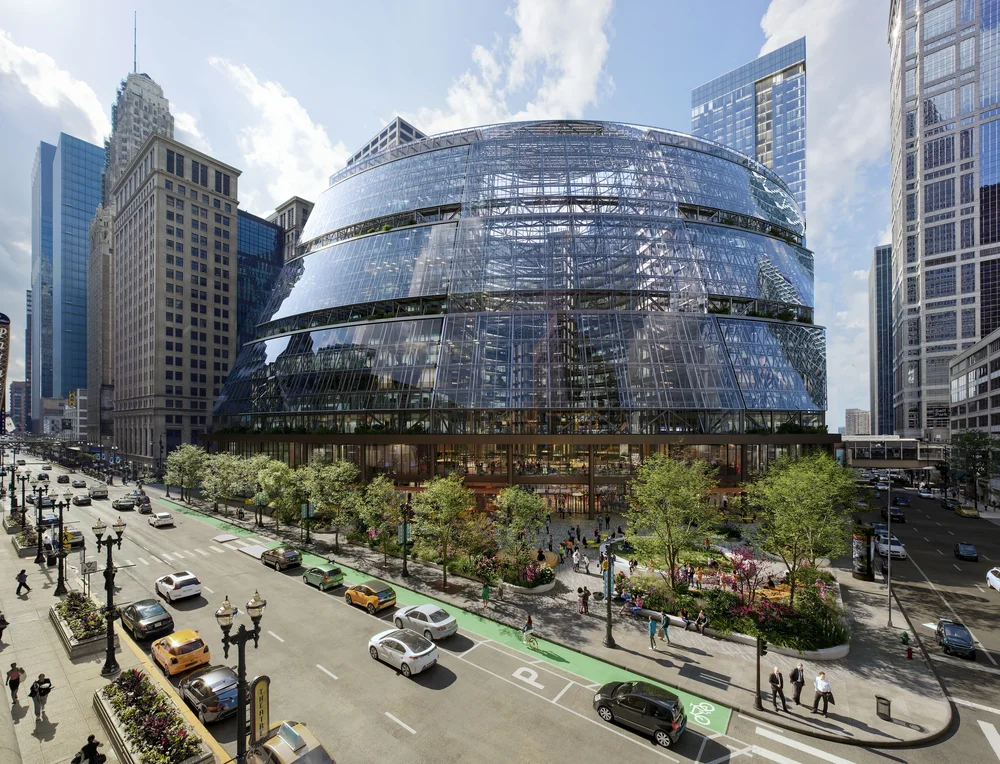
If you grew up here, you probably remember going to the incredibly loud food court, or waiting in line at the DMV while staring up at those iconic, dusty red-and-blue panels. For years, the city debated tearing it down. It was inefficient, expensive to cool, and showing its age.
Then, Google stepped in.
Google bought the building and is currently executing one of the largest corporate investments in downtown Chicago history.
Consider this:
The Loop has struggled with empty office space since 2020. Google turning this iconic building into its Midwest headquarters is going to bring thousands of workers back into the heart of the city.
Here is what is happening right now:
The massive renovation is in full swing. They have been stripping the old exterior to replace it with a sleek, modern, energy-efficient glass facade. They are upgrading the massive atrium and completely reimagining the ground-floor retail.
It preserves the wild, historic shape of the building while bringing it firmly into the 21st century. When it opens in 2026/2027, it’s going to completely revitalize the LaSalle Street corridor.
3. The 1901 Project: A $7 Billion West Side Miracle
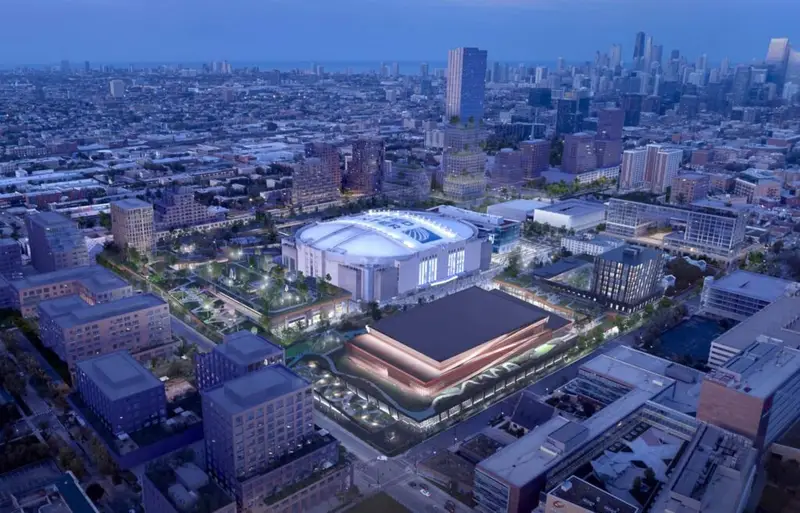
Remember that massive project I teased in the introduction?
This is it. And it might be the most important development in modern Chicago history.
If you have ever gone to a Bulls or Blackhawks game, you know the drill. You drive to the UC, you park in a massive, freezing, lifeless surface lot, you walk a mile in the wind to watch the game, and then you sit in traffic trying to leave.
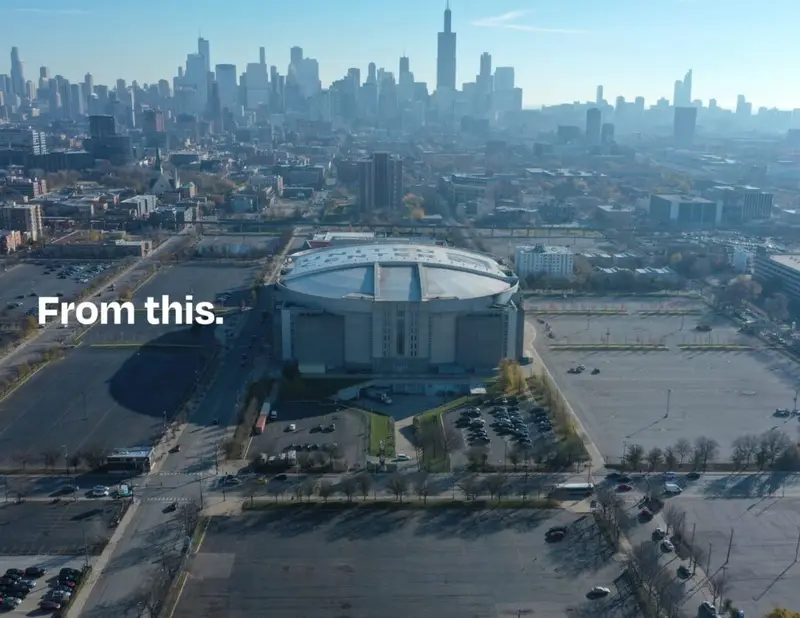
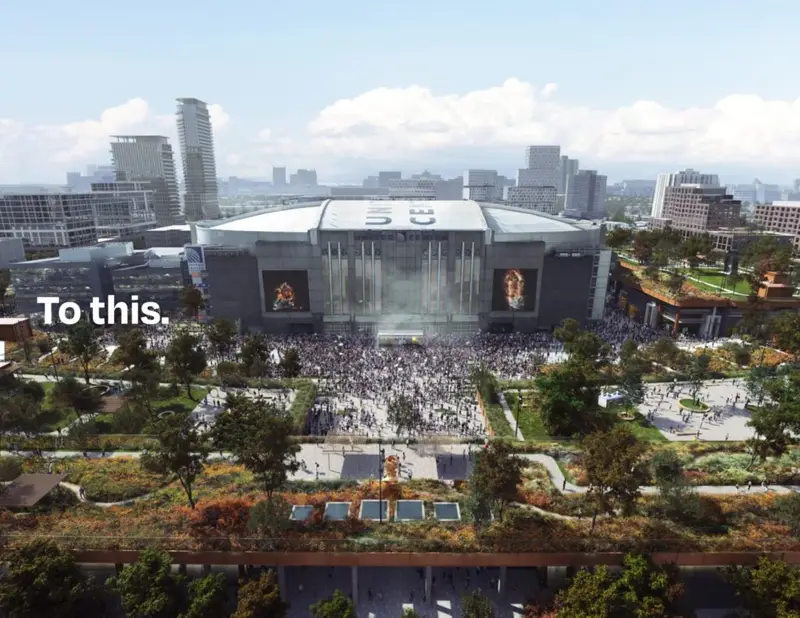
That is all about to change.
The Reinsdorf and Wirtz families have teamed up to launch The 1901 Project.
This is a jaw-dropping $7 billion mixed-use megaproject. Their goal? To erase 55 acres of surface parking lots and replace them with a vibrant, thriving neighborhood.
Imagine this:
Instead of a sea of asphalt, you walk out of the United Center into a bustling, pedestrian-first district filled with:
- Over 5,000 mixed-income housing units.
- A brand-new 6,000-seat music hall.
- A boutique hotel and street-level retail.
- 10 acres of elevated public parks and green space.
But what about the parking?
Don’t worry, they aren’t taking away the spots. The plan includes massive, modern parking garages hidden beneath the green spaces and new buildings, so you won’t have to circle the block looking for street parking.
Because the project is so massive, it will be built in phases over the next decade. But the master plan is officially in motion. The United Center is finally becoming a neighborhood, not just an island in a sea of concrete.
4. Foundry Park: The Death (and Rebirth) of Lincoln Yards
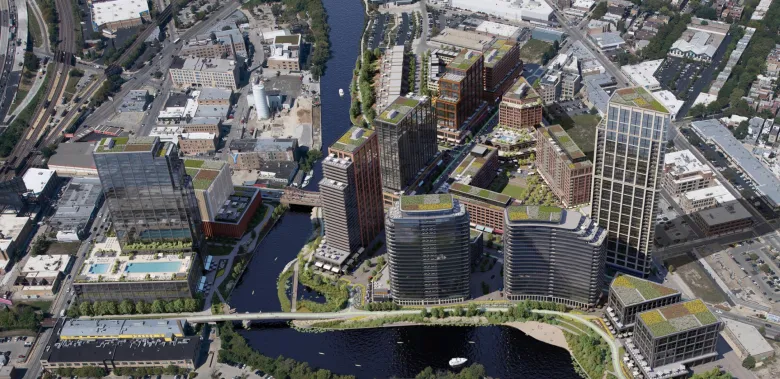
If you live anywhere near Lincoln Park or Bucktown, you already know the drama surrounding this massive plot of land.
For 130 years, this was the industrial heart of the North Side—the home of the old Finkl Steel plant. Then, Sterling Bay bought it, named it “Lincoln Yards,” and promised a $6 billion utopia of massive office towers.
We all saw the shiny renderings. We all heard the promises.
But here is what actually happened:
The post-2020 office market completely collapsed. The grand vision for Lincoln Yards stalled out, and the massive 53-acre site was split in half.
Enter Foundry Park.
In 2026, local developer JDL took over the northern 31 acres of the site and completely tossed the old playbook out the window. They realized Chicago doesn’t need more empty office space; we need housing and neighborhood infrastructure.
What you need to know about Foundry Park:
- The Vibe: They are pivoting to a residential-first neighborhood with roughly 3,700 new apartments, condos, and townhomes.
- The Infrastructure: They just secured a massive $200+ million TIF funding agreement to build out the street grid, including extending Southport Avenue down to Cortland Street.
- The Amenities: Phase one includes a 180-key hotel, protected bike lanes, and a brand-new extension of the Chicago Riverwalk.
Groundbreaking for the first phase is targeted for late 2026. The original Lincoln Yards dream might be dead, but the Foundry Park era is officially breathing life back into the North Branch.
5. Bronzeville Lakefront: The Michael Reese Redemption
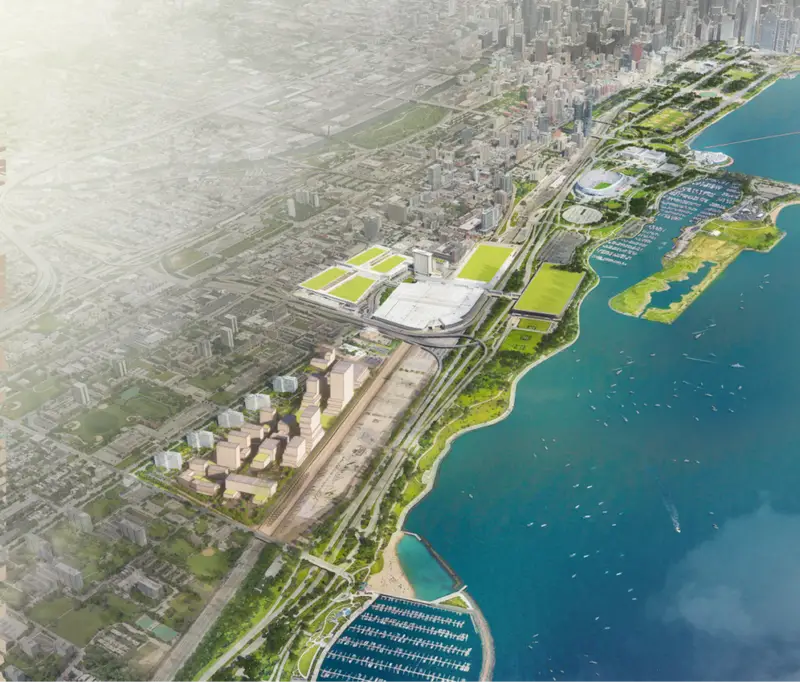
Shifting our focus to the South Side, there is a piece of land with a very complicated history.
Sitting on 48 prime acres just south of McCormick Place, the former Michael Reese Hospital site has been sitting mostly vacant for over a decade. At one point, it was supposed to be the Olympic Village for the failed 2016 Chicago Olympics bid.
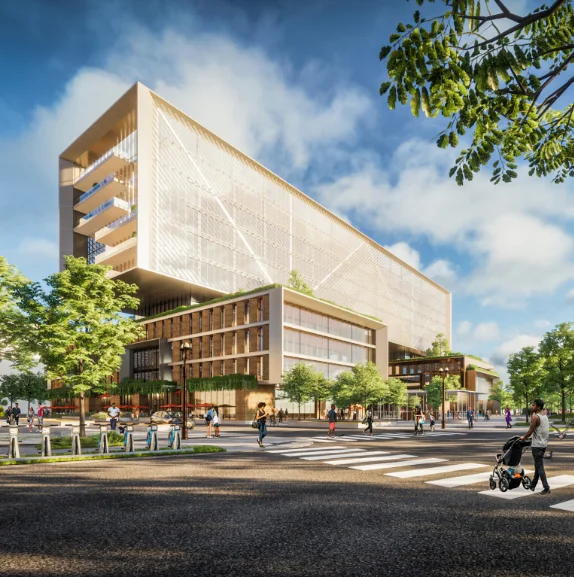
For years, it was just another empty lot with a ton of broken promises.
That narrative is finally changing right now.
The $3.8 billion Bronzeville Lakefront megaproject is officially hitting its stride in 2026. Led by a team called GRIT, this isn’t just about throwing up a few apartment buildings. This is about building a global hub for life sciences and healthcare innovation.
Picture this:
They are transforming an empty lot into a multi-cultural epicenter that will eventually hold up to 7 million square feet of commercial and residential space.
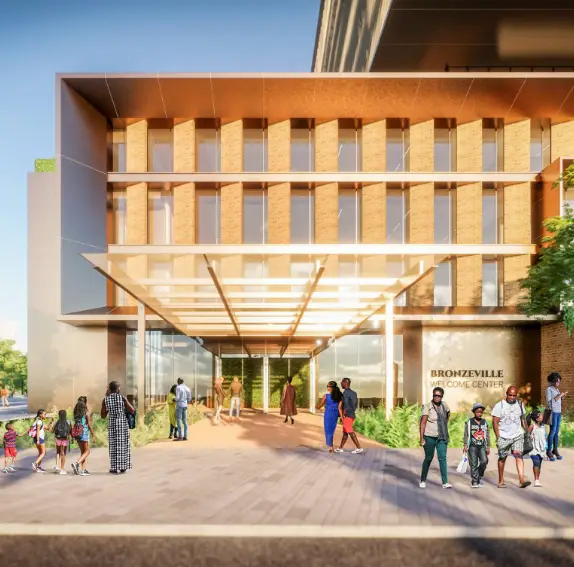
Here is what is happening on the ground today:
Crews are currently wrapping up a massive $90 million infrastructure phase. They are laying down an entirely new street grid, planting trees, installing bike lanes, and building a stunning 2-acre public park that is slated to open in late 2026.
Once the streets are paved, the vertical construction begins, starting with the Bronzeville Innovation Center. It is a massive, long-overdue win for the South Side lakefront.
6. Tribune East Tower: The Supertall Dream (Or Delusion?)
I couldn’t write an article about the future of the Chicago skyline without talking about the elephant in the room.
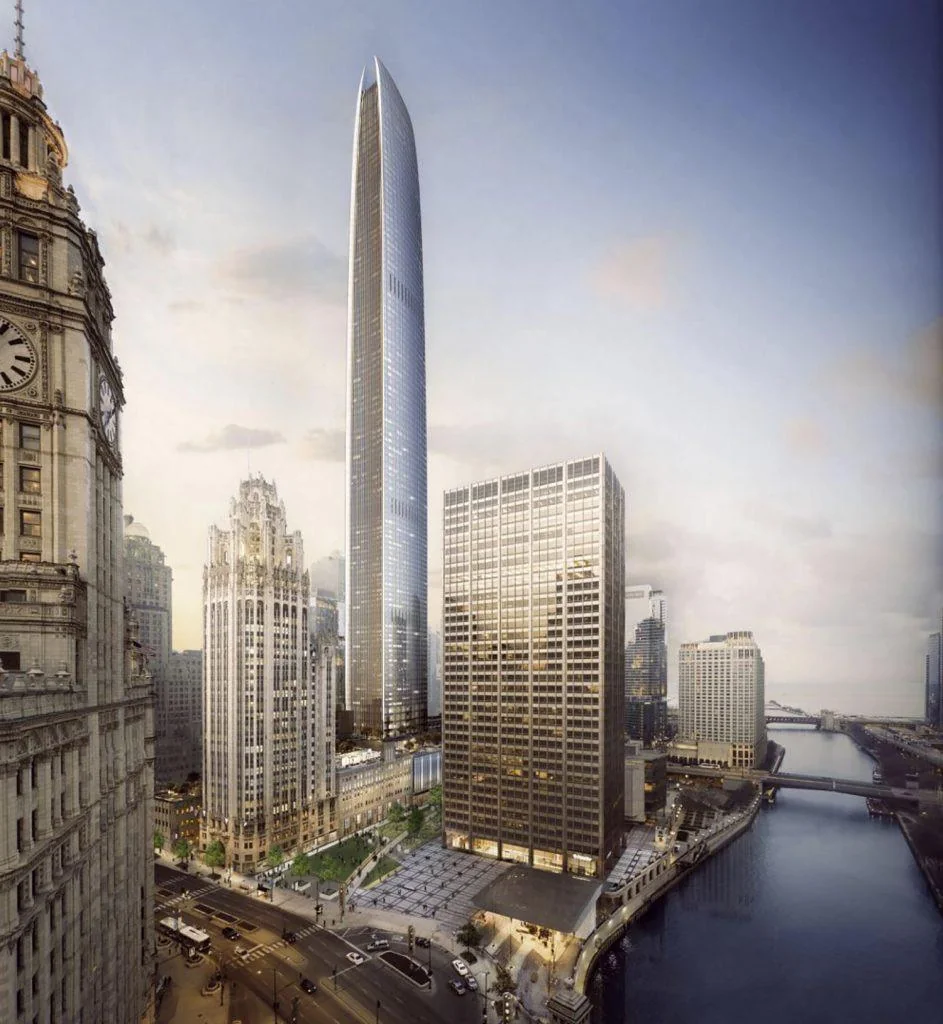
The Tribune Tower is already one of the most iconic, gothic, and historic buildings in the world. But right next door, developers have planned something that would literally redefine our city.
Enter the Tribune East Tower.
If completed as envisioned, this will be a 1,442-foot supertall skyscraper.
Let that sink in for a second. That is exactly eight feet shy of the Sears Tower roofline.
But there is a catch:
This building was approved by the city way back in May 2020. Yet, if you walk past the site today in 2026, you won’t see any cranes. You won’t see any concrete being poured.
Why?
Because building a supertall skyscraper in a post-pandemic economy is incredibly difficult. Between rising construction costs, high interest rates, and aldermanic red tape, the project has been repeatedly delayed.
So, will it actually get built?
That is the billion-dollar question. Designed by Adrian Smith + Gordon Gill (the same architects behind the Burj Khalifa), this slender, futuristic glass tower remains an incredibly ambitious dream. It would instantly become the second-tallest building in Chicago.
Local architecture nerds are holding their breath, hoping the developers can finally secure the financing to put shovels in the dirt. Until then, it remains the most beautiful building in Chicago that doesn’t actually exist yet.
7. The 78: The South Loop’s Billion-Dollar Canvas
If you have driven down Roosevelt Road anytime in the last twenty years, you know the spot.
It is a massive, 62-acre empty plot of land sitting right on the South Branch of the Chicago River. For decades, it was just a vacant railyard collecting weeds.
Developers called it “The 78” because they wanted to build a brand-new, ground-up neighborhood that would become Chicago’s 78th official community area.
We heard rumors for years. We heard the White Sox might move there. We heard tech companies were taking over.
Here is the reality of what is actually happening right now.
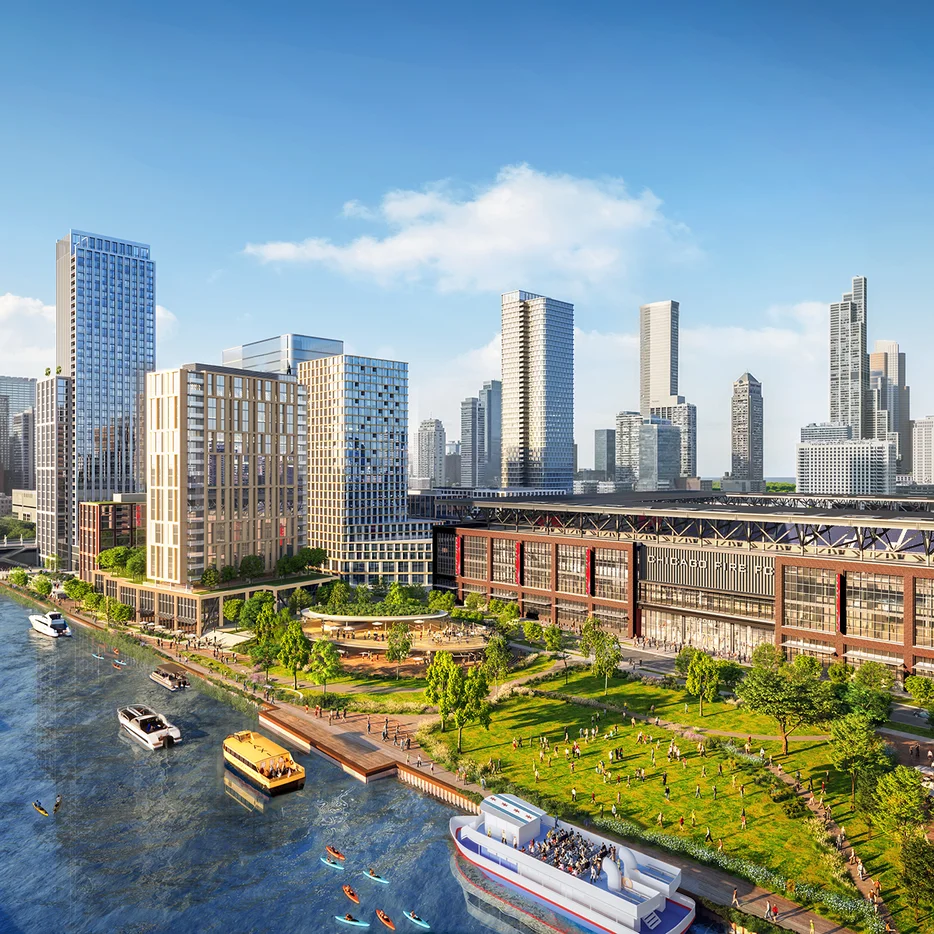
The soccer fans won the first round. In March 2026, the Chicago Fire officially broke ground on McDonald’s Park, a privately funded, $750 million, 22,000-seat stadium right in the heart of The 78.
Think about it:
They are building a world-class, open-air stadium with a brick-and-steel facade that pays homage to Chicago’s industrial roots.
But the stadium is just the anchor.
Crews are currently laying the groundwork for a massive half-mile extension of the Chicago Riverwalk. They are building new roads to connect the South Loop directly to Chinatown. When the stadium opens for the 2028 MLS season, it won’t just be a place to watch a game; it will be the epicenter of an entirely new zip code.
8. Halsted Pointe: Goose Island Finally Grows Up
For decades, Goose Island was never a place you went to hang out.
It was a place for industrial warehouses, the massive Greyhound bus maintenance facility, and the occasional brewery tour. It was concrete, trucks, and traffic.

That era is officially over.
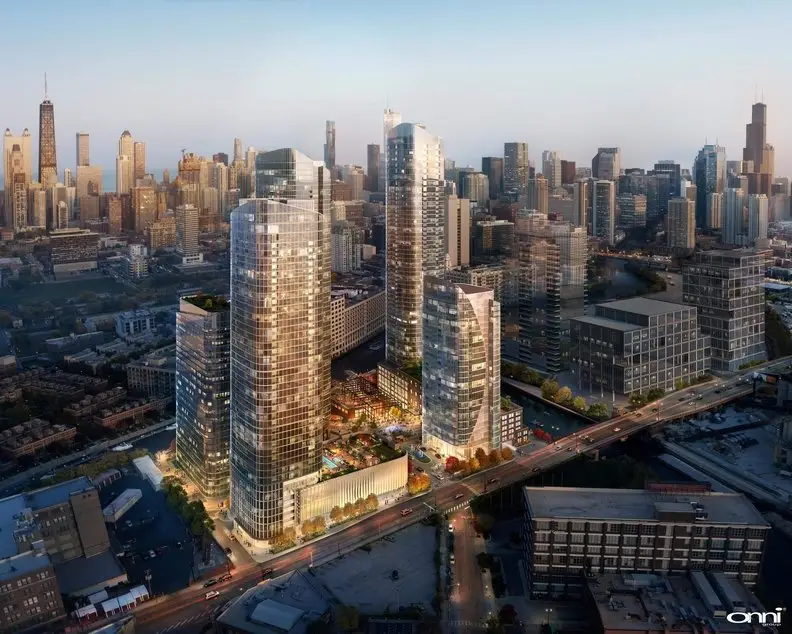
Right now, on the southern tip of the island, a massive 5-tower megaproject called Halsted Pointe is officially going vertical.
Let me explain.
In May 2026, the city issued the tower crane permit for Phase 1. The old Greyhound depot has been completely wiped off the map, and crews are pouring the foundation for a stunning 46-story glass skyscraper.
What you need to know:
- The Scale: When all five towers are finished, Halsted Pointe will bring over 2,600 residential units to the island.
- The Amenities: Phase 1 alone includes a massive outdoor deck, a wellness spa, and over 13,000 square feet of retail space.
- The Vibe: They are building an entirely new pedestrian riverwalk, turning the industrial waterfront into a lush, green, public amenity.
Goose Island is no longer just a shortcut to get around traffic on Halsted. It is about to become one of the most exclusive waterfront neighborhoods in the entire city.
9. Pearl Fulton Market: The West Loop Skyscraper Boom
Remember when Fulton Market was just meatpackers, forklifts, and the smell of wholesale fish at 4:00 AM?
If you told a local twenty years ago that the West Loop would become the most expensive and trendy neighborhood in the Midwest, they would have laughed you out of the room.
For a while, the development in Fulton Market was restricted to mid-rise boutique office buildings.
But the zoning laws changed, and the skyline followed.
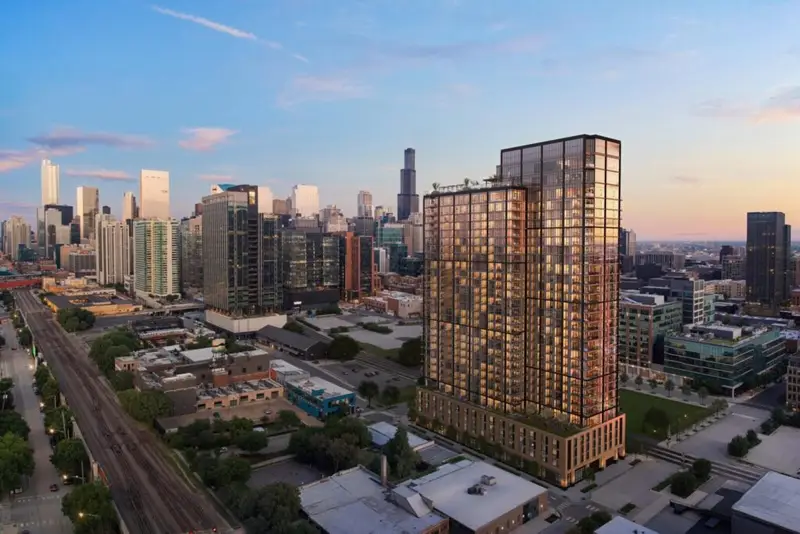
Just a few weeks ago, construction crews officially topped out Pearl Fulton Market at 370 N. Morgan Street.
This isn’t a boutique loft. This is a massive, 32-story, 539,000-square-foot luxury skyscraper right in the middle of the neighborhood.
But here is the crazy part:
Designed with a sleek, timeless look inspired by Mies van der Rohe, this tower proves that the West Loop is no longer just a restaurant district. It is a high-rise destination.
The amenities are borderline absurd:
- A 30th-floor pool deck with sweeping, unobstructed views of the Loop.
- Custom golf simulators and coworking spaces.
- Nearly 500 apartments (including 99 affordable units).
With a target opening of Spring 2027, Pearl Fulton Market is a massive statement. The cranes in the West Loop aren’t going anywhere anytime soon.
10. Bally’s Chicago: The River West Casino Goliath
You didn’t think we could write an entire series about Chicago megaprojects without talking about the permanent casino, did you?
For the last couple of years, we’ve all been hitting the tables at the temporary setup inside the historic Medinah Temple in River North. It’s been fun, but it was always just a placeholder.
The real show is happening over in River West.
For decades, the massive Chicago Tribune Freedom Center printing plant sat at Chicago Avenue and Halsted. It was a gritty, industrial relic.
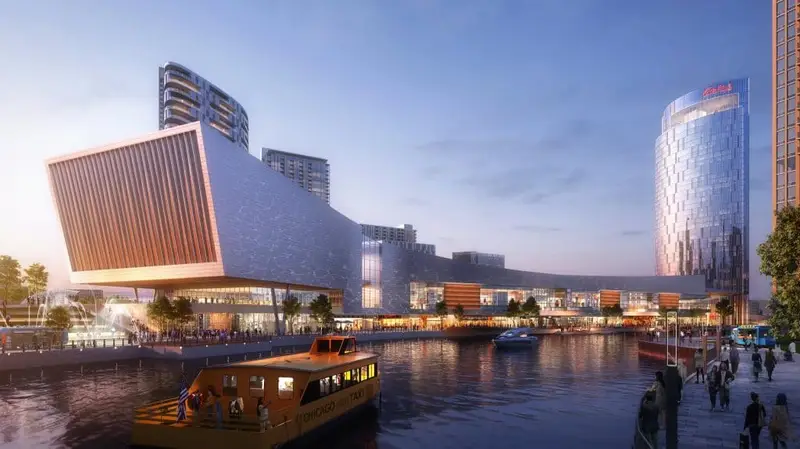
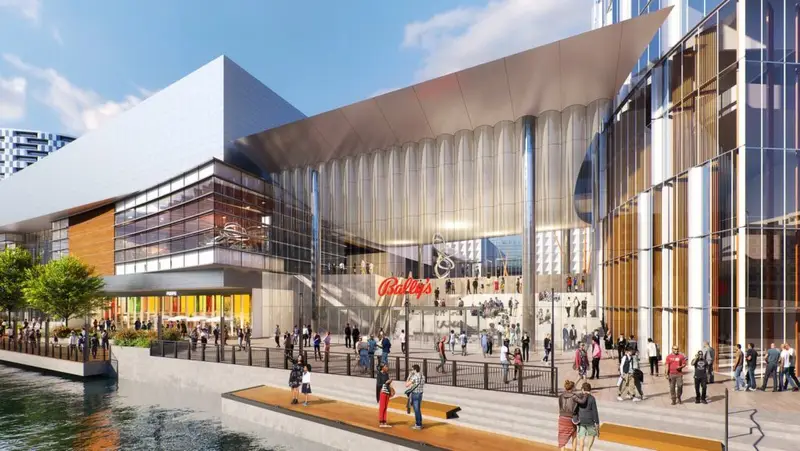
Today? It is the site of a $1.7 billion entertainment Goliath.
Here is what is happening right now in 2026:
Construction crews are working around the clock, and the sheer scale of the Bally’s Chicago complex is finally visible from the Kennedy Expressway.
But this isn’t just a room full of slot machines.
It is an entirely new skyline addition. The project features a soaring 34-story, 500-room hotel tower at the south end of the site. They are building a 3,000-seat indoor theater for live concerts, over a dozen restaurants, and a massive 2,000-foot extension of the Chicago Riverwalk.
When the doors finally open, it won’t just be a casino. It’s going to be a 365-day-a-year destination that officially connects the West Loop to River North.
11. O’Hare Global Terminal: Fixing the Midwest’s Biggest Headache

Let’s step away from the downtown skyline for a second and talk about something every single Chicagoan has an opinion on.
O’Hare International Airport.
If you have ever had a layover in Terminal 2, you know the struggle. It is cramped, it is outdated, and it feels like it hasn’t been renovated since the 1980s.
That is all about to change.
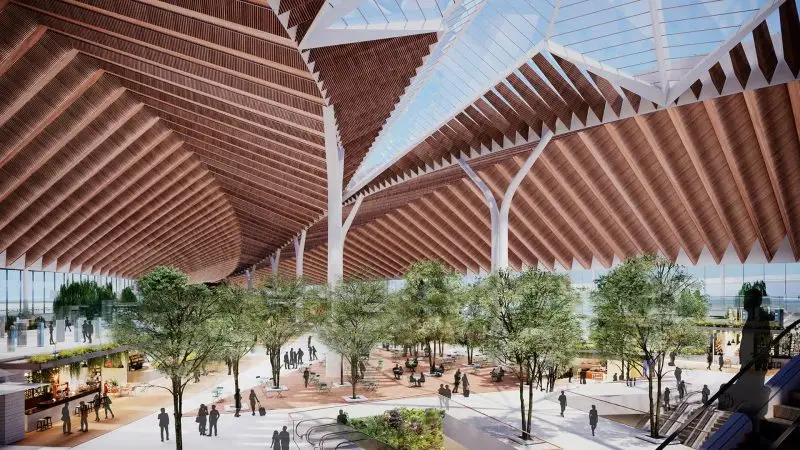
The city is currently executing the most expensive and ambitious airport overhaul in Chicago history. It is an $8.5 billion megaproject, and the crown jewel is the brand-new O’Hare Global Terminal.
Let me explain why this is a big deal.
They aren’t just slapping a new coat of paint on the walls. They are completely demolishing Terminal 2 and replacing it with a massive, state-of-the-art facility designed by local architectural legend Jeanne Gang (the same genius behind the St. Regis and Aqua towers).
What you need to know:
- The Look: The new terminal features a stunning, soaring roof shaped like the Chicago municipal device (the Y-shape you see on our city’s bridges and signs).
- The Vibe: It relies heavily on natural light and wood accents, completely eliminating that claustrophobic, fluorescent-lit airport feel.
- The Function: For the first time ever, international and domestic flights will be seamlessly integrated into one terminal. No more sprinting to the ATS train just to make your connection.
It is a massive, multi-year headache for current travelers. But when the dust settles, Chicago will finally have the world-class international gateway we deserve.
12. The Obama Presidential Center: The South Side’s New Crown Jewel

Down in Jackson Park, a long-awaited vision is finally going vertical.
If you have driven down Stony Island Avenue anytime in the last few years, you have seen the massive construction site taking over the historic park space.

It has survived lawsuits, federal reviews, and years of neighborhood debates. But right now, the Obama Presidential Center is officially a reality, and it is completely changing the South Side skyline.
Here is the best part:
This isn’t a quiet, low-slung library. The centerpiece of the campus is a jaw-dropping, 235-foot-tall museum tower.
Why does it look like that?
The tower features a wildly unique, asymmetrical design. It gets wider as it goes up, designed to represent four hands coming together. The exterior is clad in stunning, textured stone that catches the sunlight beautifully off Lake Michigan.
But the tower is just the anchor.
The campus includes a massive new public plaza, a brand-new branch of the Chicago Public Library, an athletic center, and lush public gardens.
As the construction wraps up and the center prepares to open its doors to the world, it is clear this is more than just a presidential monument. It is a massive economic and architectural anchor for the South Side.
13. One Central: The $20 Billion South Loop Pipe Dream (Or Masterpiece?)
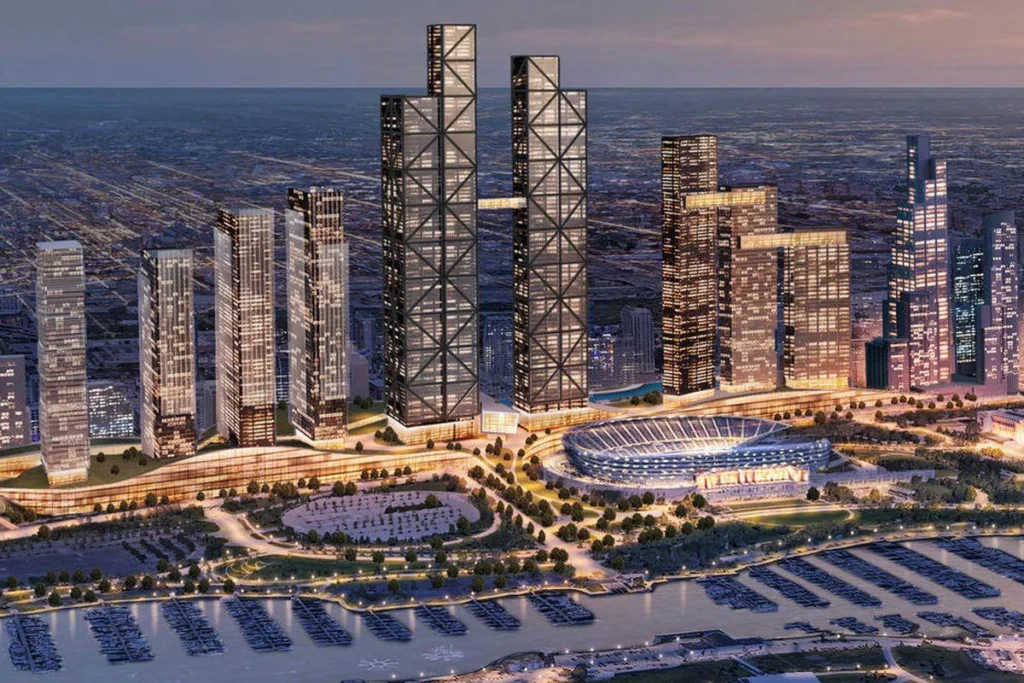
Let’s take a drive down DuSable Lake Shore Drive, right past Soldier Field.
If you look to the west, you will see a massive, ugly canyon of Metra train tracks dividing the South Loop from the museum campus. It is an eyesore, and it makes walking to the lake a massive headache.
But a developer has a wild idea to fix it.
Enter One Central.
This is arguably the most controversial and ambitious megaproject proposed in Chicago history. The developers want to build a massive platform over the train tracks, capping them completely.
Then, they want to build a city on top of it.
Here is what the $20 billion plan includes:
- A massive, state-of-the-art transit hub connecting the CTA, Metra, and Amtrak.
- A sprawling, elevated public park.
- A literal wall of brand-new skyscrapers featuring thousands of apartments, hotels, and retail spaces.
But wait, is this actually going to happen?
That is the $20 billion question. The developers have been fighting for state funding for years. Local South Loop residents have fiercely debated the massive height of the proposed towers.
While we aren’t seeing cranes in the sky for this one just yet, it remains the most fascinating “what if” in the city. If they pull it off, it will completely bridge the gap between the South Loop and the lakefront.
14. The LaSalle Street Reimagining: Saving the Financial District
Back in the financial district, the city is trying to solve a massive post-pandemic problem.
If you have ever walked down LaSalle Street near the Board of Trade after 5:00 PM on a Tuesday, you know the vibe. It is a ghost town.
When the pandemic hit, the massive, historic office buildings that line our financial district emptied out. And honestly? A lot of those corporate tenants never came back.
So, the city had to get creative.
Instead of letting these beautiful, historic skyscrapers sit empty, Chicago launched the LaSalle Street Reimagining initiative.
The solution is brilliant:
They aren’t building new skyscrapers from scratch. They are taking massive, empty office buildings (like 111 W. Monroe and 208 S. LaSalle) and gut-renovating them into thousands of brand-new apartments.
Why does this matter to you?
Because it is completely changing the DNA of the Loop.
For decades, the Loop was just a place you went to work. By injecting thousands of residents, grocery stores, and neighborhood retail directly into the financial district, the city is turning the Loop into a true 24/7 neighborhood.
Crews are actively tearing down cubicles and building out luxury kitchens right now. The era of the “office-only” downtown is officially over.
15. 1353 W. Fulton: The West Loop Pushes Even Further
Let’s head back over to the West Loop for our final project.
If you have lived here for a while, you probably remember when the “trendy” part of Fulton Market stopped dead at Halsted. Then, it pushed to Morgan. Then, it pushed to Ogden.
We all thought the high-rise boom had a western border.
We were wrong.
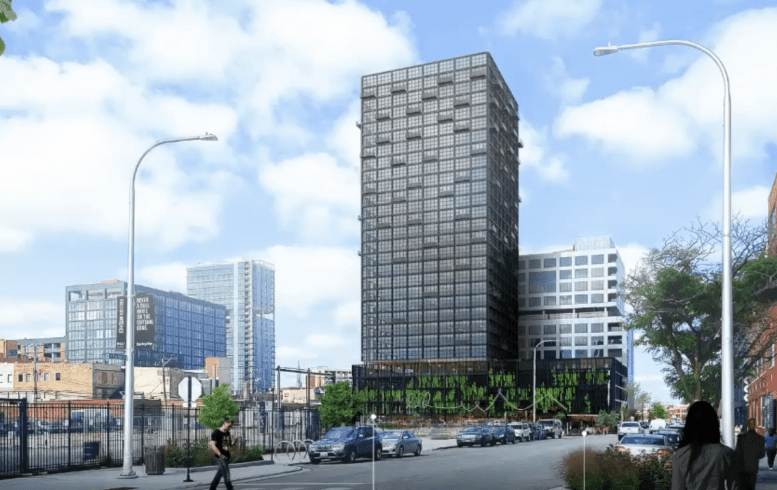
Right now, developers are pushing the skyline further west than anyone ever thought possible with a massive new tower at 1353 W. Fulton.
Look at it this way:
This isn’t a cute, mid-rise brick loft. This is a soaring, 43-story skyscraper dropping right into the western edge of the neighborhood.
The details are staggering:
- It will feature over 300 luxury apartments.
- The design includes a stunning, textured glass facade with massive outdoor terraces.
- It brings a massive influx of ground-floor retail to a stretch of Fulton Market that used to be pure industrial grit.
A decade ago, building a 400-foot skyscraper this far west would have sounded insane. Today? It is just the next logical step.
The West Loop isn’t just a neighborhood anymore. It is officially becoming its own downtown.
We Are Just Getting Started
Chicago is not a city that sits still.
From the ashes of the Spire hole to the parking lots of the United Center, the city is constantly reinventing itself. When you look up at the Willis Tower today, remember that the skyline around it is still growing.
We are getting new parks, new music venues, new riverwalks, and some of the most breathtaking architecture on the planet.
And honestly? We wouldn’t expect anything less from the city that literally invented the skyscraper.
Now, I want to hear from you.
Which of these 15 massive Chicago megaprojects are you most excited about? Do you think the Tribune East Tower will ever actually get built, or is the $20 billion One Central project a total pipe dream?
Drop your thoughts in the comments below—I read every single one.

Thanks for posting. Too too bad I’m a senior and probably will not see many of these projects come to fruition. In my career I worked on several on the buildings in ILLINOIS CENTER which was suppose to be a 20 year project. Now 45++ years later there are still a few empty sites needing to be developed