

The museums, gardens, and hidden interiors that make locals fall in love with Chicago all over again.
Most visitors to Chicago see the same five things. The Bean. The Riverwalk. Michigan Avenue. A view from the Skydeck. Deep dish somewhere on Ohio Street. Then they go home thinking they’ve seen the city.
They’ve barely scratched the surface.
Chicago’s best places aren’t on the front of the visitor guide. They’re the museum hiding inside a Gold Coast mansion. The Tiffany dome almost nobody outside Chicago knows exists. The secret garden tucked behind a museum. The Mediterranean lunch spot hiding in the back of a Loop jewelry store. The magic theater you enter through a fake laundry room door.
We asked our Facebook regulars to share the hidden gems they take out-of-town friends to specifically to hear them say “wait, this is in Chicago?” Here are 15 they sent us, organized by the kind of trip you’re planning.
Art & Culture
1. International Museum of Surgical Science
📍 1524 N Lake Shore Dr, Chicago, IL 60610 (Gold Coast)
If you have a weak stomach, sit this one out. For everyone else, this Gold Coast mansion museum is one of the strangest, most fascinating spots in Chicago.
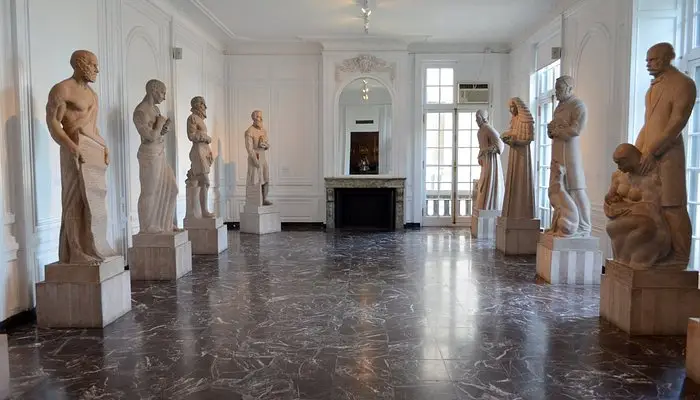
Housed in a 1917 lakefront mansion designed by Howard Van Doren Shaw, the museum is dedicated to the history of surgery and medicine. Inside, you’ll find ancient amputation saws, an actual iron lung you can stand inside, hall after hall lined with statues of medical pioneers, an exhibit on the history of anesthesia (or rather, the centuries before anesthesia existed), and a recreation of an early 20th-century apothecary. Walking through it feels like wandering through a mad scientist’s beautiful old home.
The mansion itself is worth the visit even without the medical content. Stunning marble staircases, painted ceilings, and lake views from nearly every room. Admission is around $20 for adults and the museum is open Tuesday through Sunday.
Local tip: Free admission days happen monthly through the museum’s website. Pair the visit with a walk down Astor Street, which starts two blocks south, for a full Gold Coast architecture afternoon.

2. Museum of Contemporary Art (MCA)
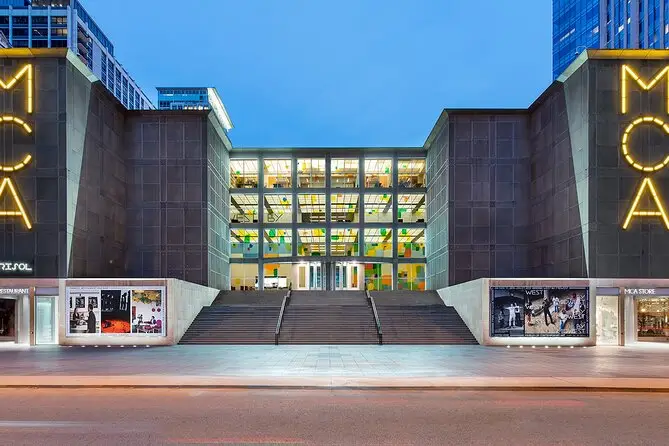
📍 220 E Chicago Ave, Chicago, IL 60611 (Streeterville)
The Art Institute gets all the glory. The MCA is the cool younger cousin one block off the Magnificent Mile. This is where you go when you’re done with Impressionist haystacks and want art that actually challenges you.
The exhibits rotate constantly, ranging from massive pop-culture retrospectives (Virgil Abloh, Takashi Murakami, Kerry James Marshall) to avant-garde installations that leave you genuinely confused. The architectural spiral staircase running up the center of the building is one of the most photographed spots in the entire zip code. The fourth-floor terrace has a skyline view most visitors miss entirely.
Admission is $20 for adults and Illinois residents get free admission on Tuesdays.
Local tip: Check the rotating exhibit schedule before you go. The MCA is genuinely transformed by what’s currently showing, and a quiet exhibit week can mean a much smaller museum experience than the blockbuster shows. Tuesdays after 5pm are free for everyone.
3. The Richard H. Driehaus Museum
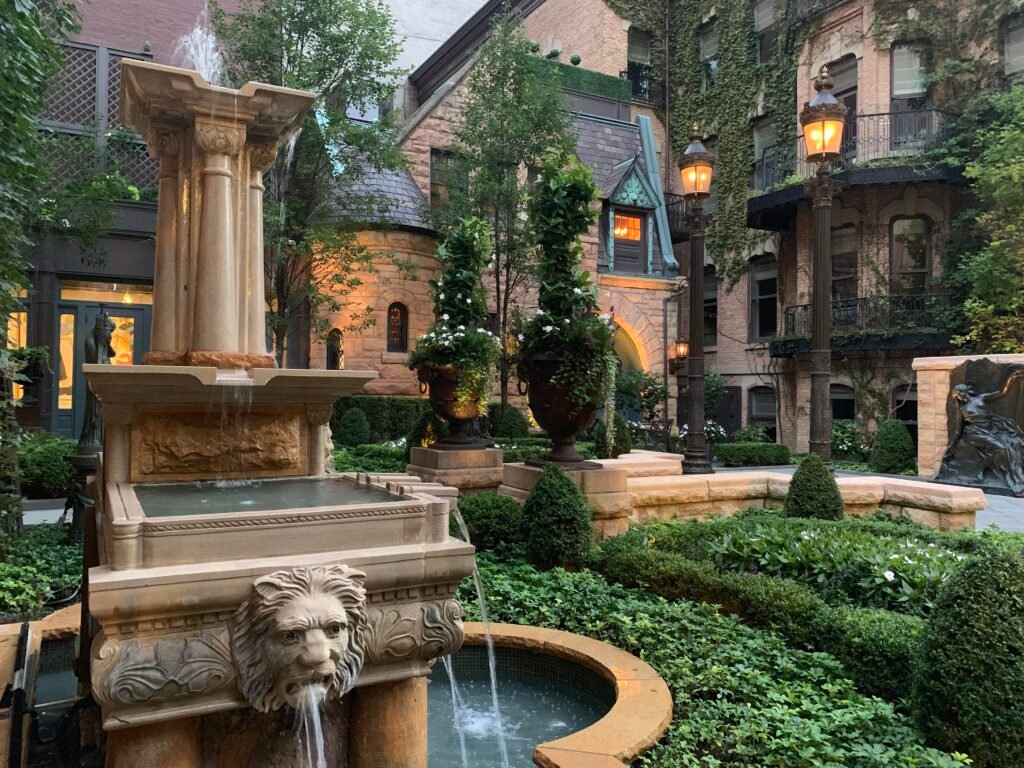
📍 40 E Erie St, Chicago, IL 60611 (Near North Side)
Walking past the chaos of Michigan Avenue, you’d never guess one of the country’s most opulent Gilded Age mansions is sitting around the corner.
Known as the “Marble Palace,” this 1883 mansion was the home of banker Samuel Mayo Nickerson and was clad almost entirely in imported European marble when it was built. Billionaire Chicago collector Richard Driehaus spent millions restoring it and opened it as a museum in 2008. Inside, you’ll find Tiffany glass throughout, original Tiffany lamps, grand staircases, painted ceilings, and one of the largest collections of Gilded Age decorative arts in America.
Admission is $25 for adults. Allow 90 minutes minimum.
Local tip: The museum hosts rotating exhibitions throughout the year, and special evening tours after-hours are some of the most atmospheric experiences in Chicago. Check the website for upcoming events. Pairs perfectly with our Tiffany Glass guide, which includes the Driehaus and the Cultural Center’s Tiffany dome.
4. National Museum of Mexican Art
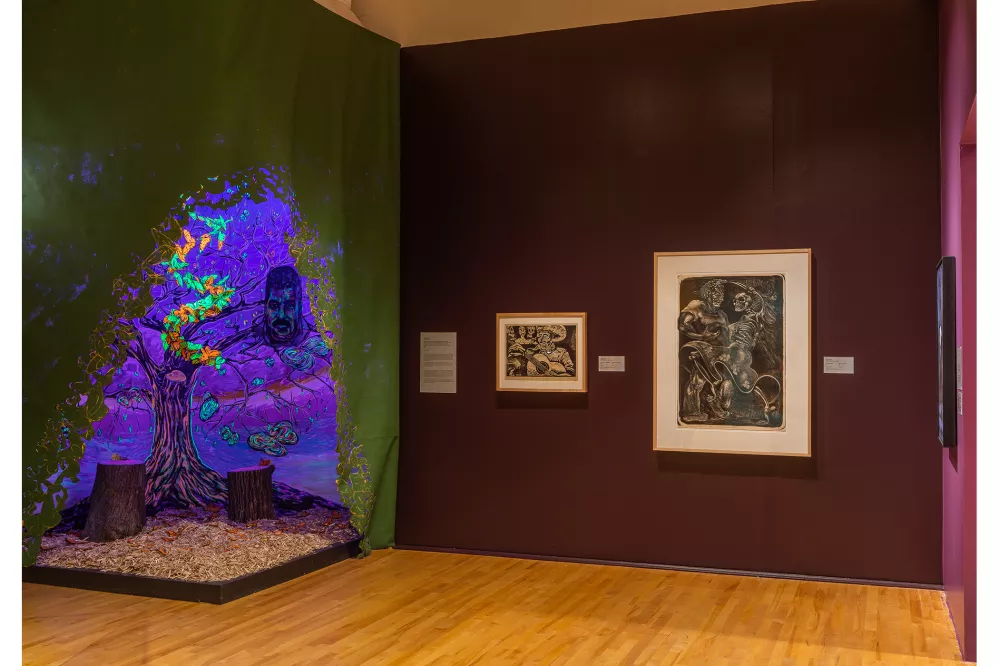
📍 1852 W 19th St, Chicago, IL 60608 (Pilsen)
One of the largest Mexican art museums in the United States, anchoring Chicago’s most colorful and historically rich Mexican-American neighborhood. And admission is completely free. Always.
The collection spans more than 10,000 pieces and covers 3,000 years of Mexican and Mexican-American art, from pre-Columbian artifacts to contemporary photography to the famous annual Day of the Dead exhibition (the largest in the United States, running every fall). The folk art galleries are extraordinary. The textile collection is among the best in the country.
Allow 90 minutes minimum, more if you walk the surrounding 18th Street and 16th Street murals afterward.
Local tip: The annual Día de los Muertos exhibition (late September through November) is the museum’s most spectacular show and worth planning a trip around. While in Pilsen, walk down 18th Street to Carnitas Uruapan for what locals consider the best carnitas in Chicago.
5. The Fine Arts Building
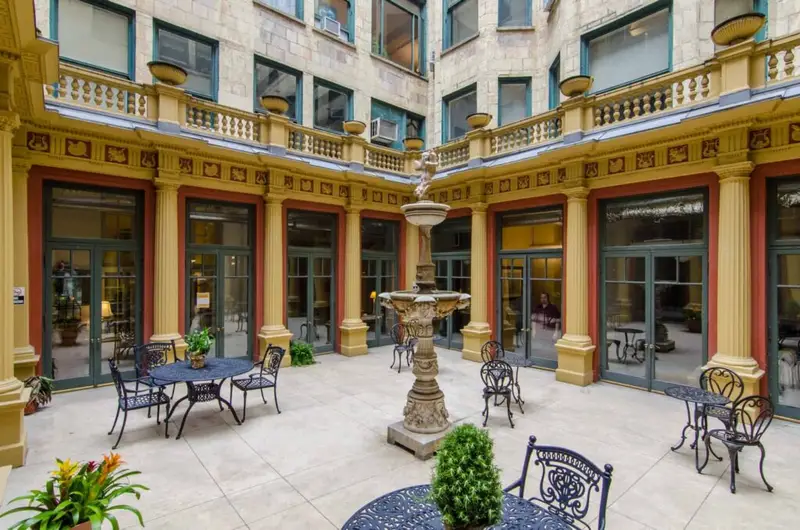
📍 410 S Michigan Ave, Chicago, IL 60605 (The Loop)
A working artist studio building hiding in plain sight on Michigan Avenue, directly across from Grant Park. Built in 1885, the Fine Arts Building has housed working artists, musicians, dancers, writers, and instrument makers continuously for 140 years. The poet L. Frank Baum wrote part of The Wizard of Oz in this building. Frank Lloyd Wright kept an office here. Studs Terkel did interviews in the lobby.
The building is normally a working space, not a tourist attraction. But on the second Friday of every month, the building hosts “Second Fridays,” when individual artists open their studios to the public, free of charge, from 5pm to 9pm. You can wander floor to floor, peek into working studios, meet artists, and ride one of the last manual operator-run elevators in Chicago. The elevator alone is worth the trip.
Local tip: Second Fridays only. Other days the building is private. Show up at 5pm to get the freshest take on the studios before they get busy. Combine with a walk through the Auditorium Theatre next door, also designed by Adler and Sullivan, which is one of the most beautiful interiors in Chicago.
7. The Music Box Theatre
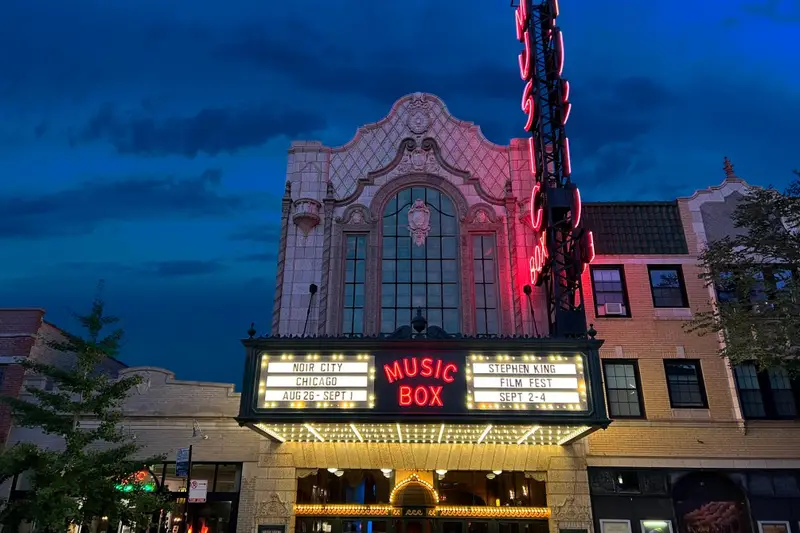
📍 3733 N Southport Ave, Chicago, IL 60613 (Lakeview)
Forget the sticky floors of your local megaplex. The Music Box on Southport is a cinematic time capsule.
Built in 1929, the theater has the original atmospheric design that was meant to make audiences feel like they were watching a movie in an Italian courtyard at night. The ceiling is painted to look like a night sky with twinkling stars and slowly moving clouds, projected via a mechanical system that’s still working after nearly a century. The walls are decorated to look like the facades of Italian villas. A live organist sometimes plays before showings.
The Music Box programs the kind of films you can’t find anywhere else. 70mm screenings. Foreign cinema. Indie premieres. Midnight cult classics like The Room and Rocky Horror. Special holiday programming including their famous Christmas double feature of White Christmas and It’s a Wonderful Life. Tickets are usually $13 to $15, less than a megaplex.
Local tip: Check the calendar for a 70mm screening if one is showing during your visit. The Music Box is one of the few theaters in the country still equipped to project 70mm film, and the experience is unlike anything you’ll get from a digital screening. The lobby cafe sells local craft beers if you want to make a full evening of it.
8. Chicago Cultural Center
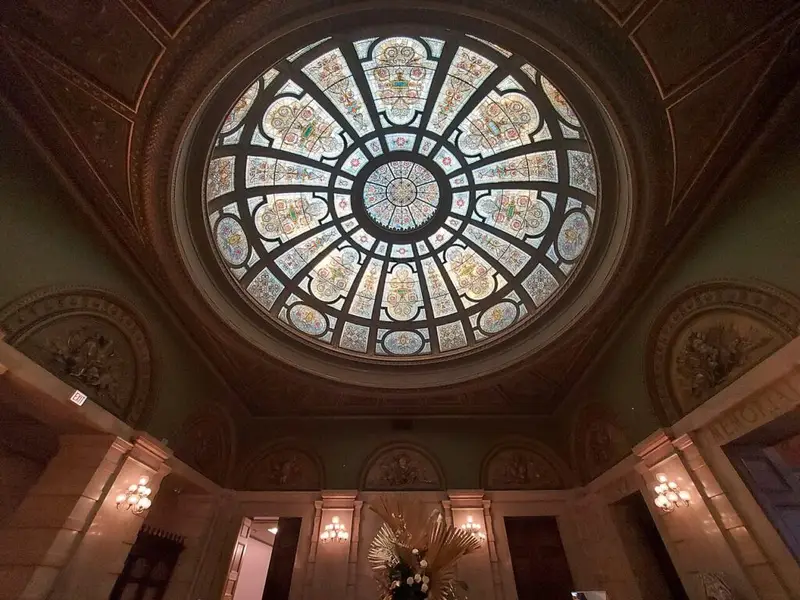
📍 78 E Washington St, Chicago, IL 60602 (The Loop)
If you only walk into one building in the Loop, make it this one. The Chicago Cultural Center is home to the largest Tiffany stained glass dome on Earth, and admission is completely free.
The dome sits in Preston Bradley Hall on the third floor. Thirty-eight feet across, made of 30,000 pieces of opalescent Favrile glass, capped by the twelve signs of the zodiac, designed by J.A. Holzer for Louis Comfort Tiffany’s studio in 1897. It is genuinely one of the most spectacular interiors in any American city, and you can stand under it for free, any day the building is open. The estimated value is around $35 million for the dome alone.
While you’re there, walk to the north wing and see the second dome, the Grand Army of the Republic Memorial dome, which is 40 feet across and contains over 50,000 pieces of glass. The building also hosts free art exhibitions, free concerts, free lectures, and weekly programming throughout the year.
Local tip: Open Wednesday to Sunday, 10am to 5pm. Free docent tours run Wednesdays, Fridays, and Saturdays. Combine with a walk to the Macy’s State Street store two blocks away to see the world’s largest Tiffany mosaic ceiling, also free, also in our Tiffany Glass guide.
9. Oz Park
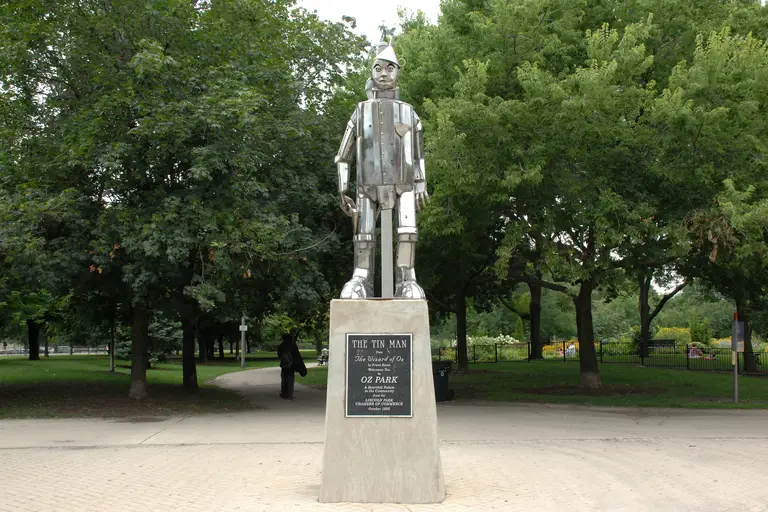
📍 2021 N Burling St, Chicago, IL 60614 (Lincoln Park)
Most people know L. Frank Baum wrote The Wizard of Oz while living in Chicago. Few realize there’s an entire park dedicated to the story in Lincoln Park.
It’s a surreal little green space where you can casually stroll past life-sized bronze statues of the Tin Man, the Scarecrow, the Cowardly Lion, and Dorothy with Toto. The statues are scattered around the park rather than grouped together, so finding all four becomes a small scavenger hunt. The Emerald Garden, a literal yellow brick path, runs through the center. The whole thing is whimsical without being cheesy and makes for one of the best photo stops in Lincoln Park.
If you want to go full Oz fan mode, Baum’s actual former Chicago home is over in Humboldt Park, complete with a yellow brick road leading up to the sidewalk. Follow the road, literally.
Local tip: The park is best in late spring or summer when the gardens are in full bloom. Pair it with a walk to the Lincoln Park Zoo (free, three blocks east) or DePaul’s campus immediately south.
10. The Garden of the Phoenix at Jackson Park
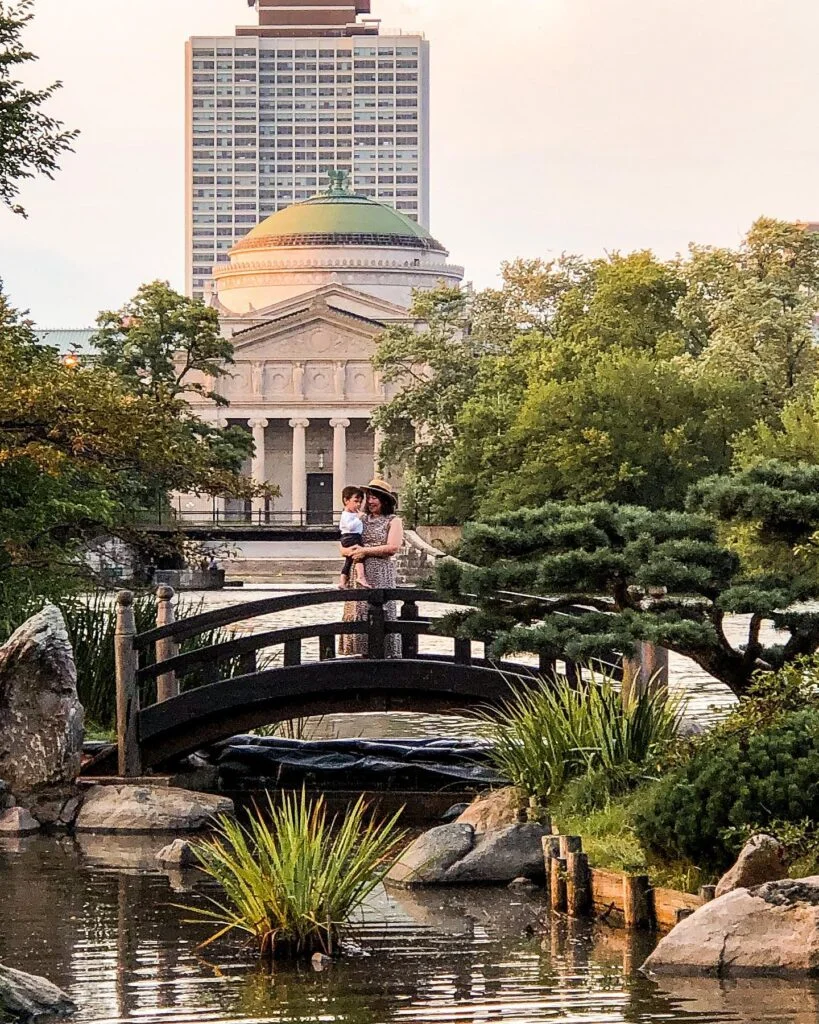
📍 6401 S Stony Island Ave, Chicago, IL 60637 (Hyde Park)
Tucked behind the Museum of Science and Industry is a literal remnant of the 1893 World’s Fair, and one of the most peaceful spots in the entire city.
The Garden of the Phoenix is a traditional Japanese garden with stone lanterns, moon bridges, koi ponds, and cherry blossoms in spring. It was originally part of the Japanese Pavilion at the World’s Columbian Exposition and has been preserved on the same site for over 130 years. The garden was a gift from the Empire of Japan to the city of Chicago, and was restored in the 2010s with new elements added by Yoko Ono herself.
While you’re there, check out the massive gold Statue of the Republic nearby. It’s a smaller replica of the 65-foot original that stood over the World’s Fair, but it’s still gigantic enough to make you feel tiny.
Local tip: The cherry blossoms typically peak in late April or early May. Plan a Hyde Park afternoon around it. Combine with the Museum of Science and Industry, the Robie House, and lunch at Valois Cafeteria (President Obama’s old regular spot) for a full day on the South Side.
11. Alfred Caldwell Lily Pool
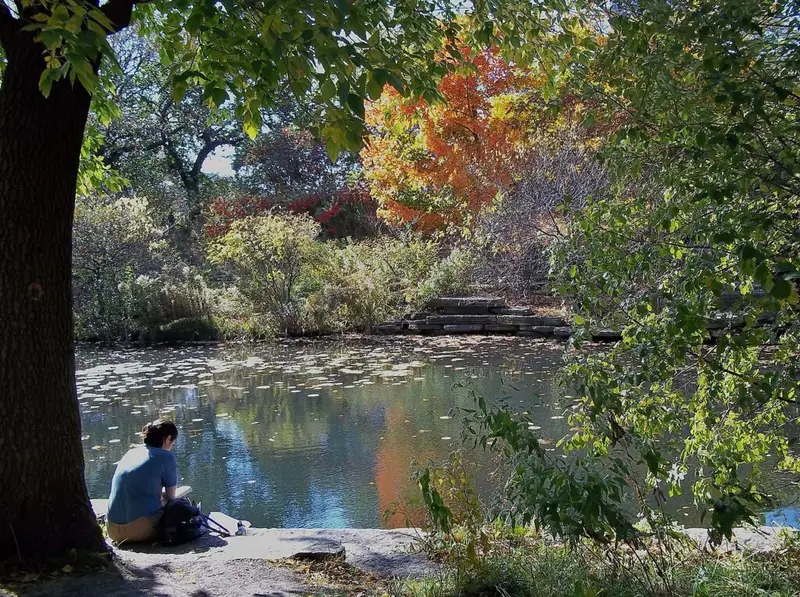
📍 125 W Fullerton Pkwy, Chicago, IL 60614 (Lincoln Park)
The most peaceful spot in Lincoln Park, hidden directly behind the Lincoln Park Zoo, and almost nobody outside the neighborhood knows it exists.
The Lily Pool was designed by landscape architect Alfred Caldwell in the 1930s in the Prairie School style. A meandering pond surrounded by limestone outcroppings, native plants, and a wooden pergola. It’s a National Historic Landmark and one of the most photographed spots for engagement and wedding photos in Chicago, despite the fact that most tourists walk right past the entrance to it without realizing it’s there.
It’s tiny. The whole thing takes 15 minutes to walk through. But it’s the kind of space that completely shifts your sense of being in a city. Birds. Water. No traffic noise. Then you walk back out through the gate and you’re staring at the Hancock again.
Local tip: Open daily, free admission, but only April through October. Combine with the stunning Lincoln Park Conservatory immediately west, which is also free and another massive hidden gem. Best photographed in early morning when the light filters through the trees.
12. Graceland Cemetery
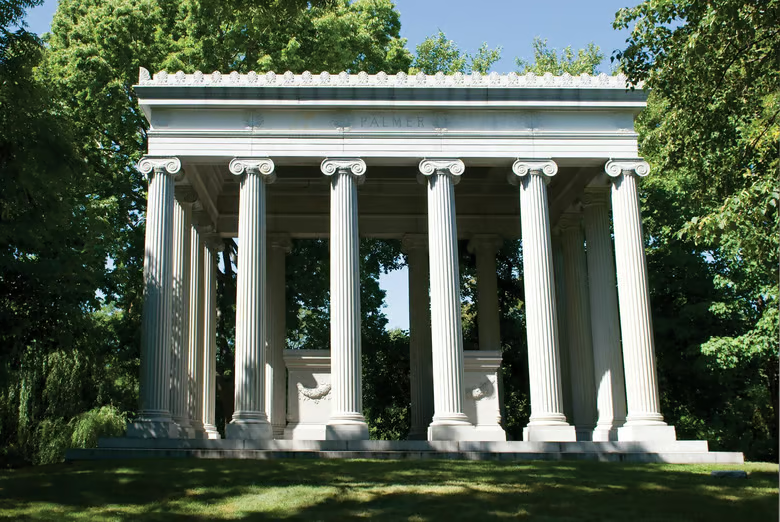
📍 4001 N Clark St, Chicago, IL 60613 (Uptown)
Telling you to hang out in a cemetery sounds morbid, but hear us out.
Graceland is essentially a massive arboretum and outdoor sculpture museum where the most famous Chicagoans of the past 150 years happen to be buried. Marshall Field. George Pullman. Daniel Burnham (who designed the modern city of Chicago). Louis Sullivan (who invented the modern skyscraper). Mies van der Rohe (who reinvented it). The Wrigley family. Several mayors. Multiple generations of Chicago industrial barons.
The mausoleums and tombstones are designed by famous architects and sculptors. The grounds are landscaped by some of the same designers who shaped the city’s parks. The Getty Tomb (designed by Sullivan), the Pullman Memorial, the Eternal Silence sculpture (locally known as “the statue of death”), and the Marshall Field family plot are the can’t-miss stops.
The cemetery is open daily and walking it on your own is allowed. Maps are available at the entrance. Plan at least an hour.
Local tip: Best walked in fall when the trees turn. Worst in February. The cemetery closes at 4pm in winter. Combine with a walk down Greenview Avenue, two blocks east, for a full afternoon of architectural appreciation. The Chicago History Museum and the Chicago Architecture Center both run guided tours of Graceland that are worth booking if you want context.
13. Oasis Cafe
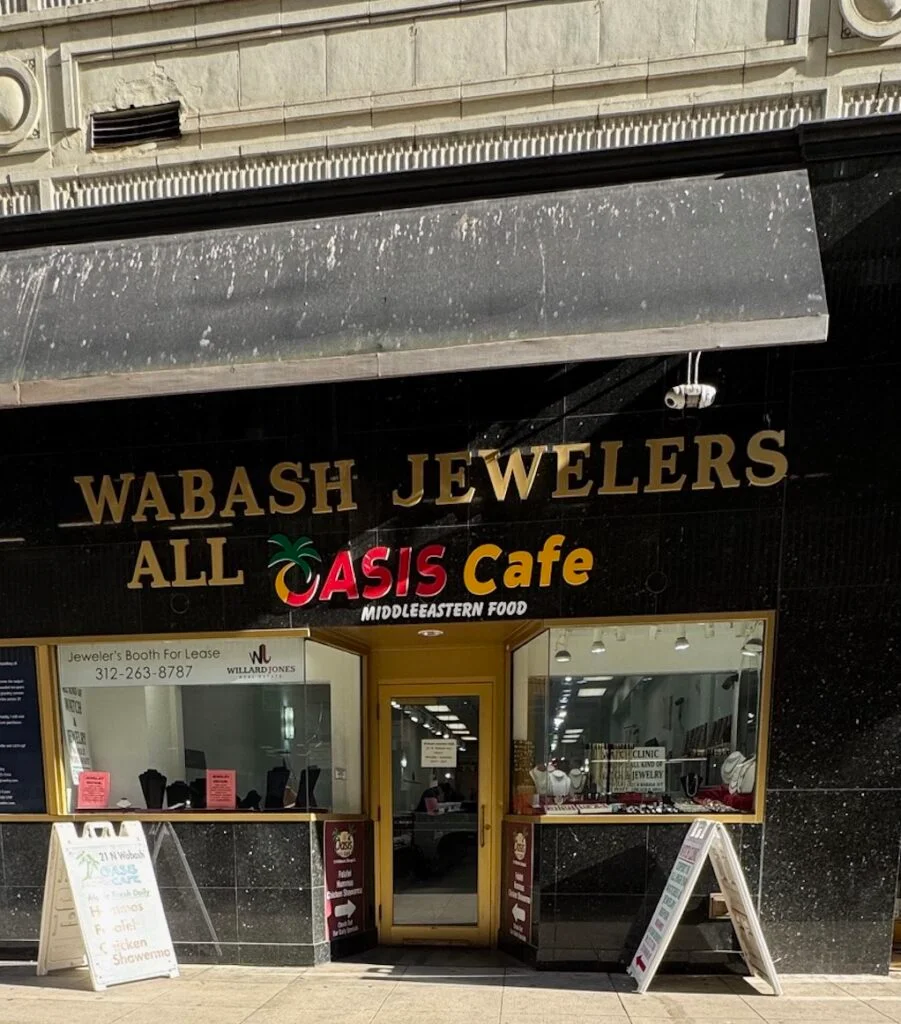
📍 21 N Wabash Ave, Chicago, IL 60602 (The Loop)
This is the most genuinely hidden hidden gem on this list. Oasis Cafe is a Mediterranean lunch spot tucked inside the back of a working jewelry store in the Loop. You walk past the watch repair counter, past the display cases of gold chains and engagement rings, and behind a small doorway is a full Middle Eastern kitchen serving some of the best falafel, gyros, and shawarma in downtown Chicago.
The place is run by a Palestinian family who have been in the back of this jewelry store for decades. The hummus is made fresh daily. The lamb gyro is genuinely good. The fattoush salad is the best you’ll find in the Loop for under $15. Lunch hour gets crowded with downtown office workers who know about the place, but it’s almost never on a tourist’s radar.
Lunch combos run $10 to $14 and include a generous portion plus side. Cash is preferred but cards work.
Local tip: Open weekdays only, lunch hours roughly 11am to 3pm. Closed weekends. The line moves fast despite looking long, and most regulars know exactly what to order. Get the chicken shawarma plate. You’ll thank us later.
14. The Green Mill
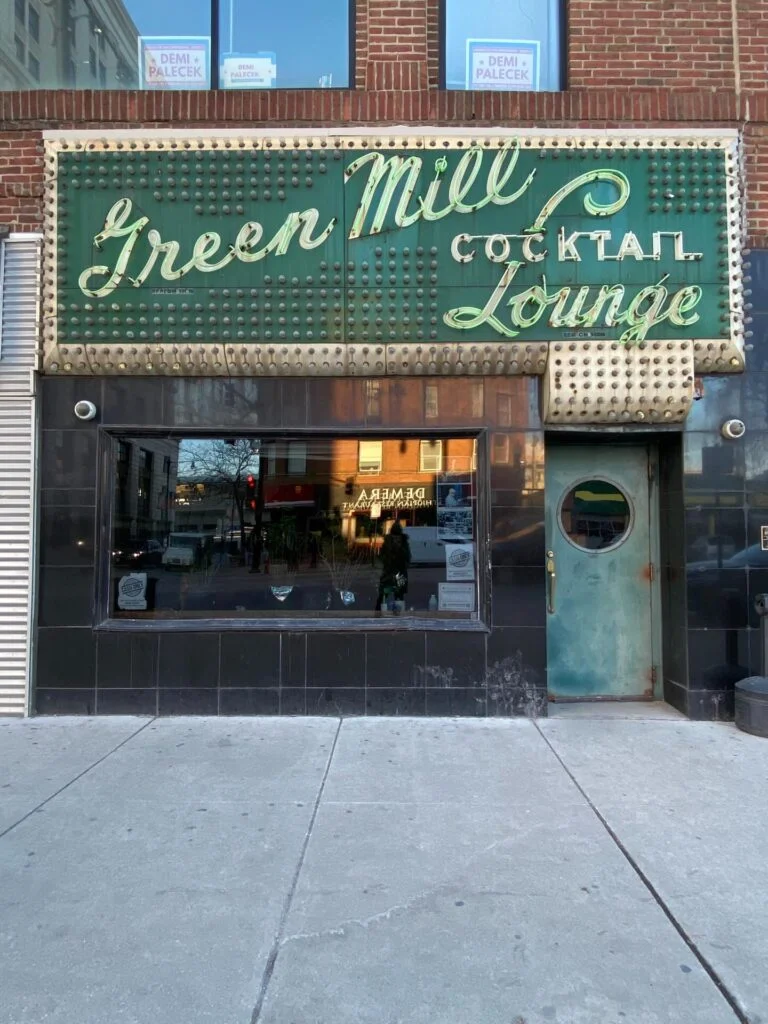
📍 4802 N Broadway, Chicago, IL 60640 (Uptown)
The most legendary jazz club in Chicago, the bar where Al Capone had his own booth, and one of the few authentic Prohibition-era venues still operating with its original interior intact.
The Green Mill opened in 1907 and during Prohibition became the unofficial headquarters of mobster Jack McGurn (Al Capone’s right-hand man). Capone himself had a regular booth in the back, positioned to give him sightlines to both the front door and the back exit. There’s a trapdoor behind the bar that connected to underground tunnels used to evade police raids. The booth, the tunnels, and the original Art Deco interior are all still there.
But the Green Mill is not a museum. It’s a working jazz club, and arguably the best one in Chicago. Live music seven nights a week. Sunday nights host the Uptown Poetry Slam, which has been running since 1986 and is one of the longest-running poetry slams in the country. Cover charges are usually $7 to $15. Drinks are reasonably priced for what the venue is.
Local tip: The “talking ban” is real. Once the music starts, the Green Mill enforces total silence from the audience. Talking through a set will get you politely escorted out. Show up on time, sit down, listen. The Capone booth is on the eastern wall and is sometimes available for seating but usually held for VIPs.
15. Chicago Magic Lounge
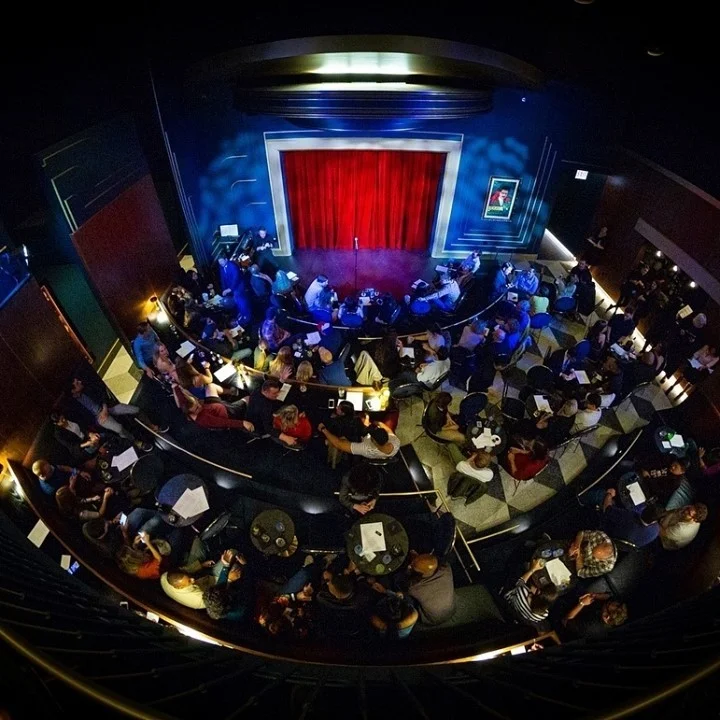
📍 5050 N Clark St, Chicago, IL 60640 (Andersonville)
The most theatrical hidden gem in the city. The entrance to the Chicago Magic Lounge is a fake laundromat. You walk in expecting to see washing machines. Instead, you push through a hidden door (a working washing machine) and enter a sophisticated 1930s-style supper club dedicated to close-up magic.
Once inside, the experience is fully immersive. Three performance spaces. Live magic happening at every table. A speakeasy bar serving classic cocktails. Performers ranging from sleight-of-hand experts to mind readers to professional magicians who tour internationally. Most shows include intimate close-up magic at your table before the main stage performance, which means you’re never further than three feet from a magician at any point in the evening.
The shows run Wednesday through Sunday. Tickets start around $40 and the experience runs roughly two hours. Reservations are required and weekend shows often sell out a month in advance.
Local tip: The 654 Club is the most exclusive room and worth booking if it’s available. The Wednesday “Resident Magician” shows are the most affordable entry point. Dress nice. The dress code is enforced. Bring a date or a friend who appreciates theater. This is the kind of place you remember years later.
The Bottom Line
Chicago is a city of public secrets. The most spectacular interiors aren’t its skyscrapers. The most peaceful gardens aren’t its parks. The best food isn’t always on the restaurant lists. And the most distinctive venues are often hiding behind ordinary doors on ordinary streets, waiting for someone to push through.
If you only have time for one of these, make it the Chicago Cultural Center. Free. In the Loop. Largest Tiffany dome in the world. The kind of place that genuinely changes how you see the city.
If you have a full day, build it around Hyde Park. The Garden of the Phoenix, the Robie House, and Promontory Point form one of the best self-guided afternoons in Chicago.
If you want the date night version, book the Chicago Magic Lounge two weeks ahead and pair it with dinner in Andersonville.
The thing that connects every place on this list is the same. They reward people who go looking. Chicago doesn’t put its best stuff on the front page. It hides it in plain sight and waits for you to find it.
Now you know where to look.
Thanks