

More than 10,000 forgotten corpses are secretly buried directly beneath the manicured lawns of a popular city zoo.
This is 100% real history, not a macabre urban legend meant to scare tourists.
Those bodies are resting right under the Kovler Lion House at the Lincoln Park Zoo.
A bitter 19th-century public health war left thousands of cholera victims abandoned in the dirt, setting the stage for the most haunted city in America.
The Graveyard Beneath the Lion House
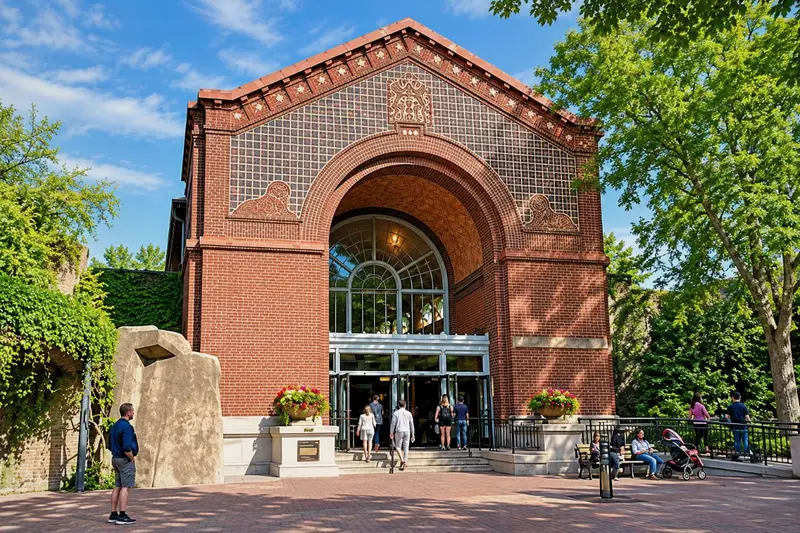
For generations of Chicagoans, Lincoln Park is a weekend sanctuary.
Locals know the trails, the lakefront breeze, and the roar of the lions.
But the ground beneath those strollers and picnic blankets was originally founded as the Chicago City Cemetery in 1837.
Between 1837 and 1866, over 35,000 people were buried in these shifting sands.
Dr. John H. Rauch, a pioneer of public health, fought a bitter war to close the cemetery.
He proved that burying cholera victims so close to Lake Michigan was actively poisoning the municipal drinking water supply.
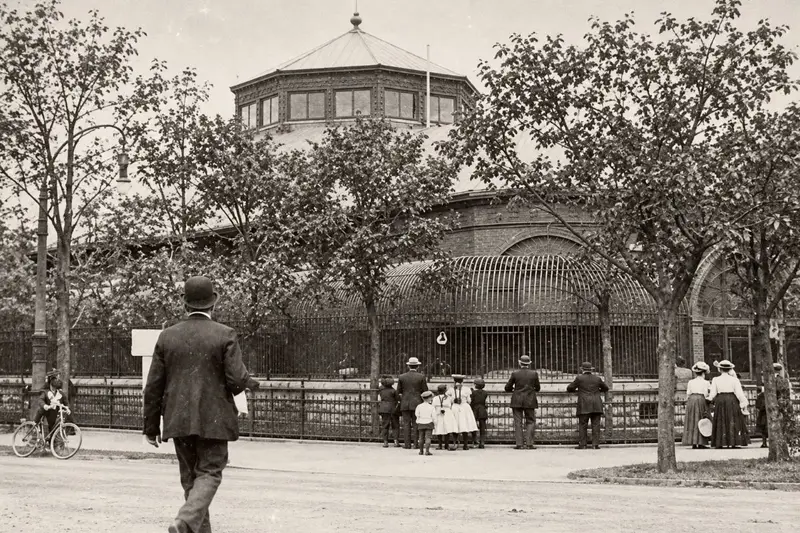
When the city finally converted the land into a park, thousands of families failed to claim their dead.
During a 1998 utility excavation, archaeologists unearthed more than 80 skeletal remains and a preserved 19th-century cast-iron coffin right beneath the turf.
Today, an estimated 10,000 to 12,000 bodies remain buried in unmarked dirt throughout the park.
The only surviving structural remnant is the massive limestone Couch Tomb near LaSalle and Clark.
The Velvet Death Trap of Couch Place
Head south into the Loop, and the ghosts become much more recent.
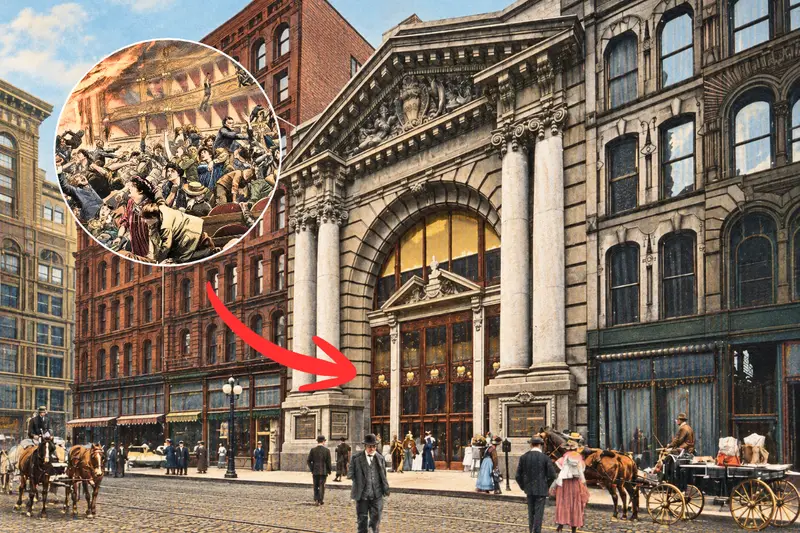
Tucked behind the modern James M. Nederlander Theatre on West Randolph Street is a narrow brick alleyway known as “Death Alley.”
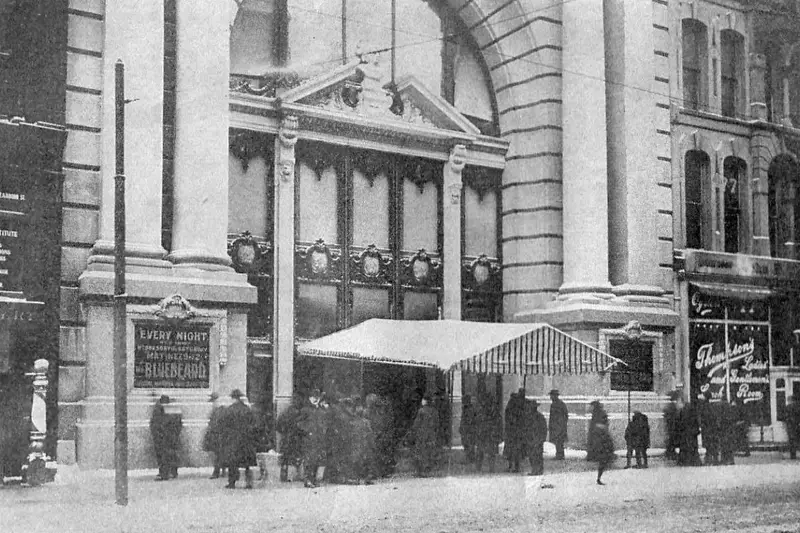
On December 30, 1903, this exact spot became the site of the deadliest single-building fire in American history.
The Iroquois Theatre was packed with an estimated 2,100 to 2,200 patrons for a sold-out Wednesday matinee.
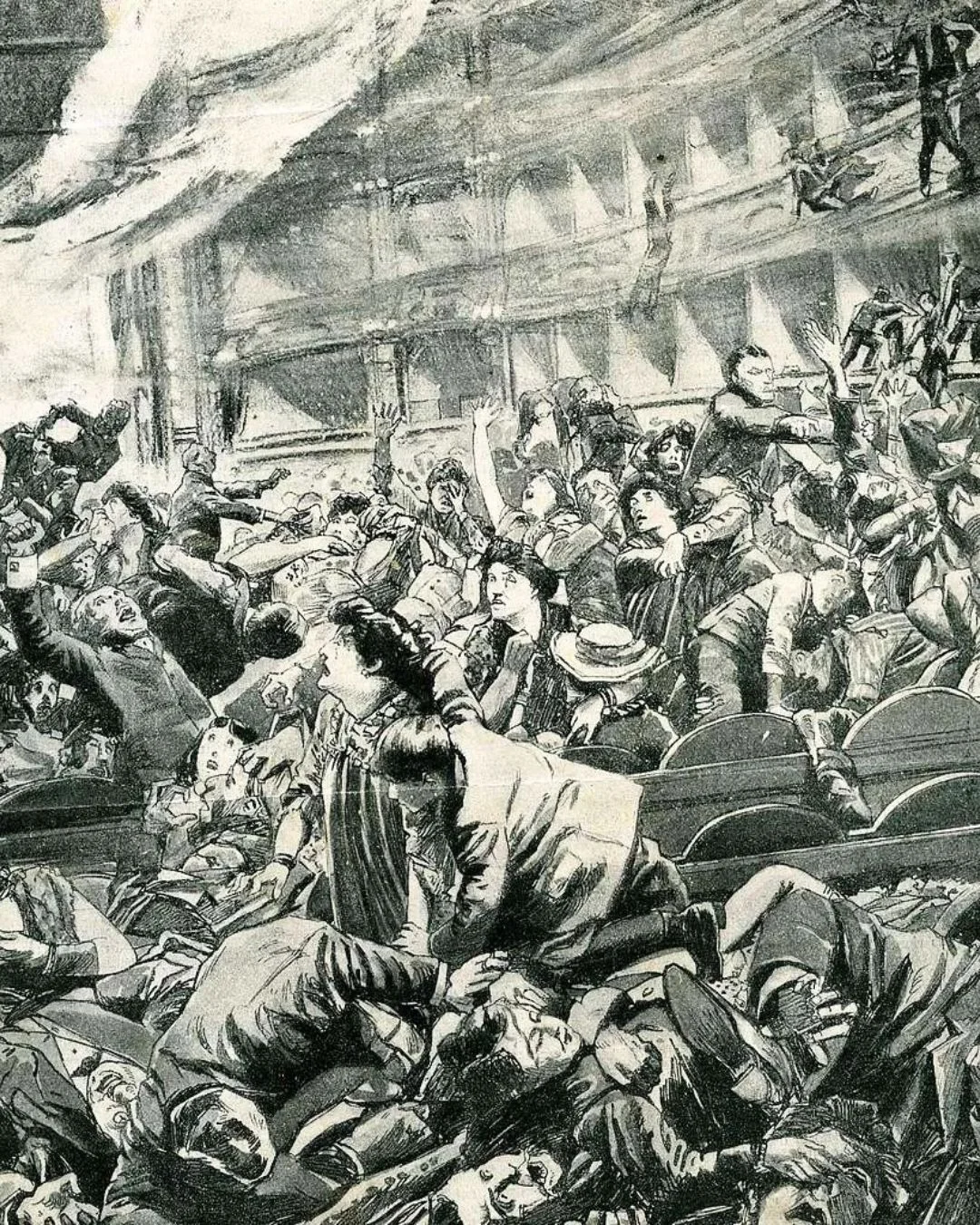
Marketed aggressively as “Absolutely Fireproof,” the $1.1 million building was a total death trap.
There was no fire alarm box, no automatic sprinklers, and the supposed “asbestos curtain” was actually made of cheap wood pulp.
When a stage light sparked a fire, the audience rushed the exits, only to find them hidden behind thick velvet draperies.
The exit doors featured European lever locks that required a specific upward pull.
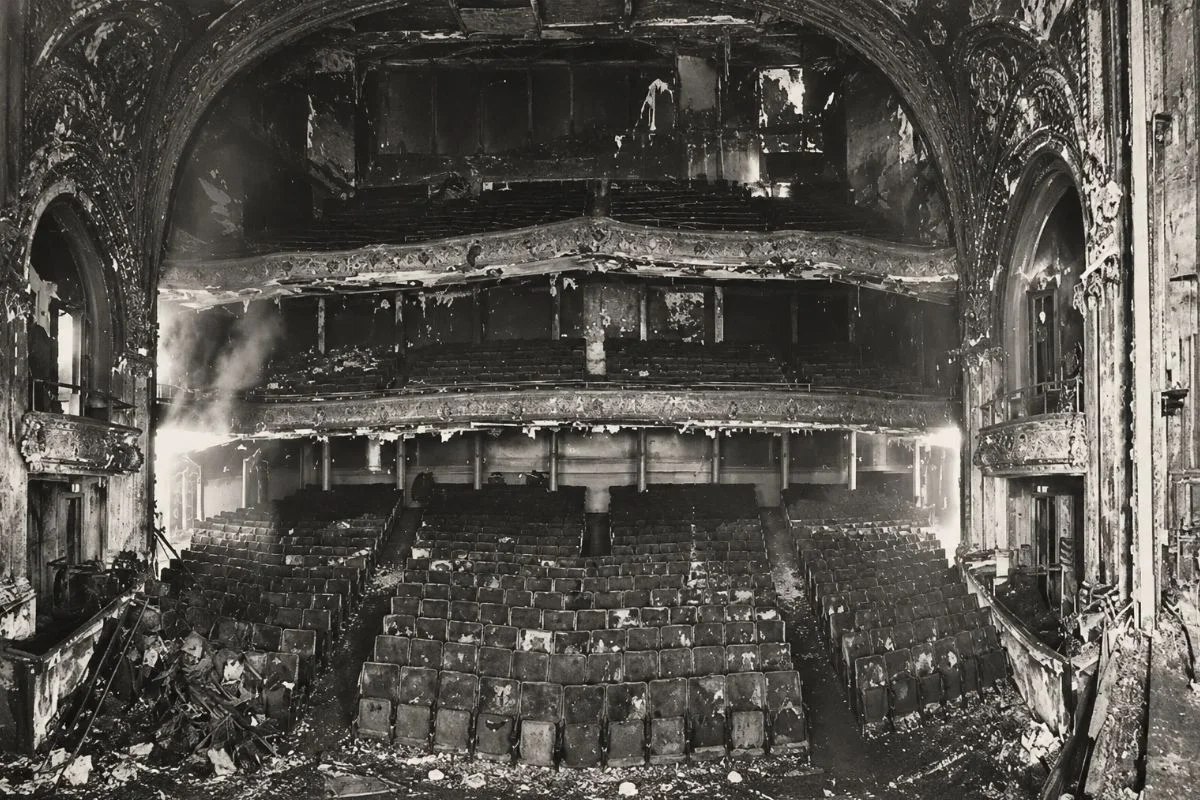
Panicked crowds, used to American push-bars, crushed against the doors and trapped everyone inside.
A staggering 602 people died from toxic smoke and the crush of bodies, not structural collapse.
Despite the immediate indictment of Mayor Carter Harrison IV and theater management, legal loopholes kept every single official out of jail.


The Bridgeport Ghost That Beat the Tax Man
Chicago corruption even extends to the supernatural.
Long before New York courts legally recognized a haunted house in 1991, Chicago set a bizarre bureaucratic precedent.
The property at 3375 South Green Street in Bridgeport holds a very strange municipal record.
On September 18, 1912, property owner John Denterlancer demanded his property taxes be slashed.
He filed an official complaint stating that tenants refused to pay rent due to violent, disembodied footsteps and shrieks.
The city tax assessors did not validate the existence of ghosts.
Instead, they ruled that the reputation of a haunting had destroyed the home’s income-generating capability.
They legally classified the ghost as a “depreciated asset” and granted a massive $500 reduction in assessed value.
The Trench of 38,000 Forgotten Souls
The darkest chapter of Chicago’s haunted history sits on the Northwest Side.
The land currently occupied by Wilbur Wright College in the Dunning neighborhood hides a massive, tragic secret.
This was once the Cook County Insane Asylum and Poor Farm, opened in 1854.
By the early 1900s, the facility was violently overcrowded with over 4,000 patients.
Legal loopholes allowed families to commit unfaithful wives or rebellious children without a trial.
Water pipes regularly froze, and records show patients frequently froze to death in their own beds.
To save municipal funds, the county used the facility’s own patients as slave labor to dig massive trenches.
They stacked cheap pine coffins five-deep in the freezing mud.
In 1989, construction workers digging a trench for a new housing development uncovered these mass graves.
Archaeologists confirmed that an estimated 38,000 poor, unclaimed, or mentally ill Chicagoans were buried in unmarked trenches on the property.
The Dark History Visitor Guide
Lincoln Park Zoo & Couch Tomb
- Address: 2400 N. Cannon Drive, Chicago, IL 60614.
- Where to look: The Kovler Lion House is located in the center of the zoo. To find the Couch Tomb, navigate to the southern edge of the park near the intersection of LaSalle Drive and Clark Street.
- Transit: Take the CTA Red Line to Fullerton and head east, or take the 151 Sheridan bus directly to the zoo entrance.
Death Alley (Iroquois Theatre Site)
- Address: 24-28 W. Randolph Street, Chicago, IL 60601.
- Where to look: Find the alley behind the James M. Nederlander Theatre. The rear brick pathway running between State Street and Dearborn Street is Couch Place.
- Transit: Take any CTA train to the State/Lake station. The alley is less than a block away.
Dunning Memorial Park
- Address: 6500 W. Irving Park Road, Chicago, IL 60634.
- Where to look: The memorial park and historical marker are located near Narragansett Avenue, adjacent to the Wilbur Wright College campus.
- Transit: Take the CTA Blue Line to Irving Park, then transfer to the 80 Irving Park bus heading west.