Chicago’s culinary history is famous worldwide for deep-dish pizza, Italian beef sandwiches, and loaded dragged-through-the-garden hot dogs.
While everyone knows about the wildly famous Chicago restaurants that are actually worth the hype, true locals know that the Windy City’s grocery and snack game was once completely unmatched.
If you grew up in or around Chicago in the 1970s, 80s, or 90s, your childhood tasted a little different.
Grocery store runs to Jewel-Osco or Dominick’s meant grabbing specific, locally-made treats you couldn’t find anywhere else in the country.
Today, we are taking a trip down memory lane.
 JM
AK
We are looking back at the forgotten Chicago snacks and discontinued food brands that shaped our youth. Prepare for some serious nostalgia!
1. Maurice Lenell Cookies
The Cookie Jar in Norridge
If you lived anywhere near the Northwest Side or the surrounding suburbs, Maurice Lenell cookies were an absolute staple in your household.
Founded in 1925 by two Swedish brothers in Chicago, the brand eventually became a local baking empire.
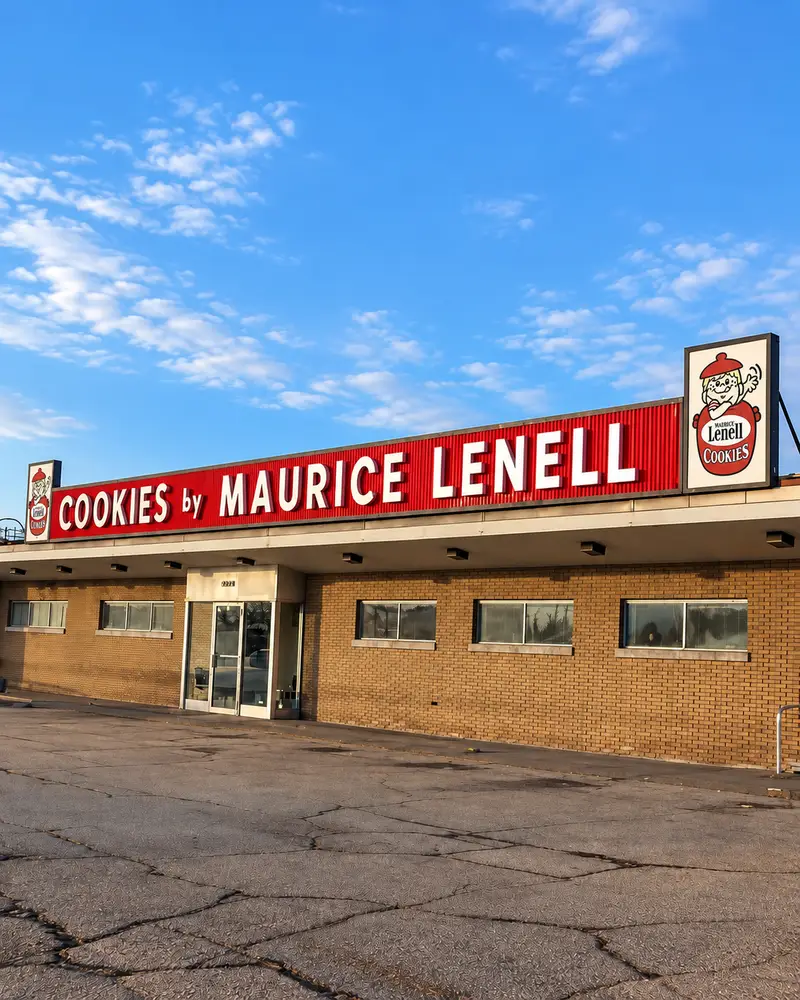
For over 50 years, locals flocked to their Harlem Avenue factory store in Norridge, which was affectionately known as “The Cookie Jar”.
Walking inside meant being instantly hit with the intoxicating smell of fresh butter, sugar, and baking chocolate.
Pinwheels and Jelly Stars
While they made dozens of varieties, a few stood out as absolute royalty.
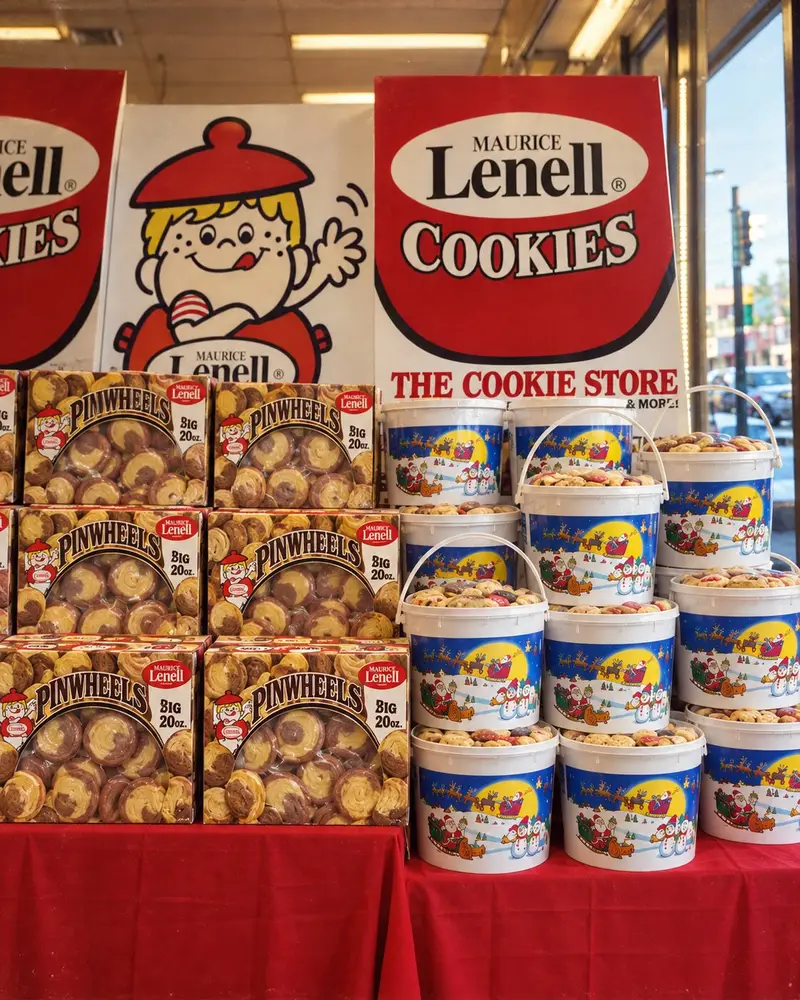
The Pinwheels—a dense, swirled chocolate and vanilla cookie with a signature pink edge—were the undisputed crown jewels of the cookie tin.
Close behind were the Raspberry Jelly Swirls and the Almonettes.
Sadly, the company closed its Norridge doors and went bankrupt in 2008. While you can sometimes find modern copycat recipes online, nothing will ever beat opening a fresh tin of original Maurice Lenell cookies during the holidays.
2. Canfield’s Diet Chocolate Fudge Soda
A 1980s Diet Soda Phenomenon
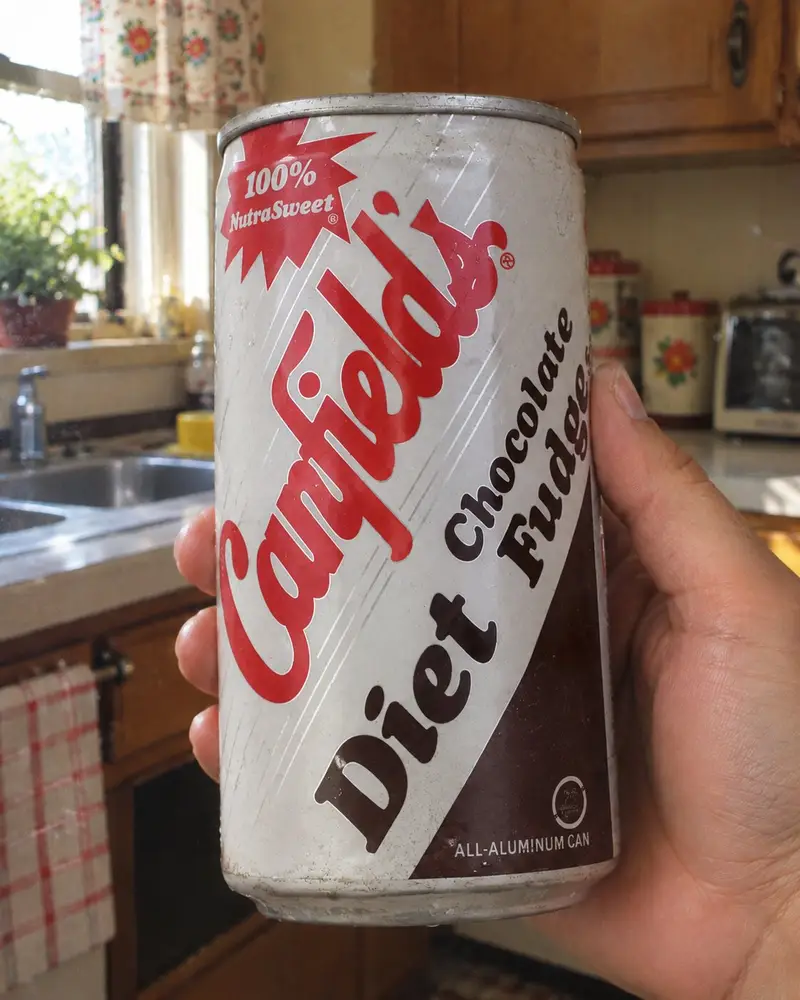
A diet soda that actually tastes like a rich, decadent chocolate dessert? To most, it sounded entirely impossible.
But in 1972, the Chicago-based A.J. Canfield Company actually made it happen.
Alan B. Canfield, a known chocolate lover and chronic dieter, challenged his chief chemist to recreate the taste of chocolate fudge in a zero-calorie drink.
The resulting concoction was Canfield’s Diet Chocolate Fudge Soda.
The Nationwide Craze
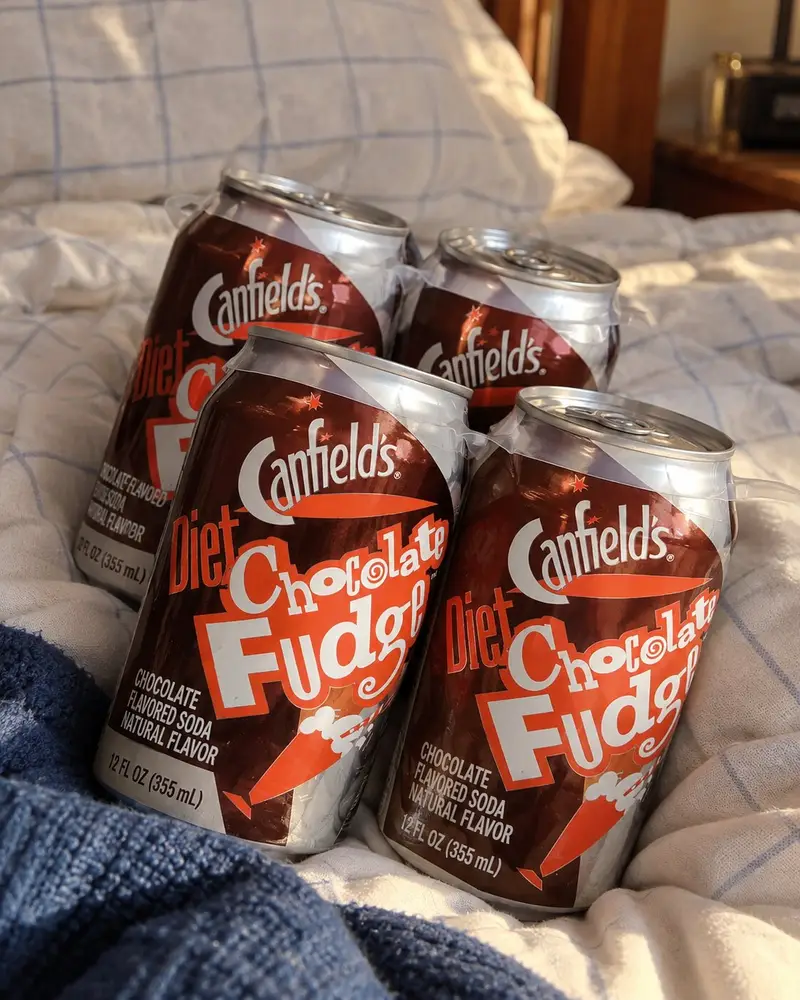
By the mid-1980s, this local Chicago secret exploded into a nationwide fad.
Propelled by a glowing review from syndicated Chicago newspaper columnist Bob Greene, the company couldn’t keep the soda on the shelves.
It had a uniquely rich, almost Tootsie-Roll-like flavor profile. People either absolutely loved it or deeply hated it.
Today, the A.J. Canfield Company has been absorbed by corporate beverage giants. This magical chocolate soda is now little more than a vintage memory for 80s kids.

3. Screaming Yellow Zonkers
The Anti-Cracker Jack
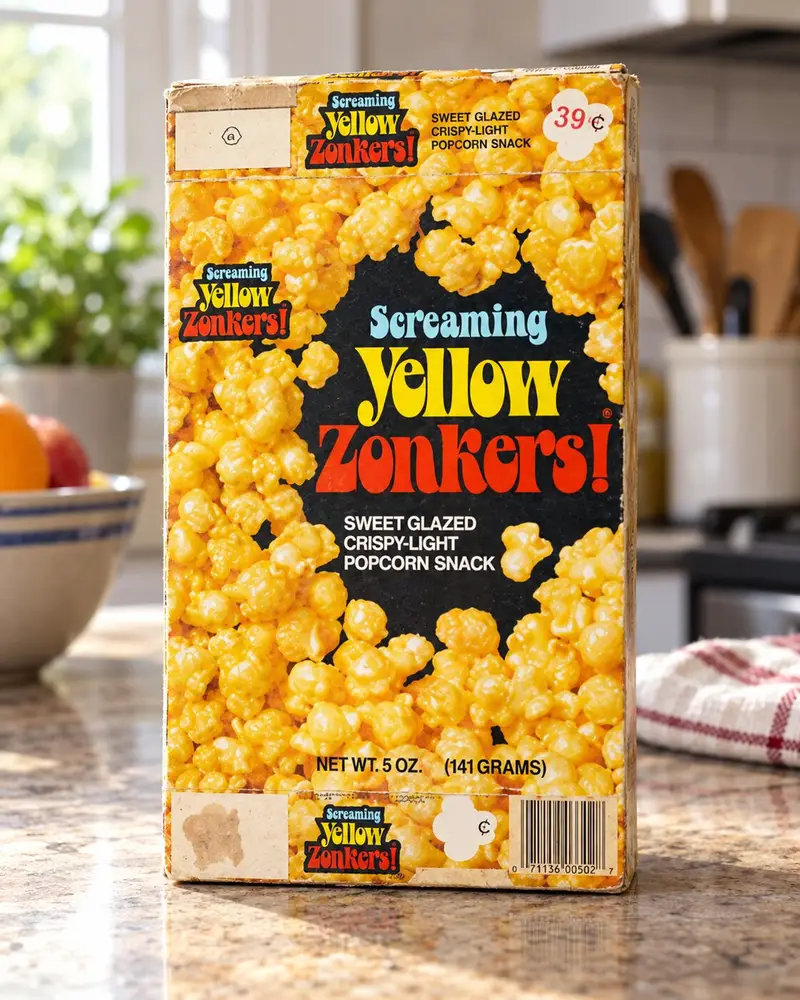
Forget peanuts, caramel, and molasses. Screaming Yellow Zonkers gave us a nut-free, kosher popcorn covered in a deliciously sweet yellow sugar glaze.
Produced by Lincoln Snacks, this treat officially hit store shelves in 1969.
The snack itself was highly addictive, but what truly made Zonkers iconic was the packaging.
Absurdist Chicago Advertising
Lincoln Snacks hired a small boutique Chicago ad agency, Hurvis, Binzer & Churchill, to market the new product.
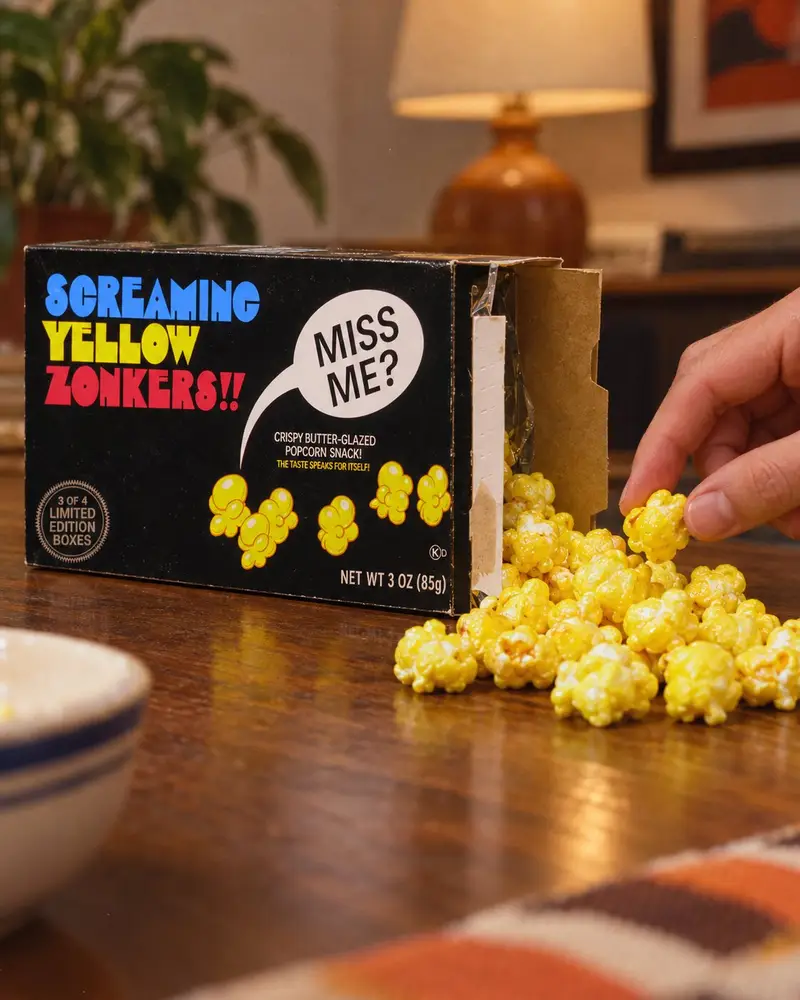
They decided to put the snack in a stark black box—a revolutionary and highly unusual move for the grocery aisle at the time.
Every inch of the box was covered in hilarious, absurdist copy and wild illustrations.
Directions on the box would jokingly tell you how to “wash or mate” your Zonkers, or inform you that 8 oz of the snack equaled 1/4409 of a metric ton.
It sounds like one of those Chicago facts that sound completely made up but are actually true, but that was just their brilliant, off-the-wall marketing strategy.
The snack was sadly discontinued in the late 2000s, leaving a permanent void in the novelty snack market.
4. Brach’s Pick-A-Mix Candy
The Ultimate Grocery Store Treat
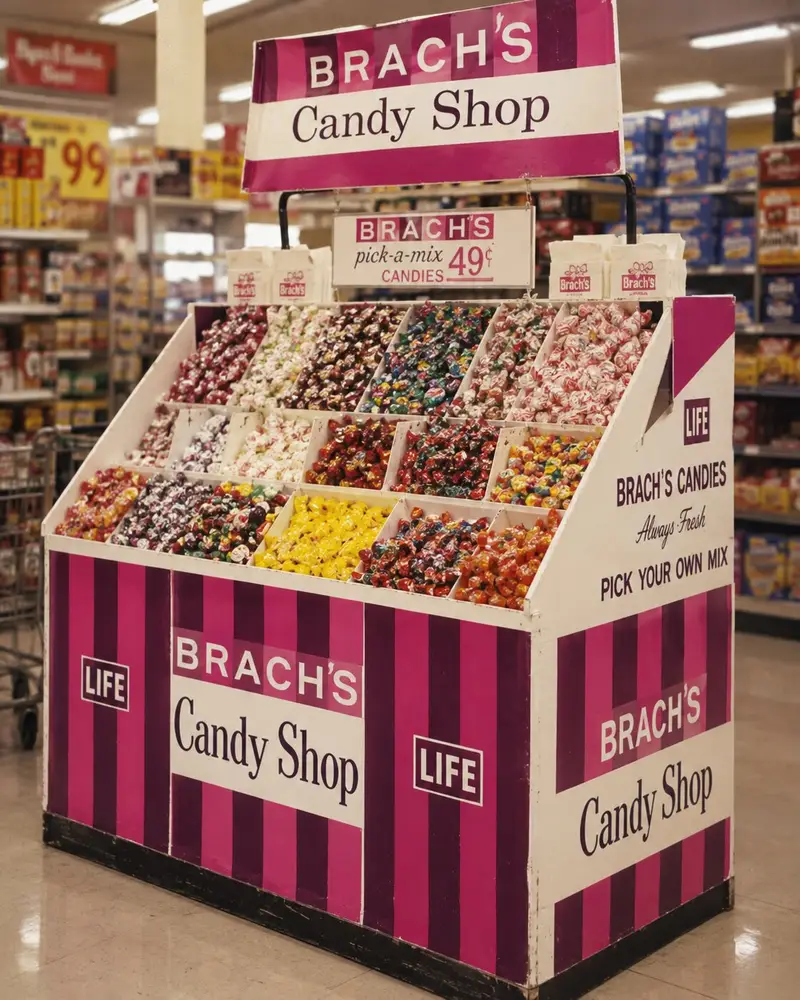
Before Brach’s was bought out and their production outsourced, it was a massive, powerhouse Chicago institution.
Emil J. Brach opened his “Palace of Sweets” in Chicago way back in 1904.
By 1923, the brand had built a sprawling factory on West Kinzie Street. For decades, it stood as the largest candy manufacturing plant in the entire country.
The Magic of the Candy Bin
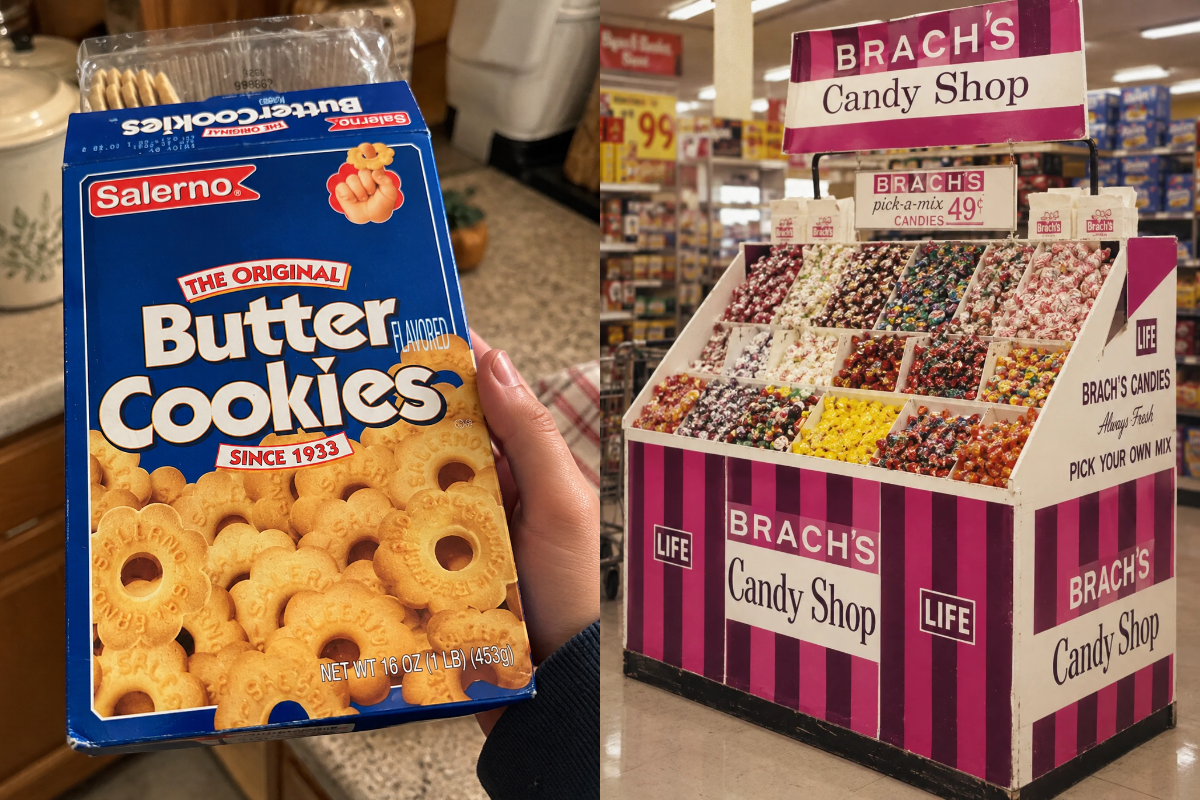
In 1958, Brach’s introduced a concept that changed grocery shopping forever: the Pick-A-Mix.
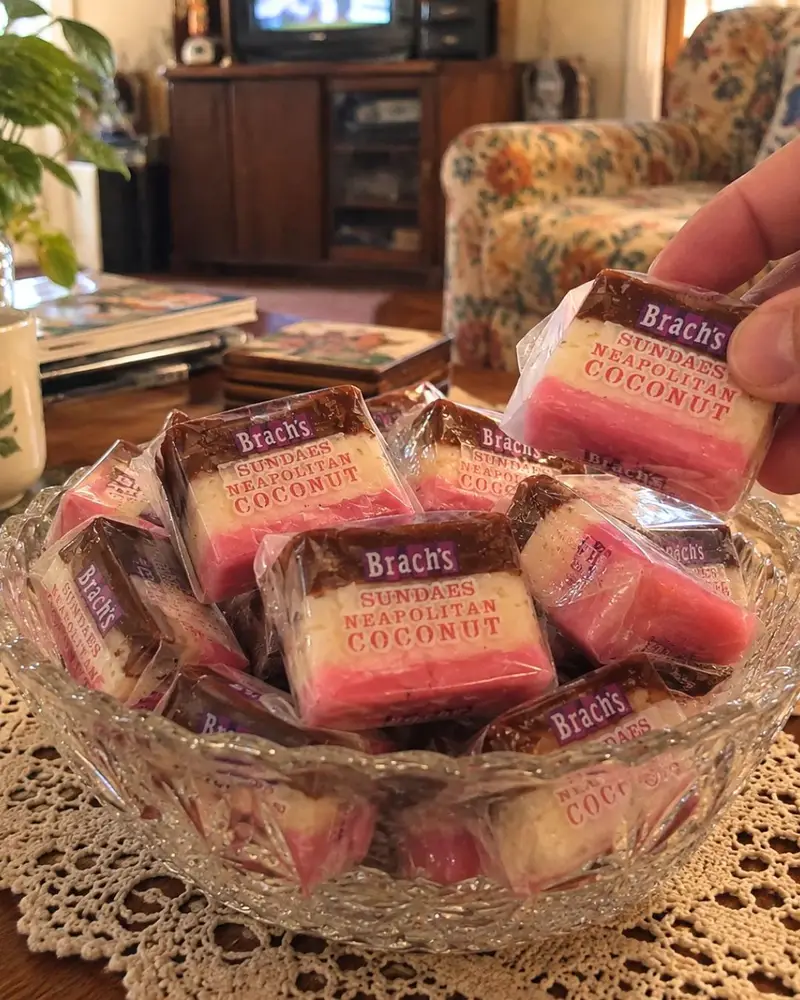
Almost every local grocery store featured a massive display of clear bins filled with wrapped candies.
You’d grab a paper bag, use the metal scoop, and mix up your own custom blend of butterscotch discs, jelly nougats, peppermints, and Neapolitan coconuts. You then paid by the pound at the register.
The legendary Chicago factory finally closed its doors in 2003 (the building even served as Gotham Hospital before being blown up in the movie The Dark Knight!).
Eventually, the classic Pick-A-Mix displays quietly vanished from our supermarkets.
5. Salerno Butter Cookies
“Mommy, Mommy, Salerno!”
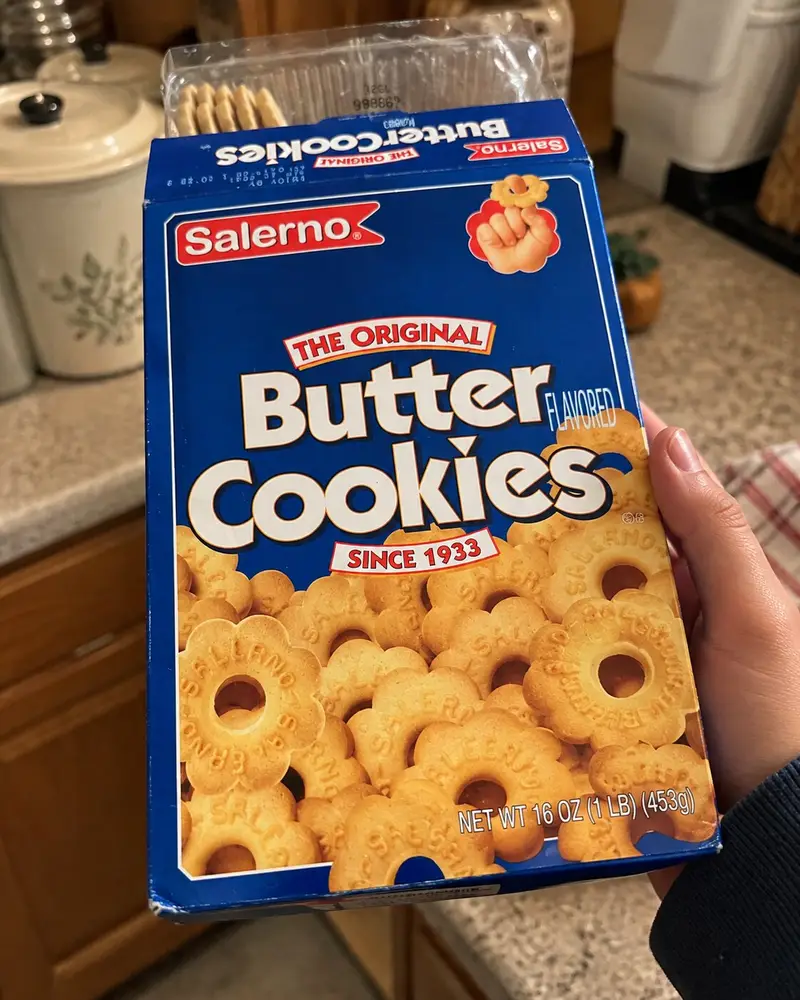
“Mommy, Mommy, Salerno!” was the television jingle that lived rent-free in the heads of every single Chicago kid.
The Salerno Biscuit Company was a beloved local brand, operating a major commercial bakery right on Division Street.
They made a wide variety of treats, including their beloved “Jingles” cookies during the holiday season.
The Finger-Hole Tradition
But the true standout of their lineup was the classic Salerno Butter Cookie.
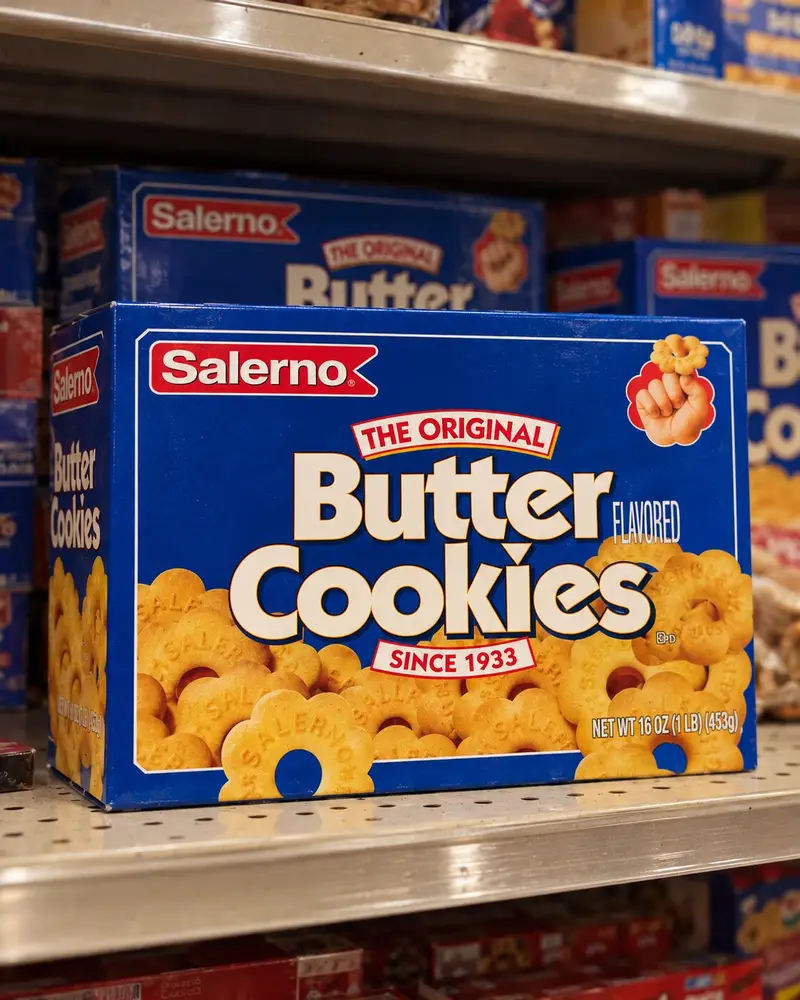
These thick, flower-shaped butter cookies featured a distinct hole right in the center.
Every child knew that the proper way to eat one was to slide it onto your index finger and nibble it off like a ring. They were also the absolute perfect cookie for dunking into a cold glass of milk.
While you can still find Salerno-branded cookies owned by a larger conglomerate today, true Chicagoans know they just don’t taste exactly like the thick, buttery originals made on Division Street.
6. Marshall Field’s Era Frango Mints
The 13th Floor Kitchen
Yes, you can technically still buy Frango Mints at Macy’s today, but true Chicagoans know a hard truth: they just aren’t the same.
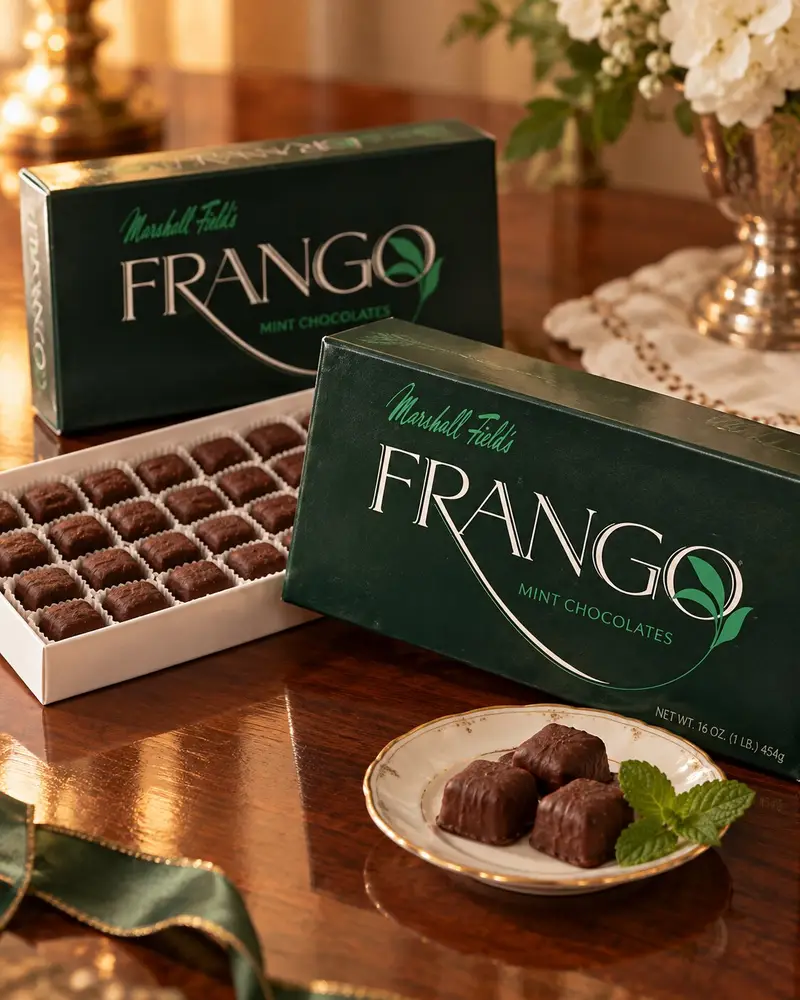
For decades, the original Frango Mints were lovingly crafted right on the 13th floor of the flagship Marshall Field’s building on State Street, which remains one of the most iconic buildings in Chicago.
Opening that iconic rectangular green box wasn’t just about eating chocolate; it was a quintessential hometown experience.
The Recipe Shift
When Marshall Field’s was famously (and controversially) taken over by Macy’s in 2006, the city went into mourning.
Prior to the buyout, candy production had already been outsourced, but the Macy’s takeover solidified the end of an era.
The recipe changed, the texture shifted, and that melt-in-your-mouth peppermint and chocolate combination lost its original magic.
If you remember eating a true Marshall Field’s Frango Mint during a holiday shopping trip on State Street, you know exactly how special they were.
7. Heinemann’s Bakeries
The Sunday Morning Staple
Before artisanal donut shops and massive supermarket bakery aisles took over, Chicago had Heinemann’s.
For nearly 80 years, Heinemann’s Bakeries were an absolute staple for weekend breakfasts across the Chicago neighborhoods where locals actually hang out, mostly servicing the South and West sides and the immediate suburbs.
They operated out of standalone shops and eventually set up beloved kiosks inside local Dominick’s grocery stores.
The Legendary Coffee Cake
If you walked into a Chicago home on a Sunday morning in the 1980s or 90s, there was a very high chance a Heinemann’s coffee cake was sitting on the kitchen table.
Their buttery, streusel-topped coffee cakes and rich brownies were simply unmatched.
Sadly, the family-owned company abruptly shut its doors and went bankrupt in 2007.
The sudden closure left generations of Chicagoans without their favorite morning treats, and local message boards are still filled with people begging for copycat recipes.
8. Moo & Oink
The Commercials That Raised Us
You cannot talk about Chicago food brands without talking about Moo & Oink.
Even if you never shopped there, if you grew up in Chicago, their theme song is permanently etched into your brain—a cultural touchstone as ingrained in our DNA as our unique Chicago slang terms.
Their legendary, low-budget local TV commercials featured employees dressed as a cow and a pig, dancing to infectious hip-hop and blues jingles. (“Moo & Oink! Moo & Oink!”)
The Ultimate BBQ Headquarters
Moo & Oink was a vital grocery chain, primarily serving Chicago’s South and West sides.
They were the undisputed champions of the summer cookout.
If you were hosting a backyard barbecue, this is where you went for your rib tips, hot links, and massive boxes of burgers.
The original chain went bankrupt and closed its brick-and-mortar stores in 2011. While the name was later purchased by another company to sell products in standard grocery stores, the bustling neighborhood energy of the original meat markets is sorely missed.
9. The Golden Era of Jays Potato Chips
Chicago’s Hometown Chip
For decades, if you were eating a potato chip in Chicago, it was a Jays chip. Period.
Founded by Leonard Japp Sr. in 1927, Jays became the dominant snack food of the Midwest, operating out of a massive plant on the South Side.
Shoestrings and O-Ke-Doke
Their classic ridged chips were incredibly salty, incredibly crunchy, and the perfect pairing for a Chicago hot dog. (We especially miss their discontinued flavors like Sour ‘n Dill).
But their specialty items were what made them legends.
Their Shoestring Potatoes came in a distinctive canister and were impossible to stop eating.
They were also the original creators of O-Ke-Doke Cheese Popcorn—the ultimate sticky, neon-orange cheese popcorn that coated your fingers and ruined your clothes.
Jays was sold off to Snyder’s of Hanover in 2007, and the local Chicago factory was eventually shuttered.
10. Green River Soda
The Prohibition Survivor
While Canfield’s Diet Chocolate Fudge had the 1980s in a chokehold, Green River Soda is a Chicago legend with roots stretching all the way back to 1916.
Originally created in Davenport, Iowa, the recipe was purchased by the Schoenhofen Edelweiss Brewing Company in Chicago in 1919 out of necessity.
When Prohibition hit, the local brewery needed to make a non-alcoholic beverage to survive.
The result was a bright, neon-green lime soda that was instantly a massive hit.
A Fading Legend
By the 1920s, Green River was actually the second most popular fountain drink in the entire Midwest, trailing only behind Coca-Cola.
It had a sweet, distinct, almost candy-like lime flavor.
Today, Green River still exists, but it has largely faded from daily life.
For the most part, it is now treated as a novelty drink, only reappearing in local Chicago pubs and grocery stores for the few weeks surrounding St. Patrick’s Day.
11. Burny Bros. Bakery
The Famous White Box With the Red String
If you grew up in the mid-20th century, bringing dessert to a family party meant stopping at a Burny Bros. Bakery.
Founded in 1932 by two French immigrant brothers, Camille and George Burny, this bakery chain was a beloved Chicago institution.
At their absolute peak, they operated dozens of retail stores across the city and surrounding suburbs, alongside a massive commercial baking plant on North Avenue.
Every true Chicagoan instantly recognized their signature packaging: a pristine white bakery box perfectly tied with a thin, red cotton string.
Butter Rings and French Pastries
Their glass display cases were stuffed with absolute magic.
From their legendary butter rings and gooey pecan rolls to their delicate French pastries and whipped cream cakes, the quality was unmatched by standard grocery store bakeries.
Burny Bros. was eventually acquired by Beatrice Foods in the 1960s.
Over the following decades, corporate production shifted, the original hometown charm was lost, and the iconic bakeries slowly disappeared from neighborhood street corners. Today, only the fond memories of untying those red-string boxes remain.
12. David Berg Hot Dogs
The Original Rival to Vienna Beef
Today, when you talk about a classic, dragged-through-the-garden Chicago hot dog (and the real reason we strictly ban ketchup on them), Vienna Beef is the undisputed king.
But if you ask the older generation of Chicagoans, they will fiercely argue that David Berg hot dogs were the superior frankfurter.
Established way back in 1860 by David Berg, this local meat brand actually predated the famous 1893 Columbian Exposition where the Chicago-style hot dog was supposedly born.
For over a century, their pure beef hot dogs, corned beef, and pastrami were the absolute gold standard for old-school delis and hot dog stands across the Midwest.
(Curious who serves the best modern dogs in the city today? We recently asked locals to vote for the absolute best hot dog in Chicago—and the results were highly debated!)
Absorbed by the Competition
David Berg hot dogs had a famously snappy casing and a deeply spiced, garlicky flavor profile that stood out from the rest of the competition.
However, as the commercial meatpacking industry consolidated in the late 20th century, the heritage brand struggled to maintain its independence.
In the early 1990s, David Berg was actually purchased by their biggest hometown rival: Vienna Beef.
While Vienna kept the David Berg name alive for a while for specific product lines, the original neighborhood legacy of the 130-year-old Chicago brand quietly faded into the background.
13. Kraml Dairy
The Milk Chute Deliveries
Before massive plastic jugs of milk were readily available at big-box superstores, Chicago relied on local dairies to bring breakfast right to their doors.
In the 1950s and 60s, Kraml Dairy was one of the most recognizable names in the city.
Operating out of the South Side of Chicago on South Tripp Avenue, Kraml’s delivery drivers were a fixture in local neighborhoods.
Homes often featured special “milk chutes”—small doors built directly into the side of the house where the milkman could drop off fresh glass bottles of Kraml milk and cream.
“Wake Up to Kraml”
The brand was heavily advertised on local Chicago television and radio.
Their famous slogan, “Wake Up to Kraml,” was known by almost every child eating a bowl of cereal before school.
As grocery store refrigeration technology improved and the milk delivery industry died out, Kraml Dairy struggled to keep up.
The dairy ultimately closed its doors and ceased operations, but those vintage, heavy glass bottles with the painted Kraml logo are still highly sought-after collector’s items at Midwestern antique malls today.
Honorable Mentions
We couldn’t fit all of our childhood favorites onto one list! Here are a few more local legends that deserve a shoutout:
- Dad’s Old Fashioned Root Beer: Developed in Chicago in 1937, this was once the undisputed king of the soda aisle.
- Mama Celeste Pizza: Before it was a nationwide microwave staple, Mama Celeste was a real Chicago woman making incredible local food.
- C.J. Vitner’s: The Vitner family provided incredible local snacks and chips for generations before corporate buyouts shifted the landscape.
Why Did So Many Classic Chicago Brands Disappear?
Looking at this list, you might be wondering how a city with such a rich food manufacturing history lost so many of its iconic brands.
The answer usually boils down to corporate consolidation.
During the 1980s, 1990s, and early 2000s, massive national conglomerates began buying up successful regional brands.
Once acquired, the production was often moved out of Chicago to cut costs. Recipes were altered to use cheaper ingredients, and if the brand didn’t perform well on a national scale, it was quietly discontinued.
While it makes sense from a corporate business perspective, it unfortunately meant the end of the line for the unique, regional flavors that defined Chicago’s neighborhoods.
Where to Find Retro Chicago Candies & Snacks Today
While you can’t walk into a Dominick’s and scoop Brach’s Pick-A-Mix anymore, there are still a few ways to scratch that nostalgic itch.
If you are exploring the city and want a taste of the past, check out these local spots:
- Margie’s Candies: Operating since 1921, this iconic Chicago parlor still serves homemade candies, fudge, and sundaes that taste exactly like they did a century ago.
- Local Vintage Candy Shops: Stores like Dulcelandia or suburban retro candy shops often carry hard-to-find treats like Green River Soda and classic wrapped nougats.
- Online Retro Retailers: Websites dedicated to vintage snacks are your best bet for finding modern recreations of 70s and 80s staples.
What Else Are We Missing?
Chicago’s food history is incredibly huge, and we know there are still dozens of local mom-and-pop brands, extinct grocery store treats, and incredible hidden gems in Chicago left to uncover.
Did you grow up eating Maurice Lenell pinwheels at Grandma’s house?
Do you remember grabbing hot bags of peanuts from The Nut House?
What discontinued Chicago food brand or retro snack do you miss the most?
Let us know in the comments below! We read every single one and love keeping the history of these classic local brands alive.
JM
AK