The story begins with a Russian immigrant teaching theatre games to kids on the West Side. It ends with Tina Fey, Stephen Colbert, and half the cast of SNL.
If you’ve laughed at a Saturday Night Live sketch in the last 50 years, there’s a good chance the comedian making you laugh learned how to be funny in Chicago. Same goes for SCTV. Same goes for half the cast of The Bear, 30 Rock, The Office, Parks and Rec, and Key & Peele.
This is not an exaggeration or a Chicago pride thing. It’s a documented pipeline that runs from a small storefront on East 55th Street in 1955 to almost every comedy room in America today.
Improv comedy as the world now knows it, the audience-suggestion, no-script, ensemble-driven art form that powers SNL, UCB, sitcoms, and corporate training seminars, was invented here. Not borrowed. Not adapted. Invented. By a handful of people who mostly didn’t realise that’s what they were doing.
Here’s the story.
It Started With A Woman And Some Children’s Games
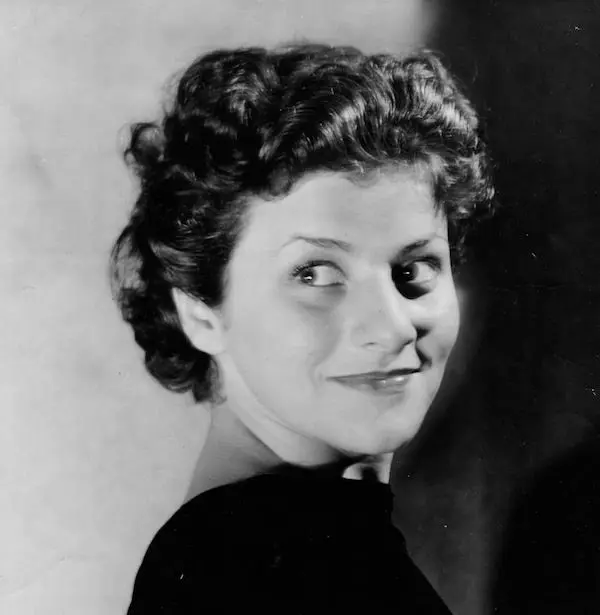
Before there was a Second City, before there was an SNL, before anyone had heard the phrase “yes, and,” there was Viola Spolin.
Spolin grew up in the Humboldt Park neighbourhood in the early 1900s, the daughter of Russian Jewish immigrants. Her family loved to perform. They played games at home. According to her granddaughter Aretha Sills, who spoke to WTTW for their documentary on Spolin’s life, “there was a tradition of play in the family.”
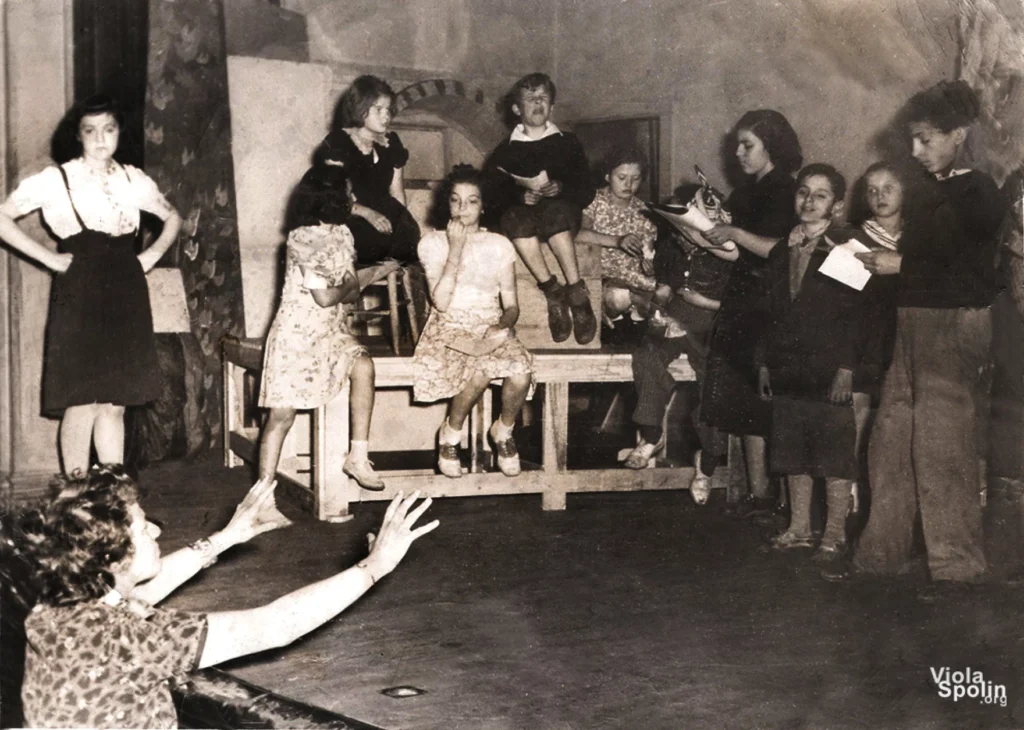
That tradition turned into a career. Spolin trained under Neva Boyd at Jane Addams’ Hull House, where she learned how to use games to teach immigrant children English and social skills. She took what she learned and built something new. Theatre Games. Hundreds of them. Exercises like Emotional Symphony, Gibberish Relay, and Building a Story, designed to get actors to stop thinking and start responding.
Her core idea: most performers block their own creativity trying to please an audience. Spolin called it the “Approval/Disapproval Syndrome.” Her games were designed to make that block disappear.
She wrote them all down. The book is called Improvisation for the Theater. About 220 games and exercises. It’s still in print. Every improviser in America has either read it or been taught by someone who did.
Local tip: The Jane Addams Hull-House Museum is free and open to the public. Most visitors don’t know it’s also the spiritual birthplace of modern improv comedy.
The University Of Chicago, A Storefront, And A Backroom Bar
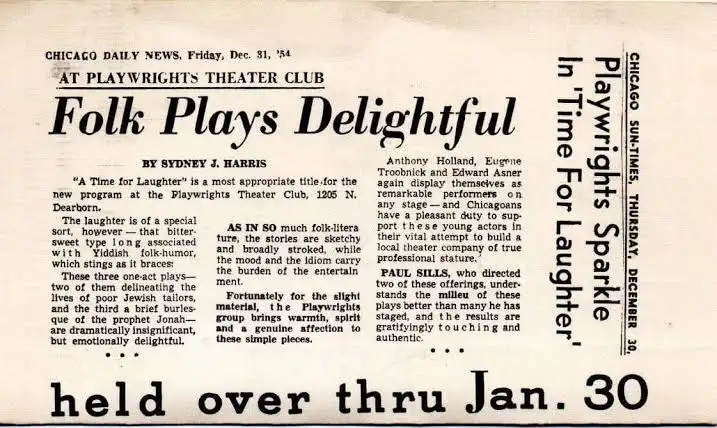
Spolin’s son Paul Sills grew up watching her teach. He learned the games as a child. When he got to the University of Chicago in the late 1940s, he started using them to train other students.
By the early 1950s, Sills had co-founded a small theatre group called Playwrights Theater Club, working out of a former Chinese restaurant in Hyde Park. The cast included names that would matter later: Mike Nichols. Elaine May. Barbara Harris. They performed traditional plays but trained on Viola’s games.
Then in 1955, Sills teamed up with David Shepherd, a producer who had come from New York frustrated with what he called the “anemic” theatre scene there. Shepherd wanted to make theatre for “the common man.” Cabaret-style, political, immediate.
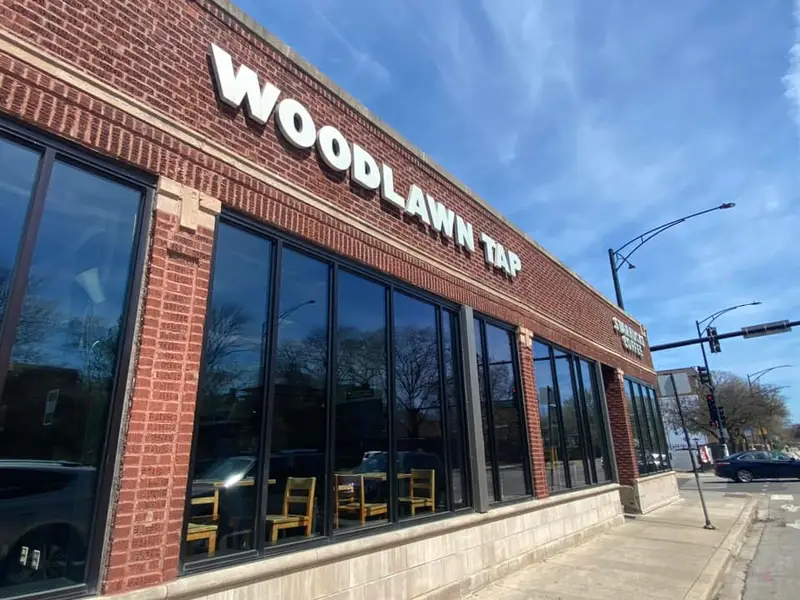
They opened a storefront theatre near the University of Chicago campus, around the corner from Jimmy’s Woodlawn Tap. They called it The Compass.
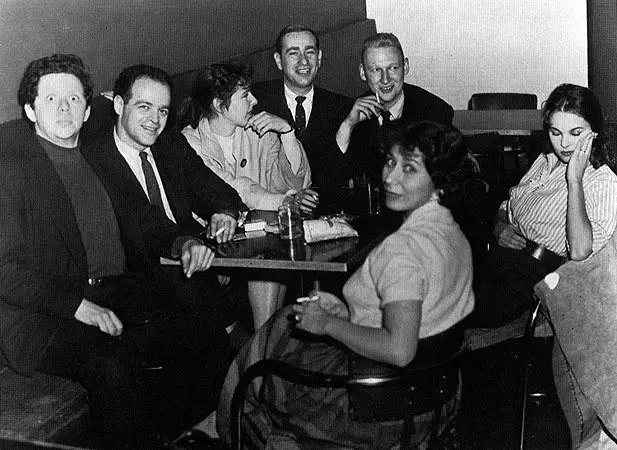
The Compass Players opened in July 1955. The plan was to perform short political plays. The problem: they couldn’t find enough scripts. As Shepherd later admitted, “I was forced to go into improvisation because I found that nobody could write the scripts I needed for the theater that was in my head.”
So they did something nobody had really done before. They built scenarios. Locations, motivations, conflicts. No dialogue. The actors made it up live, using Viola Spolin’s games as training. They asked the audience for suggestions.
That’s it. That’s the moment. July 1955. A storefront next to a college bar in Hyde Park. The first professional improvisational theatre in America.
10 Hidden Architectural Details Chicago Locals Walk Past Every Day (But Tourists Never Notice)
Why It Had To Be Chicago
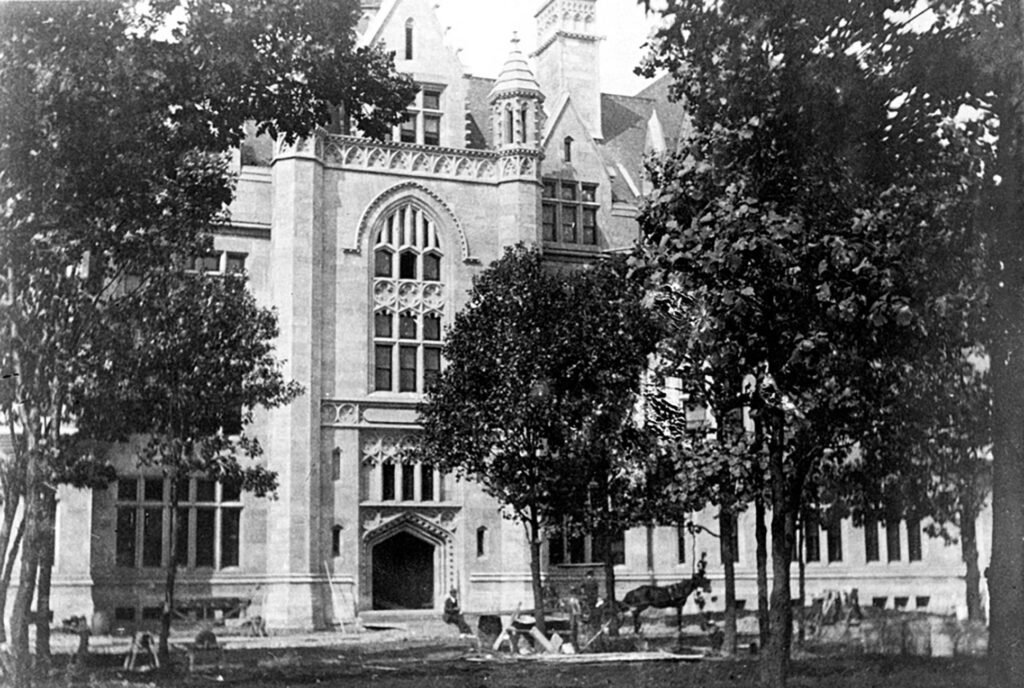
You could ask why this happened here and not in New York or Los Angeles. The Compass founders had an answer.
New York theatre in the 1950s was three-act plays and Broadway formality. LA was studio work and screen acting. Chicago had something neither city had: the University of Chicago, full of smart, restless students with time on their hands, plus a cabaret tradition imported from Europe by Jewish immigrants, plus a city culture that actually liked the idea of taking yourself less seriously.
The name “Second City” itself, which would come a few years later, was a joke about all of this. A.J. Liebling wrote a snide three-part piece for The New Yorker in 1952 calling Chicago “the Second City,” meaning second-rate, second to New York. When Sills and his collaborators opened their new theatre in 1959, they named it after the insult. That’s the Chicago move: take the slight, embrace it, build something better out of it.
If you want to understand Chicago’s whole personality, that’s it in one decision.
1959: The Birth Of The Second City
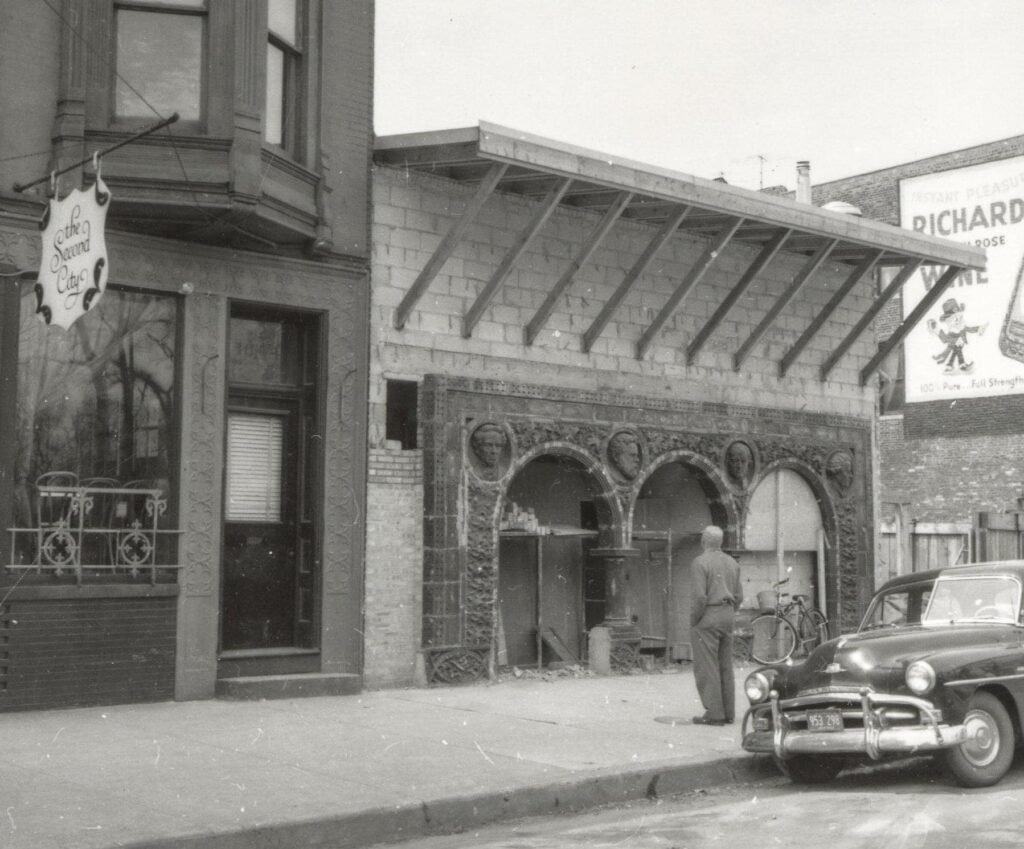
The Compass Players ran for a few years and then fell apart. Shepherd left for New York. Some of the cast went to St. Louis. Some went to Broadway, including Mike Nichols and Elaine May, who’d become superstars.
But Paul Sills wasn’t done. In 1959 he reunited with two old Compass collaborators: Howard Alk and Bernie Sahlins. Sahlins, a University of Chicago alum and World War II veteran, had sold his stake in a tape recorder business to fund the new venture. They had $6,000 in startup money.
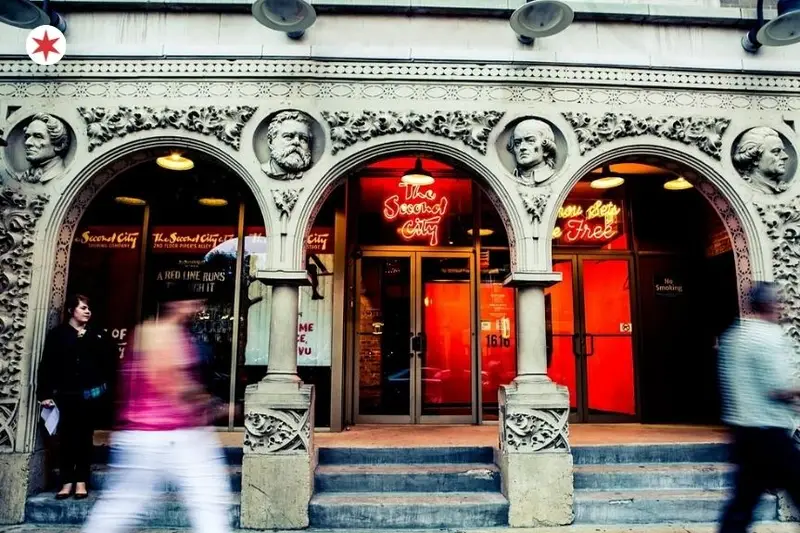
They found a former Chinese laundry called Wong Cleaners & Dyers at 1842 North Wells Street in Old Town. They converted it into a cabaret-style theatre. Howard Alk picked the name from the Liebling article.
The Second City opened on December 16, 1959. It was snowing. The carpet was still being nailed down as audiences walked in. Barbara Harris, formerly of the Compass, opened the show by singing “Everybody’s in the Know.” Tickets were $1.50 on weeknights, $2 on weekends. Sahlins and Sills flipped burgers in the kitchen between acts.
The Move To 1616 North Wells
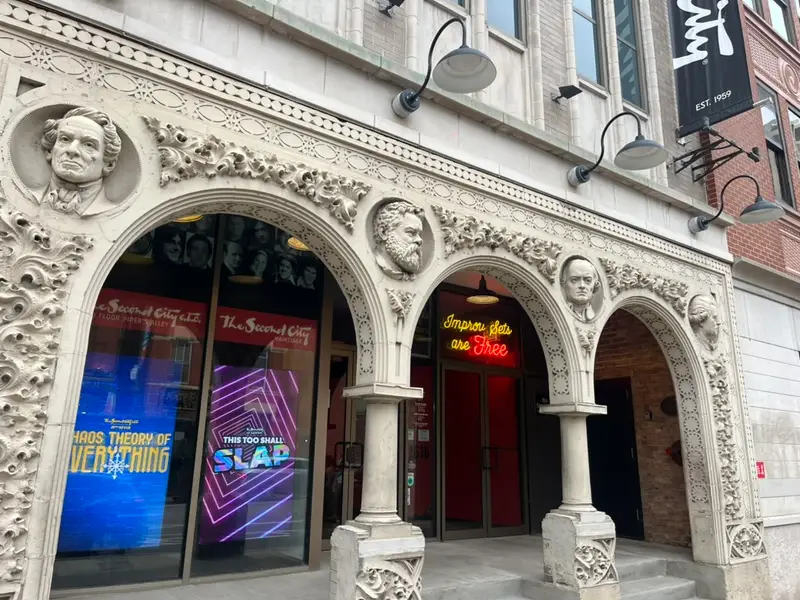
In 1967, the building housing The Second City was sold to make way for a condominium tower. The whole block got obliterated. The theatre moved two blocks south to 1616 North Wells Street, where it’s been ever since.
This is the address you can actually visit. The complex now has multiple stages: the Mainstage, the e.t.c. Theater, UP Comedy Club, Donny’s Skybox, the de Maat Studio, Judy’s Beat Lounge, and the Blackout Cabaret. The accessible entrance is at 230 W. North Ave.
The First Pipeline: 1960s And 1970s
The Second City started exporting talent almost immediately. In 1961, original cast member Alan Arkin took From the Second City to Broadway. In 1962, the troupe started doing shows in London. In 1973, Bernie Sahlins opened a Second City branch in Toronto.
Then in 1975, a brand new TV show called Saturday Night Live premiered on NBC. Lorne Michaels needed a cast. He pulled John Belushi from Second City Chicago, and Dan Aykroyd and Gilda Radner from the Toronto branch.
Two years later, Bill Murray joined SNL from Second City Chicago.
Around the same time, a group of Toronto Second City alumni created SCTV with Chicagoan Harold Ramis, featuring John Candy, Catherine O’Hara, Eugene Levy, Andrea Martin, Joe Flaherty, and Dave Thomas.
The pipeline had opened. It never closed.
Del Close, The Harold, And iO
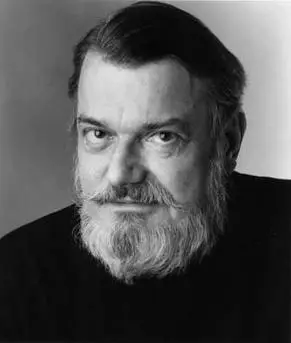
The Second City told you what improv was. iO Theatre, which opened in 1981, told you what improv could be.
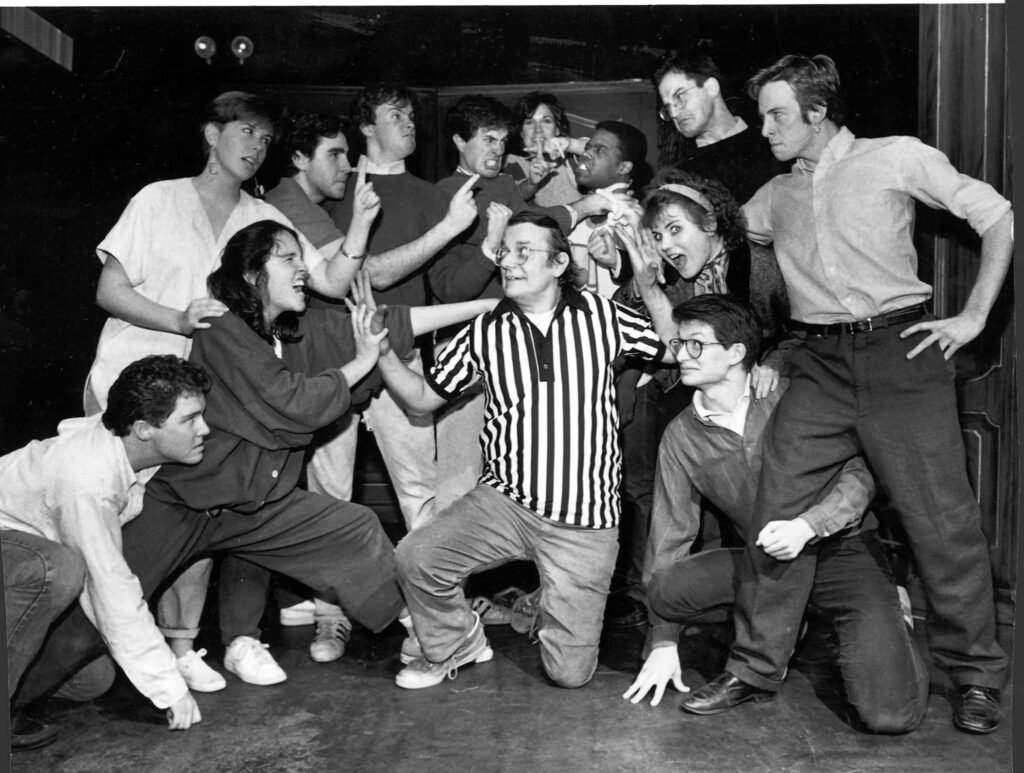
The founders were Charna Halpern and Del Close. Halpern had been working with David Shepherd, the same Shepherd who co-founded the original Compass, on competitive improv events called ImprovOlympic. The concept was Whose Line Is It Anyway-style team competitions, fun but limited.
Halpern wanted more. She approached Del Close, the legendary Second City director who’d worked with Belushi, Murray, and most of the SNL pipeline. Close had been developing a long-form improv structure he called The Harold.
The Harold isn’t a sketch. It’s a roughly 30-minute improvised piece built from a single audience suggestion, structured in three rounds of three scenes plus group games, with themes and characters that recur and connect by the end. When it works, it feels less like comedy and more like a play that wrote itself on stage.
Close and Halpern made The Harold the foundation of iO Theatre, which became the home of long-form improv in America. The pipeline shifted. Now performers trained at iO, then performed at Second City, then went to SNL or LA. The 1990s and 2000s SNL casts read like an iO graduating class: Tina Fey, Amy Poehler, Rachel Dratch, Seth Meyers, Jason Sudeikis, Cecily Strong, Aidy Bryant. Stephen Colbert. Mike Myers. Chris Farley. Bob Odenkirk. Vince Vaughn.
In 1994, Close and Halpern co-wrote Truth in Comedy with Kim “Howard” Johnson, the first book to systematically document The Harold’s structure. It became the standard text for long-form improv teaching worldwide. UCB in New York and Los Angeles, founded by iO alumni Amy Poehler, Matt Besser, Ian Roberts, and Matt Walsh, built its entire training system on it.
Del Close died in 1999, five days before his 65th birthday. His skull, by the way, is reportedly part of the prop collection at the Goodman Theatre, though the actual provenance has been disputed for years. That’s a story for another article.
The SNL Pipeline By The Numbers
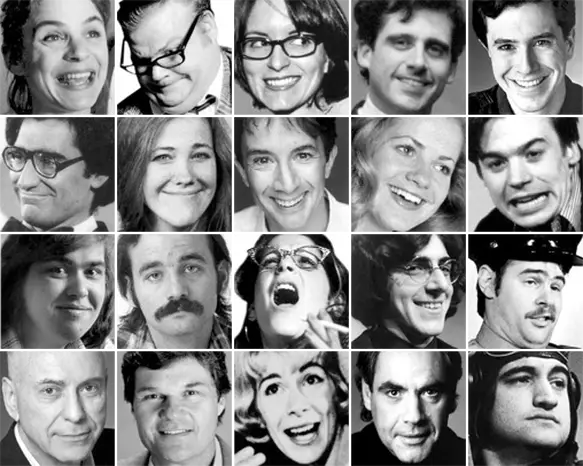
The list of SNL cast members and writers who came through Second City, iO, or both is staggering. A non-exhaustive run:
From The Second City: John Belushi, Bill Murray, Dan Aykroyd, Gilda Radner, Tina Fey, Amy Poehler, Stephen Colbert, Steve Carell, Chris Farley, Mike Myers, Cecily Strong, Aidy Bryant, Tim Robinson, Tim Meadows, Jason Sudeikis, Horatio Sanz, Rachel Dratch, Jack McBrayer, Joe Flaherty (SCTV).
From iO Chicago: Tina Fey, Amy Poehler, Stephen Colbert, Chris Farley, Mike Myers, Tim Meadows, Seth Meyers, Jason Sudeikis, Rachel Dratch, Vanessa Bayer, Cecily Strong, Tim Robinson, Bob Odenkirk, Andy Dick, Vince Vaughn.
The overlap is the point. Most of these people trained at iO, performed at Second City, then went to SNL. The pipeline isn’t an exaggeration. It’s a documented route. Lorne Michaels’ team scouts Chicago. They have for 50 years.
What People Don’t Realise About Improv’s Reach
Improv didn’t stay in comedy. Once Close and Halpern published Truth in Comedy, the techniques started spreading into everywhere.
Corporate training programs use improv exercises to teach collaboration, listening, and quick thinking. Medical schools use Spolin-derived games to train doctors in patient communication. Law firms send associates to improv workshops. Tech companies run them as team-building. The Second City has an entire corporate division called Second City Works.
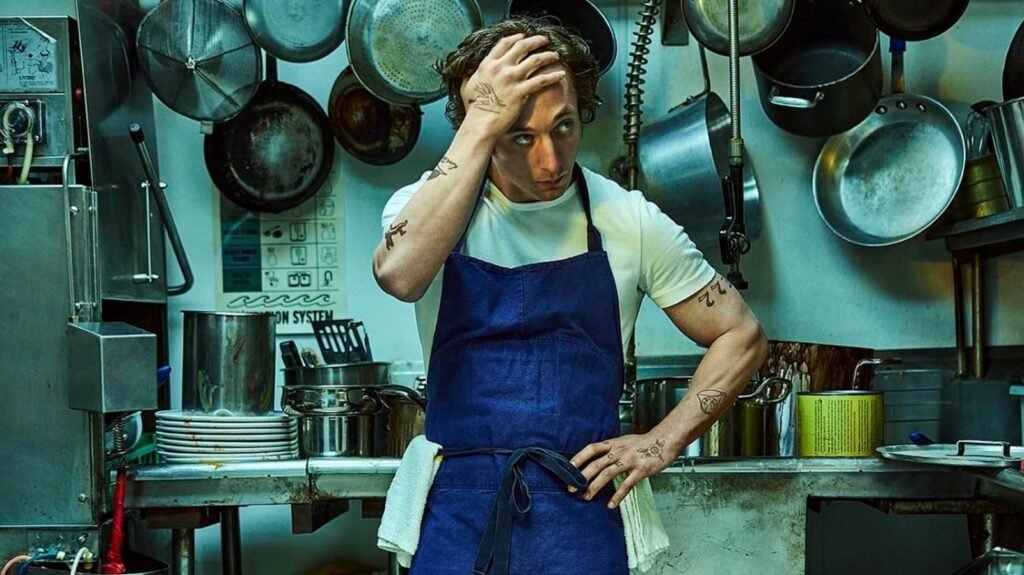
Watch any episode of The Bear, set and filmed in Chicago, and you’ll see actors with improv training in nearly every scene. The kitchen banter style, the overlapping dialogue, the loose-feeling realism, that’s improv-trained ensemble work. Lead actor Ebon Moss-Bachrach has talked openly in interviews about improv shaping how the show’s scenes get blocked and rewritten on the day.
The thing Chicago invented in a storefront in 1955 is now baked into how American television comedy looks, sounds, and feels.
How To See Improv Done Right In Chicago Today
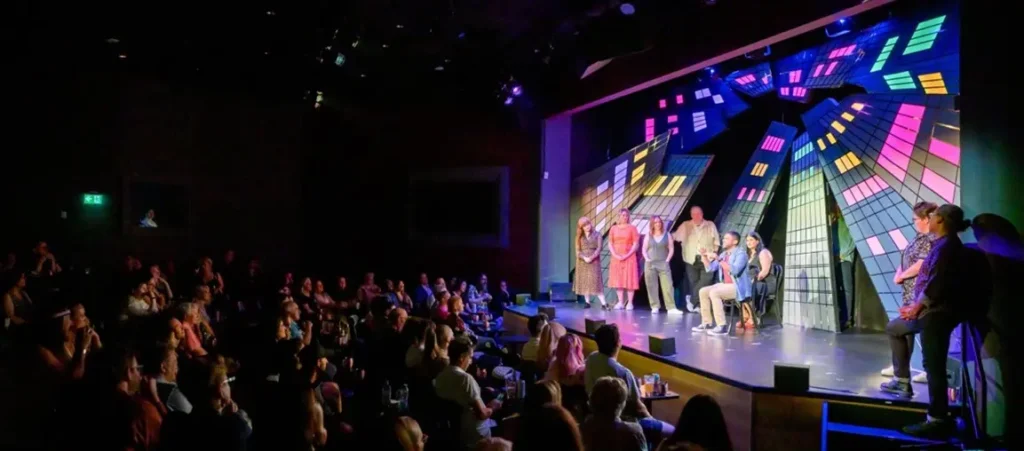
Here’s the honest current state of Chicago improv, since the pandemic changed a lot:
Second City is still the flagship. Mainstage tickets run roughly $40 to $60 depending on the night and the show. The current revue, like every revue since 1959, runs for several months and gets refreshed when cast members get poached by SNL or LA. Buy in advance for weekends.
iO reopened in late 2022 under new ownership at the Kingsbury Street location. Some original teams are back. The pricing is lower than Second City and the long-form is still the closest you’ll get to seeing how SNL stars actually train.
The smaller theatres (Annoyance, Comedy Sportz, the indie venues) run cheap, scrappy shows nightly. The talent level is high. Many of these performers will be the names everyone knows in five years.
If you want a guided experience, several walking tours include the Second City building and the history of Old Town’s comedy scene. The Chicago Architecture Walking Tour covers the broader Old Town neighbourhood including the Wells Street corridor.