

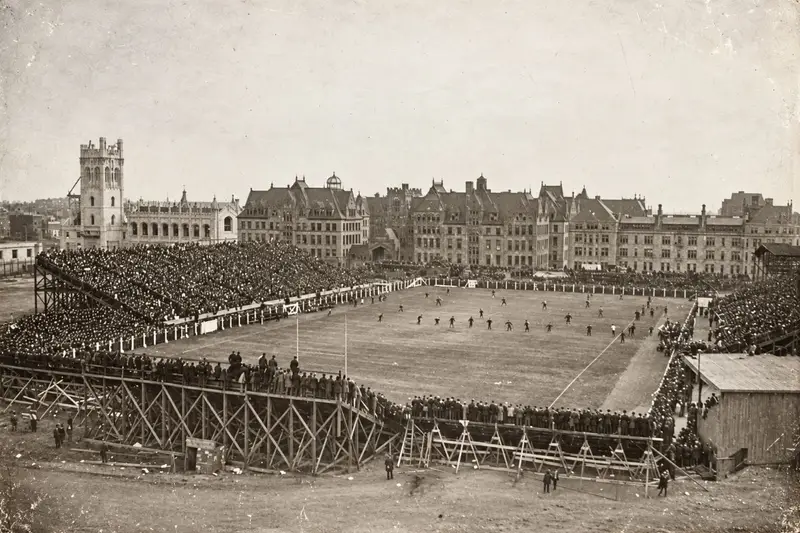
In the winter of 1942, scientists built a fully functional nuclear reactor with zero radiation shielding in the middle of a densely populated urban neighborhood.
This is not a Cold War urban legend or a sci-fi myth.
The world’s first artificial nuclear chain reaction happened directly beneath the viewing stands of the University of Chicago’s abandoned Alonzo Stagg Field.
If the math was wrong, a runaway atomic reaction would have instantly leveled Hyde Park and altered the course of human history.
The Bizarre Irony of the Banned Football Team
For generations of Chicagoans, the story of the Manhattan Project feels like it belongs in the remote deserts of New Mexico. But the Atomic Age actually began inside a freezing, unventilated rackets court on the South Side.
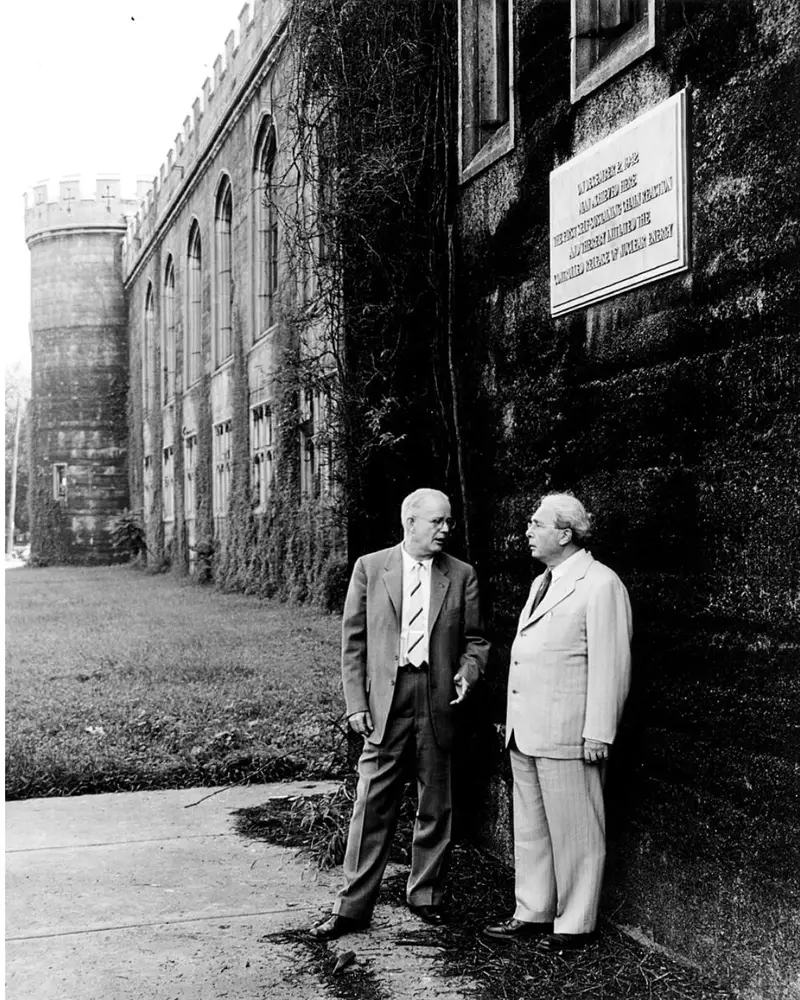
The military needed a massive, secretive space with high ceilings to build their weapon core. They found the perfect hideout because of a controversial local rule.
In 1939, University of Chicago President Robert Maynard Hutchins famously abolished the school’s football program. He argued that big-time college athletics were a distraction from serious academic inquiry. Banning football left the massive, subterranean athletic facilities entirely abandoned.
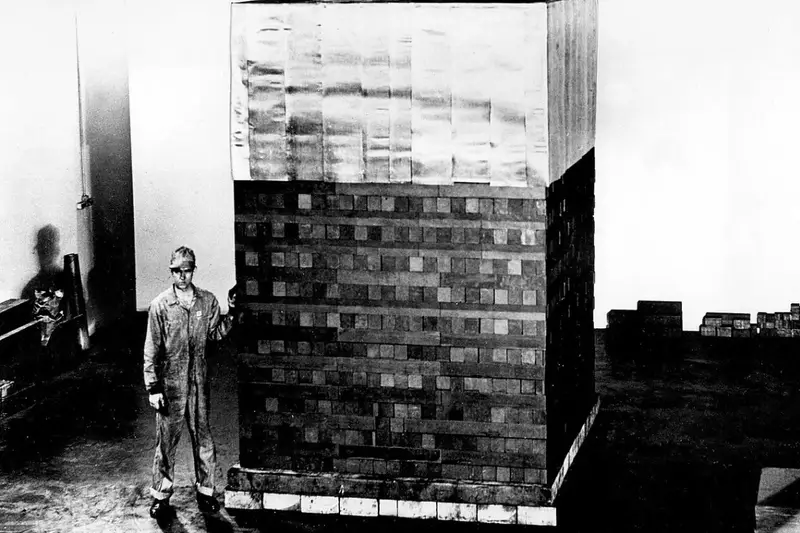
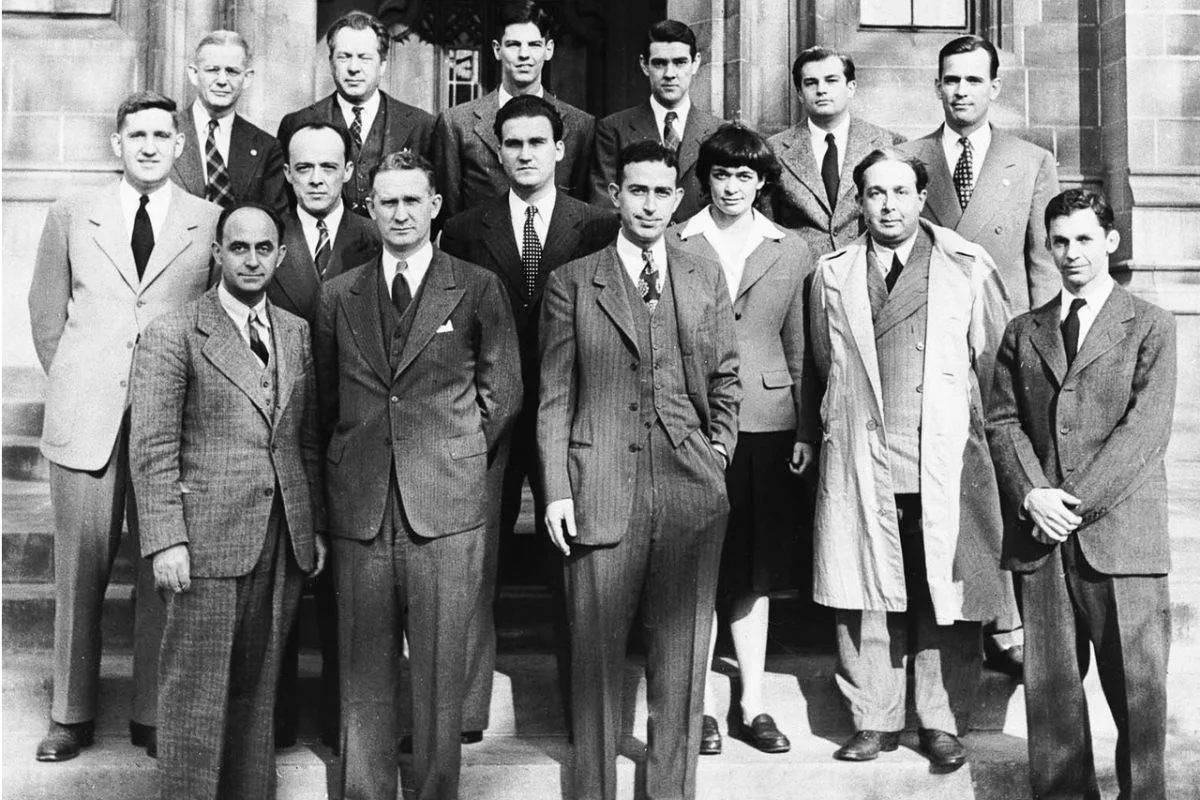
Led by Italian physicist Enrico Fermi, a team of about 30 scientists took over the squash courts. Fermi was a 1938 Nobel laureate who fled Fascist Italy to protect his Jewish wife from anti-Semitic laws. He designed a massive, egg-shaped ziggurat structure measuring 20 feet tall and 25 feet wide.
The Black-Faced Laborers of the Squash Court
The physicists calculated the math, but the physical construction of Chicago Pile-1 (CP-1) was brutal manual labor. The reactor consisted of 57 layers of materials, including 45,000 ultra-pure graphite blocks.
The government hired local dropouts, day laborers, and former football players to pull 12-hour shifts. They sawed and carved the heavy graphite blocks by hand. Machining graphite produced an omnipresent, heavy black dust that coated the entire rackets court.
The floor became slicker than ice, and the air was thick with soot.
Laborers stripped to the waist in the unheated room because they were working up a massive sweat. They emerged from the squash court completely covered in jet-black dust, looking like Appalachian coal miners.
The graphite particles got trapped so deeply in their pores that many workers sweat out black residue for weeks. Together, they stacked 360 short tons of graphite and 5.4 short tons of pure uranium metal.
10 Hidden Architectural Details Chicago Locals Walk Past Every Day (But Tourists Never Notice)


A Suicide Squad and a Rubber Balloon
The most terrifying part of the $1 million experiment was the lack of a modern cooling system. Major military figures had deep misgivings about a runaway chain reaction, but they ultimately deferred to Fermi’s slide-rule calculations.
The team even ordered a massive, square rubberized fabric envelope from the Goodyear Tire & Rubber Company. Goodyear engineers were completely baffled by the request for a non-aerodynamic giant fabric box.
Fermi planned to seal the entire reactor inside the balloon to pump the air out if ambient air absorbed too many neutrons.
The ultimate fail-safe line of defense was remarkably low-tech.
A scientist named Norman Hilberry stood on a catwalk holding a heavy axe. If the automated systems failed, his job was to manually chop a rope and drop an emergency control rod into the pile.
Below him stood a three-man “liquid-control squad” waiting in the shadows. They were ready to flood the pile manually with a cadmium-nitrate solution if the reaction began to run away. The team also included Leona Woods, a brilliant 23-year-old physicist and the only woman present.
The Chianti Bottle and the Forest Grave
On December 2, 1942, the tension in the room peaked. At 3:25 PM, physicist George Weil pulled the final cadmium control rod out to its designated mark. The recording instruments showed the neutron count rising exponentially.
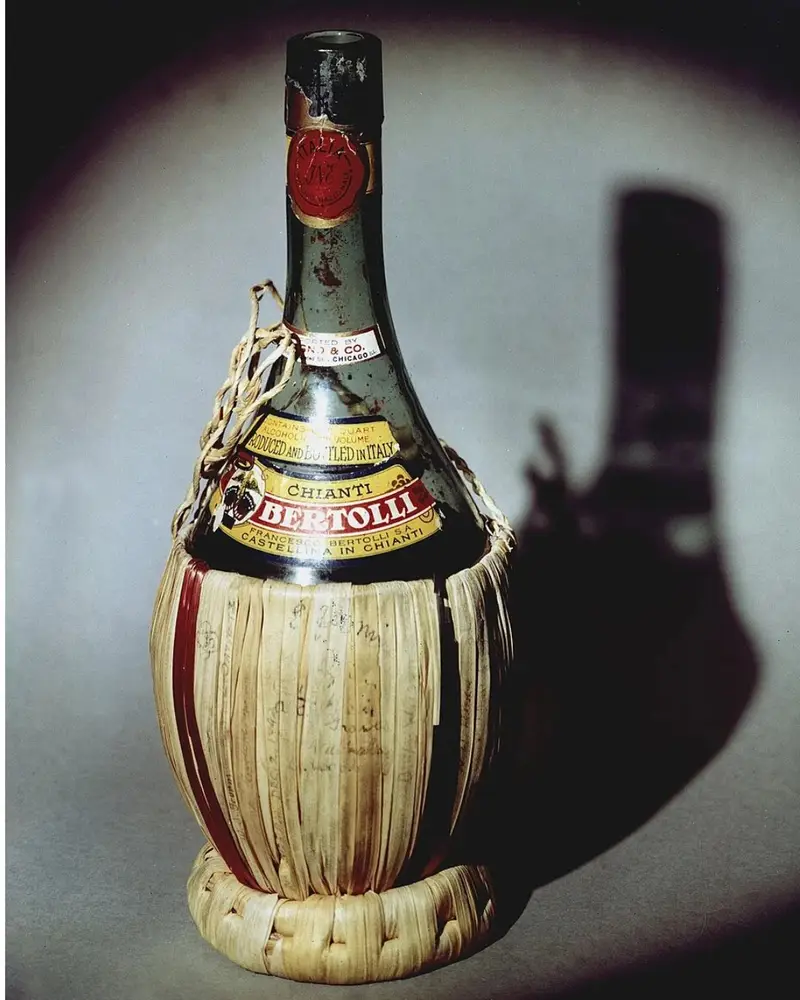
The reactor achieved criticality and operated for just 28 minutes.
It generated a maximum thermal output of just 0.5 watts, barely enough energy to power a flashlight bulb. At 3:53 PM, Fermi ordered the pile shut down, and the team silently passed around a straw-wrapped Bertolli Chianti bottle to celebrate.
Met Lab director Arthur Compton immediately placed a coded phone call to military brass. He simply said, “The Italian navigator has landed in the New World.”
The reactor did not stay under the bleachers for long. In early 1943, the top-secret pile was carefully taken apart, brick by brick. The radioactive graphite and uranium blocks were moved out to Red Gate Woods, a forest preserve southwest of the city.
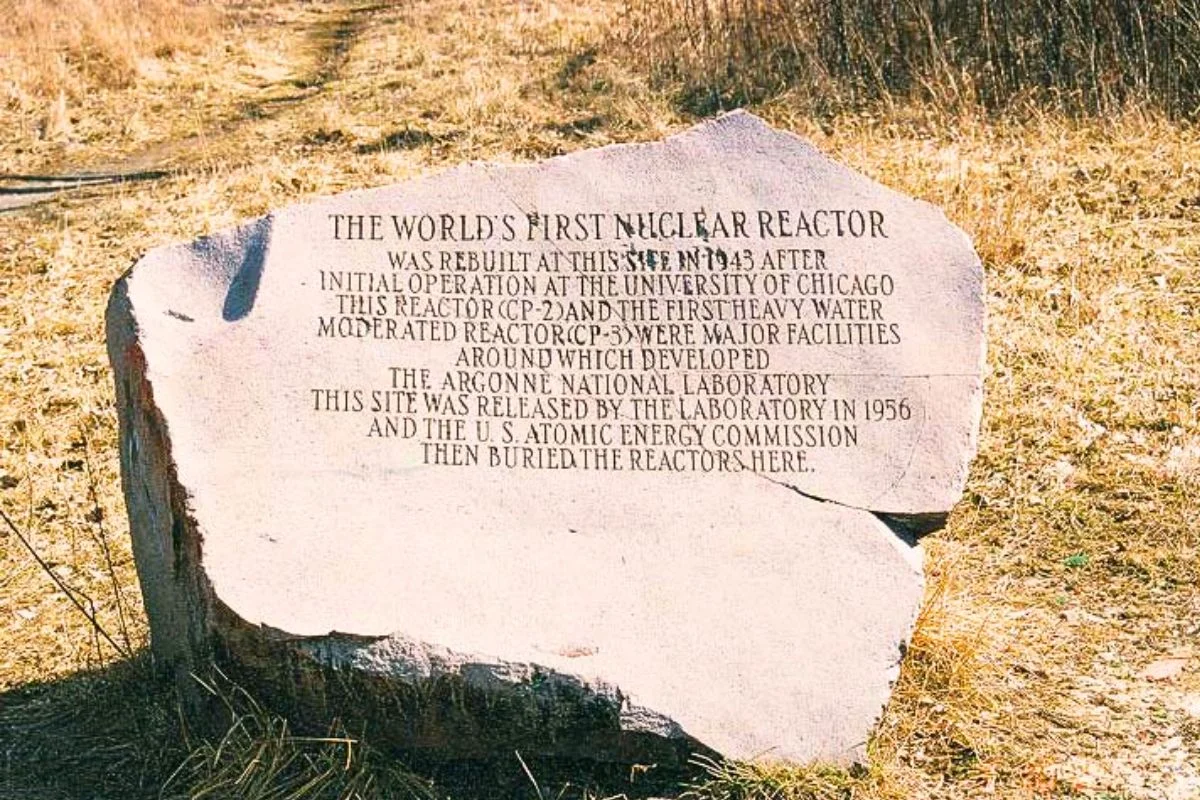
Today, hikers in the Palos Forest Preserve can still stumble upon a clearing with two stone markers. These stones warn people not to dig because the remains of the world’s first nuclear reactors are entombed directly beneath their boots.
The original squash court is gone, but the heavy legacy of that freezing December afternoon remains permanently burned into the soil of the South Side.
How to Visit the Chicago Pile-1 Site Today
The Modern Landmark: The Henry Moore “Nuclear Energy” Sculpture and the 5th Anniversary Bronze Wall Plaque.
Exact Location: The east side of Ellis Avenue, between 56th and 57th Streets, on the University of Chicago campus in Hyde Park.
The Footprint: Stagg Field was demolished in 1957. The precise location of the rackets court is now occupied by the university’s Regenstein Library and a dedicated granite plaza.
Transit Directions: Take the CTA Green Line to the Garfield station, then transfer to the #55 Garfield bus eastbound. Get off at the 55th & Ellis stop and walk one block south.