


Let’s address the elephant in the room immediately.
Chicago has a reputation.
If you only watch the national news, you probably think we dodge bullets on our way to get coffee and that Michigan Avenue is a scene from a dystopian movie.
But if you actually live here—like the millions of us who take the L and walk these streets every single day—you know the reality is very different.
Is Chicago safe for tourists? Yes. Absolutely.
But like any big city, you can’t simply walk around with your head in the clouds.
Here is the no-nonsense safety guide for visiting Chicago, sourced directly from locals who do it every day.
1. Understand The “Two Chicagos”

Chicago is massive. We are talking 234 square miles.
The violent crime you hear about on the news is tragic, but it is also hyper-localized.
It mostly happens in specific neighborhoods on the South and West sides that tourists rarely, if ever, have a reason to visit.
If you are sticking to Downtown, River North, The Loop, Lincoln Park, Wrigleyville, or the West Loop, the biggest threat you have to worry about is paying too much for a cocktail, not violent crime.
Don’t wander into random neighborhoods at 2 AM without doing research, but don’t assume the whole city is a war zone either.
2. The Real Threat is “Apple Picking”
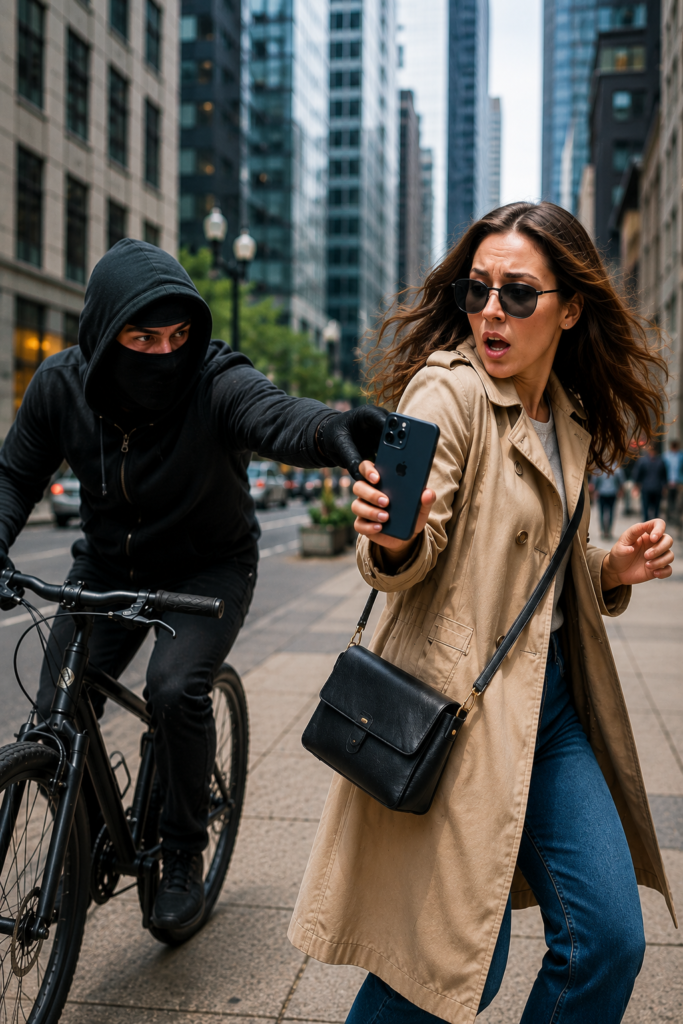
You honestly shouldn’t be worried about a shootout; you should be worried about your iPhone.
“Apple Picking”—or phone snatching—is practically a sport downtown. If you are standing on a corner in River North holding your phone loosely while staring at Google Maps, you are a target.
A guy on a bike can snatch that device out of your hand before you even register what happened. This also applies on the train: do not sit right next to the doors with your phone out as they are opening or closing.
Grip your phone with both hands, don’t leave it sitting on the table at brunch on the sidewalk, and if you are lost, step into a store lobby to check your map rather than standing in the middle of the sidewalk looking confused.



3. The “Clean Car” Rule
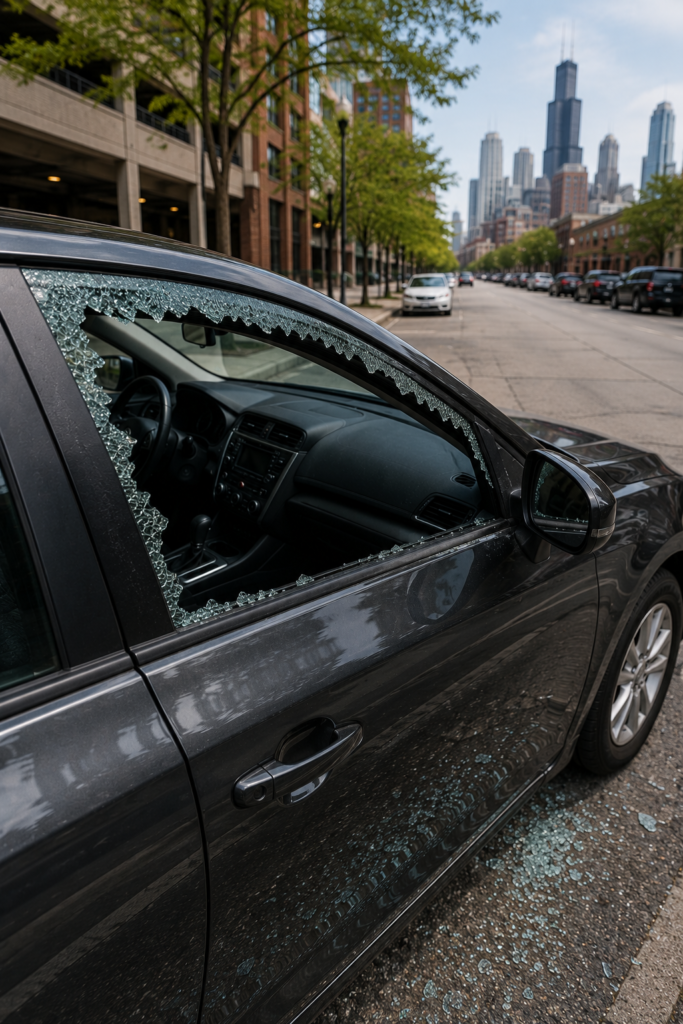
If you bring a car, or even a rental, follow this rule religiously: Leave nothing visible.
It doesn’t matter if your bag is empty or just contains gym clothes. If a thief sees a backpack, a coat, a handful of change, or even a white charging cord, they will smash the window to check.
If they see a charging cord, they assume a device is attached to the other end. Park in a garage when you can, but wherever you park, the car interior should look like it just rolled off the factory floor.
4. Never Get In The Empty Train Car
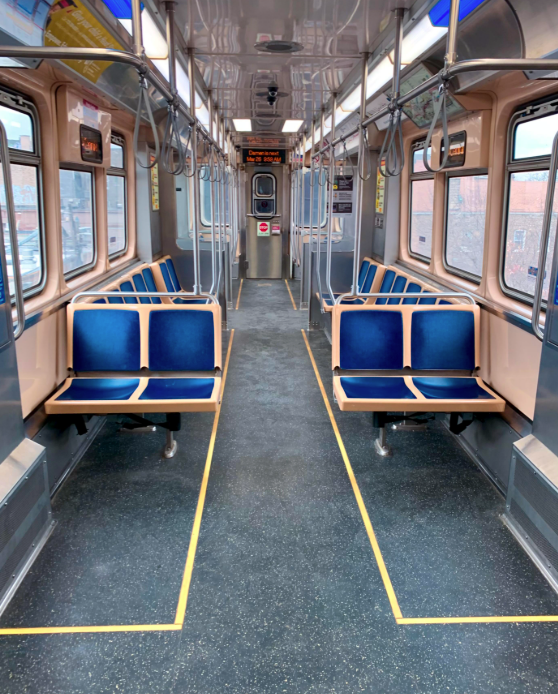
Taking the L isn’t a death wish; it’s how we get to work.
But there is one golden rule every Chicagoan knows: If a train pulls up during rush hour and one car is completely empty while the others are packed, do not get in the empty car.
It is empty for a reason. Usually, that reason is a smell that will haunt you for days, or a biohazard situation you don’t want to step in. Just squeeze into the crowded car with everyone else.
5. Know The “Cinderella Hour” for the L
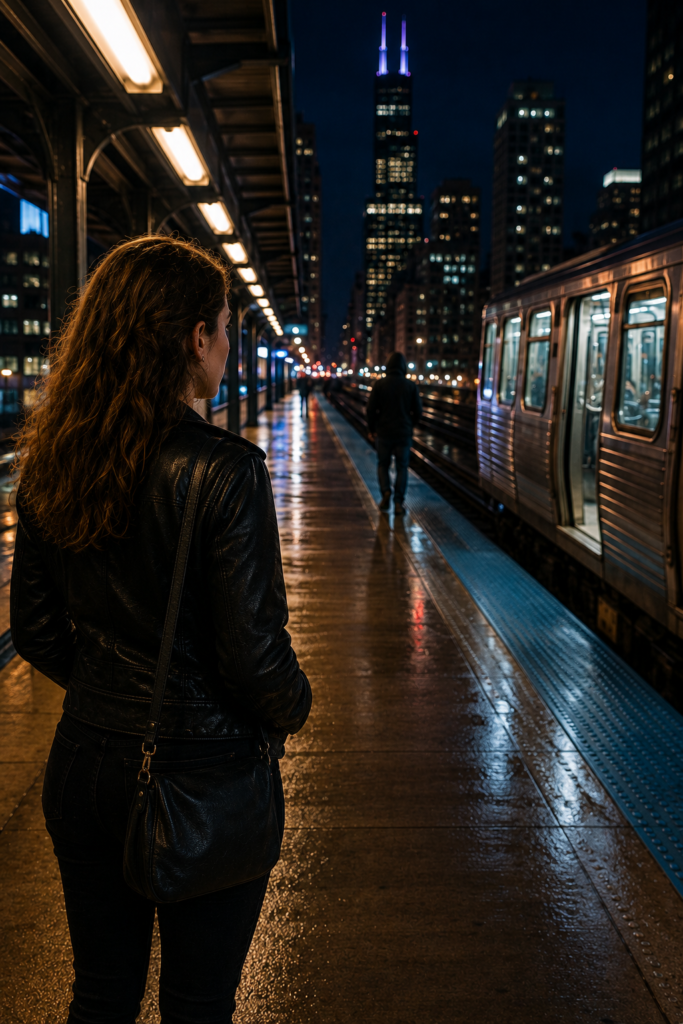
While the train is generally safe, locals know there is a shift in the vibe late at night.
During the day and evening? Ride the rails. But if you are leaving a bar at 1:30 AM on a Tuesday, just call an Uber.
The money you save on the train fare isn’t worth the hassle of dealing with the erratic energy of an empty train station in the middle of the night.
6. The “Earbud” Rule is Non-Negotiable
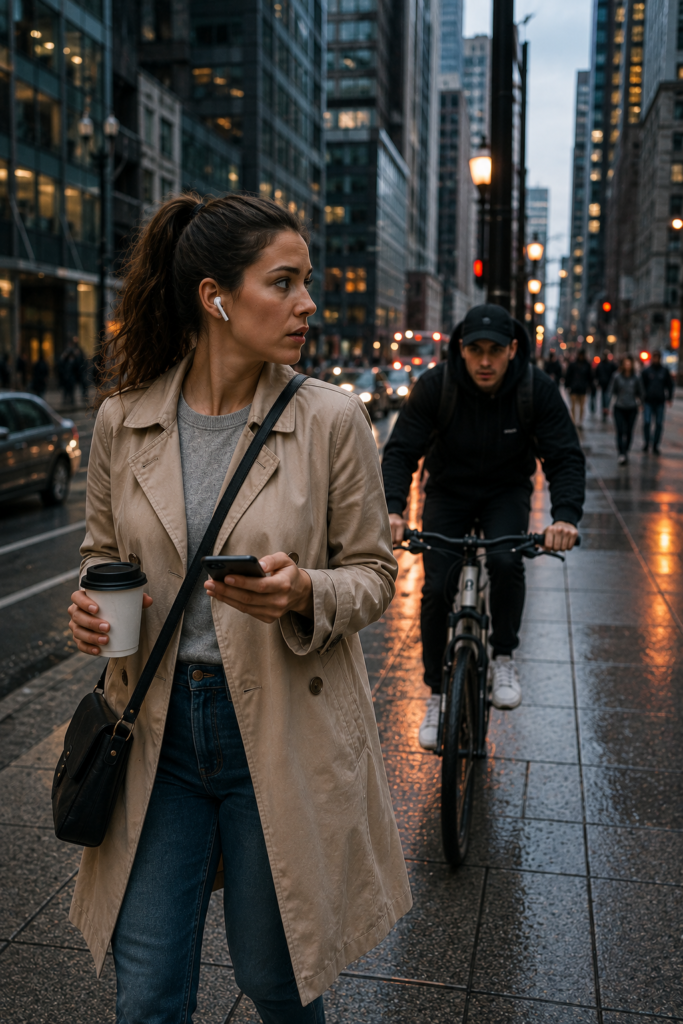
This is the number one rule for walking downtown. Do not walk around with noise-canceling headphones on full blast.
You need to hear if a bike is zooming up behind you or if the vibe on the street is shifting.
The local move is to keep your AirPods on “Transparency Mode” or just wear one. If you ever feel someone creeping on you or trying to get your attention, keep the headphones in and pretend you are on a call.
Loudly saying “I’m just turning the corner now, see you in two minutes!” into a dead phone works wonders to make creeps back off.
7. Walk With Purpose (And Don’t Be Too Nice)
Chicagoans are generally friendly and will help you with directions, but we also have street smarts.
If a stranger approaches you on Michigan Avenue with a sob story, a mixtape, or a petition, do not stop walking.
The moment you engage, you are opening yourself up to a scam. Walk like you are late for a meeting. Keep your head up, your shoulders back, and move fast. A firm “No” without breaking your stride is all the defense you need.
8. Respect The Lake
The Lakefront is our front yard, but it is not a swimming pool.
Do not go down to the water alone late at night, especially if you’ve been drinking.
It sounds like common sense, but the Lake is basically an inland sea with dangerous rip currents that catch people off guard every year.
Also, if you ever get turned around in the city, just remember that the Lake is always East. If you can find the water, you know where you are.
9. Master The “Penguin Walk”
If you are visiting between December and March, the environment itself is a safety hazard.
You need a coat that covers your bum because the wind cuts right through denim. More importantly, when the sidewalks ice over, you need to adopt the “Penguin Walk.” Keep your center of gravity over your front leg and take short, flat steps.
It looks ridiculous, but looking ridiculous is better than slipping and breaking a wrist on an icy patch of pavement.
10. Ditch the Convention Lanyard
Chicago is one of the biggest convention cities in the world. But if you are in town for a conference at McCormick Place, take your lanyard off the second you leave the building.
Wearing it on the street or while sitting at a restaurant screams, “I have out-of-town money and I don’t know where I am.”
It makes you an instant, glowing target for scammers and pickpockets. Put the badge in your pocket and blend in with the crowd.
11. The Pedway is for Daytime Only
Chicago has a massive underground tunnel system called the Pedway. In January, it is an absolute lifesaver for getting around the Loop without freezing your face off.
But after 5:00 PM when the office workers go home? Stay out of it.
It becomes an empty, confusing maze where it is incredibly easy to get turned around. The shops close, the foot traffic disappears, and the vibe gets eerie fast. Stick to the street level at night where there are lights and people.
12. Know Your Train Lines (Blue vs. Red)
Tourists mostly use two train lines: the Blue Line (to and from O’Hare Airport) and the Red Line (running North/South through downtown).
The Blue Line is generally packed with commuters and travelers with luggage, making it quite safe. The Red Line, however, runs 24/7 and can get much rowdier, especially late at night or right after a Cubs or White Sox game.
Keep your wits about you on the Red Line. Don’t engage with erratic passengers, and if the vibe in your specific train car feels off, just step out at the next stop and move one car over.
The Bottom Line: Trust Your Gut
Chicago is a world-class city, and it deserves to be experienced.
Don’t let sensationalized news headlines keep you from eating the best food, seeing the best architecture, and walking the best lakefront in the country.
If you keep your head up, stay out of your phone, and walk with purpose, you are going to have an incredible trip.
Now, we want to hear from the locals!
What is your number one safety tip for visitors coming to Chicago? Is there a rookie mistake you constantly see tourists making on the L?
Drop your tips in the comments below to help out our visitors!