
Chicago is one of the great architectural cities on the planet. People come from all over the world to look up at the skyline, take the boat tour, photograph the buildings from a million angles.
Almost nobody stops to look at the doors.
Because behind the facades of this city’s most iconic buildings are some of the most extraordinary entrances you’ll find anywhere — bronze castings, hand-carved stone, ornate ironwork that took craftsmen years to complete. Most people walk past them every single day.
We’ve put together 12 of the best. Some are in buildings you’ve visited a hundred times. Some you’ve probably never heard of. All of them are worth going out of your way for.
Go find them.
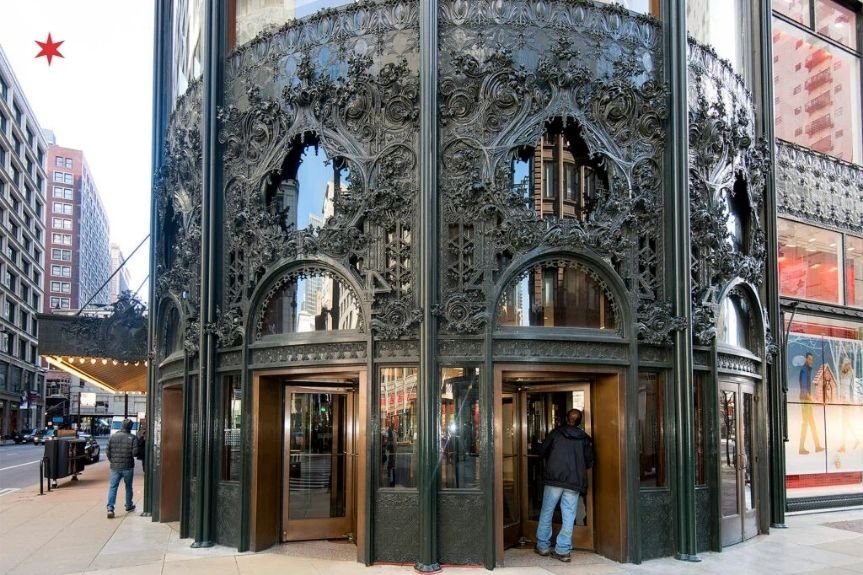
1. Carson Pirie Scott
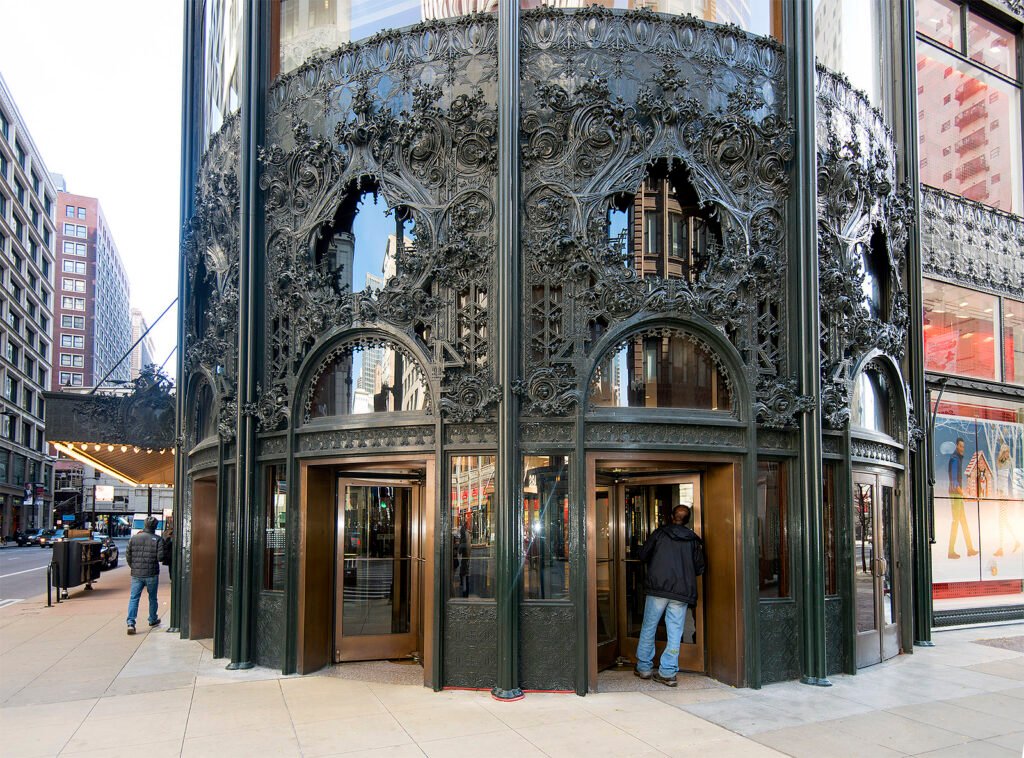
The cast iron ornamentation on the corner entrance was designed by Louis Sullivan in 1899 and it is one of the greatest examples of decorative architecture in American history. The detail is almost hallucinatory up close — organic flowing forms that look more like something grown than something built.
Architecture students come from all over the world to study it. Most people walking down State Street walk straight past it.
Worth knowing: Get as close as you physically can and look at the detail at eye level. It’s a completely different experience from ten feet away.
📍1 S State St, Chicago, IL 60602 (The Loop)
2. University of Chicago, Hyde Park
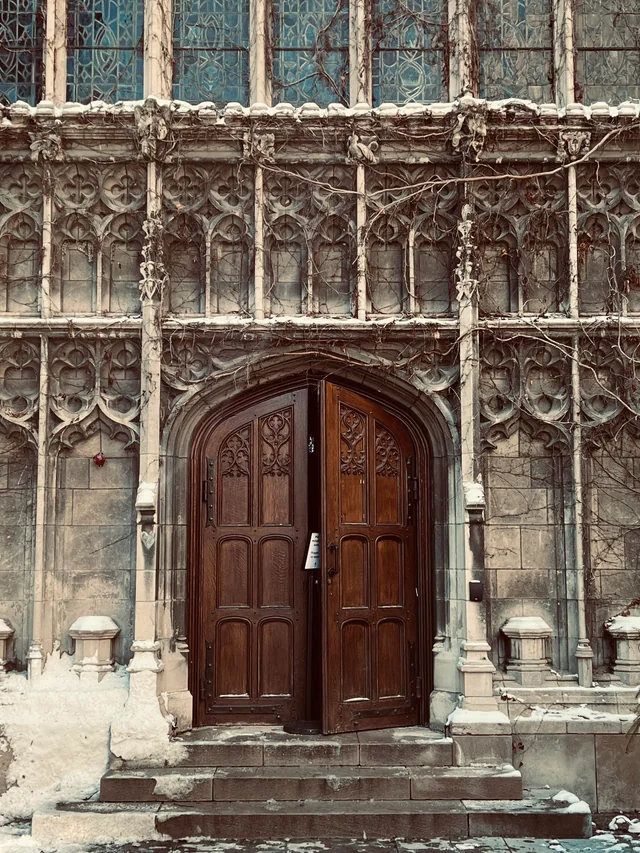
This one stops people mid-stride.
A pair of dark oak Gothic doors set into a pointed arch, covered in hand-forged ironwork, and completely swallowed by crimson ivy that turns the whole entrance into something that looks like it was lifted from Oxford and dropped into the south side of Chicago. In autumn it’s one of the most photographed spots on the entire campus. In every other season it’s still extraordinary.
The University of Chicago campus is full of doors worth finding but this one is the one people come back to photograph again and again. The combination of the ironwork detail, the carved stone arch, and the ivy is genuinely unlike anything else in the city.
The campus is open to the public and free to walk around. Most people who visit Chicago never make it to Hyde Park. That’s their loss.
Worth knowing: The campus is a destination in its own right — combine this with a visit to Promontory Point ten minutes away and the Garden of Phoenix in Jackson Park and you’ve got one of the great underrated Chicago afternoons.
📍5801 S Ellis Ave, Chicago, IL 60637 (Hyde Park)

3. Carbide & Carbon Building
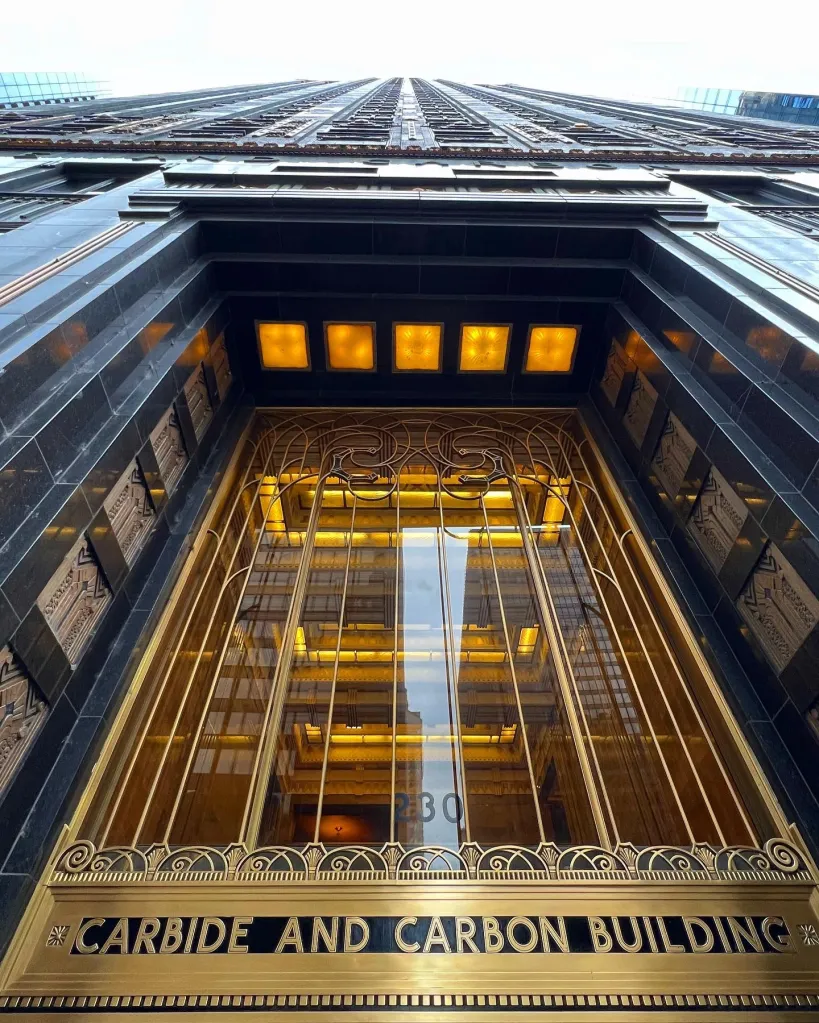
The bronze doors are deep, rich, and covered in geometric Art Deco patterns that catch the light differently depending on the time of day. Designed in 1929 at the absolute peak of the Art Deco movement and it shows. Every inch is intentional.
The building is now a Hard Rock Hotel so the interior is accessible. But stand outside first and give the doors the time they deserve.
Worth knowing: Late afternoon is the best time to photograph these. The sun hits Michigan Avenue from the west and the bronze catches the light directly.
📍230 N Michigan Ave, Chicago, IL 60601 (The Loop)
4. Chicago Cultural Center
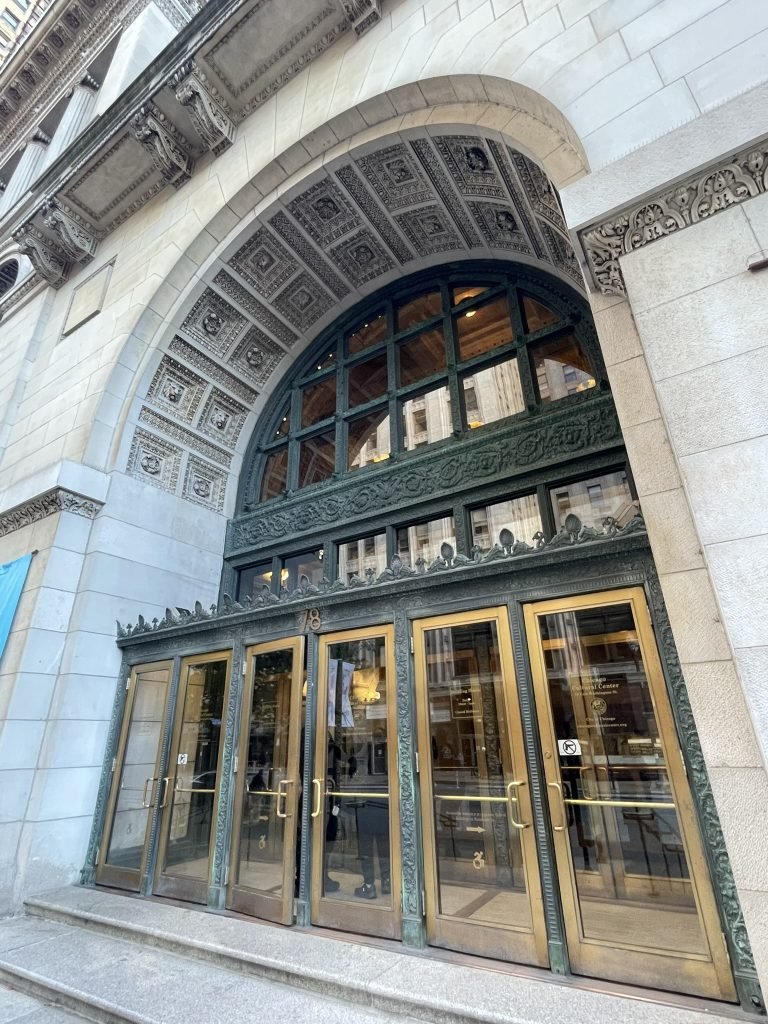
Bronze and glass doors framed by elaborately carved stonework, installed when the building opened in 1897 as the Chicago Public Library. They were designed to signal clearly that this was a building that belonged to everyone. Over a century later they still do.
Walk through them and admission is free. The Tiffany glass domes inside are among the most beautiful interior spaces in America.
Worth knowing: The Washington Street entrance facing Millennium Park is the one worth finding. The approach from the plaza gives you the best first impression of what is one of the most beautiful public buildings in America.
📍78 E Washington St, Chicago, IL 60602 (The Loop)
5. Palmer House
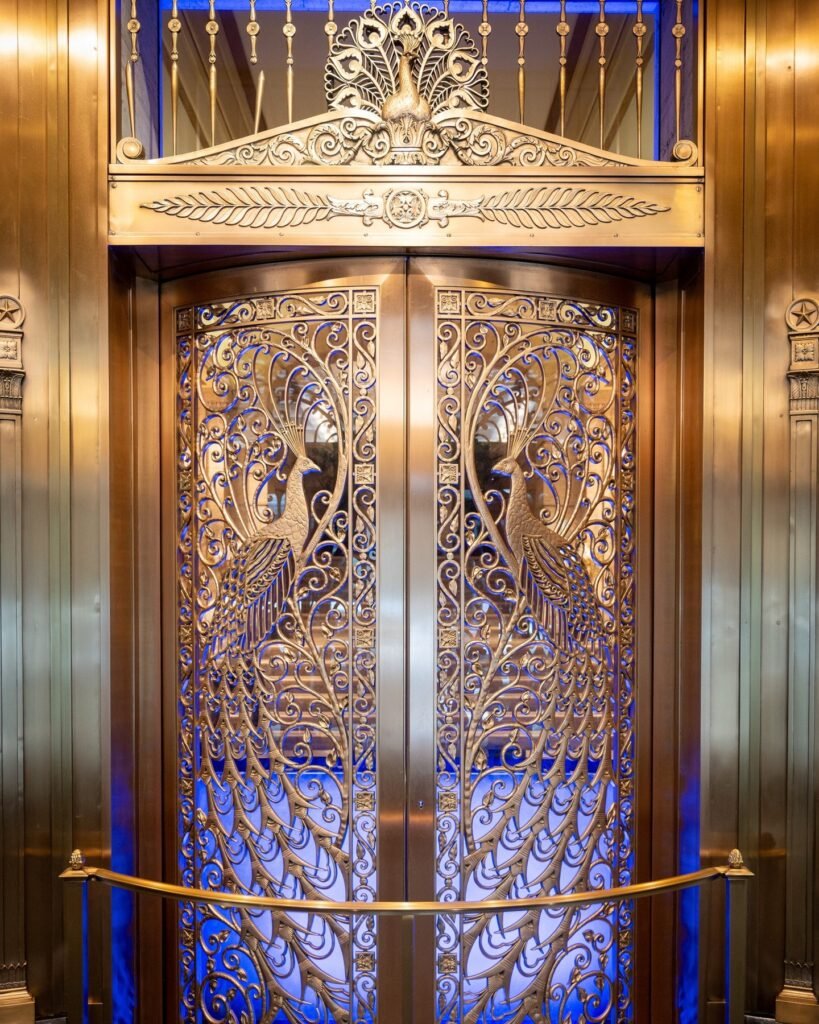
Brass and glass doors set into an archway — but it’s the covered arcade approach that makes this one special. You walk through an ornate passageway before the doors even come into view and by the time you reach them you’re already somewhere that feels completely removed from the street outside.
The peacock motif that runs through the Palmer House interior starts here at the entrance. Subtle details in the metalwork that most people miss entirely on their way through.
Worth knowing: Look up as you walk through the arcade. The ceiling is as ornate as the doors and almost nobody ever stops to look at it.
📍17 E Monroe St, Chicago, IL 60603 (The Loop)
6. Wrigley Building
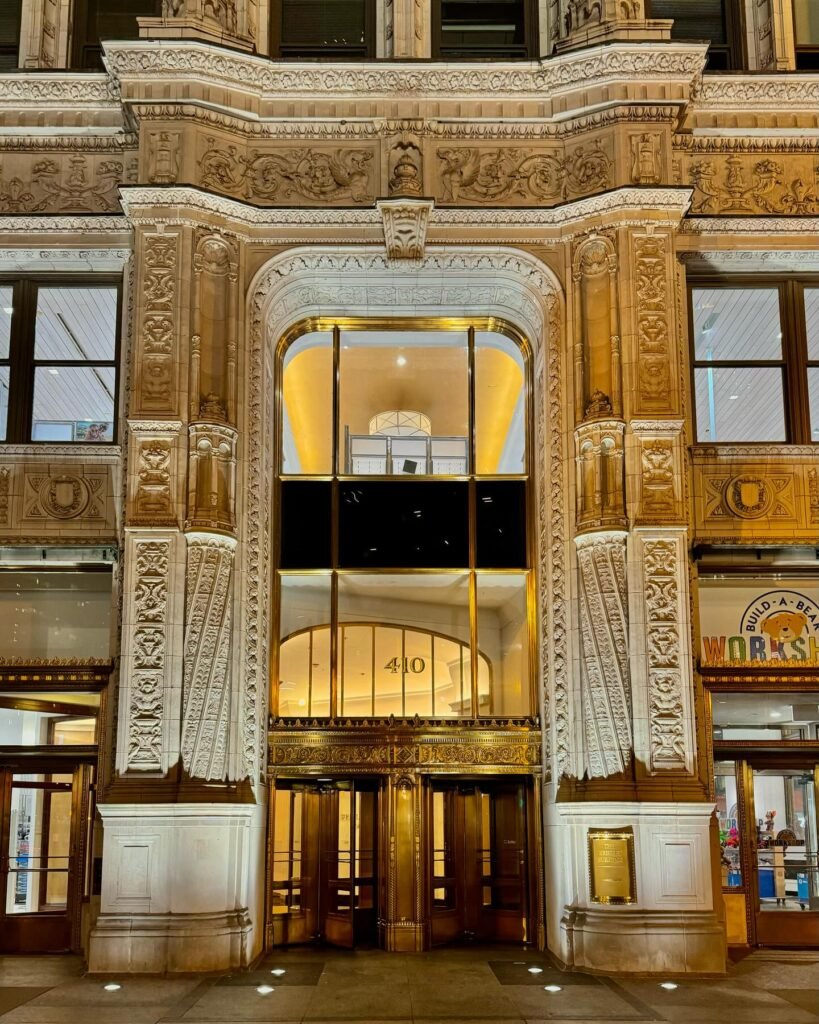
Bronze doors that manage to feel both monumental and welcoming at the same time, set into brilliant white terra cotta at the foot of the Magnificent Mile where Michigan Avenue crosses the river. The building was completed in 1924 and the entrance carries that era’s confidence — the conviction that a commercial building should be beautiful and that the people walking through deserved something worth looking at.
Most people photograph it from the bridge and move on. The ones who cross the street and look at the entrance properly always stop longer than they planned.
Worth knowing: Approach from the south side of the river first to get the full effect of the building rising above the doors.
📍400 N Michigan Ave, Chicago, IL 60611 (River North)
7. Tribune Tower
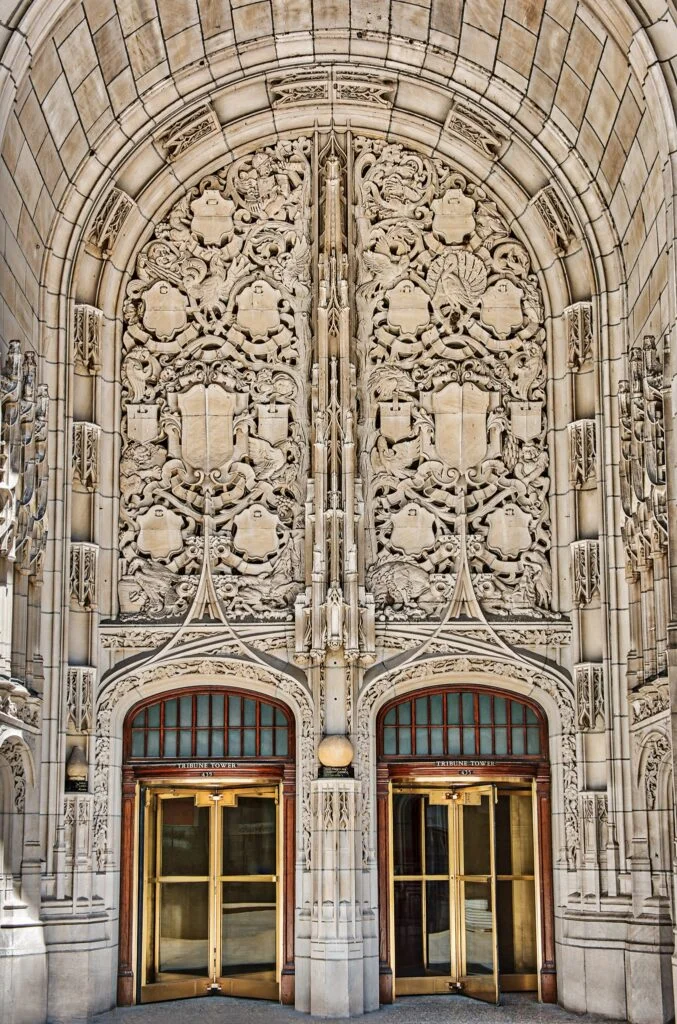
Gothic bronze doors that would look at home on a medieval cathedral. But that’s not the reason to stop here.
Look down. Embedded into the base of the building at street level are stones collected from over 150 of the most significant structures in human history — the Parthenon, the Taj Mahal, the Great Wall, the Berlin Wall, Westminster Abbey, the moon. Tribune foreign correspondents spent decades gathering them. They sit there quietly with small plaques beside each one that most people never notice.
Worth knowing: Start at the doors then work your way around the base. Budget more time than you think you need.
📍435 N Michigan Ave, Chicago, IL 60611 (Streeterville)
8. Northwestern University Feinberg School of Medicine
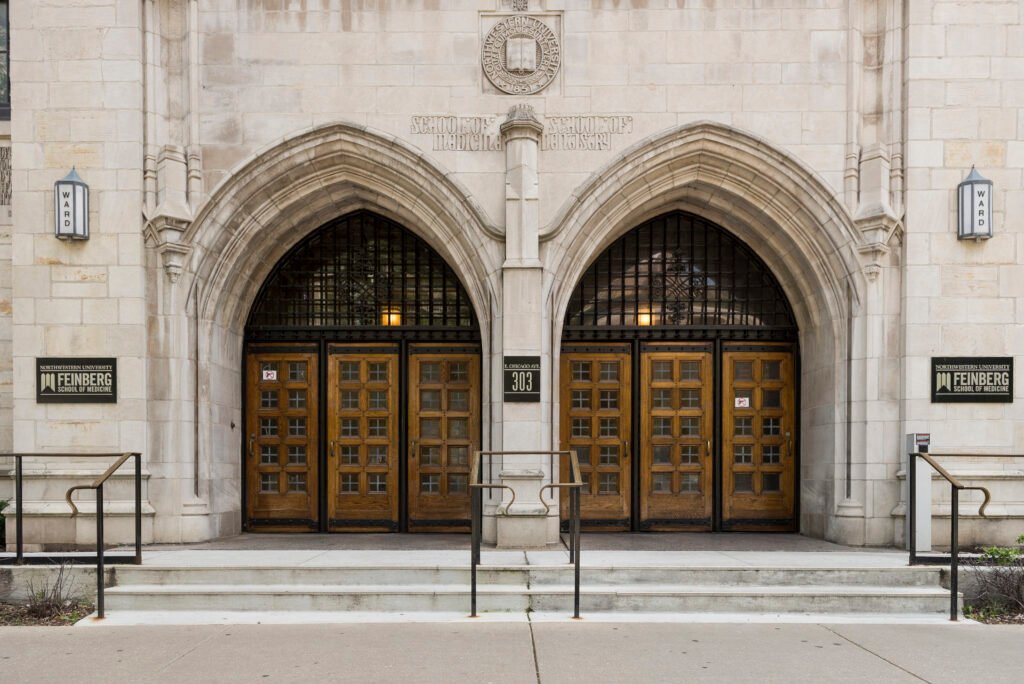
Most people associate Northwestern with the Evanston campus. This building on the near north side stops you in your tracks.
Three warm oak doors set into a soaring Gothic pointed arch, with ornate ironwork in the transom above and the words “School of Medicine” carved into the limestone facade. It was built in 1926 and looks more like an Oxford college than a medical school. The medallion above the entrance bearing the date 1851 — the year Northwestern was founded — completes the whole composition.
It sits on East Chicago Avenue and almost nobody outside the medical community knows it’s there.
Worth knowing: The exterior is fully visible from the street and worth a detour if you’re anywhere near the Magnificent Mile. You won’t find it on any tourist map.
📍303 E Chicago Ave, Chicago, IL 60611 (Streeterville)
9. Fine Arts Building
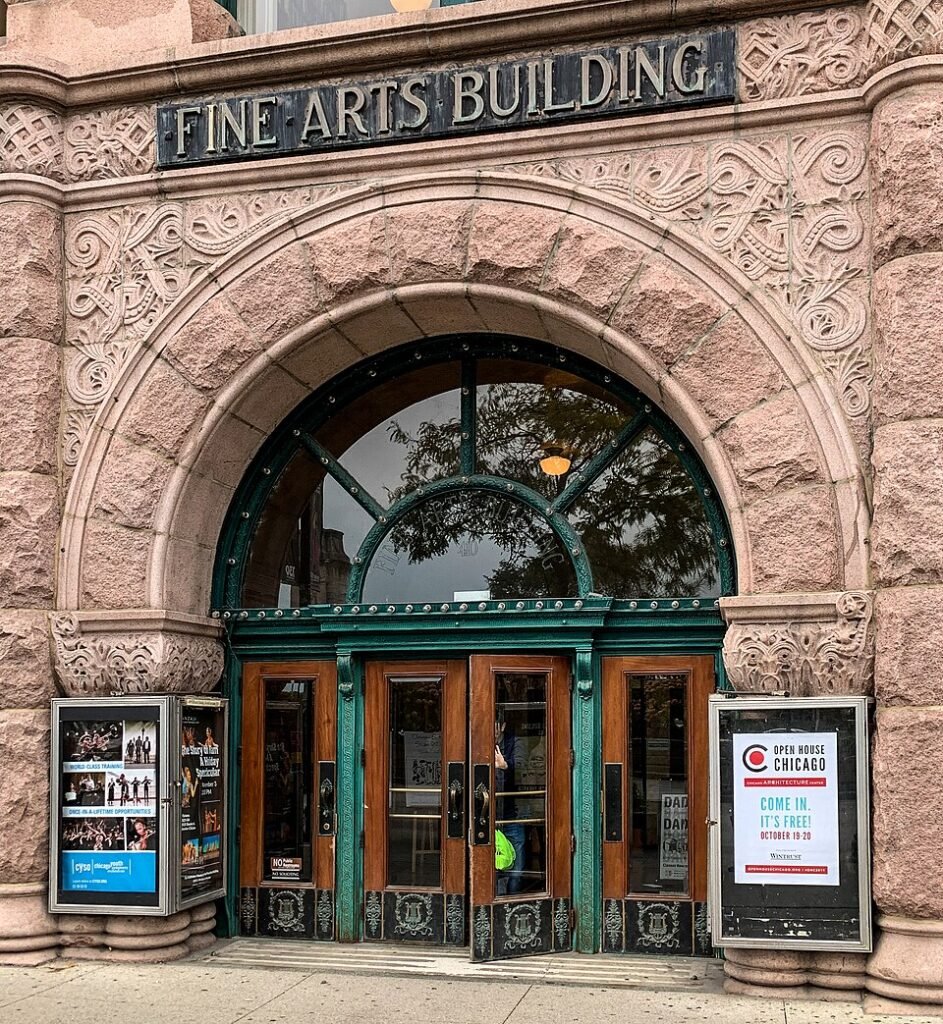
Built in 1885 and one of the most overlooked entrances on Michigan Avenue. The ornate Romanesque archway frames a set of doors that open into a building that has housed artists, musicians and writers for over a century. The manually operated Otis elevators inside are worth the visit alone.
It sits two blocks south of the Cultural Center and almost nobody stops here. That’s exactly why you should.
Worth knowing: The building is open to the public during business hours. Walk in, take the elevator, and explore the upper floors where artists still maintain working studios.
📍410 S Michigan Ave, Chicago, IL 60605 (South Loop)
10. Rookery Building
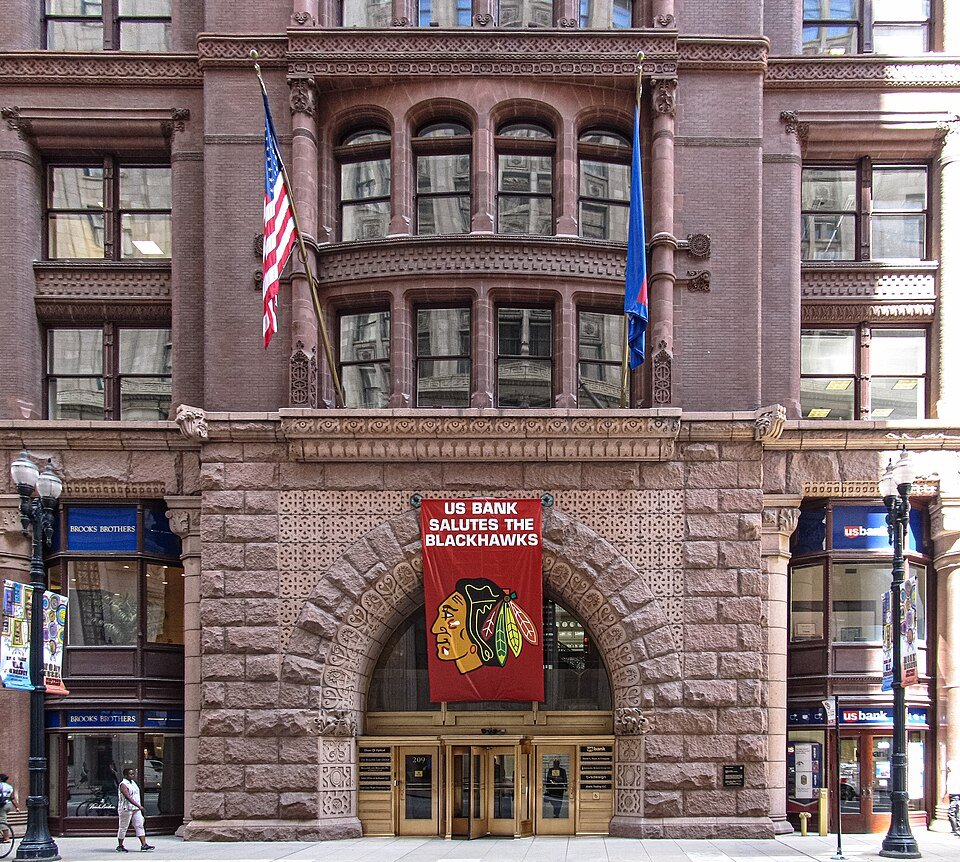
Worth knowing: The building is open during business hours and the interior light court is free to enter. The doors are the beginning — what’s inside is the main event.
📍209 S LaSalle St, Chicago, IL 60604 (The Loop)
11. Marquette Building
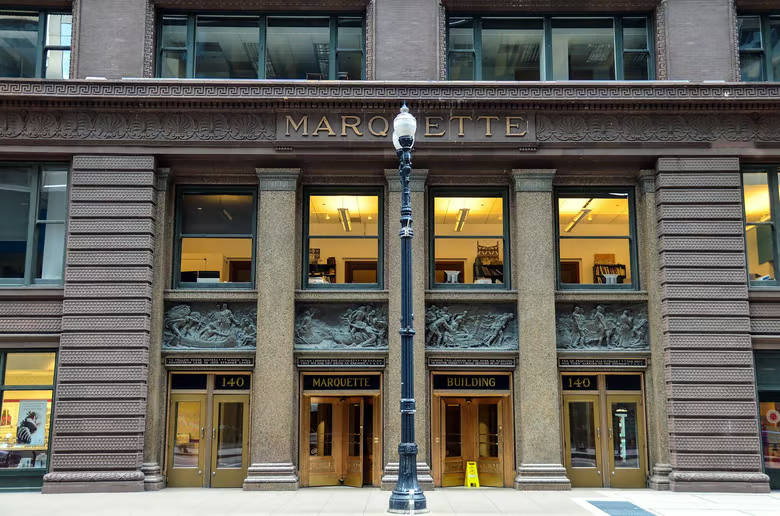
The bronze entrance doors are impressive but it’s the detail above them that most people miss — a series of mosaic panels depicting the 1674 expedition of Jacques Marquette that wrap around the entrance lobby inside. The exterior doors themselves are among the finest examples of decorative bronze work in the city, installed in 1895 and largely unchanged since.
This is one of the great overlooked entrances in Chicago. It sits on a block most tourists never walk down and it deserves significantly more attention than it gets.
Worth knowing: Step inside the lobby. The Tiffany glass mosaics and mother of pearl inlays make it one of the most stunning interiors in the city — and almost nobody knows it’s there.
📍140 S Dearborn St, Chicago, IL 60603 (The Loop)
12. Old St. Patrick’s Catholic Church
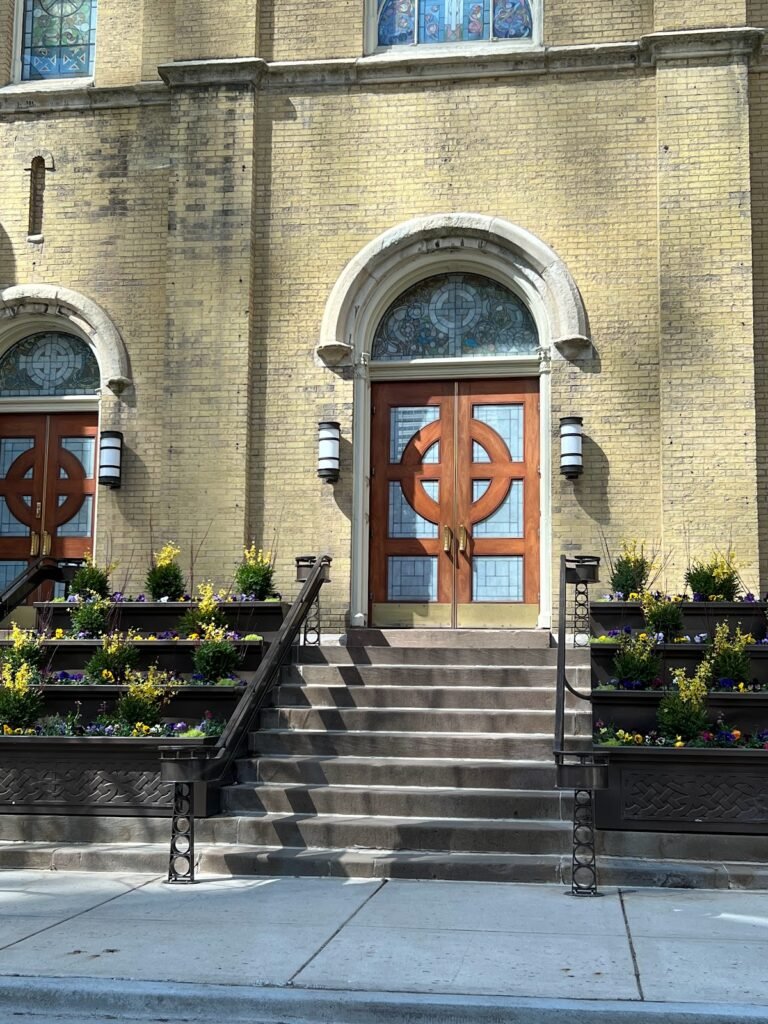
Chicago’s oldest church and one of its most overlooked entrances.
The doors at Old St. Pat’s on Adams Street feature a Celtic cross design split perfectly across both panels — warm mahogany wood, leaded glass inserts, and a stained glass transom above that frames the whole composition. It’s a door that tells you exactly what the building is before you’ve read a single word on the facade.
The church survived the Great Chicago Fire of 1871 and has been on this corner ever since. The interior is as good as the entrance — richly decorated with Celtic knotwork and imagery that makes it one of the most distinctively Irish spaces in America.
Free to visit and almost always quiet during the week.
Worth knowing: The doors face Adams Street in the West Loop, two blocks from Union Station. Easy to combine with several other entries on this list into a single afternoon walk.
700 W Adams St, Chicago, IL 60661 (West Loop)