

Chicago’s most famous ghosts are complete fictions, but the 10,000 abandoned corpses hiding beneath Lincoln Park’s baseball diamonds are entirely real.
This is 100% documented history, pulled straight from coroner records and police archives rather than campfire folklore.
These dark truths hide in plain sight at 7201 Archer Road, a Lincoln Park lawn, and an Englewood post office.
Massive legal loopholes, insurance scams, and municipal failures allowed the real villains to walk away untouched.
The Vanishing Hitchhiker of Archer Avenue
For generations of Chicagoans, the legend of “Resurrection Mary” is a South Side rite of passage.
The myth claims a blonde dancer in a white gown died in a hit-and-run on South Archer Avenue.
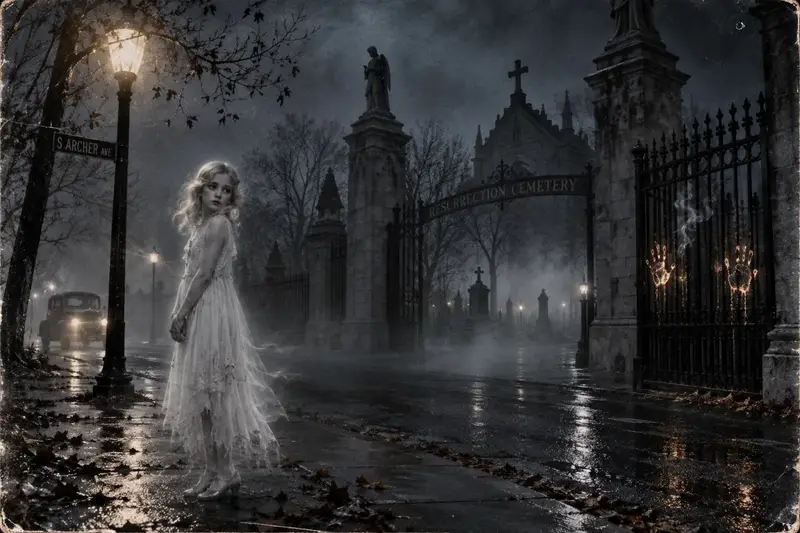
Yet archival death records confirm that no fatal hit-and-run matching that description ever occurred on that roadway.
Instead, death certificates point to Anna “Marija” Norkus, killed on July 20, 1927, returning from the Oh Henry Ballroom.
She was just 12 years old—six weeks shy of her thirteenth birthday—and was buried at St. Casimir, not Resurrection.
Another candidate, Mary Bregovy, died on March 11, 1934, but had dark hair and perished downtown at Lake and Wacker Drive.
The legend exploded in 1939 when motorist Jerry Palus claimed he danced with an ice-cold girl who vanished at the cemetery gates.
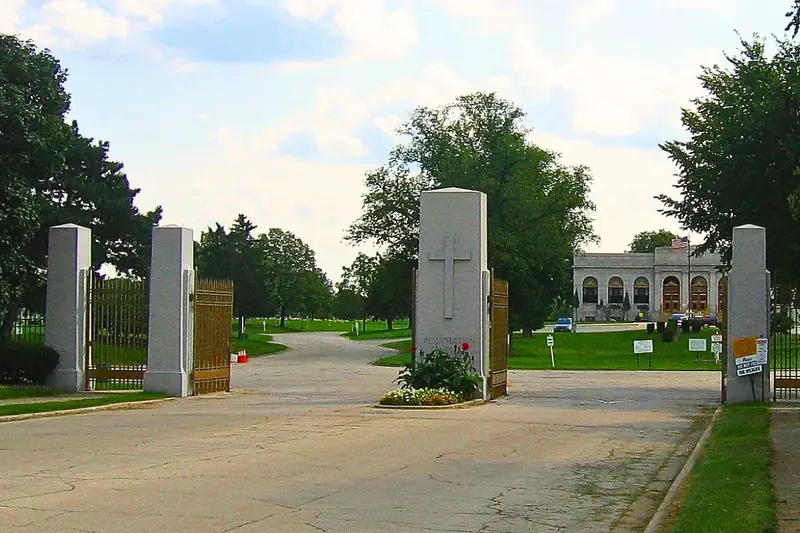
The hysteria peaked on August 10, 1976, when police investigated reports that Mary burned handprints into the entrance gates.
Cemetery workers promptly cut the 1.5-inch bronze bars with a blowtorch, bent them back, and painted them with green enamel.
The Tombstone Hiding 10,000 Bodies
Locals know Lincoln Park as a sprawling green space for weekend picnics and lakefront sports.
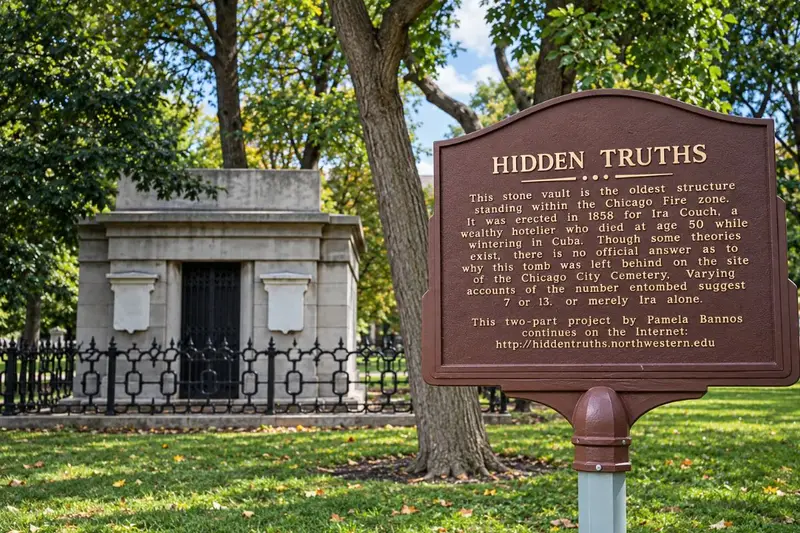
Beneath the manicured turf, however, lies the forgotten ground of the old Chicago City Cemetery.
When city leaders officially banned burials and began converting the cemetery into a public park in the late 1860s, the grave relocation project was chaotic and underfunded.
Then the Great Chicago Fire of 1871 swept through, incinerating wooden grave markers and municipal burial ledgers.
With records destroyed, historical research from Northwestern University’s Hidden Truths project confirms that more than 10,000 forgotten bodies were simply paved over and abandoned beneath the grass.
Only a single above-ground cemetery structure survived both the fire and subsequent park construction.
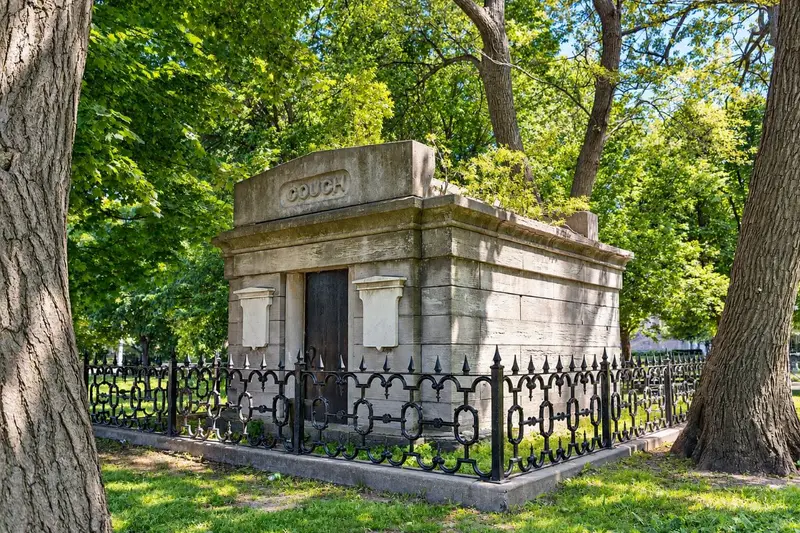
The Couch Tomb is a massive, 50-ton limestone mausoleum standing completely alone among the trees.
Because the records burned, historians still cannot confirm who rests inside the sealed stone chamber.
It remains Chicago’s only surviving pre-1871 cemetery structure.


The Englewood Insurance Hustle
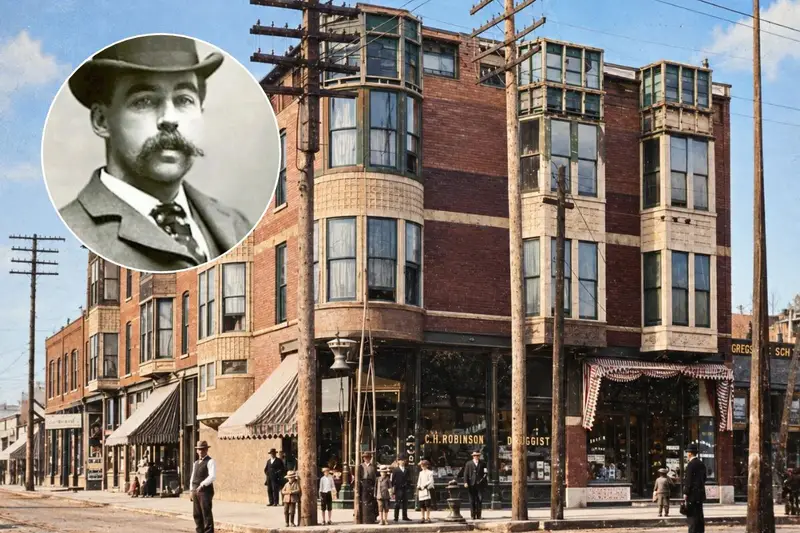
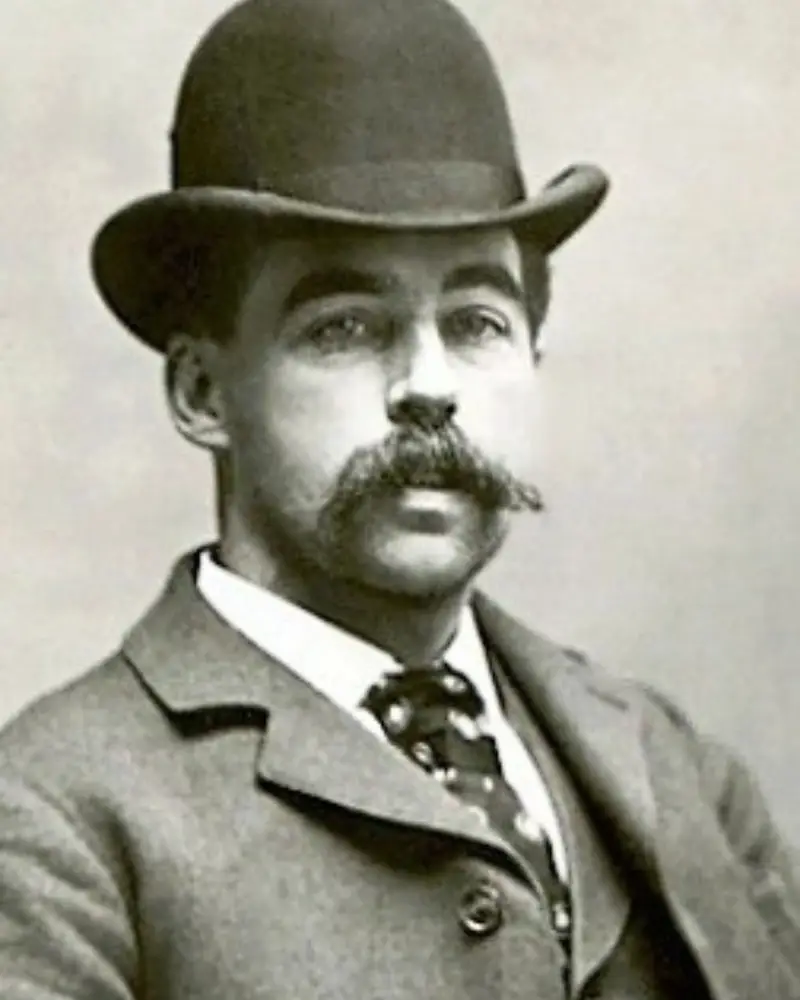
Sensational memoirs and yellow journalism transformed H.H. Holmes into a mastermind who built a “Murder Castle” for tourists during the 1893 World’s Fair.
The concept of an operational tourist hotel was completely invented.
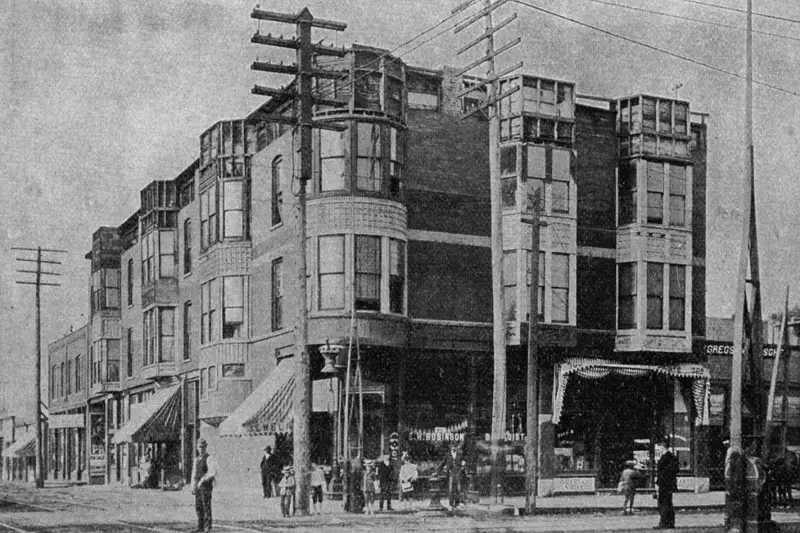
Historical land records and forensic reports preserved in the Chicago Public Library archives prove the building never opened to the public as a hotel.
Not a single World’s Fair tourist was ever documented missing from the property.
Holmes was not an architectural supervillain, but an aggressive insurance fraudster, deadbeat debtor, and bigamist.
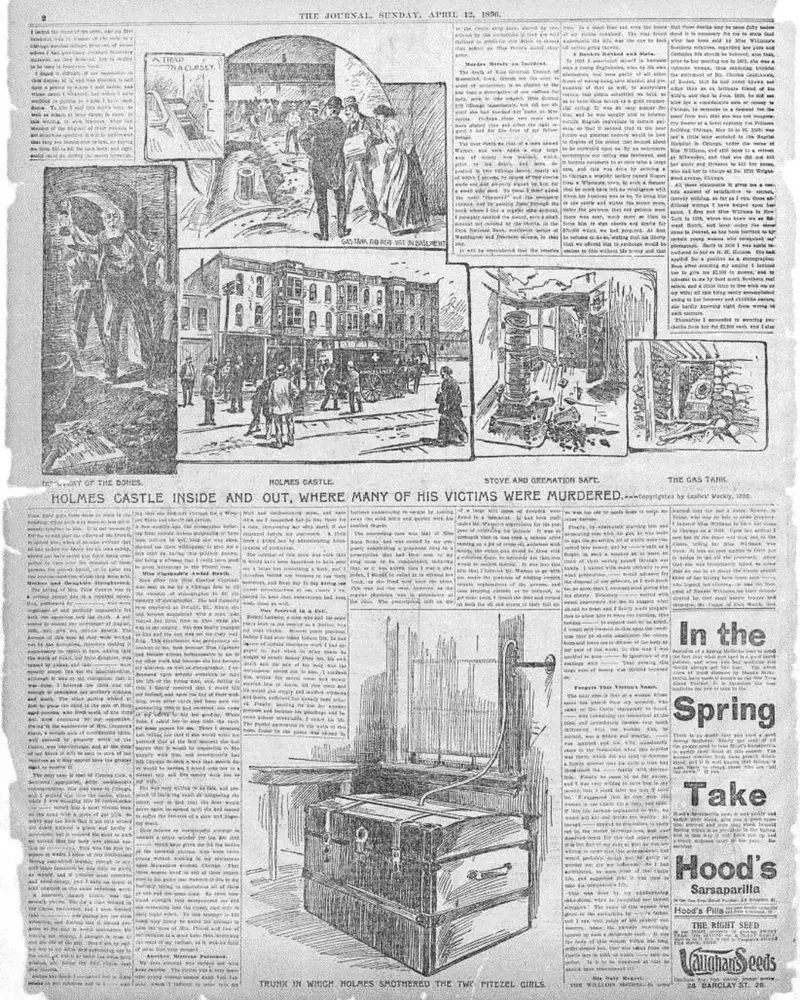
The labyrinth of partition walls and hidden rooms was not designed for stalking victims.
Holmes built the maze to hide furniture and goods bought on credit before creditors could repossess them.
The structure measured roughly 162 feet long by 50 feet wide, with retail shops filling the first floor.
Holmes continually fired carpenters mid-build so no worker understood how he concealed stolen inventory.
He was ultimately hanged for only one murder—his insurance fraud partner, Benjamin Pitezel.
The Dark History Visitor Guide
Resurrection Catholic Cemetery:
Drive down South Archer Avenue to 7201 Archer Road, Justice, IL, maintained by the Catholic Cemeteries of Chicago. Inspect the main gates where workers torched and painted over the 1.5-inch bronze bars. Directly across the street sits Chet’s Melody Lounge, a dive bar famous for patrons leaving drinks for Mary.
The Couch Tomb in Lincoln Park:
Head to Lincoln Park just east of the Chicago History Museum near Stockton Drive and LaSalle Drive. The 50-ton limestone crypt sits quietly behind an iron fence, marking roughly 10,000 bodies still buried beneath the park turf.
The Englewood USPS Branch:
Take the CTA Red Line south to 63rd Street and walk to 611 W. 63rd Street. Holmes’ building was gutted by arson in 1895 and demolished in 1938. Today the site is a neighborhood post office, where the city prohibits historical plaques.