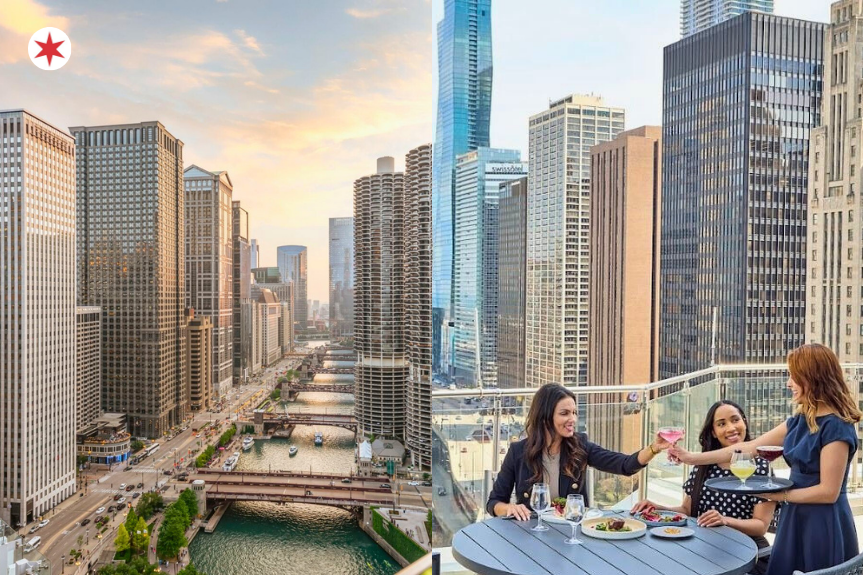

You’ve stared up at these towers a hundred times and figured glass and steel hold them up. They don’t.
A bunch of our most famous skyscrapers stay standing thanks to sloshing water tanks, one totally empty floor, and a trick an engineer worked out with a pack of cigarettes.
We ranked 15 of them by pure “wait, what?” factor, and the strangest ones sit deep in the list.
Keep scrolling for number 8, where 160,000 gallons of water stop a tower from tipping over, and number 15, where a giant goddess looks over the Loop with no face at all.
1. Sears Tower (aka Willis Tower): The Skyscraper Built Like a Pack of Cigarettes
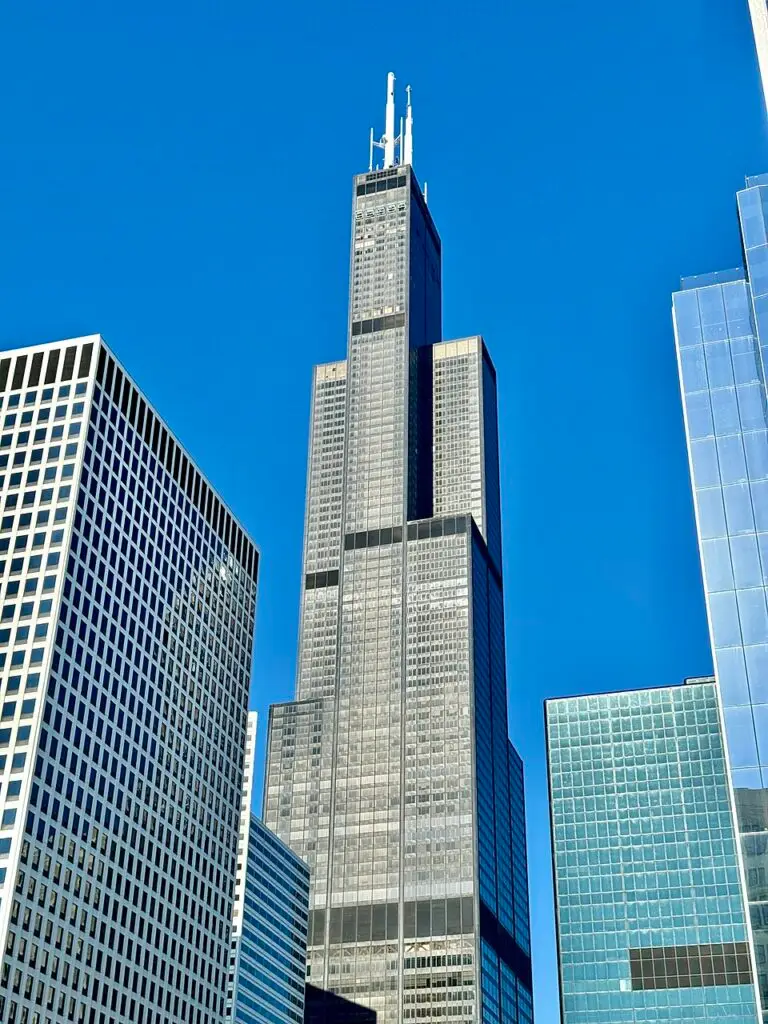
Built in 1973, the Sears Tower (aka Willis Tower) stood 1,450 feet tall and was the tallest building in the world for the next 25 years.
But the wild part isn’t the height. It’s that the shape you’ve seen your whole life is the reason it’s still standing.

Back then, nobody knew how to build this tall without the wind tearing it apart. Engineer Fazlur Rahman Khan solved it by bundling nine square tubes together so they brace one another, like nine cigarettes standing in a pack at different heights.
The story goes that architect Bruce Graham showed the Sears bosses how it worked by sliding cigarettes out of a box, right there on the table. That same idea is why the Burj Khalifa stands today.
And it’s not as solid as it looks. The top is built to sway up to three feet in a strong wind, so on a gusty afternoon up on the Skydeck, you can actually feel it move.
On a clear day the view stretches 40 to 50 miles, far enough to see four states at once. If your nerves can take it, step into the Ledge, a glass box that juts out from the 103rd floor with nothing under your feet but glass and 1,353 feet of open air.
Address: The Loop, 233 S. Wacker Dr.
2. Tribune Tower: The Wall Studded With Pieces of the Whole World
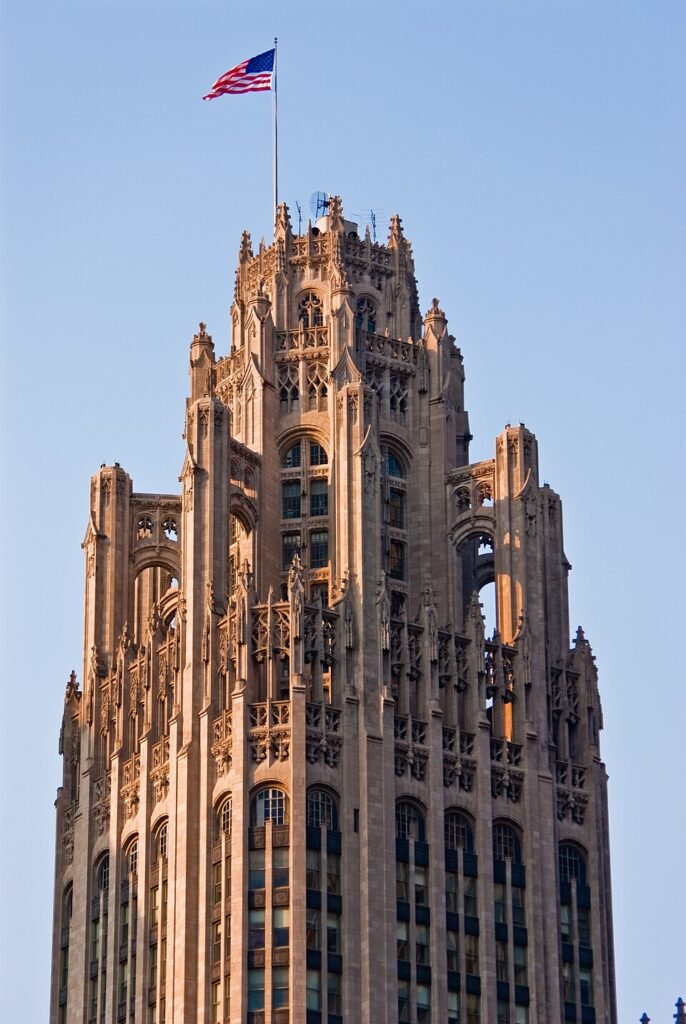
Built in 1925, the Tribune Tower stands just 36 stories, small next to the giants around it. But the bottom of its wall might be the most interesting thing to walk past in all of Chicago. It’s studded with chunks of the most famous places on Earth.
It started as a contest. In 1922 the Chicago Tribune offered a $50,000 prize, a fortune back then, for “the most beautiful office building in the world.” The winning design is all soaring stone and spires.
But the real showstopper is down at sidewalk level, where the newspaper pressed in fragments its reporters collected from landmarks around the globe.
Around 149 of them are set into the stone at eye height, each one labeled.
You can walk right up and put your hand on a piece of the Taj Mahal, the Great Pyramid, the Berlin Wall, the Great Wall of China, or the Alamo.
The whole thing started with one stolen rock. In 1914, Tribune editor Colonel Robert McCormick toured a war-damaged cathedral in Belgium and chipped off a piece to bring home.
After that, his correspondents brought back fragments from everywhere they went, and the collection still grows.
After September 11, the paper added a twisted piece of steel from the World Trade Center. For years there was even an Apollo moon rock in a window here, until NASA asked for it back in 2011 and it never returned.
Address: Magnificent Mile, 435 N. Michigan Ave.
3. The John Hancock Center (aka Big John): The Tower Wearing Its Bones on the Outside
Built in 1969, the John Hancock Center wears those big black X’s on the outside for a reason, and it isn’t style. Most people assume the dark, tapering shape was meant to look like a giant oil derrick. It wasn’t. Those crossed braces are the actual skeleton holding the building up. By moving the structure to the outside walls, engineer Fazlur Rahman Khan could throw out the forest of columns most towers need inside, which opened up the floors and used about half the steel of a normal skyscraper its size.
What he built instead was a whole city stacked in the sky. Big John packs offices, shops, restaurants, a pool, and hundreds of apartments into one tower, plus its own post office. The homes sit so high up that residents have been known to phone down to the lobby just to ask what the weather is doing at street level, because they’re sitting above the clouds.
One naming note, since it trips up visitors. Locals call it Big John or just the Hancock. The John Hancock company yanked its name off the building in 2018, so the official name is now plain old 875 North Michigan Avenue, which absolutely nobody says out loud. Up on the 94th floor, the observation deck called 360 Chicago has a stunt called Tilt, where a row of windows leans you out over Michigan Avenue at a 30-degree angle with the street a thousand feet below.
Address: Streeterville, 875 N. Michigan Ave.
4. Aon Center: The $80 Million Marble Mistake You Walk Past All the Time
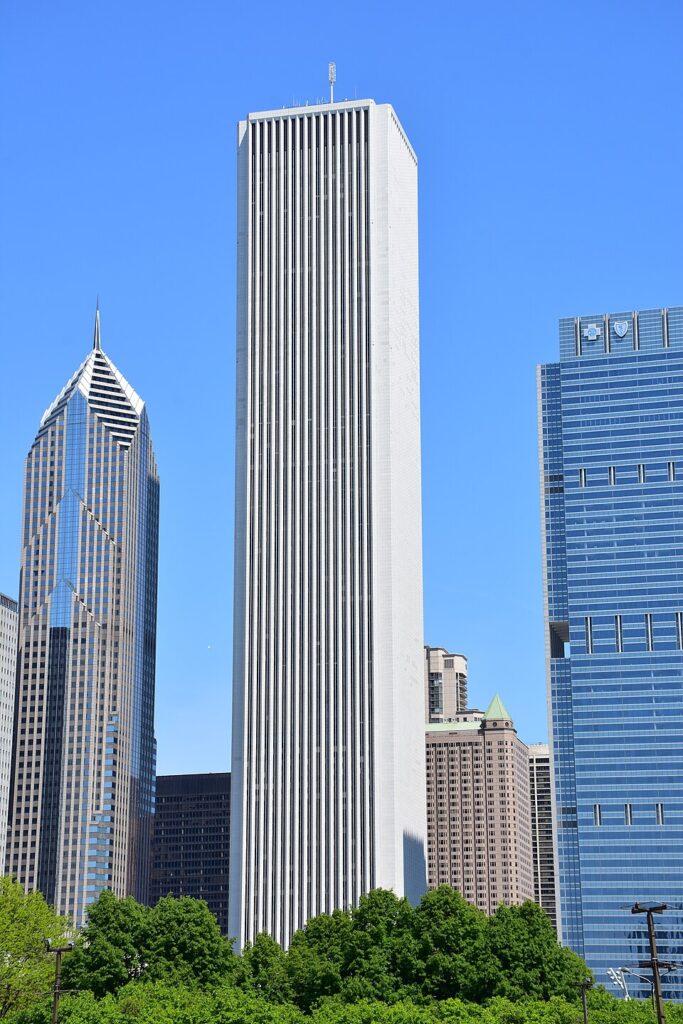
Built in 1973 for the Standard Oil Company, this tall white tower (locals nicknamed it Big Stan) was wrapped in 43,000 slabs of Italian Carrara marble, the same stone Michelangelo carved David from. The architect was so sure of his choice that he bragged the marble would cost “no more than crumpled up aluminum.” Chicago weather had other plans.
The thin marble couldn’t handle the city’s brutal freeze and thaw. On Christmas Day in 1973, before the building was even finished, a 350-pound slab peeled off the side and crashed straight through the roof of the Prudential building next door. Over the next 15 years, slabs all over the tower cracked and bowed outward. Finally the owners gave up and did the unthinkable: between 1990 and 1992 they stripped off every single panel and re-clad the entire skyscraper in granite. The bill came to more than $80 million, over half what the whole building had cost to build in the first place.
Here’s the part most people never notice. The smooth “white marble” tower you picture in your head is gone. Look closely today and you’re looking at speckled gray-white granite, a quiet monument to one of the most expensive mistakes in the history of the skyline. They even ground up most of the old marble and carved some of it into little desk clocks they sold as souvenirs.
Address: The Loop / New Eastside, 200 E. Randolph St.
5. Carbide & Carbon Building: The Skyscraper That Looks Like a Champagne Bottle
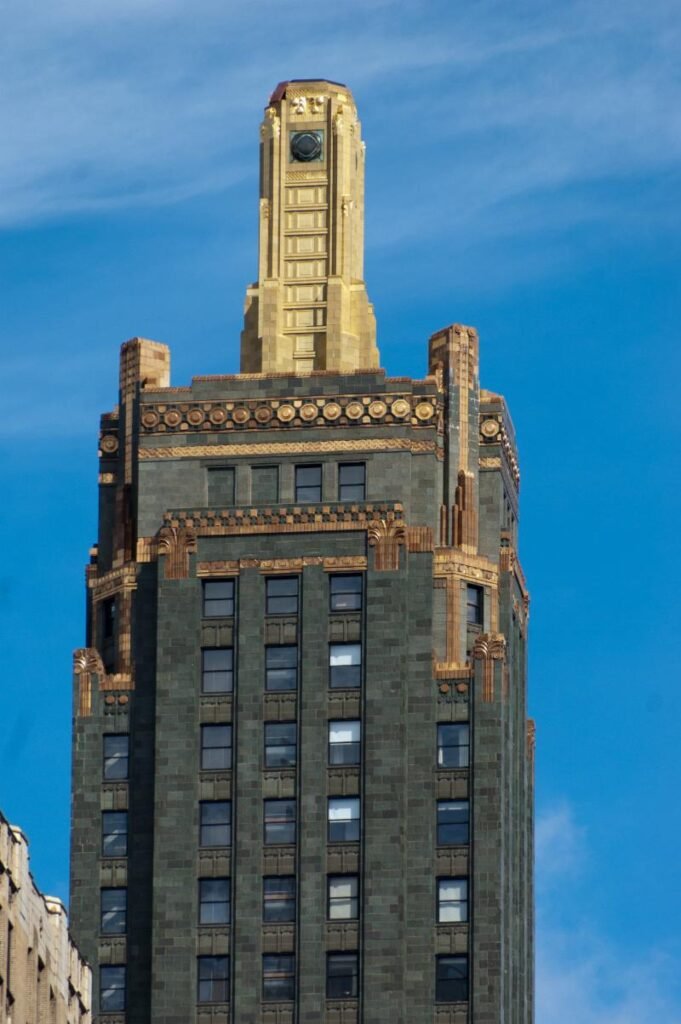
Built in 1929, this is the green-and-gold beauty that stops people on Michigan Avenue. It was designed by the Burnham Brothers, sons of Daniel Burnham, the man behind the famous “White City” of the 1893 World’s Fair. The tower is wrapped in dark green terra cotta and capped with a crown of real 24-karat gold leaf, and that combination has fueled Chicago’s favorite story about it for almost a century.
The legend goes that the building was designed to look like a giant champagne bottle, dark green glass with gold foil on top, a cheeky wink at Prohibition, since it opened nine years into the ban on booze. It’s a great story. It’s also probably not true. The bolder green-and-gold look actually echoes an earlier tower in New York, and the company wanted those eye-catching colors to work as a giant advertisement on the avenue. The gold top has been lit up every night since 2007, which only keeps the champagne tale going.
Today the building is the Pendry hotel, and you don’t need a room to enjoy it. Walk into the lobby for free to see the Belgian marble and bronze, or head up to the rooftop bar for a close look at all that gold.
Address: The Loop, 230 N. Michigan Ave.
6. Crain Communications Building: The One That Starts Arguments
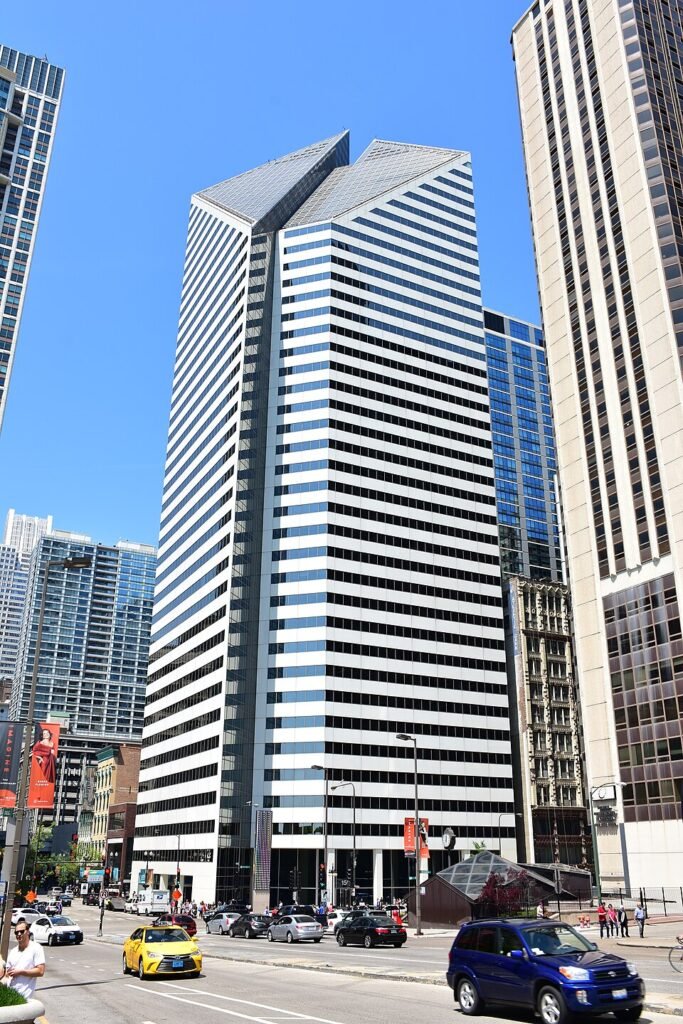
Built in 1984, the diamond-topped tower at the edge of Millennium Park is the one Chicagoans love to argue about.
Its glass roof is sliced clean across on the diagonal, as if someone took a knife to the top of the skyscraper. For decades a cheeky rumor has gone around that a woman designed that shape as a pointed jab at a downtown skyline full of, let’s say, very masculine towers.
It’s a fun story, and it’s completely false.
The building was designed by a man named Sheldon Schlegman, and the diamond was simply a bold geometric idea. Look closely and it isn’t even one clean diamond. It’s two triangles, slightly offset, with a gap between them near the very top.
You’ve probably seen it without knowing. It’s the building the kids dangerously slide down in the 1987 movie Adventures in Babysitting. At night the slanted face lights up and sometimes cheers on the home teams, flashing things like GO BEARS or GO SOX, and it once glowed with a voting message during a big election night rally in Grant Park. For the best view of that diamond roof, stand in Millennium or Maggie Daley Park and look northwest.
Address: The Loop, 150 N. Michigan Ave.
7. Marina City: The Corn Cobs You’ve Seen Even If You’ve Never Been Here
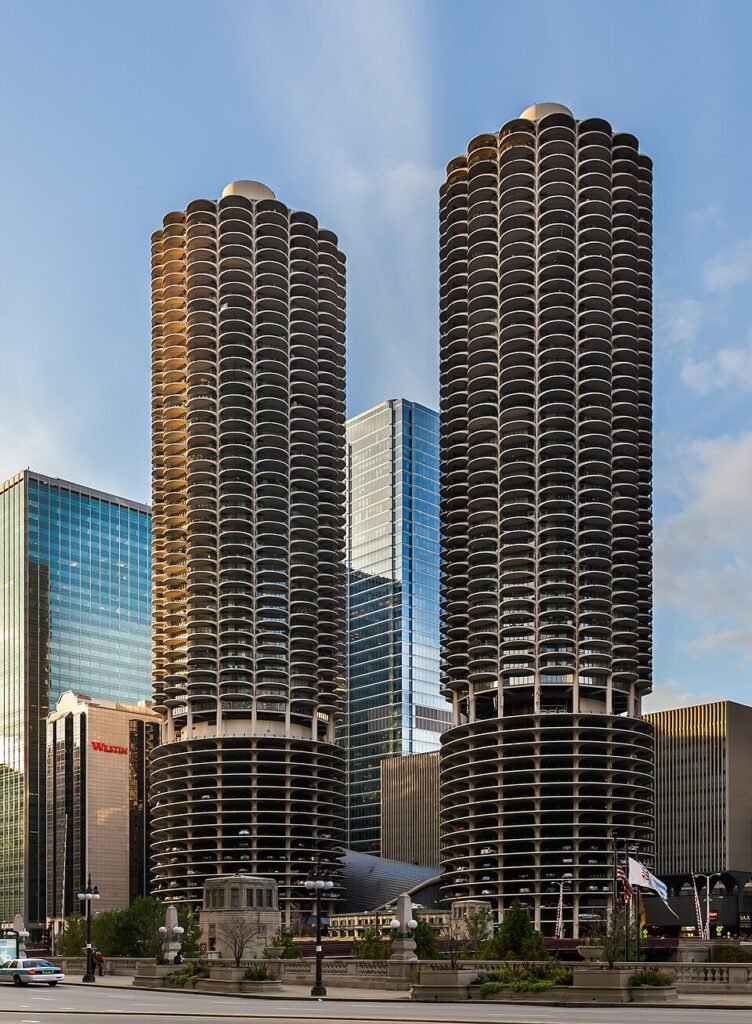
Built in 1964, these twin towers are the ones everybody calls the corn cobs, thanks to the scalloped half-circle balconies that ring them top to bottom. Architect Bertrand Goldberg had a real mission behind the funny shape. People were fleeing downtown for the suburbs, and he wanted to give them a reason to stay, so he built a “city within a city,” packing in apartments, a theater, a bowling alley, an ice rink, and a marina down at the river. The bottom 19 floors are an open-air spiral parking garage, the kind where you can see the cars wrapping around and around.
That garage is a movie star. In the 1980 Steve McQueen thriller The Hunter, a car chase ends with a car sailing right off the edge of the ramp and dropping into the Chicago River below.
You’ve probably seen these towers even if you’ve never set foot in Chicago. They’re on the cover of Wilco’s album Yankee Hotel Foxtrot, which is why some locals call them the Wilco Towers.
For the classic photo, stand on the Dearborn Street bridge or look across from the Riverwalk.
Address: River North, 300 N. State St.
8. 150 North Riverside: The Tower Balanced on a Sliver, Held Up by Sloshing Water
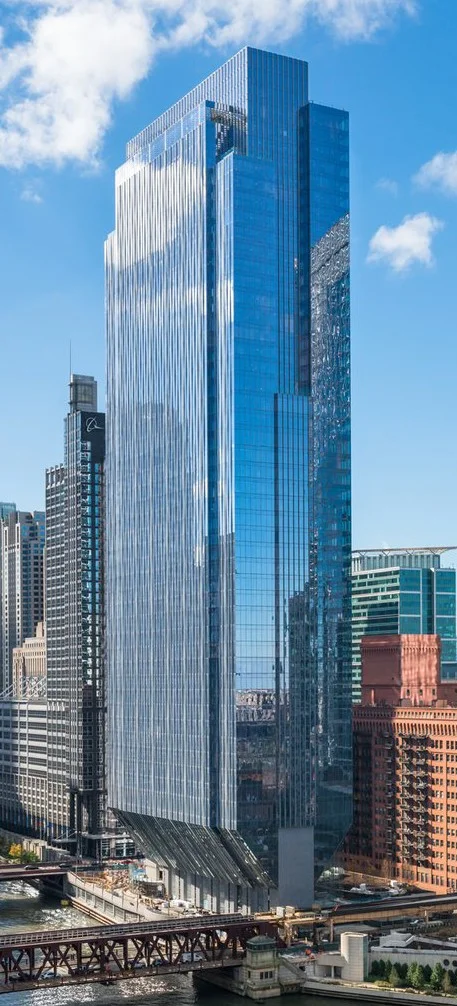
For years this was a scrap of land nobody could use, a thin sliver pinched between the Chicago River on one side and seven active Amtrak train tracks on the other. Every developer who looked at it walked away. Then in 2017, someone built a 54-story, 752-foot office tower on it anyway, balanced on a base only about 40 feet wide and flaring out wider as it climbs. Chicagoans took one look and started calling it the Tuning Fork, or, less kindly, the Guillotine.
So how does a top-heavy tower on such a skinny base not sway itself sick in our wind? Hidden up near the roof are giant tanks holding 160,000 gallons of water. When the wind shoves the building one way, all that water sloshes the other way and cancels out the motion, so the people working at the top never feel it move.
Building the thing took nerve. There was no room on the ground for a crane big enough to do the job, so the crew floated one out onto the river instead, tying together 31 barges into a single platform to hold one of the biggest cranes they could assemble. Step into the lobby today, which is free and open, and you’ll stand under a glass wall nearly ten stories tall, facing a 150-foot-long LED art wall called the 150 Media Stream that’s always playing something new.
Address: West Loop, 150 N. Riverside Plaza.
9. Aqua: The Rippling Tower That Beats the Wind With Its Shape
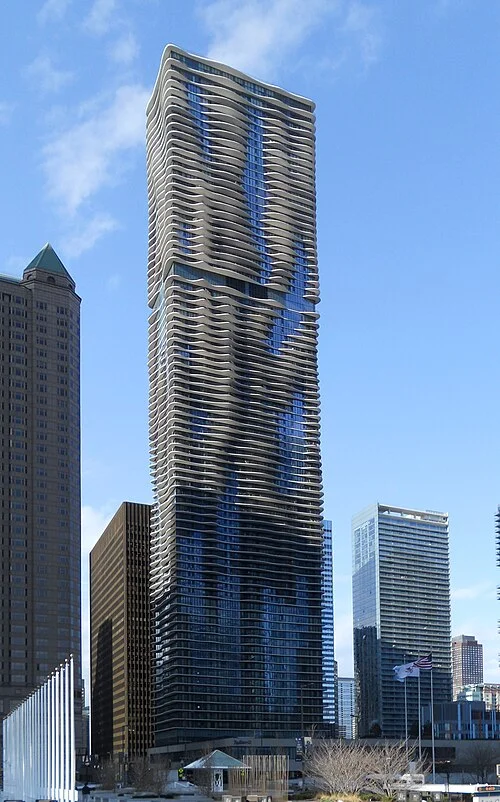
The building right before this one needs 160,000 gallons of water to stop it swaying. Aqua doesn’t need a drop. Built in 2009 as architect Jeanne Gang’s very first skyscraper, it looks like water frozen mid-ripple. From a distance, the white concrete balconies seem to roll down the sides in waves, a look Gang based on the layered limestone ledges along the Great Lakes. Every one of the 82 floors has a differently shaped balcony, each one poured by hand using GPS to get the curves exactly right.
The ripples aren’t just pretty. They break up the wind so well that Aqua skipped the heavy sway-fighting weight that most towers its size need entirely. The shape also let Gang run balconies all the way to the very top floor, where most towers quit around the 60th or 70th, and the textured glass helps keep birds from flying into it.
When it was finished, Aqua was the tallest building in the world designed by a woman, and the biggest project ever handed to an American firm run by one. Gang would go on to break her own record a decade later, with the tower standing right next door. See it up close from across the street and look straight up, where the balconies look soft enough to bite.
Address: Lakeshore East, 225 N. Columbus Dr.
10. St. Regis Chicago: The Blue Giant That Fights the Wind Three Ways
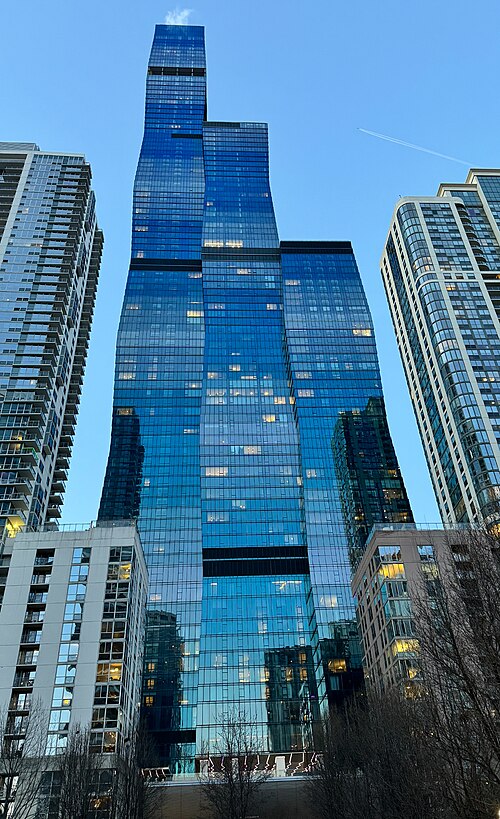
Built in 2020, this shimmering blue tower (you may still know it as Vista Tower) is the tallest building in the world designed by a woman, the very record its architect, Jeanne Gang, broke from her own Aqua tower down the street. It’s actually three connected towers of different heights, built from stacked shapes called frustums, which are just pyramids with the tops sliced off. Six shades of blue glass wrap the whole thing and shift with the light coming off Lake Michigan. Look closely and there isn’t a single real curve anywhere. The wave is all an illusion.
Holding a tower this tall and this slender steady in our wind took nearly every trick in the book. One entire floor, the 83rd, was left completely empty and open to the sky so the wind blows straight through the middle of the building instead of shoving it sideways. Up near the top sit six giant tanks holding more than 400,000 gallons of water that slosh against the sway. That empty floor wasn’t even in the first plans. Engineers added it partway through construction after wind tests showed the tower would move too much, and it cost the developers a whole floor of condos they could have sold.
The building has the highest home balconies in Chicago, tucked into the tower instead of sticking out, which is yet another way of dodging the wind. You don’t need to book a room to step inside, since the hotel lobby and restaurants are open to anyone.
Address: Lakeshore East, 363 E. Wacker Dr.
Here are 11 and 12. The Palmolive gave us a gem (Hoover lighting the beacon by remote from the White House), and the Wrigley earns the nickname “the house that chewing gum built.”
11. Palmolive Building: The Art Deco Tower With a Beacon Lit From the White House
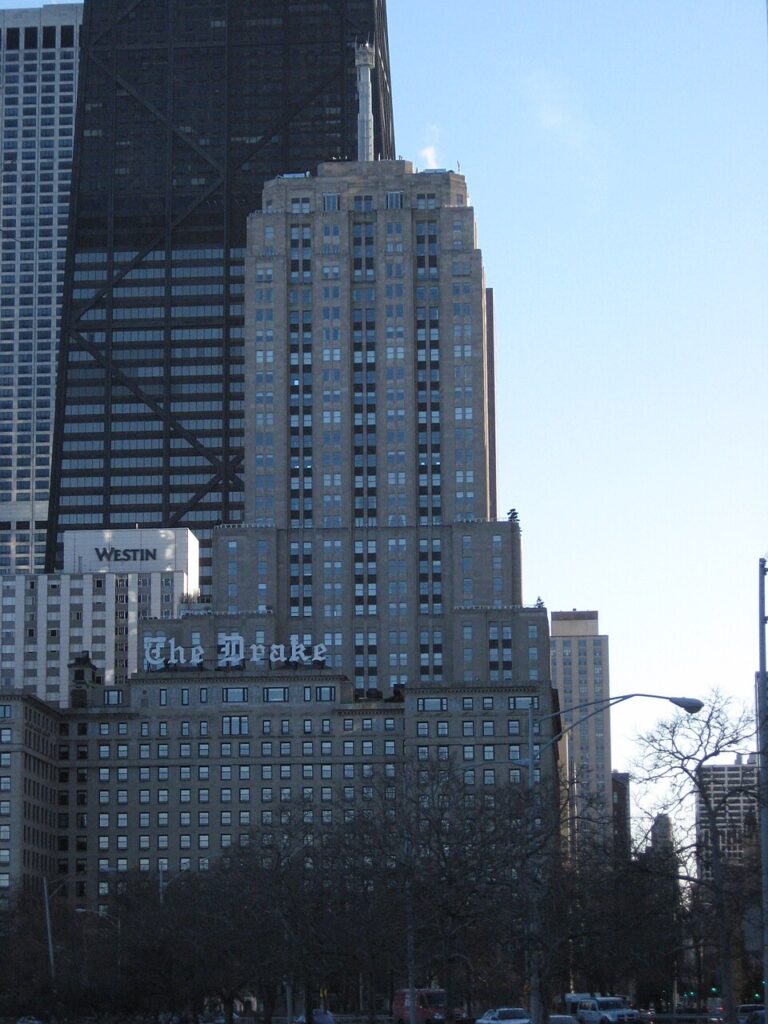
Built in 1929, this stepped Art Deco tower looks like a tiered wedding cake rising over Michigan Avenue. It started life as the headquarters of the soap company Colgate-Palmolive. Then in 1965, Hugh Hefner leased the building, hung nine-foot lit-up P-L-A-Y-B-O-Y letters across the roofline, and ran his magazine from inside until the late 1980s, so a whole generation of Chicagoans grew up calling it the Playboy Building.
The best part sits up on the roof, and it’s older than all of that. In 1930 a giant rotating searchlight went up on top, named the Lindbergh Beacon after the famous pilot, bright enough to guide airplanes toward Midway Airport. President Herbert Hoover switched it on for the very first time by remote control, all the way from the White House. The beam was so powerful that as newer, taller buildings rose around it, residents complained it was sweeping straight into their bedrooms, and it was shut off in 1981. It was eventually brought back, but now it only points out over the lake so it won’t bother anyone.
The building is luxury condominiums today. When the beacon is running in the evening, the best place to catch its sweep is Oak Street Beach, looking south.
Address: Streeterville, 919 N. Michigan Ave.
12. The Wrigley Building: The House That Chewing Gum Built
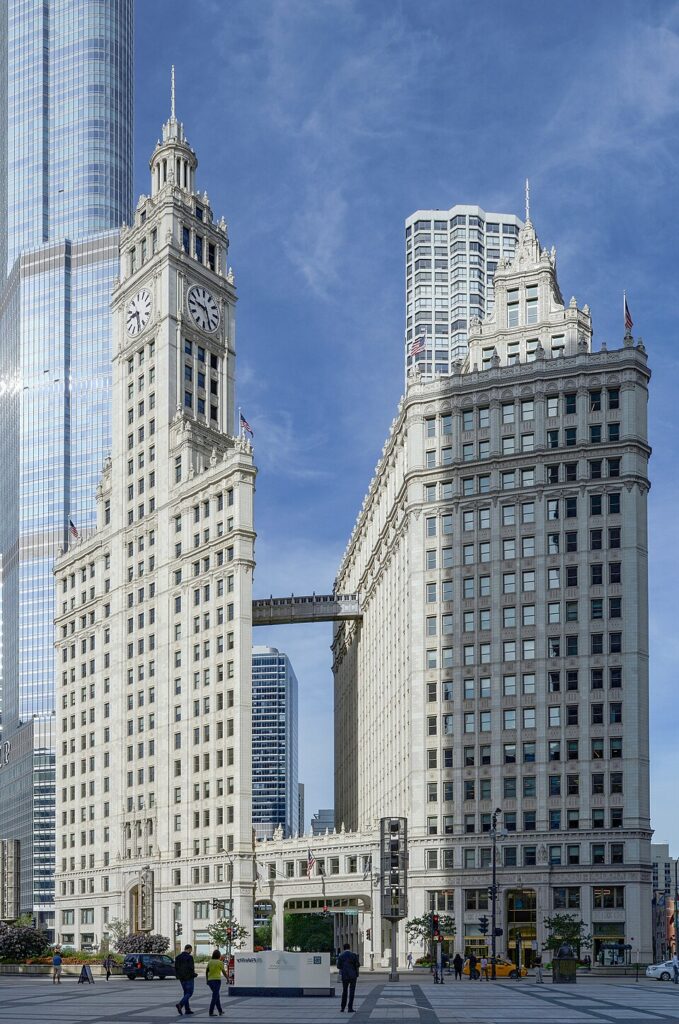
Built starting in 1921, this gleaming white tower was paid for entirely by chewing gum. William Wrigley Jr. put up his company’s headquarters here, and at the time there was nothing else north of the Chicago River. It was the first major building on what would become the Magnificent Mile, and it kicked off the whole glittering stretch. Wrigley modeled the tower on the Giralda, a centuries-old bell tower at the cathedral in Seville, Spain.
Here’s what makes it glow. As a young man, Wrigley had visited the 1893 World’s Fair, the famous “White City” that lit up at night, and he never forgot it. He wrapped his building in gleaming white terra cotta, in six slightly different shades that get brighter as the tower rises, and bathed it in floodlights, making it the first building in Chicago lit up like that after dark. To this night, the lights still wash the white facade every evening.
A couple of things most people walk right past. It’s actually two separate towers joined by walkways, and the south one carries a giant clock with a face on all four sides, each one nearly 20 feet across. It was also the first air-conditioned office building in the city. Walk through the middle of the two towers into the plaza for a free look at the riverfront and the bronze detailing.
Address: Magnificent Mile, 400-410 N. Michigan Ave.
Here are the last three, ending on the faceless goddess as teased.
13. Chase Tower: The Skyscraper That Curves Like a Letter A
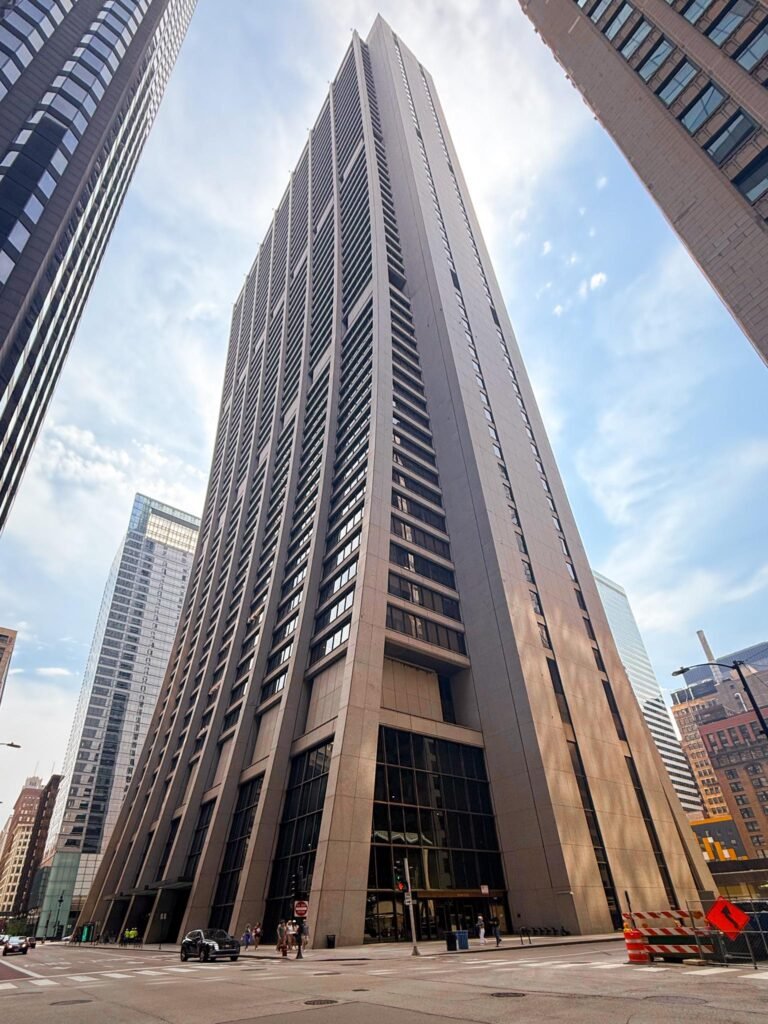
Built in 1969, most skyscrapers shoot straight up. This one swoops. From the side, Chase Tower (older Chicagoans know it as the First National Bank Building) sweeps outward into the shape of a giant letter A. There was a practical reason for the curve. The wide base gave the bank a huge, column-free hall at street level, while the upper floors stayed a normal office size. The shape was such a puzzle that the elevator banks had to be staggered to follow the building’s bend.
The real reason to stop here sits down in the plaza. Tucked at the base is Four Seasons, a sprawling mosaic by the world-famous artist Marc Chagall, built from thousands of tiny inlaid chips of glass and stone in more than 250 colors, with pieces shipped in from Italy, France, Norway, Belgium, and Israel. Chagall came to Chicago himself to oversee it, and at the 1974 unveiling he reportedly planted a kiss on Mayor Daley’s cheek.
Chicago weather went to work on it almost immediately. Chagall joked that it was suffering the very four seasons it was named for, so in the 1990s the city built a glass canopy over the whole thing to keep the rain and snow off. The plaza is free and open during the day.
Address: The Loop, 10 S. Dearborn St.
14. Lake Point Tower: The Only Skyscraper East of Lake Shore Drive
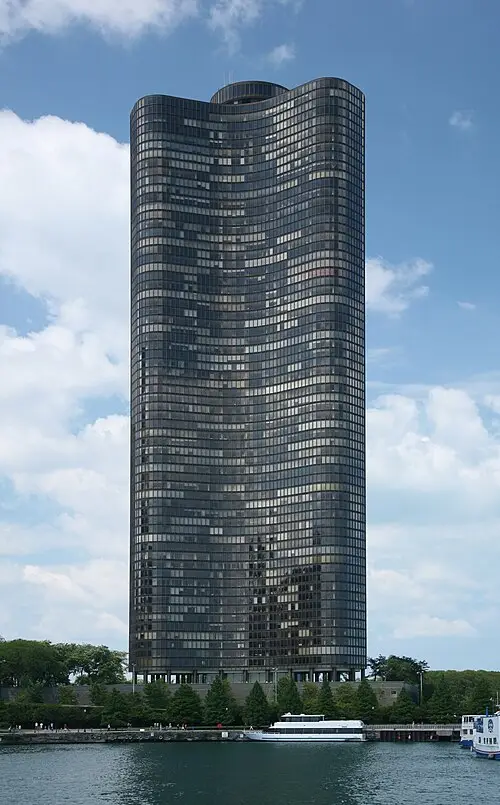
Built in 1968, here’s the trivia that wins bar bets: this dark, curving tower out by the water is the only skyscraper in the whole city standing east of Lake Shore Drive. It got there through a timing loophole, slipping in just before the city passed a law that permanently banned private building on the lakefront. Nothing like it will ever go up out there again.
The wavy, three-winged Y shape wasn’t for looks alone. The architects, both students of the legendary Mies van der Rohe, lifted it from a glass-tower idea Mies sketched back in 1922 but never built. The three curved wings let the wind slip around the tower instead of slamming into it, and they’re angled so no two apartments ever look straight into each other’s windows. The design was such a hit that it later helped inspire the Burj Khalifa in Dubai.
Here’s the hidden surprise. Three stories up, on the roof of the building’s base, the residents have their own private park, two and a half acres of it, complete with a pool and a lagoon, floating above the street. You can’t go in, but you can get great photos from Navy Pier next door or the lakefront trail.
Address: Streeterville, 505 N. Lake Shore Dr.
15. Chicago Board of Trade Building: The Goddess With No Face
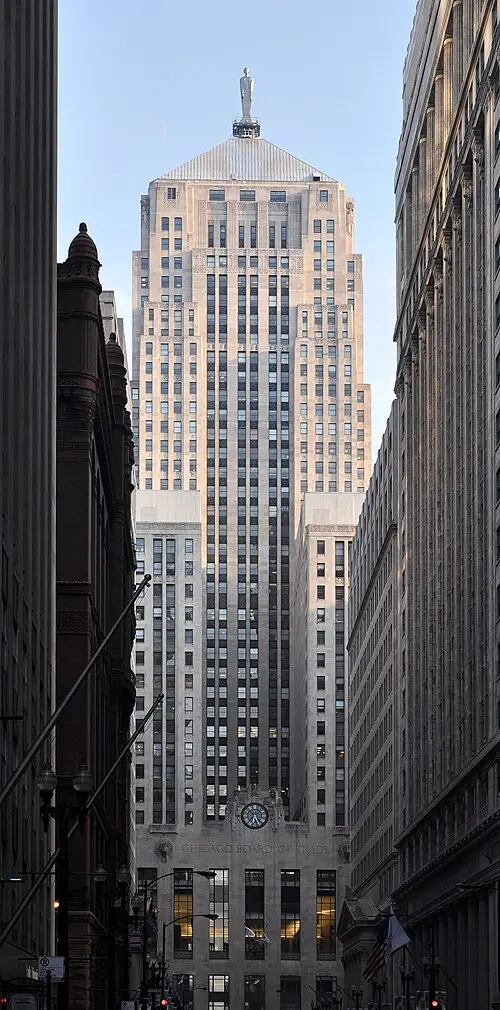
Built in 1930, this Art Deco temple of money caps the deep canyon of LaSalle Street, and for decades it was the tallest building in all of Chicago. Way up on the pyramid-shaped roof stands a 31-foot aluminum statue of Ceres, the Roman goddess of grain, a nod to the commodities that have been traded inside since the 1800s. She holds a sheaf of wheat in one hand and a bag of grain in the other.
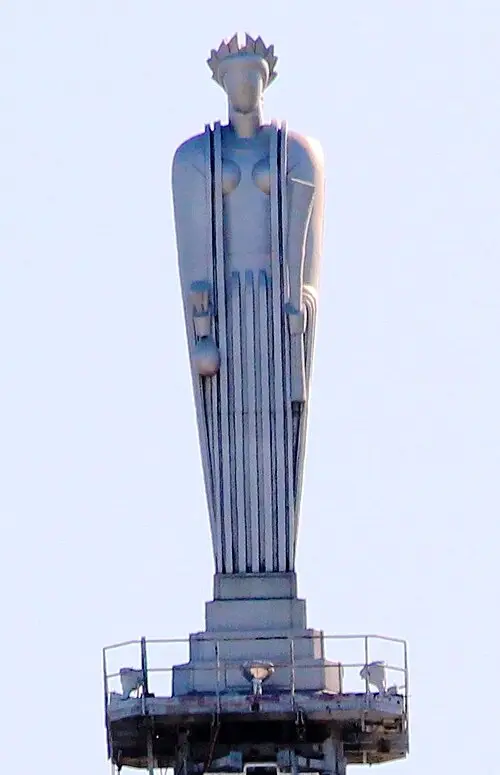
Here’s the strange part, and the perfect place to end. The goddess has no face. Sculptor John Storrs left it completely blank, and he did it on purpose. The Board of Trade was the tallest thing around, so he figured nobody would ever be high enough to see her features anyway. He never imagined the forest of taller skyscrapers that would one day rise up all around her and stare the poor goddess right in her blank face. One last kicker: within weeks of going up, she was blackened head to toe by smokestack soot, and she didn’t get a proper wash for 12 years.
Step into the three-story Art Deco lobby (free, during business hours) for the marble and the carved wheat stalks worked into the stone. And look straight down LaSalle Street toward the building to catch the dark, brooding “Gotham” mood that made it Wayne Enterprises in the Batman movies.
Address: The Loop, 141 W. Jackson Blvd.