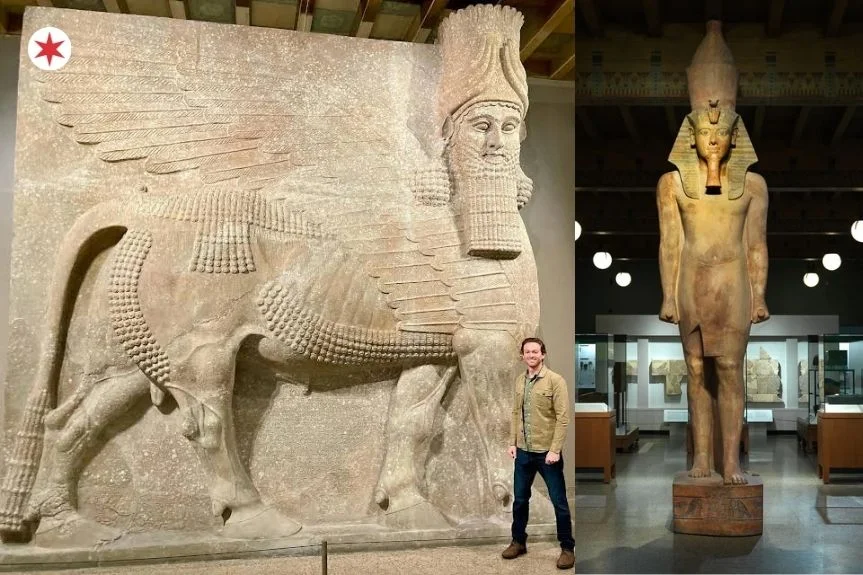
Tucked away in Hyde Park, there’s a museum where you can stand beneath a 40-ton winged bull that once guarded an Assyrian king, look up at the tallest ancient Egyptian statue in the Western Hemisphere, and come face to face with the demon from The Exorcist.
You won’t find auction-house trophies here. Almost everything was dug out of the ground by University of Chicago archaeologists, and the stories behind those digs could have come straight from an adventure movie.
Here are the incredible artifacts you can see at the Chicago museum that inspired Indiana Jones.
Wait—How Did This Museum Inspire Indiana Jones?
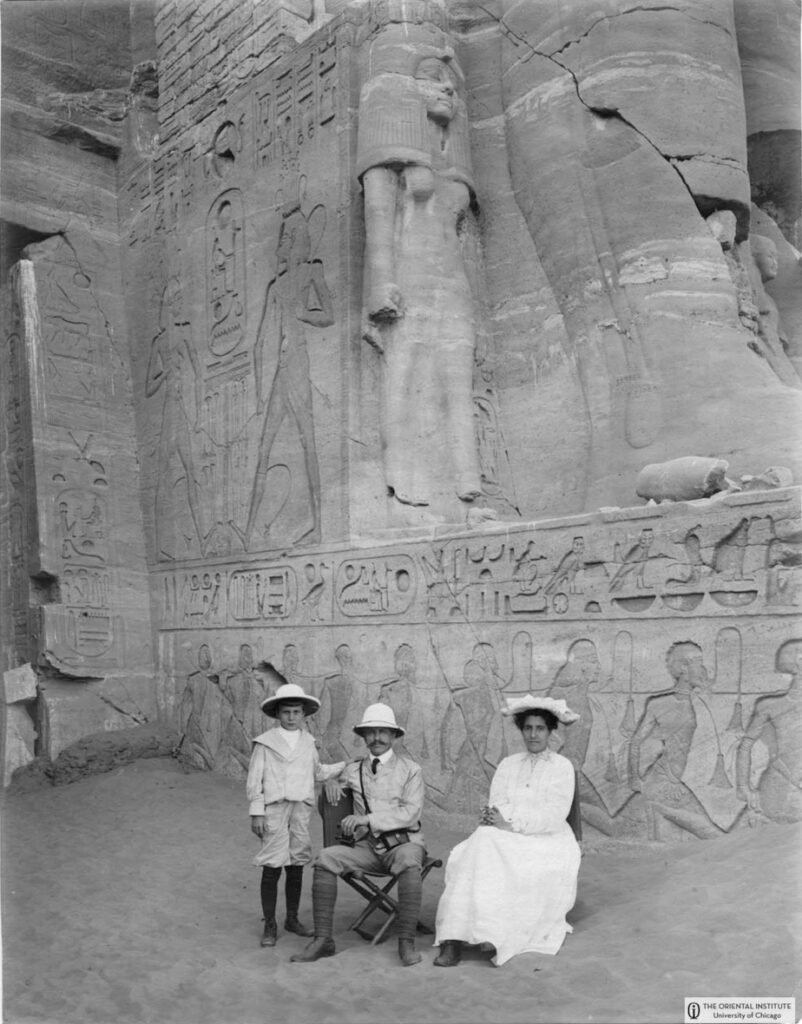
ISAC was founded in 1919 by James Henry Breasted, the first American to earn a PhD in Egyptology. He’s often named as one of the real-life models for Indiana Jones.
In the 1920s and 1930s, Breasted sent University of Chicago teams across Egypt and the Middle East. They shipped home monumental finds, some of them cut into pieces and rebuilt in Hyde Park.
The Hollywood link goes deeper: Indy’s backstory has him studying at the University of Chicago under Abner Ravenwood. Walk through ISAC’s galleries and you can see why.
Here are 8 artifacts inside ISAC, and the stories behind each one.
1. The Colossal Statue of King Tutankhamun
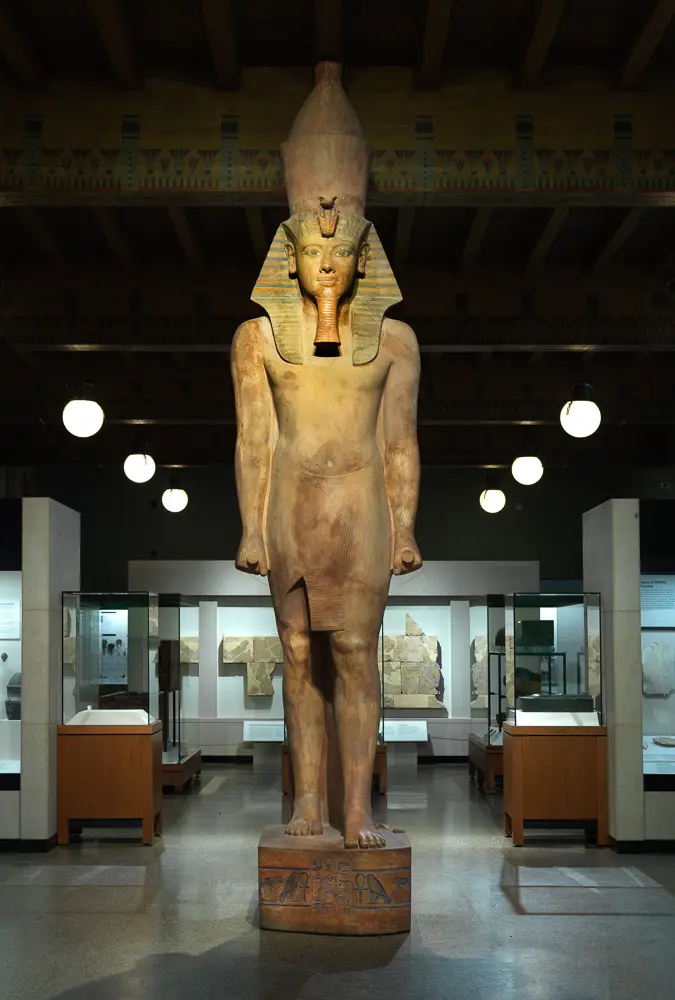
The tallest ancient Egyptian statue in the Western Hemisphere lives in Hyde Park.
Carved from red quartzite, this towering figure shows King Tutankhamun, the boy pharaoh whose tomb was found in 1922. ISAC’s statue didn’t come from his tomb, though.
Oriental Institute archaeologists excavated it in 1930 at Medinet Habu, on the west bank of the Nile near Luxor. It was one of a pair that stood in a royal mortuary temple.
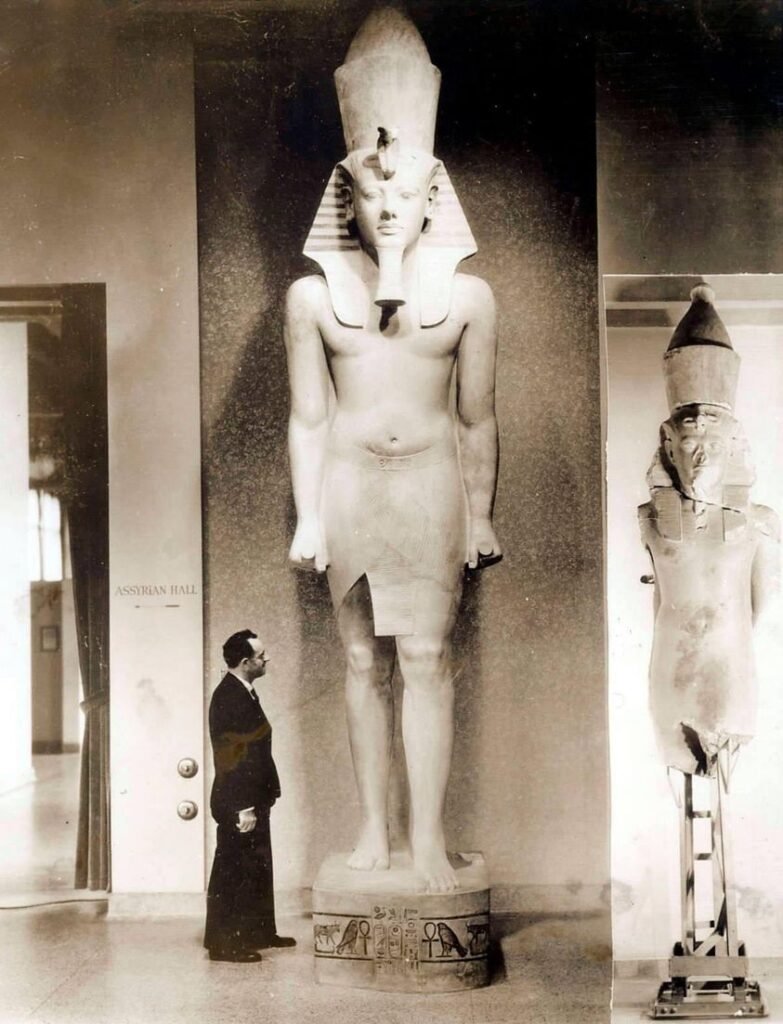
Only parts of it survived, so missing sections were restored using its more complete twin, which stayed in Egypt. Step close and look for the royal headcloth topped by the double crown of Upper and Lower Egypt.
Look for this: Check the inscription on the back pillar. It names the later king Horemheb, carved over the name of King Ay.
Experts identify the face as Tutankhamun’s from its style.
King Tut Statue at a Glance



2. The Lamassu (Human-Headed Winged Bull)
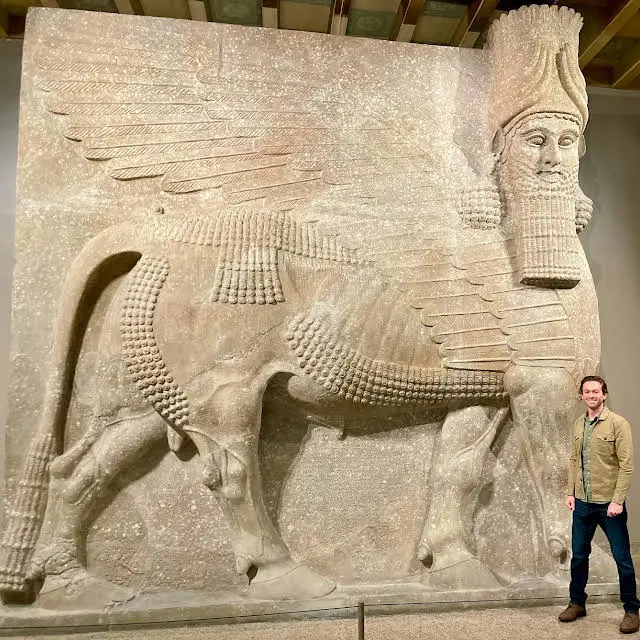
This is the museum’s showstopper, and its most photographed resident.
Carved around 721–705 BC, this 40-ton human-headed winged bull once guarded a gateway in the palace of Assyrian King Sargon II at Khorsabad, in northern Iraq.
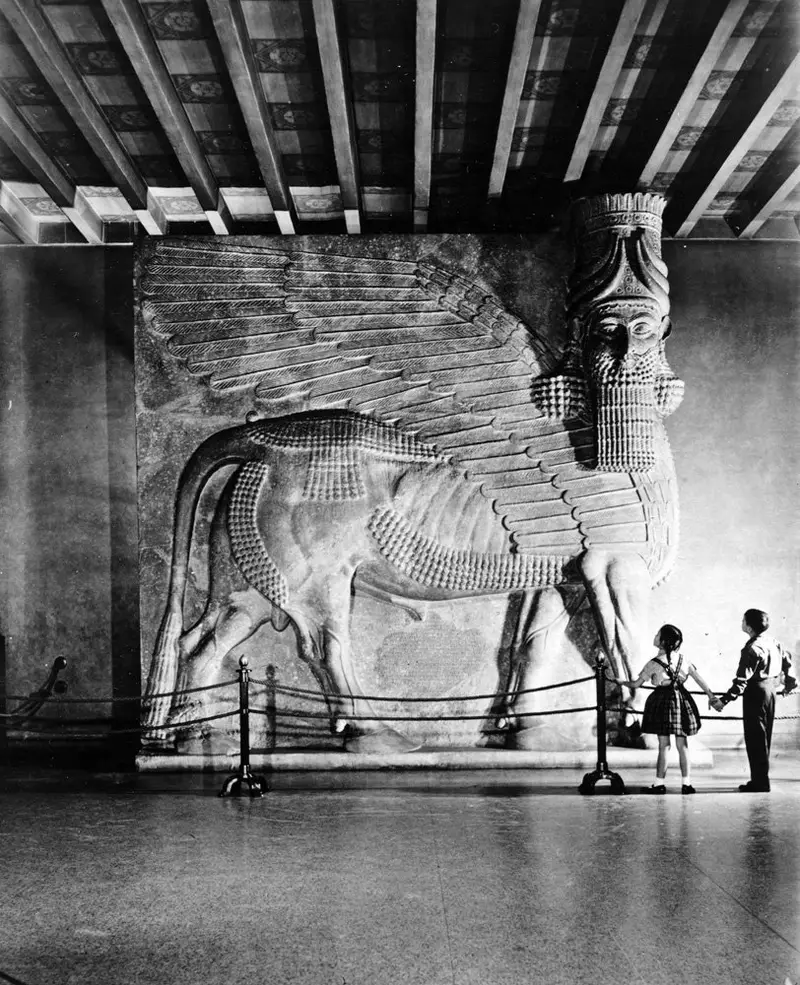
Lamassu were protective spirits designed to intimidate enemies and ward off evil. Their hybrid anatomy fused a bull’s strength, an eagle’s wings, and a bearded human’s royal wisdom.
Walk around it slowly and you’ll catch one of the cleverest optical illusions in ancient art: the bull has five legs.
Viewed straight on, it stands firmly planted on two legs like a motionless sentry. Viewed from the side, it strides forward on four.
ISAC’s Iraq Expedition excavated it in 1929, cut it into pieces for shipping, and reassembled it in Chicago.
Look for this: Scan the cuneiform carved between the bull’s legs. It’s a royal inscription of Sargon II, and it has outlasted his palace by almost three thousand years.
The Lamassu at a Glance
3. The Persian Bull Head
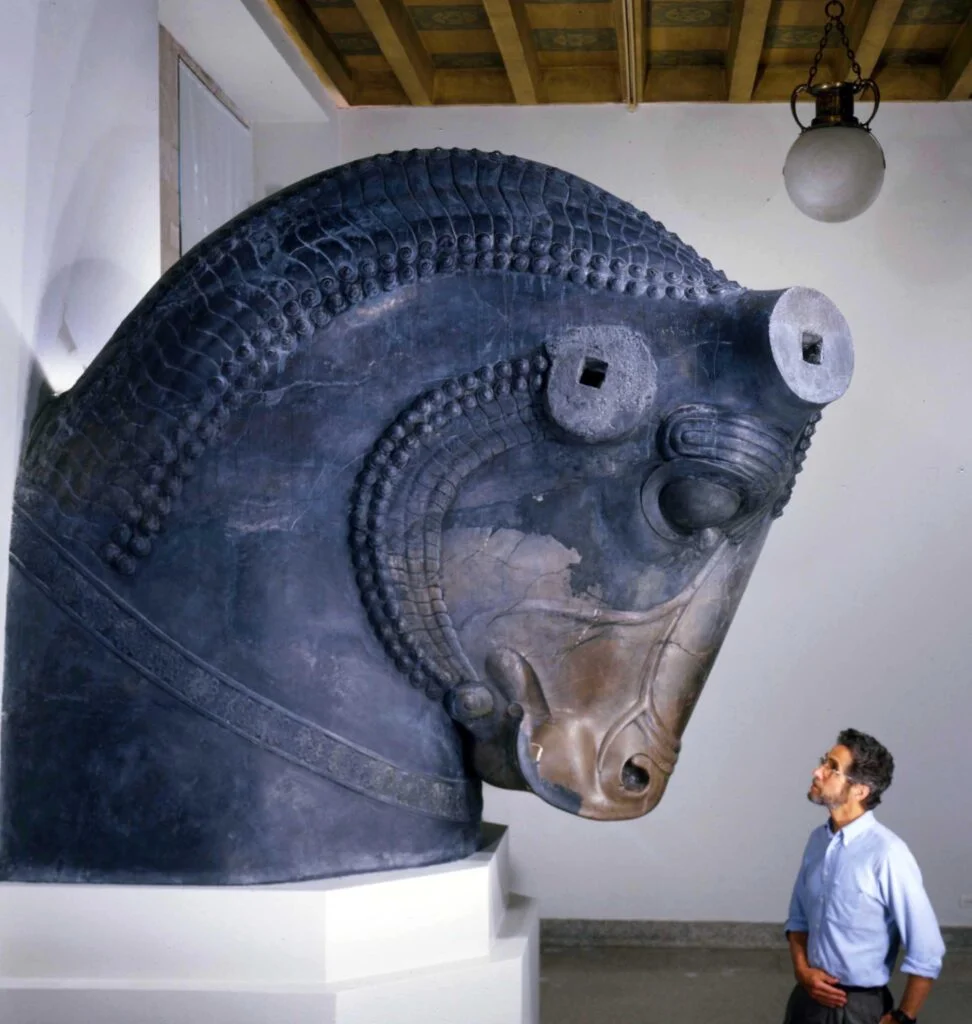
In 330 BC, Alexander the Great’s army burned Persepolis, the ceremonial capital of the Persian Empire. Historians still debate whether the fire was revenge or a victory party gone wrong.
This colossal head came from one of a pair of stone guardian bulls at the porch of the Hundred-Column Throne Hall. Iran assigned it to the Oriental Institute’s excavators, and it was restored in Chicago.
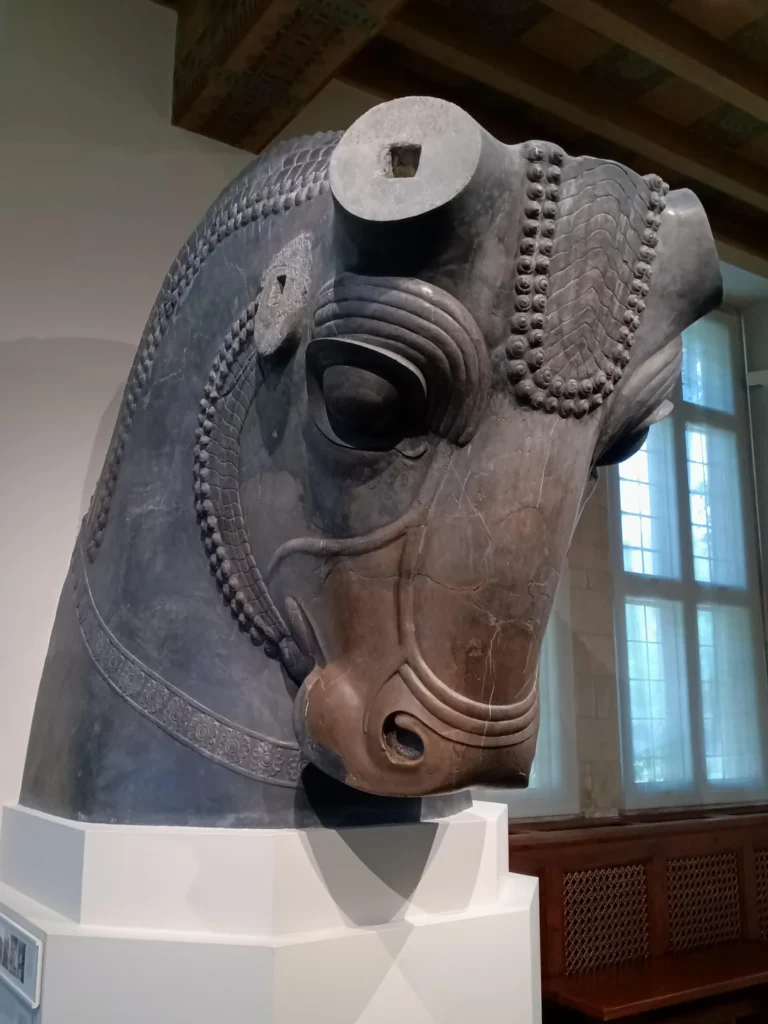
What stops visitors isn’t just the size. It’s the calm, almost thoughtful expression.
It’s carved from dark gray limestone that was once highly polished. Oriental Institute archaeologists recovered it in the early 1930s.
Look for this: Check the ears and horns. They were made separately and attached, so look for the joins.
The Persian Bull Head at a Glance
4. The Code of Hammurabi (Full-Scale Cast)
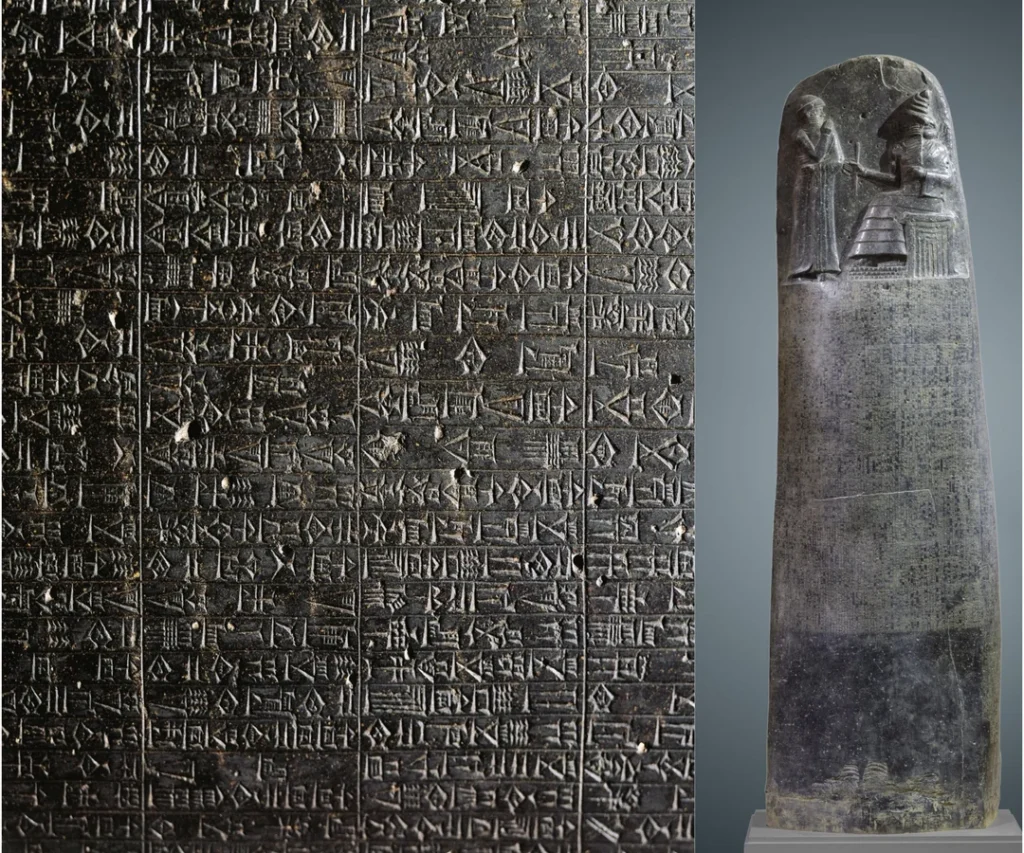
Want to read the original “eye for an eye” law up close? You actually get a better view in Hyde Park than you do in Paris.
The original black stone stele stands behind crowds at the Louvre. ISAC displays a full-size cast, and here you can walk right up and read the cuneiform in peace.
At the top, Babylonian King Hammurabi stands before Shamash, the god of justice. Below them stretch tightly packed columns containing 282 ancient laws governing everything from property disputes and botched surgeries to the regulated price of beer.
Even the original’s survival was dramatic: centuries after Hammurabi died, a rival Elamite king hauled the seven-foot pillar away as war booty to Susa (in modern Iran), where French archaeologists finally unearthed it in 1901.
Look for this: Use ISAC’s clear display labels to locate Law #196—the famous “if a man destroys the eye of another man, they shall destroy his eye” clause.
It’s the rare chance to stand inches away from the legal principle that echoed through Hebrew, Greek, and Roman law.
The Code of Hammurabi Cast at a Glance
5. The Clay Prism of Sennacherib
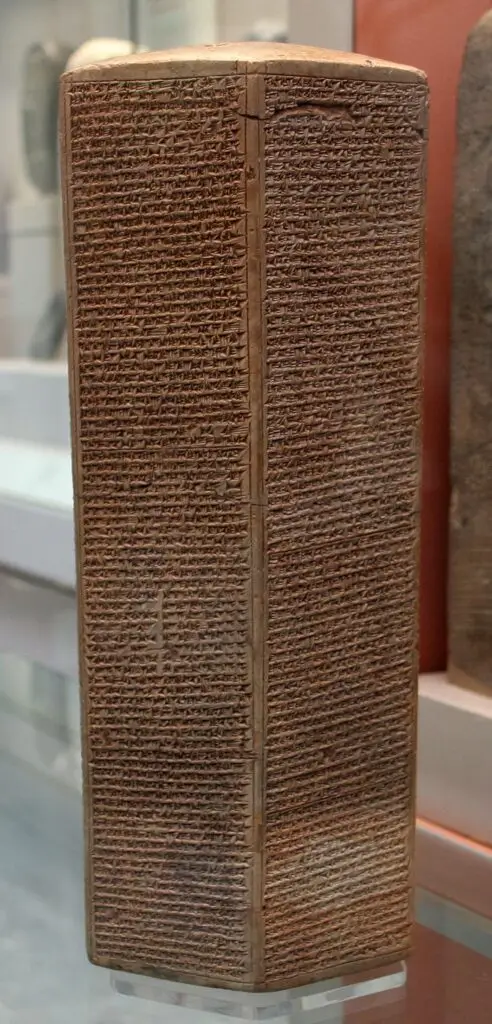
At first glance, it looks like a modest baked-clay pillar you might walk right past. In reality, it’s a 2,700-year-old propaganda battle with the Hebrew Bible.
Inscribed on six sides in microscopic cuneiform, the prism chronicles eight military campaigns of Assyrian King Sennacherib—including his famous 701 BC siege of Jerusalem against King Hezekiah.
 JM
AK
In 2 Kings and Isaiah, the Bible recounts that an angel struck down the Assyrian camp outside the walls, forcing Sennacherib to retreat.
Sennacherib’s clay prism spins a very different story, boasting that he shut Hezekiah up “like a caged bird in his royal city of Jerusalem,” collected massive tribute, and marched home victorious.
Today, historians point out that both accounts quietly confirm the same core truth: Sennacherib never actually breached Jerusalem’s walls, yet Hezekiah paid dearly to make him leave.
Rarely does archaeology hand us dueling press releases from opposite sides of an ancient war.
Look for this: Read the translated “caged bird” excerpt on the display panel next to the case, then glance back at the tiny wedge-shaped cuneiform lines pressed into the clay.
You’re reading royal spin written almost three millennia ago.
Speaking of small objects with big stories, the next one is nearby.
The Sennacherib Prism at a Glance
6. The Pazuzu Figurine (The Exorcist Demon)
Horror fans come to Hyde Park just to meet this small bronze demon.
With his snarling face, talons, scorpion tail and wings, Pazuzu was the Mesopotamian king of evil wind demons. He inspired the demon in William Peter Blatty’s The Exorcist, which opens at an archaeological dig in Iraq.
Here’s the twist Hollywood left out: ancient Mesopotamians didn’t summon Pazuzu for evil. They wore amulets of his face for protection.
Pazuzu was considered a fierce rival to Lamashtu, a far more dreaded demoness believed to prey on pregnant women and newborns.
The logic was pure ancient street smarts—hang a scary demon over the crib, and the worse demon stays away.
Look for this: Notice the small loop on top of his head. It meant the figure could be hung up as a household bodyguard.
The Pazuzu Figurine at a Glance
7. The Egyptian Book of the Dead (Papyrus Milbank)
Before you picture a single leather-bound spellbook straight out of The Mummy, the ancient Egyptian Book of the Dead was actually a custom-ordered survival guide for the afterlife.
Wealthy Egyptians paid scribes for personalised papyrus scrolls packed with spells to help their souls pass the final judgment. ISAC’s best-known copy, the Papyrus Milbank, was made for a man named Irtyuru and is over 33 feet long.
Because papyrus is fragile, the scroll was cut into sections and mounted under glass, and sections go on view in low light.
In the same gallery, look for the coffin of Meresamun, a temple singer whose mummy was CT-scanned at the University of Chicago without opening the coffin.
Look for this: Keep an eye out for the iconic Weighing of the Heart imagery—where the jackal-headed god Anubis balances the deceased’s heart against the feather of truth.
If your heart was heavier than the feather, a crocodile-headed monster waited beneath the scales to devour it.
The Papyrus Milbank at a Glance
8. The Glazed-Brick Lion From Babylon’s Ishtar Gate
We tend to imagine ancient cities in shades of beige and dust. This roaring Babylonian lion proves otherwise.
Made during the reign of King Nebuchadnezzar II (604–562 BC), this panel once lined the Processional Way that led to Babylon’s Ishtar Gate.
It’s made of molded, baked bricks covered in colored glazes. Lions like this one, the symbol of the goddess Ishtar, lined the walls along the route.
Look for this: Study the seams between the bricks. Each one was molded separately, then fitted together like a giant 3D jigsaw.
The Striding Lion at a Glance
Tips For Visiting ISAC
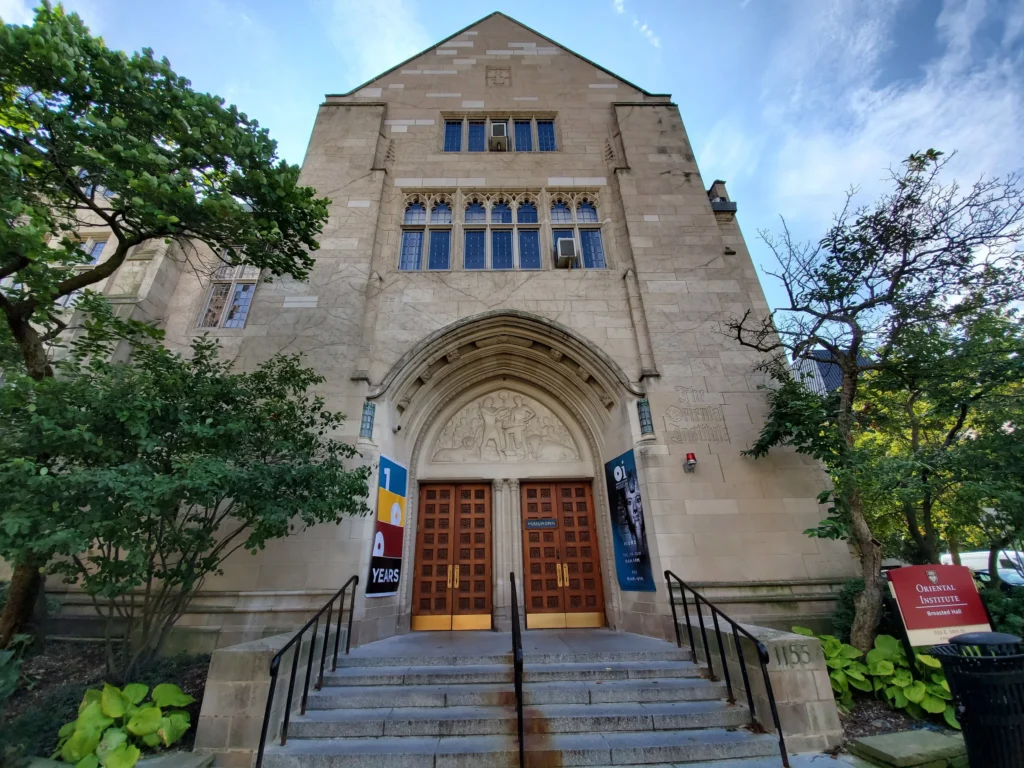
Save Time For The Suq Gift Shop
ISAC’s museum shop, the Suq, is worth a stop. Look for replicas from the collection, history books and little Pazuzu figures.
Give it 15 minutes before you leave.
When To Go
Weekday afternoons are usually quiet. Weekends draw more people, but it never feels like the Field Museum or the Art Institute.
Short On Time? Follow This 60-Minute Route
Prioritize the Egyptian Gallery (King Tut, the Book of the Dead, and Meresamun) and the Mesopotamian and Assyrian galleries (the Lamassu, the Code of Hammurabi, the Sennacherib Prism, Pazuzu and the Babylon lion).
The Persian Gallery is compact and easy to tack on right after.
What Tickets Cost
ISAC now charges admission. Adult tickets are $15, and seniors, students, children aged 4–17 and Chicago residents pay $10.
Children under 4, military and veterans get in free, and ISAC also runs a free-for-all evening each week, so check its website before you go.
Make A Half-Day Of It In Hyde Park
ISAC takes about 90 minutes to two hours. That leaves time for a slow Hyde Park afternoon, all on foot:
- 1. Walk a few minutes east to the Robie House: Frank Lloyd Wright’s Prairie-style landmark sits at 58th and Woodlawn. Even if you don’t book an interior tour, strolling past its dramatic cantilevered rooflines is free.
- 2. Browse the Seminary Co-op (3-minute walk): A much-loved independent bookstore next to Robie House, packed with dense stacks of history, fiction, and university press gems.
- 3. Grab lunch at Medici on 57th (about 10 minutes’ walk): A Hyde Park classic with graffiti-carved wooden booths, pizza and a bakery next door.
- 4. Stroll the UChicago quads before heading back: Wander through the Gothic stone courtyards (they look straight out of Oxford), then hop the Metra Electric or the #6 Jackson Park Express bus back downtown.
ISAC Museum at a Glance
The Bottom Line
ISAC is the museum to send someone to when they’ve seen the big downtown sights. The artifacts are world-class and the galleries stay calm.
Already done the Field Museum and the Art Institute? Head south to Hyde Park, stand beneath the Lamassu and lock eyes with Pazuzu.
 26 Chicago Slang Terms That Instantly Separate Locals From Tourists
 23 Chicago Churches That Could Pass for European Cathedrals (And How to Get Inside Each One)
 15 New Skyscrapers and Megaprojects Coming to Chicago in 2027 and Beyond
 13 Things People Get Wrong About Chicago (From People Who Actually Live Here)
 17 Most Beautiful Streets In Chicago And How To Find Them
 We Asked Locals For The Best Downtown Chicago Hotels. Here’s What They Said.
JM
AK