10 Stunning Chicago Mansions You Can Actually Go Inside

Have you ever walked past a massive, historic home and wondered what it looks like on the inside?

Chicago is globally famous for its towering skyscrapers and iconic skyline buildings.

But tucked away among the glass and steel are some of the most breathtaking historic mansions in the country.

During the Gilded Age, wealthy tycoons built incredible, sprawling palaces across the city.
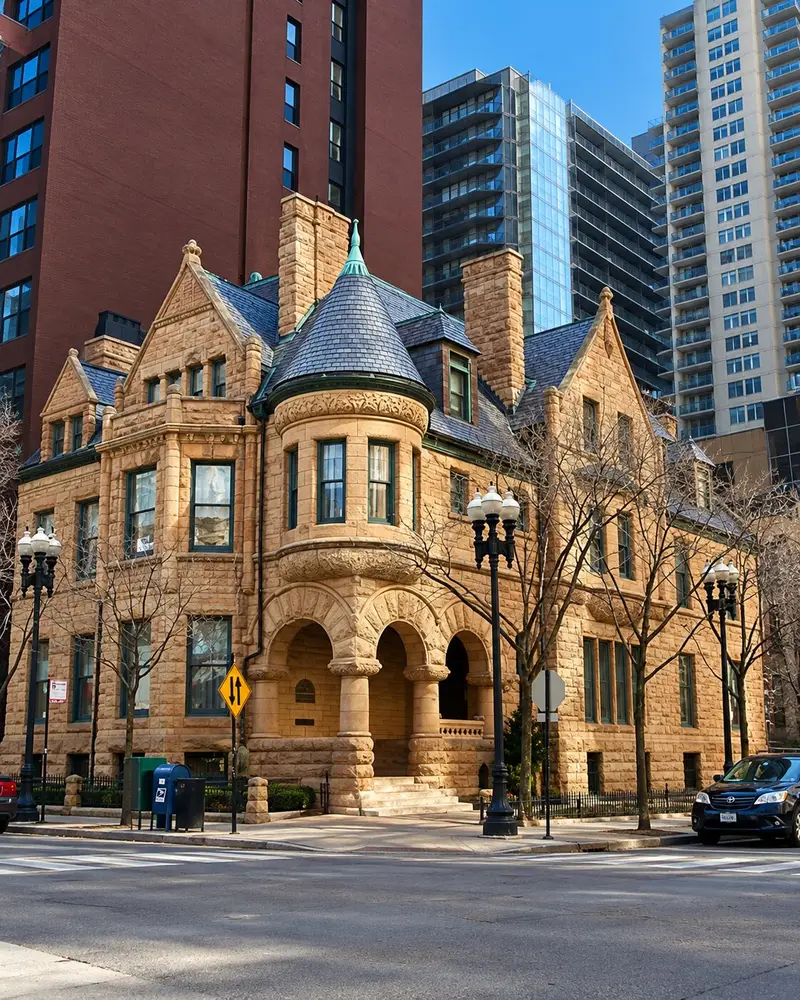
The image showcases a three-story historic stone mansion built in the Richardsonian Romanesque style with a prominent corner turret and arched entryway. It is situated on a city street corner, framed by trees and a vintage lamp post, with modern high-rise buildings visible in the background.
Designed by the architectural firm Cobb and Frost, the historic Ransom R. Cable House was completed in 1886 on the Near North Side of Chicago. This Gilded Age landmark features a distinct peach-tinted Kasota stone facade and currently serves as the offices for Driehaus Capital Management.

The best part? You don’t have to be a billionaire to step inside them today.

JM AK
Read by 5,000+ Chicagoans
❤️ Get Hey Chicago in your inbox
Join 5,000+ Chicagoans getting untold history, neighborhood secrets, and your Thursday weekend guide.
🔒 100% free. No spam. Unsubscribe in 1-click anytime.

From marble-covered estates to Frank Lloyd Wright masterpieces, these incredible hidden gems have been beautifully preserved for the public.

Here are 10 stunning Chicago mansions you can actually go inside, complete with everything you need to know to plan your visit.

1. The Richard H. Driehaus Museum (The Nickerson Mansion)
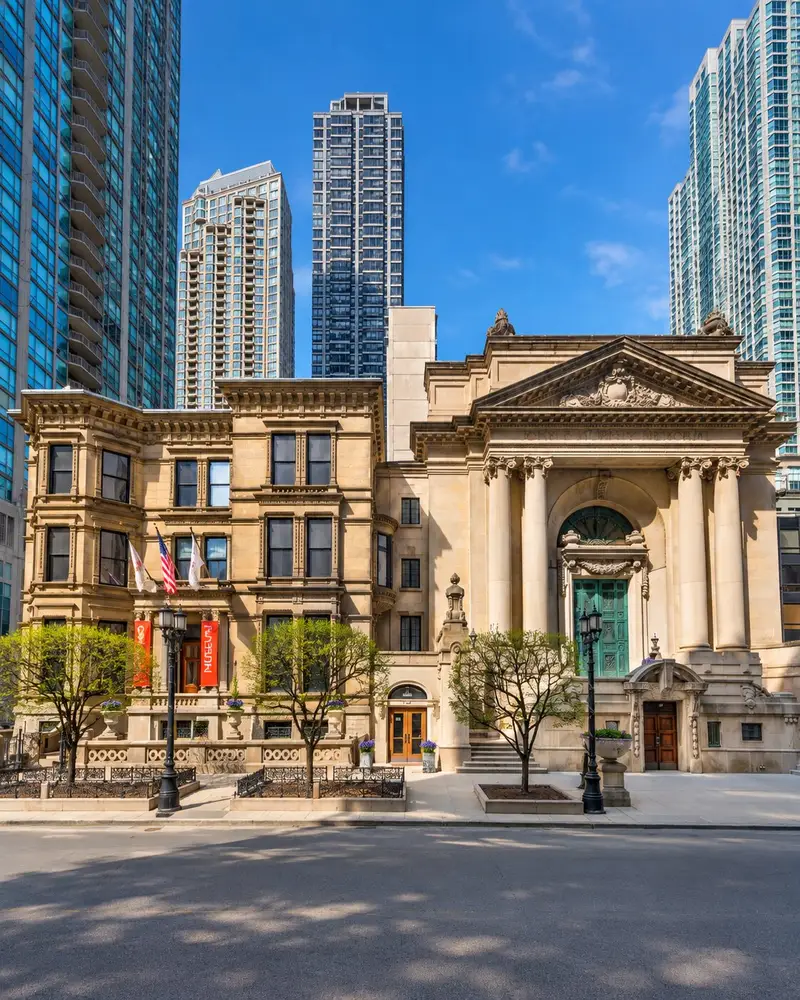
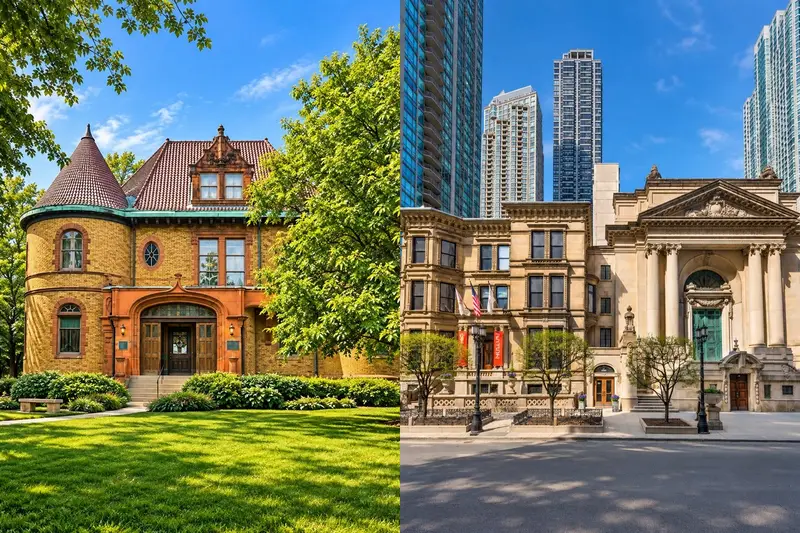
The image presents the exterior facades of two historic buildings, including a three-story brownstone mansion adorned with banners and a grand classical Beaux-Arts building featuring a towering portico with monumental columns. Set against a backdrop of modern glass skyscrapers, the structures stand side-by-side along a clean city street corner framed by small trees.
The Richard H. Driehaus Museum stands adjacent to the historic John B. Murphy Memorial Auditorium on Erie Street in Chicago. This architectural pairing bridges the ornate residential luxury of the Nickerson Mansion with the striking French Renaissance and Beaux-Arts style of the adjacent monument.

Often referred to as Chicago’s “Marble Palace,” this Near North Side gem is an absolute must-see for fans of opulent history.

It was built in 1883 for wealthy local banker Samuel M. Nickerson.

The interiors are completely lavish, featuring exotic woods, glittering onyx, and breathtaking stained glass.
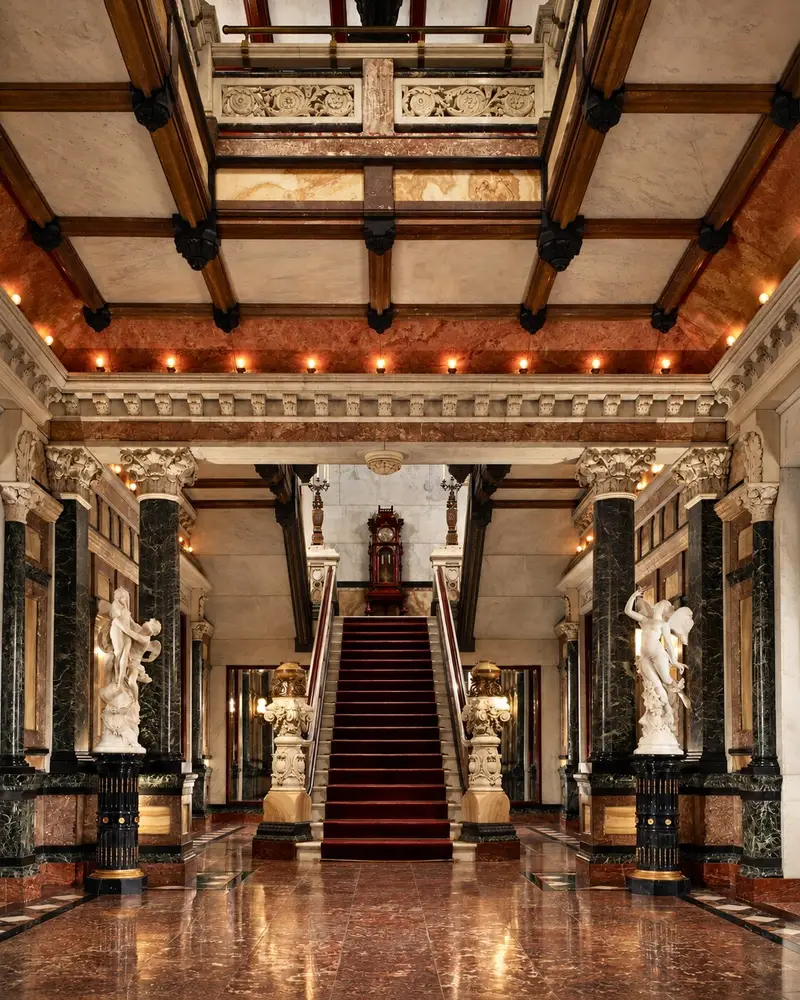
The image showcases a grand, opulent Gilded Age mansion interior featuring an elaborate marble staircase with a red carpet leading up to a landing with a grandfather clock. Two classical white marble sculptures on ornate pedestals frame the entrance to the stairs, flanked by dark green marble columns and an intricately carved wooden ceiling.
The spectacular main hall of the Richard H. Driehaus Museum in Chicago showcases the heights of late 19th-century residential luxury and craftsmanship. Known historically as the Nickerson Mansion, the space is renowned for its immersive use of domestic marbles, exquisite wood carvings, and period sculptures.

Every single room feels like you’ve stepped onto the set of a period drama.

Today, it operates as a museum celebrating the art, architecture, and design of the late 19th century.

Neighborhood: Near North Side
Admission: Around $20 for adults (Guided tours are slightly extra)
Why It’s Worth Visiting: Do not miss the stunning stained-glass dome located in the gallery—it is easily one of the most breathtaking ceilings in the entire city.

2. Glessner House
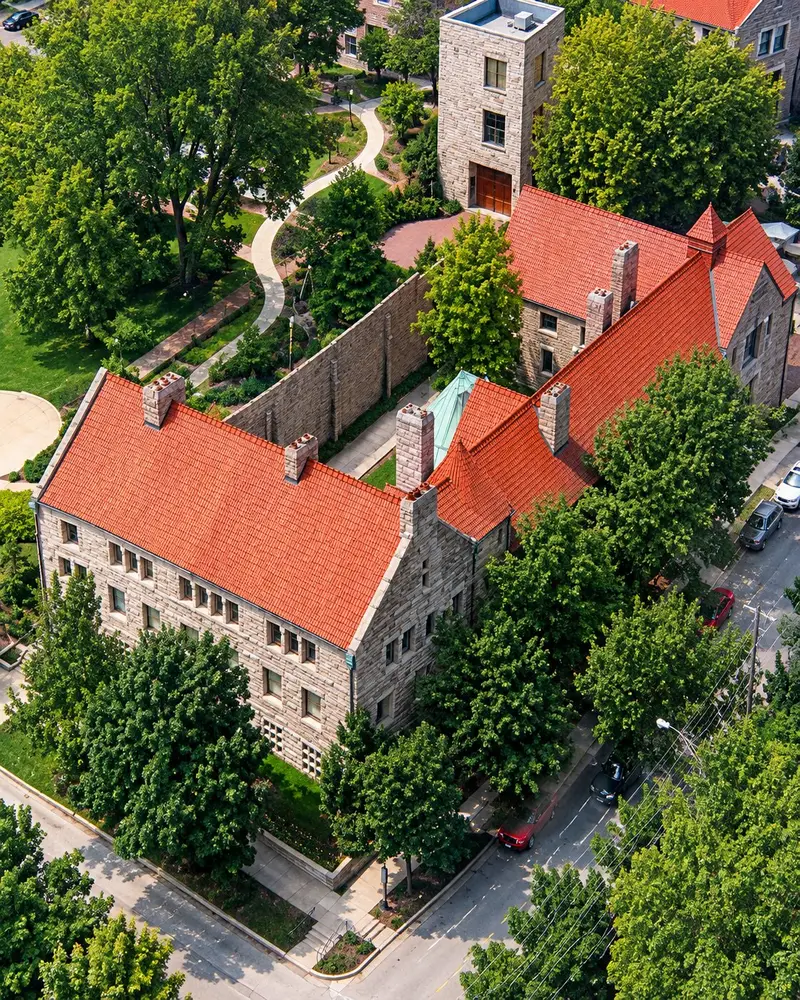
The image presents an elevated aerial view of a fortress-like stone mansion built in an L-shape configuration with a bright red tiled roof. The structure surrounds an inner courtyard area and is bordered by lush green trees, city streets with parked cars, and a winding sidewalk path.
Completed in 1887, the John J. Glessner House is a masterpiece of Richardsonian Romanesque architecture designed by renowned architect Henry Hobson Richardson. Located in Chicago’s historic Prairie Avenue district, its innovative layout pushed the building to the edges of the property line to maximize the space for an private, light-filled internal courtyard Glessner House.

Located in the historic Prairie Avenue District (once known as one of the most beautiful streets in Chicago), Glessner House looks almost like a stone fortress from the outside.

But once you step through the heavy wooden doors, you’ll find a warm, beautifully designed family home.

Designed by famous architect Henry Hobson Richardson, the home was completed in 1887.
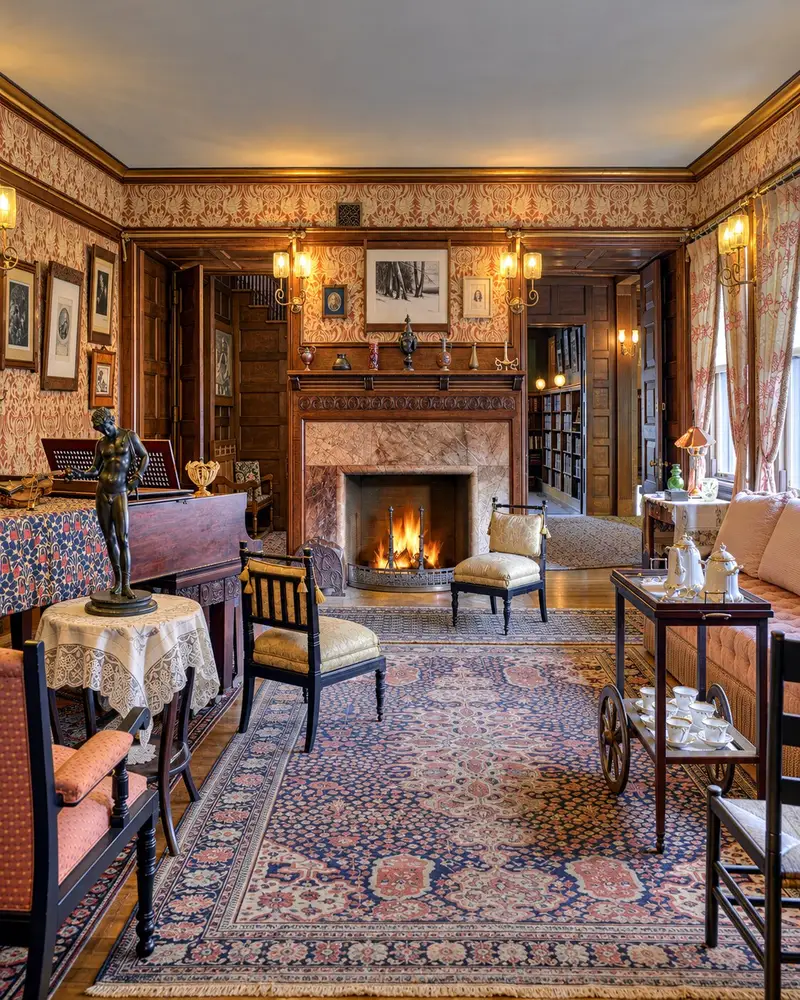
The image portrays an intricately decorated 19th-century parlor room featuring an active, fire-lit stone fireplace beneath an ornate wooden mantel piece. The room is filled with historic furniture including multiple patterned armchairs, a large grand piano draped with textiles, a patterned oriental rug, and elegant William Morris wallpaper illuminated by vintage sconce lighting.
The beautifully restored parlor of the historic John J. Glessner House showcases an exceptional example of the Late Victorian and Arts and Crafts movement styles Glessner House. The design emphasizes a fully integrated domestic environment, highlighted by its original hand-painted canvas wallcoverings, an open hearth fireplace, and a custom 1887 Steinway grand piano Glessner House.

It completely revolutionized domestic architecture in America by turning its back on the noisy street and opening up to a private, sunlit courtyard.

You can book a docent-led tour to see the home’s incredible custom furniture and original William Morris wallpapers.

Neighborhood: South Loop
Admission: $20 for a guided tour
Why It’s Worth Visiting: It is a radical departure from the fussy Victorian homes of its time, offering a rare glimpse into the birth of modern residential design.


3. Frederick C. Robie House
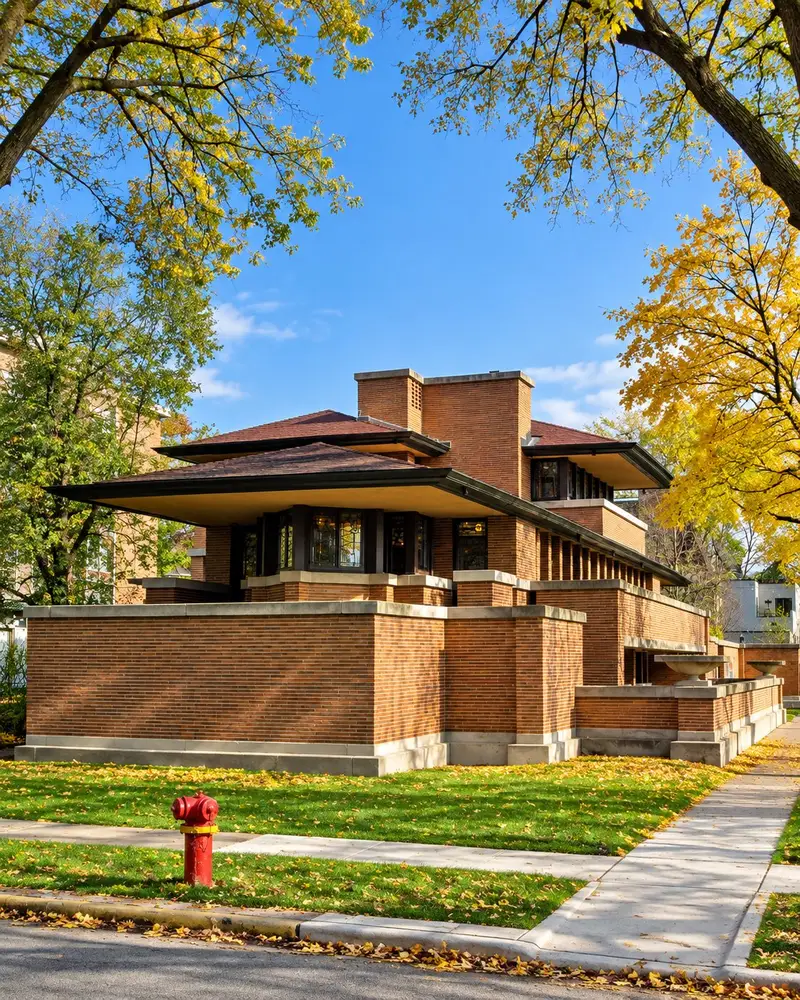
The image shows a low-profile, multi-story brick residence designed in the Prairie School architectural style with long horizontal lines and deep overhanging roof eaves. It sits on a grassy corner plot bordered by concrete sidewalks and mature trees showcasing autumn foliage.
Completed in 1910, the Frederick C. Robie House is widely recognized as a masterpiece of the Prairie School architectural style designed by Frank Lloyd Wright. Located in Chicago’s Hyde Park neighborhood, the structure is celebrated for its sweeping horizontal planes, dramatic cantilevered roofs, and seamless integration with its surrounding landscape.

You simply can’t talk about Chicago mansions without mentioning the legendary Frank Lloyd Wright.

Located on the campus of the University of Chicago in Hyde Park, the Robie House is a true architectural wonder.

It is widely considered the greatest example of Prairie School architecture in the world.

Completed in 1910, the sweeping horizontal lines and dramatic overhangs look incredibly modern even today.
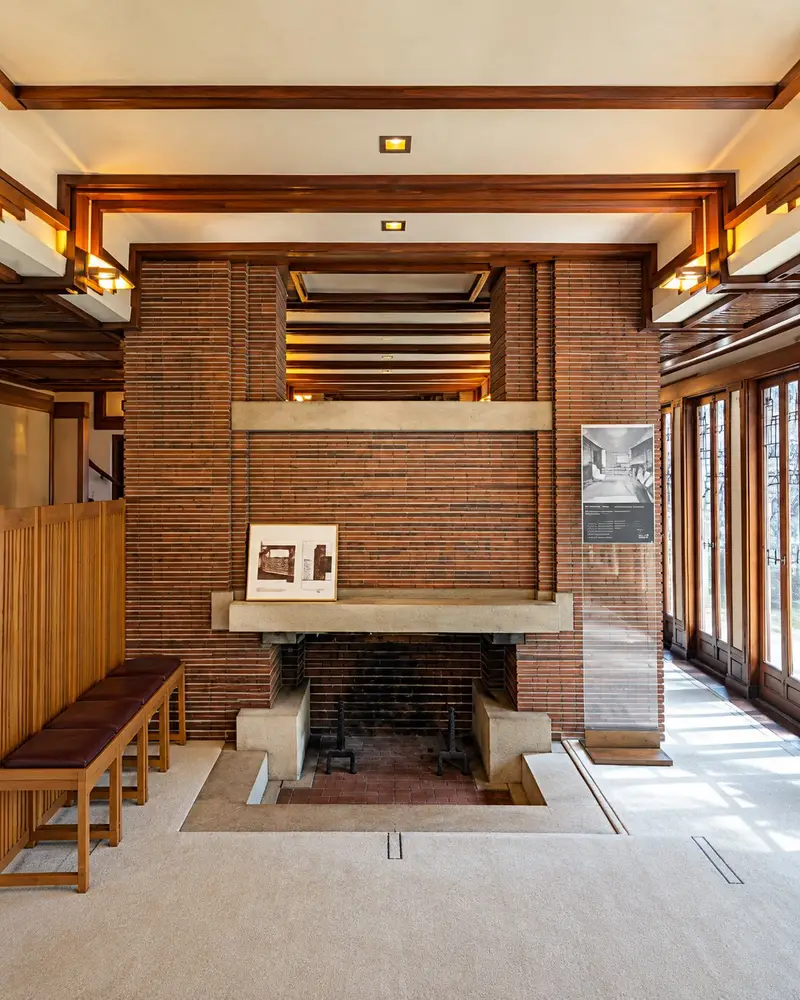
The image depicts a spacious interior room featuring a massive central fireplace constructed from long, thin Roman bricks with a prominent concrete mantelpiece. The space showcases distinctive Prairie School design elements, including a low-pitched ceiling with integrated wooden trim lighting and expansive glass doors along the right wall
The central hearth of the Frederick C. Robie House serves as the literal and symbolic anchor of the home’s open-plan living space. Designed by Frank Lloyd Wright, this magnificent Roman brick fireplace is celebrated for its innovative integrated lighting and a unique view-through opening above the mantel that connects the living and dining areas.

The interior features signature Wright elements, including stunning art glass windows and custom built-in furniture.

If you are looking for Chicago guided tours that are actually worth doing, the Frank Lloyd Wright Trust offers everything from basic 45-minute walkthroughs to in-depth, multi-hour architectural tours here.

Neighborhood: Hyde Park
Admission: Ranging from $20 to $30 depending on the tour length
Why It’s Worth Visiting: It is a recognized UNESCO World Heritage site and arguably the most famous historic home in the Midwest.

4. Charnley-Persky House
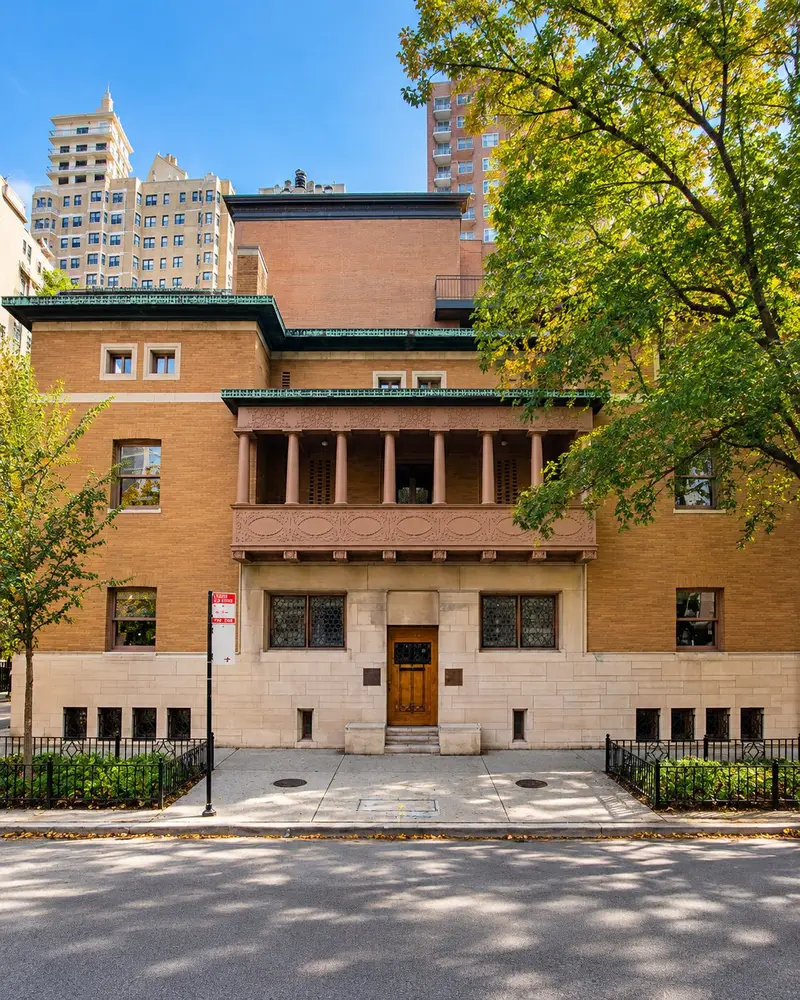
The image presents the symmetrical brick and stone front facade of a historic multi-story residence featuring a ground floor made of smooth limestone blocks and an upper portion of tan brick. The architectural design is highlighted by a central second-story loggia balcony with classical columns, flanked by small windows and framed by mature trees on either side.
Completed in 1892, the Charnley-Persky House is a pivotal landmark in modern architecture designed by Louis Sullivan and Frank Lloyd Wright. Located in Chicago’s Gold Coast neighborhood, the design is celebrated for breaking away from traditional Victorian ornamentation in favor of clean, powerful geometric forms.

Tucked away on a quiet residential street, this house is a fascinating piece of architectural history.

It was designed by the great Louis Sullivan, with significant help from his young, ambitious draftsman—Frank Lloyd Wright!
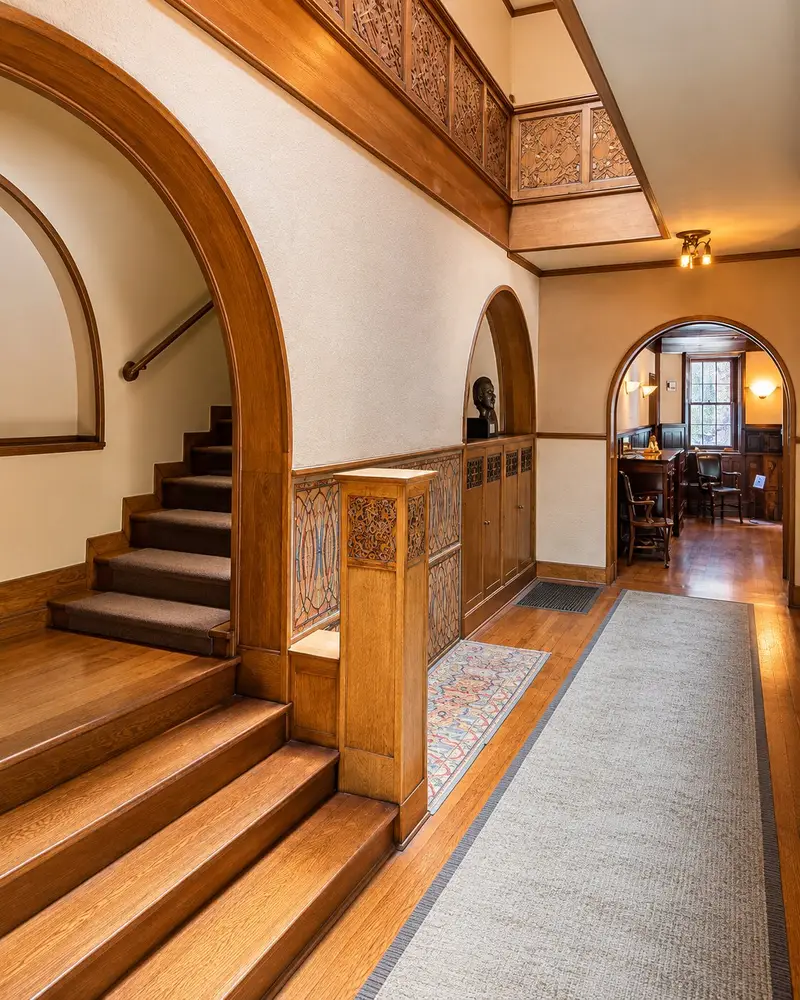
The image displays a beautifully crafted interior hallway featuring warm, natural wood elements and prominent semicircular archways over the staircases and entryways. An elegant wooden newel post with intricate carvings anchors a short flight of steps leading upward, while an open hallway stretches to the right under a low-profile ceiling.
The entrance hall of the Charnley-Persky House beautifully demonstrates the early architectural brilliance of Frank Lloyd Wright while working under Louis Sullivan. The interior design revolves around a dramatic central atrium, featuring stunning white oak woodwork, smooth plaster surfaces, and subtle geometric ornamentation that points toward the birth of modern architecture.

Built in 1892, it serves as a brilliant bridge between early ornate design and sleek, modern American architecture.

While the brick exterior is surprisingly simple, the interior features hidden architectural details and an incredible, light-filled central wooden atrium.

Guided tours are available on select days, so be sure to check their schedule and book well in advance.

Neighborhood: Gold Coast
Admission: Free on Wednesdays, $15 on Saturdays
Why It’s Worth Visiting: You get to see the rare collaboration of two of America’s greatest architectural geniuses under one roof.

5. Emil Bach House
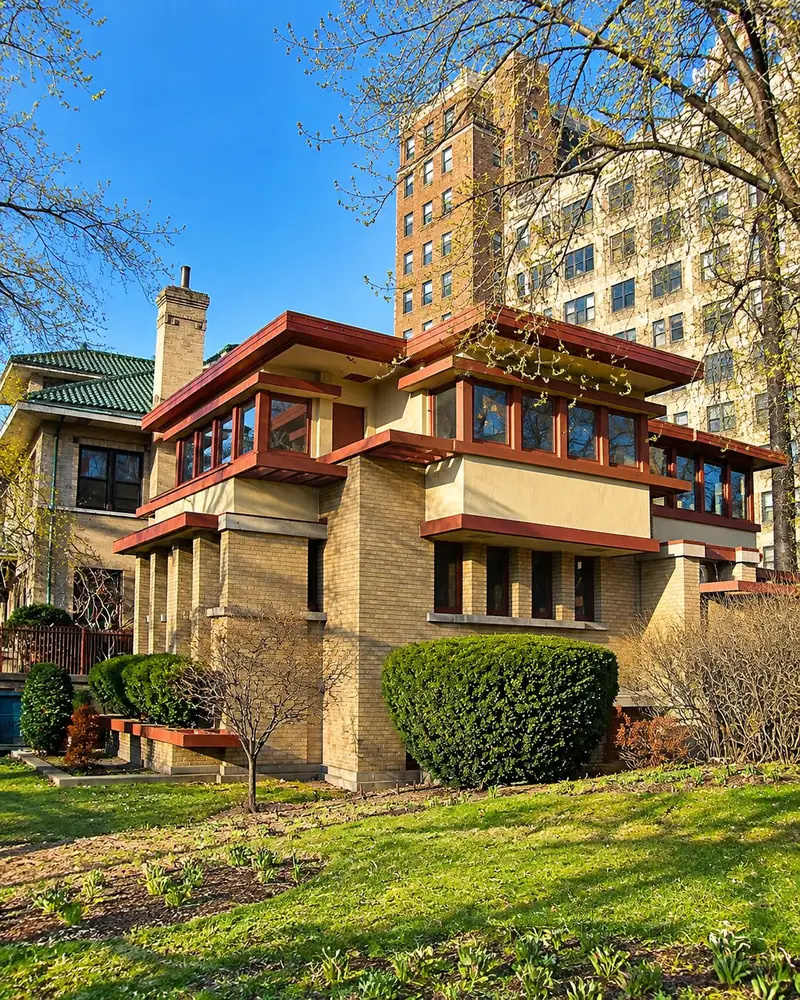
The image showcases a multi-level Prairie School style residence constructed from light yellow brick with distinctive flat, overhanging wood roofs painted in a reddish-brown trim. The building features continuous bands of square windows across its upper levels and is situated on a landscaped yard against a backdrop of a tall brick apartment building.
Completed in 1915, the Emil Bach House is a late example of Frank Lloyd Wright’s iconic Prairie School residential design. Located in Chicago’s Rogers Park neighborhood, the home represents a modification of Wright’s typical expansive horizontal villas into a more compact, geometric expression tailored for an urban city lot.

Want to do more than just tour a historic Chicago mansion?

At the Emil Bach House, you can actually spend the night.

This 1915 Frank Lloyd Wright home is a rare surviving example of his late Prairie style.

It was meticulously restored in 2013 to bring back its original, vibrant glory.

Because it operates as a vacation rental and event space, you can book it for a weekend getaway (a fantastic alternative if you want to skip the standard downtown Chicago hotels).

However, if a staycation isn’t in your budget, they also offer reasonably priced guided tours during the summer months.

Neighborhood: Rogers Park
Admission: $15 for seasonal tours (or variable pricing for overnight stays)
Why It’s Worth Visiting: It is the only Frank Lloyd Wright home in Chicago where you can legally book an overnight stay.

6. Clarke-Ford House
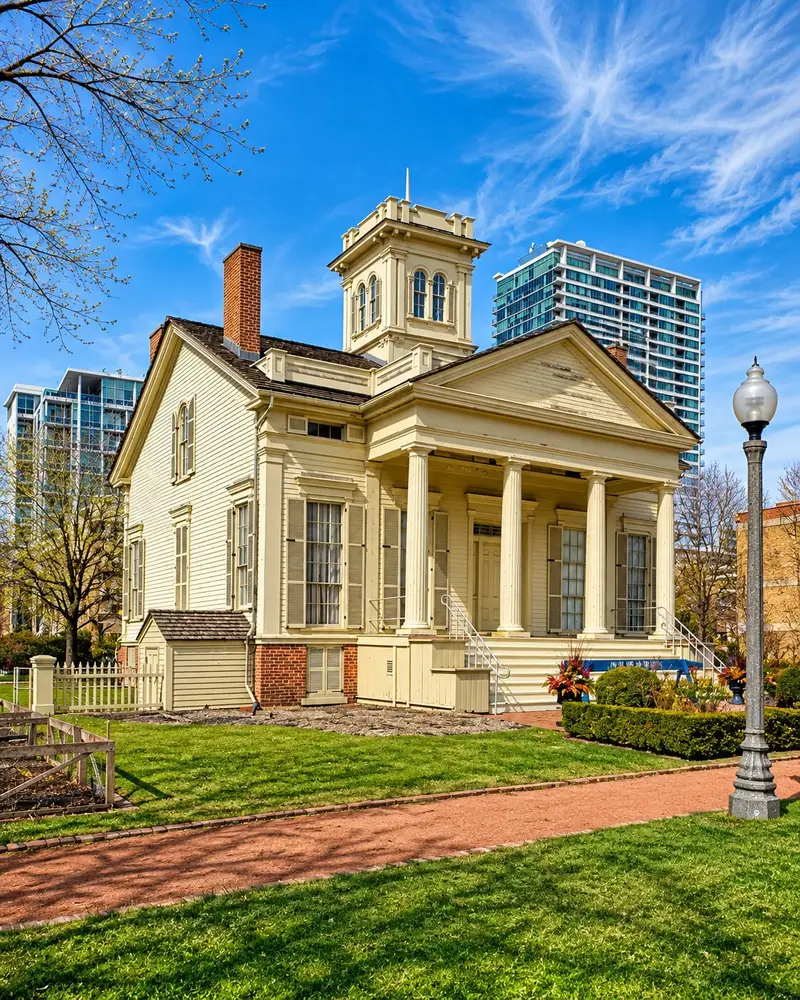
The image captures a light-colored, two-story timber frame home designed in the Greek Revival style, featuring a prominent four-column front portico and an elegant rooftop cupola. Set on a grassy plot with a brick-lined walking path and a vintage street lamp, the historic building stands in contrast to modern high-rise apartments in the background.
Constructed in 1836 for hardware merchant Henry B. Clarke, the historic Clarke-Ford House is widely recognized as the oldest surviving house built within the original city limits of Chicago. Located in the historic Prairie Avenue district, the Greek Revival landmark has survived two relocations and a fire throughout its long history.

Want to step way, way back in time? Head to Chicago’s oldest surviving house.

Built in 1836, this striking Greek Revival mansion actually survived the Great Chicago Fire of 1871.

In fact, it pre-dates the official incorporation of the city of Chicago.

The massive house has famously been moved twice in its history, and now rests safely in the Chicago Women’s Park in the South Loop.

Inside, it’s furnished with period-appropriate pieces that show what life was like for a wealthy family before the skyscrapers took over the city.

(If you love this kind of history, be sure to check out these normal-looking Chicago buildings that hide a very dark past!)

Neighborhood: South Loop
Admission: Free (Tours are operated by the Chicago Architecture Center on select days)
Why It’s Worth Visiting: It is a literal time capsule representing the earliest days of Chicago’s existence.

7. Eleanor Robinson Countiss House (International Museum of Surgical Science)
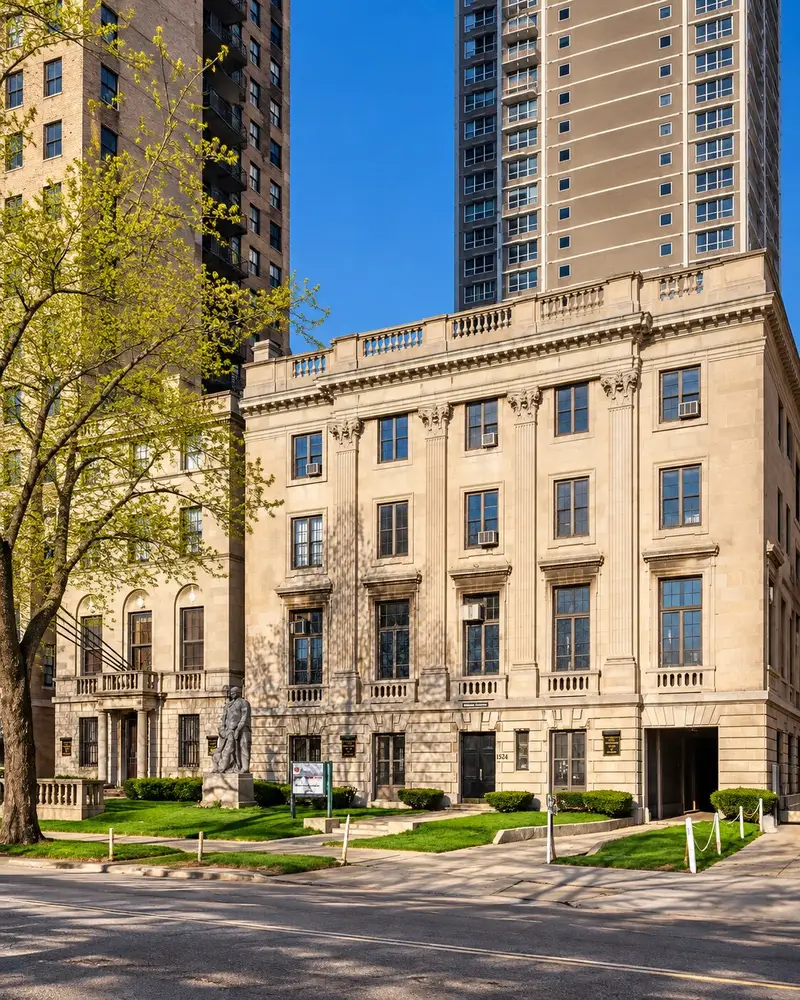
The image portrays the limestone facade of a grand four-story mansion built in the French classical style, standing next to a narrower historic townhouse. It is situated behind a manicured green lawn with low fencing along a city boulevard, set against a backdrop of modern high-rise buildings under a clear blue sky.
Completed in 1917, the Eleanor Robinson Countiss House was designed by renowned architect Howard Van Doren Shaw, who modeled its elegant facade after Le Petit Trianon at Versailles [International Museum of Surgical Science, A Division of the International College of Surgeons]. Located in Chicago’s historic Gold Coast neighborhood, the landmark structure now serves as home to the International Museum of Surgical Science.

Want to see one of the last remaining historic mansions on Lake Shore Drive?

Built in 1917, this stunning home was modeled directly after Le Petit Trianon, a French chateau on the grounds of Versailles.

It was originally built for Eleanor Robinson Countiss, an heiress to the Diamond Match Company fortune.

Today, it houses the International Museum of Surgical Science.

While the medical exhibits are fascinating (and easily make it one of the best museums in Chicago), the architecture is the real star of the show.

You can wander through the original gilded library, sweeping marble staircases, and massive windows overlooking Lake Michigan.

Neighborhood: Gold Coast / Near North Side
Admission: $22 for adults
Why It’s Worth Visiting: You get a two-for-one experience: a quirky, fascinating medical museum housed inside a breathtaking Gilded Age palace.

8. Madlener House (Graham Foundation)
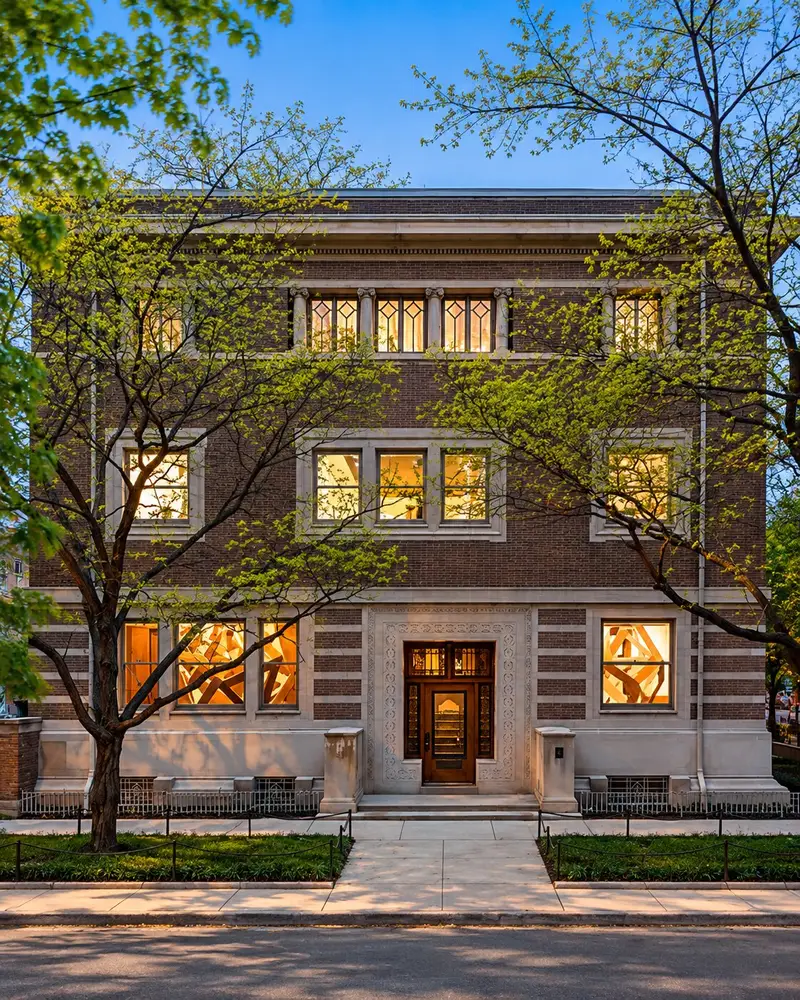
The image captures the symmetrical, three-story brick and stone facade of a historic Prairie School style mansion at dusk with illuminated windows. The exterior features a prominent central entryway framed by geometric stone carving, horizontal bands of stone trim, and leafy green trees flanking the front walkway.
Completed in 1902, the Madlener House is a landmark architectural work designed by Richard E. Schmidt and Hugh M. G. Garden. Located in Chicago’s Gold Coast neighborhood, the historic mansion has served as the headquarters for the Graham Foundation for Advanced Studies in the Fine Arts since 1963.

Tucked away in the affluent Gold Coast neighborhood, the Madlener House is a total hidden gem.

Completed in 1902, this massive home blends the blocky, horizontal style of the Prairie School with classic German neoclassical details.

Unlike many other historic homes on this list, you don’t actually have to book a paid historical tour to get inside.

Today, it serves as the headquarters for the Graham Foundation for Advanced Studies in the Fine Arts.

The first two floors are completely free and open to the public to explore during their architectural exhibitions.

Neighborhood: Gold Coast
Admission: Free
Why It’s Worth Visiting: It is a fantastic way to see beautiful historic woodwork and original fireplaces for free while enjoying modern art.

9. Frank Lloyd Wright Home and Studio
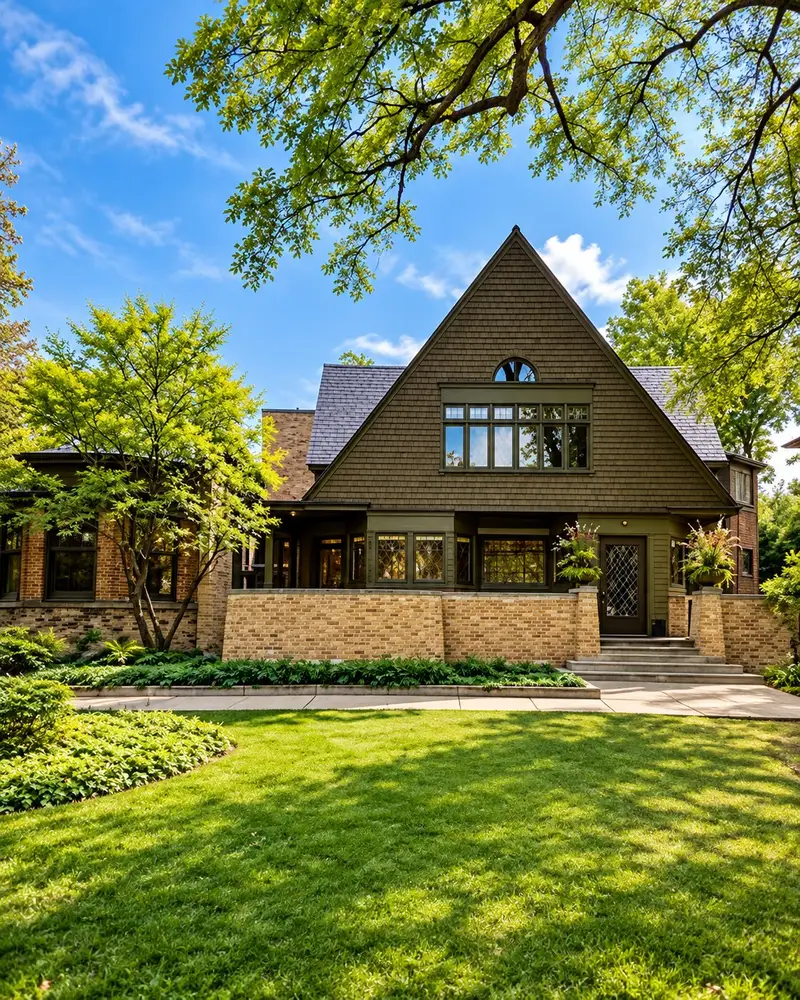
The image showcases a historic multi-story residence characterized by a prominent, steeply pitched gabled facade covered in dark wooden shingles. A light-colored brick wall encloses a small terrace in front of the house, which sits on a manicured green lawn framed by leafy trees under a slightly overcast sky.
Serving as the architect’s private residence and workplace from 1889 to 1909, the Frank Lloyd Wright Home and Studio in Oak Park, Illinois, was a crucial testing ground for his design philosophies Frank Lloyd Wright Home and Studio. This historic structure showcases an evolving aesthetic, transitioning from early Shingle style influences to the foundational elements of the iconic Prairie School movement.

Okay, this one is technically just outside the city limits in Oak Park, but it is an absolute must-do for mansion lovers.

Plus, it is incredibly easy to reach by simply hopping on the Chicago ‘L’ train directly from the downtown Loop.

This is where the famous architect lived, worked, and revolutionized American home design.

He constantly used his own home as an architectural laboratory, tearing down walls and expanding rooms over a 20-year period.

You can take a guided tour through the beautifully preserved living quarters and step directly into his stunning two-story drafting room.

Neighborhood: Oak Park (Suburb)
Admission: $20 for interior tours
Why It’s Worth Visiting: After your tour, you can take a walk around the surrounding neighborhood—it features the highest concentration of Frank Lloyd Wright-designed homes in the world.

10. Charles Gates Dawes House
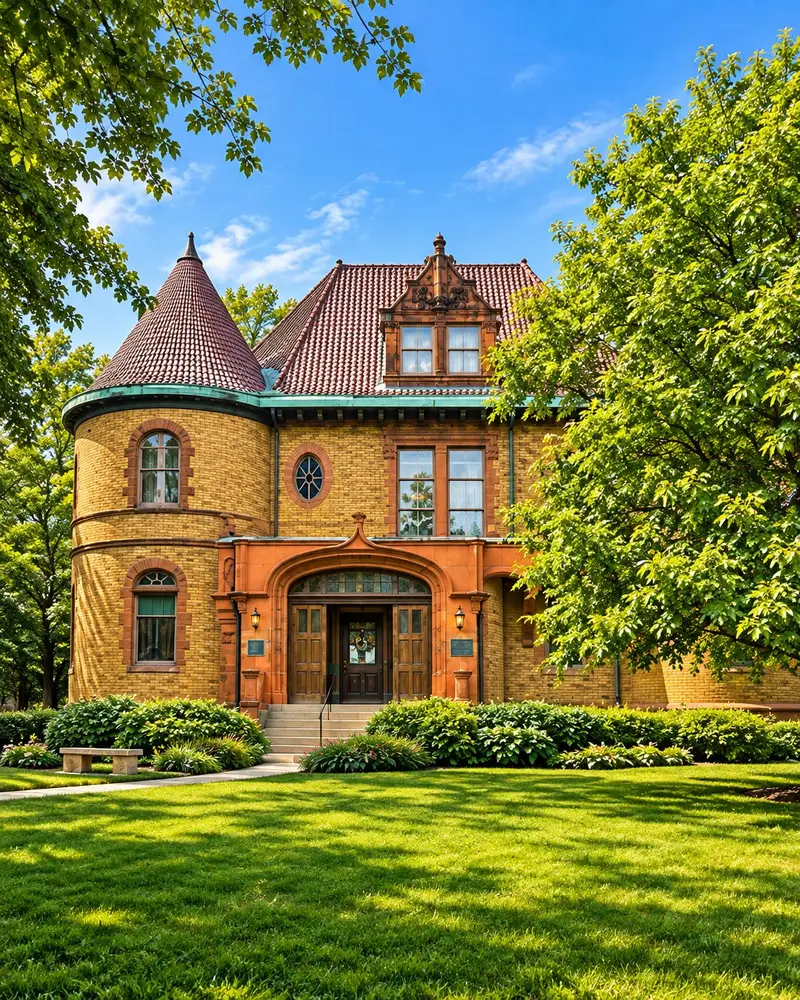
The image presents the grand exterior of a historic yellow brick and stone mansion featuring a prominent circular corner tower with a conical tiled roof. A wide red sandstone arched portico frames the main entrance, while a lush green lawn and mature shade trees fill the foreground under a bright sky.
Completed in 1894, the historic Charles Gates Dawes House is a striking example of Chateauesque and Romanesque Revival architecture overlooking Lake Michigan in Evanston, Illinois. The lakefront mansion served as the long-time home of the former U.S. Vice President and Nobel Peace Prize laureate, and it currently serves as the headquarters for the Evanston History Center.

Also located just a short train ride north in Evanston, the Dawes House is a colossal, lakefront beauty.

Built in 1894, this jaw-dropping French Chateau-style mansion looks like a real-life Disney castle.

It eventually became the home of Charles Gates Dawes, who served as the Vice President of the United States under Calvin Coolidge.

Today, it operates as the Evanston History Center.

A guided tour will take you through rooms filled with rich mahogany paneling, soaring ceilings, and original Gilded Age furnishings.

Neighborhood: Evanston (Suburb)
Admission: $15 for guided tours
Why It’s Worth Visiting: It completely transports you back to the days of high society and Great Gatsby-style lakefront parties.

Tips for Touring Chicago’s Historic Homes

If you are planning a trip to explore Chicago’s incredible architectural history, here are a few practical tips you need to know before you go:

Book in Advance

Most of these historic homes operate with limited staff or volunteer docents.

Tours for popular spots like the Robie House or the Driehaus Museum can easily sell out, especially on busy summer weekends.

Always check their official websites and book your tickets at least a few weeks in advance to secure your spot.

Check the Photography Rules

While the exteriors are always fair game, interior photography rules vary wildly from house to house.

Some locations actively encourage you to take photos (without flash) to share online.

Others strictly prohibit interior photography to protect delicate artwork, textiles, and original wallpapers from light damage.

Always ask your docent before snapping a picture!

Factor in Travel Time

Chicago is a massive city, and these mansions are spread out across entirely different, sprawling neighborhoods.

For example, the Emil Bach House is far north in Rogers Park, while the Robie House is way down south in Hyde Park.

Group your visits by neighborhood to save time and avoid spending your whole day on the train or in transit (a common rookie mistake everyone makes when visiting Chicago!).

Which Chicago Mansion Will You Visit First?

Touring these historic Chicago mansions is like stepping straight into a time machine.

They offer a fascinating, up-close glimpse into the lives of the city’s elite during its most formative years.

Whether you love Gilded Age glamour, Victorian history, or sleek Prairie School design, there is a house here waiting to inspire you.

Have you ever visited any of these historic Chicago homes?

Which of these stunning mansions are you adding to your windy city itinerary?

Let us know in the comments below!

JM AK

Read by 5,000+ Chicagoans
❤️ Get Hey Chicago in your inbox
Join 5,000+ Chicagoans getting untold history, neighborhood secrets, and your Thursday weekend guide.
🔒 100% free. No spam. Unsubscribe in 1-click anytime.

About Struan Hogg

Born in Scotland, Struan fell in love with Chicago after visiting family in his teens and never looked back. As the founder and editor of Hey Chicago, he travels to the city regularly, spending his time walking its 77 neighborhoods, digging into local archives, and tracking down the untold history behind its architecture. Combining an outsider’s wonder with a deep respect for Chicago grit, Struan celebrates the community stories that make the Windy City unmatched.

Leave a Comment