
Walk past 100 W. Monroe Street today, and you’ll see exactly what you’d expect in the heart of Chicago’s financial district.
Tailored suits, overpriced lattes, and an endless canyon of concrete and glass.
You are standing in the middle of one of the most expensive commercial real estate districts on the planet.
But legally speaking? You are standing on a cow path.
Hidden in plain sight, built directly into the side of a massive 1920s skyscraper, is a literal tunnel.
It’s reserved for a herd of cows that died 150 years ago.
This is one of the most hilarious and stubborn real estate loopholes in Chicago history. Here is how one guy beat City Hall and the city’s biggest developers to keep his livestock route open forever.
The Muddy Prairie of 1844
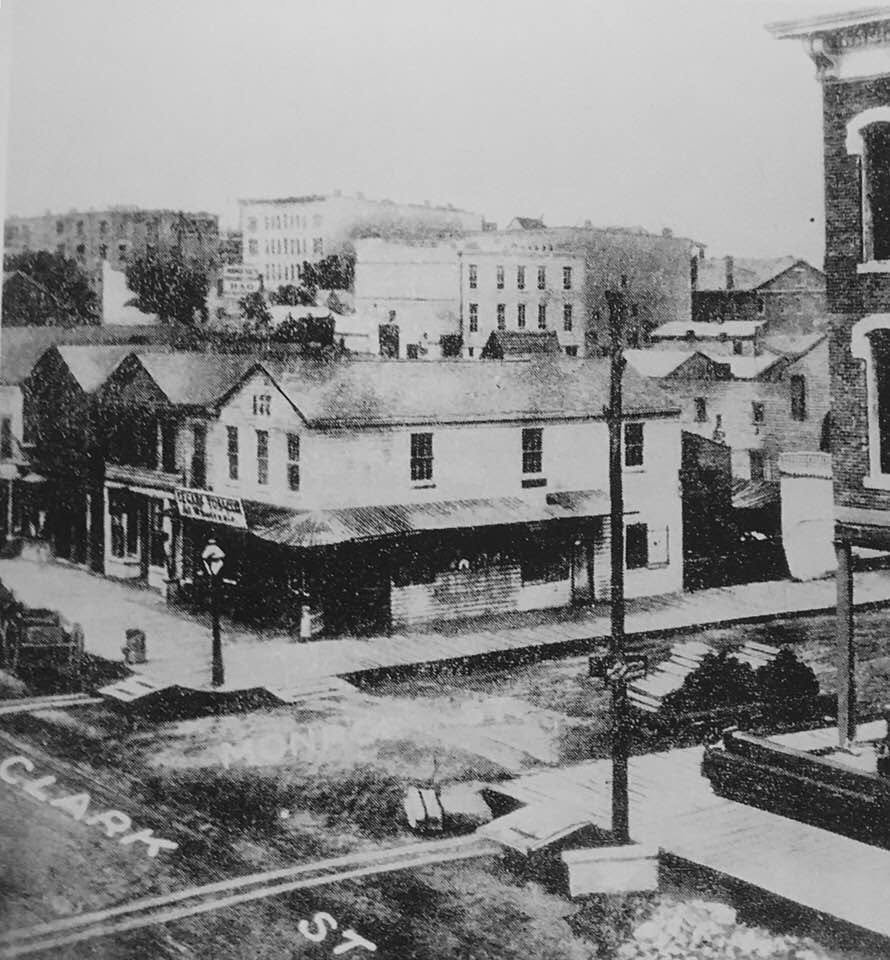
To understand how a cow path survived in the Loop, you have to remember that the Loop didn’t always look like Gotham City.
Back in 1844, Chicago was little more than a muddy frontier town.
The area around what is now Monroe and Clark streets wasn’t a financial hub. It was just prairie grass and dirt roads.
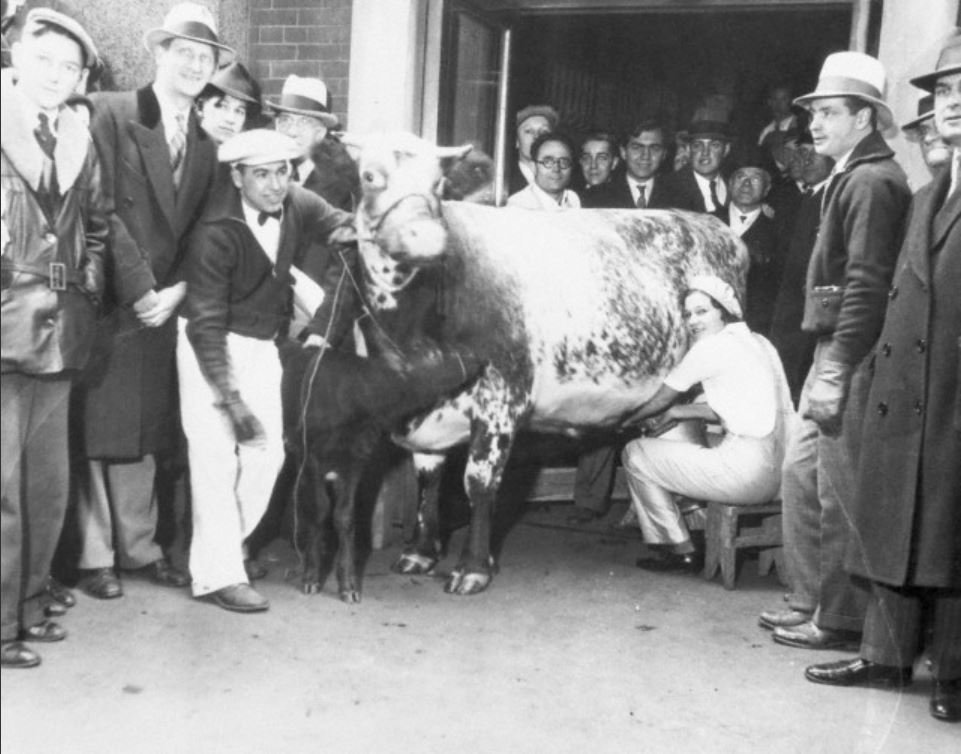
A man named Willard Jones bought a massive chunk of land right in this area. He built a comfortable house, minded his own business, and kept a small herd of cows to provide milk for his family.
Every day, he would herd his cows from his barn to the grazing pastures located outside the city center.
It was a quiet, rural life. Then, Chicago did what Chicago does.
It exploded.
The Ultimate Real Estate Flex
Within just a decade, the muddy prairie was rapidly transforming into a massive, bustling commercial grid.
The city was laying down wooden plank roads, businesses were moving in, and real estate developers were throwing cash at early landowners.
Developers approached Jones, begging him to sell his prime piece of real estate so they could build commercial blocks.
Jones finally agreed to sell, but he had a massive logistical problem.
(Insert: Photo or an embedded Instagram Reel of the Loop here)
He was keeping his house and his barn, but selling the land around it. If they built buildings on the newly sold land, he would be boxed in.
He needed a guaranteed way to herd his cows from his property out to the street. So, he pulled off an absolute masterclass in contract law.
When Jones sold the land, he wrote a hyper-specific, ironclad clause into the property deed.
The buyer was legally required to leave a permanent, open pathway—exactly 10 feet wide and 18 feet high—cutting directly through the property so Jones could walk his cows to pasture.
He didn’t just ask for a temporary favor. He made it a permanent easement. It was tied to the land forever.


Surviving the Great Fire and the Skyscraper Boom
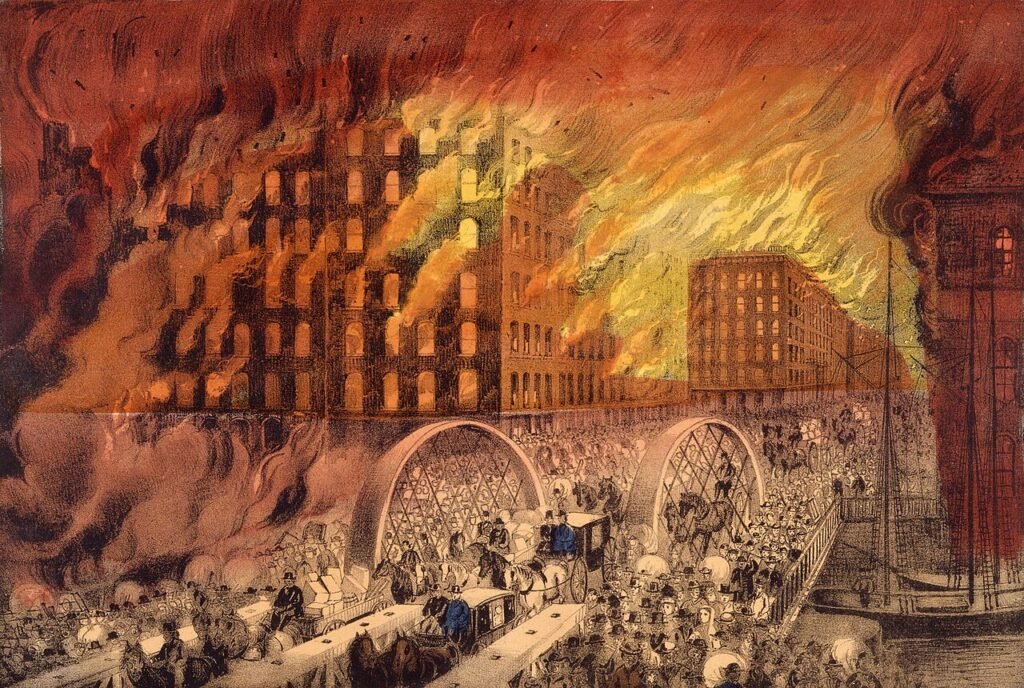
Over the next few decades, the city kept growing.
The Great Fire of 1871 leveled the entire downtown area, wiping out the original wooden buildings that surrounded Jones’s property.
But while fire destroys wood, it doesn’t destroy property deeds.
When the city rebuilt, the cow path easement survived. As Chicago entered the 1920s and the skyscraper boom took over the Loop, land values skyrocketed.
Every square inch of downtown dirt was worth a fortune.
When architects designed the massive 22-story high-rise at 100 W. Monroe, they ran into a major legal headache. They wanted to use the entire lot, but the cow easement from 1844 was still legally active.
If they blocked the path, they would be in direct violation of the deed, opening themselves up to massive lawsuits. They couldn’t pave over it. They couldn’t block it.
So, they did the only thing they could do. They built the skyscraper around it.
How to Find the Cow Path Today
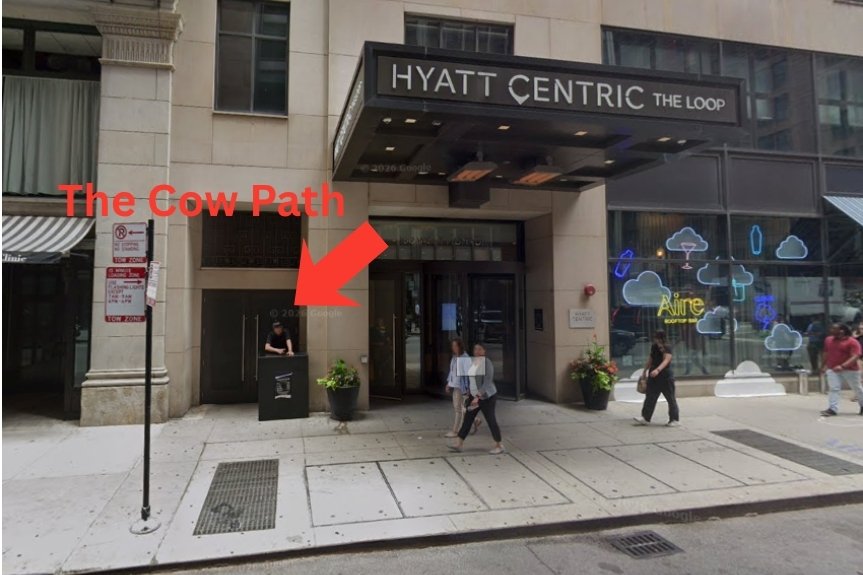
The building at 100 W. Monroe has changed hands and names several times over the last century, but the tunnel remains.
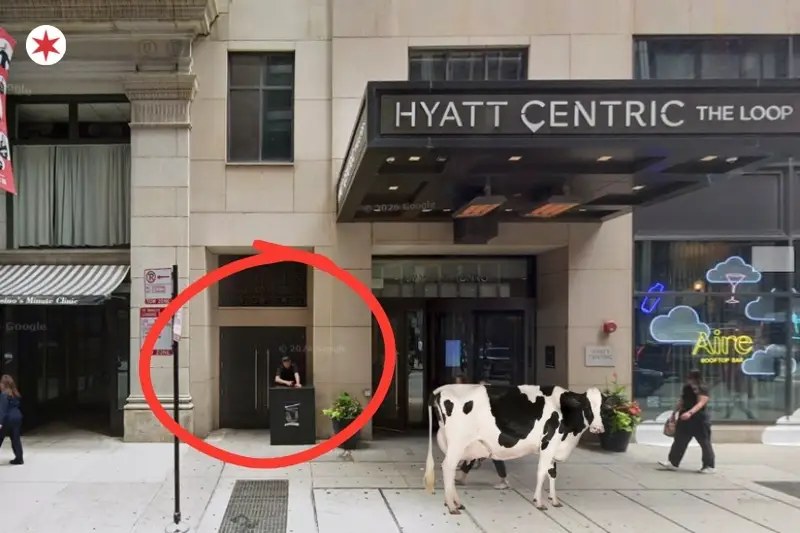
To this day, there is a literal, vaulted tunnel built into the side of the high-rise. The developers even installed heavy bronze doors near the alleyway to mark the spot.
You can’t exactly waltz through the tunnel today. The building owners usually keep the heavy doors locked and use the space for loading and garbage storage.
But the physical space remains legally clear, exactly 10 feet wide and 18 feet high. Just in case a ghost from 1844 needs to walk his livestock to Clark Street.
Want to see it for yourself? Here is the insider guide to finding it:
- The Location: Head to the corner of Monroe and Clark in the Loop.
- Where to Look: Walk just west of Clark Street on the north side of Monroe. Look for the narrow alleyway right next to 100 W. Monroe.
- The Plaque: If you look closely near the alley entrance, you will spot a small, easily missed plaque commemorating Willard Jones, his cows, and his brilliant legal loophole.
It is one of those incredibly weird, stubborn pieces of history that makes Chicago what it is.
Next time you are stuck in brutal Loop traffic on Monroe, just look over at that alley and remember: you could technically bring a cow.