
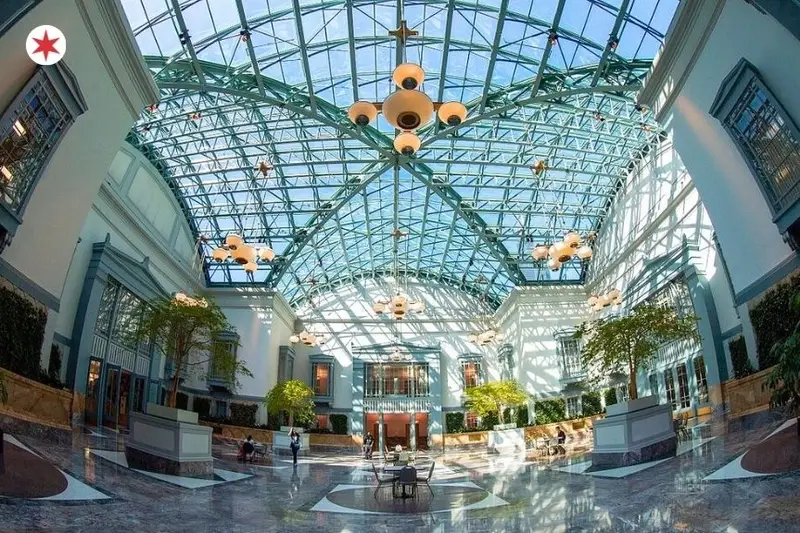
A trip to Chicago can get expensive fast.
Between museum tickets, observation decks, and boat tours, your vacation budget can disappear in a matter of days.
But you don’t need to empty your wallet to see great architecture. Some of the best spots in the city are actually hidden in plain sight, and they are completely free to walk right into.
I’m not talking about boring office hallways or standard waiting rooms. I mean massive historic spaces, hotel lounges, and huge glass atriums.
Tourists walk past these buildings all day long on their way to crowded attractions. They have no idea they can just open the front doors and hang out.
As a local, I want to show you exactly which doors to open.
Here is your guide to the best public lobbies in Chicago you can explore and relax in without spending a dime.
1. The Marquette Building
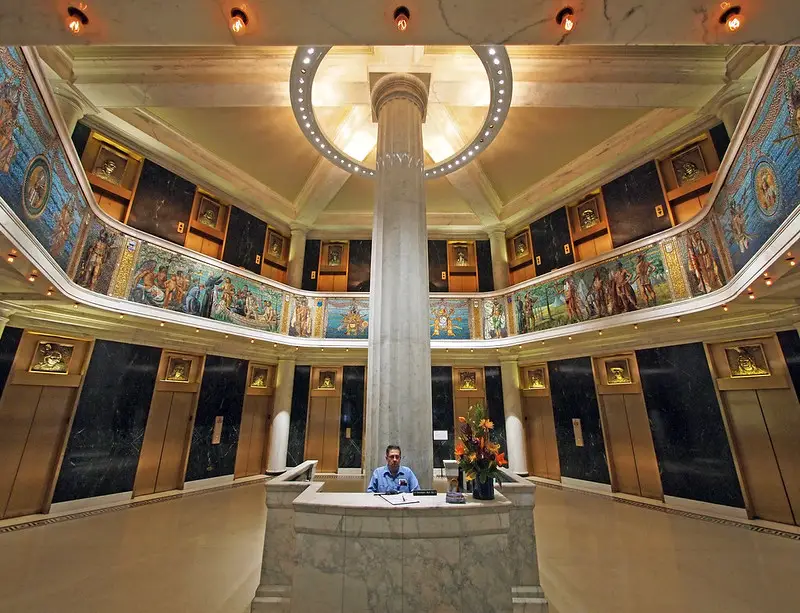
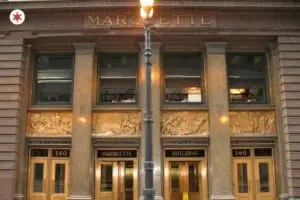
Built in 1895 by the famous architectural firm Holabird & Roche, the Marquette Building is one of the best surviving examples of the early Chicago skyscraper.
A lot of downtown office buildings lock their doors right at 5 PM. But this lobby is famously open 24 hours a day, seven days a week.
When you walk in off Dearborn Street, you are stepping into a massive, two-story hexagon that honors the French explorer Jacques Marquette.
The Tiffany Mosaics: The entire second floor of the lobby is wrapped in a continuous mosaic made of genuine Tiffany Favrile glass and mother-of-pearl. Designed by J.A. Holzer, the panels tell the story of Marquette’s 1674 winter expedition through Illinois.
The Bronze Elevators: Don’t just look up. Look right above the elevator doors to see the heavy bronze relief panels created by sculptor Hermon Atkins MacNeil. They feature incredibly detailed carvings of panthers, bears, and Native American leaders.
Local tip: The building is currently owned by the MacArthur Foundation, and they actually run a free, permanent exhibit on the first floor. It covers the history of the building and the early days of Chicago architecture. It is usually dead quiet on the weekends when the office workers are at home, so you can take your time reading the displays.
📍Address: 140 S Dearborn St
2. The Old Post Office
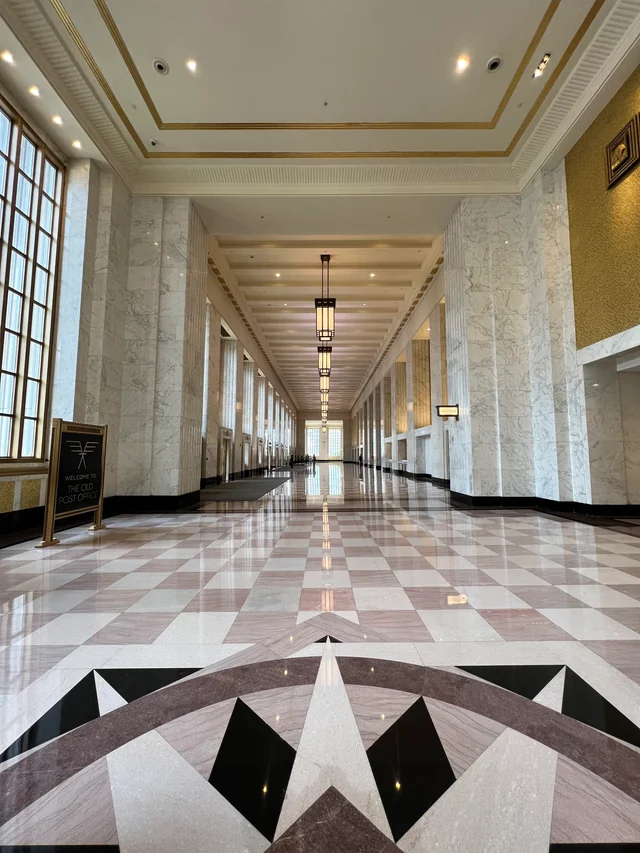
For over 20 years, the Old Post Office was a massive, empty shell sitting right over the Eisenhower Expressway. It was completely abandoned until a recent $800 million renovation brought it back to life.
Today, the main lobby is open to the public again, and it is easily one of the most impressive Art Deco spaces in the country.
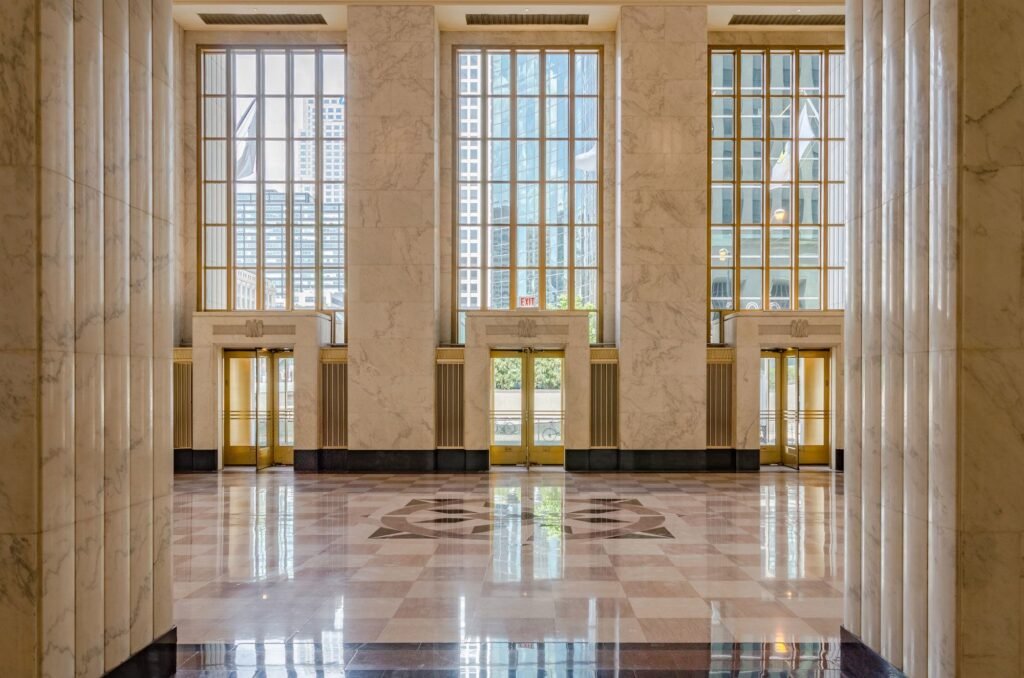
The Historic Lobby: The room is huge. It features 38-foot ceilings, white marble walls, and gold mosaic tiles. The designers kept the original 1920s brass teller cages and light fixtures, blending the building’s history with its new life as a modern corporate hub.
Local tip: You don’t just have to look around and leave. Walk past the main lobby and head into the “From Here On” food hall. It is a massive indoor market featuring local Chicago restaurants. Grab a coffee or lunch and eat at one of the tables overlooking the Chicago River.
📍 Address: 433 W Van Buren St
3. The Chicago Board of Trade
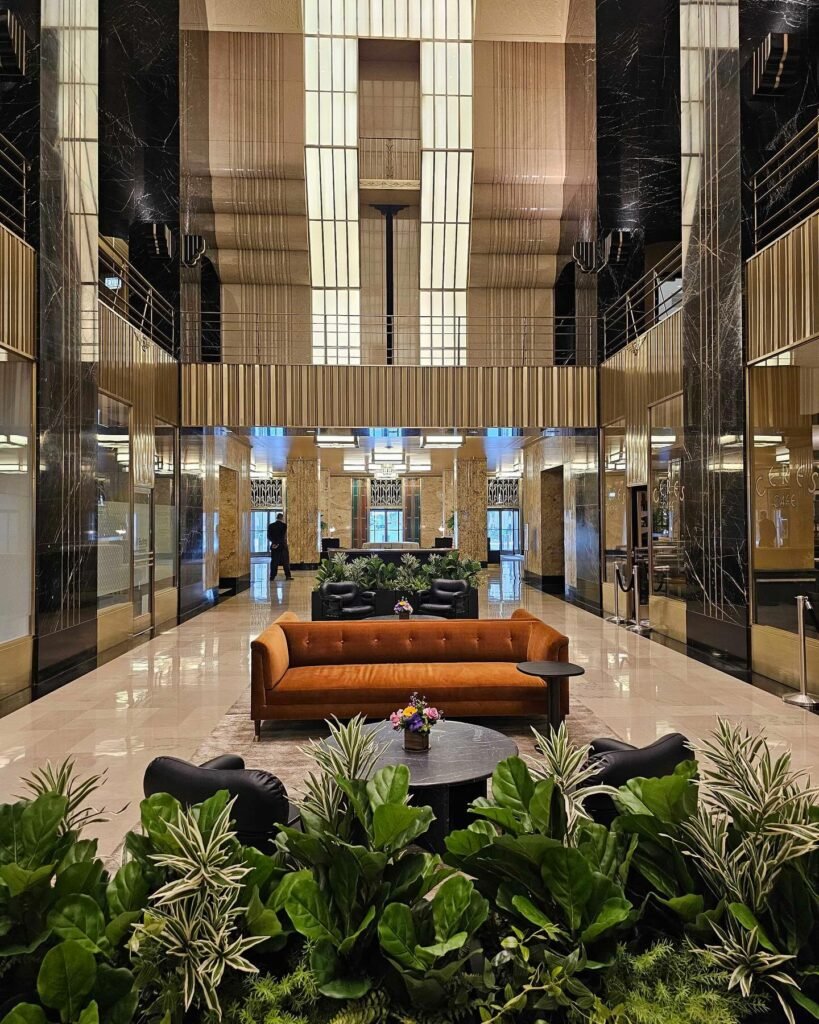
Built in 1930 by Holabird & Root, the Chicago Board of Trade Building sits dead center at the end of the LaSalle Street canyon. For decades, this was the absolute center of the global commodities market.
The lobby reflects that power. It is a massive, three-story Art Deco space covered in polished black and white marble and glowing nickel-silver light fixtures.
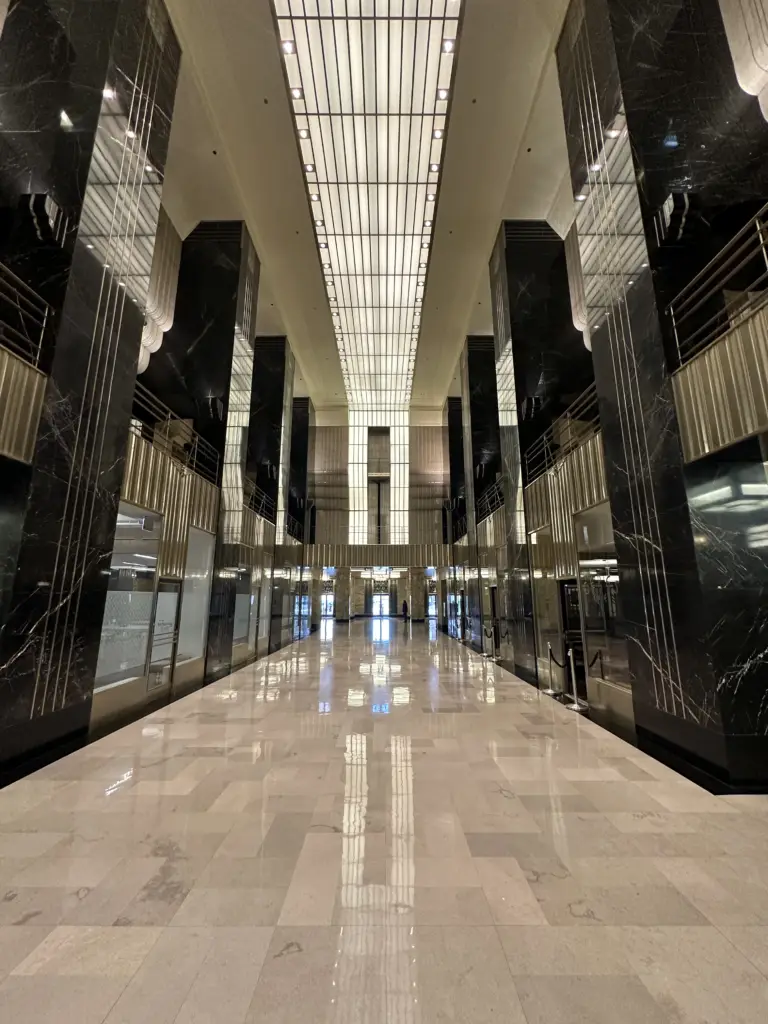
The Murals: When you walk in, look up at the massive paintings by artist John Warner Norton. They show figures harvesting wheat and corn, which were the main crops actually traded on the floors right above you.
Local tip: If the lobby looks familiar, you might recognize it from the movie Batman Begins—this building was used as the headquarters for Wayne Enterprises. Also, before you walk inside, look all the way up to the roof to see the 31-foot statue of Ceres, the Roman goddess of grain.
If you love learning about the history of the skyline, check out our guide to the 14 Most Iconic Buildings In Chicago to see what else you should look out for
📍Address: 141 W Jackson Blvd
4. The Rookery Building
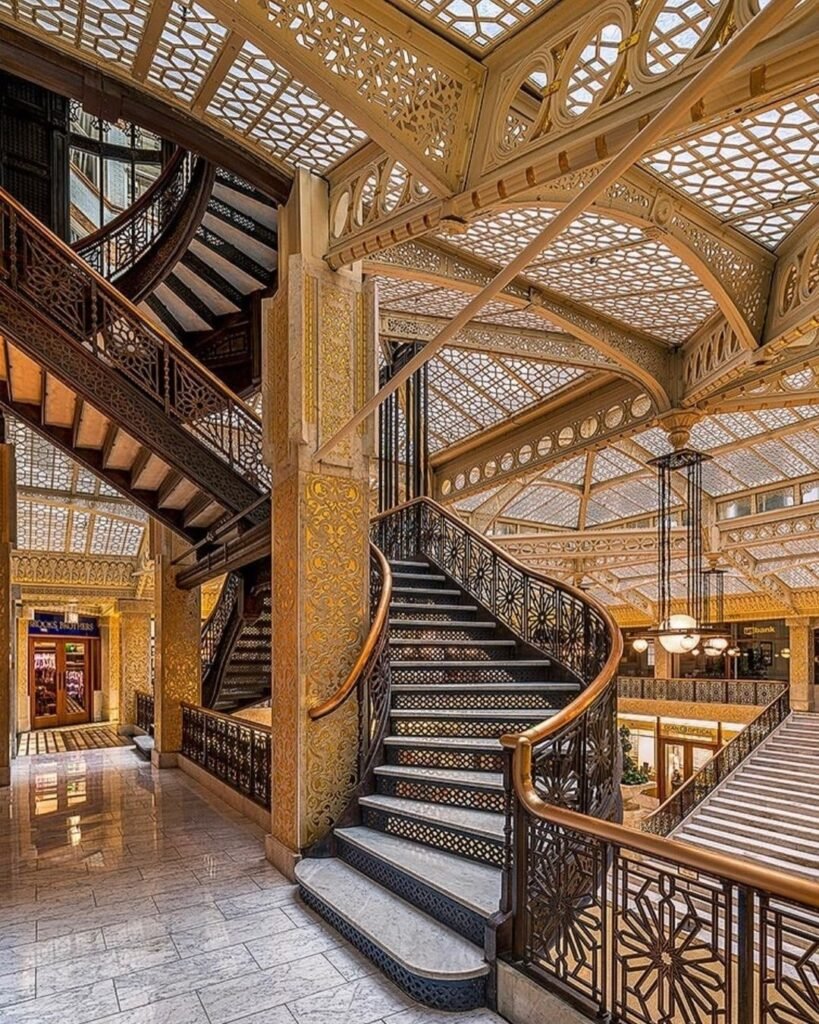
From the outside, The Rookery looks like a dark, heavy fortress. Built in 1888 by famous architects Burnham and Root, the exterior was designed to look powerful and imposing.
But when you walk through the front doors, the vibe completely changes.
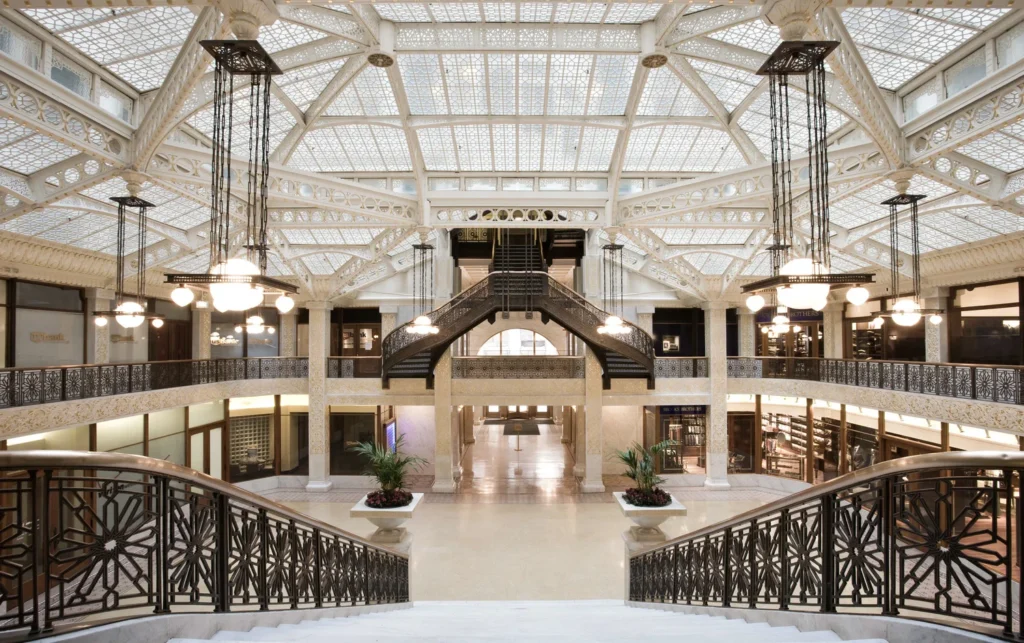
The Light Court: In 1905, a young Frank Lloyd Wright was hired to update the lobby. He took the original dark ironwork and covered it in bright white Carrara marble with gold-leaf details. Combined with the massive glass ceiling, the whole two-story space is flooded with natural light.
The Oriel Staircase: Look toward the back of the court to see the winding, intricate metal staircase going up the center of the building. It is one of the most famous photo spots in Chicago.
Local tip: Because this is a working office building, the free public access is restricted to the ground floor lobby. The security guards are strict about not letting you walk up the famous staircase. If you want to go upstairs and get the iconic top-down photo, you need to book a guided tour through the Frank Lloyd Wright Trust.
📍Address: 209 S LaSalle St
5. The Palmer House Hilton
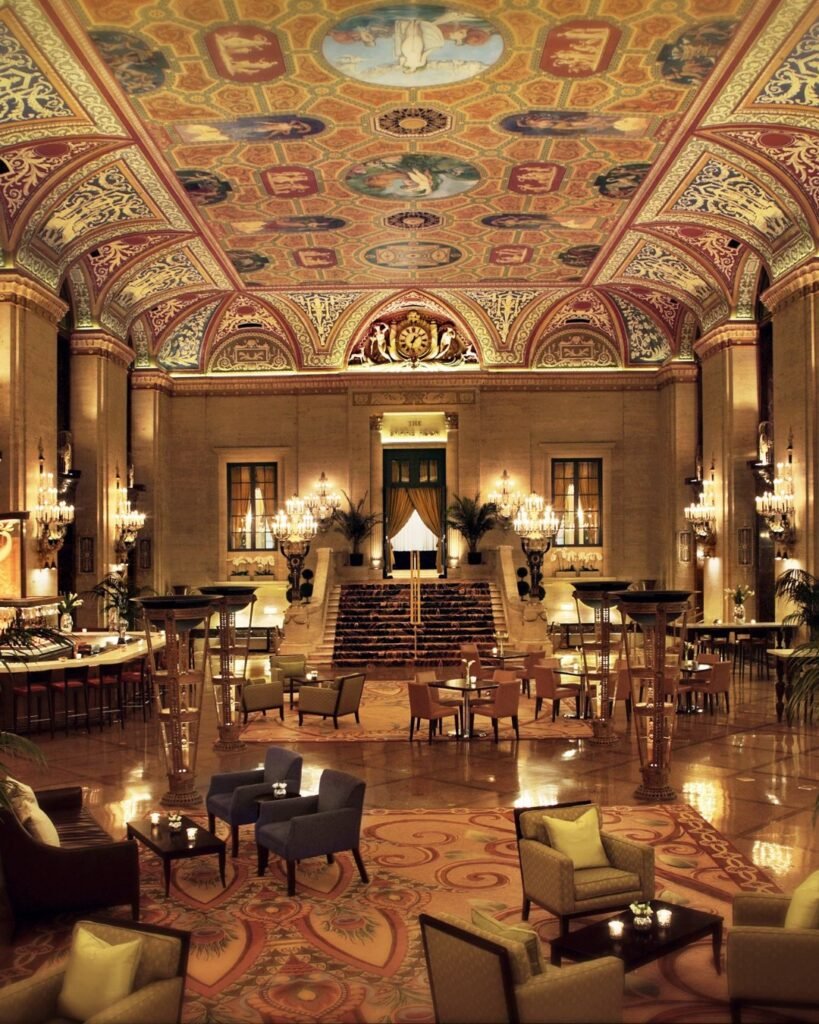
The Palmer House is one of the oldest continuously operating hotels in North America, but its history had a rough start. The original hotel was built by Potter Palmer as a wedding gift to his wife, Bertha, but it burned down in the Great Chicago Fire just 13 days after it opened.
Palmer immediately rebuilt it, and today, the lobby is easily one of the most impressive historic rooms in the city.
The Ceiling: The main attraction here is right above your head. The ceiling features 21 separate paintings of Greek mythology done by French artist Louis Pierre Rigal. The massive room is filled with velvet seating, heavy bronze fixtures, and huge chandeliers.
Local tip: You don’t have to be a guest to hang out here. Grab a seat at the central lobby bar so you have an excuse to sit back and look at the ceiling for a while. Also, the chocolate brownie was actually invented in the Palmer House kitchen for the 1893 World’s Fair. You can still buy the original recipe brownie at the lobby cafe today.
If you are planning a trip and want to know where else to stay, check out our guide to the Best Downtown Chicago Hotels, According to Locals
📍Address: 17 E Monroe St
6. The Chicago Athletic Association Hotel
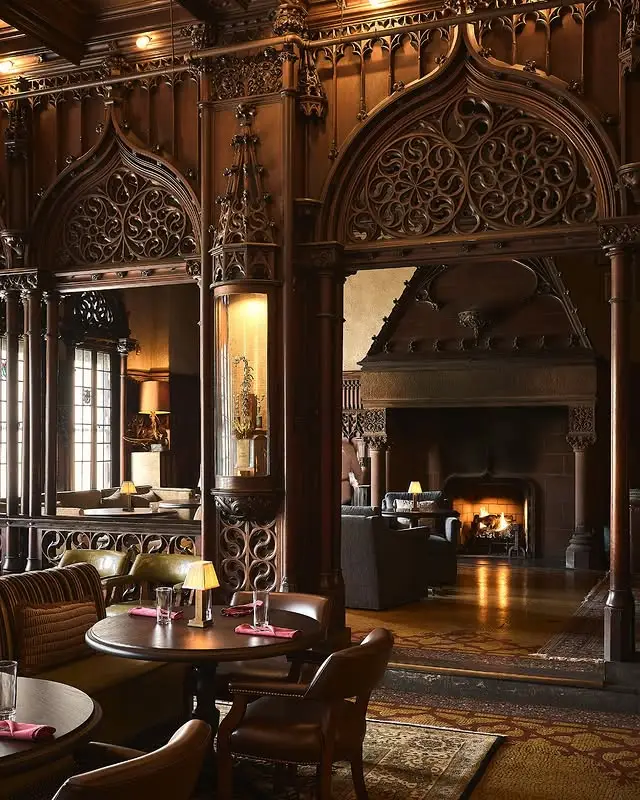
Built for the 1893 World’s Fair, the Chicago Athletic Association was an exclusive, members-only sporting club for over a century. Today, it has been restored as a boutique hotel, and the best part of the building is completely open to the public.
When you walk in, don’t just stand in the ground-floor lobby. Head up the grand staircase to the second floor.
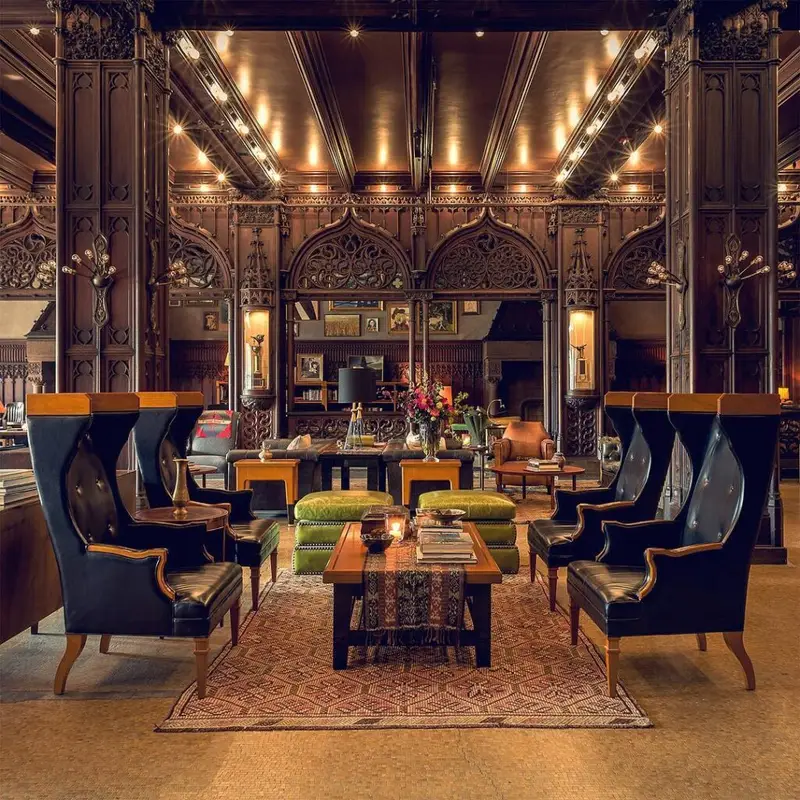
The Drawing Room: You will walk into a massive space called the Drawing Room. It looks like a 19th-century billionaire’s library, complete with giant stone fireplaces, dark wood paneling, and original stained-glass windows overlooking Michigan Avenue.
Local tip: This is essentially Chicago’s public living room. You can grab a coffee or a cocktail from the bar, sink into one of the huge leather couches, and just hang out or work on your laptop. Before you leave, take the 📍elevator up to Cindy’s on the roof—you don’t have to buy a drink to walk out on the terrace and get one of the best free views of Millennium Park in the city.
📍 Address: 12 S Michigan Ave
7. The Chicago Cultural Center
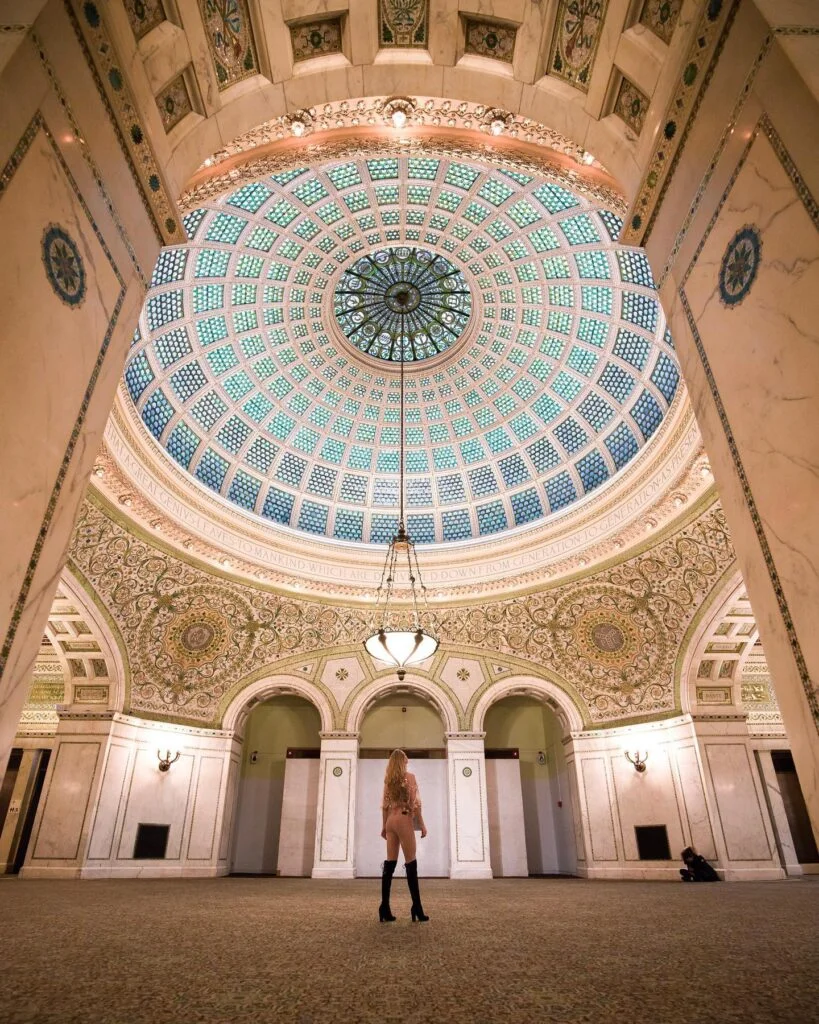
Most tourists walk right past the Chicago Cultural Center on their way to Millennium Park, completely unaware of the world-class treasure hiding inside.
Walk in the Washington Street entrance, climb the grand staircase to the third floor, and look up.
You will be standing directly under the largest Tiffany stained-glass dome in the entire world.
What to Look For: The sheer scale and breathtaking color of the dome in Preston Bradley Hall. It is 38 feet in diameter and contains over 30,000 individual pieces of glass. It is arguably the single most beautiful free sight in all of Chicago.
8. The Harold Washington Library Center
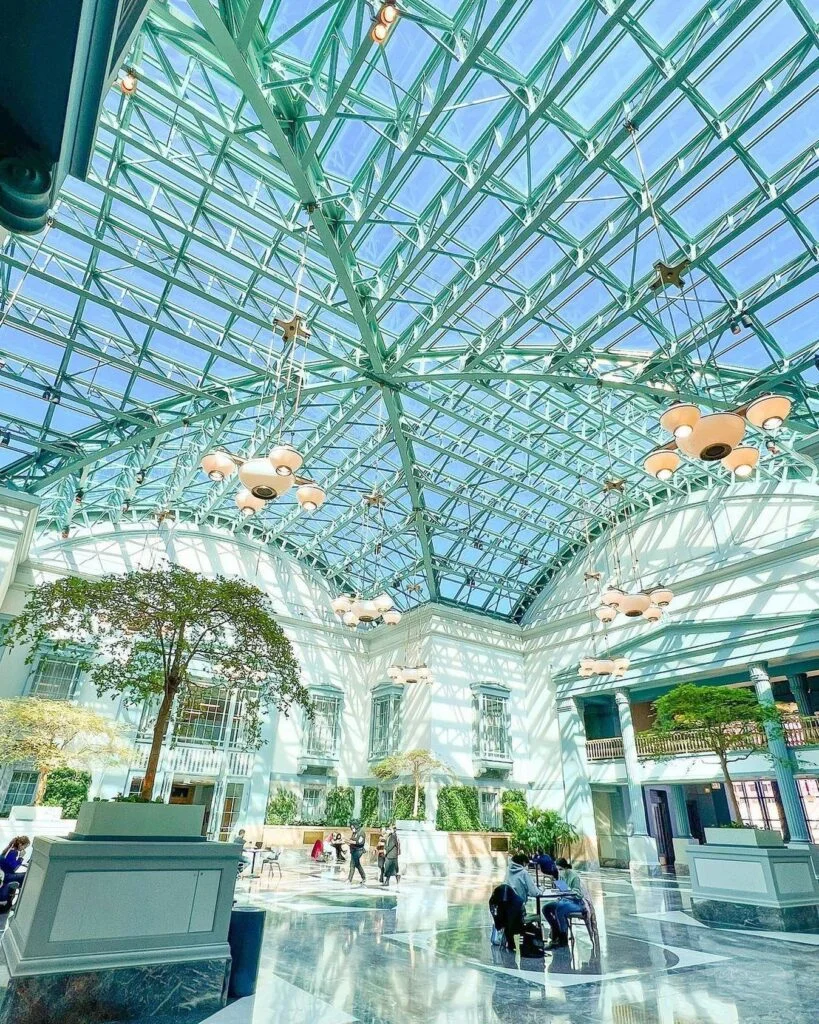
The Chicago Cultural Center sits right across the street from Millennium Park, but tourists walk past it all day long. Built in 1897, it was originally the city’s first central public library, designed to prove that Chicago had bounced back from the Great Fire.
The Tiffany Dome: Walk in the Washington Street entrance and head up to the third floor to Preston Bradley Hall. Here, you will find the largest Tiffany stained-glass dome in the world. It spans 38 feet and is made of over 30,000 individual pieces of glass.
The Second Dome: Most people see the Tiffany dome and leave, completely missing the second masterpiece. Head over to the Grand Army of the Republic (G.A.R.) Hall on the second floor to see a massive, Renaissance-style stained-glass dome created by Healy & Millet.
Local tip: The building is nicknamed the “People’s Palace” because everything inside is completely free. You can usually catch free contemporary art exhibitions in the first-floor galleries, and they frequently host free live concerts during the week.
📍Address: 78 E Washington St
Since you are already saving money here, check out our shortlist of the Best Free & Cheap Things To Do In Chicago to keep your budget intact
9. THE MART (Merchandise Mart)
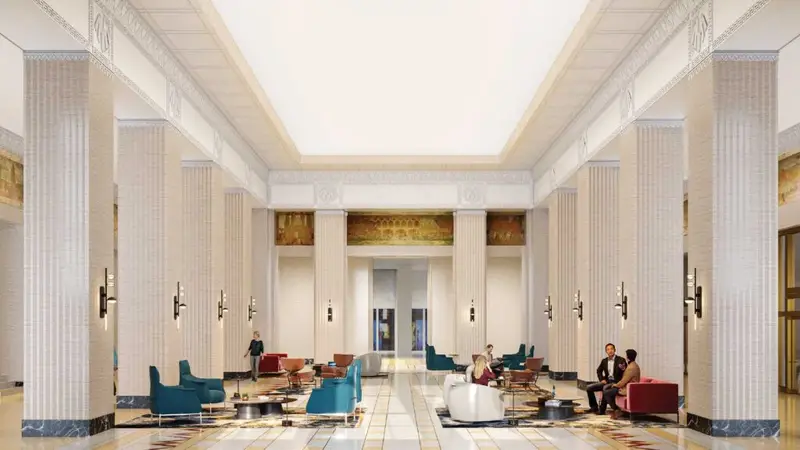
THE MART is so massive that it actually had its own dedicated zip code until 2008. Spanning two entire city blocks along the Chicago River, it was once the largest building in the world.
For decades, this was a private, wholesale design center that was completely closed off to the general public. Today, the first two floors have been opened up to everyone.
The Grand Staircase: Walk into the massive ground-floor lobby and head straight for the 50-foot-wide grand staircase. It doubles as stadium seating where locals hang out, eat lunch, or take phone calls.
Local tip: Walk up those stairs to the second floor to find Marshall’s Landing. It is a modern public lounge with comfortable couches, a full bar, and a coffee shop. It is completely free to sit here, making it one of the best remote-working spots in the city with a direct view of the river.
Want to grab dinner while looking at the water? Check out our guide to the Best Chicago Restaurants With A View
📍 Address: 222 W Merchandise Mart Plaza
10. Freehand Chicago
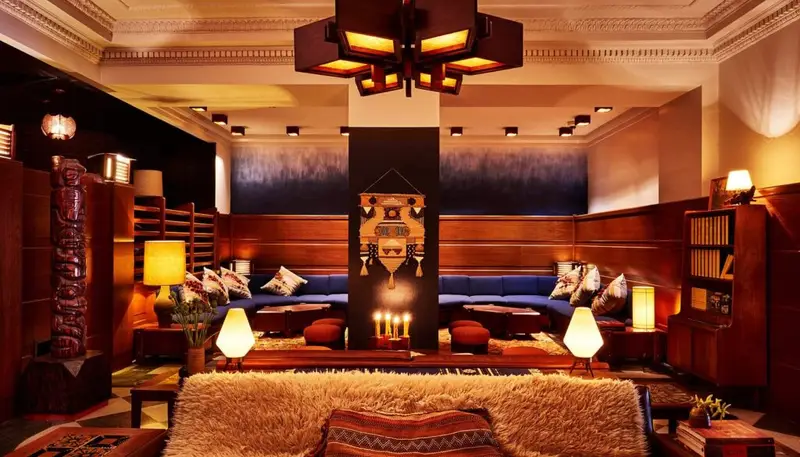
Located in River North, the Freehand is a mix between a boutique hotel and a high-end hostel. Because of that, the dark, wood-paneled lobby feels more like a cozy neighborhood hangout than a stiff hotel entrance.
The Vibe: The space is filled with eclectic art, mismatched vintage rugs, and deep leather couches. It’s a popular spot for locals to bring a laptop during the day because the Wi-Fi is free and the attached coffee counter serves a great cup of coffee.
Local tip: You definitely want to stick around until the evening. The lobby is connected to The Broken Shaker, a James Beard Award-winning cocktail bar that serves incredible craft drinks. It gets packed on weekends, but the lobby couches offer a great overflow space to sit and enjoy your drink.
If you like finding hidden cocktail spots, check out our guide to the 12 Best Speakeasies In Chicago
Address: 19 E Ohio St
11. 311 South Wacker
Most tourists in the Loop spend all their time staring up at the Willis Tower (Sears Tower). Because of that, they completely miss the massive indoor garden hiding right across the street.
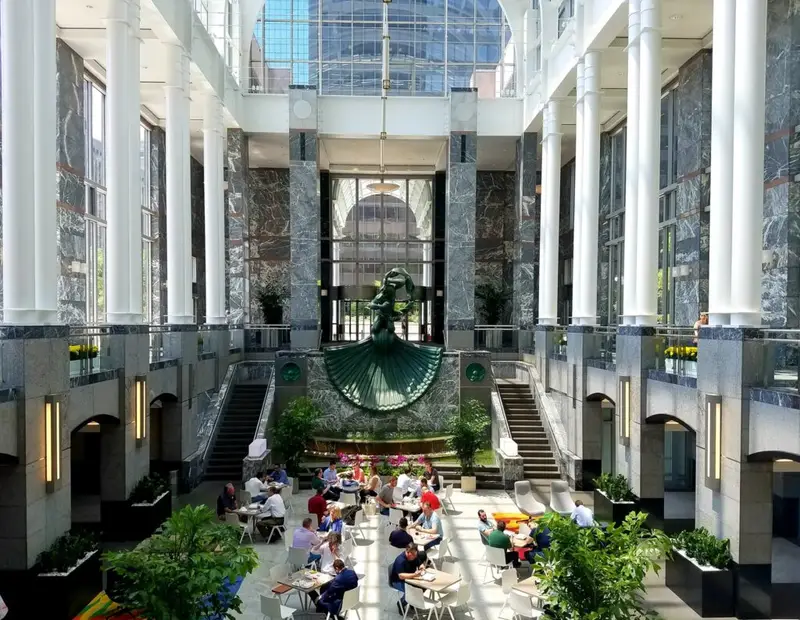
The lobby of 311 South Wacker isn’t a normal office entrance; it is a five-story glass atrium designed to be a tropical winter garden.
The Palm Trees: The space is filled with towering palm trees and lush greenery. Walking into a bright, humid greenhouse right off a freezing Chicago street is a pretty wild contrast.
The Fountain: In the center of the room, you’ll find a huge bronze fountain called “Gem of the Lakes” created by artist Raymond Kaskey. It features a Neptune-like figure surrounded by symbols representing the Great Lakes.
Local tip: There are plenty of tables and chairs scattered around the fountain. Since it’s usually quiet, it’s a great spot to bring a coffee or a packed lunch and just sit in the sunlight for a while.
Looking for more quiet places to relax? Check out our list of 10 Places in Chicago to Escape the City Without Ever Leaving It.
📍Address: 311 S Wacker Dr
12. Fine Arts Building
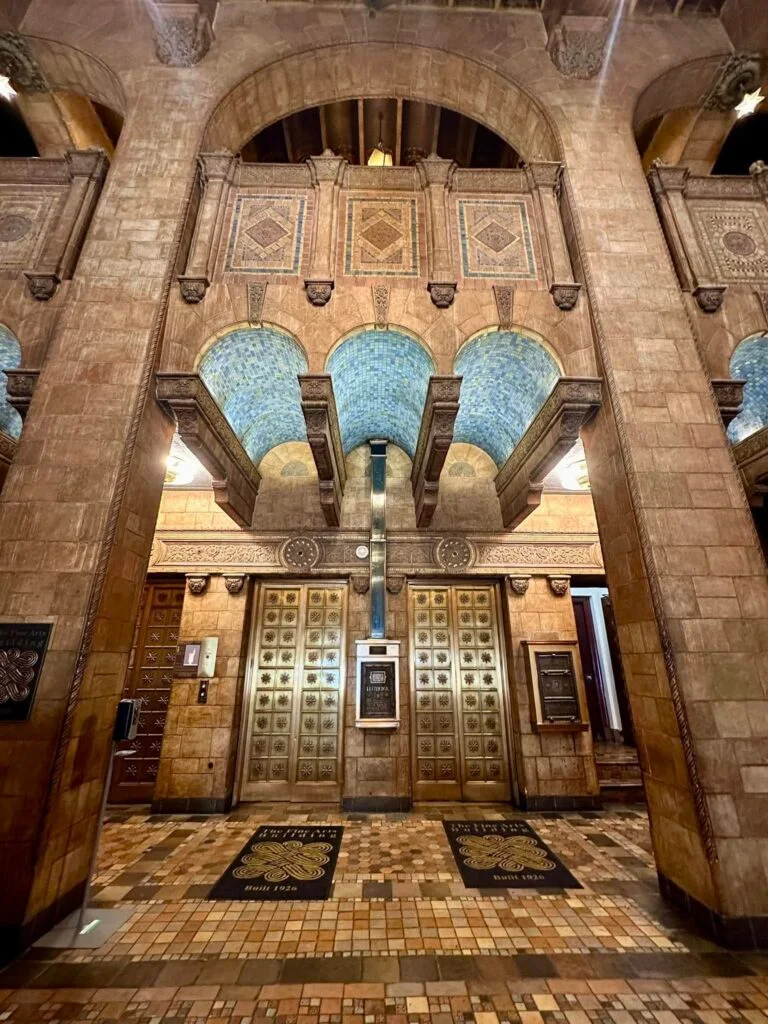
Walking into the Fine Arts Building on Michigan Avenue feels like a step back in time. It was originally built in 1885 as a massive showroom for Studebaker carriages.
By the early 1900s, the building was converted into dedicated studios for artists, musicians, and writers, and honestly, it hasn’t changed much since.
The Manual Elevators: The lobby is full of Art Nouveau details and mosaic floors, but the real reason to visit is the elevators. They are some of the last manually operated elevators in the country. You actually have to wait for a human operator to slide the heavy metal doors open and pull a physical lever to take you upstairs.
Local tip: Don’t just ride the elevator up and come right back down. Take it to the 10th floor and visit The Dial Bookshop, a great independent bookstore with incredible views of Lake Michigan. As you walk the old, creaky hallways, you can usually hear opera singers or cellists practicing behind the studio doors.
Love exploring historic spots? Check out our list of 12 Normal-Looking Chicago Buildings That Hide a Very Dark History
📍Address: 410 S Michigan Ave
13. The Carbide & Carbon Building (Pendry Chicago)
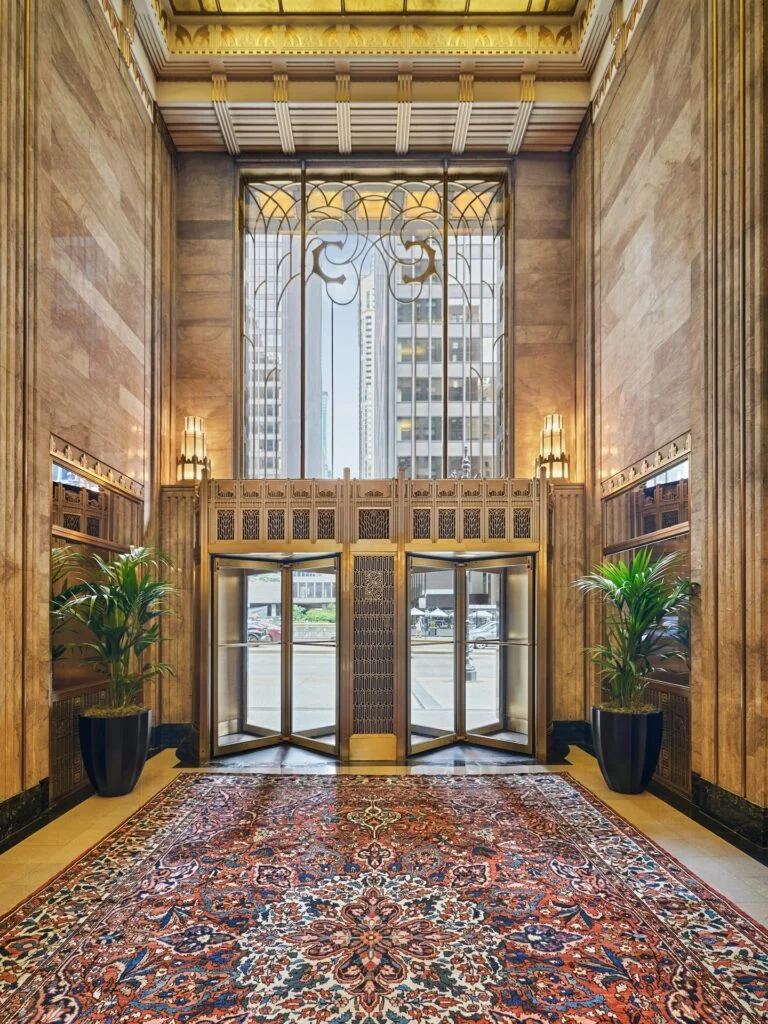
If you look at the Chicago skyline, you will see a stunning black building topped with real 24-karat gold leaf. Local legend says it was designed to look like a dark green champagne bottle wrapped in gold foil to protest Prohibition.
Today, it houses the Pendry Hotel, and the ground-floor lobby is pure 1920s luxury.
The Art Deco Details: Walking inside feels like stepping into a Great Gatsby party. The lobby is covered in black Belgian marble, frosted glass, and intricate bronze detailing that has been perfectly preserved since 1929.
Local tip: Don’t just walk through. Stop at Bar Pendry, a dark, moody cocktail lounge tucked right off the lobby behind heavy velvet curtains. It is one of the best places in the Loop to grab a quiet, high-end drink after a long day of sightseeing.
📍Address: 230 N Michigan Ave
14. The Monadnock Building
This one is a must-see for anyone who loves history. Built in two halves between 1891 and 1893, the Monadnock Building was the largest office building in the world when it opened.
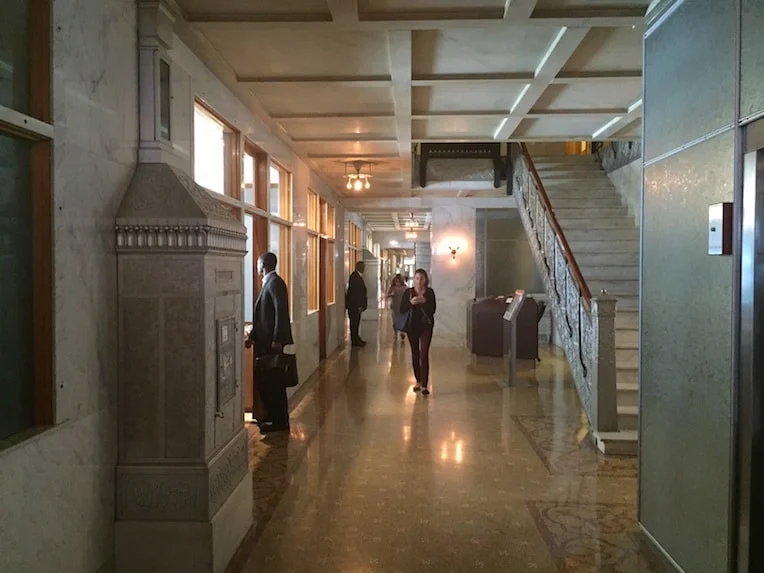
The lobby isn’t a grand, wide-open atrium like the others on this list. Instead, it is a long, narrow corridor that feels like a literal time capsule from the 1890s.
The Aluminum Staircases: The walls are lined with white Carrara marble, but the real stars are the sweeping, open staircases. They are made of cast aluminum, which was an incredibly rare and expensive metal at the time it was built.
Local tip: The building’s management has purposely only rented the lobby storefronts to businesses that fit the 19th-century vibe. As you walk down the hall, you can look through the glass doors to see a classic barbershop, a custom hat maker, and a vintage shoe repair stand.
📍 Address: 53 W Jackson Blvd
15. Chicago Union Station (The Great Hall)
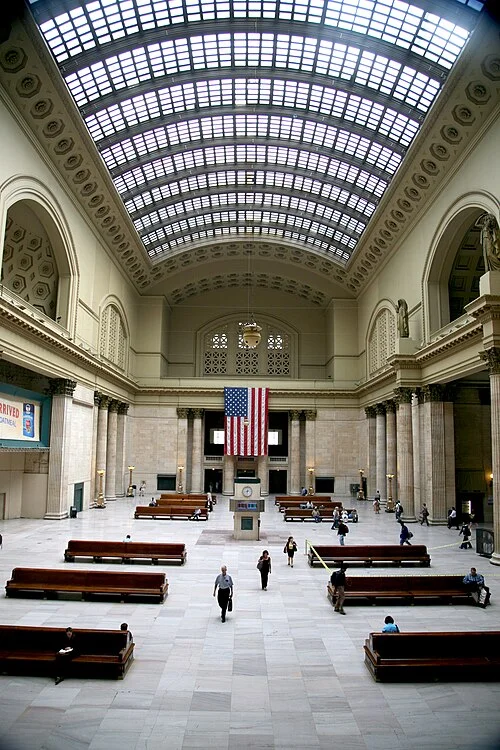
Okay, this is technically a train station, not an office building. But the “Great Hall” inside Union Station is arguably the most awe-inspiring public room in the entire Midwest, and leaving it off this list would be a crime.
Completed in 1925, this massive Beaux-Arts transit lobby was designed to make passengers feel like they were arriving in a modern-day Rome.
The Skylight: The room is larger than a football field. It features soaring 110-foot ceilings, massive Corinthian columns, and a breathtaking 219-foot-long barrel-vaulted glass skylight that floods the room with natural sun.
Local tip: If the giant marble staircases leading down into the Great Hall look familiar, it’s because you’ve probably seen them in a movie. They were the filming location for the famous slow-motion baby carriage shootout in the 1987 movie The Untouchables.
📍 Address: 225 S Canal St
Now Go Explore Chicago’s Free Beautiful Lobbies
You don’t need an expensive ticket to experience the best of Chicago’s world-famous architecture. You just need to know which doors to open.
These public lobbies prove that some of the best design in the city is still completely free for everyone to enjoy.
So, the next time you are downtown, don’t just walk past these buildings. Step inside, look up, and take your time.
Keep Exploring Chicago:
If you liked this guide, here is what our local readers suggest you check out next: