
The true story behind Chicago’s most famous landmark is stranger than you think.
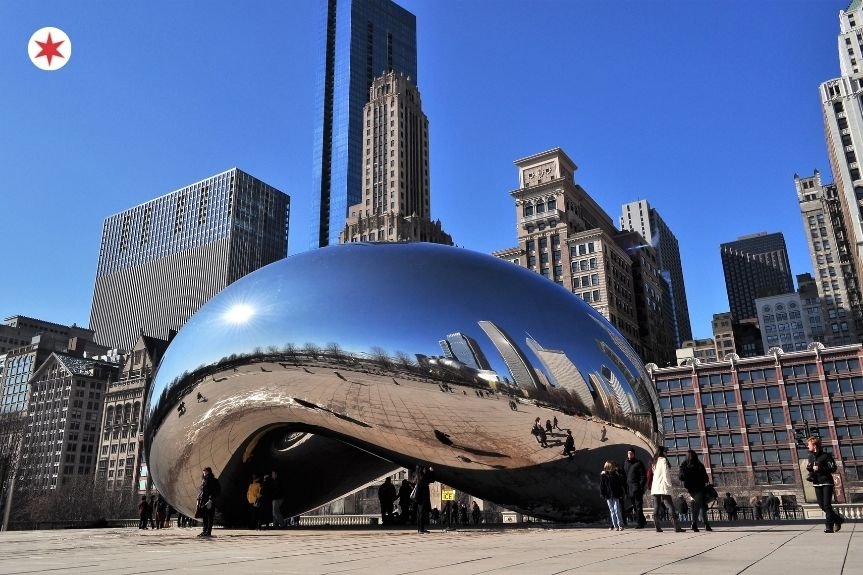
Every day, thousands of people walk into Millennium Park, stop in front of a 110-ton steel sculpture, and take a photo. They call it The Bean. They look at their distorted reflection in the mirror-polished surface, they walk underneath it, they look up at the swirling silver ceiling above them, and they feel something. Pride if they’re from Chicago. Wonder if they’re visiting for the first time.
What almost none of them know is anything about the man who made it.
Anish Kapoor is one of the most celebrated sculptors alive. He is also, depending on who you ask, one of the most controversial figures in contemporary art — a man who has triggered international scandals, sued street vendors over salt shakers, purchased the exclusive rights to the world’s darkest colour, and spent years in legal battles over who gets to profit from the object that Chicago has made its own.
The sculpture and the city have a complicated relationship with their creator. Chicago calls it The Bean. Kapoor hates that. Chicago doesn’t care. That tension — between what the city has made of this thing and what its creator intended — is the real story behind the most photographed landmark in Chicago.
Here it is.
The Man Behind The Mirror
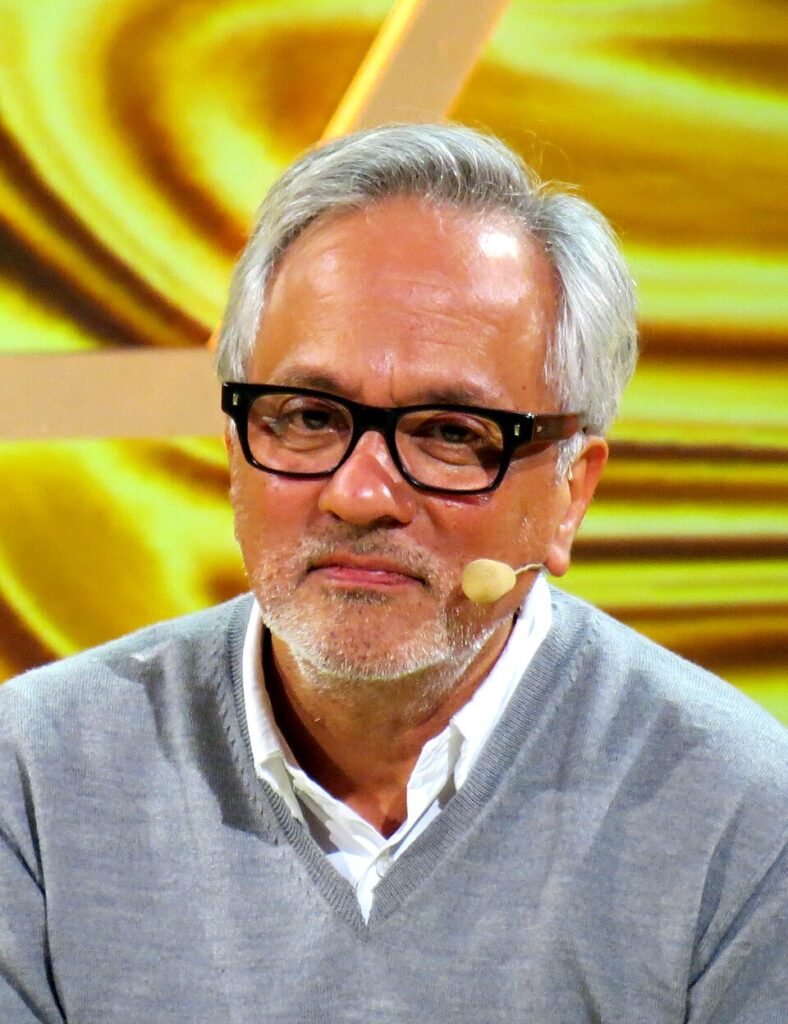
Anish Kapoor was born in Mumbai in 1954 and moved to London in his early twenties to study art. By the time he was shortlisted for the Cloud Gate commission in 1999 he had already won the Turner Prize, represented Britain at the Venice Biennale, and established himself as one of the most significant sculptors of his generation.
His work was already obsessed with reflection, void, and the relationship between objects and the space around them. Large, highly polished surfaces. Forms that seemed to absorb or distort their surroundings. The Cloud Gate commission was, in many ways, the perfect vehicle for everything he had been working toward.
When the City of Chicago put out a call for proposals for a major public sculpture in the new Millennium Park, Kapoor submitted a design unlike anything that had ever been attempted at this scale. A giant reflective bean shape that would sit in the park and reflect both the skyline and the visitors who came to see it. The reflection would never be the same twice. The city would become part of the sculpture.
The committee chose it immediately. What followed was considerably more complicated.
It Almost Didn’t Get Built
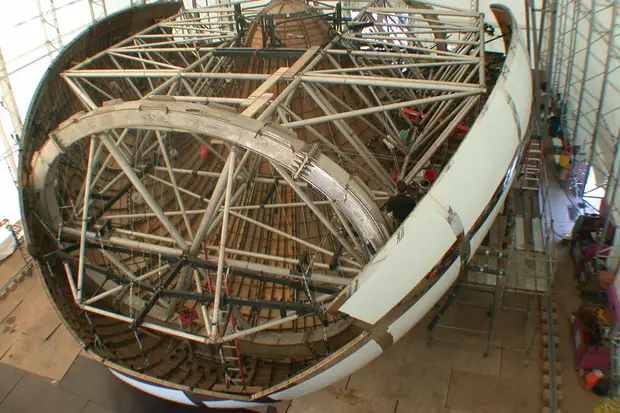
The original budget for Cloud Gate was $6 million. The final cost was $23 million.
The engineering challenges were extraordinary — 168 stainless steel plates, each polished to a mirror finish so perfect that the seams between them are completely invisible, assembled into a shape that had never been attempted at this scale before. Workers wore special lint-free suits during assembly to prevent fingerprints contaminating the finish. The steel was fabricated in California, shipped to Chicago in pieces, and assembled on site in a process that ran years behind schedule.
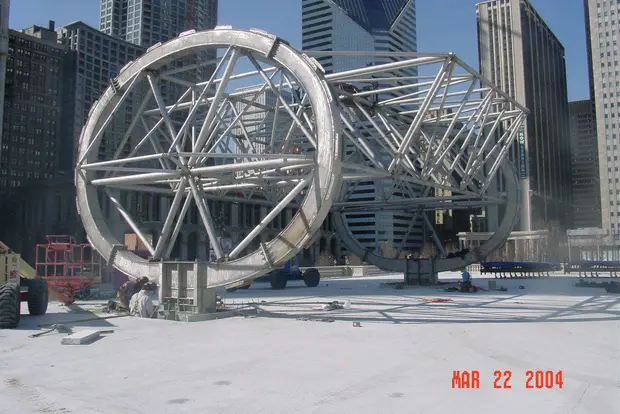
Millennium Park opened in 2004 without the sculpture complete. Cloud Gate sat shrouded in scaffolding for two more years while the final polishing was finished.
It was worth the wait. The moment the scaffolding came down it was immediately, obviously, one of the great public artworks in America.

The Name He Hates
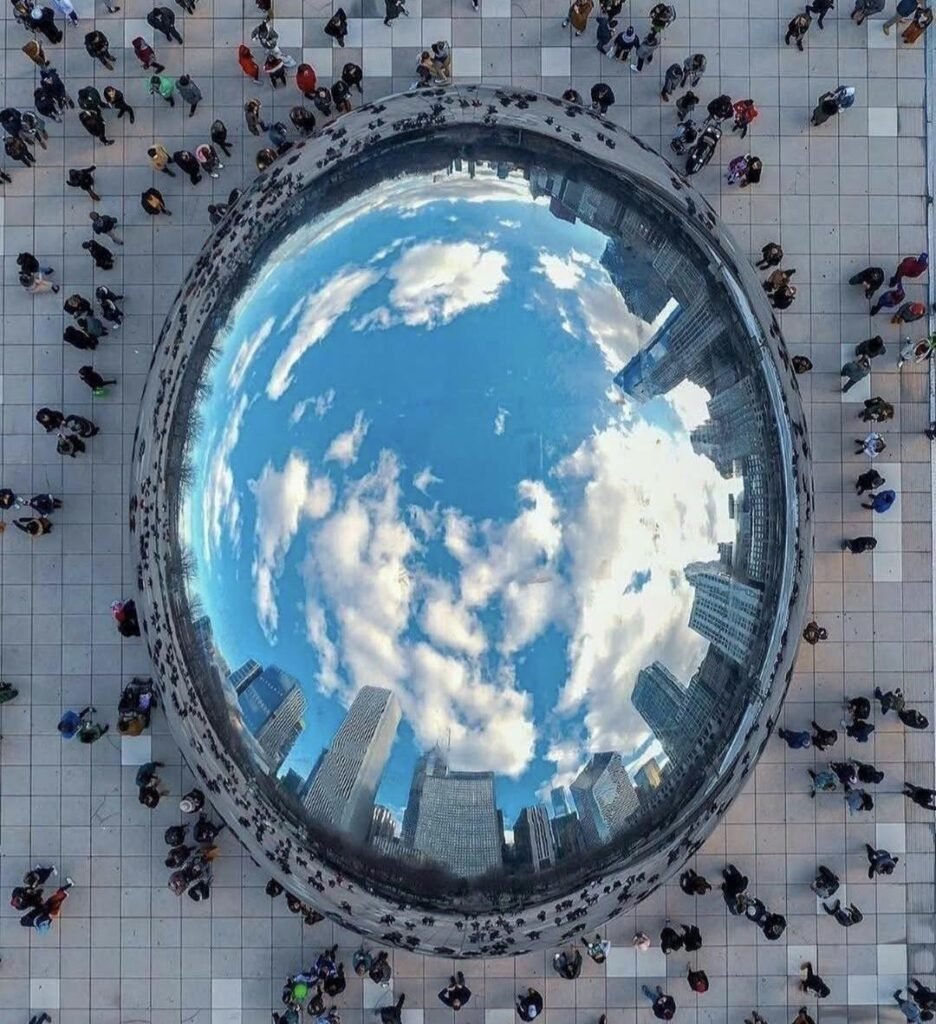
Kapoor named the sculpture Cloud Gate — a reference to the way it frames and reflects the sky, creating a portal between the city and the clouds above it. It is a considered, poetic name that reflects the conceptual thinking behind the work.
Chicago called it The Bean and never looked back.
The nickname came almost immediately. The shape is unmistakably bean-like and Chicagoans were never going to call something Cloud Gate when The Bean was right there. The name spread, stuck, and became so universal that even the city’s official tourism materials started using it.
Kapoor has made no secret of his feelings. He has described the nickname as reductive, as missing the point of the work entirely. He has said in interviews that he wishes people would use the correct name.
Chicago has continued to not care. And there is something deeply Chicago about that — a practicality, a directness, a refusal to be told what to think about something by the person who made it. Cloud Gate belongs to Chicago now. Chicago will call it whatever it wants.
You Need Permission To Photograph It Commercially
Here is something that will make every travel blogger and Instagram influencer deeply uncomfortable.
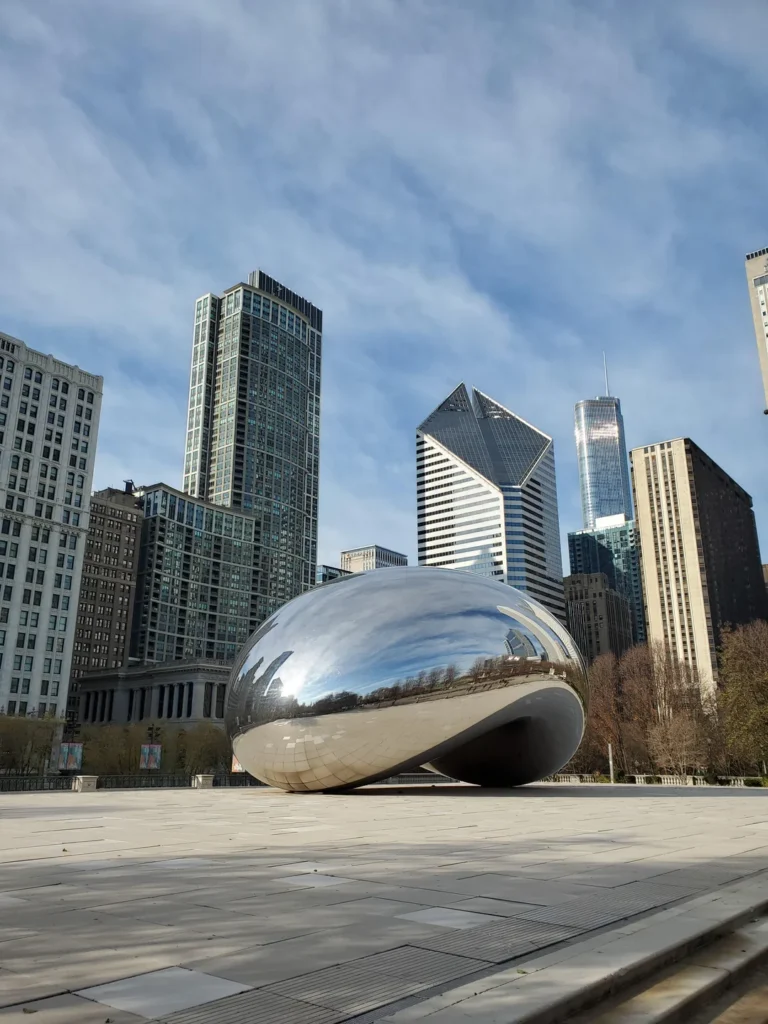
Cloud Gate is copyrighted. Kapoor holds the intellectual property rights to the sculpture’s design, which means that any commercial use of its image — selling prints, using it in advertising, publishing it in a book, featuring it in a commercial film — technically requires his permission and potentially a licensing fee.
This is not a technicality that goes unenforced. The City of Chicago and Kapoor’s representatives have actively pursued licensing agreements with commercial photographers and media companies who use the image for profit.
The average tourist snapping a photo for their Instagram is fine. The moment that photo is used to sell something it enters legally complicated territory. You can stand in front of it, photograph it, and share it freely. You just can’t make money from it without asking first — and most people who already have made money from it have no idea.
Which brings us to the salt shakers.
The Salt Shaker Lawsuit

The copyright issue is not theoretical. Kapoor has enforced it aggressively.
In the years since Cloud Gate was completed his representatives have pursued legal action against vendors selling Bean-shaped merchandise — salt shakers, snow globes, keychains, miniature replicas — without a license. Street vendors and small souvenir shops in Chicago have received cease and desist letters. Some have been sued outright.
Think about what that means for a moment. A sculpture that has become the defining symbol of a working-class, no-nonsense Midwestern city — a city that calls it The Bean, that has made it entirely its own, that prints it on everything — is legally owned by a British artist who lives in London and actively pursues legal action against the small businesses trying to sell a few dollars worth of souvenirs to tourists.
The vendors who got the letters were not major corporations exploiting the image for millions. They were small shops, market stalls, the kind of businesses that exist in every tourist city in America selling affordable mementos to visitors who want to take a little piece of the city home.
Chicago has continued to sell Bean salt shakers anyway. Some things are bigger than a cease and desist letter.
The Darkest Colour In The World
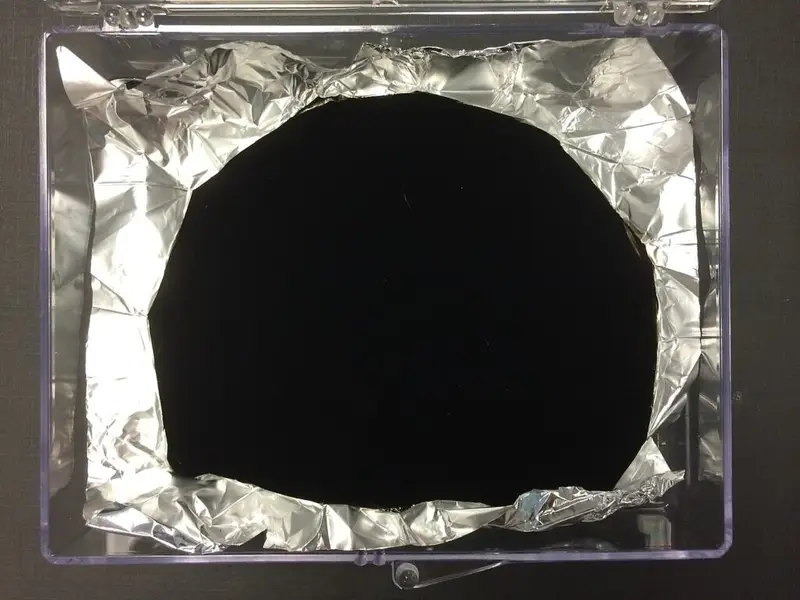
In 2016 Anish Kapoor did something that made him, briefly, the most hated artist in the world.He purchased the exclusive rights to Vantablack — a substance developed by Surrey NanoSystems that absorbs 99.965% of all visible light, making it the darkest material ever created. Objects coated in it appear to have no surface whatsoever. They look like holes cut in reality, like voids where solid objects should be.
The art world was immediately and furiously angry. Here was one of the wealthiest and most successful artists alive purchasing exclusive access to a material that artists everywhere had been excited about — and locking every other artist on earth out of it simply because he could afford to.
The response was immediate and spectacular.
Artist Stuart Semple created the world’s pinkest pink paint and made it available to purchase by any artist in the world — with one explicit condition written into the terms of sale. The paint could not be sold to or used by Anish Kapoor or anyone acting on his behalf.
Kapoor obtained some anyway. He photographed his middle finger dipped in the pink paint and posted it on Instagram with the caption “Up yours #pink.”
Semple responded by creating the world’s glitteriest glitter, the world’s most pigmented black paint, and the world’s most fluorescent colours — all explicitly banned from Kapoor’s use. A group of artists showed up at an art fair and covered Kapoor in glitter in protest.
The feud became one of the most public and bizarre disputes in contemporary art history. It is still technically ongoing.
The man whose sculpture sits at the heart of one of America’s most beloved public parks, whose work Chicagoans have adopted as a symbol of their city, is regarded by a significant portion of the art world as a bully with a chequebook. Most of the people taking selfies in front of it have absolutely no idea.
What The Sculpture Actually Is
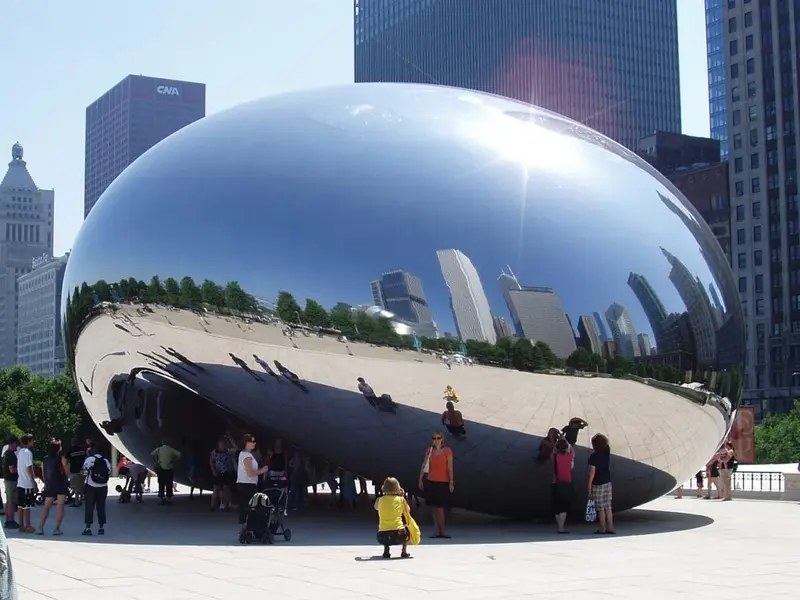
In the middle of all of this it is easy to lose sight of what Cloud Gate actually is.
It is, by any measure, an extraordinary object. It weighs 110 tons and has no flat surfaces and no straight lines anywhere on its exterior. In winter the steel contracts slightly in the cold — the sculpture physically moves with the temperature. A dedicated cleaning team maintains the mirror finish twice a day. The underside — which Kapoor called the omphalos, Greek for navel — creates a surreal visual tunnel that most visitors walk under without stopping to look up properly. Stand directly beneath it and look up. It is one of the stranger visual experiences available in any public space in America.
It was inspired, Kapoor has said, by liquid mercury. The way a droplet of liquid metal sits on a surface — perfectly reflective, perfectly curved, seemingly alive. He wanted to create something that felt like it had landed rather than been built. Something that belonged to the sky as much as to the ground.
Whatever you think of the man, he achieved it.
Chicago’s Bean
Here is the thing about Cloud Gate that nobody planned and nobody could have predicted.
Chicago took it. Not in a legal sense — Kapoor still owns the copyright, still enforces it, still hates the nickname. But in every other sense that matters, The Bean belongs to Chicago now.
It has become the place where the city gathers — for festivals, for celebrations, for New Year’s Eve, for the simple daily ritual of walking past something beautiful on the way to work. Children run toward it instinctively. Tourists plan entire trips around standing in front of it. Locals who have seen it a thousand times still stop occasionally and look at themselves in the curved steel and feel something they can’t quite name.
Kapoor wanted to make something that created a relationship between a city and its sky. He succeeded beyond anything he could have imagined. He just didn’t get to control what that relationship looked like.
Chicago called it The Bean. Chicago made it theirs. Chicago doesn’t care what the artist thinks about that.
That is, in the end, the most Chicago thing about it.