Plenty of hot dog stands in this city don’t stock ketchup. Not hidden behind the counter, not available on request: simply not in the building.
That tells you most of what you need to know about how Chicagoans feel about their food, which is roughly how they feel about their sports teams, only with less forgiveness. The city runs from Michelin-starred tasting menus to historic neighborhood joints, and the street-food end comes with unspoken, strictly enforced, culturally ingrained rules.
Visitors keep asking whether Chicago is safe for tourists. Honestly, the biggest risk here is embarrassing yourself in front of the guy working the window. These are the 15 crimes that make locals wince, and how to avoid every one of them.
1. Ordering an Italian Beef “Dry”
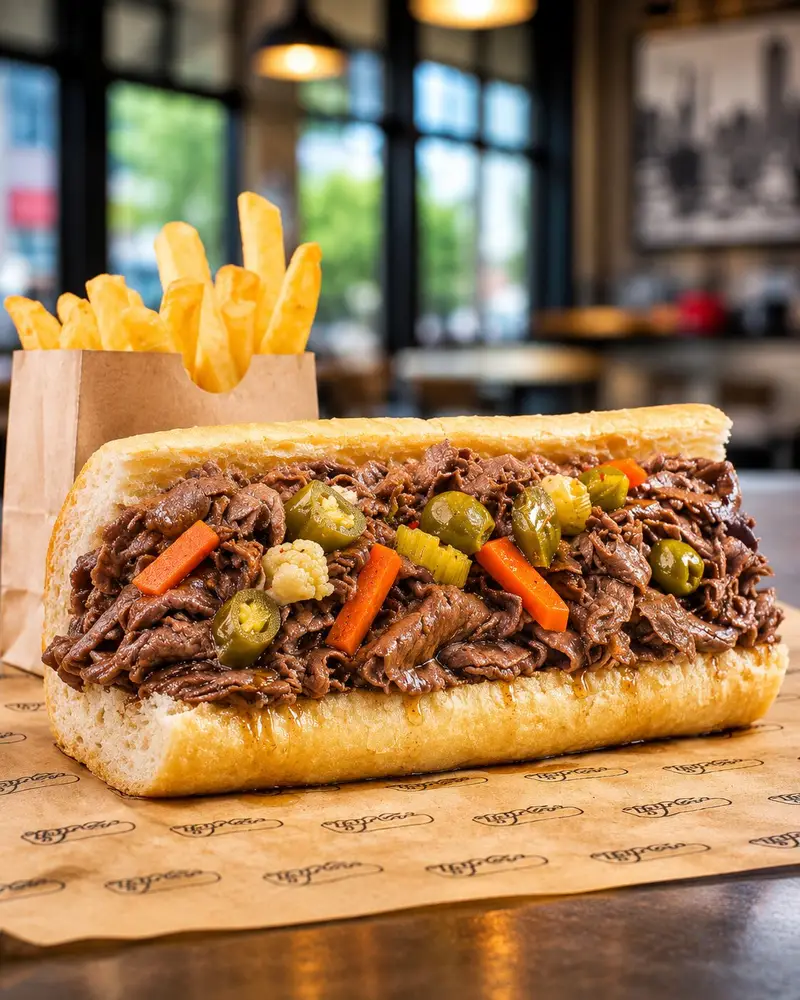
The gravy an Italian beef roasts in has one job, and that job is wrecking the bread.
 JM
AK
Born out of tough times in the early 20th century, Italian immigrants created the sandwich for “peanut weddings,” slicing tough cuts of beef paper-thin and simmering them in garlic- and oregano-infused broth so a little meat could feed a crowd. Today, that thinly sliced, seasoned roast beef gets piled onto a dense Turano or Gonnella French roll, and the whole thing is a messy, savory, slow-roasted masterpiece.
Why is it a crime?
Ordering it “dry,” with no gravy touching the bread, throws away most of the flavor and leaves you chewing through a crusty French roll that was never meant to be eaten plain. It’s engineered to be dense for a reason: it’s built to soak.
The Local Fix:
Order it “wet” (a ladle of extra gravy splashed over the top) or “dipped” (also called “baptized,” where the entire sandwich is submerged right into the gravy vat with tongs).
Then pick a side on toppings: “sweet” gets you roasted green bell peppers, “hot” gets you spicy, pickled giardiniera. Feeling extra hungry? Order a “Combo”—an Italian beef sandwich with a grilled Italian sausage link tucked right inside the roll beneath the beef. Once you’ve got the vocabulary down, go practice at one of these 14 Italian beef stands locals rank highest.
2. Forgetting the “Italian Beef Lean”
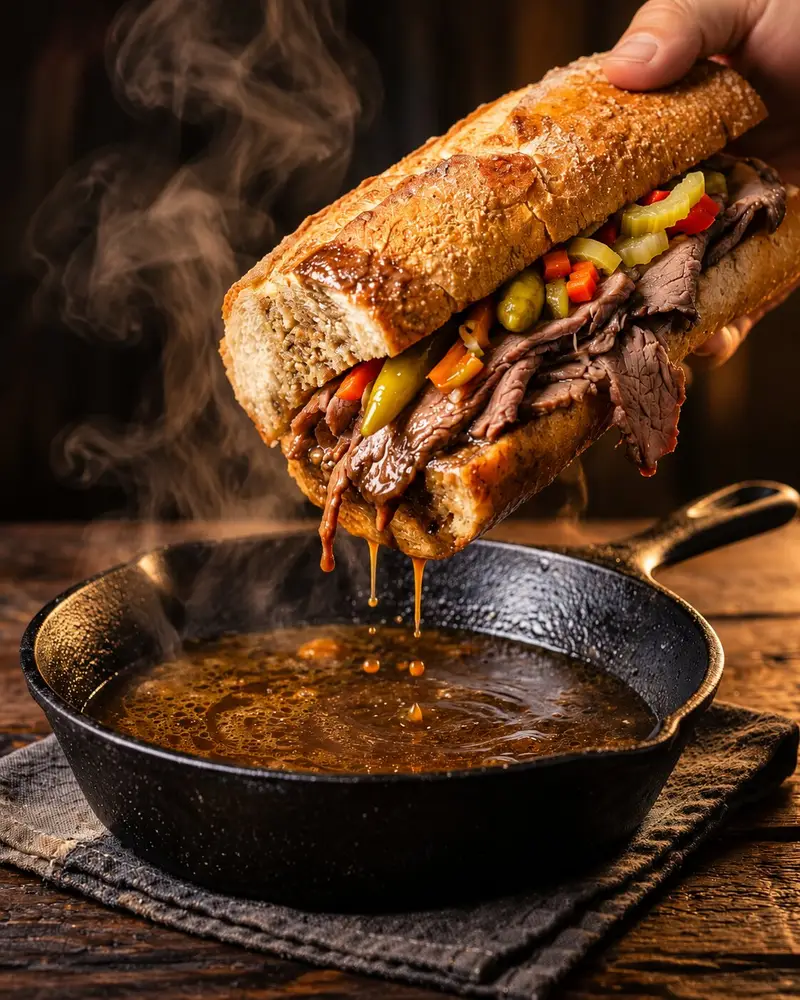
There is a correct way to stand while eating a sandwich in this city, and it involves a 45-degree angle.
Ordering your beef dipped means you’re now holding something structurally compromised, dripping savory beef jus and spicy giardiniera oil from every angle. Physics is not on your side.
Why is it a crime?
Eating it sitting straight up or, worse, leaning back is the rookie move that ends with gravy and orange pepper oil down your favorite shirt. Locals who spot someone eating a wet beef perfectly upright have already started mourning that person’s laundry.
The Local Fix:
Enter the Italian Beef Lean, famously perfected at stands like Al’s #1 Italian Beef on Taylor Street and known citywide as the “Chicago Stance.” It is mandatory.
Feet shoulder-width apart. Forearms resting flat on the high-top counter. Upper body tilted forward at that 45-degree angle, hands bringing the sandwich to your mouth rather than your head dipping down, so anything that falls hits the butcher paper and not your pants or shoes.
3. Mispronouncing (or Ignoring) Giardiniera
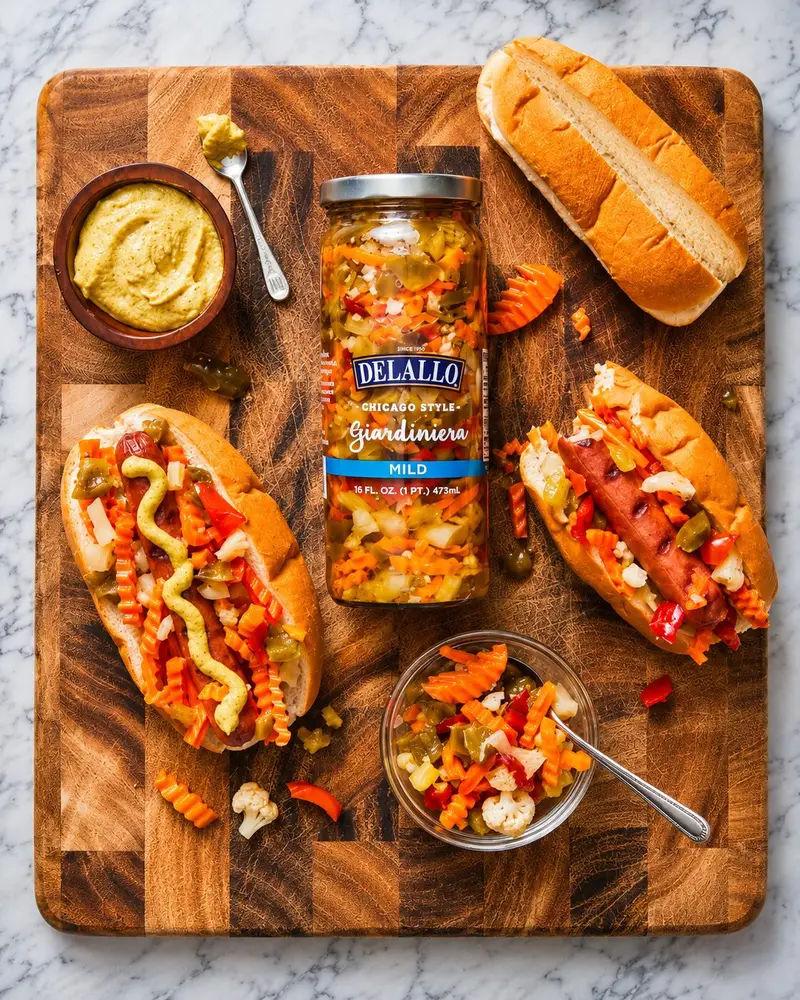
Say it with me: jar-din-air-ah (or, if you want to sound like a third-generation South Sider, drop the last syllable entirely: jar-din-air).
If ketchup is the villain of Chicago food, this is the hero. Unlike traditional Italian sottaceti—which consists of large chunks of vegetables pickled solely in vinegar brine—Chicago-style giardiniera is finely diced serrano or sport peppers, celery, carrots, cauliflower, and olives that get pickled first, drained, and then packed in rich soybean or olive oil. It goes on Italian beef, tavern-style pizza (try a sausage and giardiniera pie), scrambled eggs, and just about any sandwich that will hold still.
Why is it a crime?
Two ways to blow it. The first is pointing at the jar and nervously mumbling, “Can I get some of those spicy garden veggies?” or sounding out every letter (“gee-ar-dee-nee-air-uh”). Nothing announces an out-of-towner faster.
The second is turning it down entirely, which means skipping the punchy, oil-rich condiment that ties the whole city’s menu together.
The Local Fix:
When a local offers you giardiniera on your pizza or sandwich, the answer is yes. And when you order it yourself, just ask for “hot peppers” at a beef stand, or say the word like you’ve been saying it your whole life.
4. Ignoring the “Tamale Guy” at a Dive Bar
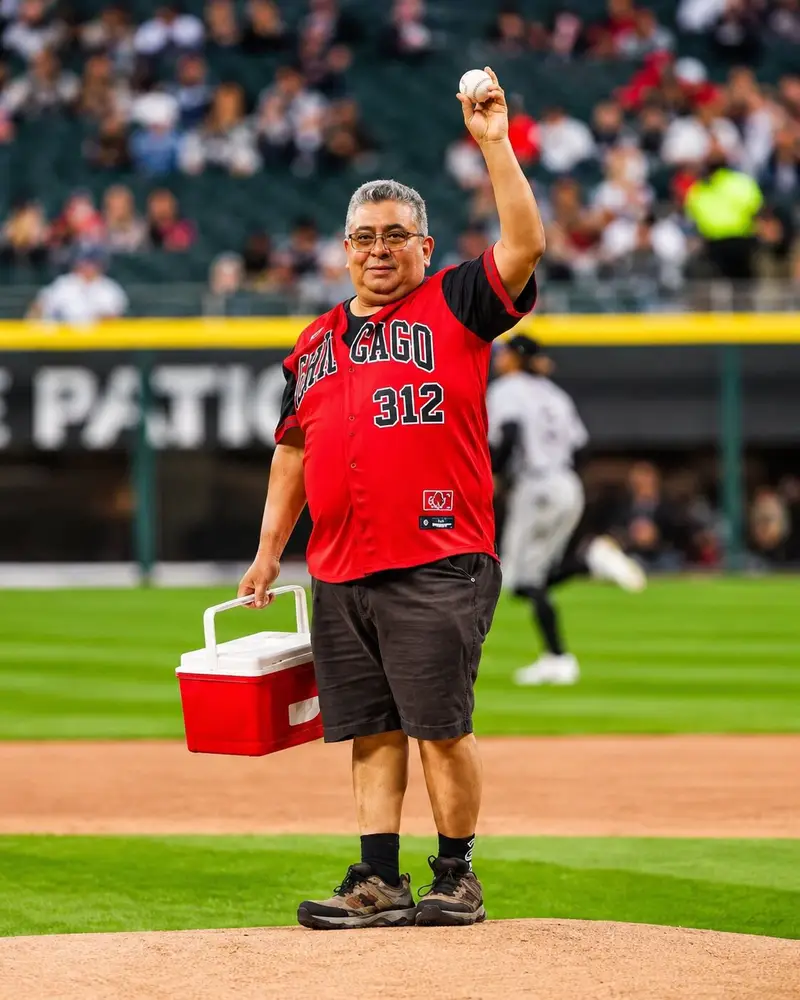
A small red cooler walking through the door of a dive bar at 1:00 AM on a Friday is the most welcome sight of the night.
Picture the scene: dim Old Style neon lights, cash only, your third drink. In walks a man carrying an Igloo cooler, and inside it are warm, foil-wrapped, corn-husk tamales stuffed with pork, chicken, or cheese and jalapeño. While several mobile vendors work different corners of the city, the undisputed king of the craft is Claudio Velez—the original “Tamale Guy,” whom locals affectionately call “Santa Claus for the drunk and hungry”.
Why is it a crime?
Waving a tamale vendor off—or worse, acting sketched out about buying hot food out of a cooler in a tavern—is a serious cultural faux pas. In Chicago, the Tamale Guy is a late-night superhero who routinely receives standing ovations when he walks into a bar. You don’t ignore a superhero.
The Local Fix:
Red cooler enters the bar, you pull out cash ($5 to $10 usually gets you a hefty Ziploc bag of a half-dozen), you tip generously, and you share with your table. Do not ask for a menu. Just unwrap the foil and eat the tamales.
(Still hungry after the cooler leaves? Here’s where Chicagoans actually eat at 2am.)
5. Ordering a Maxwell Street Polish Without Grilled Onions
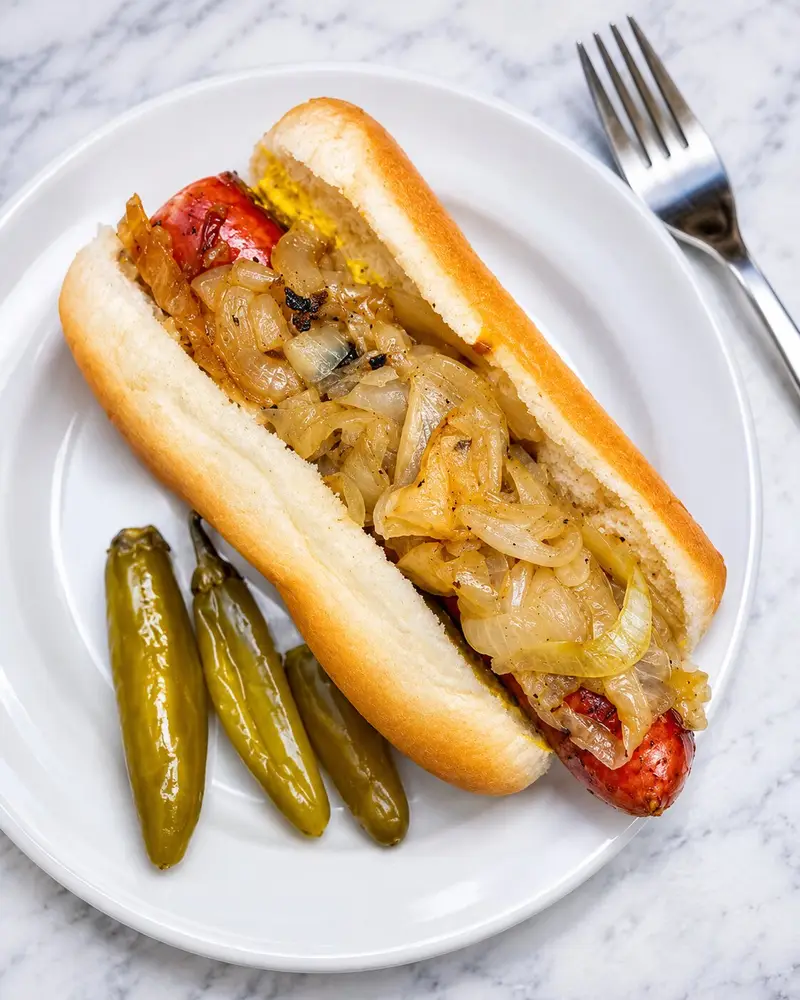
Order one of these plain and what you’ve paid for is just a lonely kielbasa in bread.
Chicago’s hot dogs get the national fame, but the Maxwell Street Polish is the city’s gritty, late-night unsung hero. Invented in 1939 by Macedonian immigrant Jimmy Stefanovic at Jim’s Original stand at the historic Maxwell Street Market, it features a snappy, garlicky beef-and-pork Polish sausage grilled or fried until the casing blisters.
Why is it a crime?
The sausage is the foundation, not the finished product. Unlike a Chicago hot dog, which is loaded with cold, fresh garden veggies, a Maxwell Street Polish is all about rich, savory heat. Skip the toppings and you’ve missed the entire reason the sandwich has its own name.
The Local Fix:
A proper Maxwell Street Polish must come buried under a mountain of sweet, caramelized, griddle-cooked onions that have been stewing in sausage drippings for hours, a heavy squirt of yellow mustard, and two or three spicy pickled sport peppers on top.
At spots like Jim’s Original or Express Grill on Union Avenue, your order often comes with a complimentary bag of fries, making it one of the best budget meals in town—right alongside these nine Chicago meals under $10.
6. Complaining About “Cheese Fingers” from Garrett Popcorn
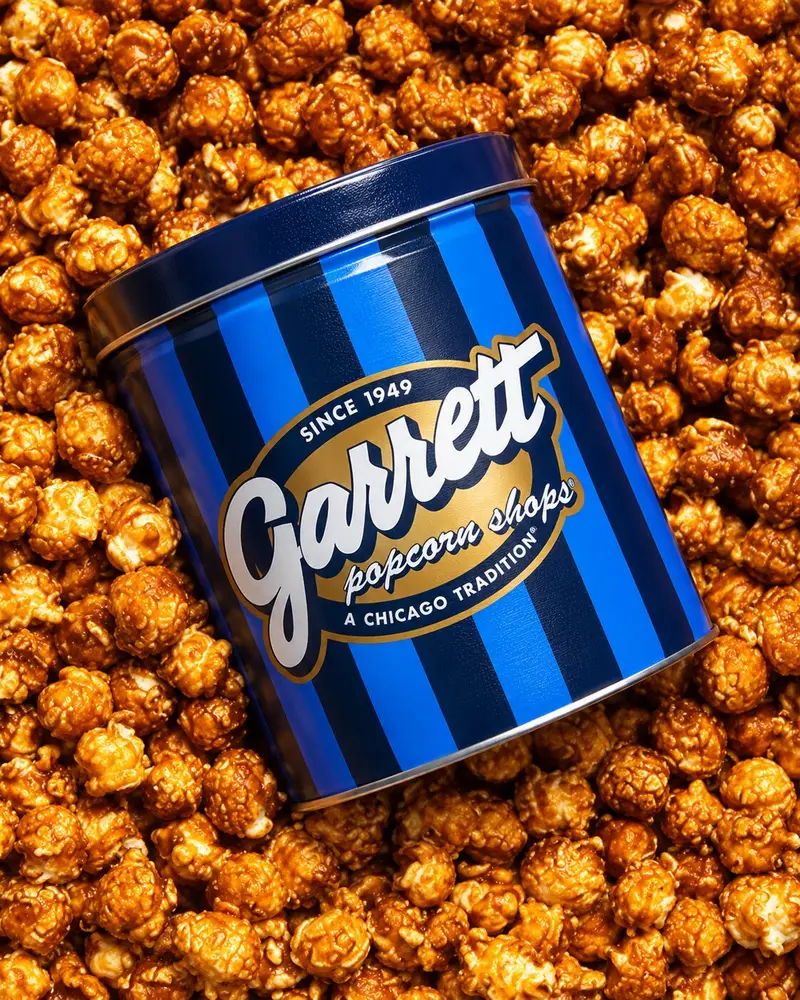
Your fingers will turn orange. Not faintly orange: bright, traffic-cone orange.
Since 1949, you can smell a Garrett Popcorn Shop half a block before you see it in the Loop or on Michigan Avenue. The non-negotiable order to make is the “Garrett Mix” (which plenty of older locals still generically call “Chicago Mix”), a 50/50 blend of rich, buttery CaramelCrisp and sharp, freshly melted cheddar CheeseCorn cooked in copper kettles.
Why is it a crime?
Because Garrett uses real melted sharp cheddar rather than dry powdered flavoring, that CheeseCorn leaves a heavy, glorious layer of orange grease and cheese dust on everything it touches. Complaining about the mess, eating it with a spoon, or asking the counter for wet wipes marks you as an amateur instantly.
The Local Fix:
Make sure every handful contains both a caramel kernel and a cheese kernel—the sweet-and-salty collision is the whole point. Accept the consequences, wipe your hands on a stack of brown napkins, and keep going.
7. Trying to Fold a Slice of Thin-Crust Pizza
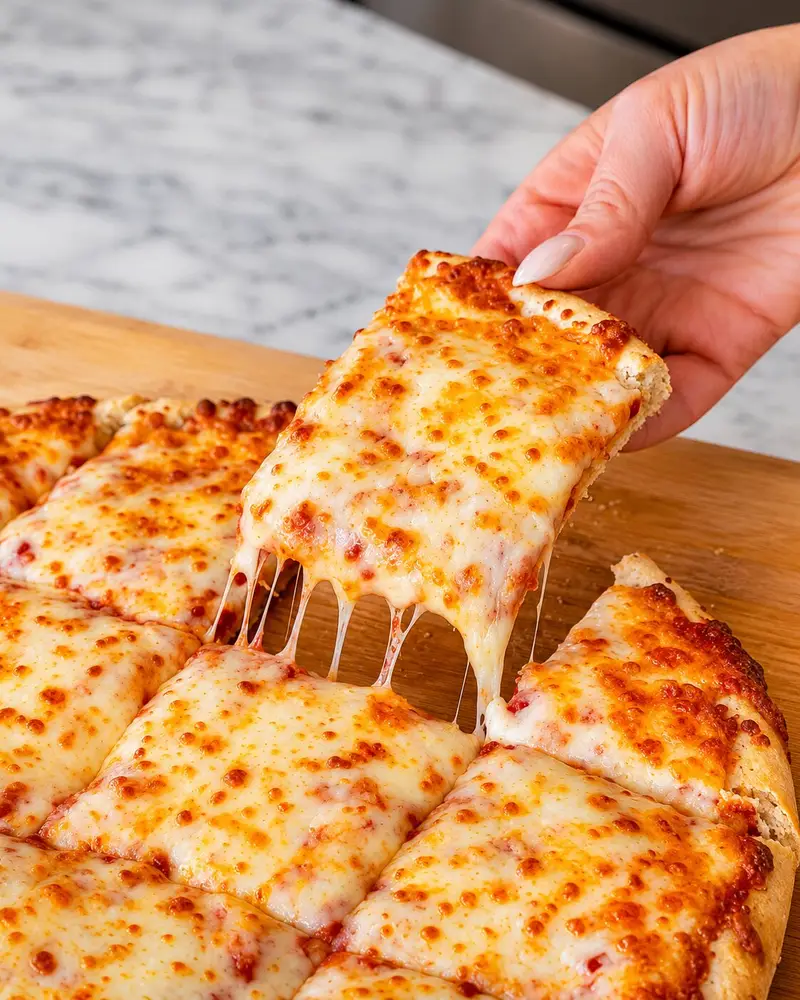
Try the New York fold on a Chicago square and you will hear an audible snap.
New Yorkers fold their enormous wedge slices in half and eat them walking down the street. Attempt that on a Chicago tavern-style pie—or ask the pizzeria to “pie-cut” it into triangles—and you’ll make enemies before the first bite.
Why is it a crime?
Chicago tavern-style thin-crust is rolled paper-thin, often “cured” (dried out for hours before baking), dusted with cornmeal, baked until it’s cracker-crisp, and sliced into small squares known as the “party cut.” This style originated in mid-century neighborhood taverns, where bartenders handed out small square slices on cocktail napkins so patrons could keep a beer in one hand and a slice in the other.
There is zero bend in it. Push on the middle and it breaks clean in two. That rigidity is deliberate: the crust is engineered to carry heavy layers of tangy oregano-spiked sauce, edge-to-edge mozzarella, and raw pinched fennel sausage without sagging.
The Local Fix:
Pick up the square, eat it flat, and respect the unspoken hierarchy of the box: the tiny crunchy corner triangles go to the crust lovers, while the saucy, crustless middle squares are the prized possession of the table.
8. Asking for “Pączki” in September
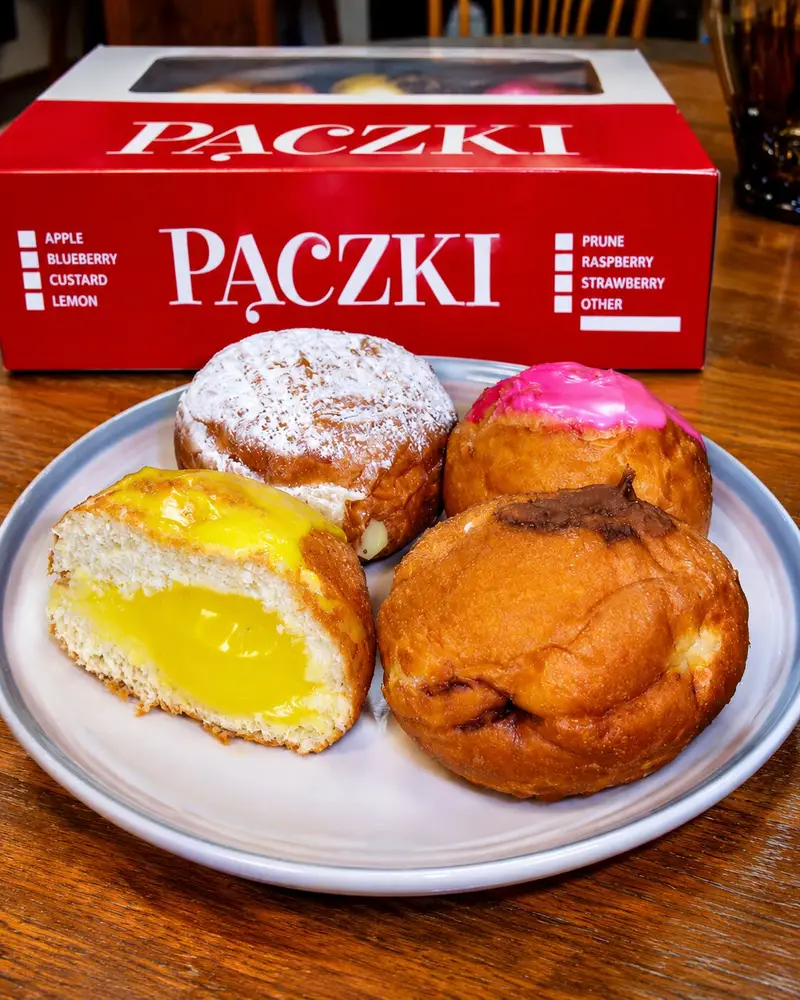
Chicago bakeries sell millions of these in a single 24-hour window, and then they largely disappear.
Historically home to the largest Polish diaspora outside of Warsaw, Chicago built a very specific pastry hierarchy. Sitting right at the top are pączki (pronounced poonch-key—and if you want extra credit, pączki is plural; a single one is technically a pączek, pronounced poon-check). Historically made to use up all the rich lard, sugar, eggs, and fruit in the house before the fasting of Lent, these ultra-rich dough balls are fried with a splash of grain alcohol (Spiritus) in the batter so the dough repels oil and stays pillowy inside.
Why is it a crime?
Treating them like an everyday Dunkin’ jelly doughnut.
While a handful of hardcore Polish delis on the Northwest and Southwest Sides might fry a small batch on weekends, real pączki—stuffed with traditional rosehip jam, stewed plum (prune), custard, or fresh strawberries—are strictly seasonal. They are devoured on Fat Thursday (the traditional Polish day of indulgence) and Pączki Day (Fat Tuesday, the day before Ash Wednesday).
The Local Fix:
Don’t walk into a bakery in Avondale, Jefferson Park, or Garfield Ridge in the middle of September expecting the full Pączki Day spread. Wait until February or March, wake up at 5:00 AM, and stand in the freezing cold line outside a neighborhood bakery with a dozen box like everyone else.
9. Putting Ketchup on a Chicago-Style Hot Dog
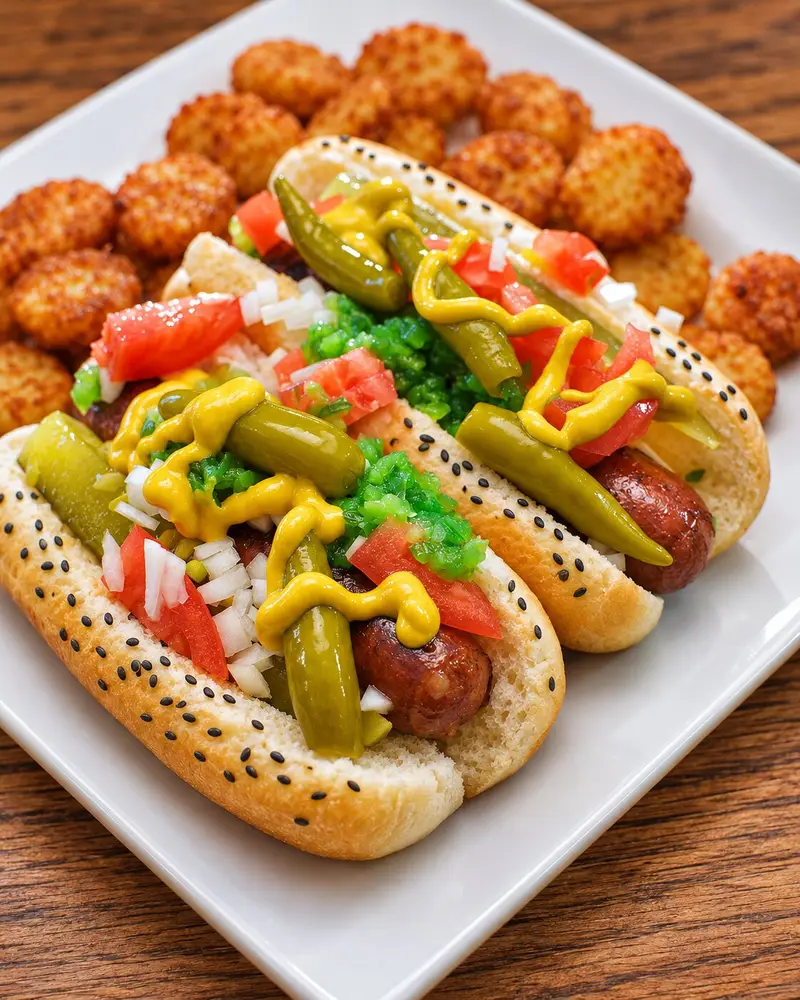
Ask for ketchup on a hot dog here (if you are over the age of eight) and you might as well ask to be escorted to the city limits.
This is the most unforgivable culinary sin on the list, and the city backs it up with policy: legends like Superdawg, Wieners Circle, and Gene & Jude’s famously refuse to put ketchup anywhere near a frankfurter.
Why is it a crime?
Born during the Great Depression when street cart vendors piled cheap, fresh market vegetables onto a nickel frankfurter to make it a full meal, a true Chicago-style dog is a carefully balanced culinary ecosystem. It starts with an all-beef frankfurter (almost always Vienna Beef) in a steamed S. Rosen’s poppy seed bun, and gets “dragged through the garden” with seven exact toppings: yellow mustard, neon green sweet pickle relish, chopped white onions, two tomato wedges, a kosher dill pickle spear, two spicy sport peppers, and a mandatory dash of celery salt.
Ketchup is sugary, acidic, and loud. Since the dog already has fresh tomatoes and sweet relish, ketchup completely steamrolls that balance and masks the garlic-and-paprika snap of the beef. And if you think this is just stubbornness, there’s a real history behind the ketchup ban worth knowing.
The Local Fix:
Order it with “everything,” hold the ketchup, and skip the tourist traps in favor of the hot dog spots locals voted for. (Bonus local note: if you visit a “Depression Dog” stand like Gene & Jude’s or Jimmy’s Red Hots, don’t even ask for tomatoes or relish—those spots strictly serve mustard, relish, onions, sport peppers, and hand-cut fries piled directly on top of the dog!)
10. Assuming Deep Dish Is the Only Chicago Pizza
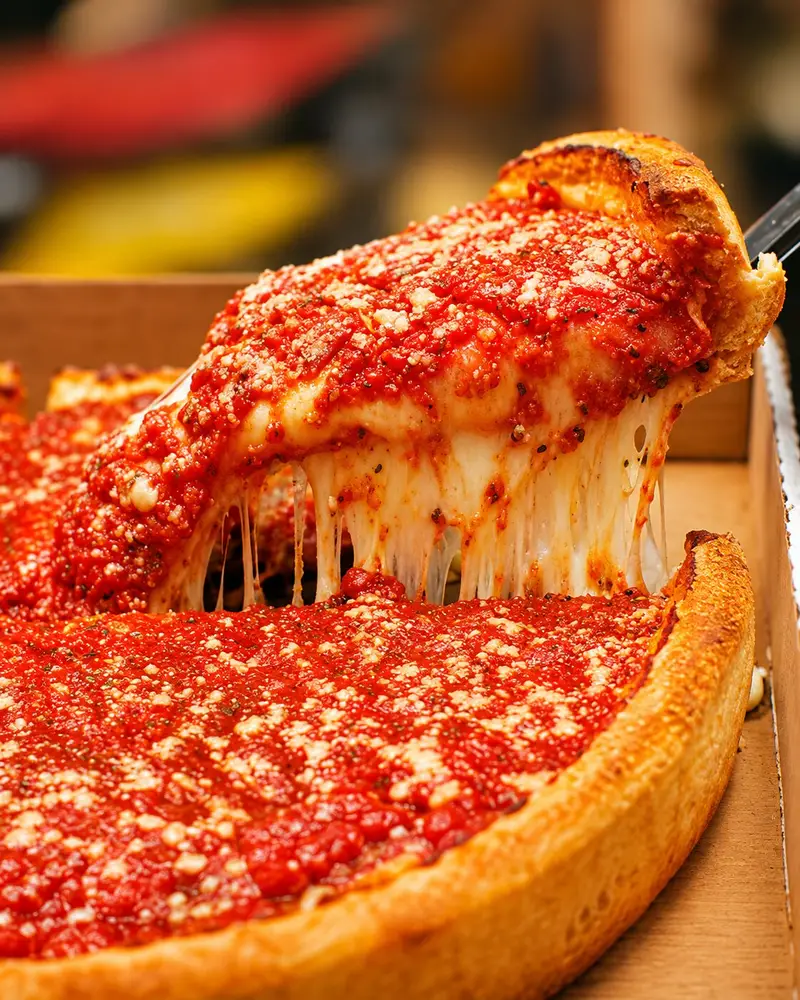
A deep dish pie takes 45 minutes to bake, and most Chicagoans order one roughly as often as they host out-of-town relatives.
Don’t get us wrong—the love for Pizzeria Uno (where it was invented in 1943), Lou Malnati’s, Pequod’s, and Giordano’s is real. Because deep dish bakes for so long in a deep steel pan, the layers have to be assembled “upside down”: thick slices of Wisconsin mozzarella go directly against the flaky, butter-and-cornmeal crust, followed by meat and vegetables, with chunky crushed tomatoes layered on top so the cheese doesn’t burn. It’s a glorious commitment requiring a knife, a fork, and a nap afterward.
Why is it a crime?
Treating it as the city’s sole pizza style—or worse, making the tired tourist joke that “it’s a casserole, not pizza”—is a dead giveaway that you don’t know the city’s food scene. Stopping at deep dish means ignoring the pizza Chicagoans actually eat 90% of the time: tavern-style thin-crust (plus its thicker cousin, the double-crusted “stuffed” pizza made famous by Nancy’s and Giordano’s).
The Local Fix:
Eat deep dish once on your trip, enjoy every bite, and then do what locals do on a Friday night: head to one of the neighborhood joints that came out on top when we asked locals where to get thin crust.
11. Disrespecting Jeppson’s Malört
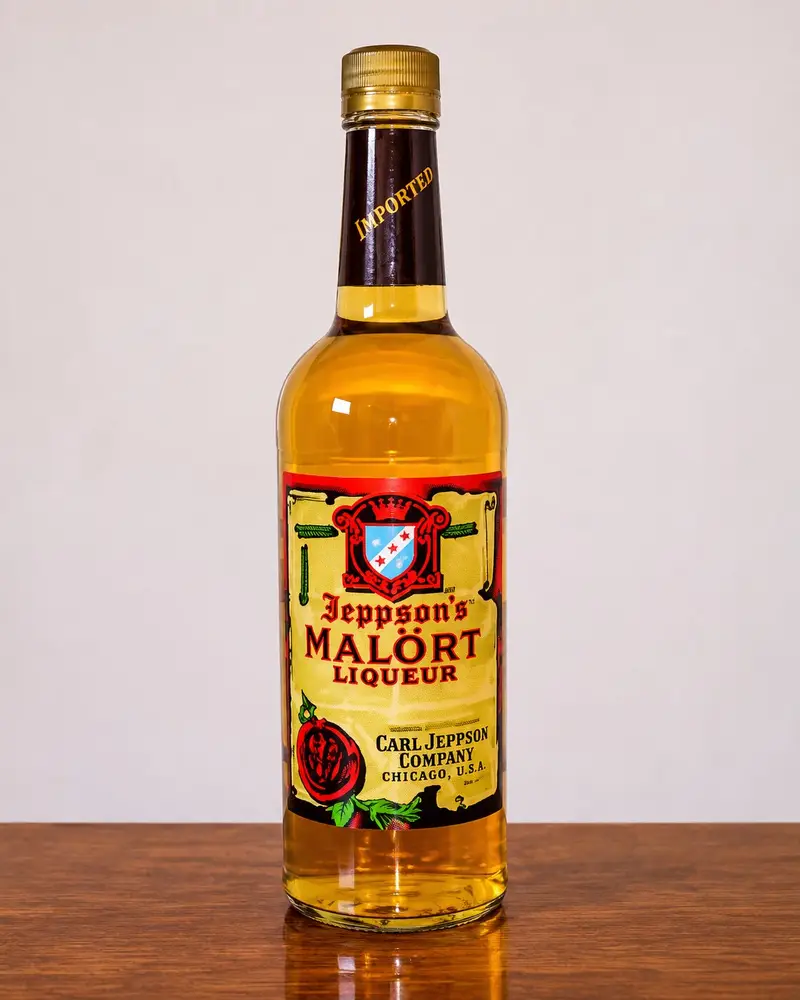
“Grapefruit mixed with earwax.” “Pencil shavings and regret.” “A burning tire fire.” Those are the kind descriptions.
At some point on a night out in Chicago, somebody is going to slide you a shot of Jeppson’s Malört, a Swedish-style beskbrännvin (wormwood-infused schnapps) first popularized in Chicago during the 1930s by Swedish immigrant Carl Jeppson, who sold it legally during Prohibition as “medicinal” alcohol. It tastes famously, proudly, aggressively bitter.
Why is it a crime?
The crime isn’t hating how it tastes. Almost everyone hates the first shot. The crime is refusing it.
A shot of Malört—often ordered alongside an Old Style tallboy in a combo known across the city as a “Chicago Handshake”—is a rite of passage. When a bartender or a new friend at a bar slides a glass your way, pushing it back or complaining only proves you don’t get the city’s self-deprecating sense of humor.
The Local Fix:
Clink glasses, take the shot, make the involuntary grimace locals fondly call “the Malört face,” and wear it like a badge of honor. Why does a whole city do this to itself? Malört’s bizarre Chicago history explains a lot.
12. Calling It “The Willis Tower” While Eating Near It
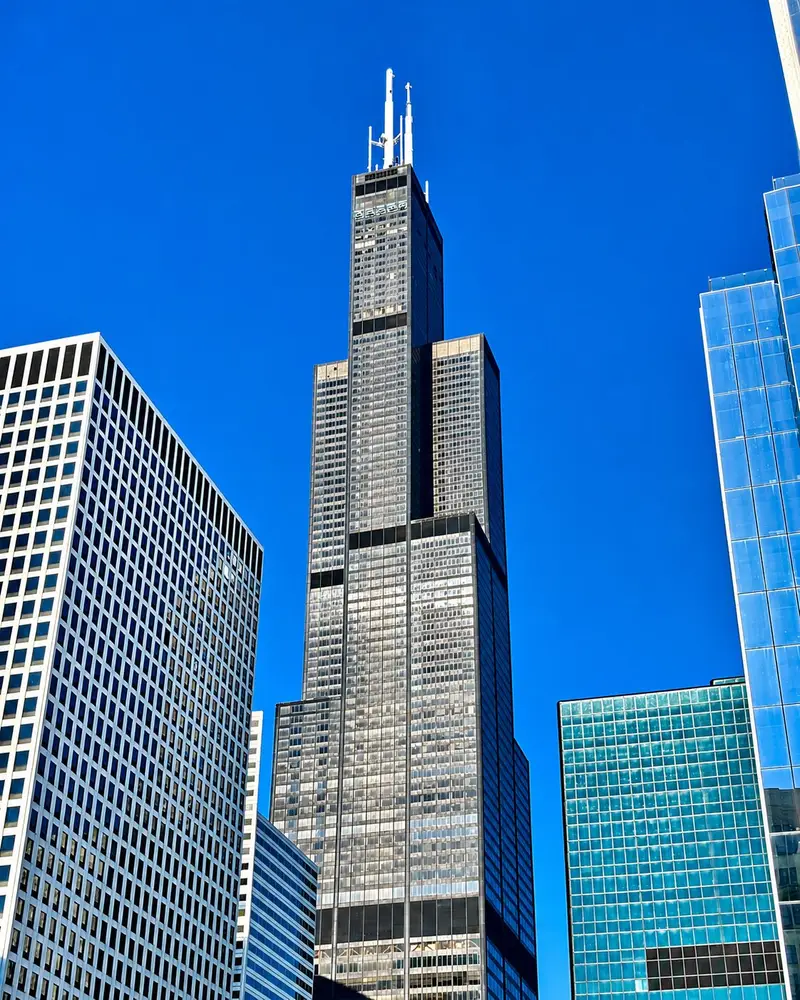
Not a dish, technically, but this one comes up constantly at downtown lunch counters and delis.
In 2009, London-based insurance broker Willis Group Holdings acquired the naming rights to the 110-story Sears Tower—which held the title of the tallest building in the world for nearly 25 years after its completion in 1973—and renamed it the Willis Tower. On paper, anyway.
Why is it a crime?
Grab a quick pastrami on rye or a slice in the West Loop, refer to the massive black skyscraper overhead as “the Willis Tower,” and every local within earshot will roll their eyes. It falls into the exact same category of corporate renaming sins as calling Comiskey Park “Guaranteed Rate Field” or calling Macy’s on State Street anything other than Marshall Field’s. Disrespect the skyline’s name and they’ll assume your hot dog has ketchup on it too.
The Local Fix:
To Chicagoans, it will always be the Sears Tower. Order your lunch, point up, and use the rightful name. (The renaming is only one of the city’s oddities; here are 15 Chicago facts that sound made up but are true.)
13. Ordering a “Soda” at a Hot Dog Stand
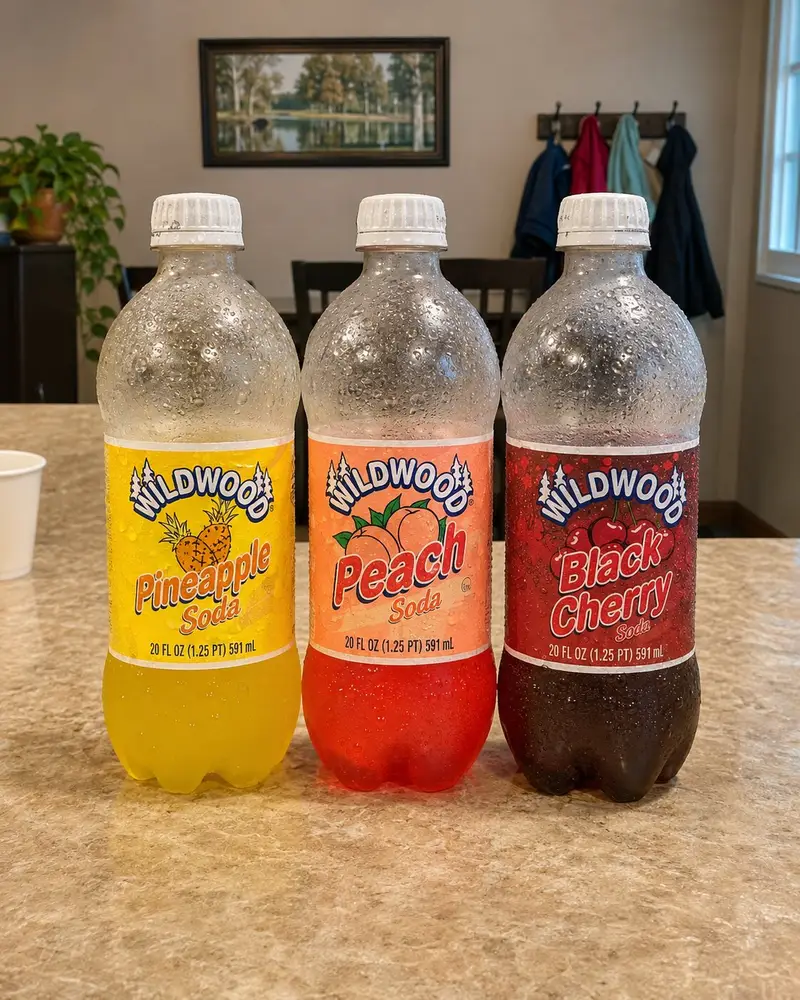
You can blow your cover before the food even arrives, with a single word to the person at the window.
It’s a subtle, purely linguistic crime, and it’s one of the quickest tells there is.
Why is it a crime?
In Chicago, the sugary carbonated drink next to your Italian beef, pizza puff, or hot dog is called pop. Full stop.
Whether you’re grabbing a corner-store bottle of Wildwood, a draft root beer from century-old South Side bottler Filbert’s, an RC Cola (the traditional pairing with a tavern-style pizza), or a neon-green fountain cup of Green River (a Chicago Prohibition-era lime soda staple), step up to a classic counter-service joint and ask for a “soda,” and you’ll get a playful eye roll.
The Local Fix:
Here’s the whole order, word for word: “Two dogs with everything, fries, and a large pop.”
Pop is just the beginning, too. There are 22 slang terms Chicagoans use daily that are worth learning before you land.
14. Sleeping on South Side “Mild Sauce”
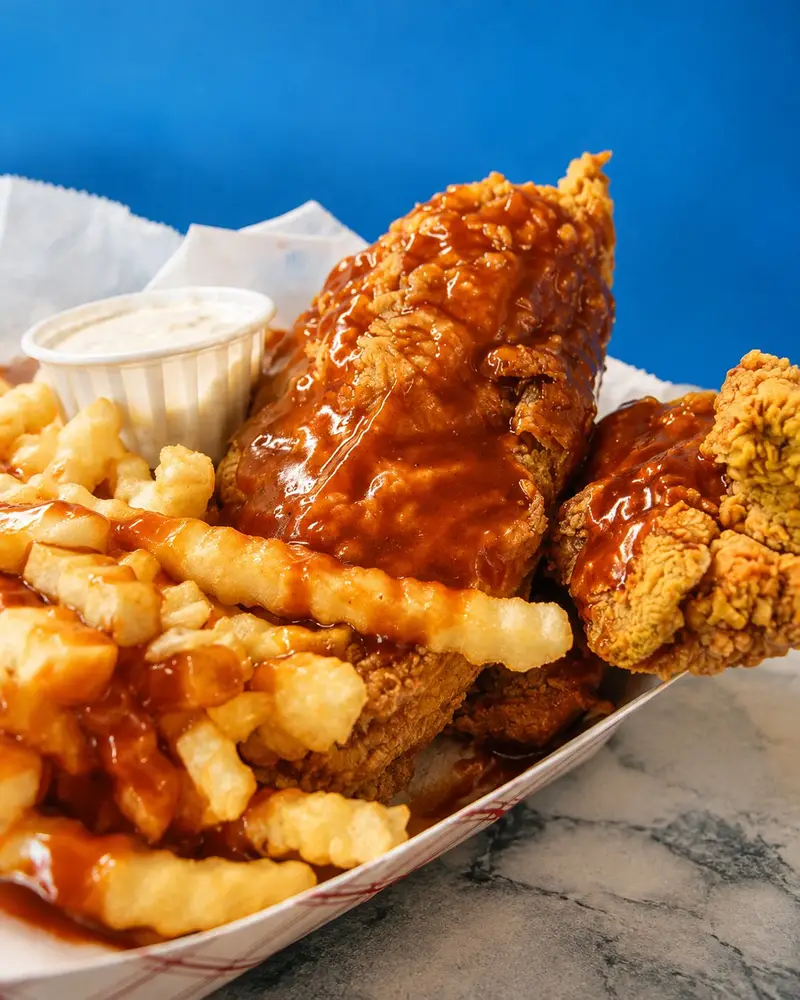
At Harold’s Chicken Shack, asking for ranch is a confession.
Stick only to downtown and the North Side and you’ll miss one of the city’s most fiercely defended culinary treasures: mild sauce. Born at South Side and West Side fried chicken and rib joints—most famously Harold’s Chicken Shack, founded in 1950 by Harold Pierce—it is a glossy, reddish-amber blend that hits the exact intersection of tangy barbecue sauce, sweet ketchup, and punchy Louisiana-style hot sauce.
Why is it a crime?
Ordering a six-wing dinner—which traditionally comes fried in beef tallow and vegetable oil, served over crinkle-cut fries with a small cup of coleslaw and two slices of white Wonder Bread—and asking for ranch or plain hot sauce instead. The counter staff behind the bulletproof glass will fill the order. They will also judge you.
The Local Fix:
Don’t ask for mild sauce on the side. Tell the cashier, “Six wings, fried hard, salt and pepper, mild sauce on everything.” It should be ladled directly over the chicken, the fries, and the white bread until the whole styrofoam container is glorious and saucy.
15. Assuming Navy Pier Is a Local Culinary Destination
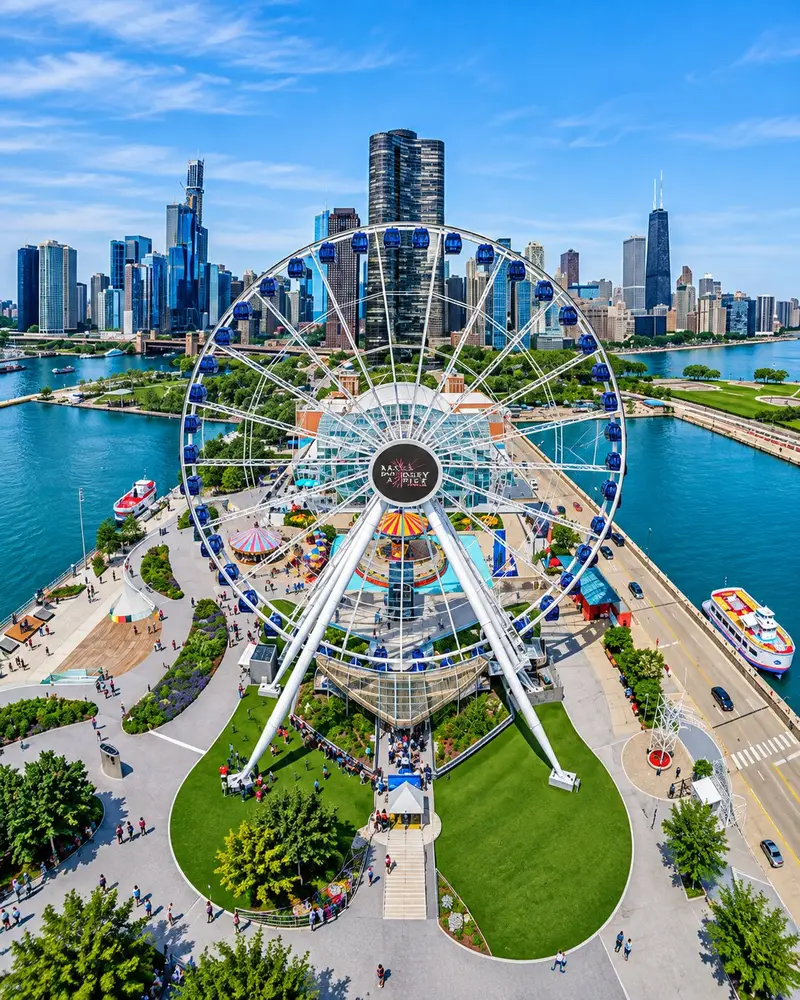
Tell a Chicagoan you’re heading to Navy Pier for a taste of “authentic Chicago food” and watch their face drop.
The pier itself is a fine attraction for a summer stroll. Lake Michigan views, architecture boat tours, Wednesday and Saturday night fireworks, and the nearly 200-foot Centennial Wheel. The dining scene, however, is a different conversation.
Why is it a crime?
While the pier’s food court has improved in recent years by bringing in outposts of local names like Billy Goat Tavern and Harry Caray’s, eating your way through a crowded tourist mall surrounded by suburban chains means missing the soul of a world-class food city. It regularly tops the list when we ask locals to name the city’s worst tourist traps.
The Local Fix:
Eating like a local means leaving the Loop and River North. Get on the CTA “L” train and ride it out into the neighborhoods—Pilsen for carnitas, Chinatown for hand-pulled noodles, West Loop’s Randolph Street (“Restaurant Row”) for tasting menus, Uptown for Vietnamese pho, or Bridgeport for old-school beefs and breaded steak sandwiches.
For a proper sit-down meal, book ahead at one of the 12 famous Chicago restaurants that live up to the hype.
Final Thoughts on Chicago Food Culture
None of this is snobbery. Chicago’s food scene grew out of working-class stockyard history and tight-knit immigrant neighborhoods, and it carries a distinct lack of pretension; the rules exist because people here want you to taste their hometown food the way it was engineered to be eaten.
So hold the ketchup, say yes to the giardiniera, lean forward at 45 degrees over your dipped beef, and you’ll fit right in.
Which of these Chicago food rules is your favorite? Let us know in the comments below!
JM
AK