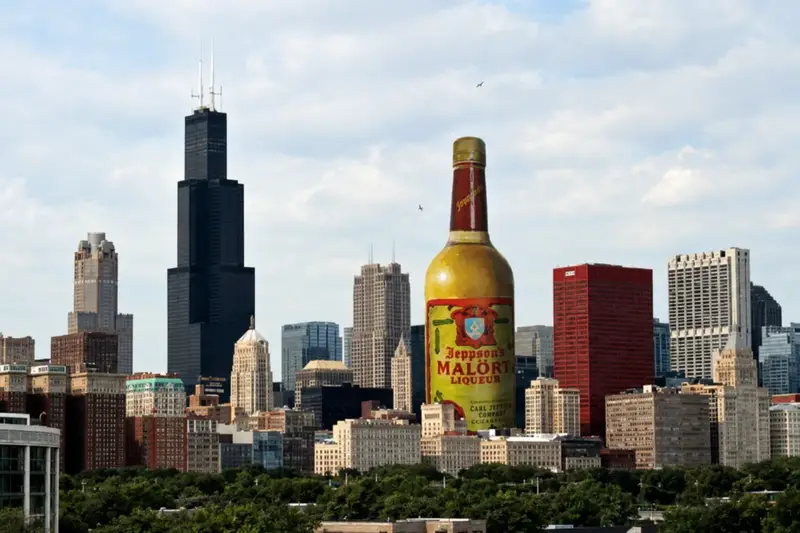
Chicago’s most famous liquor only survived Prohibition because federal agents decided it tasted too repulsive to be consumed for pleasure.
This is a documented historical fact, not some drunken tavern myth.
Today, that exact same brutal recipe is pumped out by the thousands at CH Distillery in the Pilsen neighborhood.
It all started with a chain-smoking immigrant whose deadened taste buds accidentally birthed a 70-proof legal loophole.
The Dead Taste Buds of Division Street
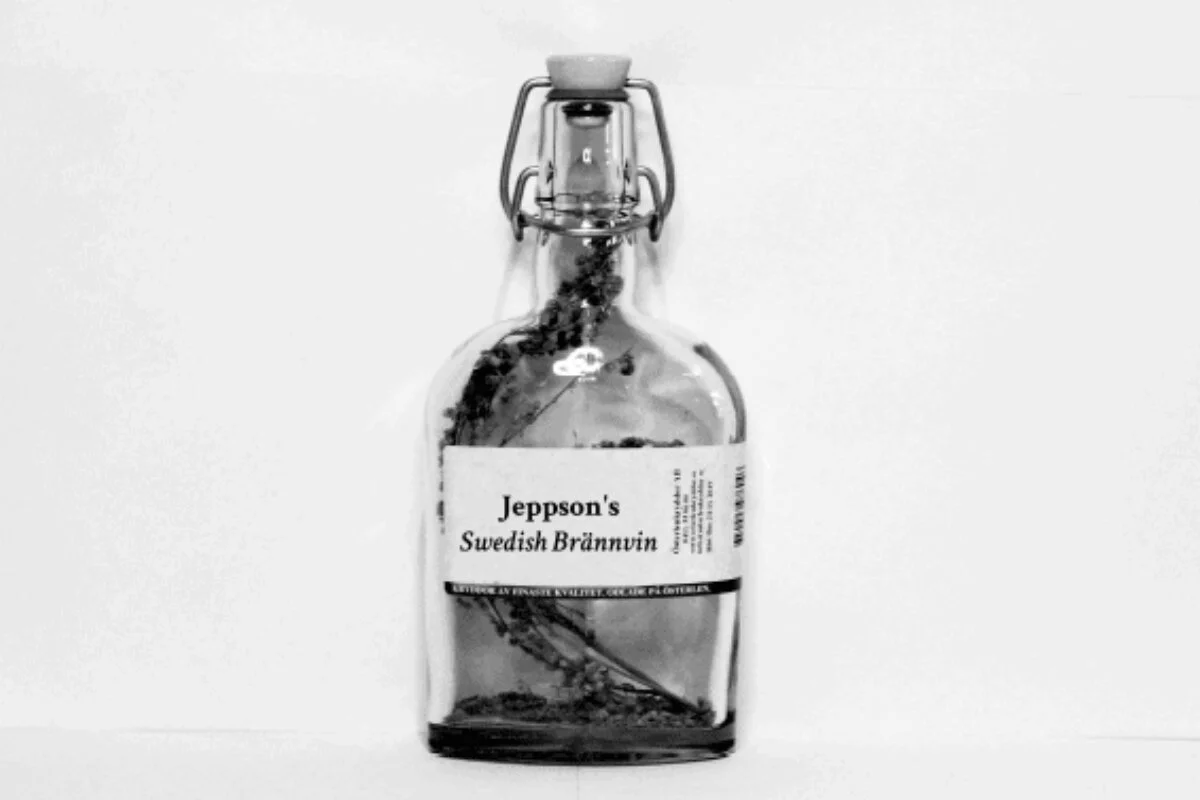
For generations of Chicagoans, taking a shot of Jeppson’s Malört is a rite of passage. But the creator of this notoriously bitter spirit never intended to torture anyone.
Carl Jeppson was a Swedish immigrant who arrived in Chicago in the mid-1880s. He ran a cigar shop near the modern intersection of Clybourn Avenue and Division Street.
Jeppson smoked so heavily that he completely destroyed his own palate. The only thing he could actually taste was raw, unmitigated botanical bitterness.
So, he began distilling a traditional wormwood-infused liquor out of his home. When Prohibition hit, Jeppson peddled his homemade brew door-to-door.
Federal agents intercepted him, but one sip of the liquid made them gag. They legally cleared it under the Volstead Loophole as a medicine for stomach parasites.
The government ruled it was officially “unfit for beverage purposes.” Carl passed away in his Edgewater apartment in 1949, leaving behind a bizarre legacy.
Draft Dodgers and the Three-Star Freeze
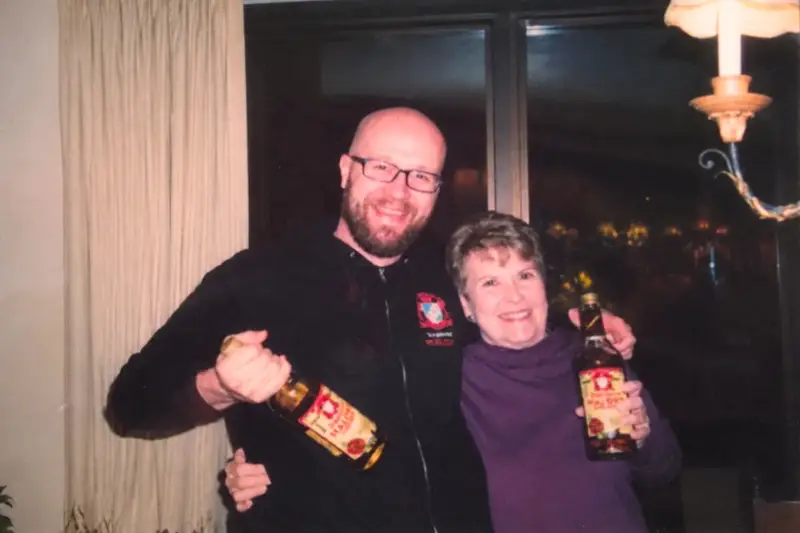
When Prohibition ended, Jeppson sold his recipe to a local company in 1934. A young law graduate named George Brode eventually took over the brand.
Brode was a fascinating rogue who served prison time for dodging the World War II military draft. He legally changed his name and ran the Malört brand as a side hustle for 40 years.
Brode designed the iconic Chicago flag label that still wraps the bottle today. If you look closely, the label only features three red stars.
Chicago officially added a fourth star in 1939, but the Malört label remains stubbornly frozen in time. Brode aggressively marketed the liquor to working-class men, printing a legendary challenge on the bottle.
He claimed that only 1 in 49 men who tried it would ever drink it again. Despite his defiant marketing, sales plummeted to absolute zero by 1988.
The company didn’t even formally trademark the generic Swedish word “Malört” until November 3, 2015. They immediately forced rival distilleries to rename their wormwood products to avoid lawsuits.
FEW Spirits had to drop the word entirely. They rebranded their bottle simply as Anguish and Regret.

Surviving Exile and the Twitter Resurgence
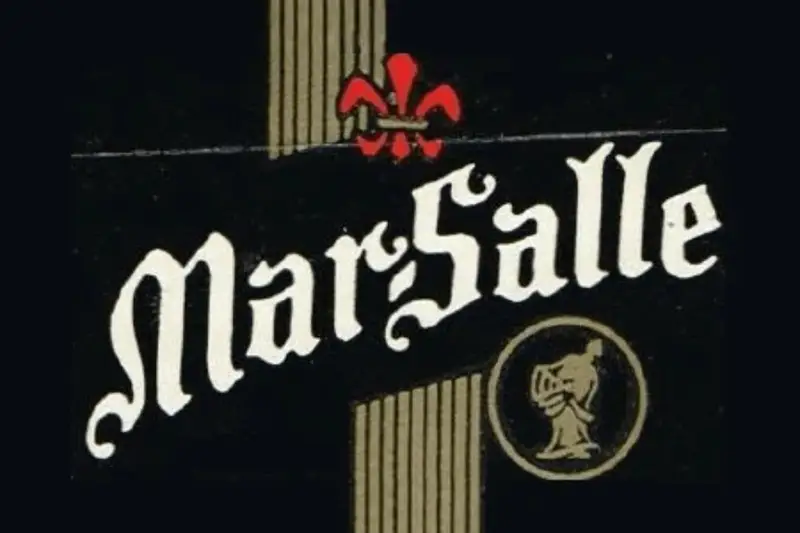
When Mar-Salle Distillery closed in 1986, Malört production was exiled to Kentucky and Florida. Brode passed away and left the dead company to his legal secretary, Patricia Gabelick.
She kept the trademark alive through decades of near-zero sales. Then, a Chicago wine bar bouncer named Sam Mechling accidentally changed history.
In 2011, Mechling launched a rogue, grassroots Twitter campaign mocking the liquor. The internet obsessed over the “Malört Face”—a visceral expression of watering eyes and heavy puckering.
Comedian John Hodgman famously described the flavor as tasting like “pencil shavings and heartbreak.” Locals compare the sharp aftertaste to “diaper-strained gasoline.”
Yet, the viral mockery worked, and annual sales skyrocketed to 30,000 cases by 2018. On September 28, 2018, Pilsen-based CH Distillery purchased the brand, finally bringing production back home.
Chernobyl, Cocktails, and World Records
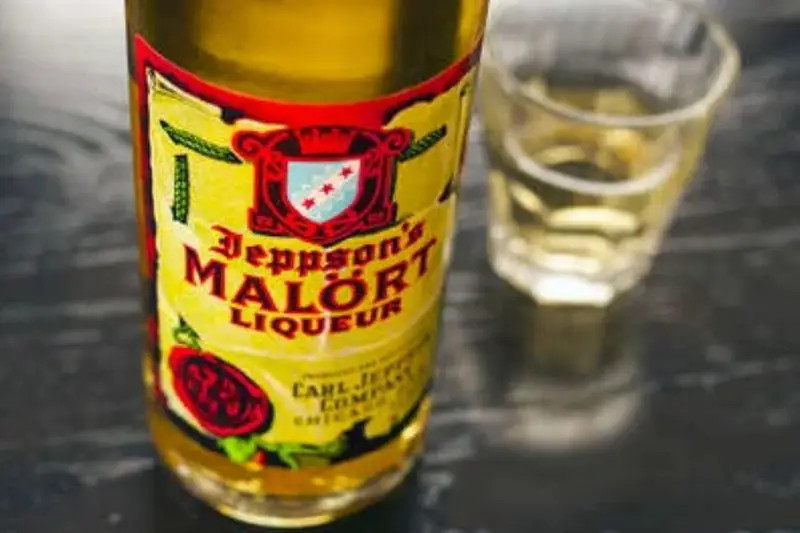
Many drinkers falsely assume Malört causes hallucinations because it is heavily infused with wormwood. In reality, the spirit contains extremely low levels of thujone and relies entirely on safe, botanical bitterness.
Linguistically, the Swedish word “Malört” translates directly to wormwood. Fascinatingly, the literal translation of the Ukrainian word for wormwood is Chernobyl.
Today, Chicago mixologists are weaponizing that intense flavor profile. Bartenders pour the “Malari” (half Malört, half Campari) to create a brutally aromatic digestif.
Others mix a Malört Margarita, using citrus juices to surprisingly mask the bracing punch of the herbs. But the ultimate local staple remains the “Chicago Handshake”—a neat shot chased by an Old Style tallboy.
The city’s obsession reached a fever pitch just months ago in 2026. Over 1,000 active participants packed into Recess in the West Loop to attempt a Guinness World Record.
They simultaneously downed a promotional shooter alongside Everleigh Entertainment. The event, titled “Bad Decision for a Good Cause,” raised thousands for Ravenswood Community Services.
The Malört Survivor’s Guide
Locals know the best way to experience this brutal piece of history is straight from the source.
Where to find the modern distillery:
CH Distillery is located at 1609 S. Clinton St. in the Pilsen neighborhood. Reach it by taking the CTA Pink Line or grabbing the #8 Halsted bus.
Where the 2026 World Record happened:
Recess is located at 838 W. Kinzie St. in the West Loop. It sits just a few blocks from the CTA Green Line Morgan Station.
Where to order a Chicago Handshake:
Walk into literally any cash-only dive bar in the city, slap a $10 bill on the sticky counter, and ask for the handshake. Just remember to persevere past the first shock-glass.