
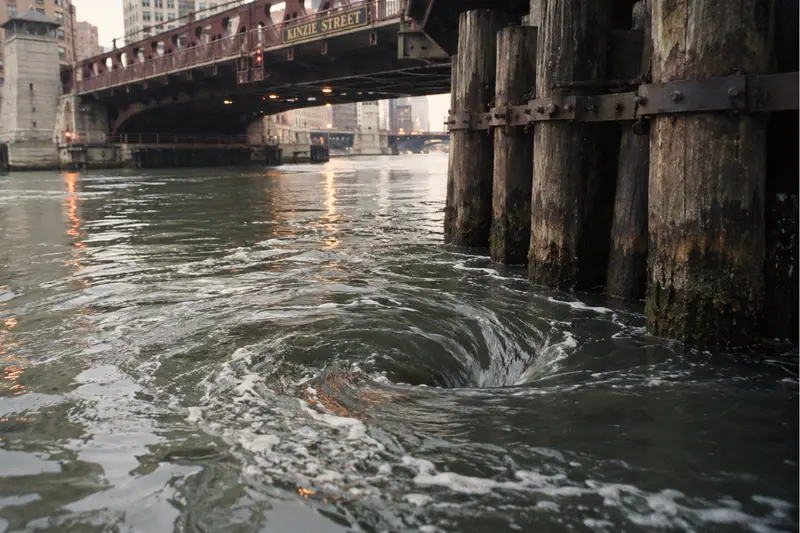
A single wooden beam driven exactly twelve inches off its blueprint line swallowed an entire metropolis.
This is the 100% real history behind the most expensive infrastructure failure in the Midwest.
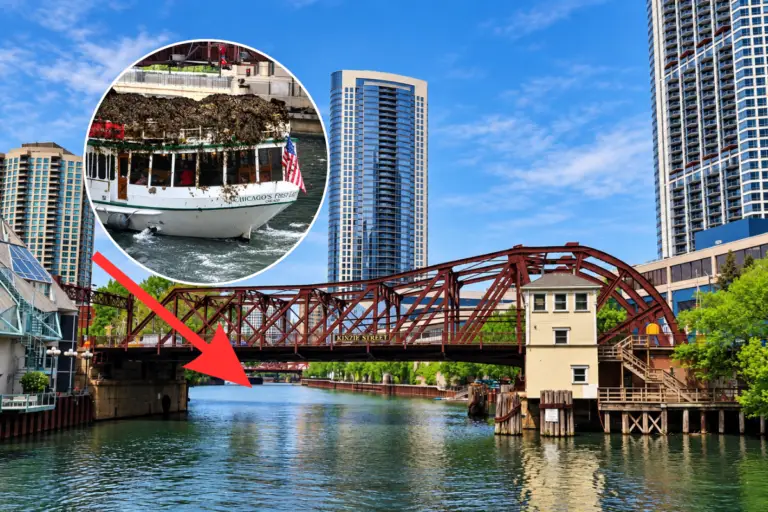
The epicenter of this catastrophe hides right at the eastern base of the modern Kinzie Street Bridge.
A delayed ten-thousand-dollar repair bill triggered a two-billion-dollar subterranean tsunami that paralyzed financial markets.
The 12-Inch Mistake and the Drugstore Delay
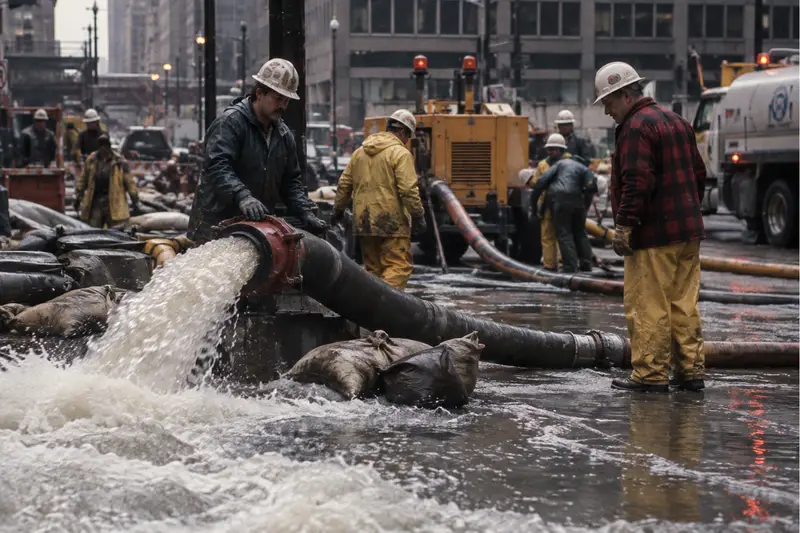
In September 1991, a dredging crew replaced wood pilings near the Kinzie Street Bridge.
A worker accidentally drove a 50-foot heavy timber pile one foot too far south.
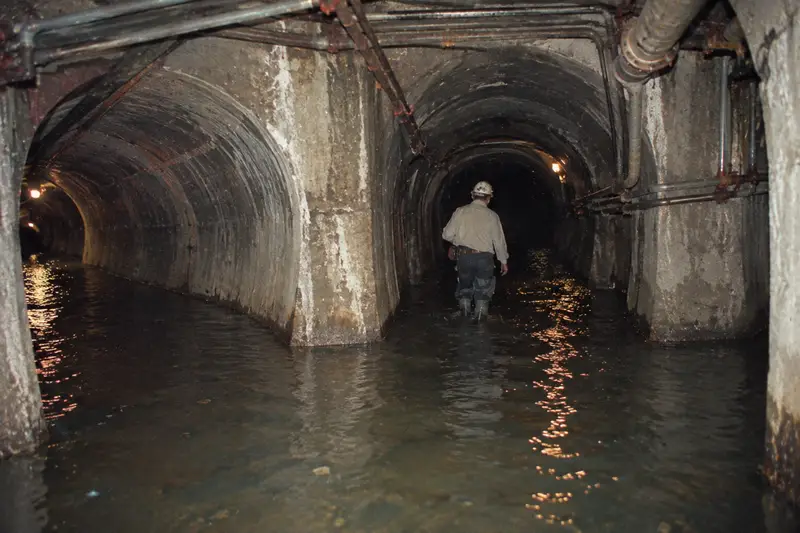
That miscalculation punctured the concrete ceiling of a forgotten 60-mile underground freight railroad sitting 40 feet beneath street level.
By mid-January 1992, a cable TV crew spotted river water pooling inside the narrow-gauge tunnels.
They alerted city engineering technician James McTigue, who photographed the incoming clay.
But McTigue dropped his film off at a commercial drugstore for a casual seven-day turnaround.
Because of this delay, top-tier city engineers did not view the catastrophic visuals until April 1, 1992.
They received a formal repair estimate of just $10,000 to plug the small leak.
Instead of acting immediately, bureaucrats hesitated to coordinate public bidding.
The Day the Loop Became an Aquarium
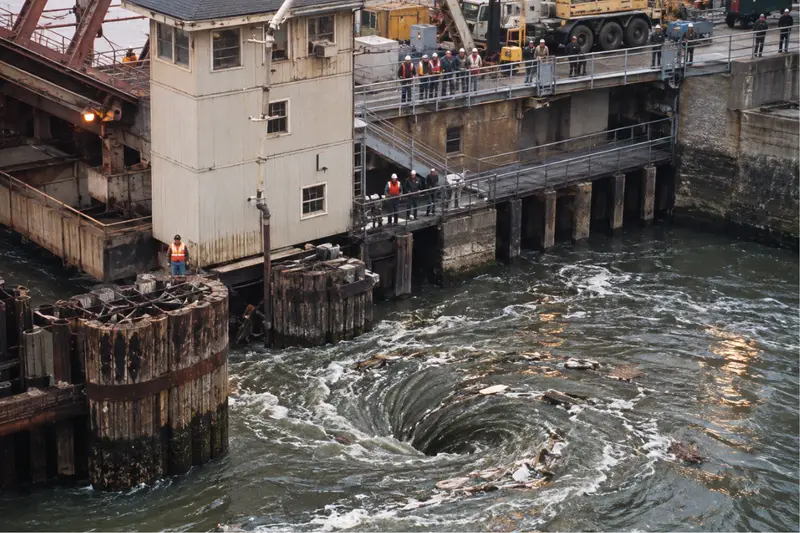
On April 13, 1992, at 6:00 AM, the cracked tunnel wall completely gave way.
A massive whirlpool opened in the North Branch of the Chicago River.
Reporters flying overhead described the vortex as the biggest bathtub drain in the world.
250 million gallons of murky river water roared into the Chicago Loop.
The deluge surged through hidden tunnels under every downtown street.
At the Merchandise Mart, subterranean levels filled with 30 feet of water.
Hundreds of wild river carp were sucked inside, turning the building into an indoor aquarium.
At 111 N. State St., the deep basement of Marshall Field’s Flagship Store was completely submerged.
Millions in luxury wedding dresses and designer furs were instantly ruined.
The destruction threatened generations of property deeds housed in City Hall.
Thousands of historical municipal records were rushed to industrial facilities and freeze-dried to stop them from turning into mush.
The State Street and Dearborn Street transit tubes flooded, disconnecting the city’s rail network.
Meanwhile, the Federal Reserve Bank of Chicago evacuated millions in cash using heavily armed convoys.
The “Flood Stud” and the Jell-O Solution
The disaster froze an estimated $25 billion in financial assets as the Chicago Board of Trade shut down.
Engineers initially tried to plug the vortex by dropping rocks and old mattresses into the abyss.
Citizens flooded hotlines with wild ideas, including dumping thousands of gallons of Jell-O into the river.
Chicagoans did what they always do: they made bootleg merchandise.
Vendors sold out of t-shirts declaring Chicago “The Venice of the Midwest.”
David Letterman joked that the mayor’s new traffic solution was introducing municipal gondolas.
Mayor Richard M. Daley bypassed public bidding red tape and put John Kenny Jr. in charge of stopping the deluge.
Wearing a distinctive teal winter jacket during televised press conferences, the media universally dubbed the unflappable CEO the “Flood Stud.”
By April 19, 1992, Kenny’s crews successfully sealed the breach by pouring giant quick-setting concrete plugs.
Meanwhile, Daley used James McTigue as the primary political scapegoat, publicly firing the Vietnam veteran.
McTigue fiercely fought back, famously declaring he wouldn’t let them make him the Mrs. O’Leary’s cow of the flood.
The Law of the Sea in the Midwest
The aftermath triggered a bizarre legal battle.
The dredging firm attempted to evade land-based liabilities by invoking federal maritime law.
They argued damages should be restricted strictly to the financial value of their tugboats.
This jurisdictional dispute went to the U.S. Supreme Court in 1995.
The high court validated the maritime connection, ruling that admiralty jurisdiction applied because a floating water vessel caused the damage.
Ultimately, the dredging company settled for $26 million, while Chicago paid out $36 million to downtown property owners.
Today, the 60-mile tunnel system is a permanently sealed, silent underground tomb.
Locals know you can still spot massive steel blast doors retrofitted inside older building basements and CTA subway tunnels.
These heavy gates ensure that if the river ever breaks through again, it won’t take the whole city down with it.
How to Visit the Ground Zero Breach Today
The exact site of the 1992 disaster remains a hidden piece of urban lore.
You can view the modern river wall right from the public riverwalk.
Exact Location: The eastern base of the Kinzie Street Bridge over the North Branch of the Chicago River.
Modern Landmark: Stand near 325 W. Wolf Point Plaza, directly adjacent to the Merchandise Mart.
Transit Directions: Take the CTA Brown or Purple Line to the Merchandise Mart station and walk one block west.
Look For: The notorious Riot Fest Historical Society plaque on the bridge grating.
Ironically, it commemorates a 2004 incident where a Dave Matthews Band tour bus emptied a septic tank onto a passing boat, rather than the 1992 flood.