
There is a 22-story skyscraper in the middle of downtown Chicago that is legally required to let cows walk through its lobby.
This isn’t an urban legend or a forgotten prank.
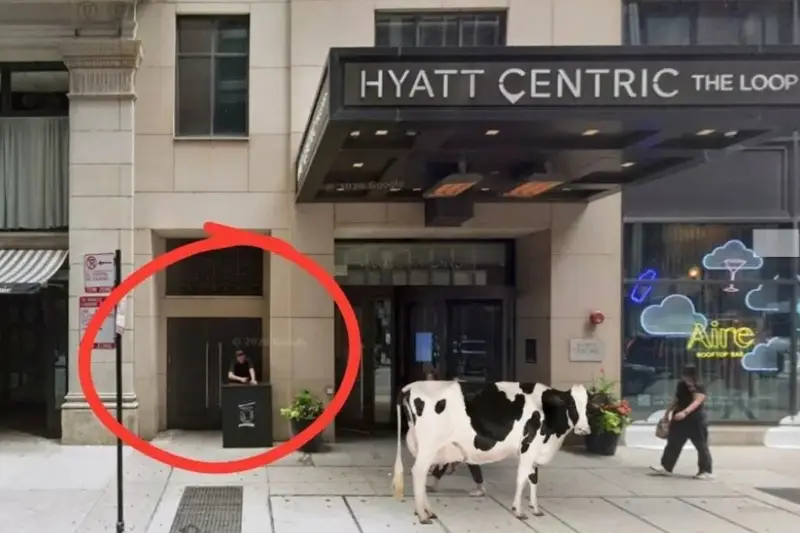
Hidden right in plain sight at 100 W. Monroe Street is a literal, vaulted tunnel—ten feet wide and eighteen feet high—cut directly into the building’s foundation.
In 1844, one stubborn prairie farmer wrote a clause so airtight into his property deed that not even 180 years of skyscraper developers could break it:
Leave the path open, or lose the building.
The Muddy Prairie of 1844
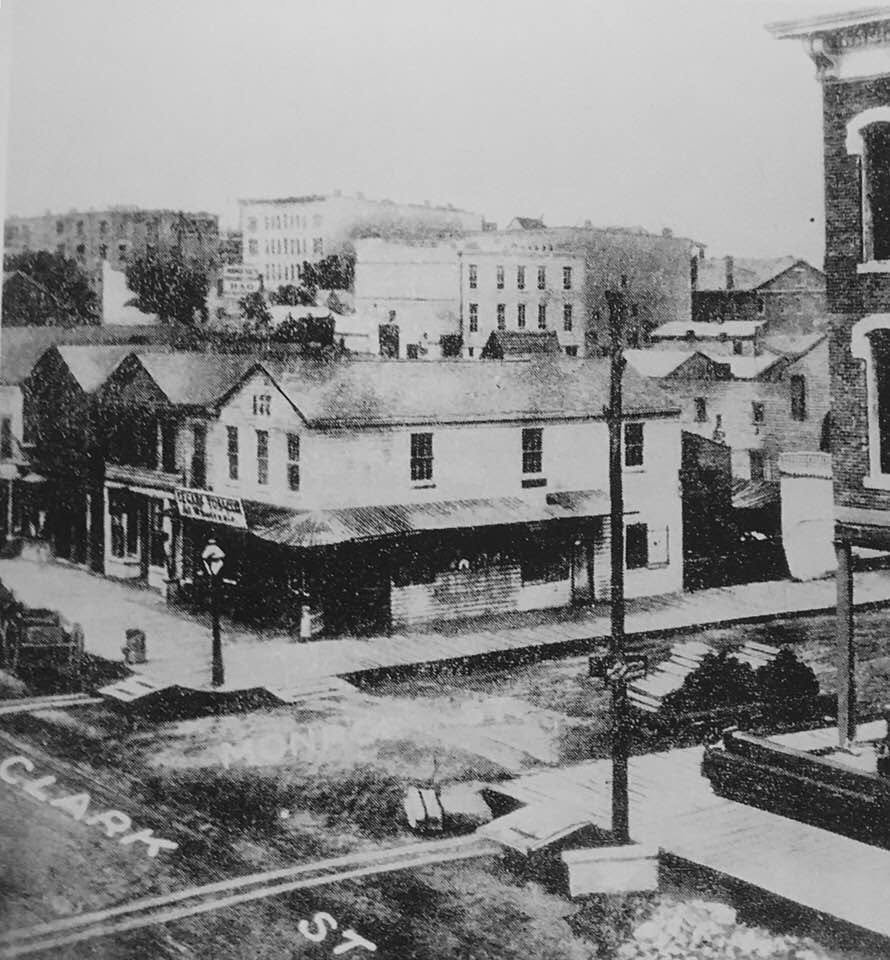
To understand how a livestock route survived in the modern Loop, you have to remember that downtown Chicago wasn’t always a forest of steel and glass.
Back in 1833, Chicago was just incorporated as a frontier town. That same year, a farmer named Willard Jones bought a modest 90-foot-wide parcel of land northwest of Clark and Monroe for just $200.
Jones built a home, put up a small barn, and kept a herd of dairy cows. Every single morning, he walked his herd down a dirt path to graze on open pastures outside the settlement.
It was a quiet, rural existence.
Then, Chicago exploded.
The Ultimate Real Estate Flex
Within a decade, the swampy prairie was swallowing up farmland to lay out a commercial grid. Speculators and builders began offering small fortunes to early landowners.
In 1844, developers approached Jones, desperate to buy the southern portion of his lot along Monroe Street.
Jones agreed to sell, but he had a major logistical problem: if new buildings went up on Monroe, his barn would be completely landlocked. He would have no way to herd his cattle out to pasture.
So, Jones pulled off an absolute masterclass in contract law.
He wrote an ironclad clause directly into the warranty deed: the buyers and all future owners were legally mandated to preserve a permanent, open areaway—exactly 10 feet wide by 18 feet high—cutting straight through the block to Clark Street.
It was a perpetual easement tied to the land forever. He didn’t ask for a favor. He made it local law.

Surviving the Great Fire and the Skyscraper Boom
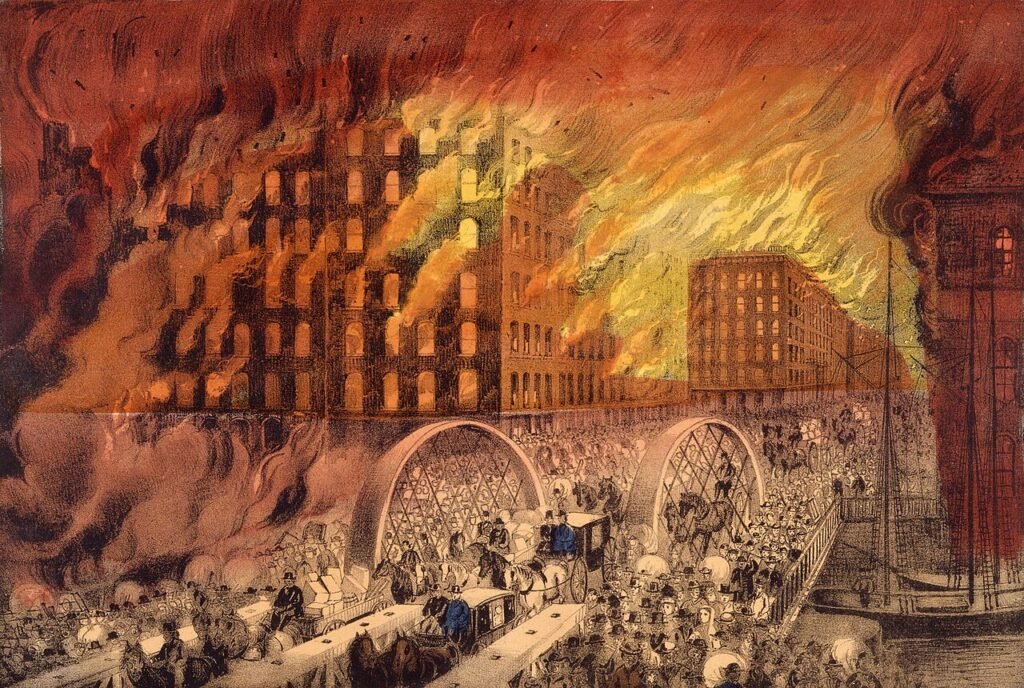
When the Great Chicago Fire of 1871 leveled the Loop, it incinerated the wooden structures surrounding the Jones estate.
Flames can destroy timber, but they cannot erase county land records. When the city rebuilt out of stone, the cow easement quietly survived.
Fast forward to the 1920s. Chicago was in the middle of a massive architectural boom, and every square inch of downtown dirt was worth millions.
When developers acquired the corner of Clark and Monroe to build a towering 22-story Art Deco skyscraper, their attorneys tried desperately to challenge the 80-year-old farm clause.
The fight went all the way to the Illinois Supreme Court in 1925—and the court delivered a stunning verdict: the cow path was legally binding and could never be blocked.
Architect Frank Chase had no choice. He redesigned the skyscraper’s blueprints to carve an 18-foot-tall vaulted passageway right through the building’s western edge to accommodate wagons and livestock.
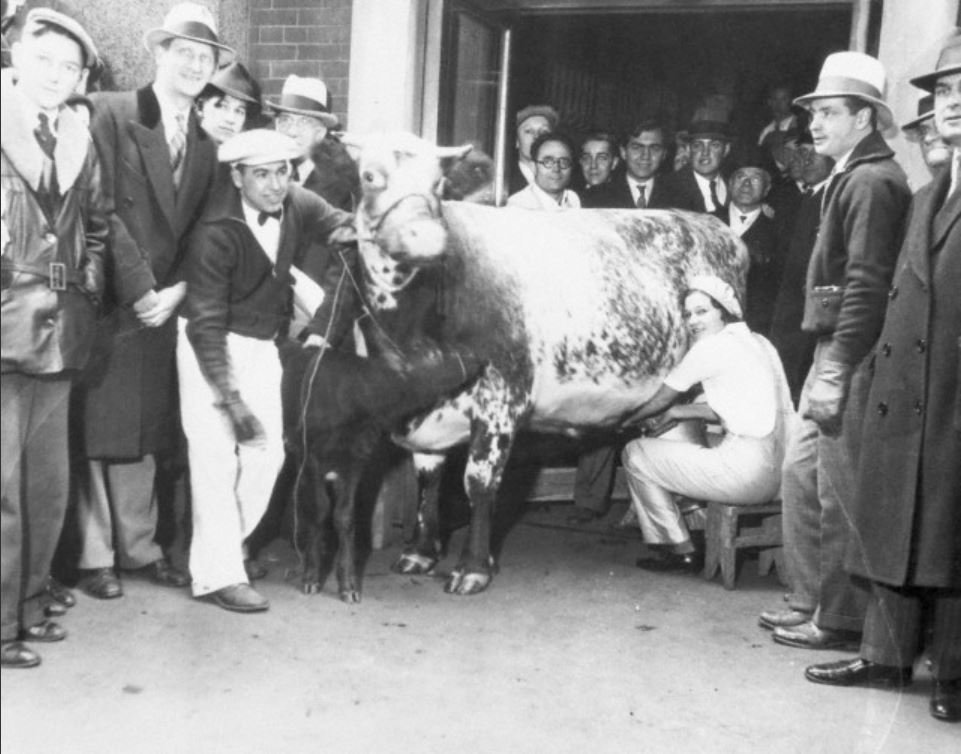
How to Find the Cow Path Today
Today, 100 W. Monroe operates as the upscale Hyatt Centric The Loop Chicago. In a nod to the building’s history, the hotel even named one of its primary meeting rooms the “Willard Jones Room.”
The vaulted tunnel still cuts through the western wall. While the heavy bronze service doors are typically kept closed for hotel operations, the physical space remains 100% unobstructed by law.
In 1937, during Chicago’s Charter Jubilee, Mayor Edward Kelly commemorated the site with an official bronze plaque that read:
“Historic Cow Path: This areaway 10 x 177 x 18 feet is reserved forever as a cow path by the terms of the deed of Willard Jones in 1844 when he sold portions of the surrounding property.”
— Authenticated by the Chicago Historical Society
Want to spot it yourself? Here is how to find it:
- The Location: Corner of Monroe Street and Clark Street in the central Loop.
- Where to Look: Walk just west of Clark on the north side of Monroe. Look for the narrow alleyway and service gate built directly into the side of the 100 W. Monroe high-rise.
- The Rooftop Bonus: Take the elevator up to Aire Rooftop Bar on the 24th floor to sip a cocktail directly above the city’s most famous cattle trail.
Next time you find yourself stuck in Loop traffic on Monroe Street, take a look over at that narrow passageway.
Surrounded by private equity offices and high-end law firms, an 1844 farmer’s livestock route still stands completely undefeated.