
The only submarine in naval history where a commander took his own life during combat is now a family-friendly tourist attraction.
This is a fully documented, 100% real piece of World War II history, not an urban legend.
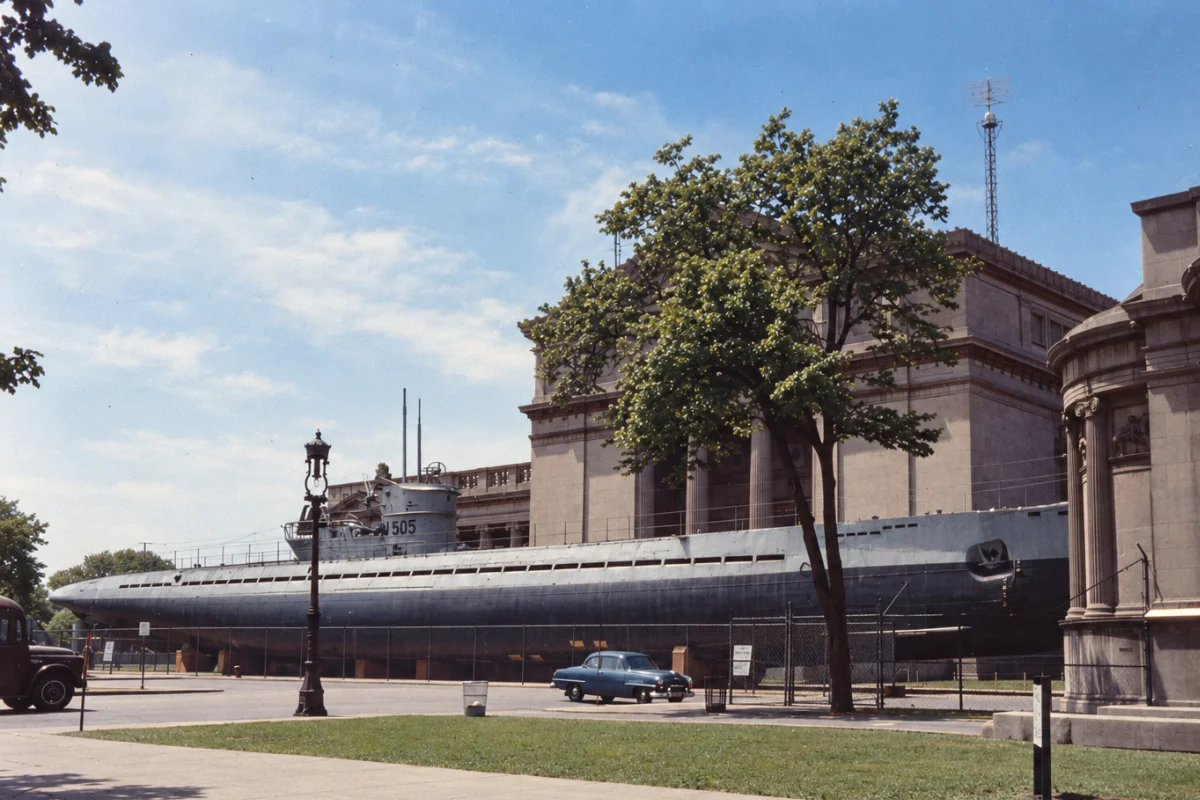
You will find this 1,120-ton steel tomb buried underground at the Griffin Museum of Science and Industry.
Capturing this cursed vessel nearly triggered a military court-martial, and today, night-shift staff refuse to enter its control room alone.
The Jinxed Boat of Lorient
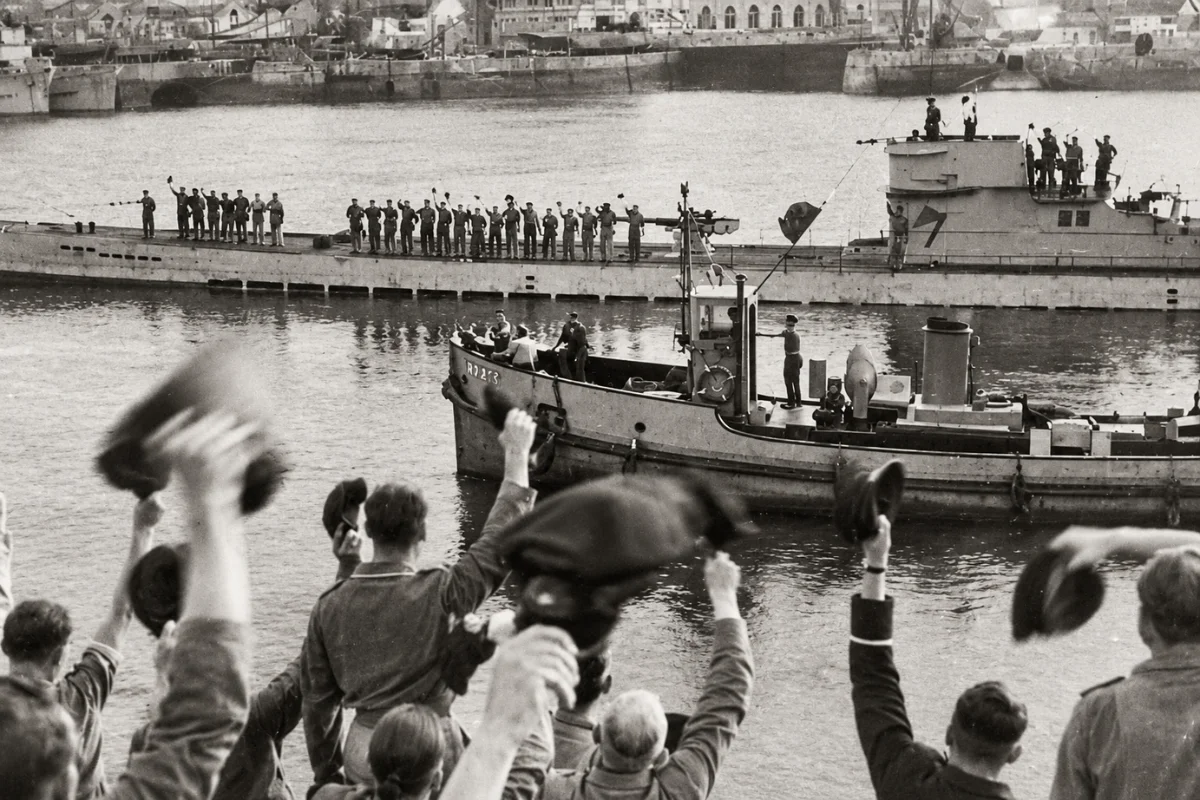
Long before it reached Chicago, the Kriegsmarine crew openly called the U-505 a cursed vessel. It earned the dark nickname U-Boot-Fluch (the jinxed boat) after a brutal streak of horrific luck on the high seas.
On November 10, 1942, a British Hudson bomber scored a direct hit right on the deck plating. The explosion blew away part of the superstructure and trapped screaming crewmen inside the twisted metal.
The sub miraculously limped back to the Lorient submarine pens in occupied France, only to face relentless dockyard sabotage. French Resistance workers routinely tampered with valves, punctured fuel tanks, and severed electrical wiring.
This forced the submarine to abandon multiple patrols within days of launching, making the crew a laughingstock among the German fleet. Sailing a repeatedly broken ship took a massive psychological toll on its heavily decorated second commander, Kapitänleutnant Peter Zschech.
The 21:00 Hour of Tragedy
The curse finally reached its breaking point on October 24, 1943. Pinned down east of the Azores, the U-505 absorbed a brutal, relentless pounding from British destroyer depth charges.
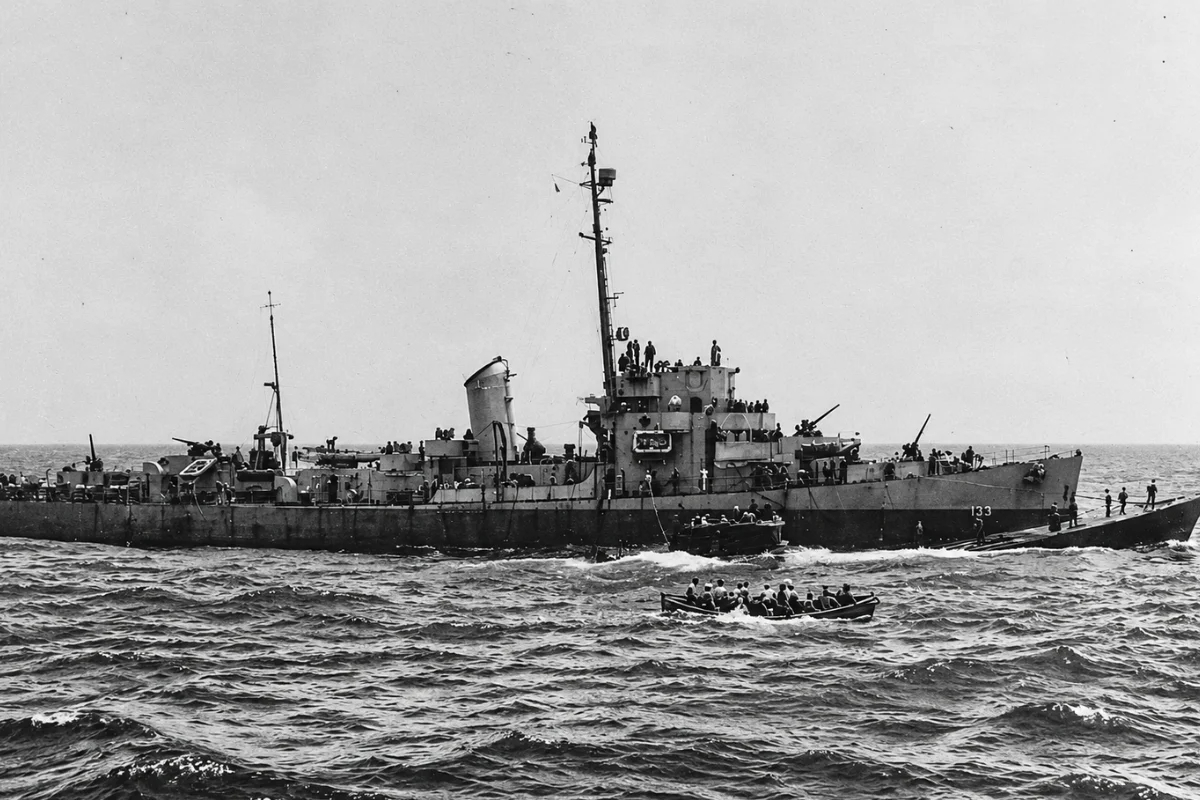
Under the crushing pressure of the deep Atlantic, Zschech suffered a total nervous breakdown. In full view of his horrified watch crew, he took his own life right inside the control room.
First Watch Officer Paul Meyer immediately took command, kept the panicked crew calm, and safely navigated the damaged submarine back to base. Instead of an Iron Cross, the German High Command merely absolved Meyer of blame to cover up the embarrassing breakdown of fleet discipline.
Crewman Hans Joachim Goebeler, who witnessed the downward spiral, later confirmed the intense trauma that saturated the boat’s steel walls.


A Secret Capture and a Chicago Spectacle
On June 4, 1944, a hunter-killer task group led by Chicago native Captain Daniel V. Gallery Jr. finally cornered the sub off the coast of West Africa. Lieutenant Albert David led a nine-man boarding party into the sinking vessel, retrieving the highly classified Enigma code books.
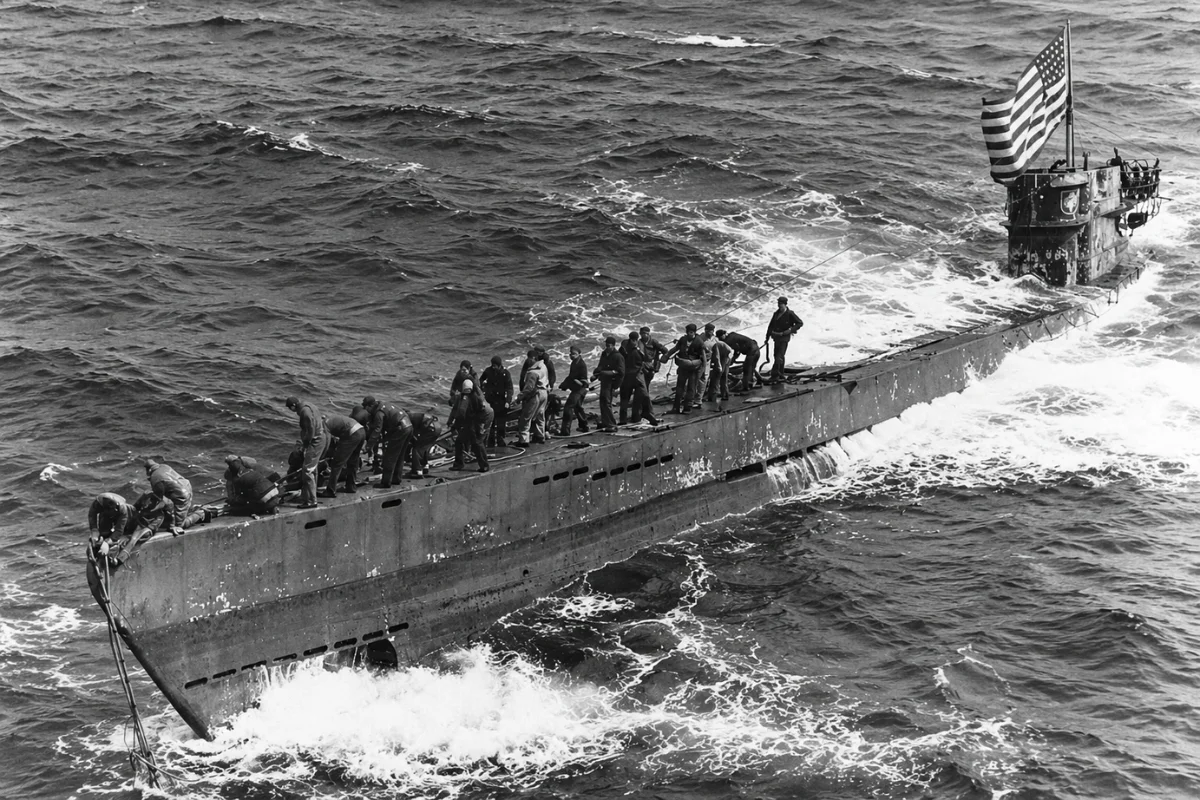
This intelligence coup almost got Gallery court-martialed by a furious Admiral Ernest J. King. If Berlin knew the sub was captured intact, they would have changed their cipher keys on the eve of the D-Day invasion.
To hide the truth, the U.S. Navy shipped the 58 surviving German crewmen to an isolated Louisiana prison camp. For over a year, these men were officially listed as “lost at sea,” living as ghosts hidden from the International Red Cross.
After the war, the Navy planned to sink the sub for target practice until Father John Ireland Gallery convinced Chicago civic leaders to save it. On September 2, 1954, crews shut down Lake Shore Drive overnight to roll the 251-foot-long warship 800 feet across the highway on steel rails.
The Phantoms of the Subterranean Pen
In 2004, the museum moved the deteriorating submarine into a $35 million, 42-foot-deep underground climate-controlled bunker. Ever since the vessel went underground, the paranormal claims have skyrocketed.
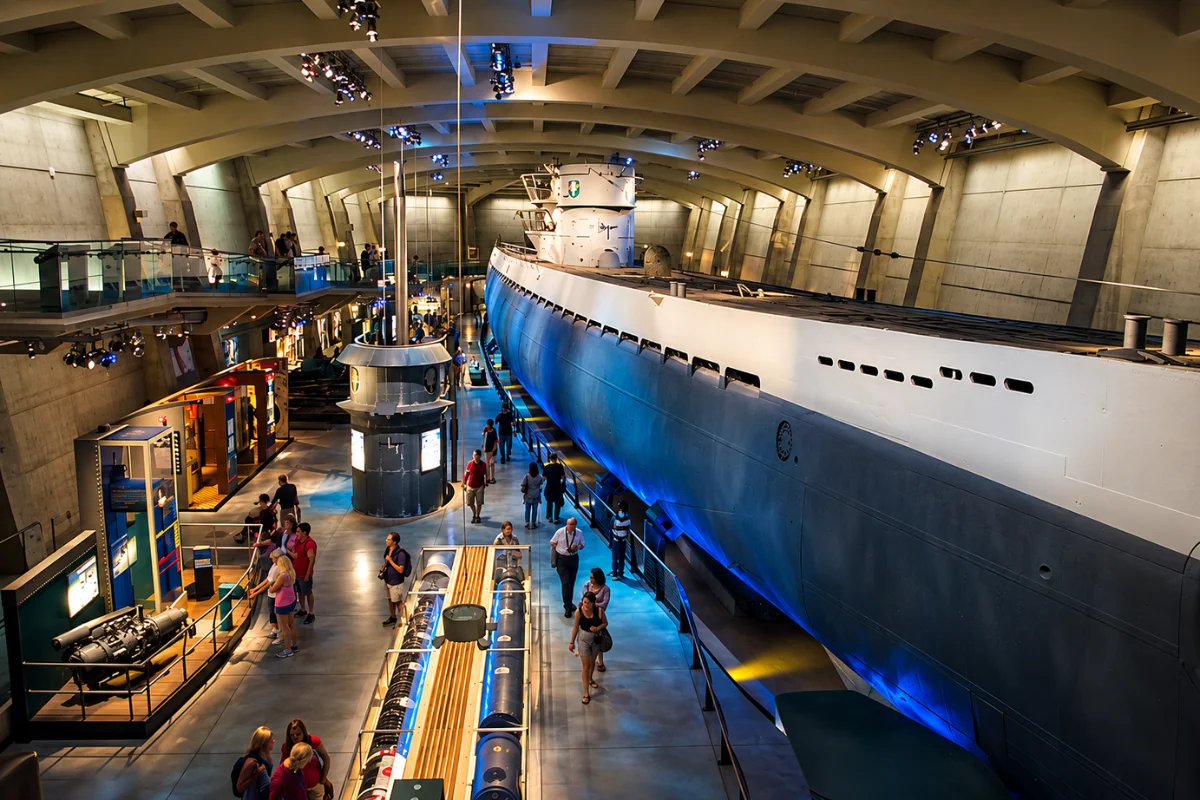
Night-shift electricians and cleaning crews frequently report sudden 15 to 20-degree temperature drops near the central periscope housing. This localized cold spot sits on the exact deck plates where Zschech pulled the trigger.
Overnight security guards have documented disembodied voices speaking low German and the metallic clicks of phantom hatches opening in the dark. Paranormal investigators capturing Electronic Voice Phenomena (EVP) inside the hull report massive audio spikes right around 21:00 military time.
This perfectly matches the exact hour Paul Meyer recorded the captain’s suicide in the official war log. Today, docents leading the tight, 25-minute indoor tours often describe a heavy, suffocating sensation near the off-limits conning tower.
These hauntings blend perfectly with the museum’s own ghostly history as a leftover structure from the 1893 World’s Columbian Exposition. For generations of Chicagoans, the U-505 is a triumph of engineering, but for the staff who walk its narrow steel corridors at midnight, it remains an active crime scene.
U-505 Visitor Survival Guide
Location: Griffin Museum of Science and Industry (MSI).
Exact Address: 5700 S. DuSable Lake Shore Drive, Chicago, IL 60637.
Where to Find It: Head to the lower level of the museum to access the 32,000-square-foot subterranean exhibit gallery.
Transit: Take the Metra Electric Line to the 55th-56th-57th Street stop, just a short walk from the museum entrance.
Pro Tip: General museum admission includes access to the underground exhibit hall, but walking inside the submarine requires a separate timed-entry ticket. Book these online days in advance, as they sell out every weekend.