Chicago Street Names Locals Say Wrong (And How to Actually Pronounce Them)

If you are new to the Windy City, there is one surefire way to out yourself as a transplant.

It isn’t putting ketchup on your hot dog or failing to master Chicago slang terms. It is confidently mispronouncing Chicago street names.

Chicago is a massive city of distinct neighborhoods, rich immigrant history, and a very specific local accent.

Because of this incredible melting pot of cultures, many streets named after French explorers, German writers, and English towns have been completely “Chicago-fied.”
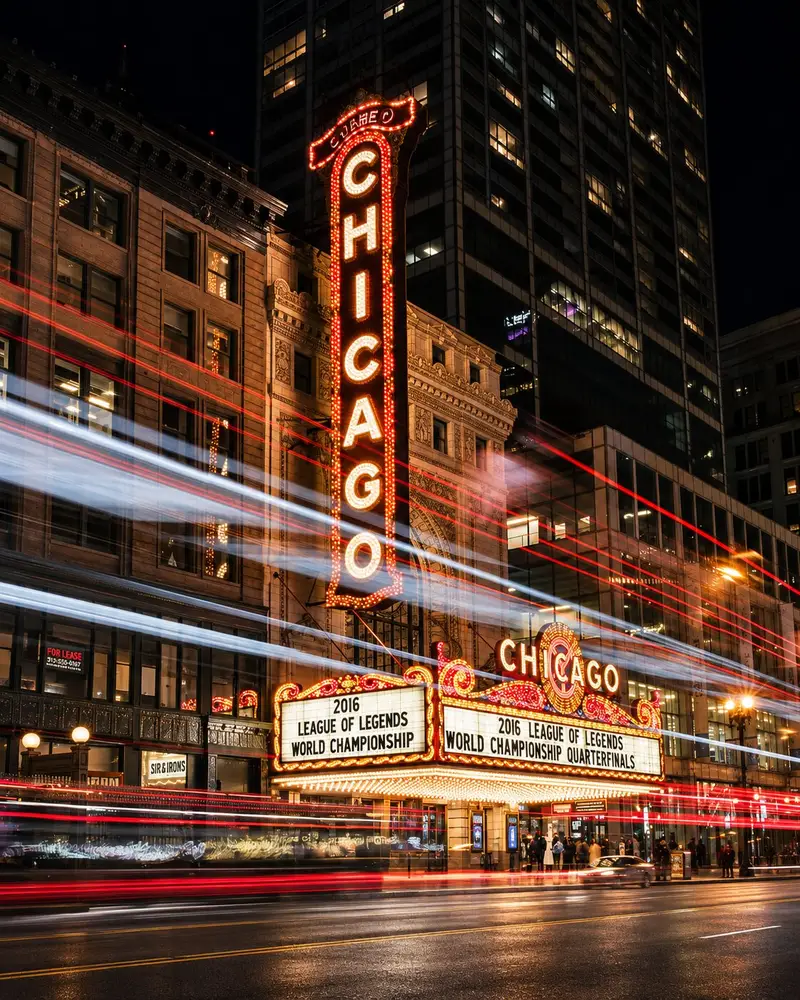
A long-exposure photograph captures the illuminated neon marquee of The Chicago Theatre at night, with light trails from passing vehicles streaking across the foreground. The marquee displays text announcing the 2016 League of Legends World Championship Quarterfinals.
The historic Chicago Theatre glows brightly against the night sky as a vibrant focal point in downtown Chicago. This long-exposure shot beautifully contrasts the stationary, classic architecture of the landmark marquee with the kinetic, glowing streaks of city traffic.

As a result, the “wrong” pronunciation is actually the right one if you want to sound like a true local.

If you pronounce these streets the way they are phonetically spelled—or how they are said in their native languages—locals won’t have a clue what you’re talking about. Mispronouncing street names is actually one of the biggest rookie mistakes everyone makes when visiting Chicago.

Here is your ultimate guide to the Chicago street names locals say wrong, and how you should actually be saying them.

Why Do Chicagoans Pronounce Street Names Differently?

Before we dive into the list, you might be wondering why Chicago has so many mispronounced streets.
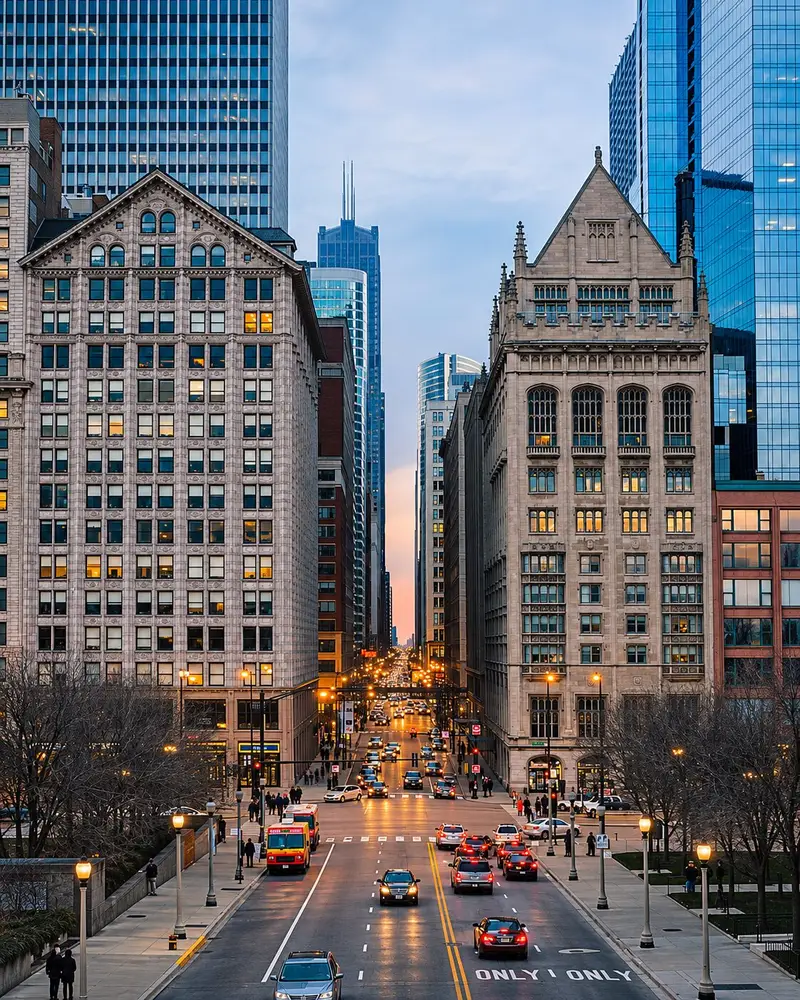
A high-angle view captures a busy downtown Chicago street lined with towering historic and modern skyscrapers under a twilight sky. Cars with glowing headlights and taillights travel down the multi-lane road into the distant city center.
An elevated perspective looking down Michigan Avenue showcases the impressive architectural diversity of Chicago’s urban landscape. The warm glow of vehicle lights down the street corridor creates a striking contrast against the cool tones of the towering office buildings.

In the 19th and 20th centuries, Chicago was a booming hub for immigrants from all over the world. French, Polish, German, and Czech names were slapped onto street signs across the rapidly expanding grid.

Over time, working-class locals with thick Midwestern accents began anglicizing or entirely butchering these names.

The mispronunciations stuck. It is one of those facts about Chicago that sound made up, but eventually, even the CTA adopted many of these butcherings for their automated train announcements.

Today, saying these names “incorrectly” is a badge of honor for true Chicagoans.

The Most Commonly Mispronounced Chicago Street Names

Ready to test your local knowledge? Here are the most infamous street names that confuse tourists and transplants alike.

1. Paulina Street
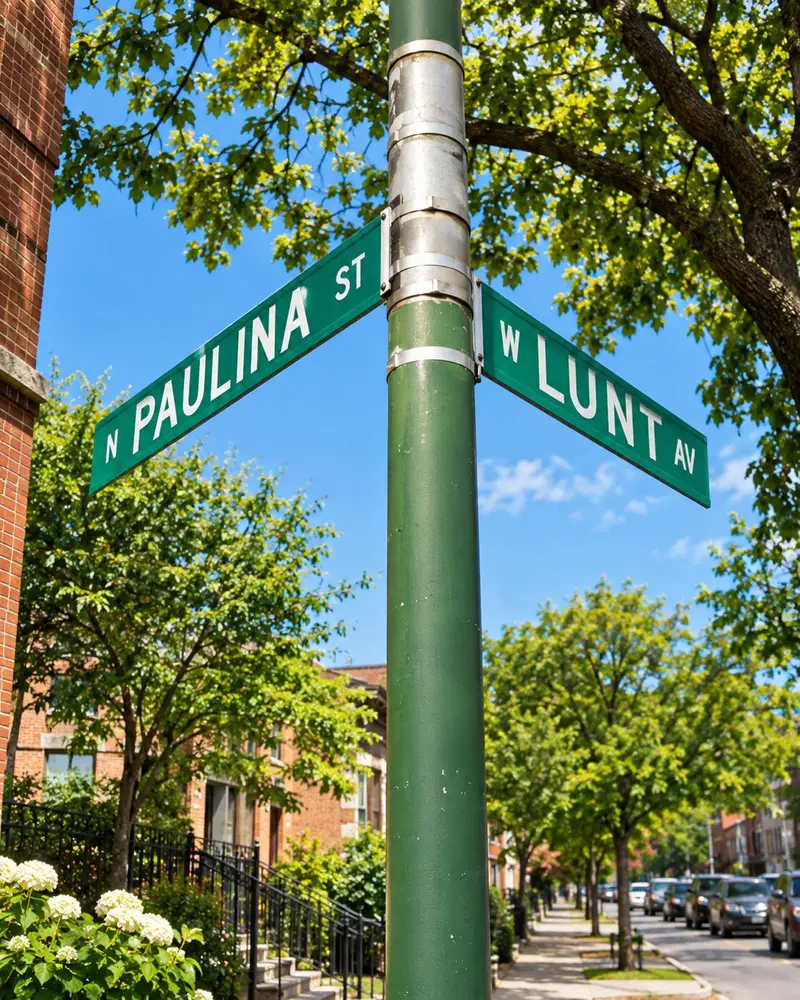
A close-up shot shows a green city street sign post marking the intersection of North Paulina Street and West Lunt Avenue against a clear blue sky. The reflective green signs feature bold white lettering and are mounted on a thick metal pole.
This street sign captures the quiet intersection of N. Paulina St. and W. Lunt Ave. located in Chicago’s Rogers Park neighborhood. Set against a bright blue sky, the classic green and white markers provide a clean, geographic snapshot of the city’s northern grid system. This image is for illustration purposes only.

If you know someone named Paulina, you probably pronounce it Paul-EE-nuh.

Do not make that mistake in Chicago.

If you are giving a cab driver directions to this North Side street, you have to lean heavily into the long “I” sound.

  • How it looks: Paul-ee-nuh
  • How Chicagoans say it: Pull-EYE-nuh

2. Goethe Street
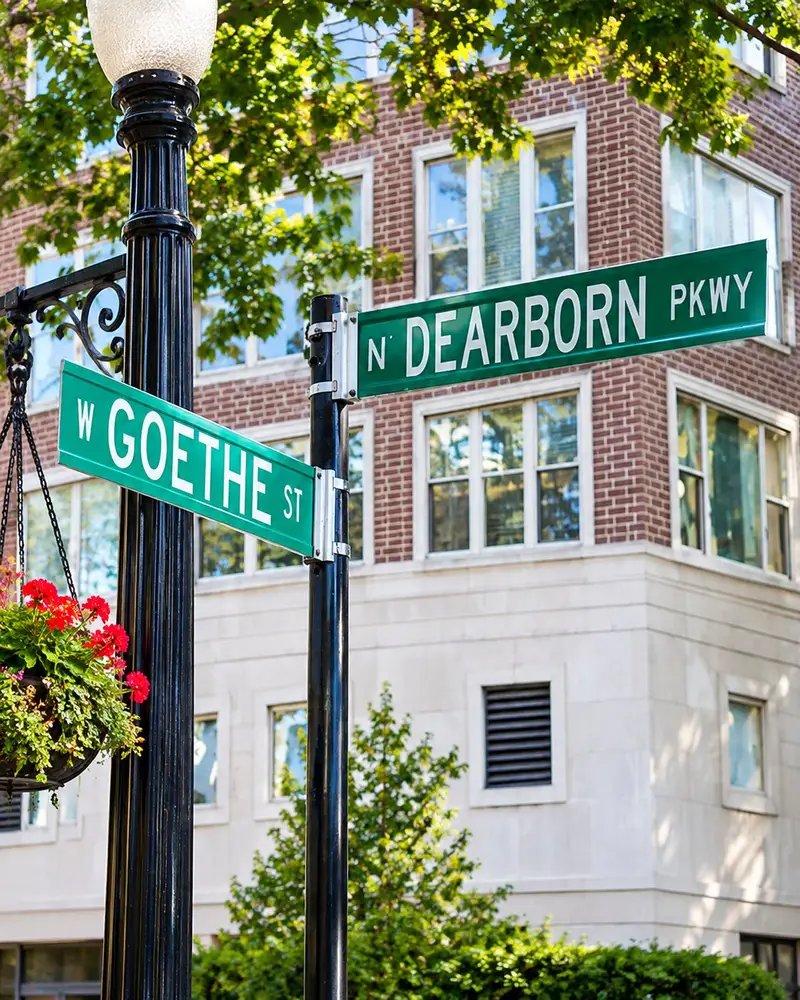
A close-up shot captures a black metal sign post marking the street intersection of West Goethe Street and North Dearborn Parkway in an urban neighborhood. The vibrant green street signs feature clean white lettering, framed by a multi-story brick apartment building and lush green trees in the background.
This scenic street corner captures the historic and leafy atmosphere of Chicago’s Gold Coast neighborhood at the intersection of Goethe and Dearborn. The classic black light pole, adorned with a hanging basket of bright red flowers, exemplifies the charming residential aesthetic characteristic of this upscale area.

This one is arguably the most fiercely debated street name in the entire city.

Named after the famous German writer Johann Wolfgang von Goethe, the proper German pronunciation is close to GER-tuh.

While you might hear the proper pronunciation when using the Chicago ‘L’ train or riding the CTA bus, old-school locals absolutely refuse to accept it.

If you talk to someone who has lived in Chicago for decades, they will give it a hard, literal pronunciation.

  • How it looks: Go-eeth
  • How Chicagoans say it: GO-thee
Struan JM AK
Read by 5,000+ Chicagoans
❤️ Get Hey Chicago in your inbox
Join 5,000+ Chicagoans getting untold history on Tuesdays and our curated weekend guide on Thursdays.
🔒 100% free. No spam. Unsubscribe in 1-click anytime.

3. Devon Avenue

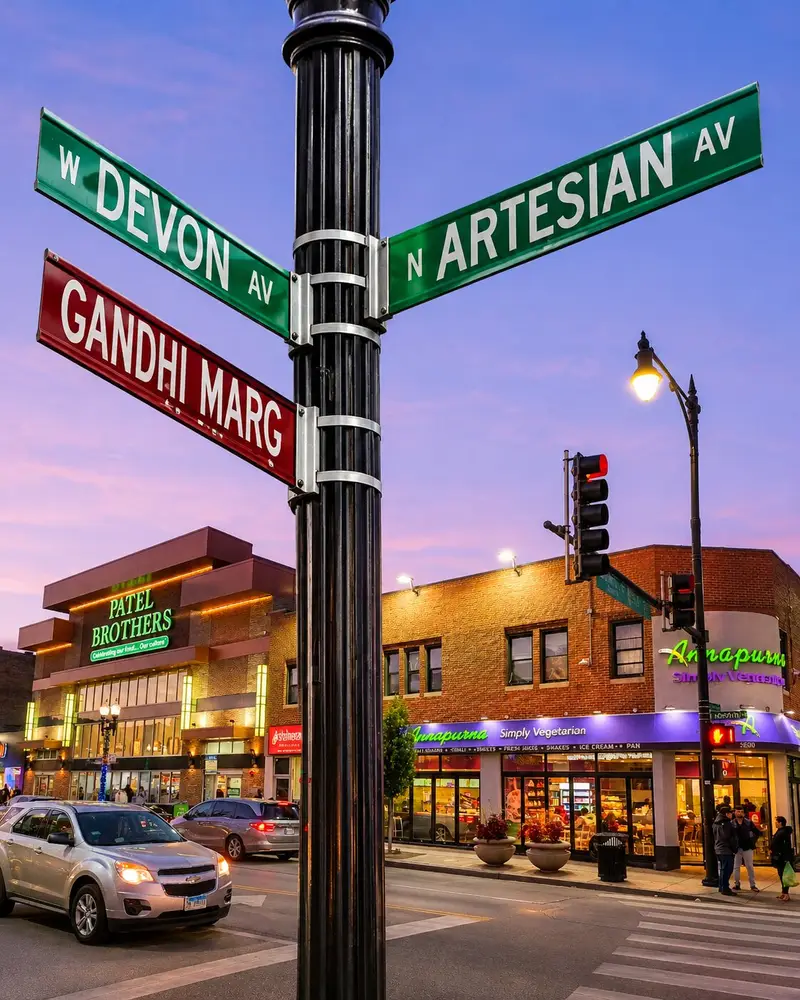
A street sign post at an intersection displays signs for West Devon Avenue, North Artesian Avenue, and an honorary sign for Gandhi Marg against a blue sky with fluffy white clouds. Above the street names, a circular decorative medallion features a colorful pattern with the words "Devon Avenue."
This street sign highlights the vibrant cultural tapestry of Chicago’s West Ridge neighborhood at the intersection of Devon and Artesian avenues. The inclusion of the brown honorary sign designation “Gandhi Marg” reflects the rich South Asian heritage that defines this bustling commercial corridor. This image is for illustration purposes only.

Devon Avenue is famous for its incredible South Asian culture and some of the most famous Chicago restaurants in the city.

It is named after the English county of Devon, which is pronounced DEV-in.

But in Chicago, the emphasis is heavily and aggressively placed on the second syllable.

  • How it looks: DEV-in
  • How Chicagoans say it: Dih-VON

4. Throop Street
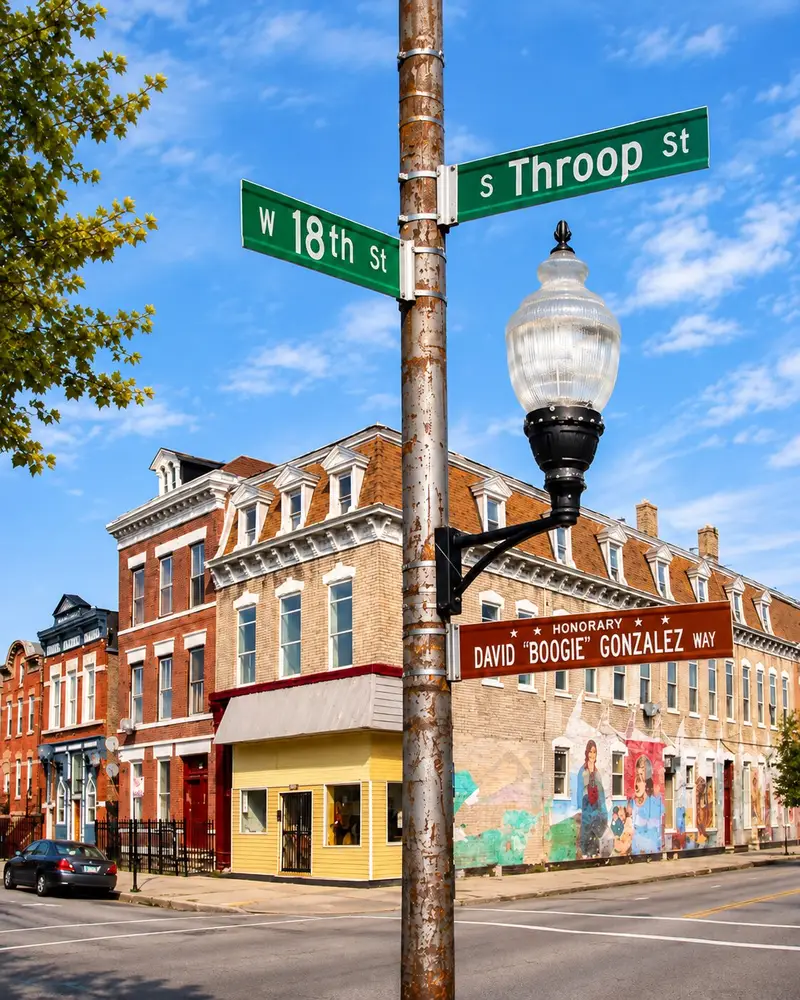
A street corner signpost displays intersecting signs for South Throop Street, West 18th Street, and an honorary sign for David 'Boogie' Gonzalez Way. In the background, a historic brick building features a prominent mansard roof with multiple dormer windows under a clear sky.
This street sign captures the intersection of South Throop Street and West 18th Street located in Chicago’s vibrant Pilsen neighborhood. The brown honorary designation commemorates David ‘Boogie’ Gonzalez, adding a layer of local community history to the area’s rich architectural backdrop. This image is for illustration purposes only.

You’ll find this street running through South Side neighborhoods like Bridgeport and Pilsen.

Logically, you would look at the “Th” and pronounce it like “Through” with a P at the end.

However, in true Chicago fashion, the “H” is completely silent.

  • How it looks: Th-roop
  • How Chicagoans say it: Troop (rhymes with loop)

5. Honore Street
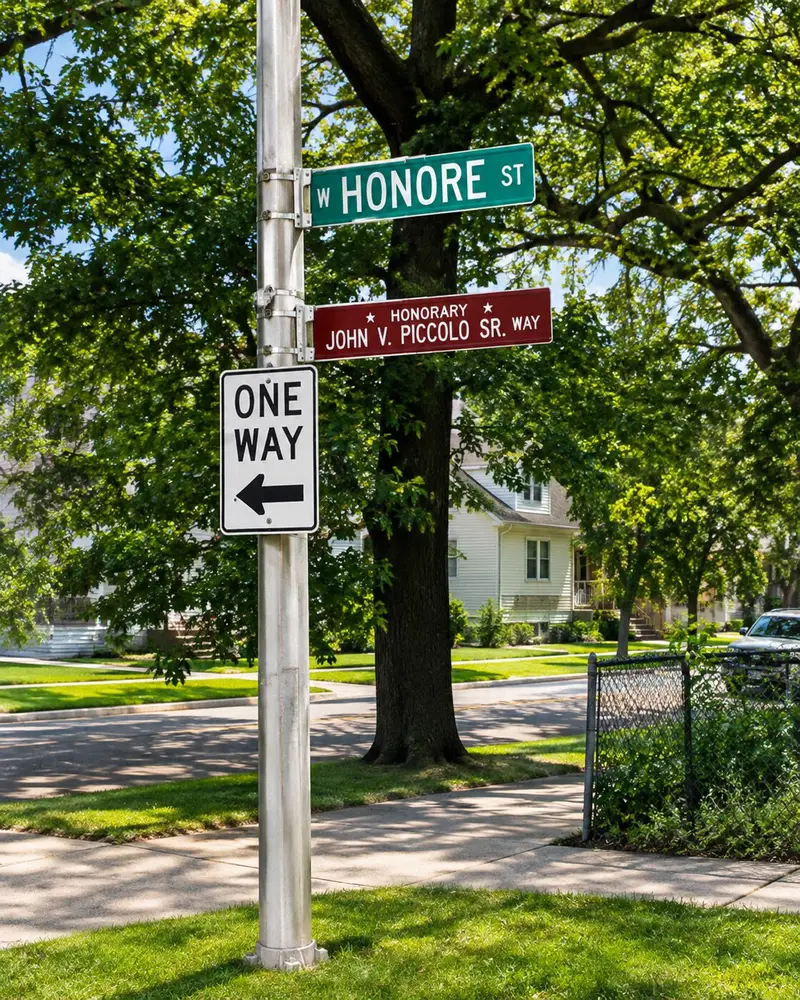
A silver metal post displays a green street sign for South Honore Street and a brown honorary sign for Jimmy Rogers Street beneath it. A white and black "ONE WAY" sign pointing to the left is also attached to the pole, set against a backdrop of green grass and trees.
This street sign captures the intersection of South Honore Street and honorary Jimmy Rogers Street in Chicago. The brown honorary marker pays tribute to legendary Chicago blues guitarist and singer Jimmy Rogers, identifying a historic neighborhood landmark.

French words do not stand a chance against the Chicago accent.

Proper French rules dictate this should be pronounced Ah-nor-AY (with a silent H).

Chicagoans looked at that, laughed, and pronounced every single letter as forcefully as possible.

  • How it looks: Honor-ay
  • How Chicagoans say it: HON-er-ee

6. Leavitt Street
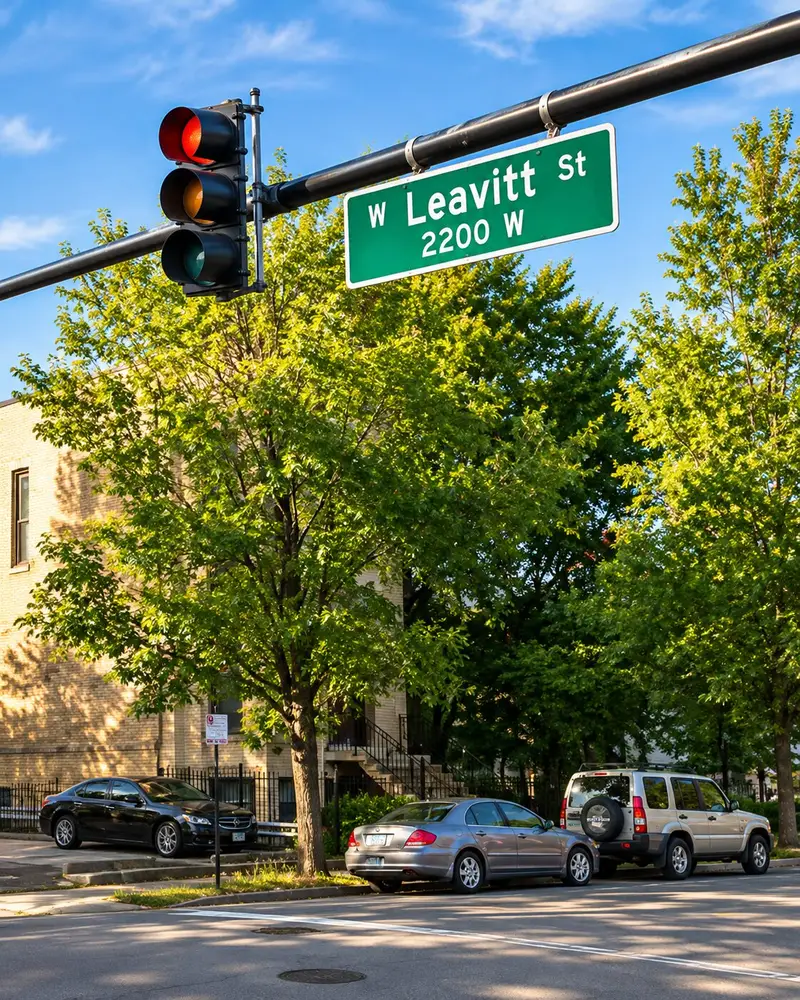
A bright green overhead city sign reading "N Leavitt St 2200 W" hangs from a black metal master arm alongside a standard vertical traffic light displaying a green signal. The background features lush, leafy green trees lining a sunny residential street where several cars are parked along the curb in front of a brick building.
An overhead street sign marks North Leavitt Street at the 2200 West block alignment within Chicago’s comprehensive municipal grid system. The quiet, tree-lined residential corridor exemplifies the typical neighborhood streetscapes found throughout the city’s West and North sides.

This one catches almost every single out-of-towner off guard.

If you tell your Uber driver to turn on Leave-it Street, they are going to miss the turn entirely.

  • How it looks: Leave-it
  • How Chicagoans say it: LEV-it (rhymes with rev-it)

7. Desplaines Street (and Des Plaines, the suburb)
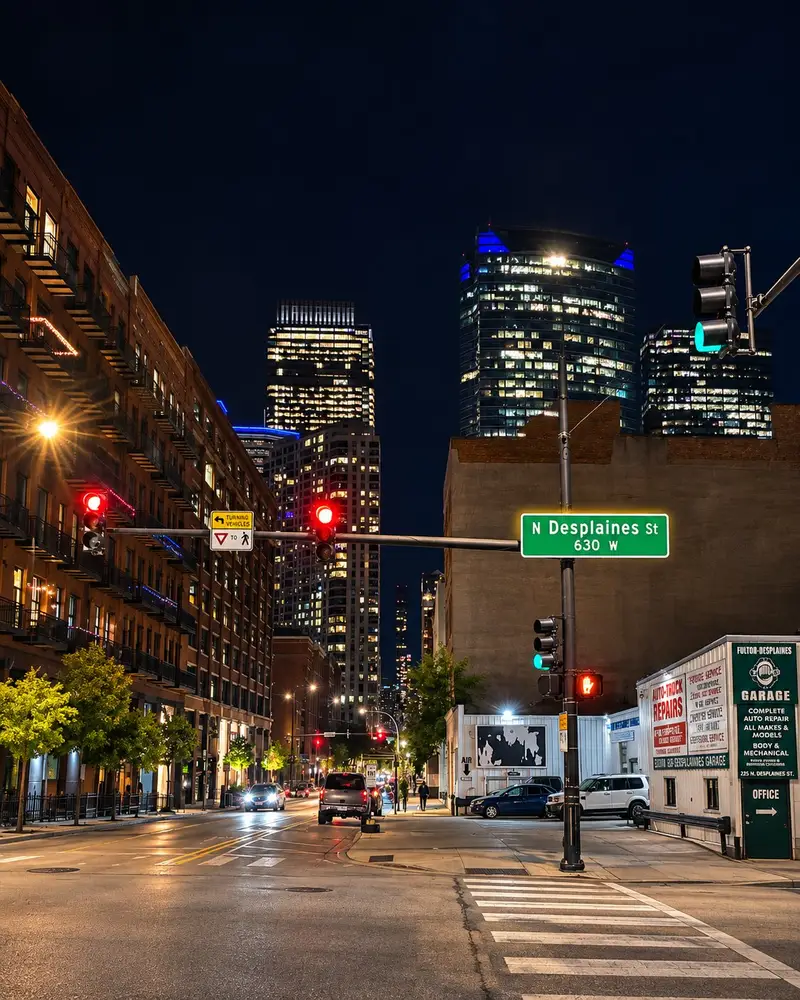
A night view captures an urban intersection featuring a green street sign that reads "N Desplaines St 640 W" mounted on a traffic signal post. Illuminated skyscrapers and modern high-rise buildings glow in the background against the dark night sky, while a low-rise garage structure sits on the right corner.
The intersection at North Desplaines Street reveals a striking view of Chicago’s downtown skyline glowing brightly at night. The scene contrasts the quiet, everyday presence of local auto repair garages and city street signs with the grand scale of towering metropolitan high-rises in the distance.

Here is another piece of French history that the Midwest completely steamrolled.

Whether you are talking about the downtown street or the nearby suburb, the rule is the exact same.

Forget the silent French “S”. We pronounce all the S’s here.

  • How it looks: Day-plane
  • How Chicagoans say it: Dess-PLAINS

8. Cermak Road
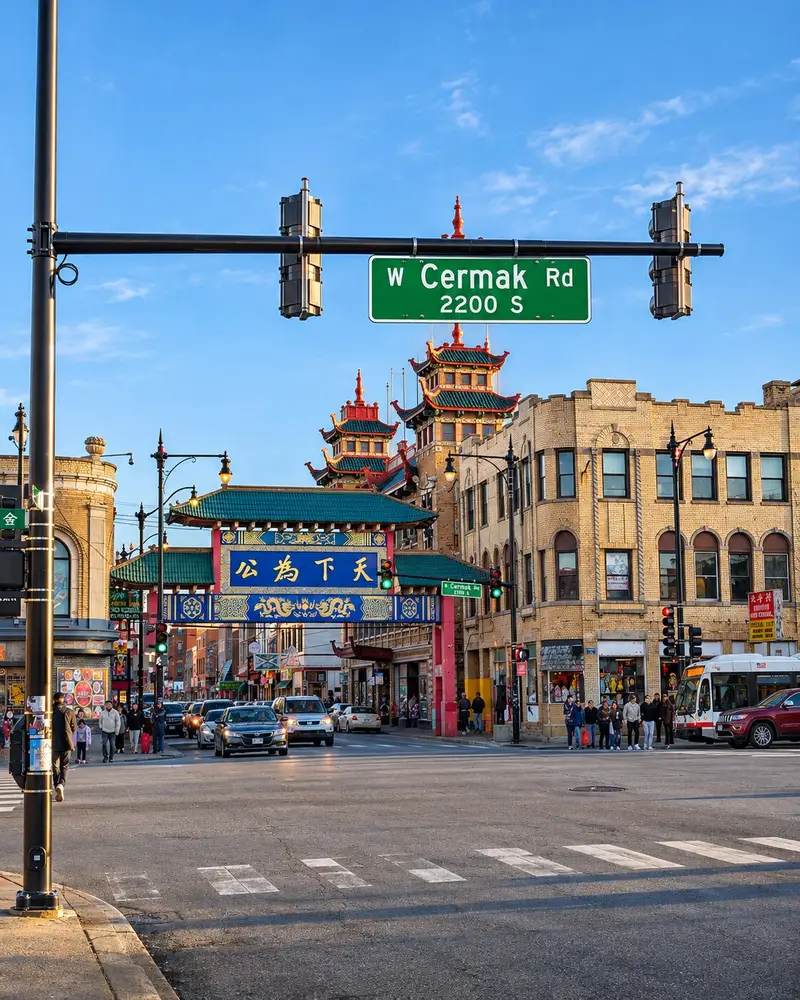
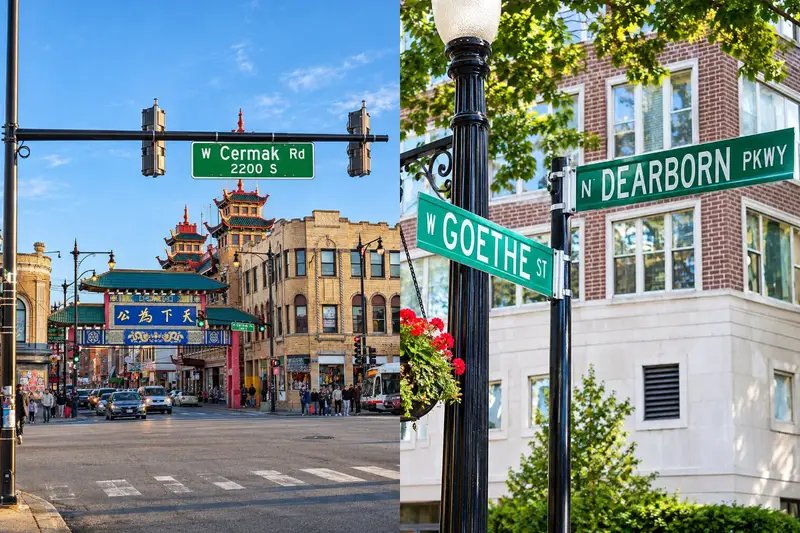
A street-level shot captures a green overhead sign reading "W Cermak Rd 2200 S" hanging at a bustling city intersection. In the background stands the iconic, ornate Chinatown Gateway arch alongside traditional multi-tiered pagoda architecture and brick commercial buildings under a clear blue sky.
The prominent intersection at West Cermak Road marks the vibrant entrance to Chicago’s historic Chinatown neighborhood. Framed by the landmark ceremonial gateway arch, the area showcases a beautiful blend of traditional Chinese architecture and active urban street life.

Named after Anton Cermak, a famous Chicago mayor of Czech descent, this road runs through the heart of the South Side and Chinatown.

In Czech, the name is pronounced CHAIR-mahk.

While you might hear some history buffs use the traditional pronunciation, the vast majority of the city has flattened it out.

  • How it looks: Sir-mack
  • How Chicagoans say it: SIR-mack

9. Laramie Avenue
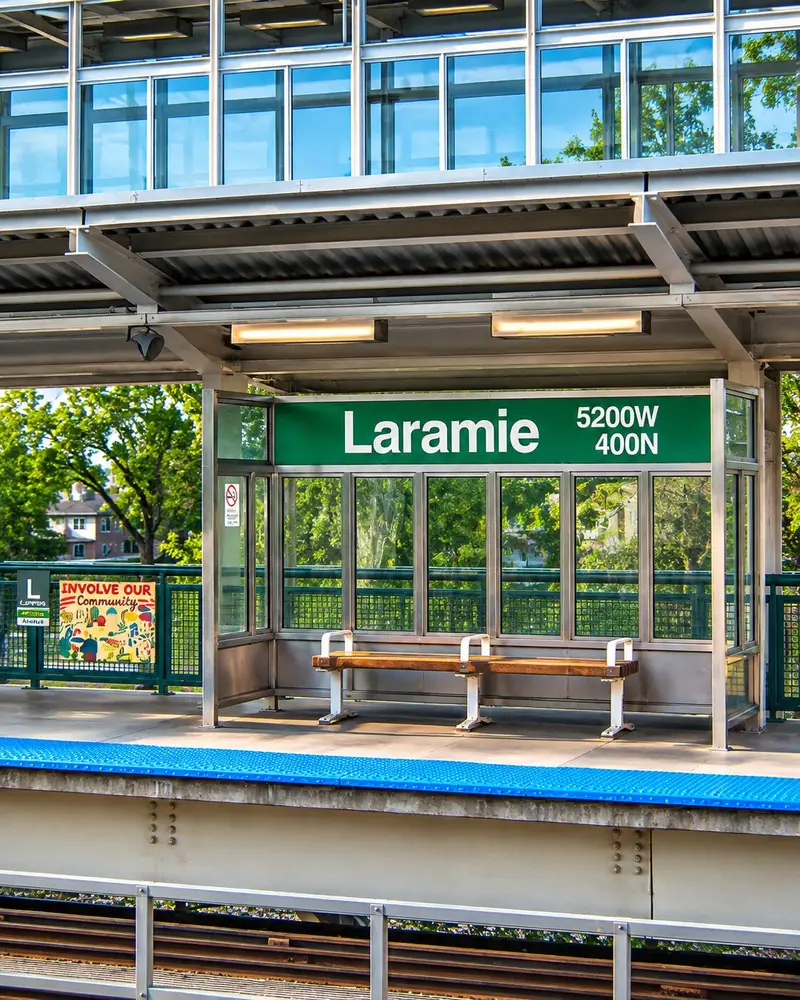
An elevated view shows a modern transit platform shelter featuring a large green sign that reads "Laramie 5200W 400N" above a wooden bench. The clean white structure includes an upper glass-enclosed walkway and overlooks train tracks with green trees visible in the background.
The Laramie station passenger platform serves commuters on the Chicago Transit Authority’s Green Line on the city’s West Side. The bright, contemporary architectural design offers functional waiting shelters and clear geographic navigation markers for passengers.

This one isn’t so much a mispronunciation as it is a case of Chicagoans talking way too fast.

We simply do not have the time or energy for three syllables.

The middle “A” gets completely dropped in everyday conversation.

  • How it looks: Lair-uh-mee
  • How Chicagoans say it: LARE-mee

The Deep Cuts: Neighborhood Streets You’re Probably Saying Wrong

Once you master the major streets, it’s time to tackle the residential roads.

If you are exploring the Chicago neighborhoods where locals actually hang out, you will definitely encounter these tongue-twisters.

10. Touhy Avenue
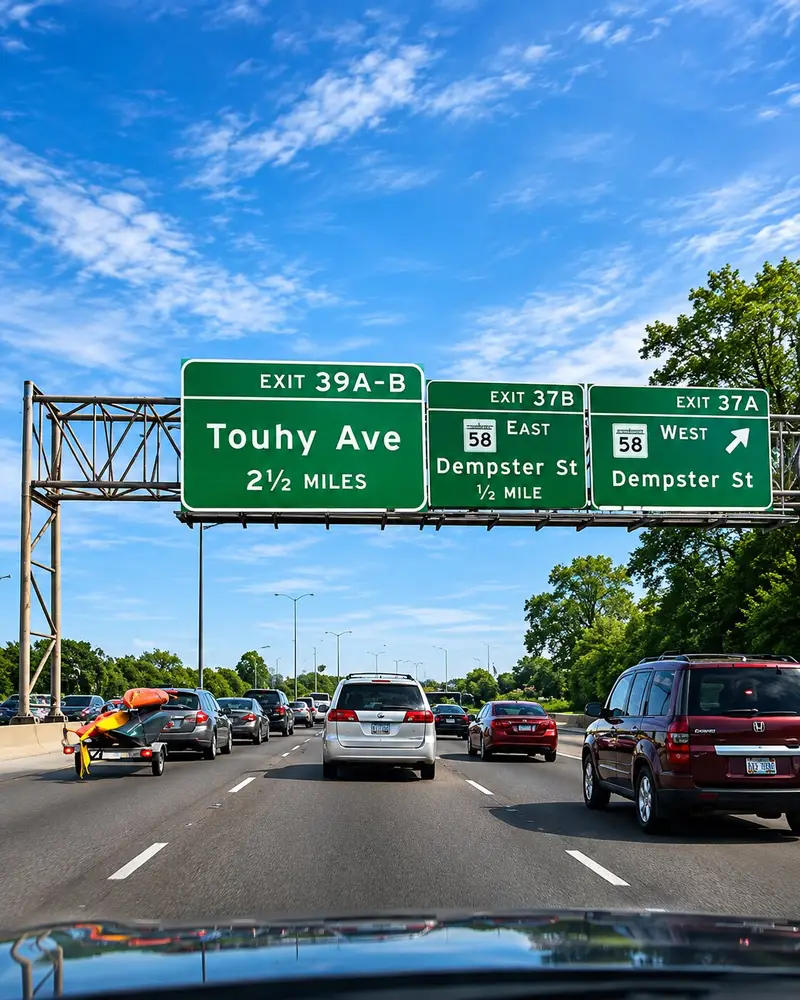
A dashboard perspective captures heavy traffic moving along a multi-lane highway beneath a large steel overhead gantry holding green directional signs. The highway signs mark approaching exits for Touhy Avenue, Illinois Route 58 East (Dempster Street), and Route 58 West, under a partly cloudy sky.
A view along Interstate 94, also known as the Edens Expressway, shows motorists navigating traffic near Skokie and Morton Grove, Illinois. The prominent green overhead gantries provide clear lane assignments and distances for the upcoming high-traffic exits at Dempster Street and Touhy Avenue.

This Far North Side street is a notorious trap for out-of-towners.

If you look at the spelling, it is incredibly tempting to pronounce the “H.” Tourists almost always call it Too-hee or even Tow-hee.

However, we just pretend the “H” doesn’t exist.

  • How it looks: Too-hee
  • How Chicagoans say it: TOO-ee

11. Bryn Mawr Avenue
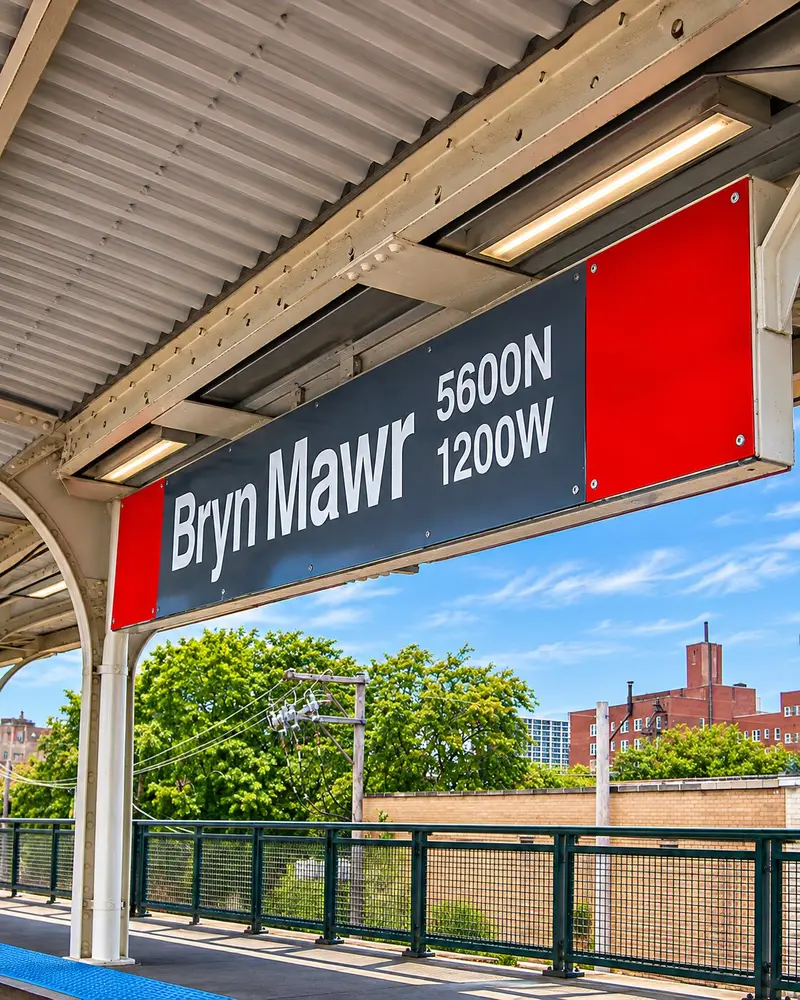
An angled, close-up shot captures a red and grey station sign reading "Bryn Mawr 5600N 1200W" hanging from the corrugated roof of an outdoor train platform. The background shows neighborhood residential buildings, brick structures, and green treetops under an overcast sky.
The station platform sign at Bryn Mawr guides commuters traveling along the Chicago Transit Authority’s Red Line in the Edgewater neighborhood. This classic overhead signage format provides clear geographic coordinates within the city’s comprehensive grid system.

This street takes its name from a Welsh phrase meaning “great hill.”

If you aren’t familiar with Welsh pronunciations, looking at this street sign is incredibly confusing. Many visitors try to sound it out as Brin-MOWER (rhymes with power).

Instead, the “W” acts more like an “O” or an “A,” depending on who you ask.

  • How it looks: Brin-Mower
  • How Chicagoans say it: Brin-MAR (or Brin-MORE)

12. Cuyler Avenue
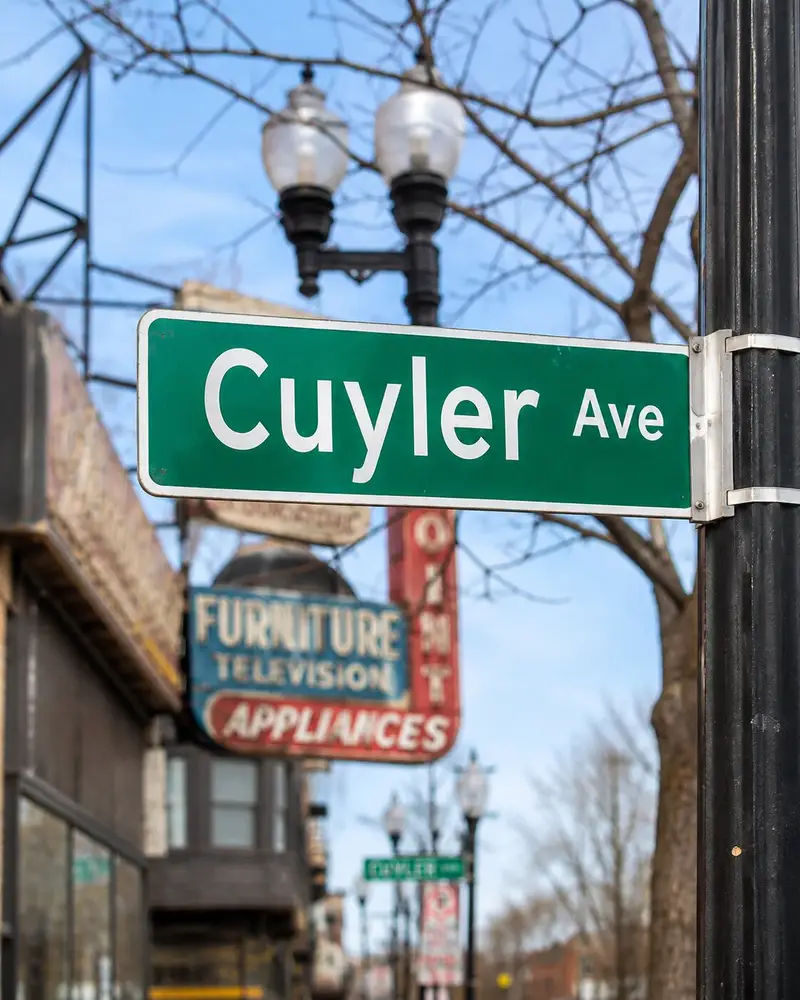
A vertical eye-level shot captures a towering, weathered vintage neon sign for Cole's Furniture, Television, and Appliances hanging along a city sidewalk. The retro sign, attached to a brick storefront, overlooks an empty street corridor with bare trees and decorative streetlights under an overcast sky.
The iconic vintage neon sign for Cole’s Appliance & Furniture Co. stands as a historic neighborhood landmark on Lincoln Avenue in Chicago. This weathered storefront marker showcases the classic, mid-century commercial typography and local character of the city’s North Center district. This image is for illustration purposes only.

This quiet, residential street on the North Side trips up almost everyone who isn’t from the immediate area.

Because of the “uy” spelling, people usually guess Coy-ler or even Cue-ler.

You have to dig deep into your Midwestern vowels for this one and give it a hard “Y” sound.

  • How it looks: Coy-ler
  • How Chicagoans say it: KYE-ler

13. Vincennes Avenue
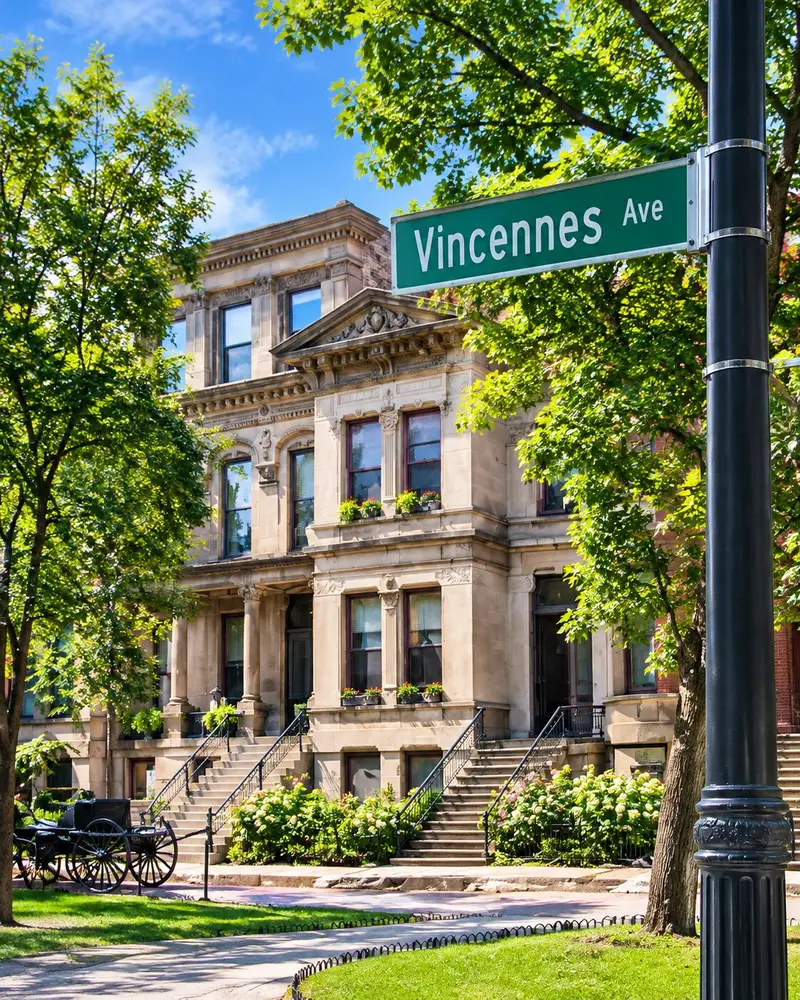
A bright green street sign reading "Vincennes Ave" is mounted on a black lamp post in the foreground of a leafy residential area. In the background, ornate historic greystone townhouses with detailed stone carvings, flower-filled window boxes, and front staircases stand under a clear blue sky.
The charming streetscape along Vincennes Avenue showcases the spectacular late-19th-century architecture found in Chicago’s historic Bronzeville neighborhood. Lush green trees and a vintage horse-drawn carriage on the grass complement the elegant stonework of these beautifully preserved row houses. This image is for illustration purposes only.

Running diagonally through the South Side, this avenue is steeped in rich city history.

It gets its name from a French explorer, which means it technically should have a soft, elegant French pronunciation like Van-SENN.

Naturally, Chicagoans were having none of that. We Americanized the heck out of it, hitting the “Z” sound at the end as hard as possible.

  • How it looks: Van-senn
  • How Chicagoans say it: Vin-CENZ

14. Melvina Avenue
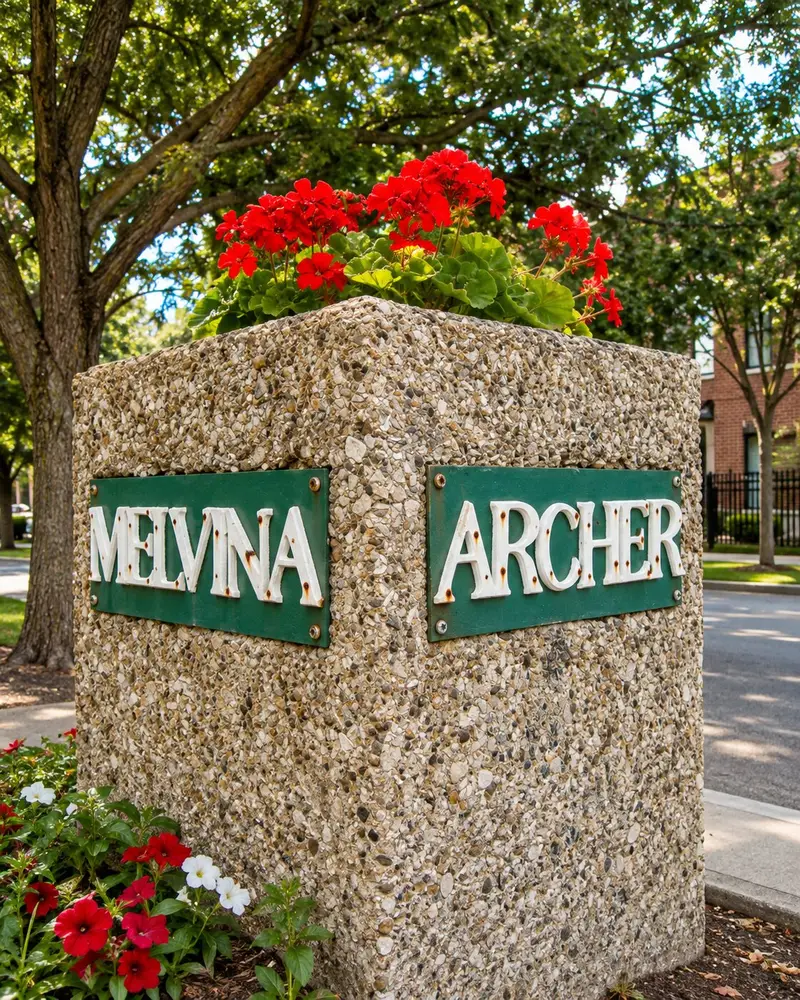
A close-up shot captures a square, textured aggregate concrete street marker corner at a neighborhood intersection. Rectangular green panels set into the concrete display the white embossed names "MELVINA" and "ARCHER," while bright red geraniums grow from a planter built into the top.
This unique street marker stands at the intersection of South Melvina Avenue and West Archer Avenue in Chicago. The aggregate concrete pillar design, complete with integrated seasonal flower planters, provides a distinctive mid-century architectural detail common to several Southwest Side neighborhoods.

Remember the “Paulina Rule” from earlier? It applies to other streets, too.

Melvina is a street you’ll find on the city’s far Northwest and Southwest sides.

Just like Paulina (Pull-EYE-nuh), you have to completely ignore the fact that “ina” usually makes an “ee-nuh” sound.

  • How it looks: Mel-vee-nuh
  • How Chicagoans say it: Mel-VY-nuh

15. Wabansia Avenue
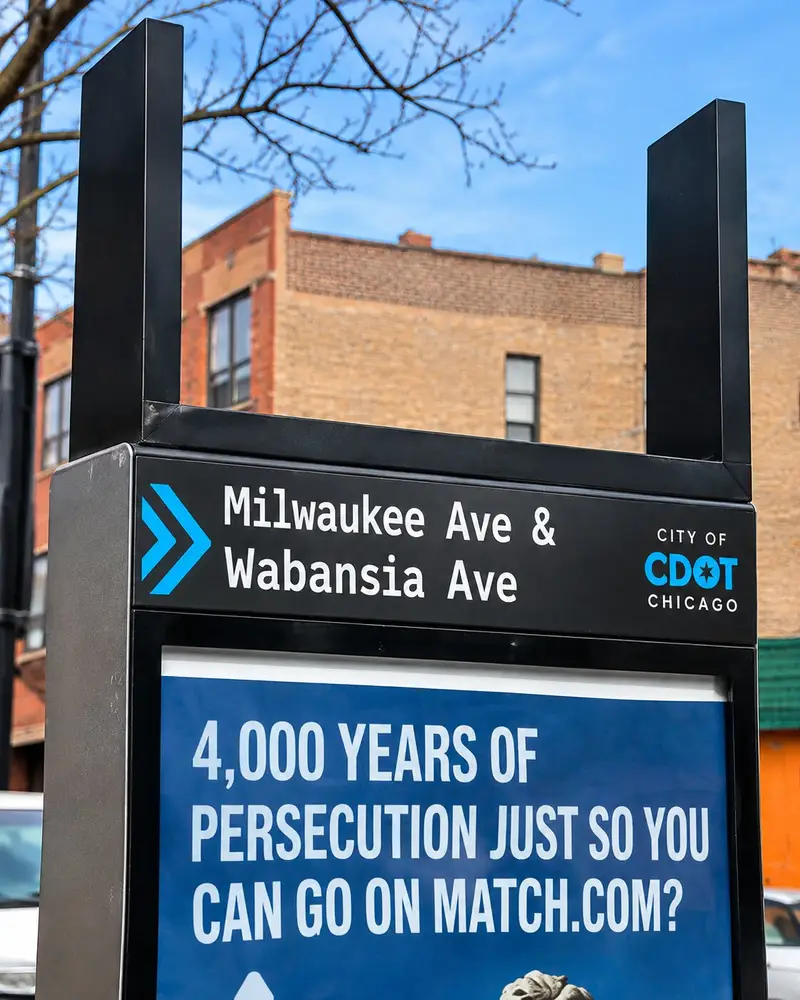
A row of light blue Divvy rental bicycles sits docked along a city sidewalk next to an electronic information kiosk. The kiosk panel shows a JDate advertisement featuring an illustration of Moses holding the Ten Commandments with the text, "4,000 years of persecution just so you can go on Match.com?"
A Divvy bike-sharing station stands at the corner of Milwaukee Avenue and Wabansia Avenue in Chicago’s Bucktown neighborhood. The digital kiosk adjacent to the docks serves a dual purpose, providing localized navigation info alongside commercial advertisements.

Named after a Potawatomi chief, this street name looks much more intimidating than it actually is.

Visitors tend to stumble over the syllables, often trying to say Wah-ban-SIGH-uh or completely jumbling the letters.

Once you hear it said out loud, it actually rolls off the tongue pretty easily.

  • How it looks: Wah-ban-see-uh (said with hesitation)
  • How Chicagoans say it: Wah-BAN-see-uh (said with confidence)

16. Damen Avenue
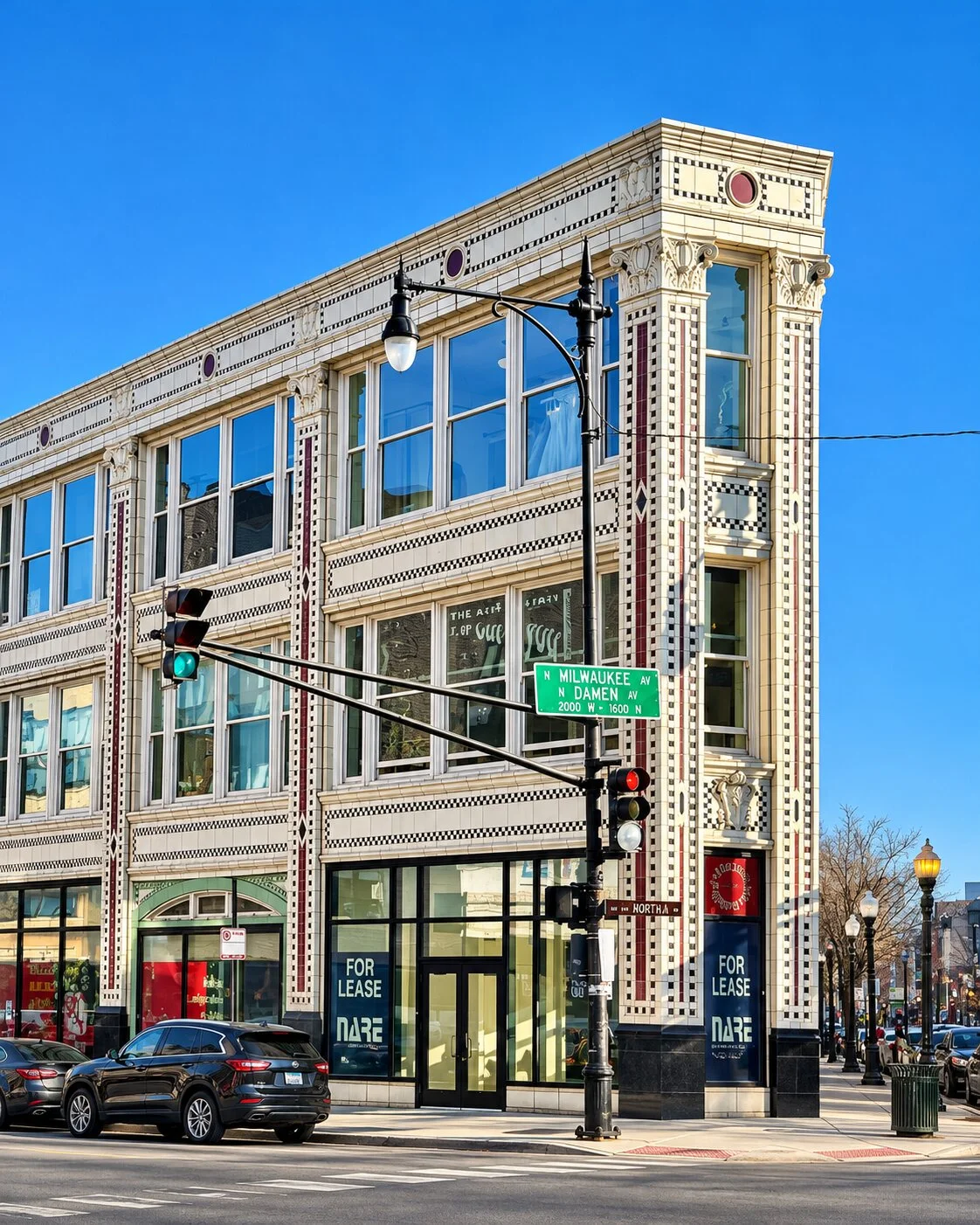
A street-level perspective captures the distinctive wedge-shaped, historic white terra-cotta building situated at a bustling multi-point street intersection under a clear blue sky. In the foreground, numerous cars navigate the intersection next to a black lamp post equipped with green street signs pointing toward North Milwaukee Avenue and North Damen Avenue.
The historic Flat Iron Arts Building, also famously known as the Flat Iron Building, stands as a central architectural anchor at the vibrant six-way intersection of Milwaukee, North, and Damen avenues in Chicago’s Wicker Park neighborhood. Originally constructed in 1913, this iconic three-story structure has long served as a creative hub, housing numerous artist studios, galleries, and local businesses.

This one might seem incredibly simple, but it consistently catches European tourists off guard.

Because “Damen” translates to “Ladies” in German (and is pronounced DAH-men), many international visitors give it a soft, European flair.

In Chicago, it is aggressively phonetic.

  • How it looks: DAH-men
  • How Chicagoans say it: DAY-men

How to Read the Chicago Grid Like a Local

Knowing how to pronounce Chicago streets is only half the battle. Knowing how they connect is what truly makes you a local.

Chicago is built on a massive, highly organized grid system that originates at the intersection of State Street and Madison Street downtown.

Every block you travel away from State and Madison adds 100 to the street address. That means eight blocks (or 800 address numbers) equals exactly one mile.

If someone tells you a bar is at 3200 North and 1600 West, you instantly know it is 4 miles north and 2 miles west of downtown. It makes navigating incredibly easy, which is great to keep in mind if you find yourself asking, “Is Chicago safe for tourists?”

The only streets that break this perfect grid are the diagonal avenues (like Milwaukee, Lincoln, and Vincennes). These diagonals follow old Native American trading routes that predated the city’s grid system!

Final Thoughts

Chicago is a city that doesn’t just have its own deep-dish pizza rules—we have our own language, too.

The next time you’re visiting the Windy City, keep this list handy.

Whether you are tracking down the absolute best Italian beefs in Chicago or exploring Chicago’s hidden gems, speaking the local language goes a long way.

Dropping a casual Pull-EYE-nuh or Troop in conversation is the fastest way to earn the respect of a true Chicagoan.

Struan JM AK
Read by 5,000+ Chicagoans
❤️ Get Hey Chicago in your inbox
Join 5,000+ Chicagoans getting untold history on Tuesdays and our curated weekend guide on Thursdays.
🔒 100% free. No spam. Unsubscribe in 1-click anytime.

About Struan Hogg

Born in Scotland, Struan fell in love with Chicago after visiting family in his teens and never looked back. As the founder and editor of Hey Chicago, he travels to the city regularly, spending his time walking its 77 neighborhoods, digging into local archives, and tracking down the untold history behind its architecture. Combining an outsider’s wonder with a deep respect for Chicago grit, Struan celebrates the community stories that make the Windy City unmatched.

Leave a Comment