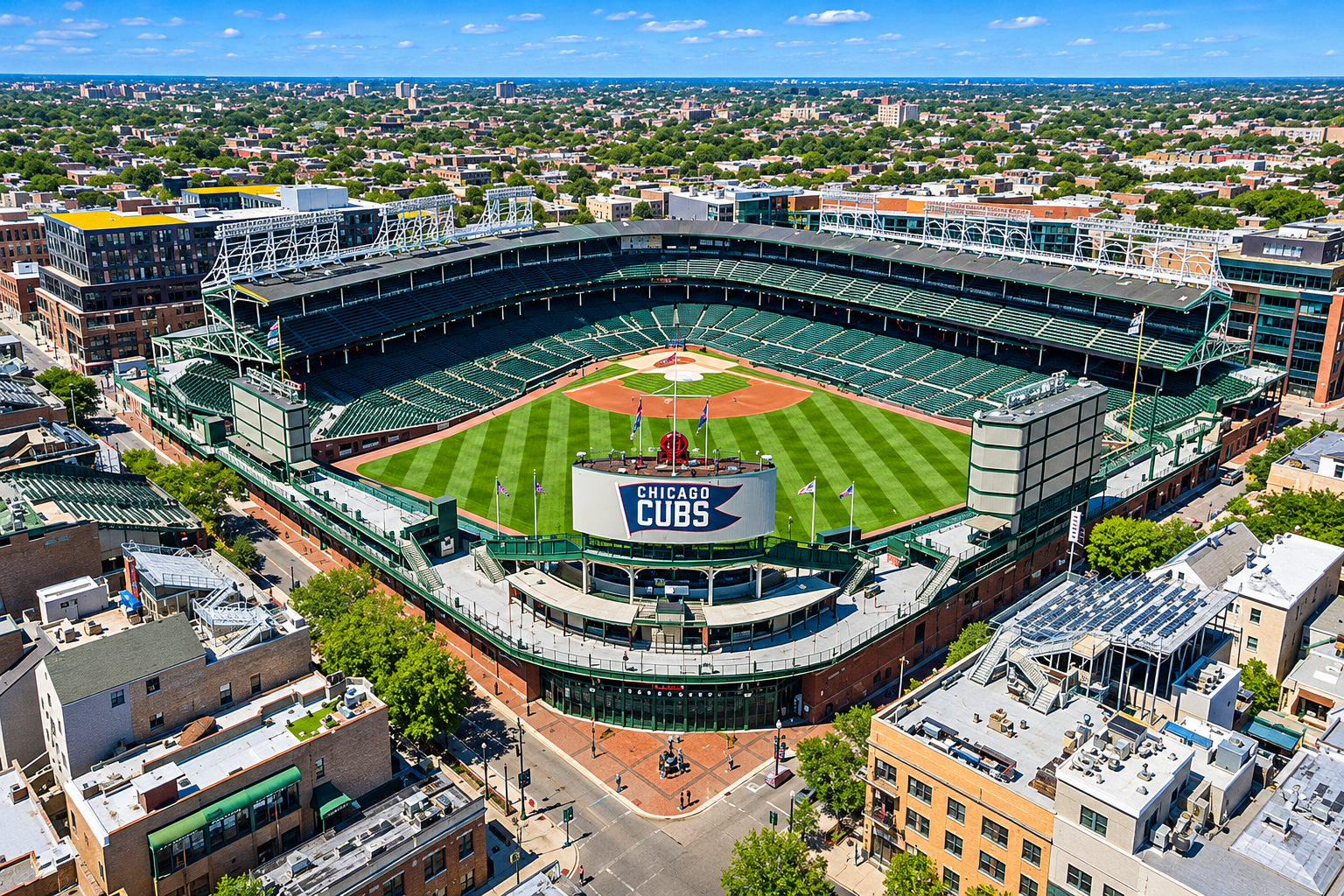
Wrigley Field is an absolute bucket-list destination for any baseball fan.
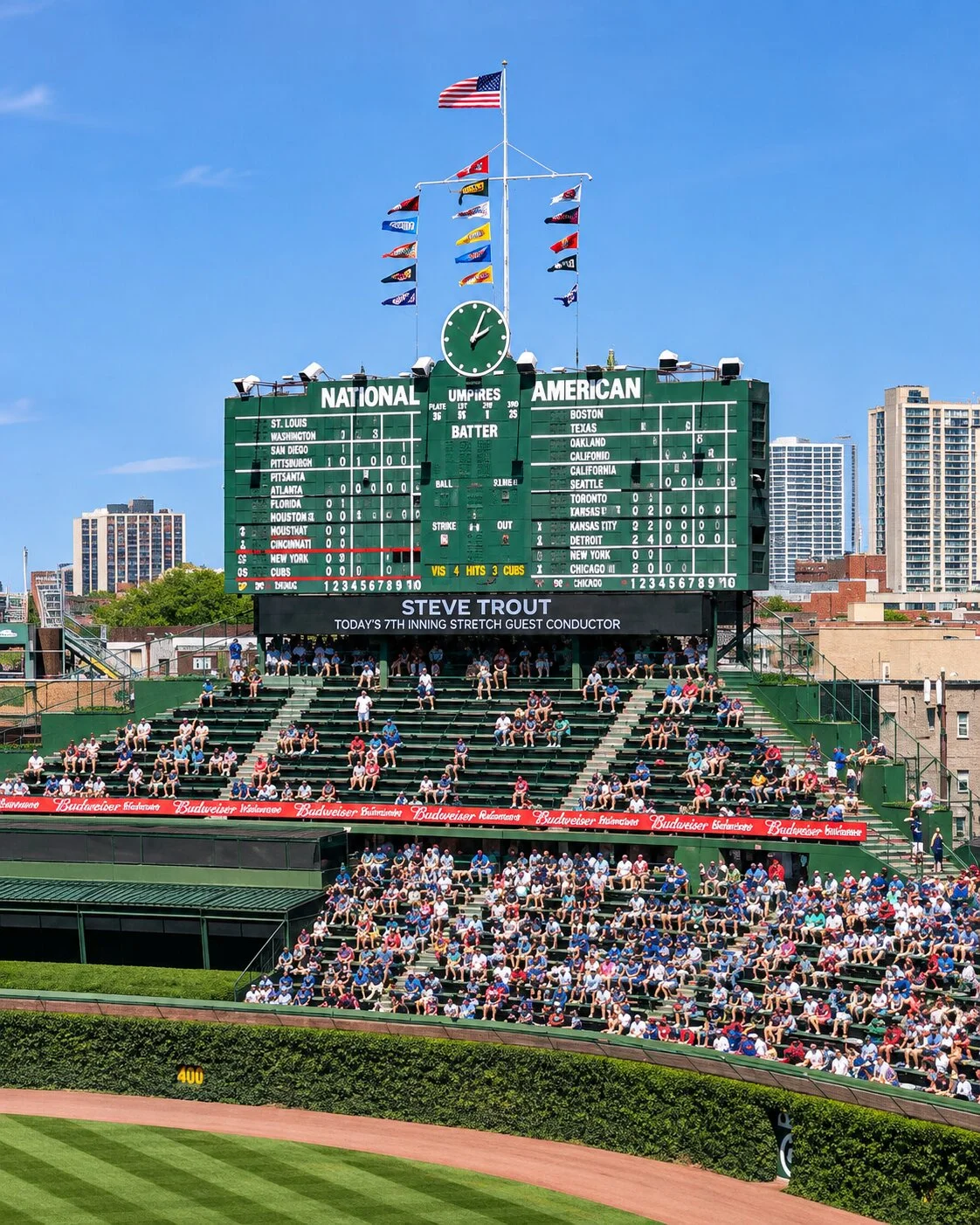
With its iconic ivy-covered brick walls, the manual scoreboard, and the legendary marquee, stepping into the “Friendly Confines” feels like stepping back in time.
It is pure, unadulterated baseball magic.
But because Wrigley Field was built way back in 1914, it comes with a few quirks.
 JM
AK
While you generally don’t need to worry about your well-being—Chicago is incredibly safe for tourists as long as you follow a few basic rules—Wrigley Field has its own unique set of unwritten laws.
If you aren’t prepared, it is easy to make a rookie mistake that can completely derail your Chicago experience.
Want to make sure your trip is memorable for all the right reasons?
Here are the top ways to completely ruin your day at Wrigley Field—and exactly how you can avoid them.
1. Trying to Drive and Park Right Next to the Stadium
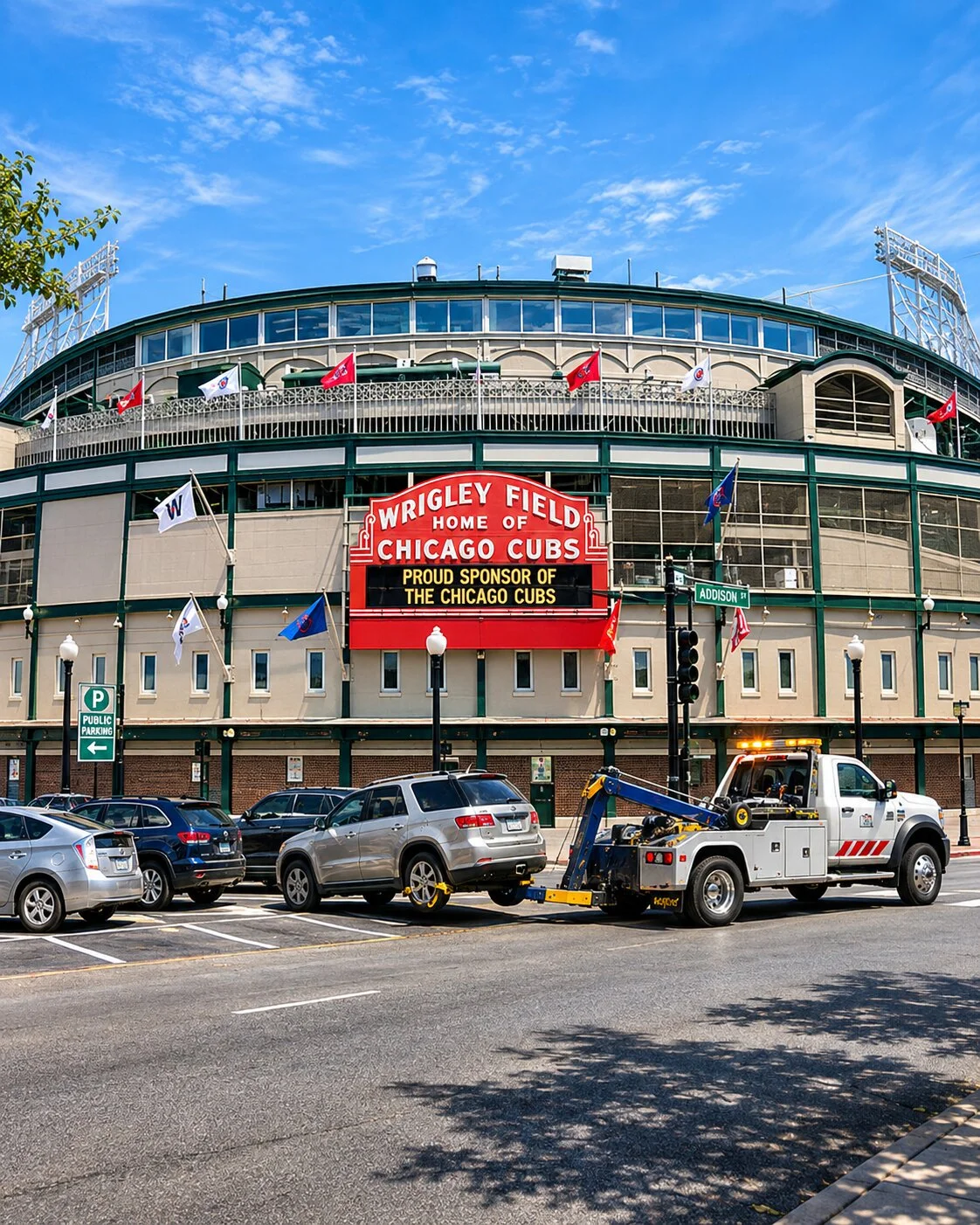
If there is one surefire way to start your day in a terrible mood, it’s attempting to navigate a car through Wrigleyville on game day.
Wrigley Field is nestled right in the middle of a dense, residential Chicago neighborhood.
There are no massive, sprawling parking lots like you’ll find at modern stadiums.
Street parking is strictly for residents with permits, and if you park there, you will be towed.
The few private lots and garages nearby will easily charge you upwards of $50 to $100+ for the privilege of parking your car, and it will take you ages to get out after the game.
How to avoid this: Take public transportation! Check out our tourist’s guide to using the Chicago ‘L’ train to see how easy it is to take the CTA Red Line right to the Addison station, just steps from the stadium. If you must drive, use the free remote parking lot at 3900 N. Rockwell St. and take the free shuttle to the park.
2. Buying an “Obstructed View” Seat Without Checking
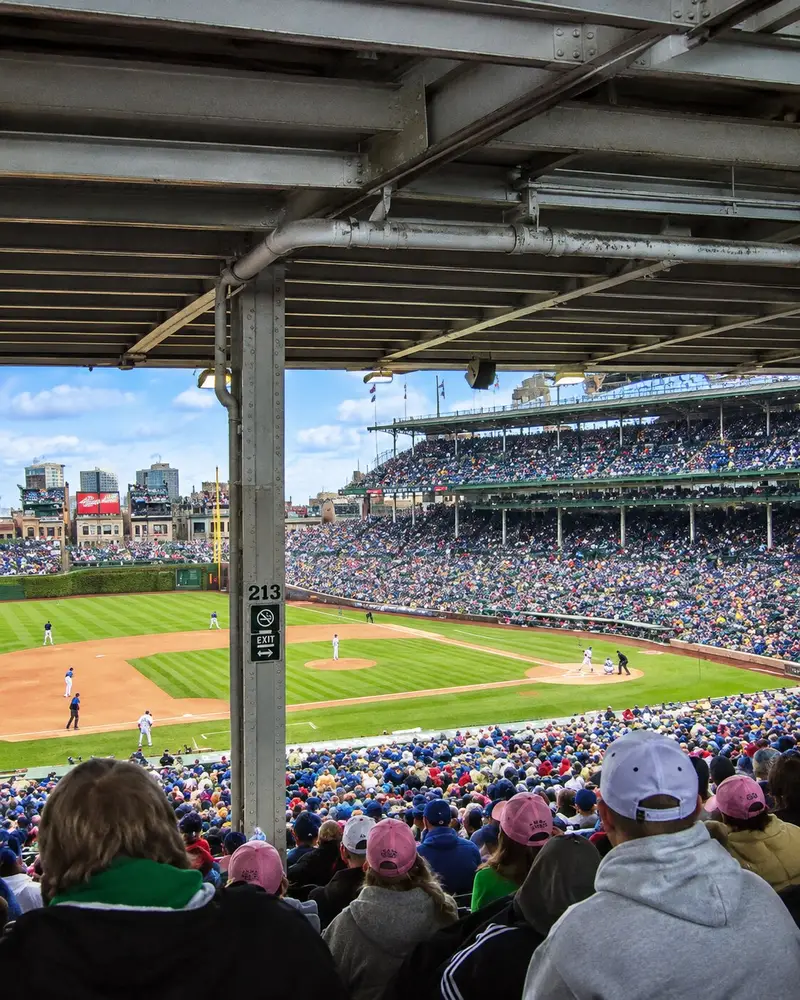
Wrigley Field has incredible charm, but that old-school architecture comes with a price: support beams.
To hold up the upper deck, there are thick steel columns scattered throughout the lower bowl (specifically in the 200-level terrace sections).
If you buy tickets without paying attention, you might end up staring at a green steel pole instead of home plate.
Imagine spending your hard-earned money only to miss every pitch because a column is blocking the pitcher’s mound.
How to avoid this: Always read the ticket description carefully before hitting purchase. Websites like StubHub and SeatGeek will explicitly state “Obstructed View.” You can also use a site like A View From My Seat to check the exact sightlines from your section and row before buying.


3. Sitting in the Bleachers if You Have Thin Skin
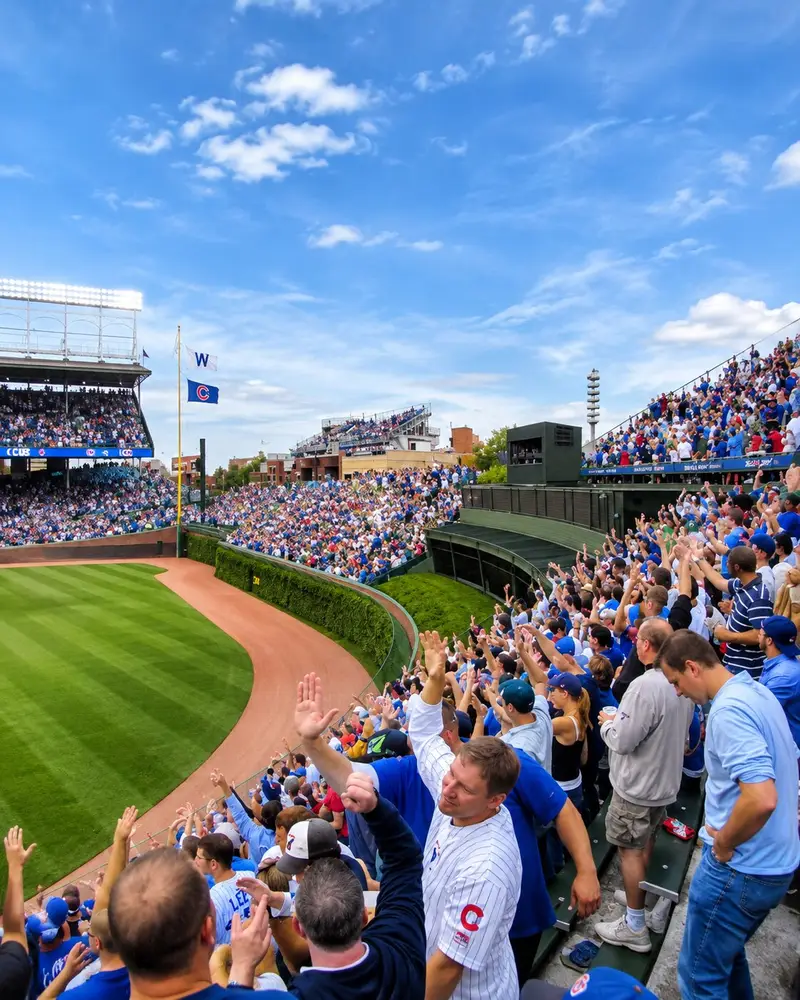
The Wrigley Field bleachers are legendary.
They are effectively a stadium within a stadium, complete with their own entrance and general admission seating.
It is arguably the best party in Chicago.
However, the bleachers are loud, rowdy, and heavily fueled by Old Style beer.
If you bring small children who don’t like noise, or if you are wearing the opposing team’s jersey (especially the St. Louis Cardinals or Chicago White Sox), you are going to hear about it.
How to avoid this: Know your vibe! If you want a relaxed, family-friendly atmosphere where you can quietly score the game in a program, buy a ticket in the grandstand. If you want to party, chant, and bake in the sun with the “Bleacher Bums,” the bleachers are for you.
4. Forgetting About the Unpredictable Chicago Weather
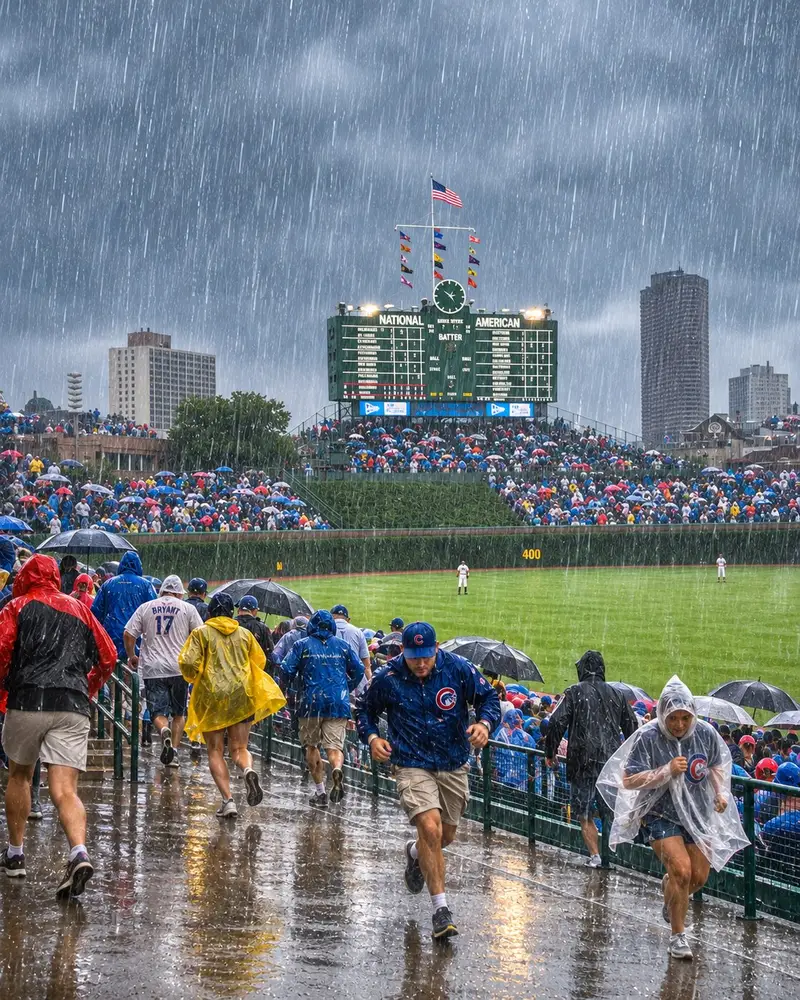
There is a reason Chicago is called the Windy City, and Wrigley Field is located just a mile away from Lake Michigan.
The weather can turn on a dime.
In April and May, a 60-degree day can instantly feel like 40 degrees when the wind whips off the lake.
Conversely, a July afternoon game in the bleachers can feel like the surface of the sun, as there is zero shade.
Showing up without layers—or without sunscreen—is a guaranteed way to ruin your day.
How to avoid this: Check the hourly forecast before you leave. If you are going early or late in the season, bring a jacket, a beanie, and extra layers. If you are going in the summer, especially in the bleachers, bring sunglasses, a hat, and plenty of sunscreen.
5. Keeping an Opponent’s Home Run Ball
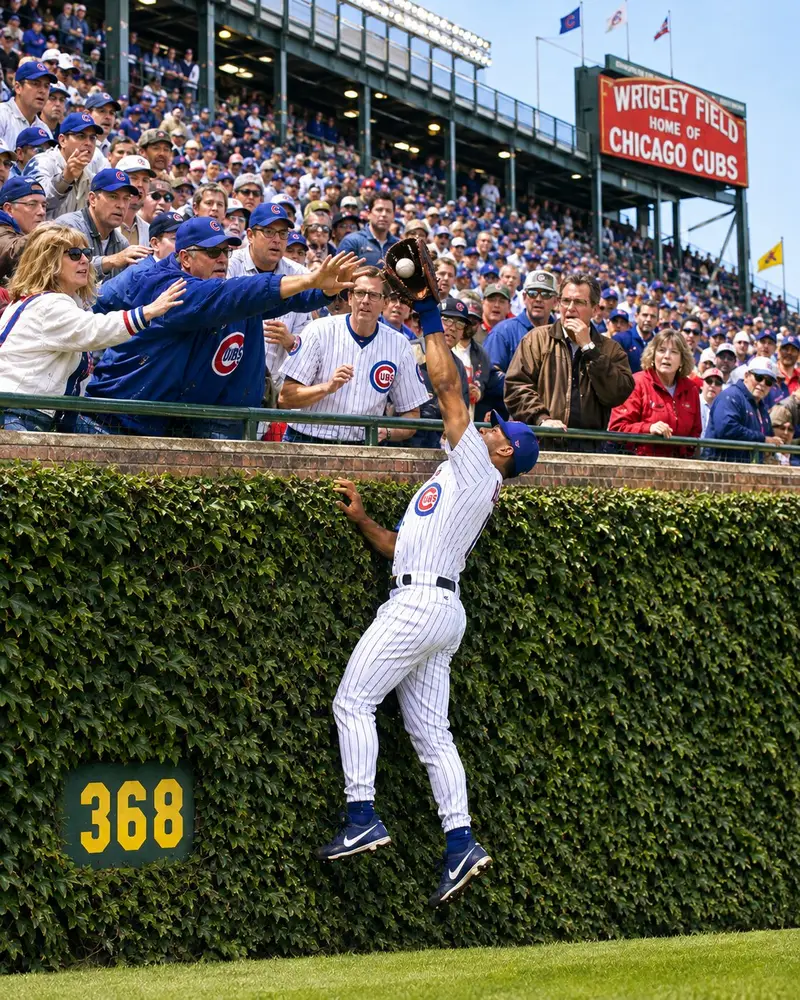
Catching a home run ball is a dream come true for most baseball fans.
But at Wrigley Field, there is a very strict, unwritten rule.
If a player from the opposing team hits a home run into the stands, you must throw it back onto the field.
If you decide to keep it, the entire section will turn on you.
You will be relentlessly booed, chanted at, and shamed until you either throw the ball back or leave your seat in embarrassment.
How to avoid this: Just throw it back! It’s one of the best traditions in baseball and makes for a hilarious story. (Pro tip: Some savvy fans bring a “decoy” baseball in their pocket to throw back while secretly keeping the actual home run ball!).
6. Bringing a Bag That Violates Stadium Policy
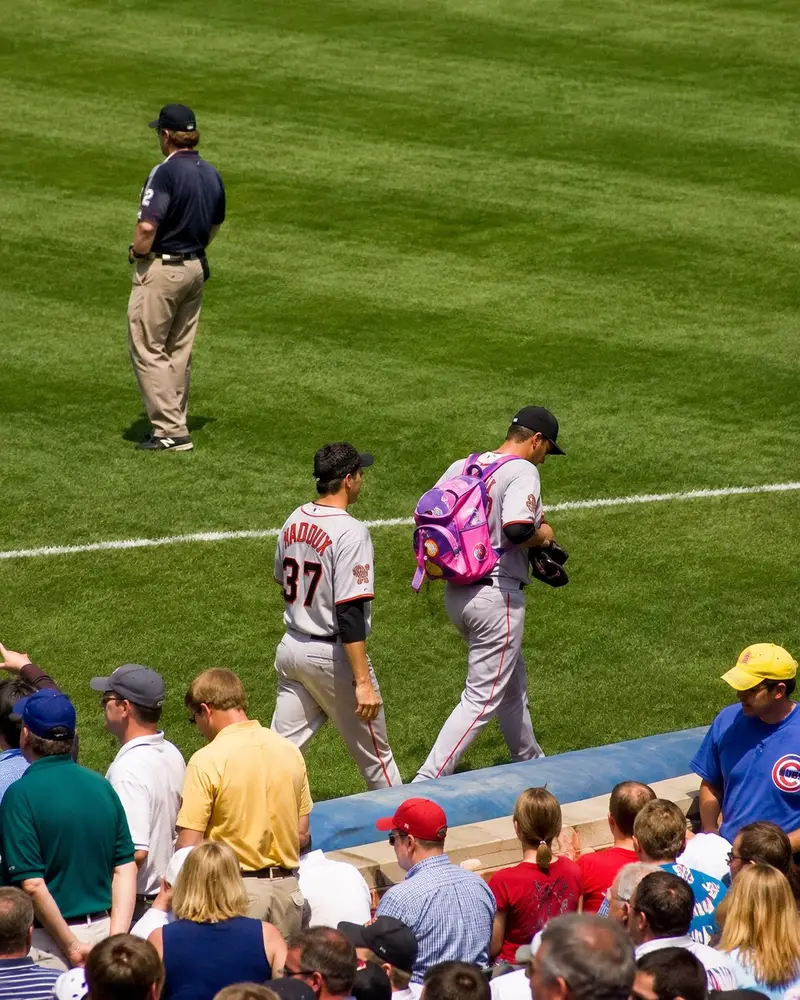
Like most major sports venues today, Wrigley Field has strict security rules.
Nothing kills your pre-game buzz quite like waiting in a long security line, only to be told you can’t bring your favorite backpack inside.
Wrigley Field strictly enforces its bag policy.
Backpacks (including clear ones), hard-sided coolers, and large bags are completely prohibited.
How to avoid this: Pack light! You are allowed to bring in wallets, purses, fanny packs, and small bags as long as they are smaller than 16″ x 16″ x 8″. When in doubt, leave the bag securely in your room at one of the best downtown Chicago hotels before you head up to the North Side.
7. Skipping the Pre-Game in Wrigleyville
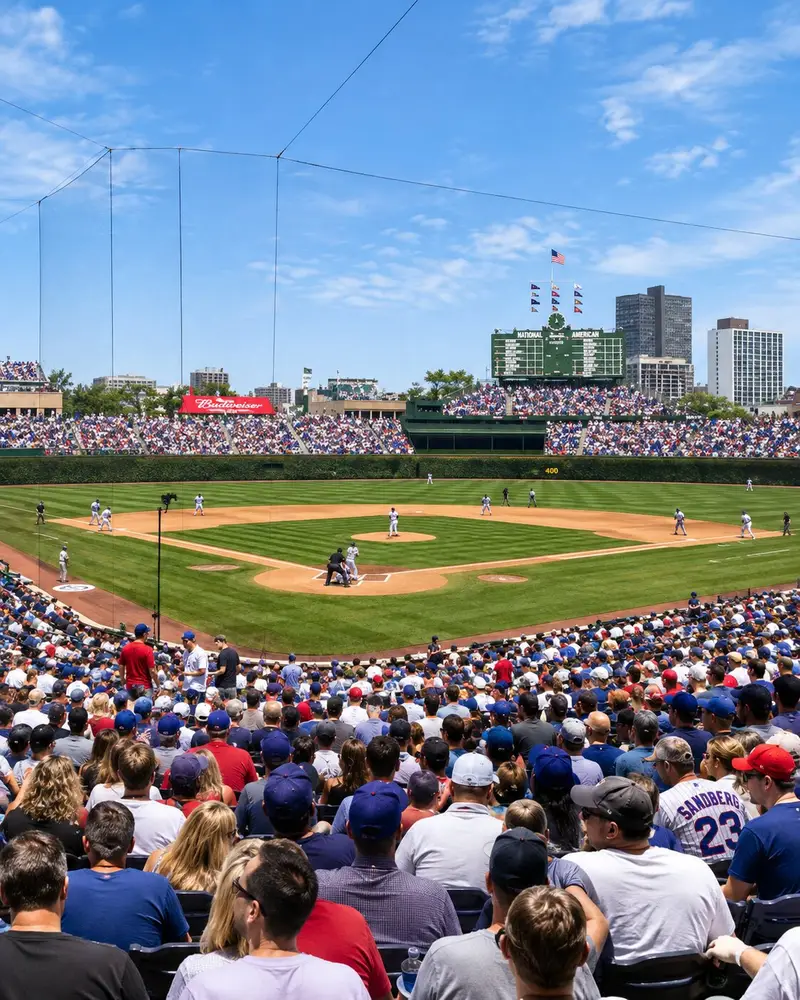
Wrigley Field isn’t just a baseball stadium; it is the heartbeat of the Wrigleyville neighborhood.
Wrigleyville is easily one of the best Chicago neighborhoods where locals actually hang out, and on game day, it comes alive.
The blocks surrounding the stadium on Clark and Addison streets are packed with iconic sports bars, rooftop venues, and restaurants.
If you just show up five minutes before the first pitch, walk to your seat, and leave immediately after the 9th inning, you are missing half the experience.
How to avoid this: Plan to arrive at least two hours early. Walk around Gallagher Way (the plaza right outside the stadium). Grab a drink at famous spots like The Cubby Bear, Murphy’s Bleachers, or Sluggers. Soak in the festival-like atmosphere that makes Wrigley so special.
8. Showing Up Late to the Bleachers with a Group
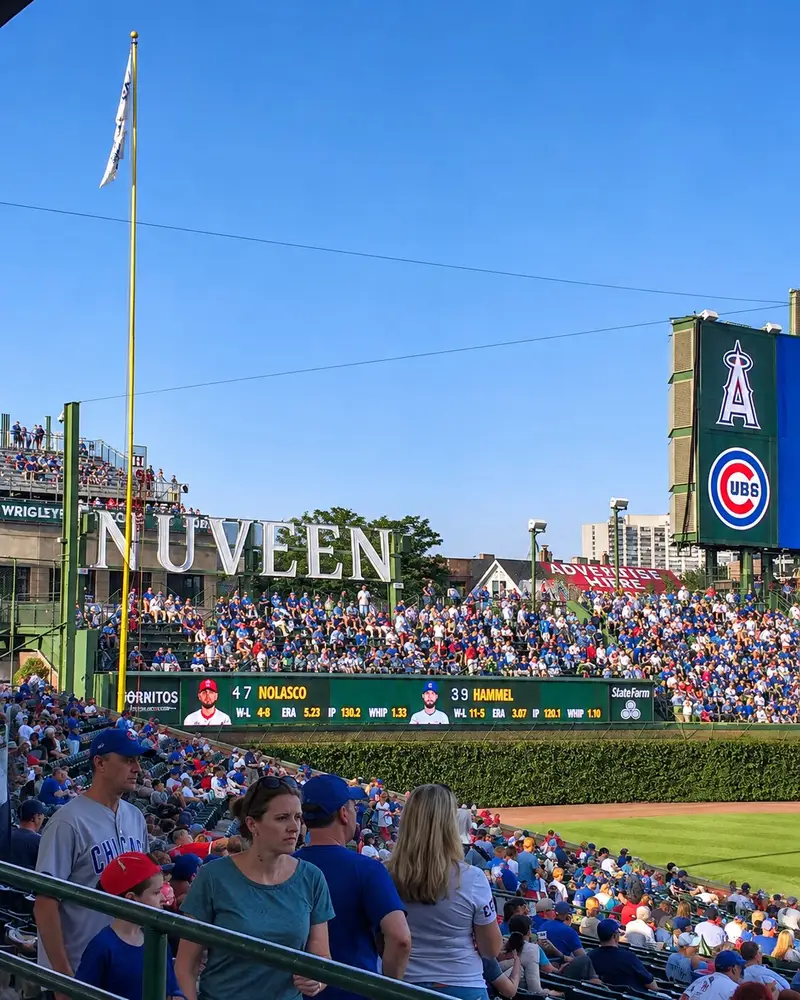
As mentioned earlier, the bleachers at Wrigley Field are strictly General Admission.
This means there are no assigned seats—it is entirely first-come, first-served.
If you are going with a group of four or more friends and you show up right at the first pitch, you are going to have a massive problem.
You will not find four empty seats together, and Chicago fans are not going to move to accommodate you just because you didn’t plan ahead.
You will end up split up, standing in the back, or sitting in the very top corners of the section.
How to avoid this: If you have bleacher tickets, the gates open 90 minutes before the game (two hours early on Saturdays and opening day). Get there when the gates open, sprint to claim your spot, and take turns sending people to grab drinks while someone guards the territory.
9. Timing Your Bathroom Breaks Poorly (And the Infamous Troughs)
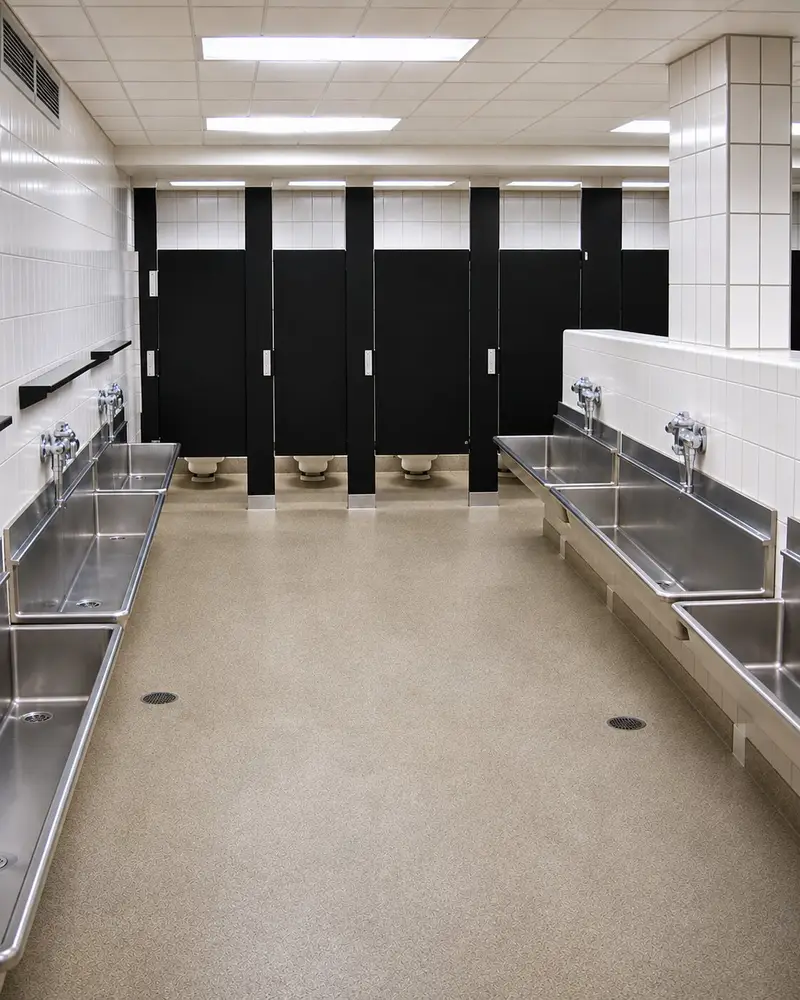
Because Wrigley Field is well over a century old, it does not have the sprawling, ultra-modern facilities of newer MLB stadiums.
The restrooms are notoriously small, and the lines can get incredibly long—especially for the women’s restrooms between innings.
And for the men? Prepare for a culture shock if you’ve never been.
Many of the men’s restrooms at Wrigley still feature the infamous, communal metal troughs instead of individual urinals.
If you wait until the middle of the 7th-inning stretch to use the restroom, you will spend an entire inning crammed in a chaotic, shoulder-to-shoulder line.
How to avoid this: Go during the action, not during the breaks. Slip away during a mid-inning pitching change or while the bottom of the opposing team’s lineup is batting.
10. Asking for Ketchup on a Chicago Dog
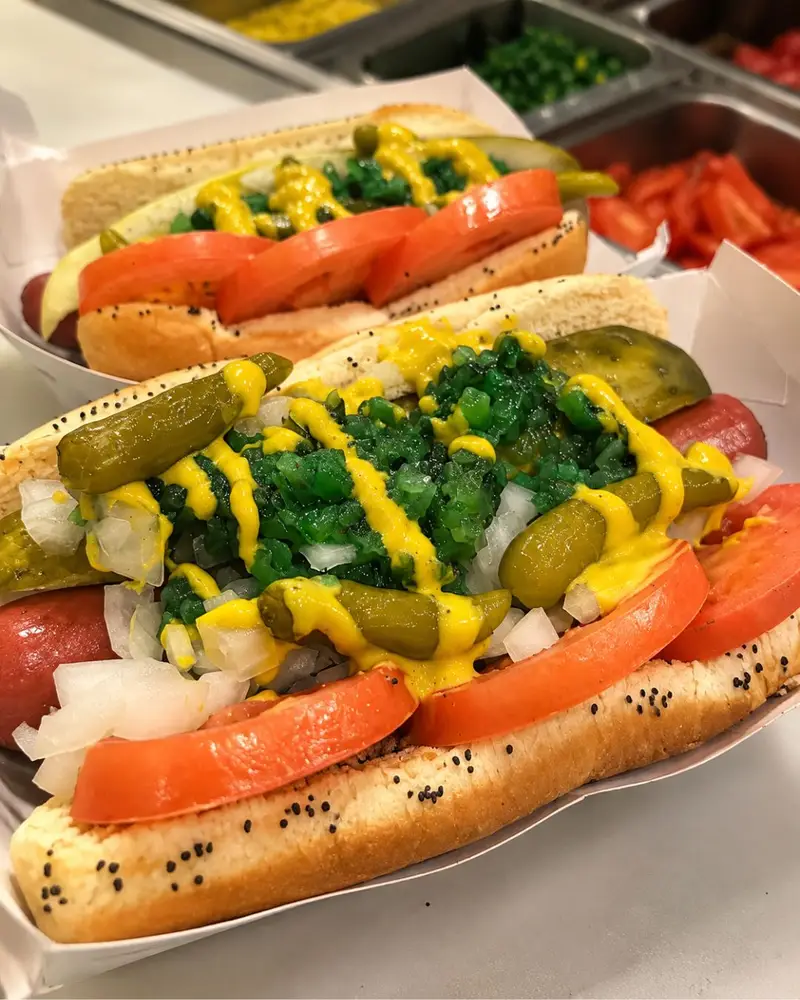
Getting a hot dog at the ballpark is an essential part of the baseball experience.
But if you are visiting Chicago, there are culinary rules you must respect.
If you want to try one of the best hot dogs in Chicago, you have to order it “dragged through the garden.”
That means yellow mustard, bright green relish, chopped onions, tomato slices, a dill pickle spear, sport peppers, and a dash of celery salt.
If you ask the concession vendor for ketchup, you will get some serious side-eye. There is a deeply rooted, historical reason Chicago banned ketchup on hot dogs, and Wrigley Field honors that tradition.
How to avoid this: Embrace the local culture and eat the hot dog exactly how it was meant to be eaten! If you really need ketchup for your french fries, you can find self-serve pump stations on the concourse, but apply it discreetly.
11. Wearing Open-Toed Shoes or Expensive Sneakers
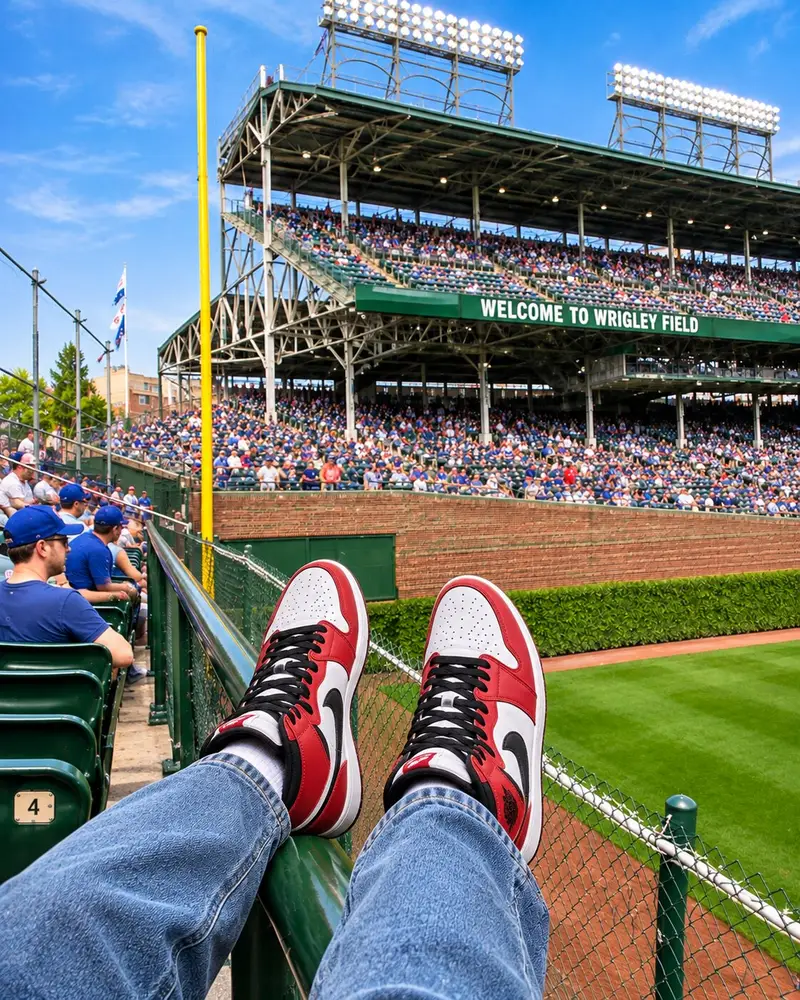
Wrigley Field is a magical place, but pristine and spotless it is not.
By the third inning, the floors in the seating areas and concourses will be a sticky mix of spilled beer, melted ice cream, mustard packets, and thousands of crushed peanut shells.
If you wear flip-flops, sandals, or your brand-new, bright white designer sneakers, you are going to regret it immediately.
Your feet will either end up incredibly dirty or your expensive shoes will be permanently stained by a rogue drop of nacho cheese.
How to avoid this: Dress comfortably and practically. Wear a pair of comfortable, closed-toe walking shoes or older sneakers that you don’t mind getting a little bit of “character” on.
12. Bringing Cash Instead of a Card
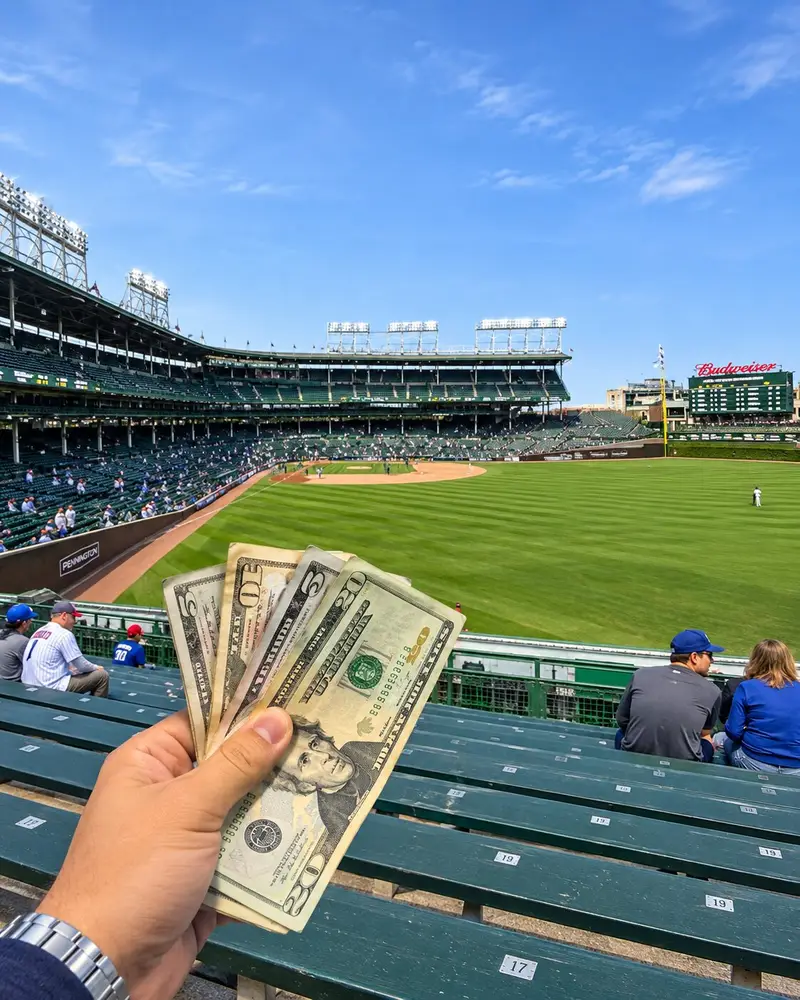
Nothing holds up a concession line quite like a tourist trying to hand a $20 bill to a cashier, only to be told their money is no good there.
Like many modern sports and entertainment venues, Wrigley Field is now a completely cashless stadium.
If you only bring physical cash to the game, you won’t be able to buy a beer, a pretzel, or a souvenir foam finger.
How to avoid this: Bring your credit card, debit card, or ensure your phone is set up with Apple Pay or Google Pay. If you only have cash on you, there are “reverse ATMs” located inside the stadium where you can insert cash and receive a prepaid debit card to use at the stands.
13. Relying on a Screenshot of Your Ticket
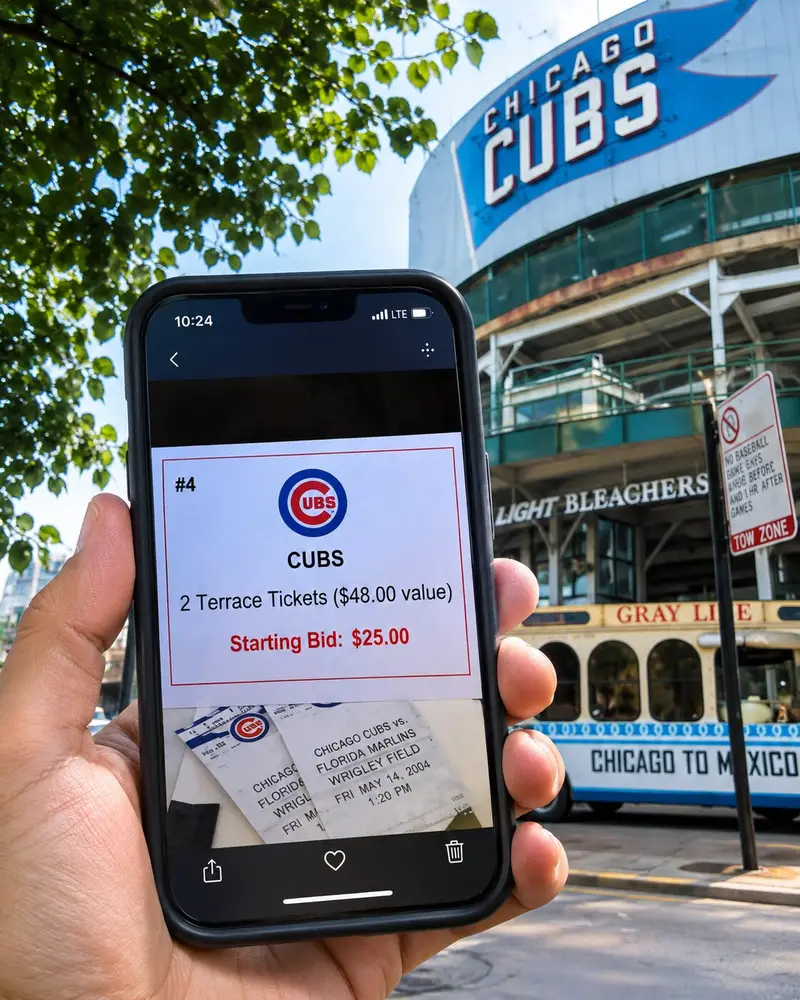
If you get to the historic Wrigley Field marquee, stand in the security line, and proudly pull up a screenshot of your ticket barcode, you will be turned away at the gate.
Wrigley Field requires live, dynamic mobile tickets via the MLB Ballpark app (or verified third-party apps like StubHub or SeatGeek).
Screenshots and printed paper tickets are not accepted.
Because the cellular service around the stadium gets overwhelmed by 40,000 people trying to use their phones at the same time, trying to load the app at the very last second can cause a massive headache.
How to avoid this: Download the MLB Ballpark app well in advance. Log in, ensure your tickets are visible, and add them directly to your Apple Wallet or Google Wallet before you even leave your hotel.
14. Trying to Navigate the Main Concourse Between Innings
The main concourse underneath the grandstands at Wrigley Field is incredibly narrow.
When the inning ends and thousands of people stand up simultaneously to grab a drink, that concourse turns into an absolute gridlock.
If you try to walk from one side of the stadium to the other during this time, you will be moving at a glacial pace.
It can feel claustrophobic and incredibly frustrating if you are just trying to get back to your seat.
How to avoid this: Once again, timing is everything. If you want to explore the stadium or visit the main team store, do it before the game starts. Once the game is underway, try to stick to the concession stands closest to your section.
15. Leaving Early to Beat Traffic (and Missing a Win)
We get it—traffic on Clark Street is a nightmare, and the CTA train gets packed the second the game ends.
Because of this, many fans are tempted to leave in the 8th inning to beat the rush.
But if the Cubs are winning, leaving early is a massive mistake.
When the Cubs win at home, the entire stadium stays to belt out the iconic victory song, “Go, Cubs, Go!” while the white flag with the blue “W” is raised over the manual scoreboard.
It is one of the most joyous, goosebump-inducing traditions in all of sports.
How to avoid this: If the Cubs have the lead, stay in your seat! The memory of singing at the top of your lungs with 40,000 strangers is worth the extra 20 minutes of sitting in traffic. Embrace the chaos of exiting the stadium—it’s all part of the Wrigley experience.
Final Thoughts on Surviving (and Loving) Wrigley Field
Wrigley Field is so much more than just a place to watch a baseball game; it is a living, breathing piece of sports history.
Yes, the concourses are narrow, the weather is completely unpredictable, and the bathrooms are… well, historic.
But those old-school quirks are exactly what make the “Friendly Confines” so incredibly special.
By taking public transit, dressing in layers, avoiding the bleachers if you want a quiet afternoon, and embracing the local traditions, you are setting yourself up for an unforgettable day of Chicago baseball.
Just remember to grab a Chicago Dog, sing your heart out during the 7th-inning stretch, and always throw that opposing home run ball right back where it belongs!
Which of these Wrigley Field tips is your favorite? Let us know in the comments below!
JM
AK