In the spring of 2013, a maintenance worker at a Gold Coast apartment complex on North Dearborn Street set out to plant a garden. He got about six inches down before his spade hit something hard and pale. It was a human leg bone. Beside it, a rib.
Nobody had been murdered. The bones had simply been there, a few inches under the lawn, for roughly 160 years—left behind when the city forgot to finish moving a cemetery.
That is Chicago in a nutshell. Every time a crew breaks ground on a skyscraper, a school, or a sewer line, there is a real chance they will hit something that was never supposed to be found again: a graveyard, a shipwreck, a 3,000-pound safe nobody can open.
Here are eleven of the strangest things dug up under Chicago, taking you from a few inches below the grass all the way to nearly eighty feet under the lakefront.
 JM
AK
Why Is So Much Buried Under Chicago?
Chicago is built on top of itself, and that is not a figure of speech.
In the 1850s the city sat on a swamp. Sewage had nowhere to drain, cholera kept coming back, and engineers eventually settled on a solution that still sounds like something we made up: raise the city. Over about two decades, crews jacked up entire buildings, sidewalks, and streets by four to fourteen feet, then filled in underneath. The original ground floor of Chicago became its basement.
Then came the Great Fire of 1871, which flattened the heart of the city and left millions of tons of rubble that was simply spread around, pushed into the lake, or built over.
Add a lakefront that keeps getting extended with landfill, a soil that is mostly wet clay (excellent at preserving wood and bone), and a city that grew too fast to keep good records, and you get a place where the past is never more than a backhoe scoop away.
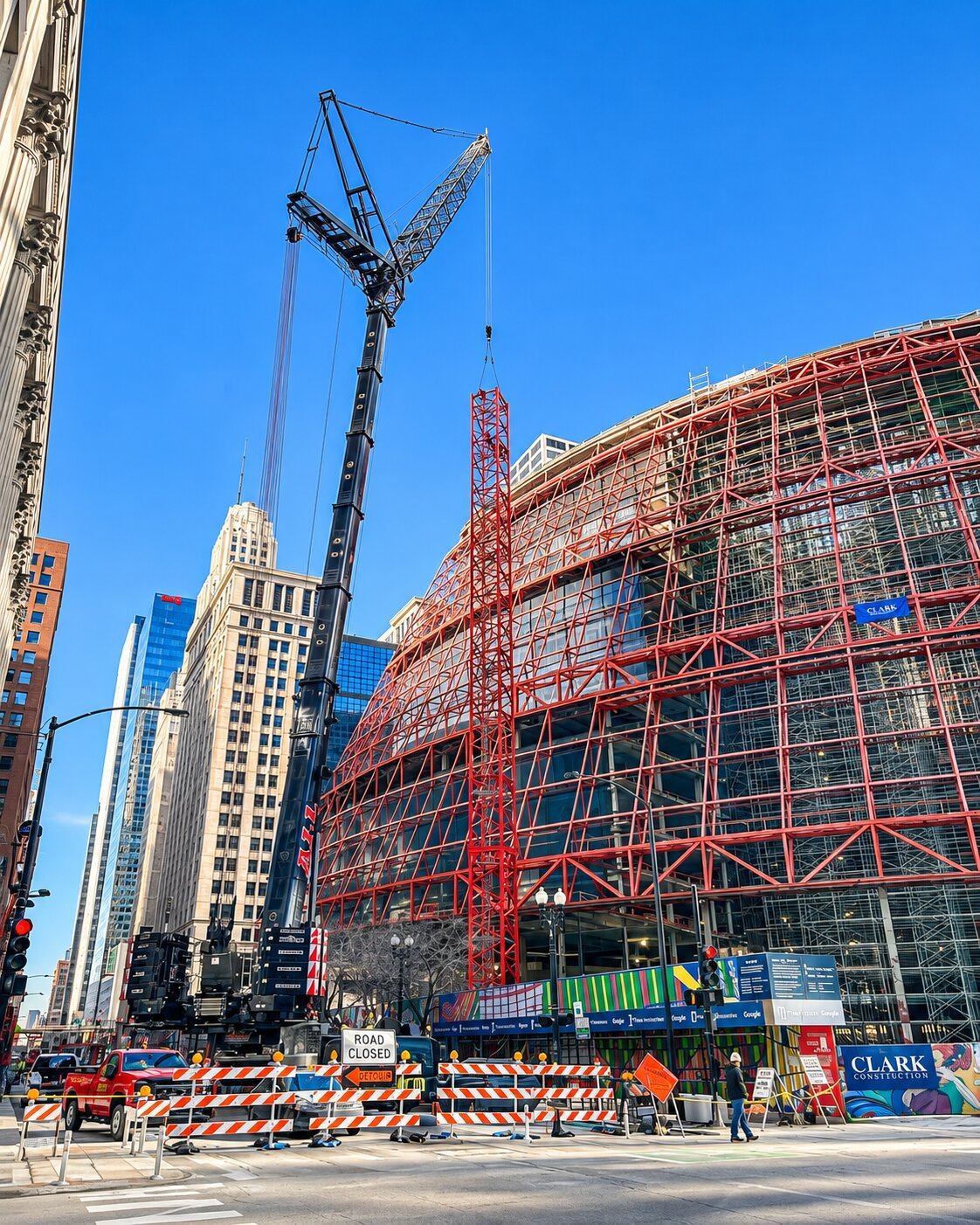
So let’s start digging. First stop: six inches down.
1. Thousands of Skeletons Under Lincoln Park
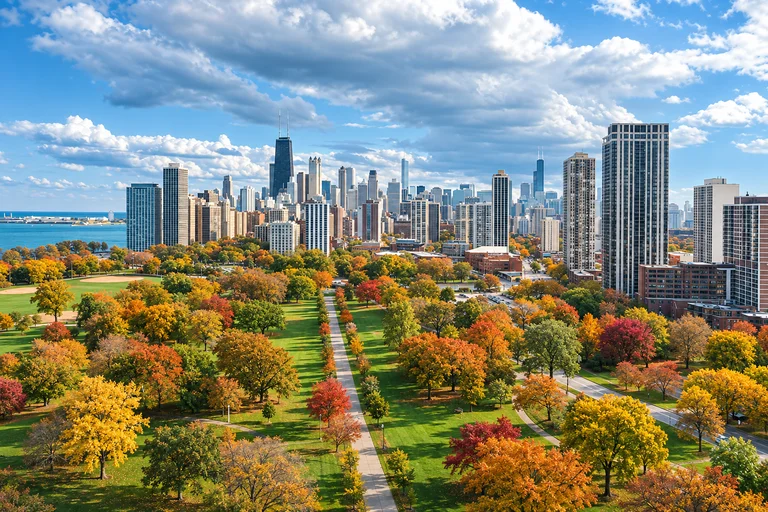
Today, the zoo and the lakefront are some of the best things to do in Lincoln Park. In the 1840s, the same ground was the Chicago City Cemetery, and more than 35,000 people were buried in it.
By the 1860s, the city had a problem. The graves were shallow, the water table was high, and officials worried the dead were seeping into Lake Michigan—the city’s drinking water. They decided to turn the cemetery into a park and ordered every body moved.
They didn’t move every body. Not even close.
Between sloppy contractors, lost records, and the Great Fire burning through the paperwork, historians estimate 10,000 to 12,000 people were left in the ground. The park was simply landscaped over the top of them.
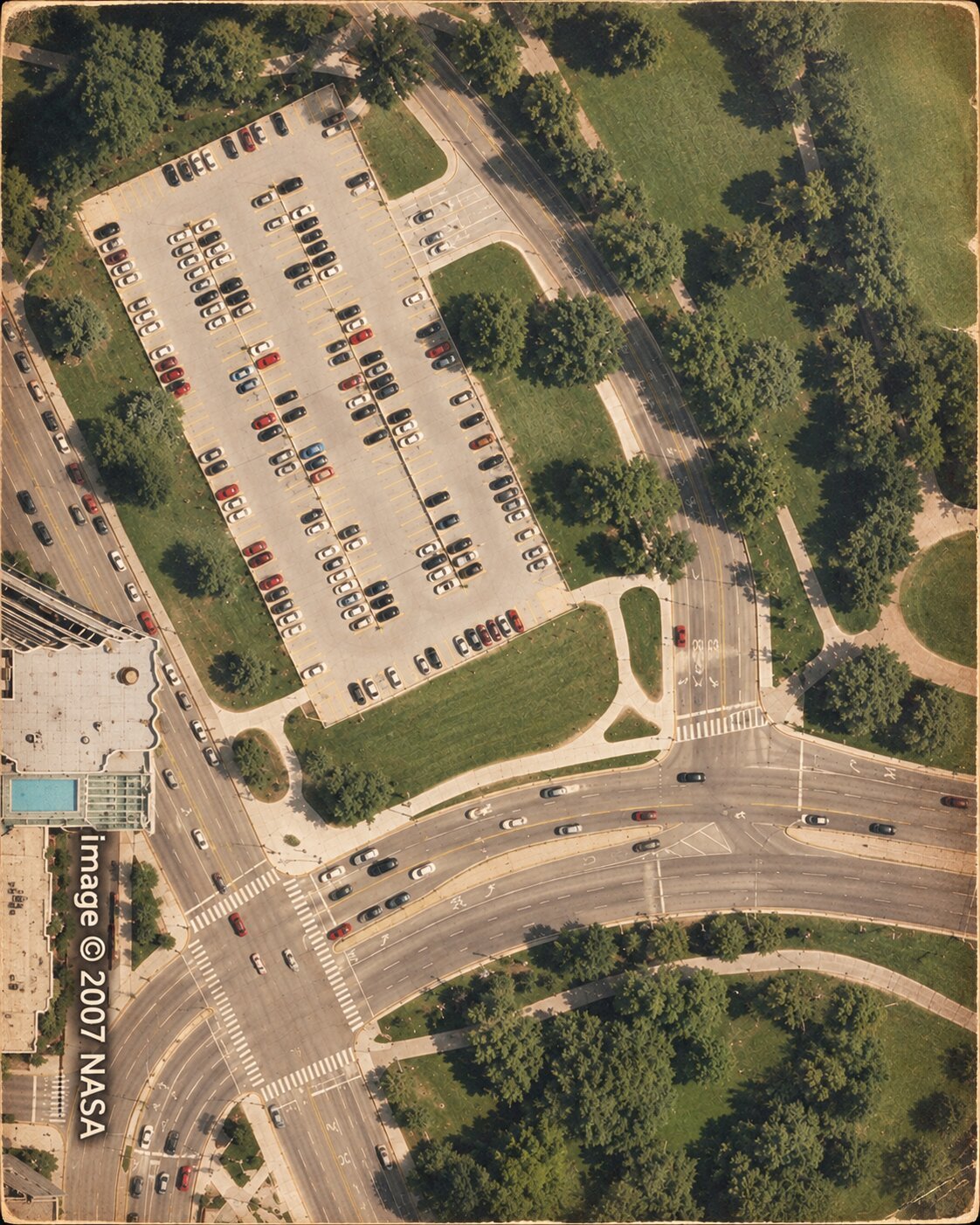
Which is why the bodies keep turning up. In 1998, workers building a parking garage for the Chicago History Museum uncovered the remains of 81 people, including an 1850s young man sealed inside a cast-iron coffin, so well preserved his leather boots were still intact. In 2013 came the Gold Coast gardener and his six-inch discovery. Routine utility work in the park has produced bones more times than anyone has bothered to count.
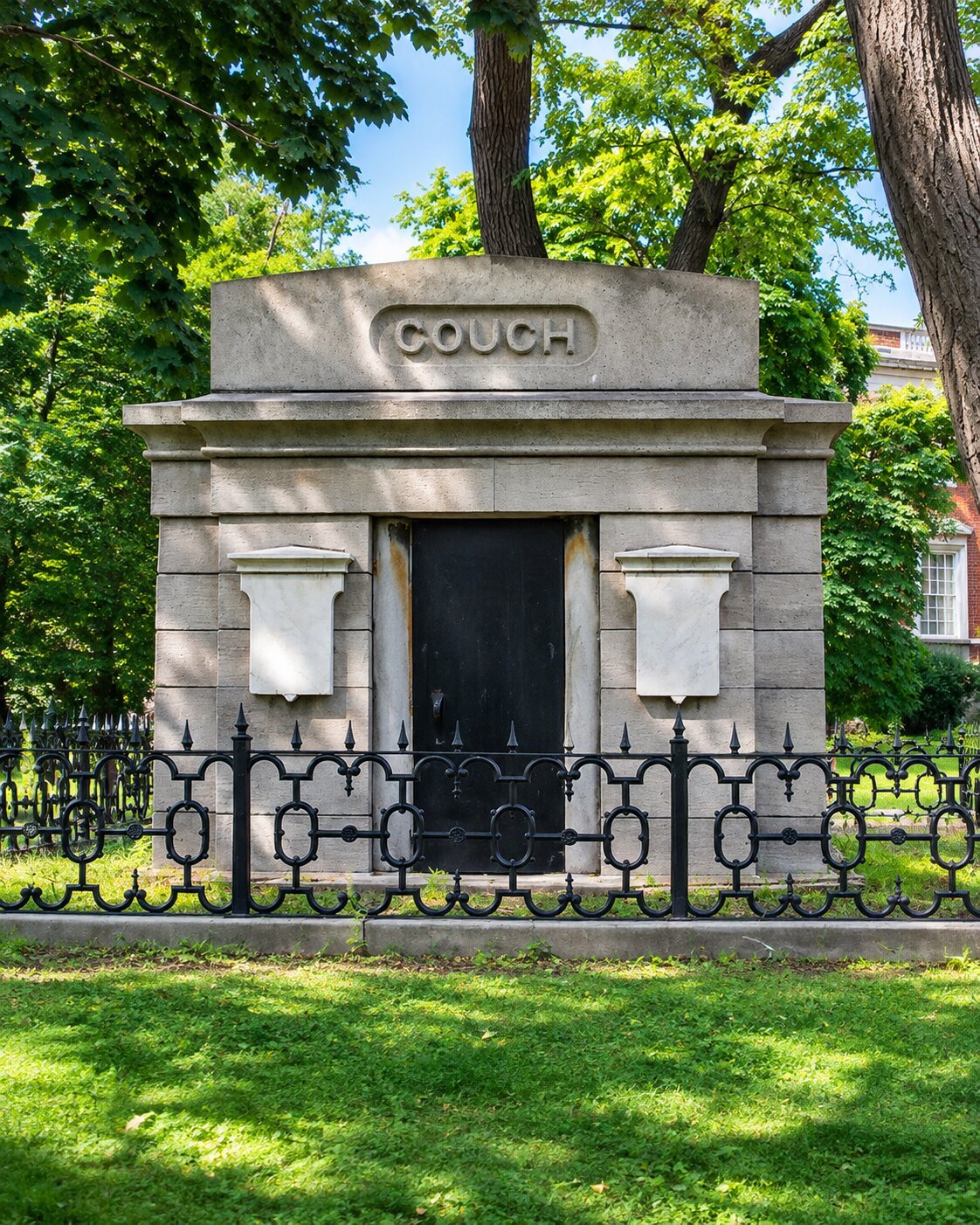
See it today: The 50-ton Couch Tomb still stands beside the Chicago History Museum, left behind in the 1800s because it was too expensive to move. Nobody is entirely sure who, or how many, are inside.
2. Civil War Relics in Bronzeville
Three feet down in a grassy lot behind Pershing Magnet School, there is a war.
Most people picture the Civil War in Virginia or Georgia, but Chicago hosted one of the largest Union training camps and Confederate prisoner-of-war camps in the country: Camp Douglas, on the South Side in what is now Bronzeville. Thousands of Confederate prisoners died there. When the war ended, the camp was torn down, sold off, and built over so thoroughly that for a century its exact footprint was lost.
Beginning in 2013, archaeologists and volunteers started opening small trenches in the lots behind the school. They didn’t have to go far. About three feet below the surface they began pulling up Union uniform buttons, bullets, ink wells, and clay smoking pipes carved by bored soldiers 150 years earlier.
Today, any plumbing or real-estate work in that corner of Bronzeville puts preservationists on alert, because the dig proved what everyone suspected: the camp never really went anywhere.
See it today: Head a few miles south to Oak Woods Cemetery (1035 E. 67th St.) to see the Confederate Mound, where more than 4,000 prisoners who died at Camp Douglas were reburied beneath a towering bronze monument.
3. An 1870s Saloon’s Trash Pit (and a Hot Sauce Bottle)
Before weekly garbage collection, Chicagoans threw their trash into the backyard privy vault—the outhouse pit—or just buried it. For an archaeologist, a 19th-century privy is the closest thing to a time machine.
In 2016, a developer partially demolished an 1870s building on West Chicago Avenue in West Town to put up a new retail space. While digging out the old dirt basement, workers broke into one of these pits. It had belonged to the building’s first occupant: a saloon run by a German immigrant named Nick Eckhardt.
What came out was an entire evening at an 1870s bar, in pieces. Vintage signs. Dozens of shattered beer mugs. Thousands of animal bones from the saloon’s stews. And one perfectly intact, cathedral-shaped green pepper sauce bottle dated to 1867—proof that Chicagoans have been putting hot sauce on everything for a very long time.
4. The Lost Tiles of the Mecca Flats
Not everything under Chicago is a body or a bottle. Sometimes it’s beautiful.
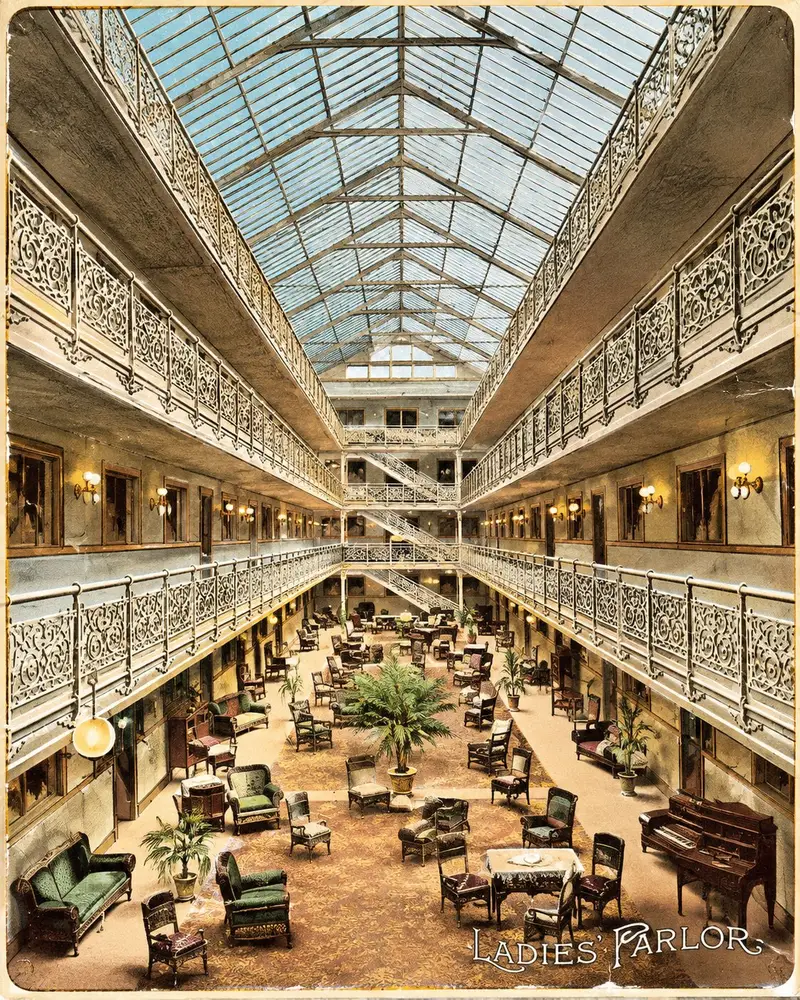
The Mecca Flats went up in 1891 to house visitors to the World’s Fair: a grand apartment block with open-air interior courtyards, glass skylights, and ornate iron balconies. By the 1920s it had become a landmark of Black Chicago, home to musicians, writers, and families who gave the building a life far bigger than its architects imagined. Gwendolyn Brooks wrote a book-length poem about it.
The Illinois Institute of Technology wanted the land. Residents fought the demolition for fifteen years and lost. In 1952 the Mecca came down, and Mies van der Rohe’s steel-and-glass Crown Hall rose in its place. For sixty years, the building survived only in black-and-white photographs.

Then, in 2018, maintenance workers cut a plumbing trench beside Crown Hall and the dirt gave way to color. Terracotta, cream, cobalt blue. The Mecca’s original mosaic floors had been sitting under the campus lawn the entire time, and the first people to see them in color since 1952 were plumbers.
See it today: A salvaged section of the tile is now in the collection of the Art Institute of Chicago.
5. Plaster From the 1893 White City
The 1893 World’s Columbian Exposition was the most spectacular thing Chicago ever built, and it was designed to fall apart.
The grand neoclassical palaces of the “White City” in Jackson Park weren’t marble at all. They were wood and steel frames coated in staff, a cheap mix of plaster, cement, and jute fiber painted white. The fair closed, a fire swept through the fairgrounds, and within a few years almost nothing was left standing.
Almost nothing above ground, anyway.
In 2007, University of Chicago researchers and students ran the first formal archaeological dig on the fair site. Sifting through their trenches, they found chunks of the original white staff—from the fair’s Ohio state building—along with corroded nails from the construction. After more than a century under the grass, the White City was still there, in crumbs.
See it today: The Museum of Science and Industry is the one major fair building that survived on-site, built with a fireproof brick substructure to protect priceless art exhibits—though its crumbling plaster exterior was eventually stripped and re-carved in permanent Indiana limestone in the 1930s.
6. Water Mains Made of Trees
How did a booming 19th-century city pipe water from Lake Michigan into thousands of homes before cast iron was cheap? With logs.
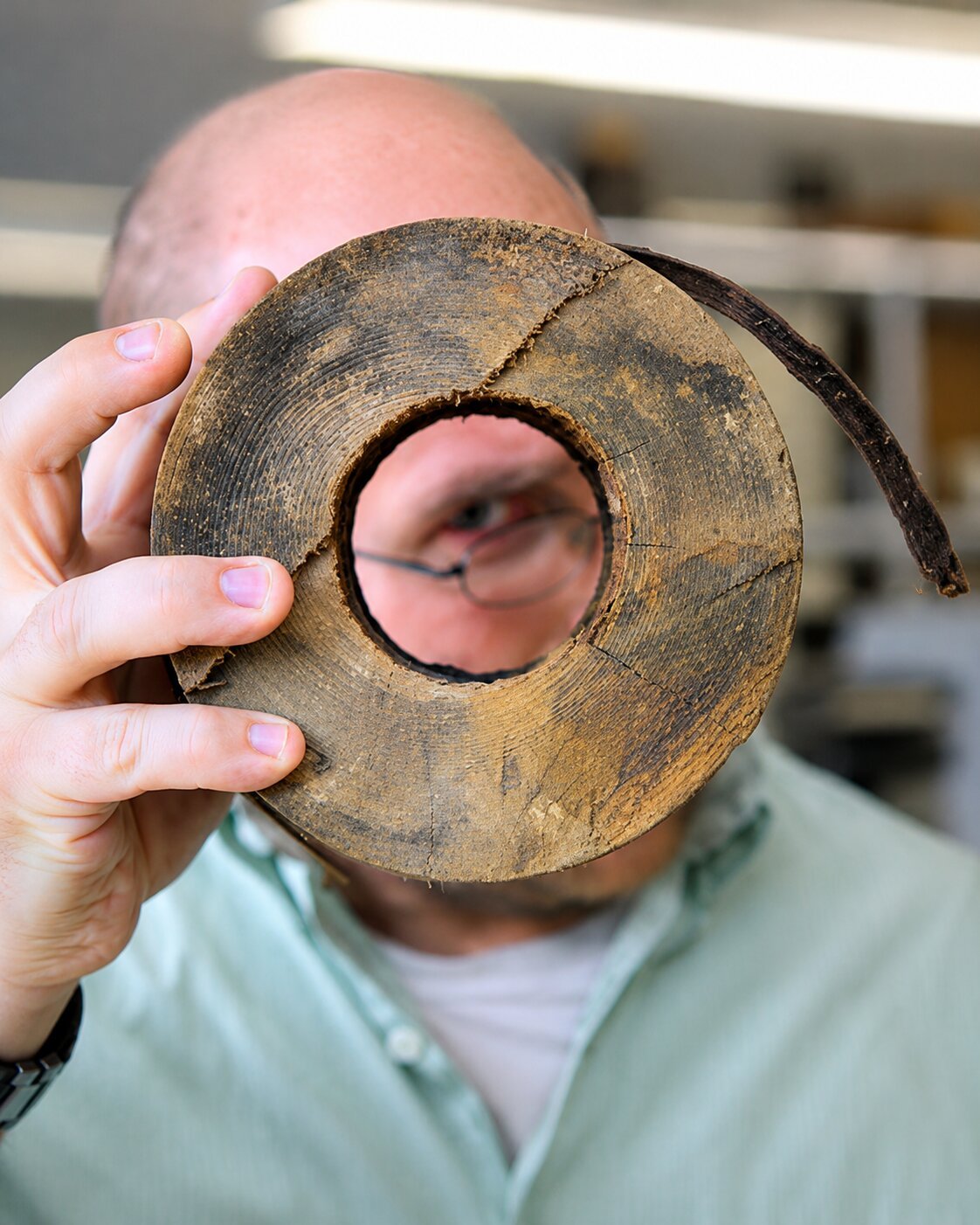
In the mid-1800s, companies like the Chicago Hydraulic Company bored a hole down the center of cedar and pine trunks, joined them end to end with iron bands, and buried them under the streets. Miles of them. When iron and later copper took over, nobody bothered to dig the old logs out. They just laid the new pipe beside them.
Chicago’s wet clay soil turned out to be an ideal preservative. More than 150 years later, utility crews repairing a modern main still occasionally hit one of these wooden pipes, and more often than not it comes up solid, with the bore hole still clean enough to look through.
7. A 3,000-Pound Safe Nobody Can Crack
In June 2019, plumbers were trenching a new sewer line under the parking lot of Anshe Emet Synagogue in Lakeview, part of an expansion of the Bernard Zell Anshe Emet Day School. Foreman Bill Schroeder heard a commotion and walked over to find his crew staring at a rusted steel ball the size of a diver’s helmet. It weighed about 3,000 pounds.
It was a cannonball safe, a design from around 1906 that banks once put on proud display in their lobbies. The spherical shape and solid manganese-steel walls several inches thick meant robbers couldn’t pry it, couldn’t roll it out the door, and couldn’t blow it open with nitroglycerin the way they could a square vault. It was built to be opened by exactly one person: whoever had the combination.
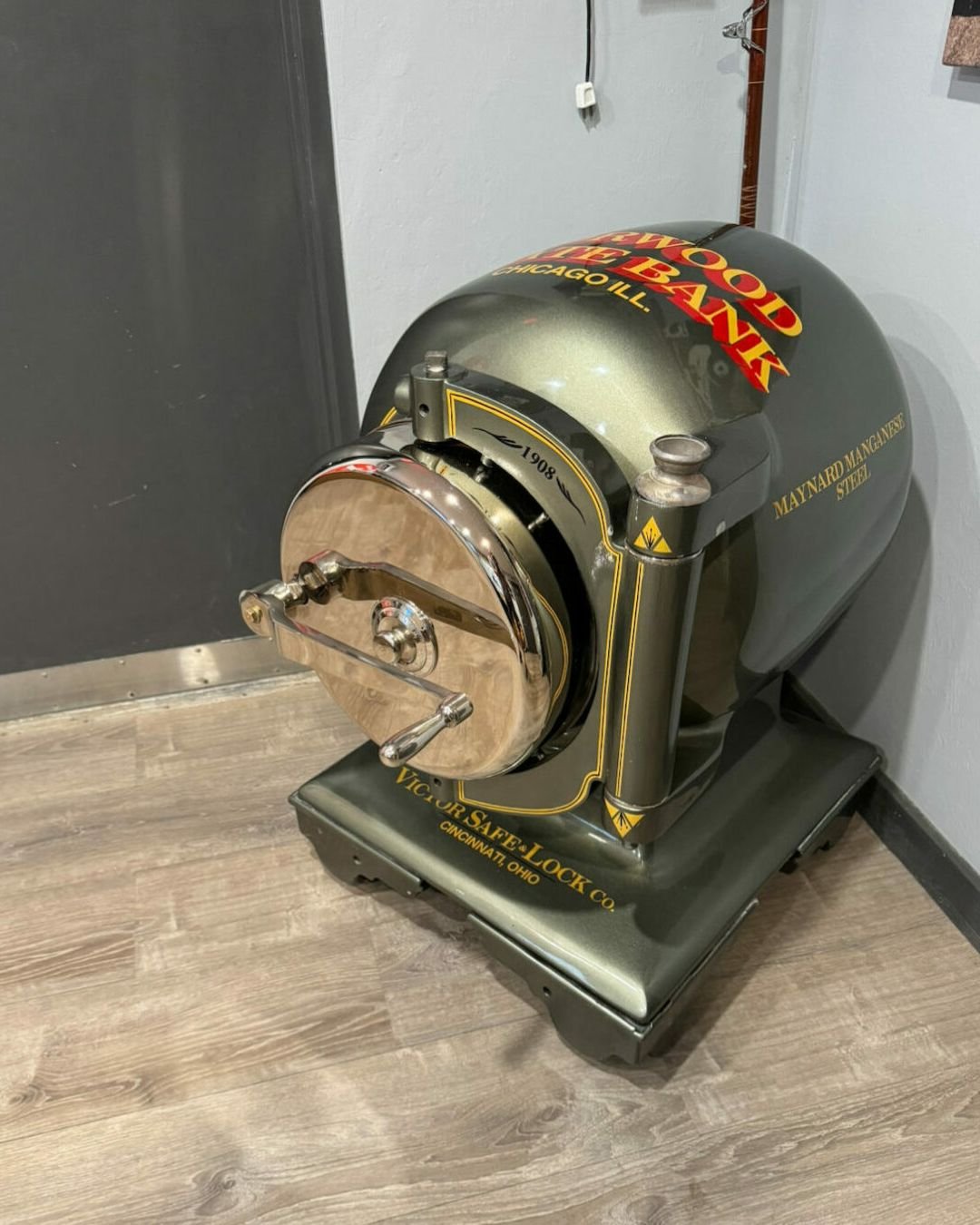
Nobody had the combination. Over the following weeks a parade of locksmiths and self-described safe-crackers tried drilling into it. They snapped drill bits. The synagogue posted a video asking who could crack the mystery, and the internet responded with theories ranging from Al Capone’s lost fortune to a golem. One estimate put the cost of properly opening it at more than $10,000.
Here is the part that drives people crazy: as of the last public update, it was never opened. The synagogue announced it had no plans to crack the safe, and it was tucked under a tarp on the job site while everyone argued about what to do with it. Somewhere in Lakeview, a century-old steel ball is still keeping its secret.
8. A 38,000-Grave Potter’s Field Under a High School
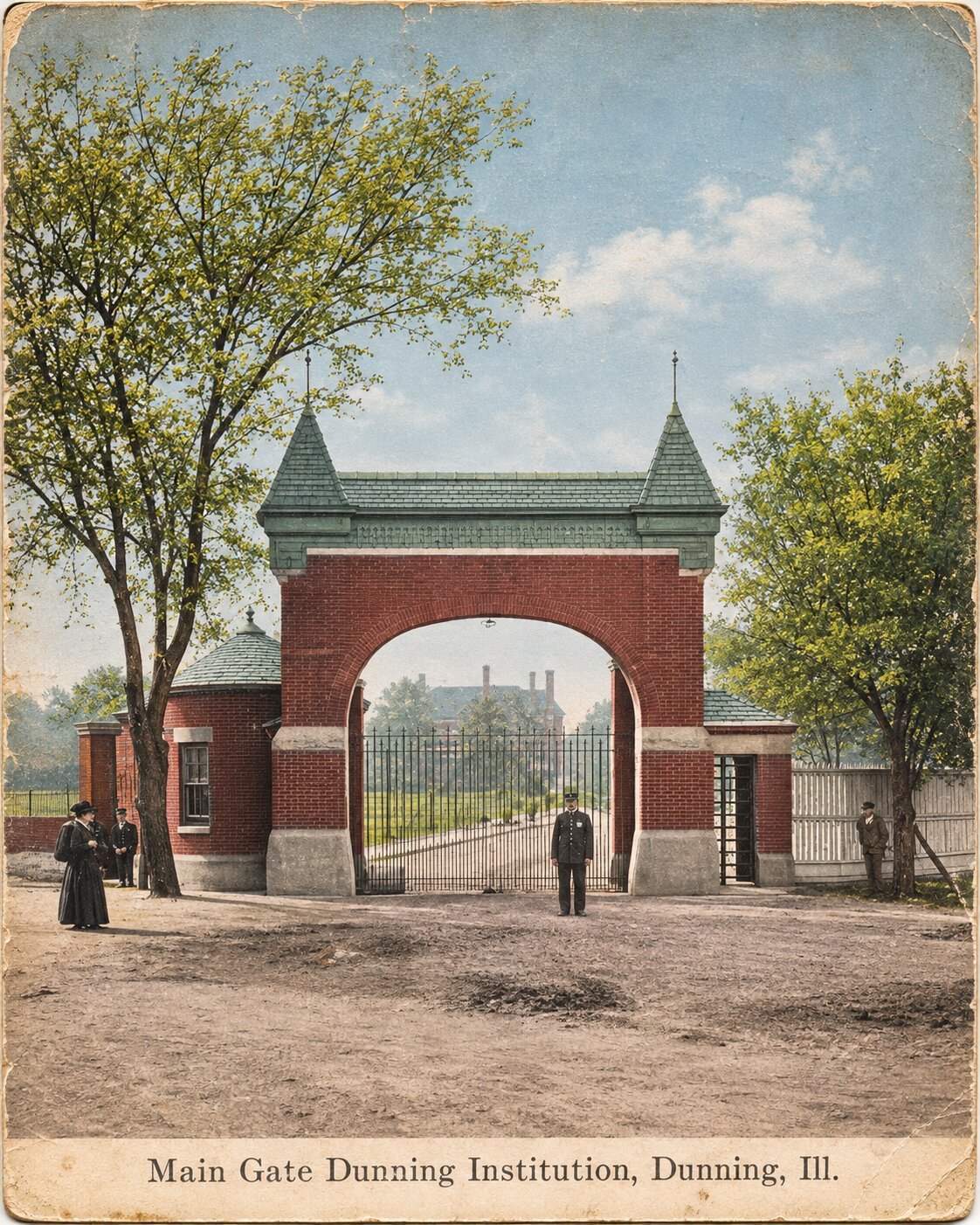
If Lincoln Park’s cemetery was a bureaucratic mess, Dunning’s was a deliberate one.
From the mid-1800s until 1912, a 320-acre complex on the Northwest Side housed the Cook County Poor Farm, the county Insane Asylum, and a tuberculosis hospital. Anyone who died there without family or money—and that was most of them—went into the ground in a wooden box in an unmarked trench. The same went for the unclaimed dead from across the county, and for bodies transferred from Lincoln Park when that cemetery closed. Historians put the total at around 38,000 graves.
Then the institutions closed, the buildings were demolished, and the maps were lost.
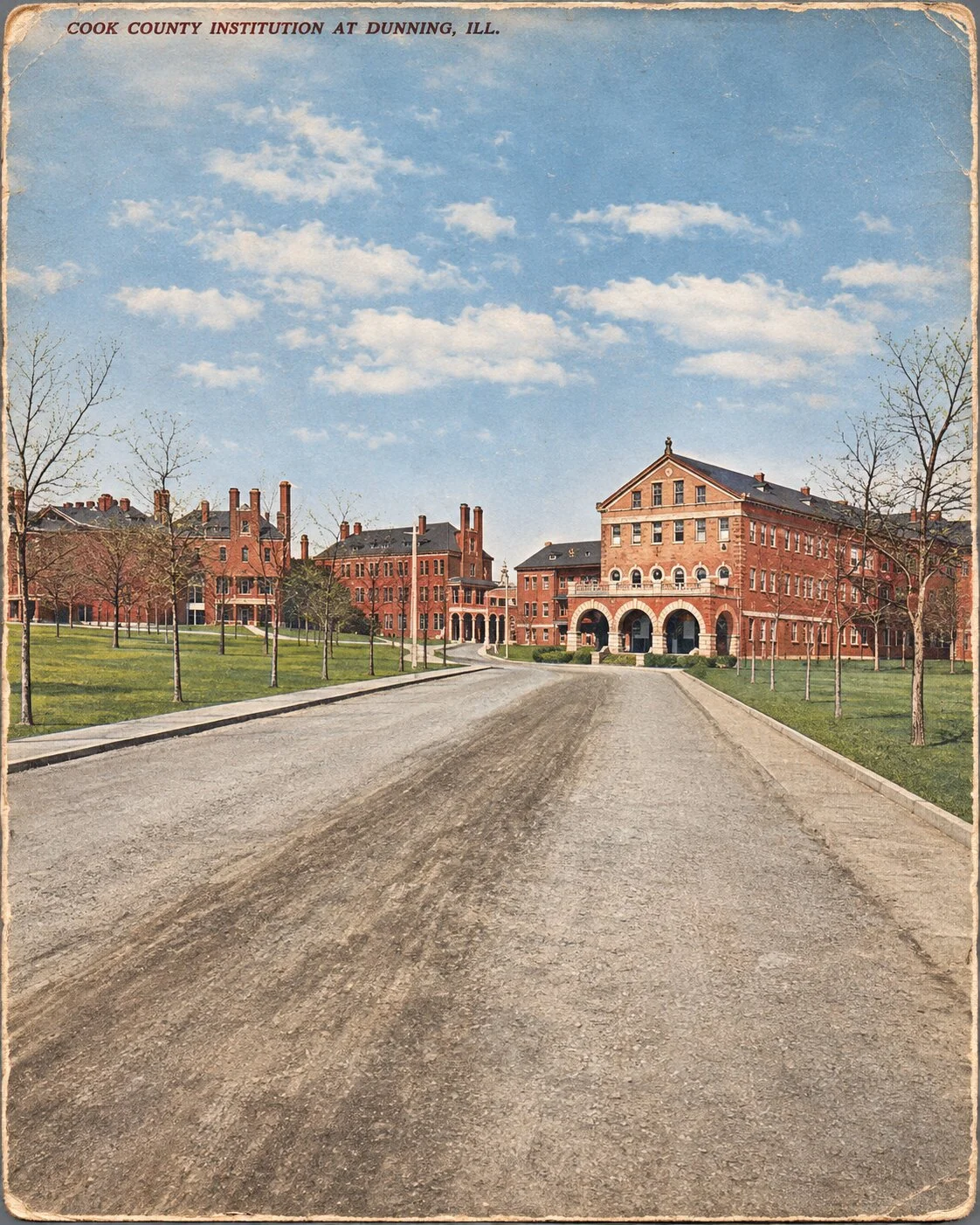
The neighborhood found out the hard way. In 1989, crews laying sewer pipe for a new housing development began pulling up rotted coffins and bones by the dozen. It happened again in 1995. By the time Chicago Public Schools broke ground on a $70 million high school campus there in 2018, nobody could pretend to be surprised: the district brought in ground-penetrating radar, planned every trench around the survey, and relocated what it found before the foundations went in.
It is a reminder that plenty of ordinary-looking Chicago buildings hide a dark history.
See it today: A small memorial park, Read-Dunning Memorial Park, marks a portion of the burial ground near Narragansett and Belle Plaine.
9. A Shipwreck Under a Streeterville Skyscraper
Streeterville, one of the most expensive neighborhoods in the city, is literally built on garbage, and the man responsible would be delighted to tell you so.
In 1886, a showman and part-time gunrunner named Captain George Wellington Streeter ran his steamboat aground on a sandbar off what is now Superior Street. Rather than refloat it, he started charging contractors to dump their construction debris and leftover Fire rubble around the hull. Sand piled up against the fill. New land appeared. Streeter declared it the “District of Lake Michigan,” claimed it belonged to him, and spent the next thirty years fighting the city, the courts, and occasionally the police to keep it. He lost in 1918; the Hancock Center and Water Tower Place now stand on his “district.”
Fast-forward to April 2026. Crews digging deep utility trenches along East North Water Street, feeding a new high-rise near Lake Shore Drive and the river, hit wood. Curved wood.
Out of the trench came fragments of an 1800s boat hull, along with a scatter of 19th-century life: medicine bottles, square-cut construction nails, and leather boots in surprisingly good shape. Local historian Gail Spreen, who has spent years documenting the neighborhood, confirmed the site sat right on Chicago’s original shoreline—exactly where Streeter’s era would have left its junk. The artifacts are being preserved, with talk of a future museum display.
Whether it is the Captain’s own boat, nobody can yet say. But it is the right kind of boat, in the right place, in the right trash.
See it today: A bronze statue of Captain Streeter—top hat, walking stick, and his dog Spot—stands near the lakefront at the east end of Grand Avenue, looking back at the skyline built on his sandbar.
10. A 78-Foot Hole Full of Water
Not every relic under Chicago is old. Some are embarrassingly recent.
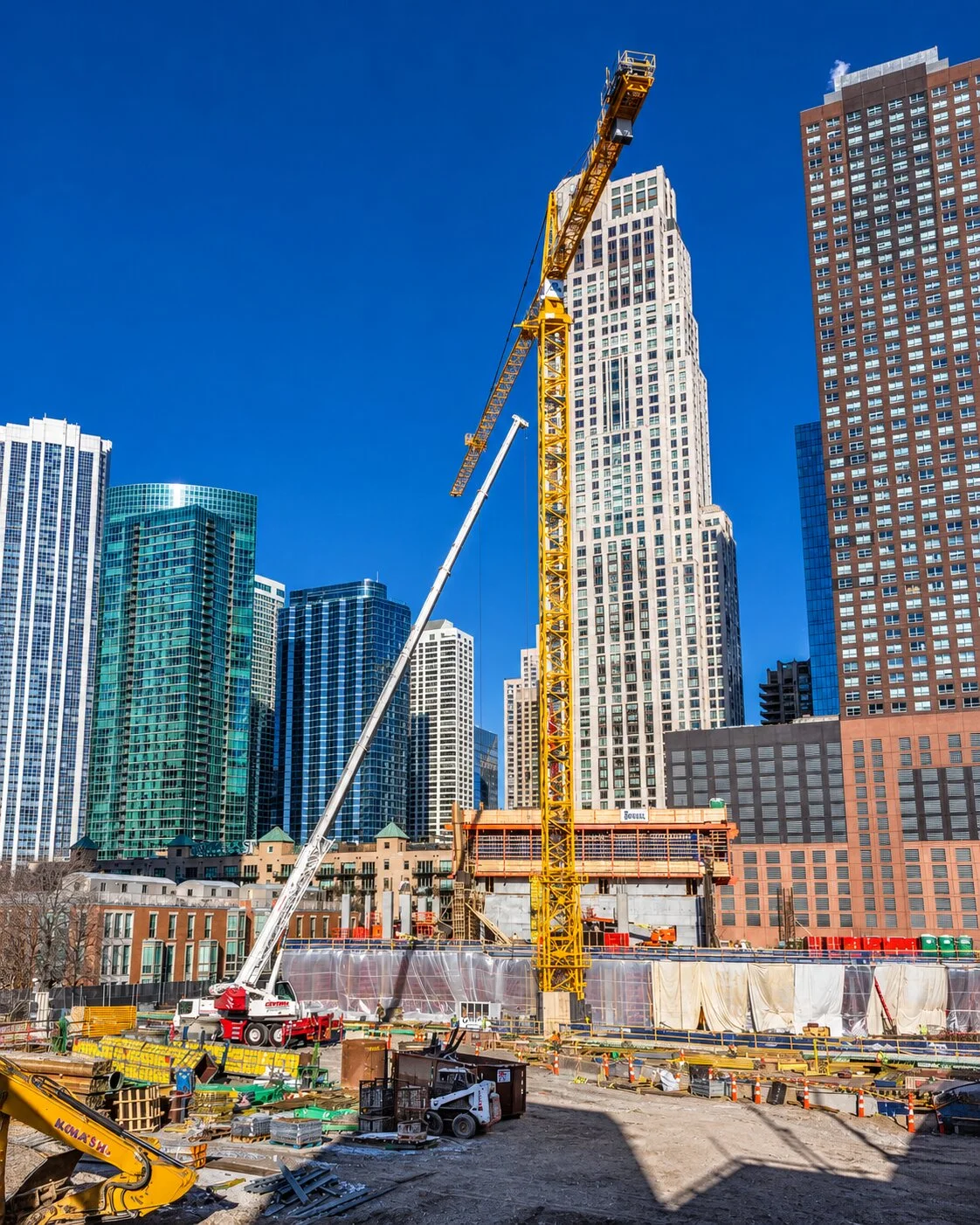
In 2007, work began on the Chicago Spire, a twisting 2,000-foot tower that would have been the tallest building in the Western Hemisphere and the crown of Chicago’s already absurd skyline. Crews dug the foundation first: a circular cofferdam 104 feet across and 78 feet deep, right where the river meets the lake. Then the 2008 financial crisis hit, the money vanished, and the developers walked away.
The hole stayed. For more than a decade it sat at the foot of Lake Shore Drive filled with rainwater, a round, flooded crater that tourists photographed and locals called the city’s most expensive swimming pool.
When Related Midwest finally built on the site—the twin towers of 400 Lake Shore Drive—engineers couldn’t simply fill the hole and start over. They had to drain it, inspect it, and work the old cofferdam into the new foundation. The failed Spire is now, quite literally, holding up its replacement.
11. Sixty Miles of Forgotten Tunnels
Back up at forty feet below the Loop, the thing crews found wasn’t an object. It was an absence: a vast, empty labyrinth that almost nobody remembered was there.
Starting in 1899, a private telephone company got a permit to run cables under downtown. What it actually built was a 60-mile network of narrow-gauge railway tunnels, six feet wide and seven and a half feet tall, under nearly every street in the Loop. For fifty years, tiny electric locomotives hauled coal, ash, mail, and freight between the basements of department stores, office towers, and the Post Office, keeping thousands of delivery trucks off the streets above. In 1959 the company went bust, the trains stopped, and the tunnels were sealed and, gradually, forgotten.
Then, in April 1992, a crew drove new wooden pilings into the bed of the Chicago River near the Kinzie Street bridge. One piling went straight through the roof of a tunnel.
The river poured in. Roughly 250 million gallons of water raced through sixty miles of tunnels and up into the basements of nearly every major building downtown, knocking out power, drowning electrical systems, and shutting the Loop for days. Nobody was hurt, but the damage ran to the better part of a billion dollars. It became known, simply, as the Chicago Flood—a flood that happened entirely underground, in the sunshine, on a day with no rain.
The tunnels are still down there, now carrying fiber-optic cable. And every foundation crew working in the Loop has a map of exactly where they run.
Bonus: An 1889 Time Capsule, Found Inside a Wall
Not quite “under” Chicago, but too good to leave out.
In 2016, demolition crews were taking down the 1889 First Evangelical Lutheran Church on Damen Avenue in West Town. Salvager Eric Nordstrom, who makes a living rescuing fragments from doomed buildings, was on site when a limestone cornerstone came apart and revealed a sealed copper box inside. A 127-year-old time capsule.
Inside were crisp newspapers from October 26, 1889, including the Chicago Daily News and the Daily Inter Ocean. And a headline story? A breathless report on “professional safe blowers” who had cracked a massive steel vault on Halsted Street.
Somebody should mail a copy to the locksmiths in Lakeview.
What’s Still Down There?
Here’s the unsettling math. Around 10,000 bodies are still under Lincoln Park. Most of the 38,000 at Dunning have never been located. Captain Streeter’s actual boat has never been positively identified. The cannonball safe has never been opened.
Chicago raised itself, burned itself down, filled in its own lake, and built on top of all of it, mostly without writing anything down. The next time you pass a construction site downtown, take a look through the fence. Somewhere in that pit is a layer of the city nobody has seen since before your great-great-grandparents were born.
Which Chicago block would you most want to dig under—and what do you think is down there? Tell us in the comments.
JM
AK