Chicago is a world-class city known for its incredible deep-dish pizza, stunning architecture, and vibrant neighborhoods.
But if you’re a film buff, the Windy City holds a completely different kind of magic.
For decades, Chicago’s soaring skyscrapers and gritty alleys have played a starring role in Hollywood’s biggest blockbusters. From heartwarming John Hughes comedies to explosive superhero epics, this city is a sprawling outdoor film set.
While you can easily spend a small fortune on guided bus tours, you don’t have to. You can create your own Hollywood itinerary without spending a single dime on admission tickets.
 JM
AK
As you walk the city grid to find these cinematic landmarks, you’ll find that Chicago is incredibly safe for tourists as long as you use basic street smarts.
If you’re looking to add some cinematic magic to your travel itinerary, here are the most famous Chicago movie scenes you can visit.
1. Union Station
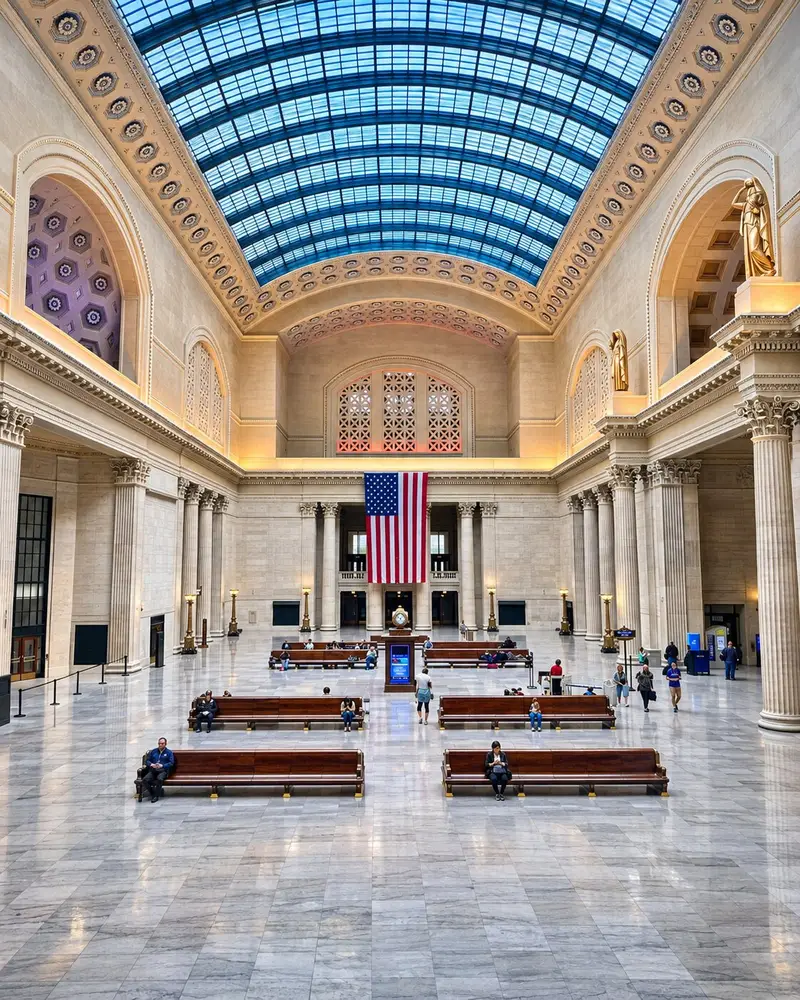
The Movies: The Untouchables (1987), My Best Friend’s Wedding (1997)
The Scene: Union Station is arguably one of the most recognizable indoor filming locations in Chicago. The most iconic moment filmed here is the tense, slow-motion baby carriage shootout on the grand staircase in The Untouchables.
It also served as the romantic, bustling backdrop where Julianne (Julia Roberts) chases after Michael (Dermot Mulroney) in My Best Friend’s Wedding.
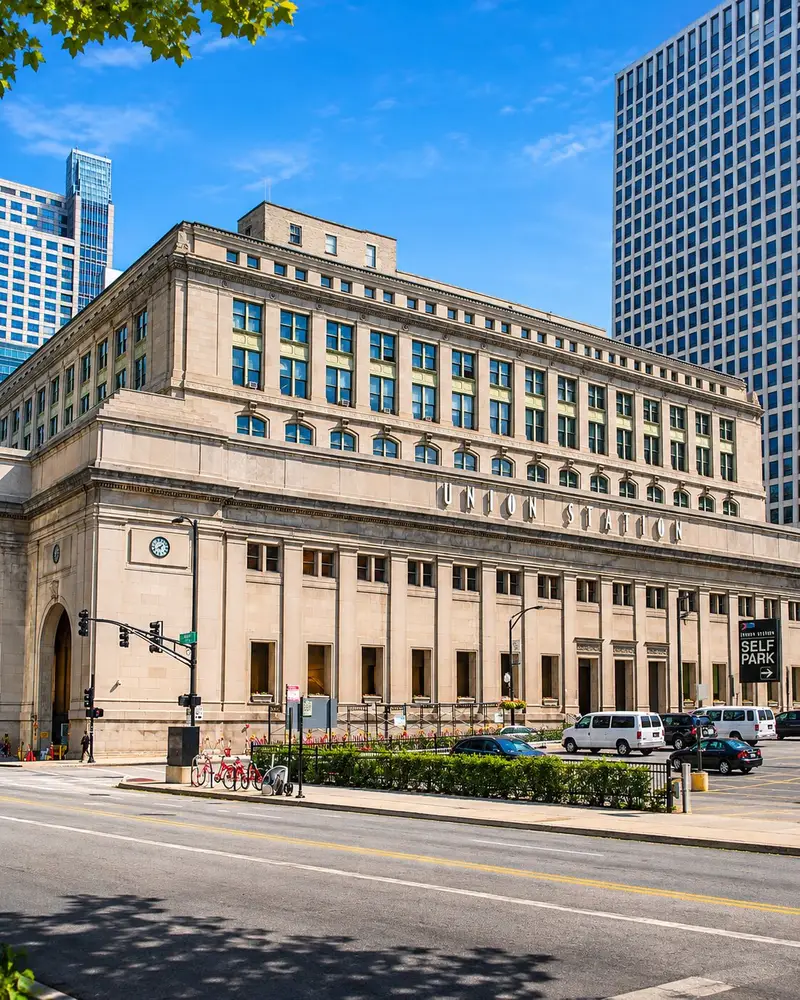
How to Visit: Union Station is an active, working transit hub. That makes it one of the most stunning historic lobbies in Chicago you can experience for free. Head directly to the Great Hall. You’ll immediately recognize the massive brass lamps, the soaring skylights, and the famous marble staircase.
How to Get There: Take the CTA Blue Line to the Clinton stop, or simply walk a few blocks west from the heart of the Loop.
2. LaSalle Street & The Board of Trade
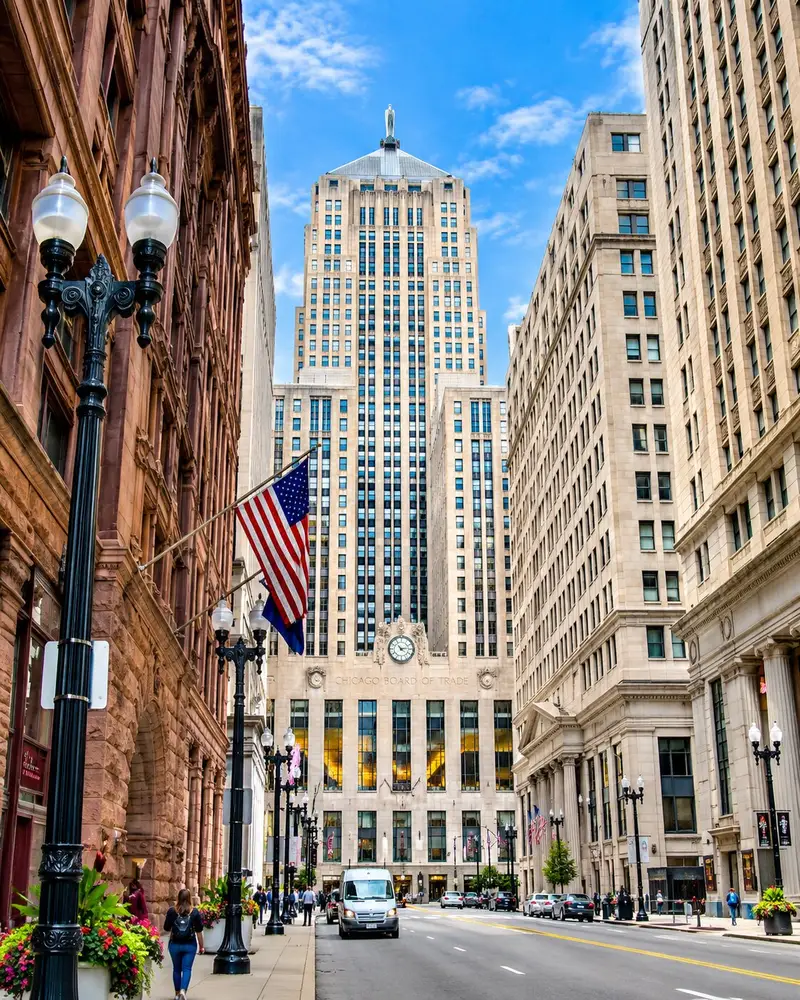
The Movies: The Dark Knight (2008), Ferris Bueller’s Day Off (1986)
The Scene: Welcome to Gotham City! When Christopher Nolan needed a moody, cavernous financial district for The Dark Knight, he chose the heart of Chicago’s Loop.
LaSalle Street is the exact location of the unforgettable showdown between Batman and the Joker. This is the street where the Joker’s 18-wheeler semi-truck was physically flipped upside down in a groundbreaking practical stunt.
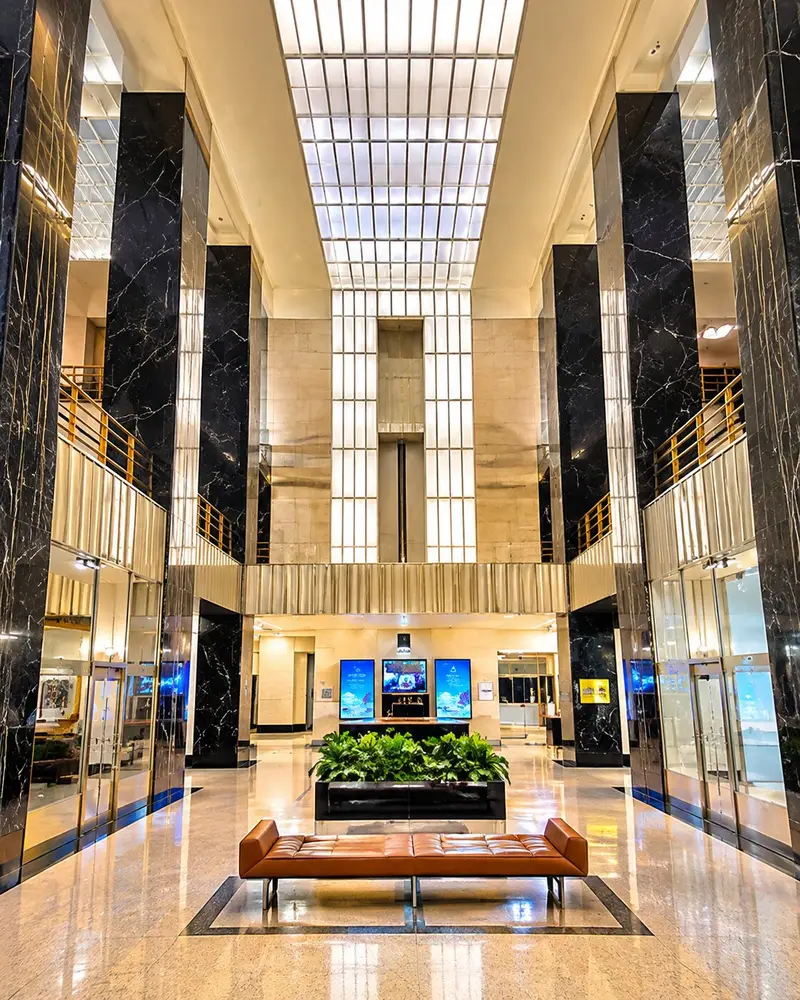
How to Visit: Walking down the LaSalle Street “canyon” won’t cost you a penny. Stand on the sidewalk at Jackson Boulevard and look straight north. The towering art-deco architecture on both sides perfectly frames the Chicago Board of Trade, making it one of the most iconic buildings in Chicago.
How to Get There: Take the CTA Brown, Orange, Pink, or Purple line to the Quincy station and walk one block east.
10 Hidden Architectural Details Chicago Locals Walk Past Every Day (But Tourists Never Notice)

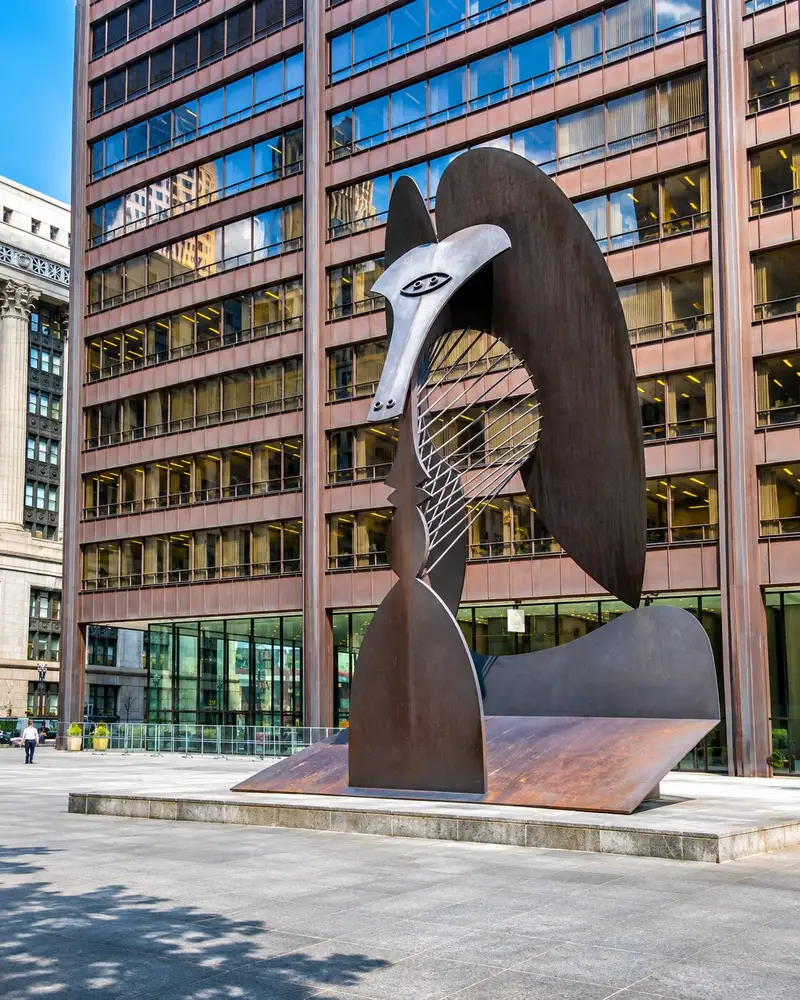
3. Daley Plaza & The Picasso Statue
The Movies: The Blues Brothers (1980), The Fugitive (1993)
The Scene: No movie captures the spirit of Chicago quite like The Blues Brothers.
During the film’s chaotic climax, Jake and Elwood drive their battered Bluesmobile straight through the glass doors of the Richard J. Daley Center. They ultimately crash right in front of the plaza’s massive, unnamed Picasso sculpture. This exact plaza is also famous for Harrison Ford’s frantic phone booth scene in The Fugitive.
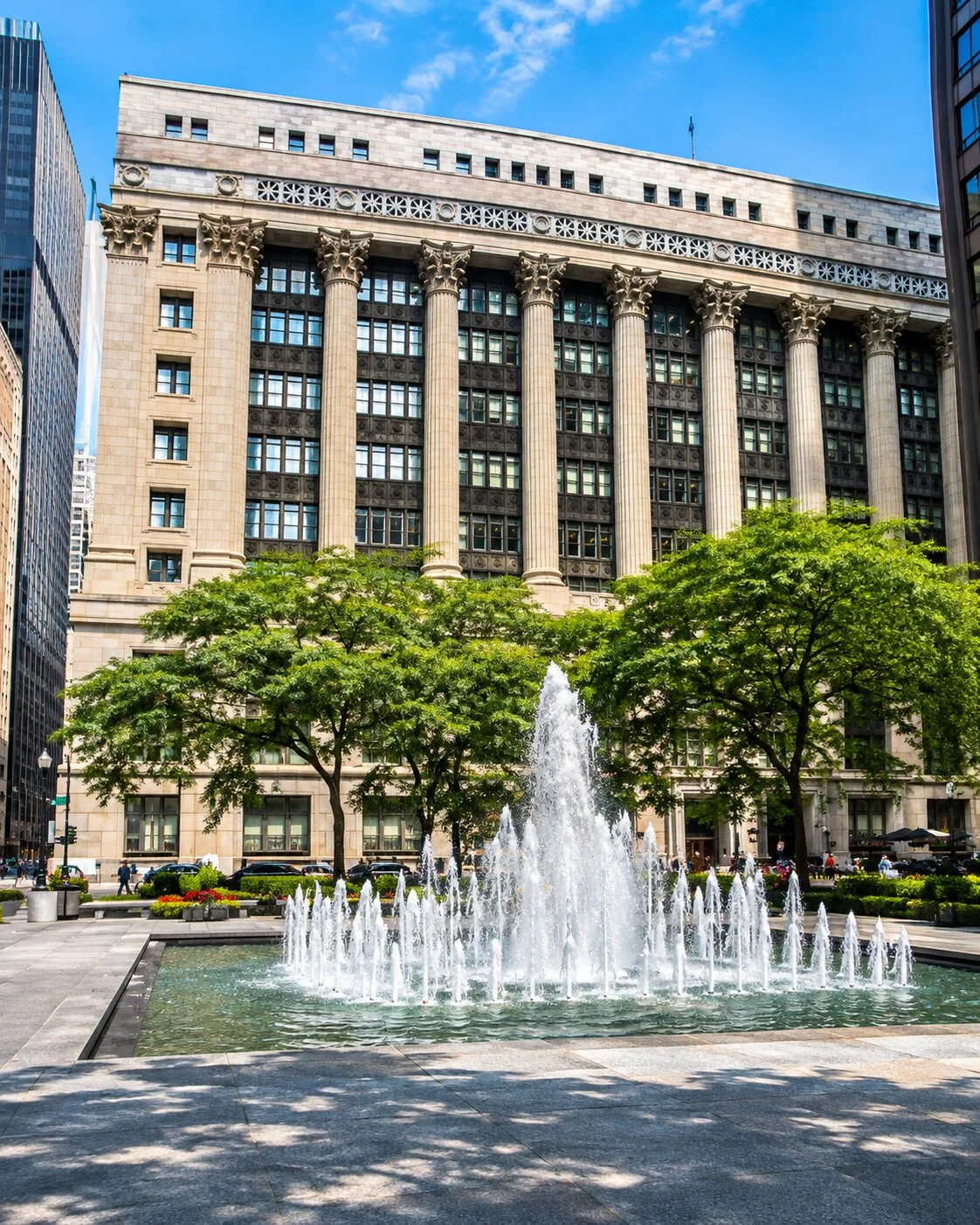
How to Visit: Daley Plaza is a massive open public square in the middle of the city. The 50-foot-tall, rusting steel Picasso statue is impossible to miss. While the glass doors of the Daley Center have since been reinforced, the plaza looks almost exactly as it did in the 1980s.
How to Get There: Take the CTA Red Line to the Washington/State stop and walk one block west.
4. The DuSable Bridge / Michigan Avenue
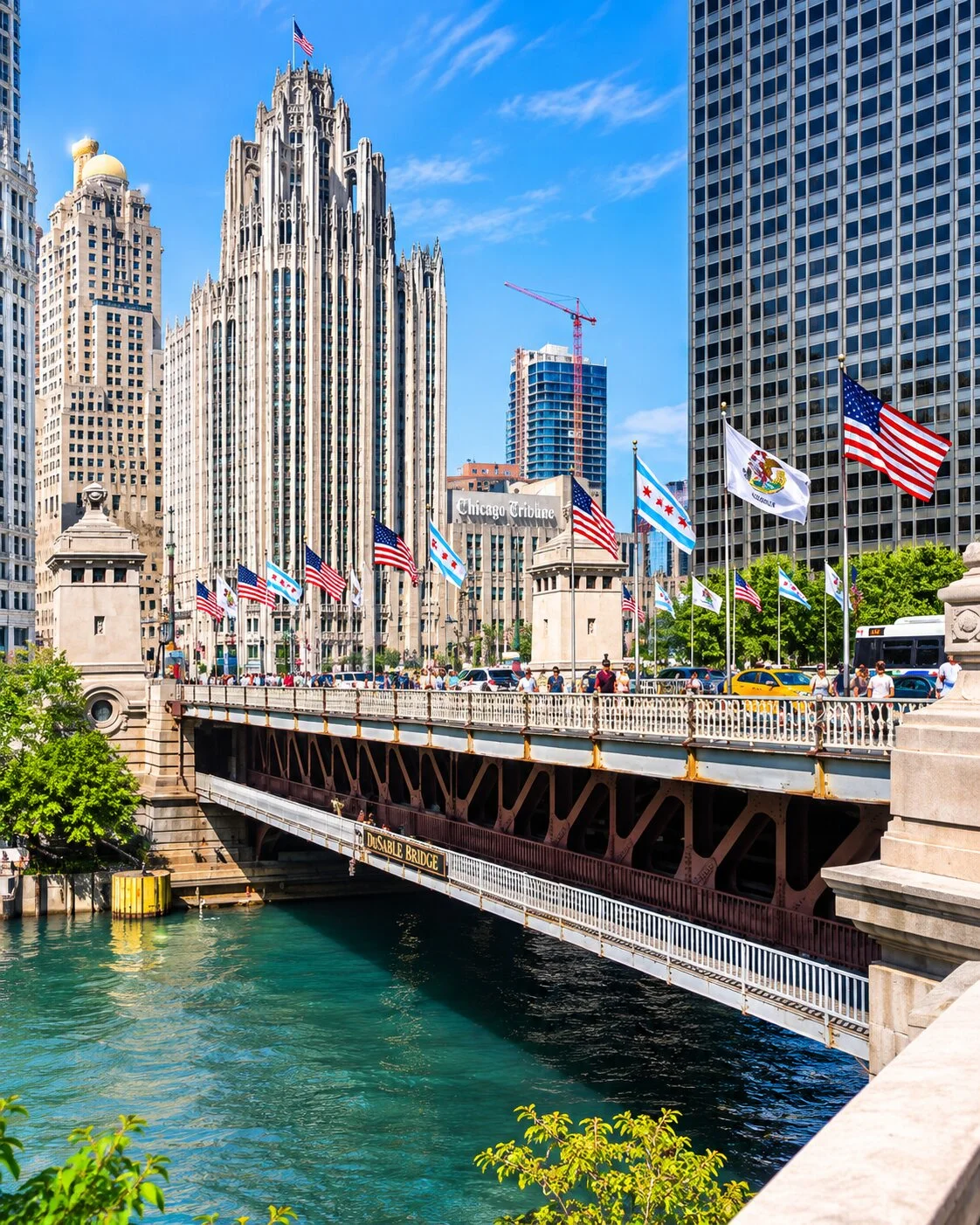
The Movies: Transformers: Dark of the Moon (2011)
The Scene: If you prefer giant robots and exploding skyscrapers, you’ll definitely recognize this area.
Director Michael Bay basically took over the entire Michigan Avenue bridge (now officially the DuSable Bridge) to film the epic, destructive Battle of Chicago in the third Transformers film.
How to Visit: As one of the main pedestrian thoroughfares connecting the Loop to the Magnificent Mile, crossing the bridge is completely free. Look up at the stunning, gothic Tribune Tower and the Wrigley Building, and you can easily visualize the Decepticons attacking from above.
How to Get There: Take the CTA Red Line to the Grand station and walk a few blocks south down Michigan Avenue.
5. Federal Plaza & The Calder Flamingo
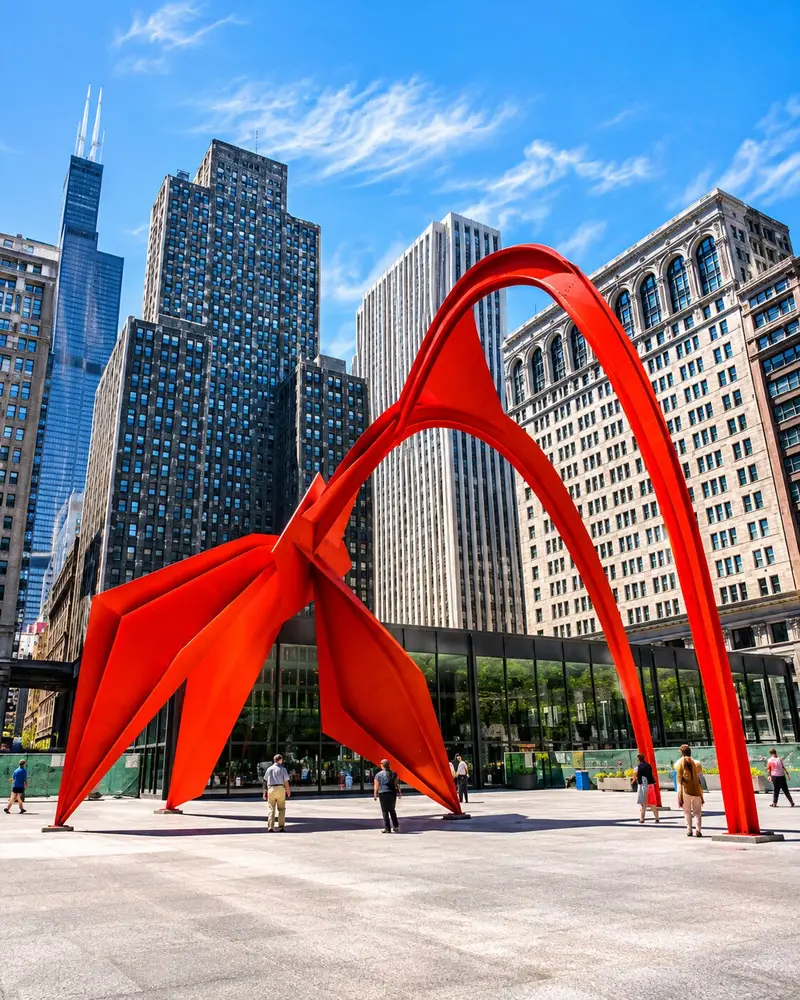
The Movies: Ferris Bueller’s Day Off (1986)
The Scene: John Hughes famously called Ferris Bueller’s Day Off his “love letter to Chicago.”
Ferris famously visits the Art Institute during his joyride. While you’ll need a ticket to view the incredible masterpieces at the Art Institute of Chicago, you can easily visit the outdoor parade locations for free. The most iconic spot is where Ferris crashes the Von Steuben Day Parade and lip-syncs to “Twist and Shout.”
How to Visit: The parade scenes were filmed right in the heart of the business district along Dearborn Street and at Federal Plaza. Look for the giant, bright red arching sculpture known as the Calder Flamingo where crowds of dancers gathered. Throw on your favorite leopard-print vest, crank up the Beatles on your headphones, and recreate the magic.
How to Get There: Take the CTA Blue Line to the Jackson stop, which puts you steps away from the plaza.
6. Millennium Park & Cloud Gate
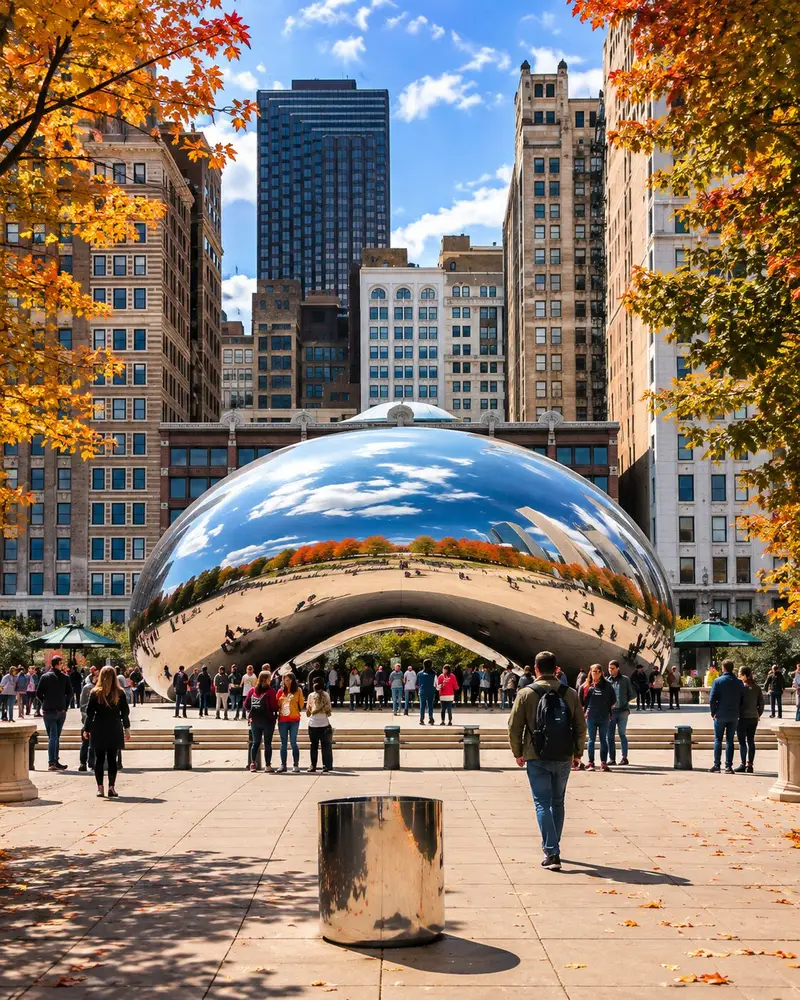
The Movies: Source Code (2011), The Vow (2012)
The Scene: Chicago’s most famous modern landmark, “The Bean” (officially named Cloud Gate), has quickly become a Hollywood favorite.
It is prominently featured at the end of the mind-bending sci-fi thriller Source Code starring Jake Gyllenhaal. It also serves as a romantic, snowy backdrop for Channing Tatum and Rachel McAdams in the romance film The Vow.
How to Visit: Millennium Park is completely free and open to the public daily. Walk right up to the reflective, stainless-steel sculpture. Try to visit early in the morning to beat the massive tourist crowds and get a clear, cinematic photo of your reflection against the skyline.
How to Get There: Take the CTA Green, Orange, Brown, Pink, or Purple line to the Washington/Wabash stop and walk one block east.
7. The McCallister House
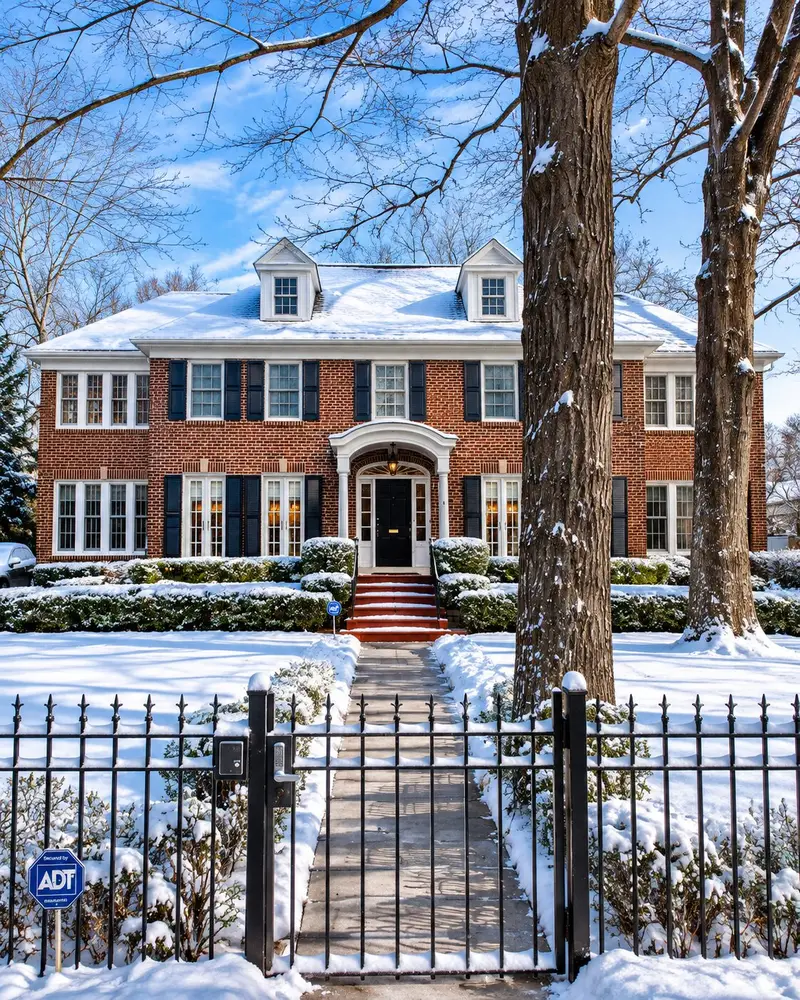
The Movies: Home Alone (1990)
The Scene: “Kevin!” We couldn’t make a list of famous Chicago movie scenes without including the ultimate holiday classic.
The stunning red-brick colonial house where Kevin McCallister sets his ingenious booby traps for the Wet Bandits is a real home located just outside the city limits.
How to Visit: Viewing the house itself from the street is totally free. The exterior of the home looks incredibly similar to how it did in 1990. Please note this is a private residence. You are welcome to take photos from the sidewalk, but do not trespass on the lawn or porch.
How to Get There: Take the Metra Union Pacific North (UP-N) train from Ogilvie Transportation Center to the Winnetka stop. The house is about a 10-minute walk from the station.
8. The Wrigley Field Marquee
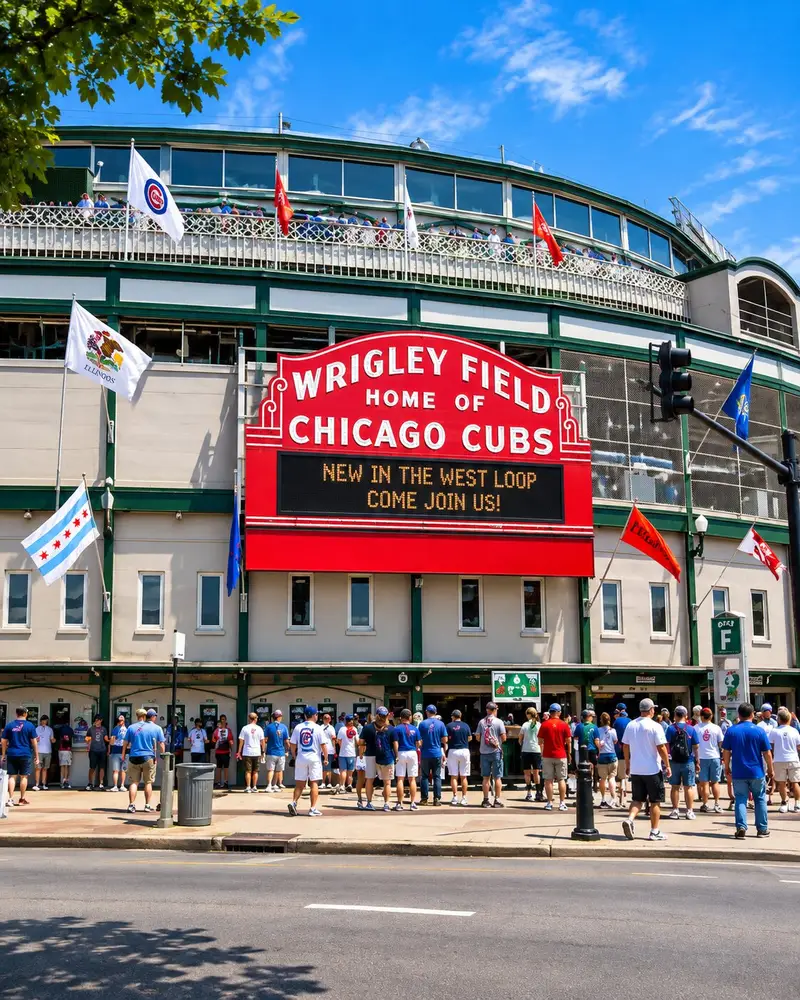
The Movies: The Blues Brothers (1980), Ferris Bueller’s Day Off (1986), A League of Their Own (1992)
The Scene: Wrigley Field isn’t just a historic baseball stadium; it’s a bona fide movie star.
When Elwood Blues needs to forge a fake address on his driver’s license in The Blues Brothers, he famously lists 1060 W Addison St—the exact address of Wrigley Field. The stadium is also where Ferris Bueller catches a foul ball, and it briefly stood in as the tryout field in A League of Their Own.
How to Visit: While buying a ticket to a Chicago Cubs game will cost you, taking a photo in front of the stadium’s world-famous red marquee is completely free. You can also wander around Gallagher Way, the public park right next to the stadium, for free views of the exterior architecture.
How to Get There: Take the CTA Red Line directly to the Addison station. The stadium is right outside the train doors.
9. Lower Wacker Drive
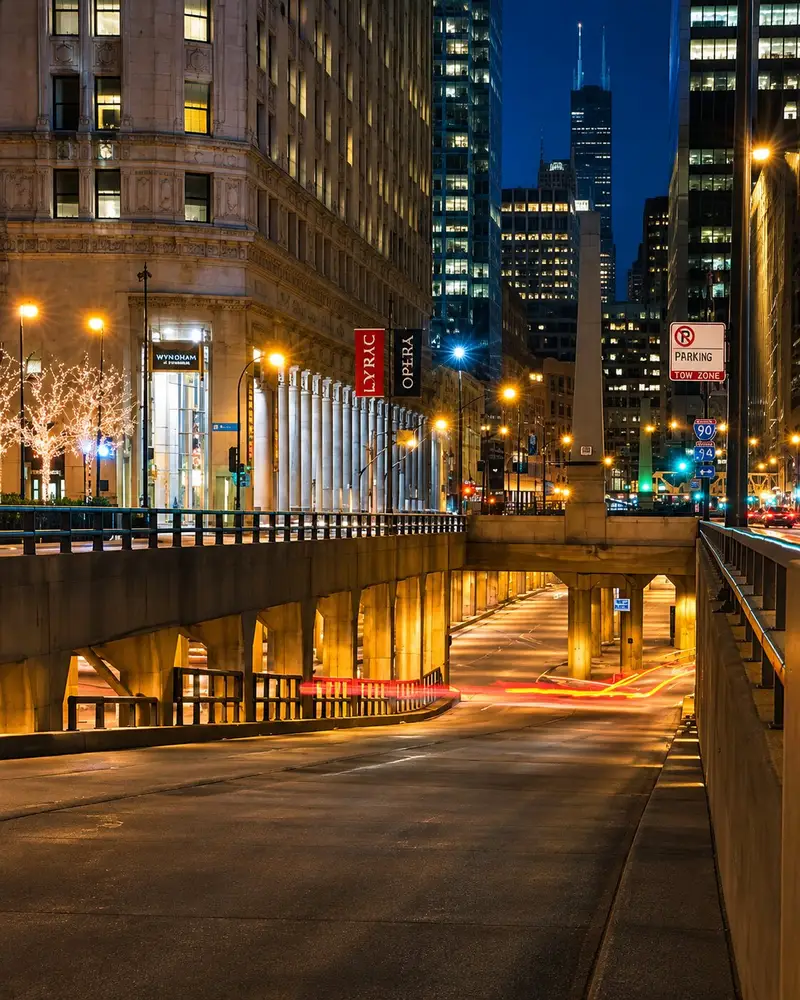
The Movies: The Dark Knight (2008), The Blues Brothers (1980), Batman Begins (2005)
The Scene: If a movie features a high-speed, destructive car chase in Chicago, there is a 99% chance it was filmed on Lower Wacker Drive.
This multi-level, subterranean street network provided the gritty, tunnel-like atmosphere for the iconic Batmobile (Tumbler) chase in The Dark Knight. It is also the exact route Jake and Elwood take while fleeing a literal army of police cars.
How to Visit: Lower Wacker Drive is a public road, so you can easily walk or drive through it for free. The glowing orange streetlights and cavernous echoes will immediately make you feel like you are speeding through Gotham City.
How to Get There: The safest way for pedestrians to view Lower Wacker is by taking the stairs down from Upper Wacker Drive near the Chicago Riverwalk. Stay strictly on the designated pedestrian sidewalks, as cars drive very fast down here!
10. Marina City / “The Corncob Buildings”
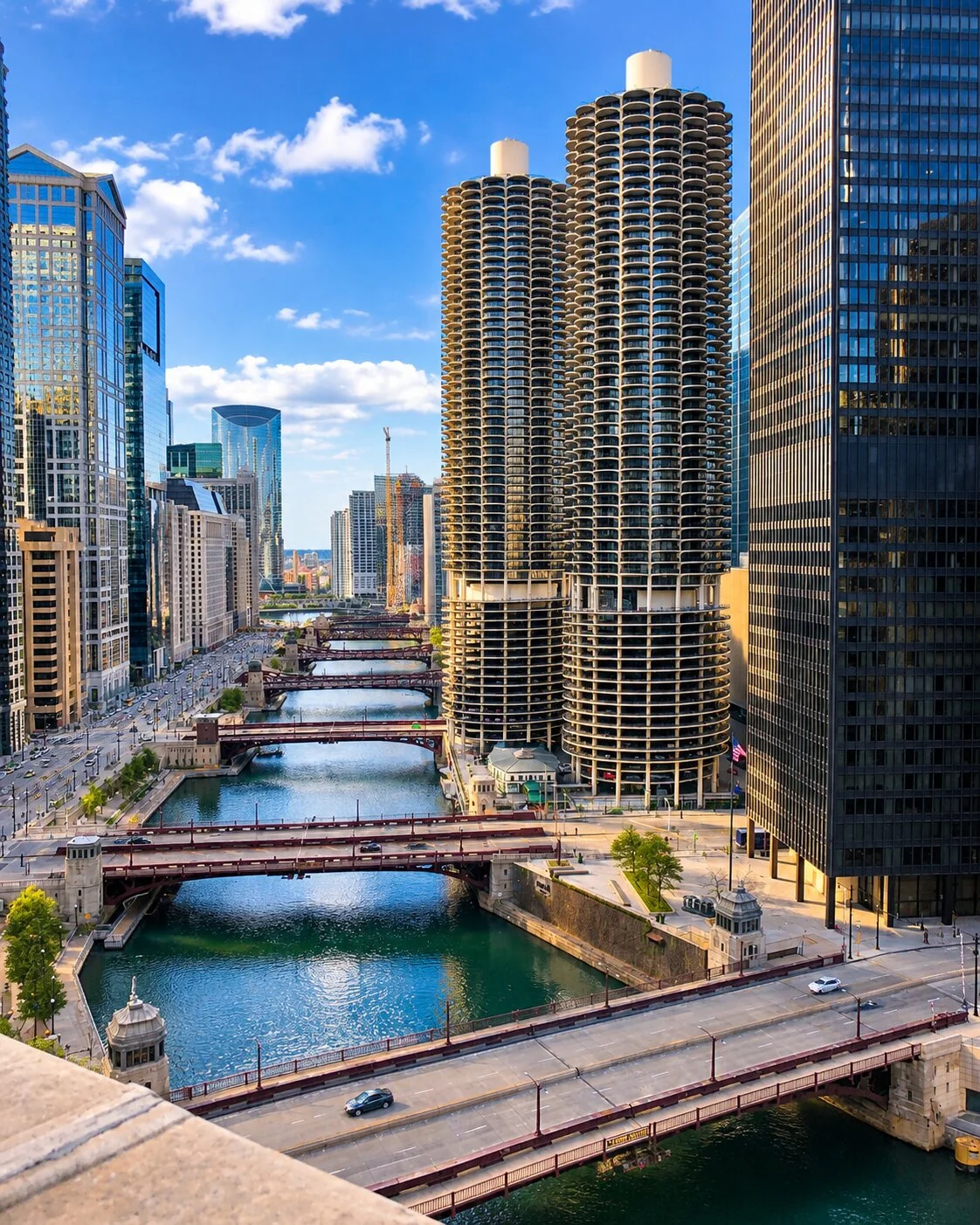
The Movies: The Hunter (1980), The Dark Knight (2008), Ferris Bueller’s Day Off (1986)
The Scene: Chicago is famous for its architecture, but Marina City might be the most unique fixture on the skyline.
These twin, corncob-shaped towers have been featured in countless establishing shots. However, their most famous cinematic moment was in the 1980 Steve McQueen film, The Hunter, where a 1979 Pontiac Grand Prix is dramatically driven off the spiraling parking garage and into the Chicago River.
How to Visit: You get the absolute best views of Marina City from the sidewalks directly across the river. You’ll clearly see the exposed, spiraling parking garage levels taking up the bottom third of the towers.
How to Get There: Take the CTA Red Line to the State/Lake stop and walk one block north to the State Street Bridge.
11. Navy Pier
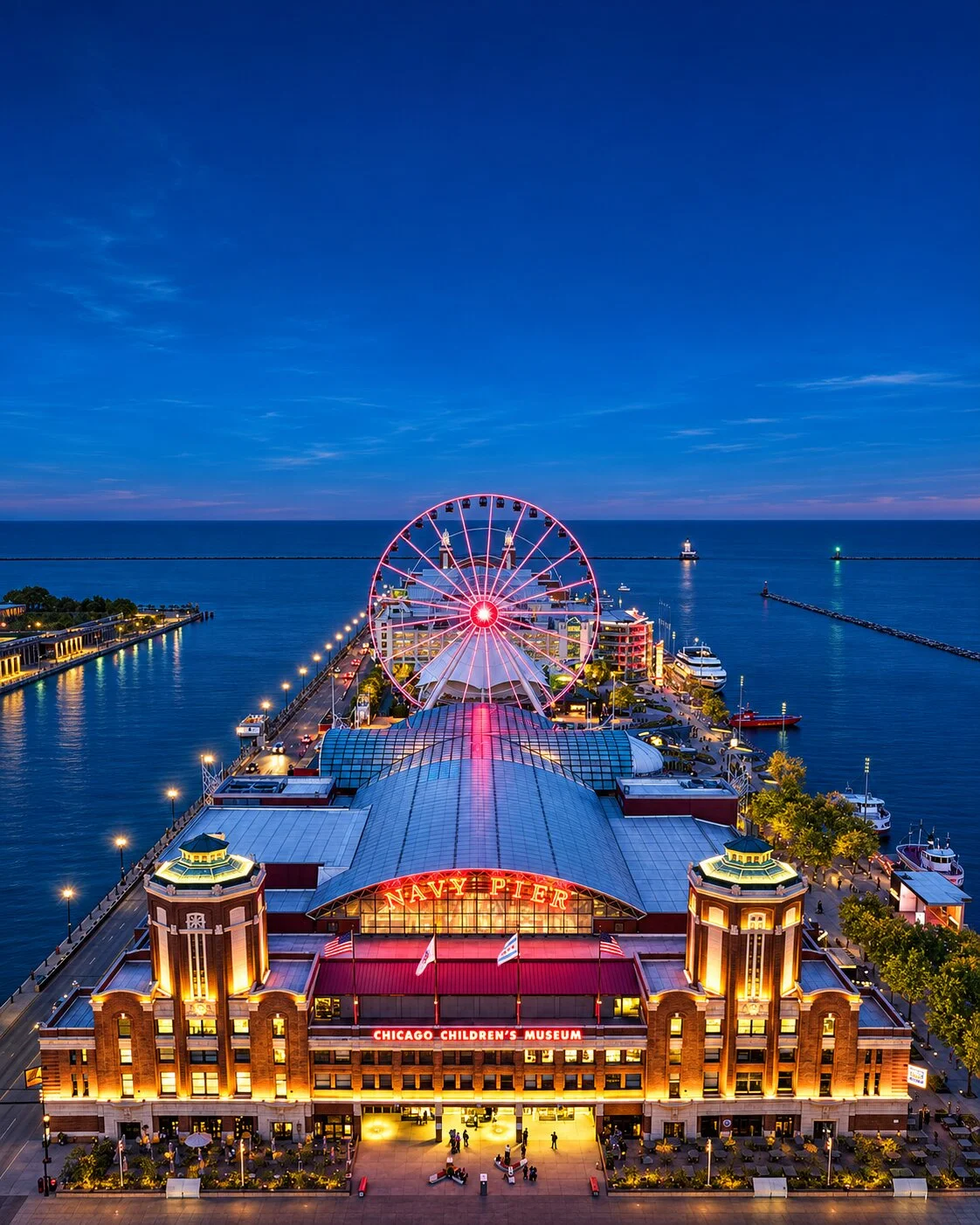
The Movies: Divergent (2014), The Color of Money (1986)
The Scene: In the dystopian sci-fi hit Divergent, a post-apocalyptic Chicago is the main setting.
One of the most memorable scenes features Tris (Shailene Woodley) and Four (Theo James) climbing a massive, rusted Ferris wheel during a high-stakes game of capture the flag. That wheel is none other than the centerpiece of Navy Pier!
How to Visit: Navy Pier is one of Illinois’ top tourist attractions, and you can walk the entire 3,300-foot-long pier. While riding the Centennial Wheel requires a paid ticket, standing underneath it and taking photos is free.
How to Get There: Take the CTA Red Line to Grand, then hop on the #65 Grand Avenue bus heading east directly to the pier entrance.
12. The Biograph Theater
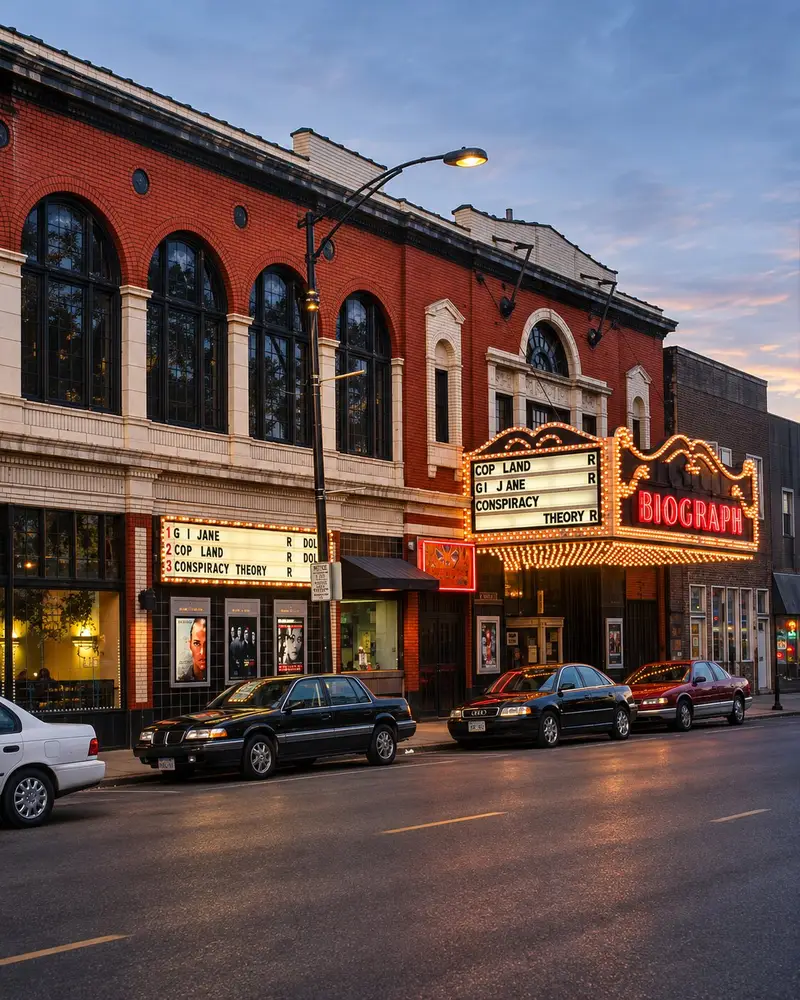
The Movies: Public Enemies (2009), High Fidelity (2000)
The Scene: Sometimes, Hollywood uses Chicago to film real-life history.
In the 2009 film Public Enemies, Johnny Depp plays the notorious bank robber John Dillinger. The movie filmed Dillinger’s final moments at the exact location where they happened in real life: right outside the Biograph Theater.
How to Visit: The theater is located in the heart of Lincoln Park, which is easily one of the best Chicago neighborhoods where locals actually hang out. The theater (formerly operating as the Victory Gardens Theater) still features its gorgeous, glowing vintage marquee.
How to Get There: Take the CTA Red, Brown, or Purple Line to the Fullerton stop, then walk about five minutes east to Lincoln Avenue.
13. The Rookery Building
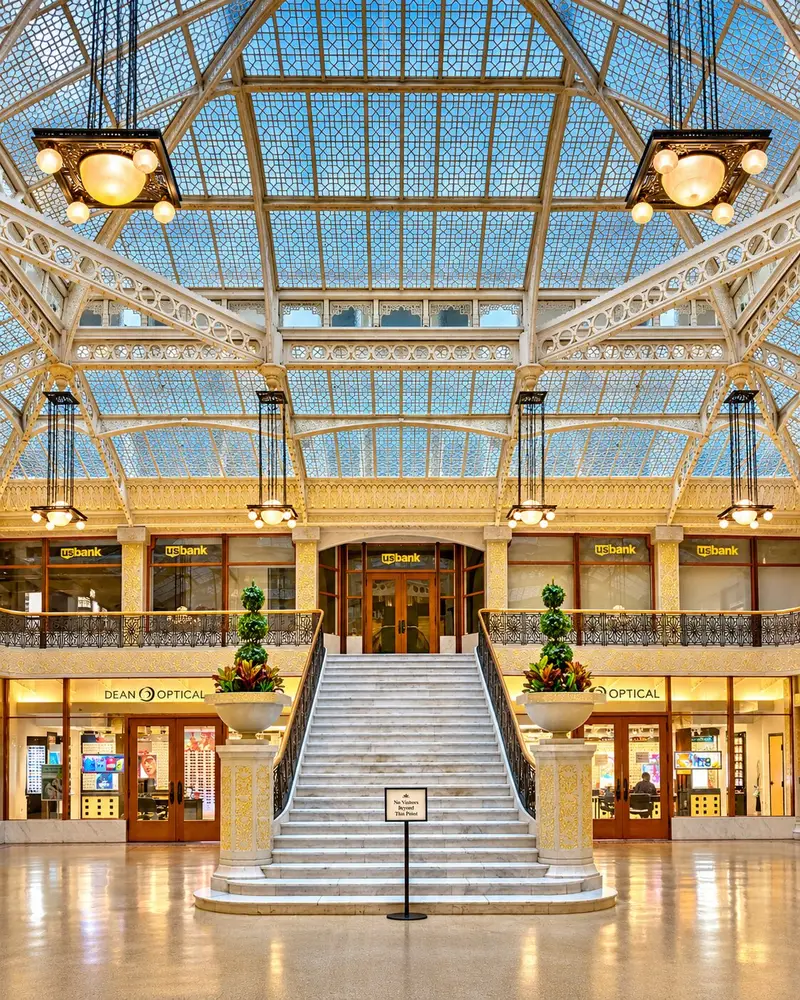
The Movies: Home Alone 2: Lost in New York (1992), The Untouchables (1987)
The Scene: Wait, a New York movie filmed in Chicago? Yes!
While Kevin McCallister gets lost in the Big Apple in Home Alone 2, the exterior of the famous “Duncan’s Toy Chest” was actually filmed in Chicago’s financial district. This stunning architectural masterpiece also served as the police headquarters where Eliot Ness works in The Untouchables.
How to Visit: The exterior and the breathtaking first-floor lobby are completely free to view. Step off the street and into the dazzling, light-filled lobby, which was famously redesigned by Frank Lloyd Wright in 1905.
How to Get There: Take the CTA Brown, Orange, Pink, or Purple line to the Quincy station and walk a half-block east to LaSalle Street.
14. The Old Chicago Main Post Office
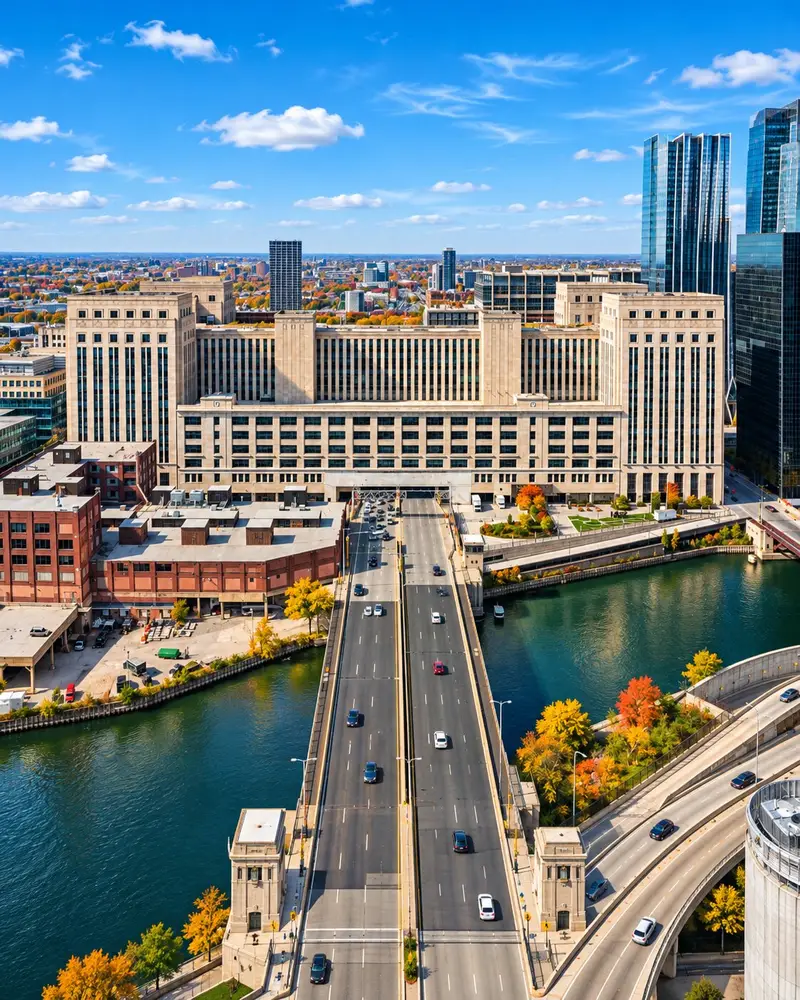
The Movies: The Dark Knight (2008), Transformers: Dark of the Moon (2011)
The Scene: One of the most thrilling opening sequences in modern cinema is the massive bank heist orchestrated by the Joker in The Dark Knight.
While the scene is supposed to be the “Gotham National Bank,” the building they actually used was the colossal, abandoned Old Chicago Main Post Office.
How to Visit: The building recently underwent a massive, multi-million-dollar renovation and is now a sprawling corporate hub. The stunning art-deco public lobby has been meticulously restored and is free to walk through during business hours.
How to Get There: Take the CTA Blue Line to the Clinton stop and walk south to Van Buren Street.
15. The Chicago Theatre Marquee
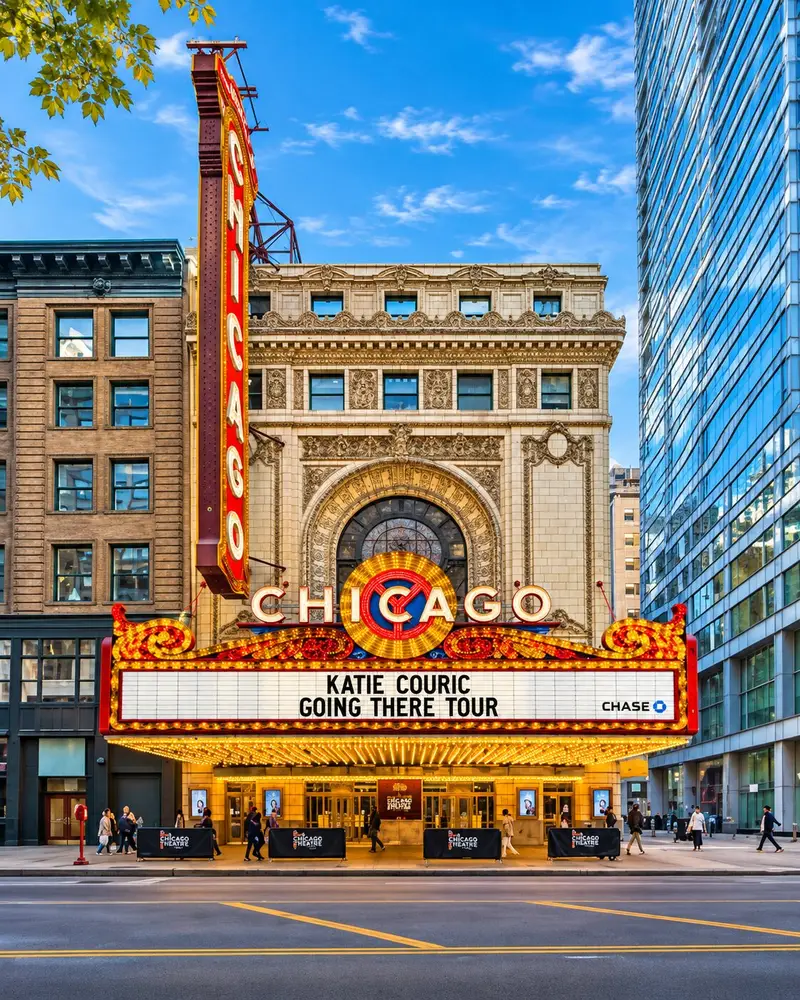
The Movies: The Fugitive (1993), High Fidelity (2000), Adventures in Babysitting (1987)
The Scene: If a director needs to tell the audience, “We are in Chicago!” in three seconds or less, they show the Chicago Theatre.
This dazzling, six-story “C-H-I-C-A-G-O” sign has been featured in establishing shots and montage sequences for decades. It is the ultimate visual shorthand for the Windy City.
How to Visit: While seeing a comedy show or concert inside requires a ticket, the real cinematic magic happens right on the sidewalk. Stand on the corner of State Street and Lake Street for the ultimate, non-negotiable Chicago photo op.
How to Get There: Take the CTA Red Line to the Lake stop. When you walk up the stairs to street level, the marquee will be right in front of you.
Quick Tips for Your DIY Chicago Movie Tour
Ready to hit the pavement? Here are a few quick tips to make your self-guided film tour a breeze:
- Take the “L” Train: Navigating the city is incredibly easy once you understand the transit system. For a truly cinematic experience, ride the Brown Line around the Loop. The elevated tracks themselves have been featured in movies like While You Were Sleeping. Brush up on our guide to using the Chicago ‘L’ Train before you arrive.
- Batch Your Locations: Union Station, the Board of Trade, The Rookery, and Daley Plaza are all within a 15-minute walking distance of each other in the Loop. Tackle these in a single afternoon.
- Eat Like a Local: All this walking is going to make you hungry. Skip the chain restaurants and grab lunch at one of the absolute best Italian Beef spots in Chicago to refuel like a true Chicagoan!
Final Thoughts on Exploring Chicago’s Cinematic History
Chicago’s cinematic history is woven into the very fabric of its streets, skyscrapers, and transit hubs.
The best part about this DIY Hollywood tour is that it naturally pulls you through some of the city’s most breathtaking architecture and vibrant neighborhoods.
It allows you to experience the authentic, gritty, and beautiful side of the city without spending a dime on expensive tourist trap admission fees.
Whether you want to channel your inner Ferris Bueller in Federal Plaza, stand on the Gotham City battlegrounds of LaSalle Street, or simply admire the quiet beauty of the Biograph Theater marquee, the Windy City is always ready for its close-up.
Grab your walking shoes, load up your CTA transit card, and get ready to step right into your favorite blockbuster.
Which of these famous Chicago movie scenes is your favorite? Let us know in the comments below!
JM
AK