11 Beautiful Chicago “L” Stations That Feel Like a Time Capsule

If you have ever caught a train in Chicago, you know the “L” is more than just a public transit system.

It is the rhythmic, steel-clanking heartbeat of the city.

While many CTA stops have been modernized with sleek glass and steel, a few select stops have intentionally defied the march of time.

Stepping onto the platform at these historic CTA stations feels like you have just bought a ticket to the 1890s.

From perfectly preserved wooden ticket booths to Victorian-era cupolas, Chicago is home to some of the most beautiful vintage train stations in the country.
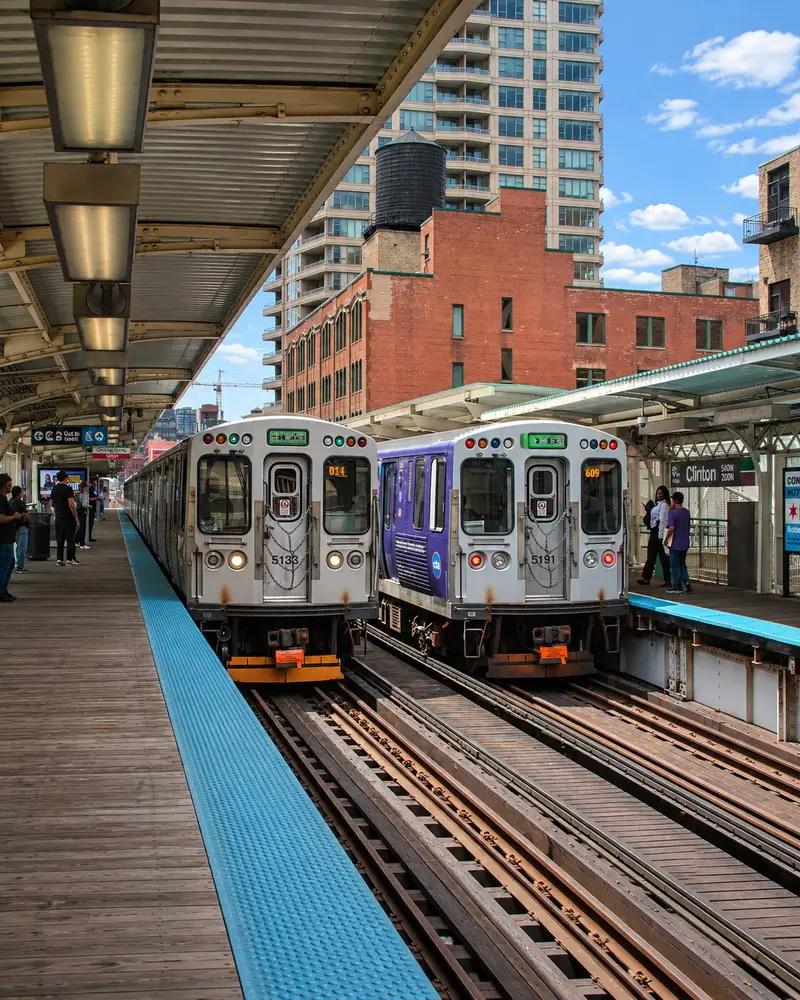
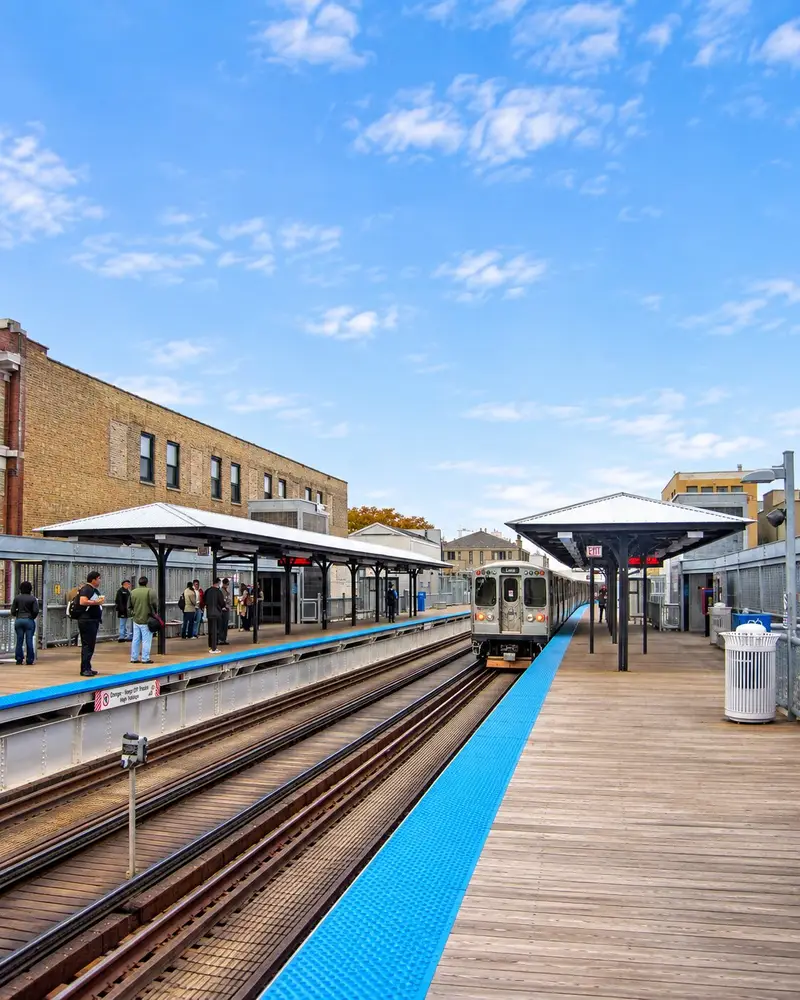
Two Chicago Transit Authority (CTA) "L" trains sit side-by-side on parallel tracks at the outdoor Clinton station platforms. The modern white and silver passenger cars feature illuminated electronic destination signs on their front ends beneath a bright sky.
A pair of CTA rapid transit trains stop at the elevated Clinton station platforms under a blue sky surrounded by brick city buildings. Passengers stand waiting along the wooden platform edge as the trains sit ready for departure.

If you are a fan of history, architecture, or just love a good aesthetic photo op, grab your Ventra card.

(And if you are new to navigating the transit system, be sure to brush up on our Tourist’s Guide to Using the Chicago ‘L’ Train first!)

Here is a guide to the beautiful Chicago “L” stations that feel like an absolute time capsule.

1. Quincy Station
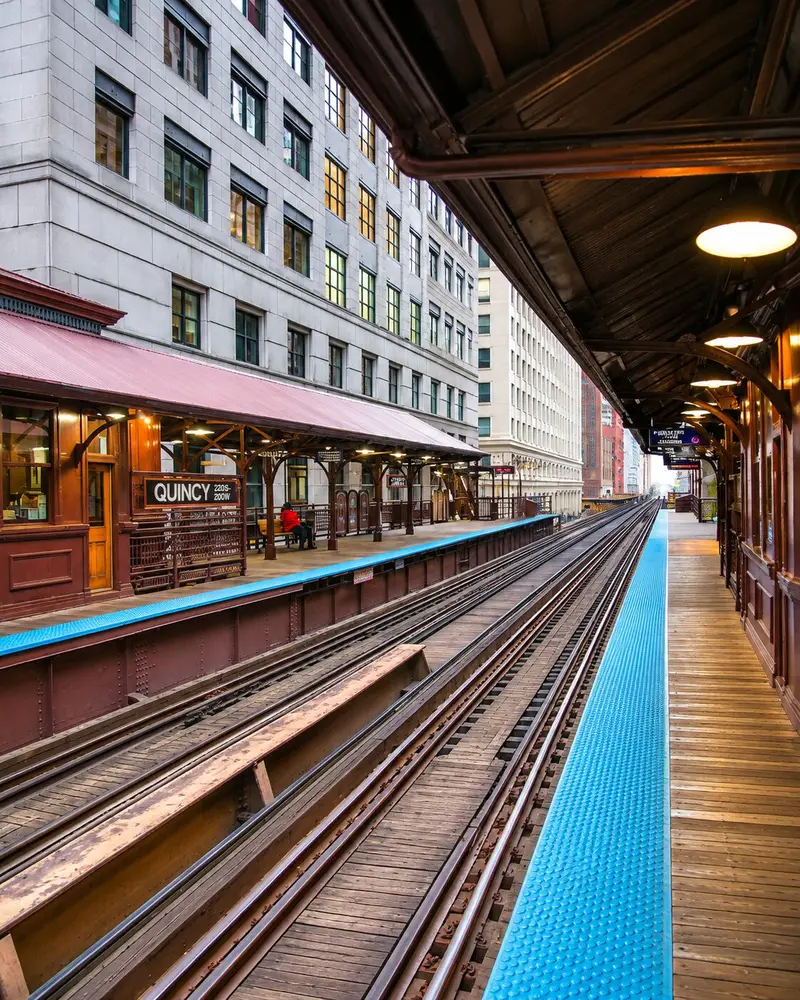
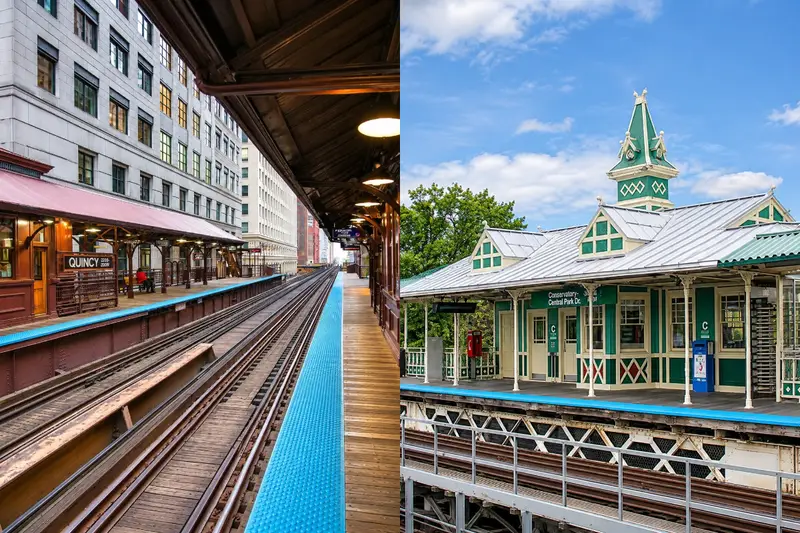
The historic wooden platforms of the elevated Quincy CTA station flank multiple sets of steel train tracks running through downtown Chicago. Vintage-style brown wooden station houses with peaked awnings stand in sharp contrast to the modern multi-story office buildings rising directly behind them.
Preserved vintage architecture defines the iconic Quincy “L” station platform situated in the heart of Chicago’s Loop district. The tranquil, empty tracks stretch forward into the urban canyon, capturing a quiet moment between arriving commuter trains.

When it comes to historic Chicago L stations, Quincy is the undisputed crown jewel.

Located in the downtown Loop, this station first opened its doors in 1897.

Stepping off the train here feels like walking straight into the Gilded Age.

The CTA undertook a massive, meticulous historic restoration of Quincy in the 1980s. They followed it up with a 2018 renovation that added modern elevators without sacrificing an ounce of its vintage charm.

Look around and you will see pressed tin ceilings, tongue-in-groove wood paneling, and fluted pilasters.
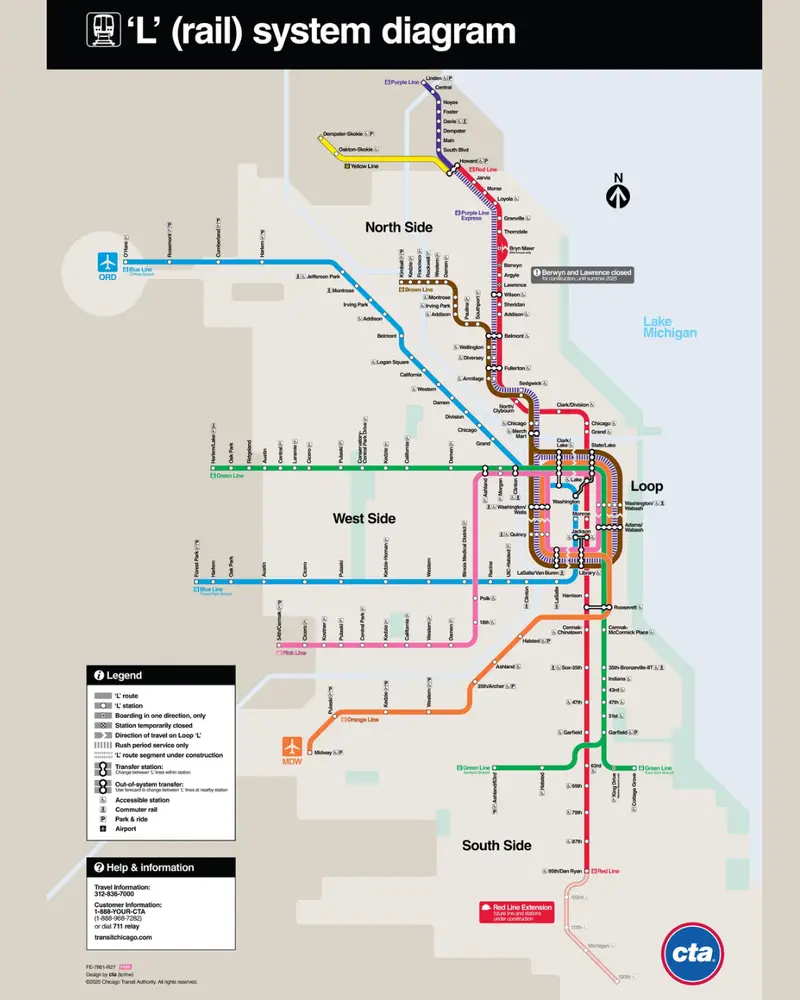
The official colorful transit schematic outlines the routing of the Chicago Transit Authority (CTA) "L" rapid transit rail system lines. Colorful intersecting tracks link the North, West, and South Sides of the city together through a central hub known as the Loop.
A comprehensive network map displays all colored lines, stops, and transfer hubs within Chicago’s iconic elevated rail system. Complete with a helpful legend, airport indicators, and help hotlines, it guides commuters navigating across the metropolitan transit grid.

The station still features replicas of the original oak doors, turn-of-the-century ticket agent booths, and even vintage advertisement posters on the platforms.

It is easily one of the best-preserved examples of original Loop architecture, rivaling even some of the stunning free historic lobbies found just a few blocks away.

Station At A Glance:

  • Lines: Brown, Orange, Pink, and Purple Lines
  • Neighborhood: The Loop
  • Year Built: 1897

2. Ashland Station

The historic Queen Anne-style station house of the Ashland CTA stop features corrugated metal siding painted in vibrant green hues, complete with a steep gabled roof and square cupolas overlooking the elevated tracks.
The beautifully preserved historic Ashland station on the Green and Pink Lines serves as a stunning example of 19th-century Queen Anne transit architecture, complete with twin station houses and Victorian Gothic details.

Heading west on the Green or Pink Line, you will find the Ashland station.

Built for the Lake Street Elevated Railroad, it is a stunning piece of 19th-century transit history.

Unlike modern open-air stops, Ashland features enclosed twin station houses on both sides of the tracks.

The architecture here is an eccentric, beautiful blend of Queen Anne style with Victorian Gothic influences.

You will immediately notice the corrugated metal siding, decorative window panels, and steep gabled roofs topped with square cupolas.
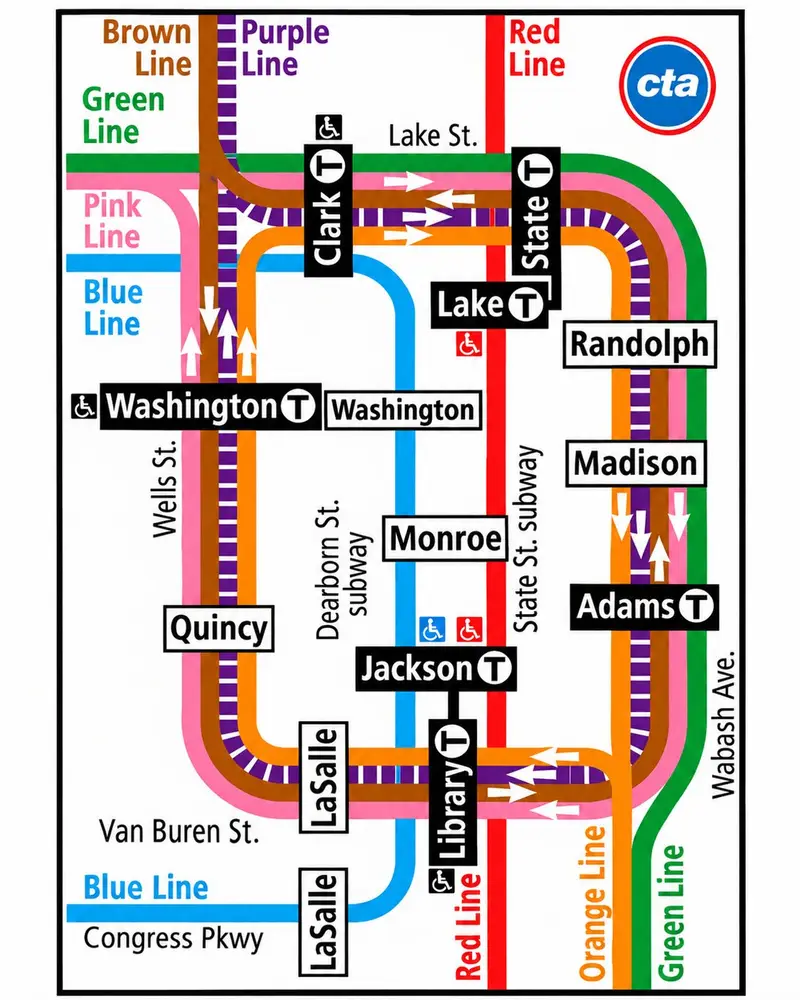
A detailed schematic diagram focuses on the central rectangular loop of the Chicago Transit Authority (CTA) "L" system. Multiple colored transit lines, including the Brown, Purple, Green, Pink, and Orange lines, circle the perimeter or run vertically through the downtown subway corridors.
This close-up route map highlights the intricate transit connections within Chicago’s historic downtown “Loop” district. It clearly illustrates how the various elevated lines and underground subways intersect, showing key transfer stations like Clark, State, Washington, and Jackson.

Out of all the identical stations built along the Lake Street line in the 1890s, Ashland is one of the very last original survivors.

Waiting for a train here on a quiet afternoon feels like waiting for a steam locomotive from the World’s Columbian Exposition.

Station At A Glance:

  • Lines: Green and Pink Lines
  • Neighborhood: Near West Side
  • Year Built: 1893
Struan JM AK
Read by 5,000+ Chicagoans
❤️ Get Hey Chicago in your inbox
Join 5,000+ Chicagoans getting untold history on Tuesdays and our curated weekend guide on Thursdays.
🔒 100% free. No spam. Unsubscribe in 1-click anytime.

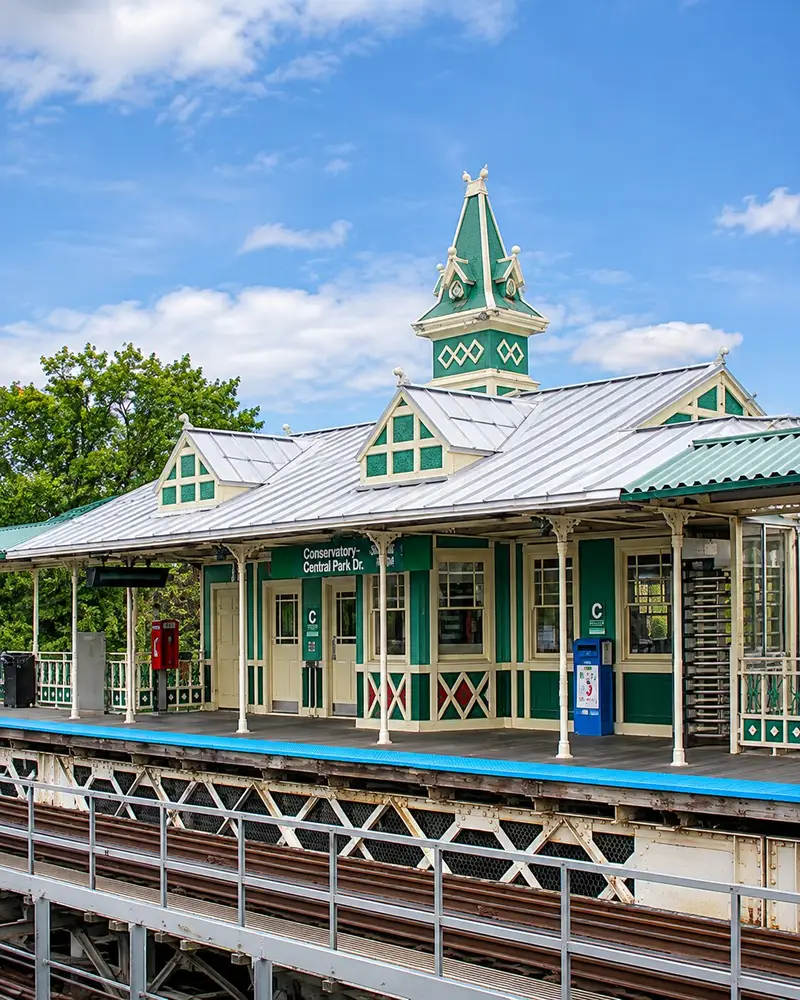
3. Conservatory-Central Park Drive

An ornate, green and white station house with a Victorian-style roof spire sits along an elevated train platform under an overcast sky. The historic building features a white metal roof, cross-braced details, and decorative columns adjacent to the empty railway tracks.
The historic Conservatory–Central Park Drive station showcases beautifully preserved Victorian-era architecture on Chicago’s Green Line. Located near Garfield Park, this elevated platform house blends classic turn-of-the-century aesthetics with functional urban transit infrastructure.

The Conservatory-Central Park Drive station has one of the most fascinating histories in the entire CTA network.

While it officially opened in 2001 to serve the nearby Garfield Park Conservatory, the building itself is much, much older.

This station is actually the historic Homan station, originally built in 1893.

When the CTA closed the Homan stop in the 1990s, preservationists realized the Queen Anne-style station house was too beautiful to demolish.

So, in an incredible feat of engineering, they carefully deconstructed the historic Victorian building and moved it two blocks west.

The official colorful transit schematic outlines the routing of the Chicago Transit Authority (CTA) "L" rapid transit rail system lines. Colorful intersecting tracks link the North, West, and South Sides of the city together through a central hub known as the Loop.
A comprehensive network map displays all colored lines, stops, and transfer hubs within Chicago’s iconic elevated rail system. Complete with a helpful legend, airport indicators, and help hotlines, it guides commuters navigating across the metropolitan transit grid.

Today, this stop is an absolute Chicago hidden gem that perfectly bridges the gap between the city’s vintage architectural roots and its modern transit needs.

Plus, it drops you off right at the doorstep of one of the most stunning botanical conservatories in the country.

Station At A Glance:

  • Lines: Green Line
  • Neighborhood: East Garfield Park
  • Year Built: 1893 (Relocated in 2001)

4. Garfield Station
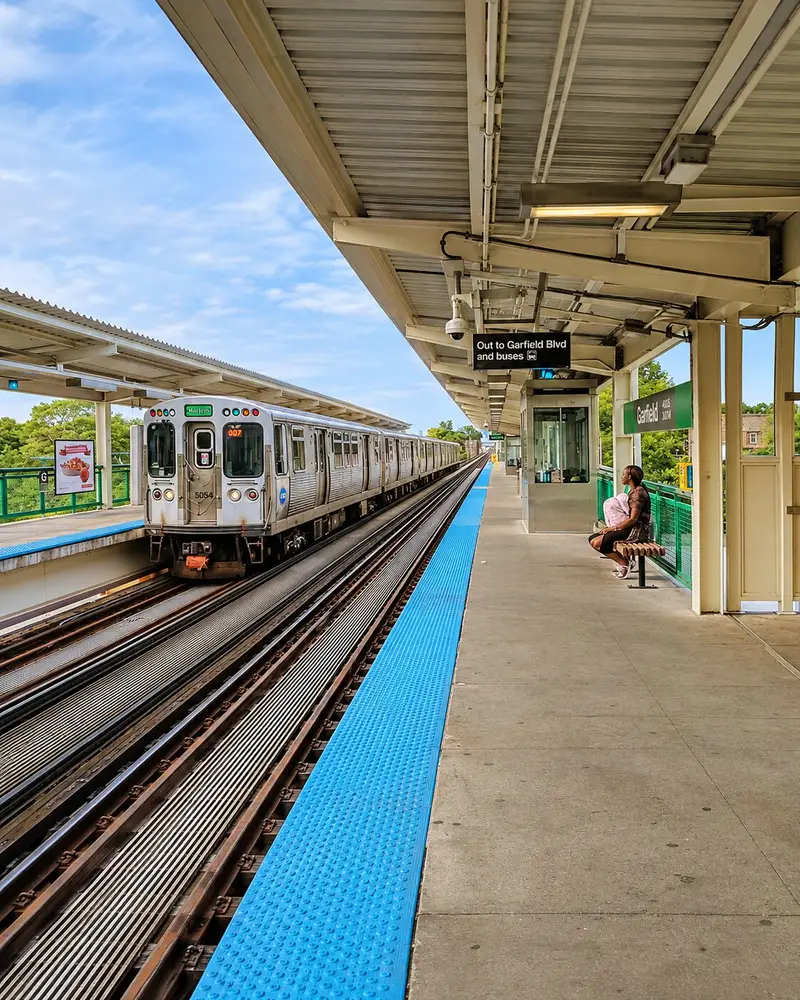
A silver Chicago Transit Authority (CTA) "L" train arrives at the elevated Garfield station under a bright, partly cloudy sky. A single passenger sits on a platform bench waiting for transit options near an overhead informational sign directing commuters to Garfield Boulevard and buses.
A modern commuter train pulls up to the platform at the active Garfield Green Line station in Chicago, which sits directly adjacent to the historic 1892 original station house that has now been beautifully preserved as a community arts space.

While the active Garfield Green Line station is relatively modern, it sits right next to a spectacular piece of CTA history.

The original Garfield station house was built for the South Side Rapid Transit company.

Today, it is one of the oldest surviving “L” structures in Chicago.

Though trains no longer board from this specific building, the city and local arts organizations banded together to save it from the wrecking ball.

A detailed schematic diagram focuses on the central rectangular loop of the Chicago Transit Authority (CTA) "L" system. Multiple colored transit lines, including the Brown, Purple, Green, Pink, and Orange lines, circle the perimeter or run vertically through the downtown subway corridors.
This close-up route map highlights the intricate transit connections within Chicago’s historic downtown “Loop” district. It clearly illustrates how the various elevated lines and underground subways intersect, showing key transfer stations like Clark, State, Washington, and Jackson.

It was beautifully restored and transformed into a community arts space.

The building features gorgeous terra cotta detailing and classic 19th-century brickwork that stands as a proud monument to the birth of Chicago’s elevated transit system.

Station At A Glance:

  • Lines: Green Line (Adjacent to the active station)
  • Neighborhood: Washington Park
  • Year Built: 1892

5. Sedgwick Station

An arriving silver CTA "L" train approaches the outdoor wooden platforms of an elevated transit station under an overcast sky. Several commuters stand waiting under the protective canopy structures while bright blue safety tiles mark the platform edges alongside the tracks.
Passengers wait on an elevated platform as a Chicago Transit Authority commuter train pulls into the station. The outdoor facility blends functional wooden decking and corrugated metal canopies with the surrounding brick urban neighborhood.

If you are riding the Brown Line through Old Town—one of the best Chicago neighborhoods where locals actually hang out—you have to look out the window when the train pulls into Sedgwick.

Built for the Northwestern Elevated Railroad, this station is a striking example of Queen Anne-style Victorian architecture.

It is one of the oldest operational stations on the North Side.

What makes Sedgwick so special is how it seamlessly blends the past with the present.

During a massive capacity expansion project in 2007, the CTA was faced with a challenge. They needed to add modern elevators and longer platforms without destroying the historic Victorian headhouse.

The official colorful transit schematic outlines the routing of the Chicago Transit Authority (CTA) "L" rapid transit rail system lines. Colorful intersecting tracks link the North, West, and South Sides of the city together through a central hub known as the Loop.
A comprehensive network map displays all colored lines, stops, and transfer hubs within Chicago’s iconic elevated rail system. Complete with a helpful legend, airport indicators, and help hotlines, it guides commuters navigating across the metropolitan transit grid.

Their solution was brilliant.

They meticulously restored the original brick and terracotta station house, and built a modern, accessible expansion right behind it.

Station At A Glance:

  • Lines: Brown and Purple Lines
  • Neighborhood: Old Town
  • Year Built: 1900

6. South Boulevard Station
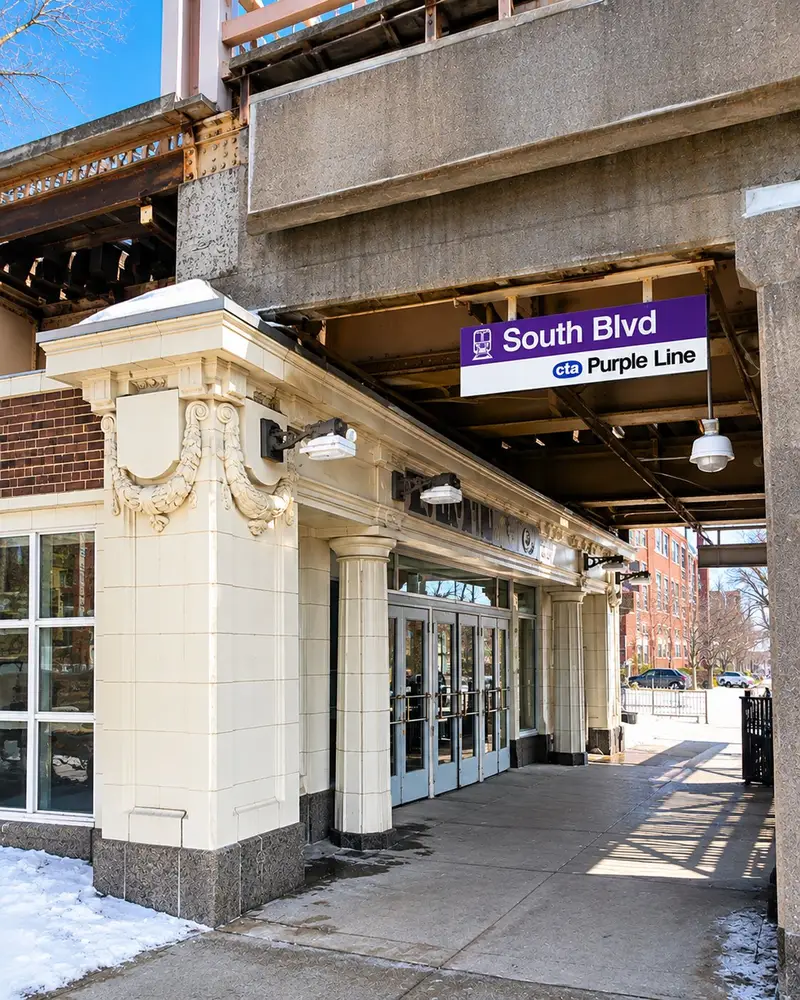
The historic stone facade entrance of the South Boulevard CTA Purple Line station stands beneath an elevated concrete track structure. A purple and white transit sign hangs prominently near glass entry doors that are flanked by classical-style columns and brick accents.
A street-level entrance welcomes passengers to the South Boulevard rapid transit station located in Evanston, Illinois. Serving commuters on the Chicago Transit Authority’s Purple Line, this station blends traditional architectural stone elements with industrial transit infrastructure.

If you ride the Purple Line just over the Chicago border into Evanston, you will find a completely different era of architectural history.

The South Boulevard station is a masterpiece designed by Arthur U. Gerber.

Gerber was a legendary commercial architect who essentially served as the visual mastermind for Chicago’s early rapid transit networks.

The South Boulevard station house is a stunning blend of Beaux-Arts and Prairie School architectural styles.

It features incredible cream-colored terra cotta detailing, globe lights, and Greek-style Doric columns framing the wooden doors.

A detailed schematic diagram focuses on the central rectangular loop of the Chicago Transit Authority (CTA) "L" system. Multiple colored transit lines, including the Brown, Purple, Green, Pink, and Orange lines, circle the perimeter or run vertically through the downtown subway corridors.
This close-up route map highlights the intricate transit connections within Chicago’s historic downtown “Loop” district. It clearly illustrates how the various elevated lines and underground subways intersect, showing key transfer stations like Clark, State, Washington, and Jackson.

Above the entrance, you can still see the words “RAPID TRANSIT” proudly engraved in the stone.

It is a beautiful callback to the era before the CTA was officially formed in 1947, when the trains were run by the Chicago Rapid Transit Company.

Station At A Glance:

  • Lines: Purple Line
  • Neighborhood: Evanston (Just north of Chicago)
  • Year Built: 1931

7. Fullerton & Belmont Stations
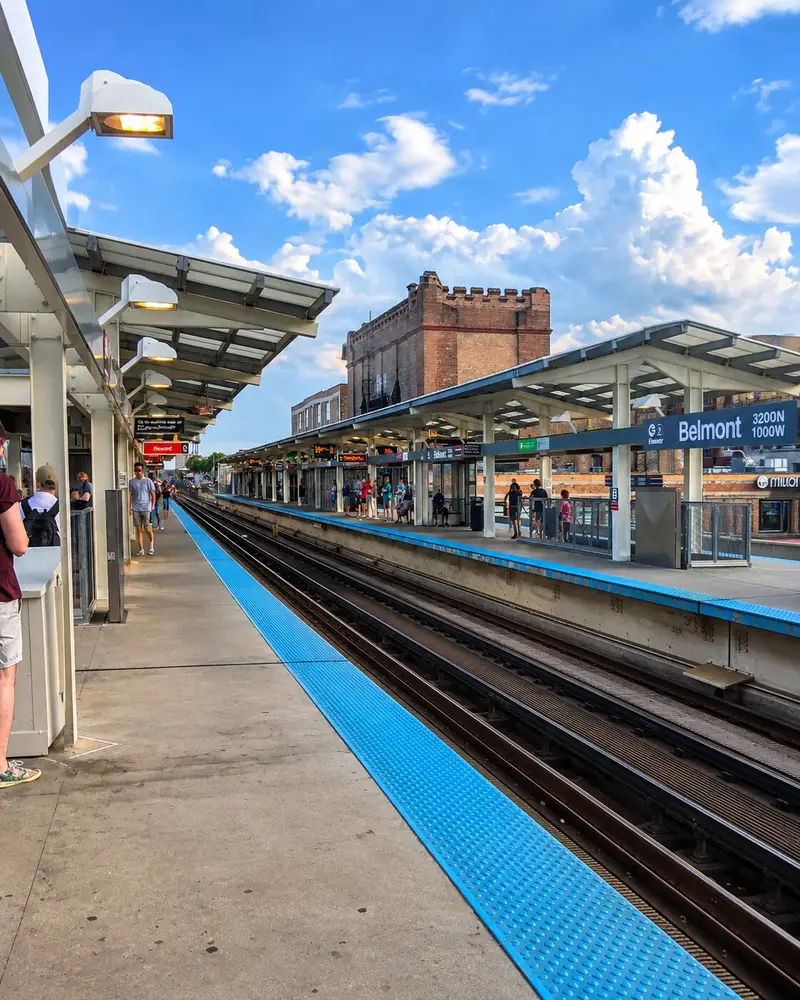
Two modern, covered island platforms sit parallel to multiple sets of train tracks at the elevated Belmont CTA station. Commuters stand waiting along the concrete structures under a bright afternoon sky with fluffy white clouds, while bright blue safety tiles run along the edge of the platform tracks.
The bustling Belmont station facility serves as a vital transfer hub for the Chicago Transit Authority‘s Red, Brown, and Purple lines. Passengers wait for incoming transit options on the outdoor platforms, surrounded by the historic brick buildings of Chicago’s Lakeview neighborhood.

While Fullerton and Belmont are two of the busiest transfer hubs on the North Side today, they harbor an incredible historic preservation secret.

Both stations originally opened over a century ago, featuring charming, historic brick station houses similar to Sedgwick.

When the CTA needed to drastically expand these stations in the late 2000s, the original buildings were directly in the way of the new concrete pillars.

Instead of bringing in the wrecking ball, the city did something extraordinary.

In a massive feat of engineering, they physically lifted the 1,000-ton historic 1900 station houses off their foundations.

The official colorful transit schematic outlines the routing of the Chicago Transit Authority (CTA) "L" rapid transit rail system lines. Colorful intersecting tracks link the North, West, and South Sides of the city together through a central hub known as the Loop.
A comprehensive network map displays all colored lines, stops, and transfer hubs within Chicago’s iconic elevated rail system. Complete with a helpful legend, airport indicators, and help hotlines, it guides commuters navigating across the metropolitan transit grid.

The buildings were then pushed on steel rollers to the other side of the street.

Today, these perfectly preserved, century-old buildings act as secondary auxiliary entrances to the otherwise ultra-modern mega-stations.

Station At A Glance:

  • Lines: Red, Brown, and Purple Lines
  • Neighborhood: Lincoln Park (Fullerton) & Lakeview (Belmont)
  • Year Built: 1900

8. Armitage Station

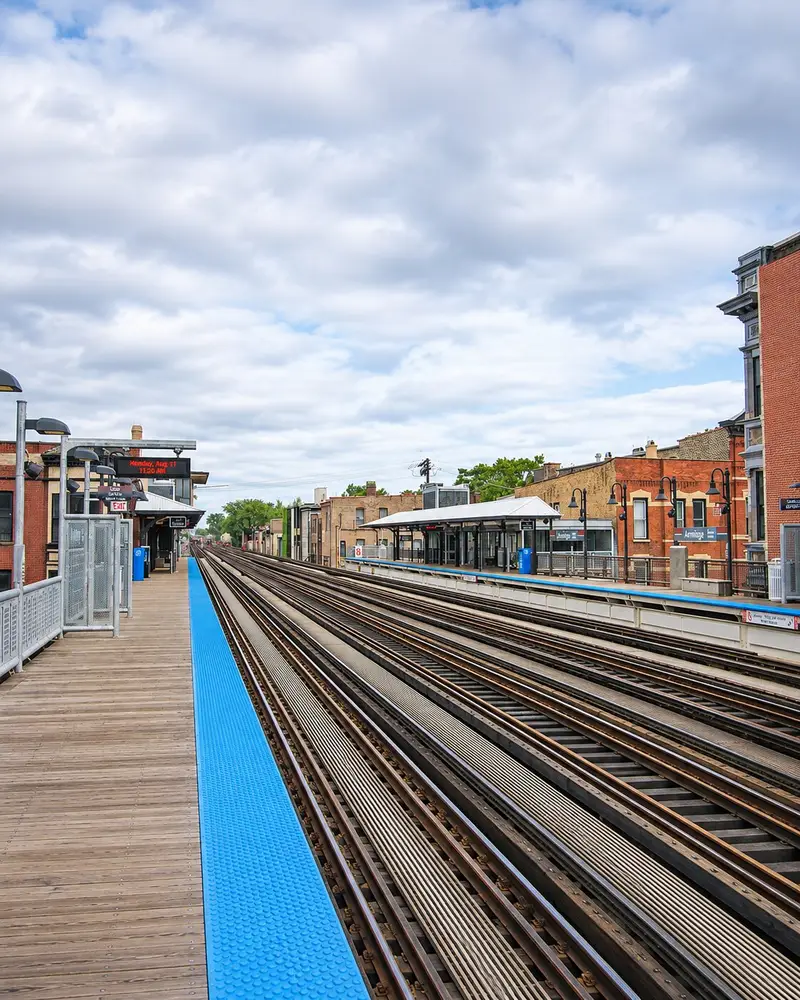
Four parallel train tracks slice between two elevated wooden platforms at the Armitage CTA station under a cloudy sky. Metal canopy shelters, informational station signs, and bright blue safety tactile tiles line the platform edges adjacent to low-rise brick neighborhood buildings.
The open-air Armitage station offers an expansive view across multiple rail lines on the Chicago Transit Authority’s Brown and Purple lines. Situated in the historic Lincoln Park neighborhood, the elevated infrastructure contrasts with the surrounding multi-story brick residential and commercial architecture.

Much like its sister station Sedgwick, the Armitage station in Lincoln Park is a beautiful relic of the Northwestern Elevated Railroad.

This station features a stunning Queen Anne-style station house that has served commuters for well over a century.

During the Brown Line capacity expansion in the late 2000s, the CTA worked closely with the local community to ensure this landmark wasn’t lost to modernization.

The original brick and terracotta building was meticulously restored, retaining its steeply pitched roof, historic dormers, and detailed brickwork.

A detailed schematic diagram focuses on the central rectangular loop of the Chicago Transit Authority (CTA) "L" system. Multiple colored transit lines, including the Brown, Purple, Green, Pink, and Orange lines, circle the perimeter or run vertically through the downtown subway corridors.
This close-up route map highlights the intricate transit connections within Chicago’s historic downtown “Loop” district. It clearly illustrates how the various elevated lines and underground subways intersect, showing key transfer stations like Clark, State, Washington, and Jackson.

Walking up to this station nestled among Lincoln Park’s high-end boutiques and some of the most beautiful streets in Chicago feels like stepping right into the turn of the 20th century.

Station At A Glance:

  • Lines: Brown Line
  • Neighborhood: Lincoln Park
  • Year Built: 1900

9. Dempster-Skokie

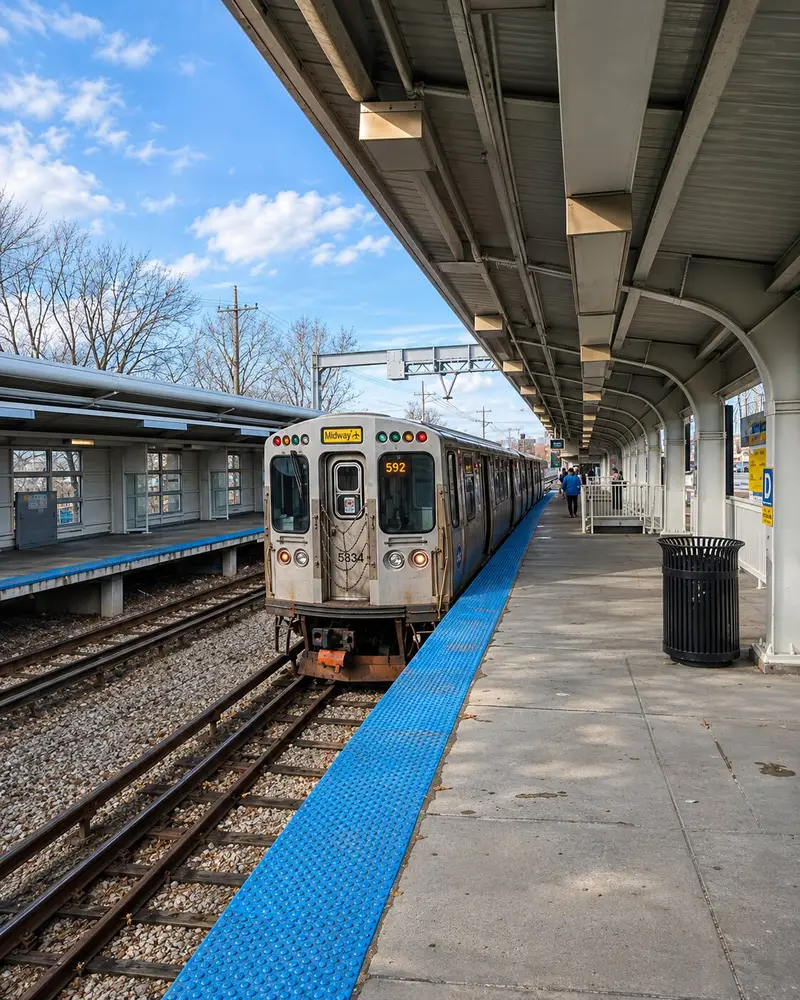
A silver Chicago Transit Authority (CTA) train sits alongside a concrete passenger platform at an outdoor transit station under a partly cloudy sky. The train car displays a glowing yellow destination sign on its front end next to the bright blue tactile safety tiles lining the platform edge.
A commuter train rests at the platform of the active Dempster-Skokie station on the CTA’s Yellow Line. Just steps away sits the beautifully restored 1925 Prairie School historic station building designed by Arthur U. Gerber.

If you take the Yellow Line (formerly the Skokie Swift) to the end of the route, you will be rewarded with one final architectural gem.

The original Dempster station is another masterpiece by legendary rapid transit architect Arthur U. Gerber.

It is a striking example of Prairie School architecture blended with early Art Deco elements.

While the historic building was retired from active transit duty in the 1990s, the structure was beautifully preserved and restored in 2004.

The official colorful transit schematic outlines the routing of the Chicago Transit Authority (CTA) "L" rapid transit rail system lines. Colorful intersecting tracks link the North, West, and South Sides of the city together through a central hub known as the Loop.
A comprehensive network map displays all colored lines, stops, and transfer hubs within Chicago’s iconic elevated rail system. Complete with a helpful legend, airport indicators, and help hotlines, it guides commuters navigating across the metropolitan transit grid.

Today, it has operated as a commercial retail space, including serving as a very charming Starbucks!

Grabbing a coffee inside a restored 1920s rapid transit hub before hopping on the Yellow Line is the ultimate Chicago transit time-capsule experience.

Station At A Glance:

  • Lines: Yellow Line (Adjacent to active station)
  • Neighborhood: Skokie
  • Year Built: 1925

10. Wilson Station (Gerber Building)
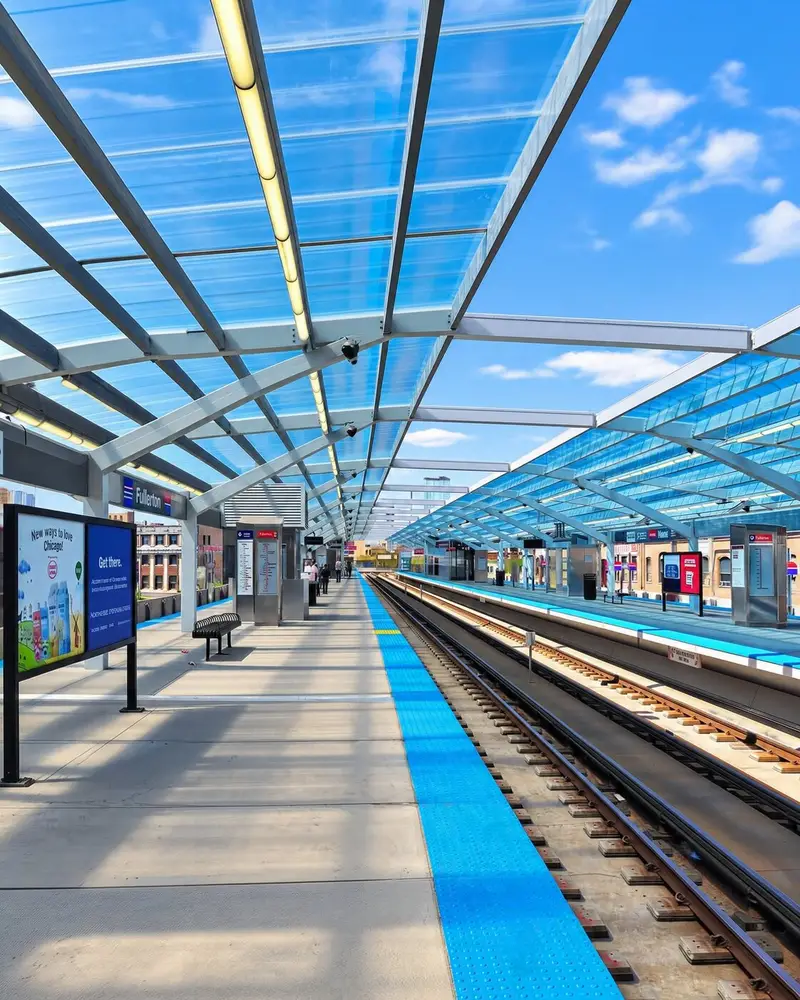
A striking blue translucent canopy roof covers the spacious, modern concrete platforms of the elevated Wilson CTA station. Multiple sets of train tracks run through the center of the facility under a clear blue sky, flanked by bright blue tactile safety tiles along the platform edges.
While the completely reconstructed Wilson station features an expansive modern glass canopy over the tracks, its crown jewel is the meticulously restored 1923 historic Gerber Building, seamlessly blending Chicago’s transit past and future.

If you are riding the Red or Purple Line through Uptown, you cannot miss the stunning Wilson station.

While the actual track and platform areas were recently rebuilt into a massive modern transfer hub, the crown jewel of this stop was meticulously saved.

Built in 1923, the historic station house (known as the Gerber Building) is yet another masterpiece by legendary transit architect Arthur U. Gerber.

It was designed in the classic Beaux-Arts style, featuring a majestic white terra cotta facade and intricate classical detailing.

A detailed schematic diagram focuses on the central rectangular loop of the Chicago Transit Authority (CTA) "L" system. Multiple colored transit lines, including the Brown, Purple, Green, Pink, and Orange lines, circle the perimeter or run vertically through the downtown subway corridors.
This close-up route map highlights the intricate transit connections within Chicago’s historic downtown “Loop” district. It clearly illustrates how the various elevated lines and underground subways intersect, showing key transfer stations like Clark, State, Washington, and Jackson.

For decades, the building had fallen into disrepair, but during a massive 2017 station overhaul, the CTA poured millions into restoring it to its 1920s glory.

Today, it stands as a shining example of how Chicago’s transit past can beautifully coexist with its future.

Station At A Glance:

  • Lines: Red and Purple Lines
  • Neighborhood: Uptown
  • Year Built: 1923 (Restored in 2017)

11. California Station (Blue Line)
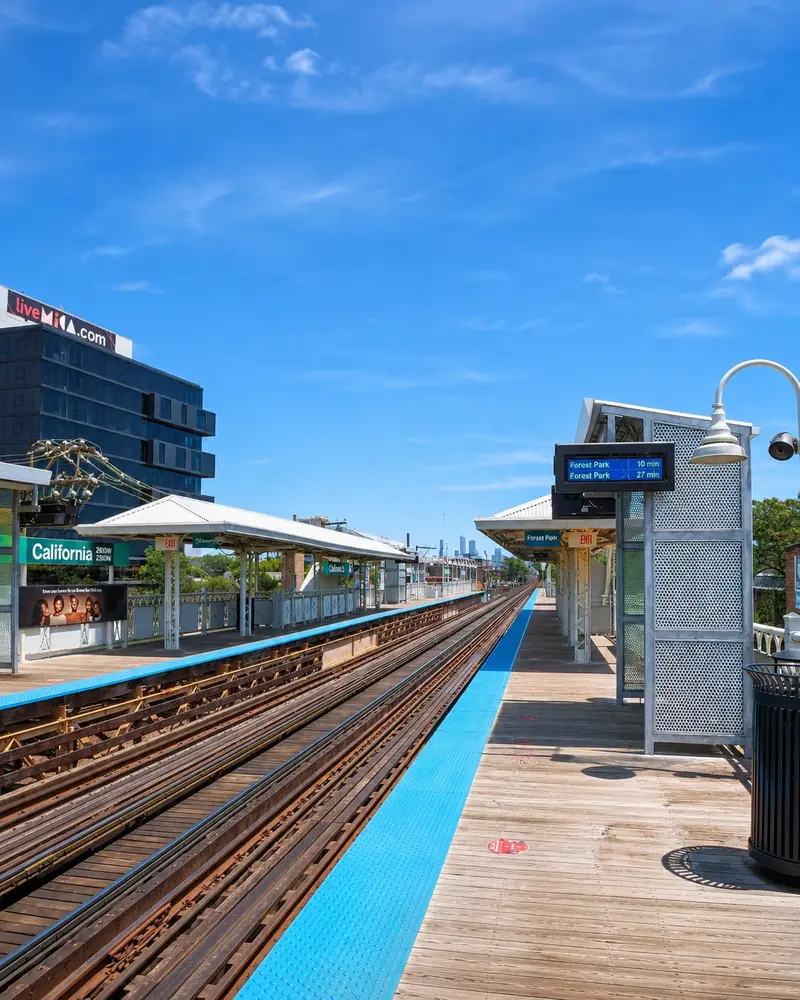
The open-air wooden platforms of the elevated California CTA station flank parallel rail tracks stretching toward the distant downtown skyline. White metal canopy shelters shade the passenger boarding areas, which are outlined by vibrant blue tactile safety tiling under a clear blue sky.
An expansive perspective view highlights the outdoor platforms at the California station along the CTA’s Blue Line. The stop underwent a massive historic restoration in 2014 to bring its original 1895 brick station house back to its former glory.

Most of the original 1890s stations on the CTA’s Blue Line have been lost to time, which makes the California stop incredibly special.

Built in 1895 for the Metropolitan West Side Elevated Railroad, this station serves the trendy Logan Square neighborhood.

For years, it was looking a bit rough around the edges.

But in 2014, the CTA completed a massive historic restoration that brought the 19th-century brick station house back to life.

The official colorful transit schematic outlines the routing of the Chicago Transit Authority (CTA) "L" rapid transit rail system lines. Colorful intersecting tracks link the North, West, and South Sides of the city together through a central hub known as the Loop.
A comprehensive network map displays all colored lines, stops, and transfer hubs within Chicago’s iconic elevated rail system. Complete with a helpful legend, airport indicators, and help hotlines, it guides commuters navigating across the metropolitan transit grid.

They restored the original masonry, refurbished the vintage wooden doors, and brought back the classic architectural details that had been covered up for decades.

Today, stepping off the Blue Line at California feels like exiting into a much earlier, deeply charming era of Chicago’s history.

Station At A Glance:

  • Lines: Blue Line
  • Neighborhood: Logan Square
  • Year Built: 1895 (Restored in 2014)

Why Preserving Chicago Transit History Matters

It is easy to view public transit purely as a means to an end.

We just want to get from Point A to Point B as quickly as possible.

But Chicago’s historic L stations remind us that everyday infrastructure can be deeply beautiful.

These stations are living museums.

They tell the story of a rapidly expanding metropolis at the turn of the 20th century.

By preserving these spaces—restoring tin ceilings, saving vintage ticket booths, and keeping Queen Anne architecture alive—Chicago allows everyday commuters to interact with history on their morning ride to work.

Which of these historic Chicago “L” stations is your favorite? Let us know in the comments below!

Struan JM AK
Read by 5,000+ Chicagoans
❤️ Get Hey Chicago in your inbox
Join 5,000+ Chicagoans getting untold history on Tuesdays and our curated weekend guide on Thursdays.
🔒 100% free. No spam. Unsubscribe in 1-click anytime.

About Struan Hogg

Born in Scotland, Struan fell in love with Chicago after visiting family in his teens and never looked back. As the founder and editor of Hey Chicago, he travels to the city regularly, spending his time walking its 77 neighborhoods, digging into local archives, and tracking down the untold history behind its architecture. Combining an outsider’s wonder with a deep respect for Chicago grit, Struan celebrates the community stories that make the Windy City unmatched.

Leave a Comment