This wasn’t about landmarks. It was about identity.
Every city has a highlight reel. The postcard shots, the trivia that shows up on quiz night, the stuff travel guides recycle year after year. But pride is different. Pride is personal. It’s the thing that makes a Chicagoan’s voice change when they talk about home, the thing that makes them lean forward and say, “No, but you don’t understand.”
We wanted to know what that thing was. So we posted the question to the Hey Chicago Facebook community, Chicago locals, expats, and people who’ve spent enough years on these streets to know what matters. We also cross-referenced the responses with online Chicago communities to make sure nothing slipped through.
What came back wasn’t a list of tourist attractions. It was a love letter to a city that fights for things, builds things, invents things, and refuses to let anyone forget it. The responses were overwhelming, sometimes emotional, and surprisingly consistent. Here’s what Chicagoans are actually proud of.
The Lakefront, Forever Open, Clear, and Free
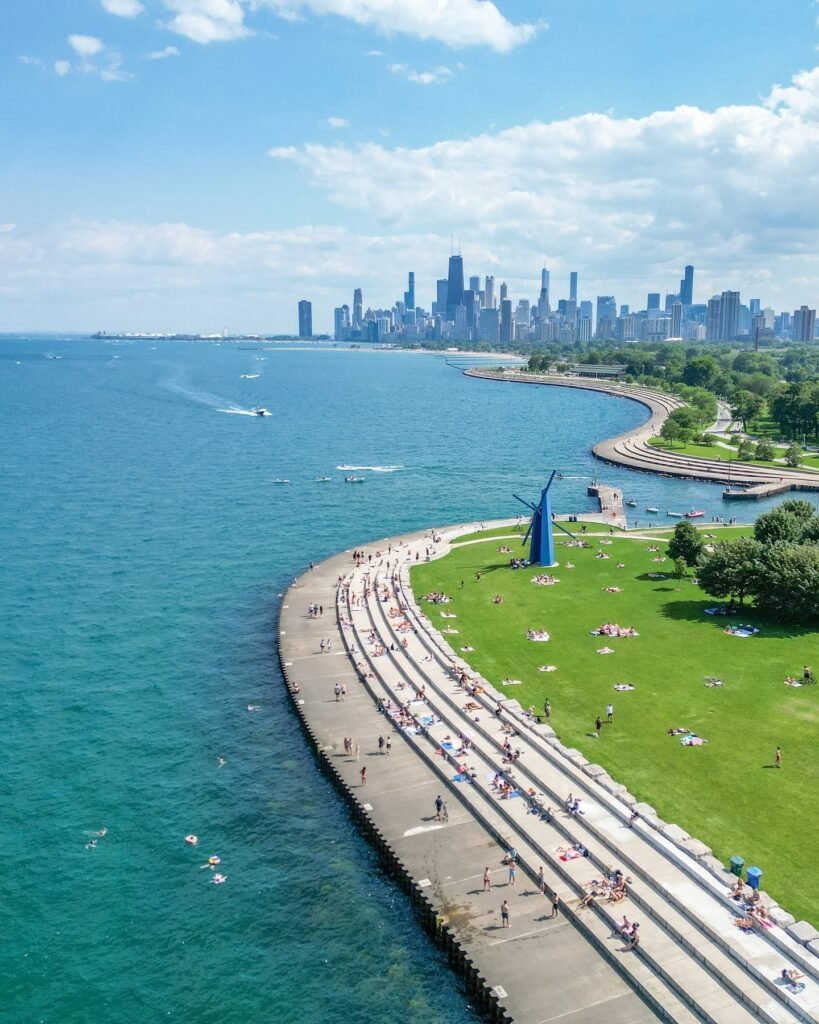
Nothing else came close. When we asked what Chicagoans are most proud of, the lakefront wasn’t just the top answer. It was the answer that people got emotional about.
Chicago has 26 miles of public shoreline along Lake Michigan, and nearly all of it is protected parkland. That’s not an accident. It’s the result of a fight that’s been going on since the 1830s, when the phrase “Public Ground, A Common to Remain Forever Open, Clear, and Free” was written into the city’s original plans. Aaron Montgomery Ward spent years and his own fortune in court battles to keep the lakefront public, and locals haven’t forgotten.
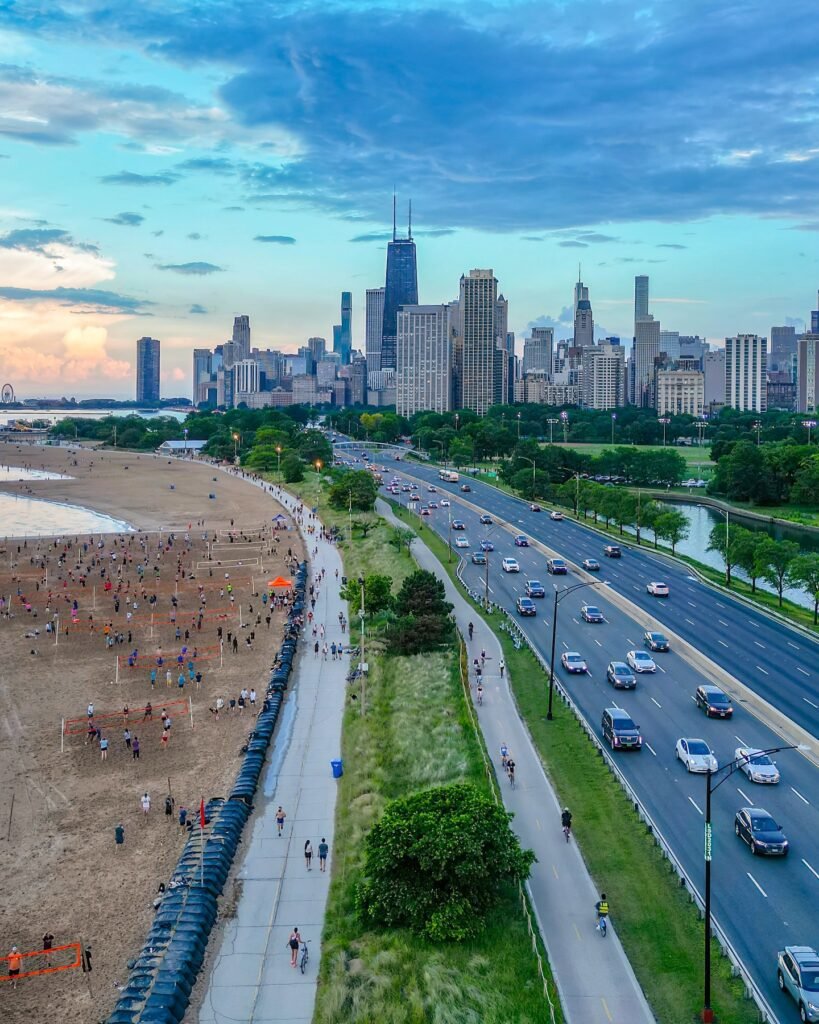
What makes this different from other cities with nice waterfronts? Chicago actually kept its promise. Other major waterfront cities sold off their shoreline to developers decades ago. In Chicago, you can walk from Ardmore Street on the Far North Side to 71st Street on the South Side without ever hitting a private barrier. The Lakefront Trail runs the entire stretch.
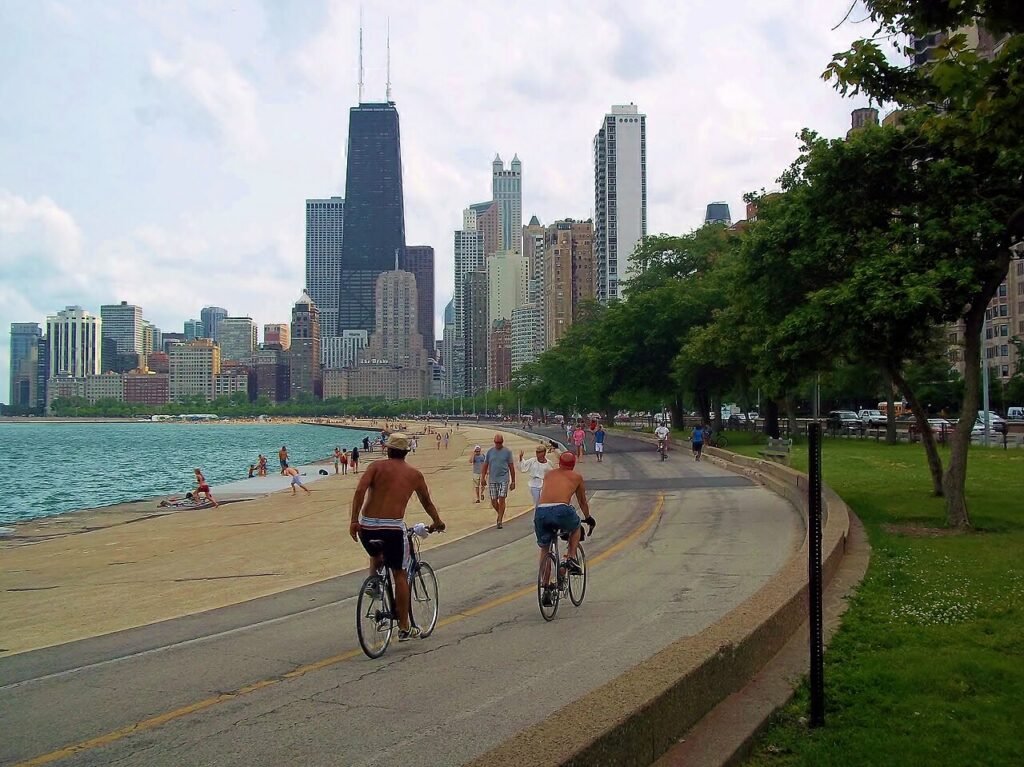
One community member put it perfectly: living in other cities where the waterfront is all privatized makes you appreciate that Chicago puts its money where its mouth is.
Did you know? Lake Michigan is the only Great Lake entirely within U.S. borders. It supplies drinking water to over 12 million people, including every Chicagoan.
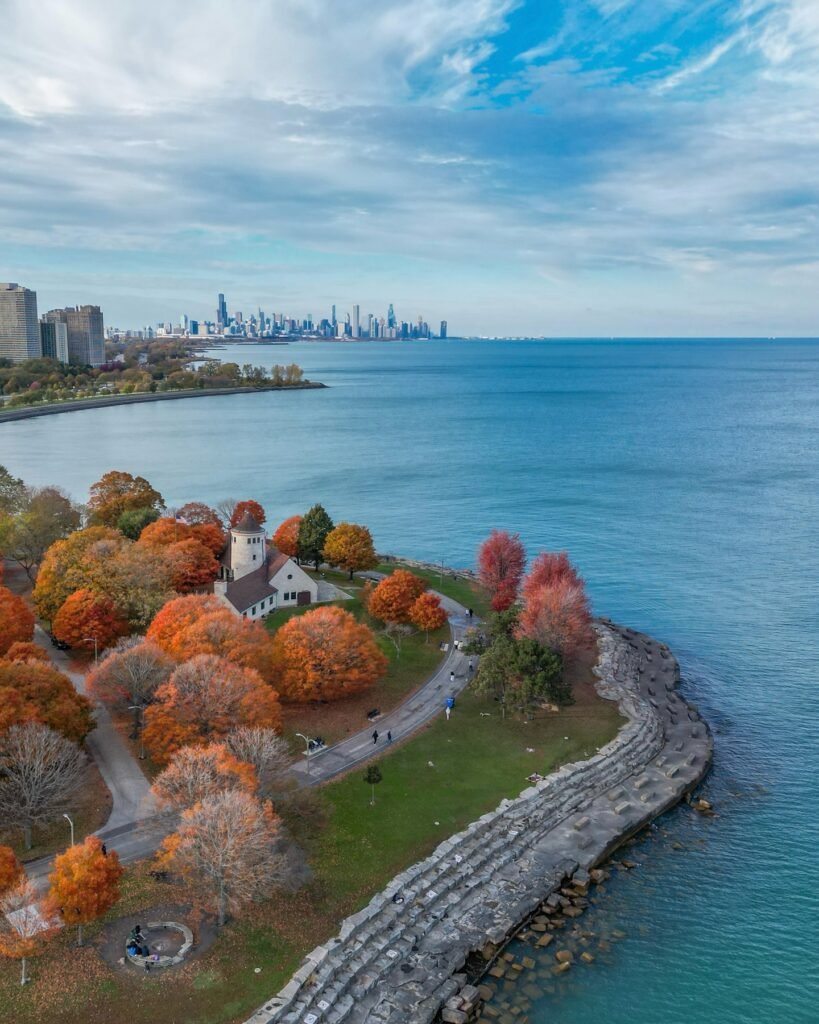
Local tip: For the best skyline view on the entire lakefront, skip the tourist crowds at Navy Pier and head to Promontory Point in Hyde Park. It’s free, it’s quiet, and the view is unbeatable, especially at sunset.
The Park System, and the City That Actually Invested in Green Space
The lakefront gets the headlines. But Chicagoans were just as vocal about something broader: the entire park system.
Chicago has over 600 parks spanning more than 8,800 acres. Lincoln Park Zoo is free. Garfield Park Conservatory is free. Millennium Park, Maggie Daley Park, the 606 Trail, Jackson Park, Humboldt Park. Every neighbourhood has green space, and most of it is well maintained and genuinely used, not just decorative.
What sets Chicago apart from other major American cities is scale. New York has Central Park and a handful of others. LA has scattered pockets. Chicago built an interconnected system of parks, boulevards, and conservatories that stretches across the entire city, North Side to South Side, lakefront to western edge. The boulevard system alone, designed in the late 1800s, connects major parks with tree-lined corridors that were revolutionary urban planning for their time.
Multiple community members brought up the parks alongside the lakefront but as a separate point of pride. The parks are where the free concerts happen, where the festivals run every summer weekend, where block parties spill over into. They’re the infrastructure of neighbourhood life.
One local summed it up simply: the bulls of the 90s, the hot dogs, the kindness, but also the parks. Other cities don’t have this kind of green space.
Did you know? Lincoln Park Zoo is one of the oldest zoos in the country and one of the last remaining free-admission zoos in a major U.S. city. It’s been free since it opened in 1868.
Local tip: Garfield Park Conservatory on the West Side is one of the largest conservatories under glass in the country, and it’s completely free. Most tourists never make it there because it’s off the typical visitor circuit. Their loss.
The Labor Movement, Born Right Here
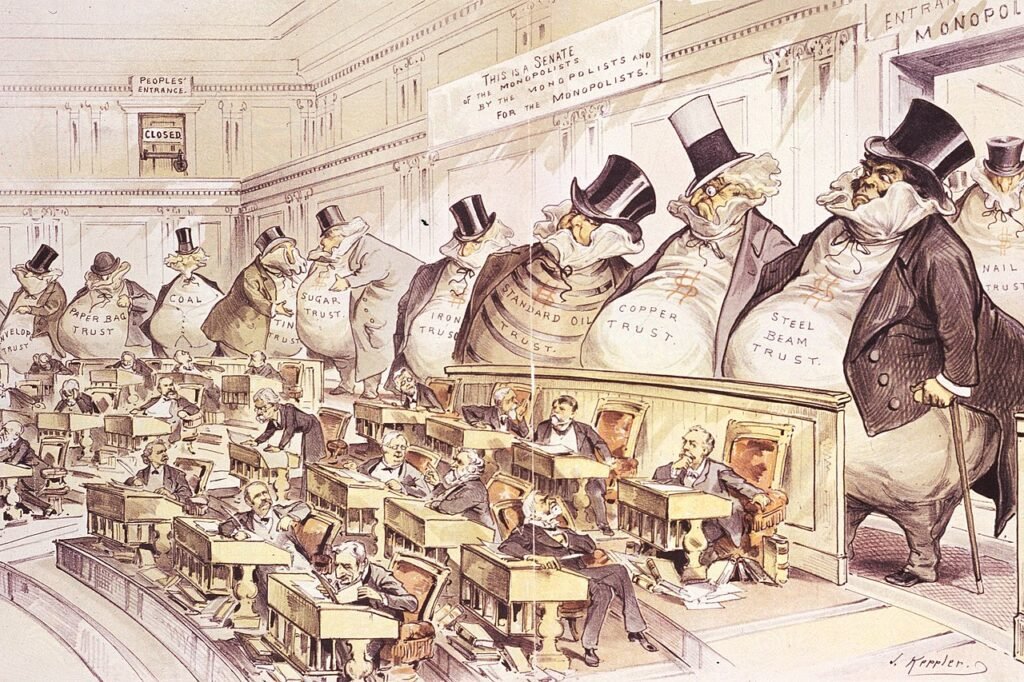
This one caught us off guard. Not because it’s wrong, but because of how many people said it, and how fiercely. The community didn’t just mention Chicago’s labour history. They claimed it.
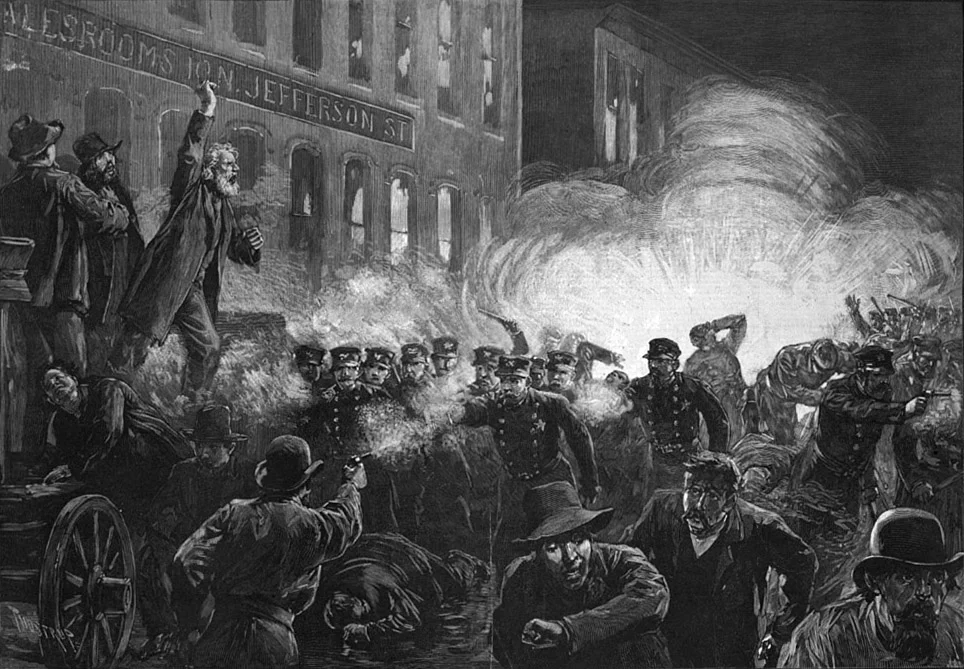
On May 4, 1886, a labour rally at Haymarket Square turned into one of the most significant events in global workers’ rights history. Workers had been striking for an eight-hour workday. A bomb went off during the protest, killing both police officers and civilians. Eight labour leaders were convicted afterward in a trial widely considered unfair. The event became international news and directly led to May Day being designated as International Workers’ Day in 1889.
But Haymarket wasn’t an isolated moment. Chicago produced the Pullman Strike of 1894, which required federal intervention. The city was home to labour activists like Lucy and Albert Parsons. It was the spiritual centre of the movement that gave the world the concept of the eight-hour workday, the weekend, and fundamental protections for workers.
As one local put it: we wouldn’t have weekends now if it weren’t for what happened in Chicago.
Fast facts:
- The Haymarket Affair occurred on May 4, 1886
- May Day (International Workers’ Day) was designated in 1889 to commemorate it
- Chicago was also the site of the 1937 Memorial Day Massacre at Republic Steel
- The city hosted the founding convention of the Industrial Workers of the World
Local tip: The Haymarket Memorial is at 175 N Desplaines Street in the West Loop. Most tourists walk right past it without knowing what they’re looking at. Stop and read the plaque.
The Architecture, and the Stubborn Refusal to Stop Building
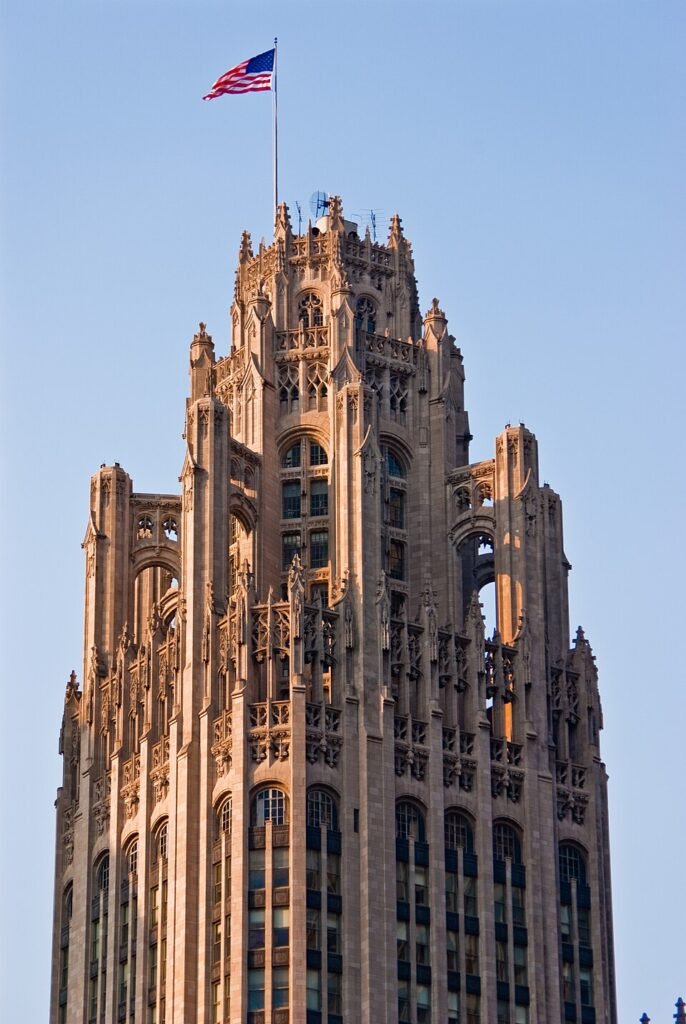
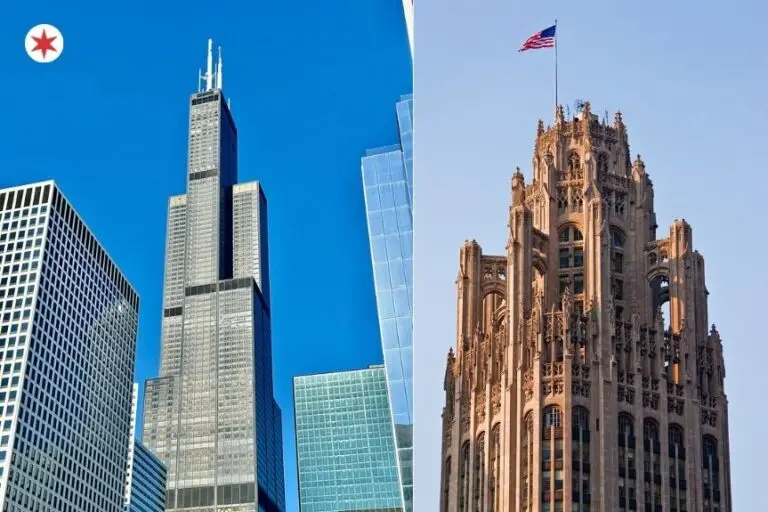
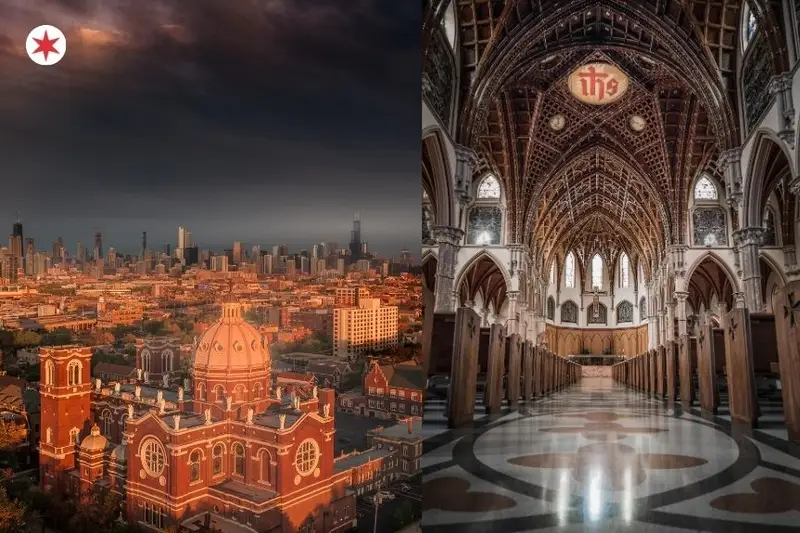
Chicagoans don’t just like their buildings. They understand them. They know the architects’ names. They can tell you which style a building belongs to. And they’re proud of the reason the skyline looks the way it does: because Chicago burned down and chose to build something better.
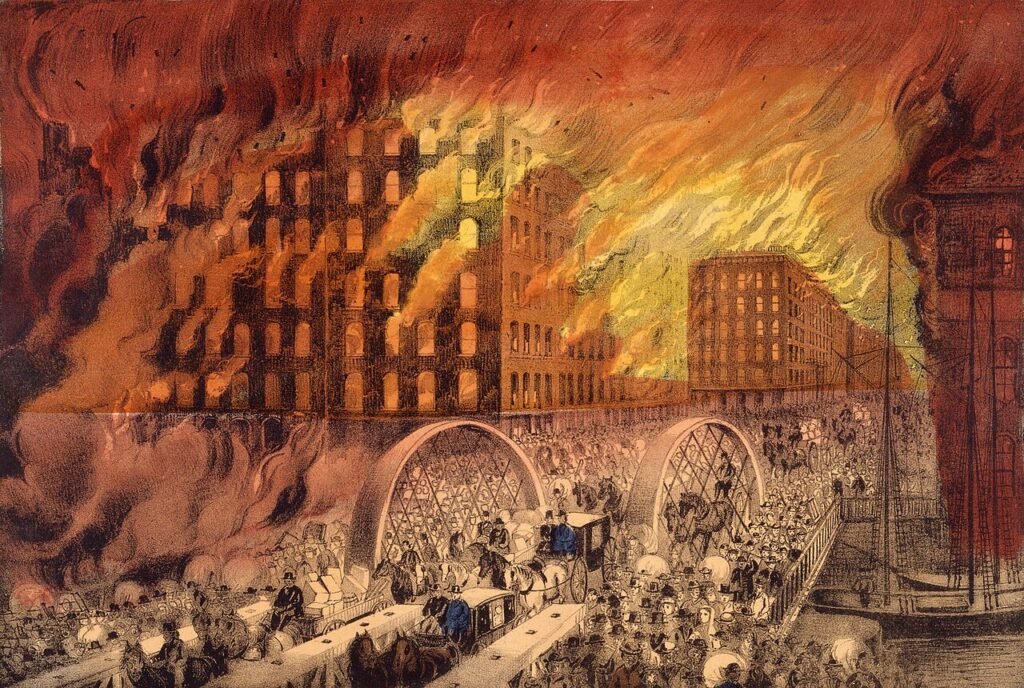
The Great Chicago Fire of October 1871 destroyed 3.3 square miles of the city. At least 300 people were lost, and over 100,000 were left homeless. What happened next is the part Chicagoans can’t stop talking about. The city rebuilt itself faster than anyone thought possible, and in doing so, it invented modern architecture. The first steel-frame skyscraper was built here in 1885. The Chicago School of Architecture defined how the world builds tall. Frank Lloyd Wright’s Prairie Style originated on these streets.
If you want to understand why this matters to locals, consider that one of the community’s most repeated answers was simply: “the skyscraper.” Not a specific one. The concept itself.
If the history of Chicago’s buildings fascinates you, the Chicago Architecture Boat Tour is the best way to see the skyline from the river. It’s one of the few tours that locals will actually recommend.
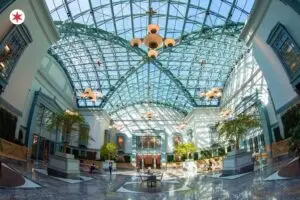
Local tip: Don’t just look up. Chicago’s lobbies are some of the most overlooked architectural treasures in the city. We wrote a whole guide to the best ones.
The Food That Started Here
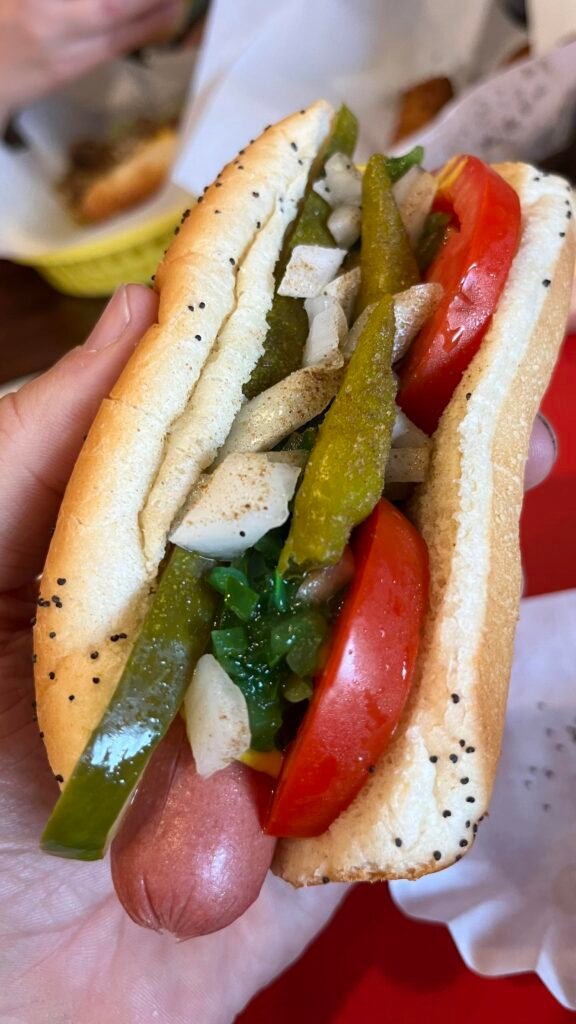
Ask a Chicagoan about food pride and you won’t hear about Michelin stars. You’ll hear about specific dishes that were invented on these blocks, perfected over decades, and defended with a loyalty that borders on aggressive.
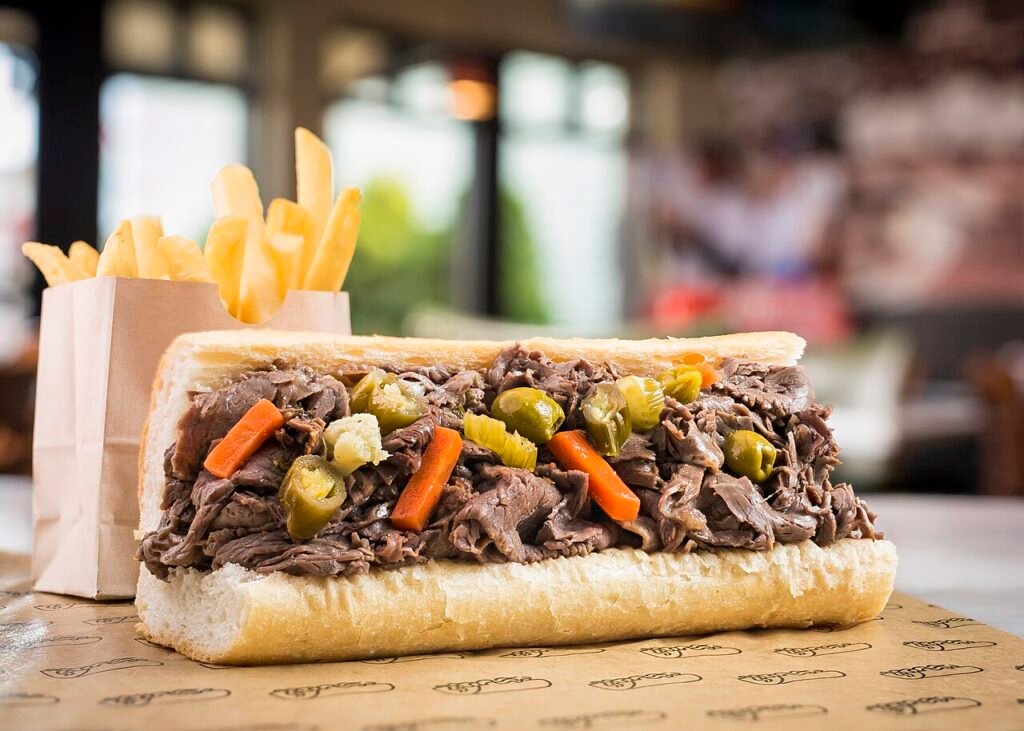
The community’s list of Chicago-originated dishes was longer than we expected: Italian beef, the Chicago-style hot dog (seven toppings, absolutely no ketchup, ever), saganaki (the flaming cheese dish, first served tableside at The Parthenon in Greektown), chicken Vesuvio, shrimp de Jonghe, brownies (yes, brownies, first created at the Palmer House hotel for the 1893 World’s Fair), and the jibarito, a Puerto Rican sandwich made with fried plantains instead of bread, invented at Borinquen Restaurant in Humboldt Park in 1996.
The debate: Deep dish vs. tavern-style thin crust Out-of-towners assume deep dish is what Chicagoans eat. Locals were quick to correct this. Tavern-style thin crust, square cut and crispy, is the everyday pizza of Chicago. Deep dish is for special occasions and visiting relatives.
And then there’s giardiniera. The spicy, pickled vegetable relish that goes on Italian beef, sausage, pizza, and everything else. Multiple locals brought it up not as a topping, but as a point of pride. One person noted that leaving Chicago and realising giardiniera counts as exotic food elsewhere was a real culture shock.
Local tip: If you want to eat like a Chicagoan, order an Italian beef dipped with hot giardiniera. “Dipped” means the whole sandwich gets submerged in the cooking juices. It will fall apart. That’s the point.
For a proper tour of the city’s food scene, check out our guide to famous Chicago restaurants that are actually worth the hype.
The Immigrants, Wave After Wave
This one wasn’t a single answer. It was a feeling that ran through dozens of responses, and it kept surfacing no matter what the specific topic was.
Chicagoans are proud that their city was built by immigrants. Not in the abstract, hand-waving way that every American city claims diversity. In the specific, neighbourhood-by-neighbourhood way where you can still trace the layers. Pilsen is Mexican-American. Avondale is Polish. Bridgeport is Irish Catholic. Chinatown anchors the South Side around Wentworth and Cermak. Ukrainian Village was exactly what the name says. Devon Avenue shifts from Indian to Pakistani to Bangladeshi to Middle Eastern within a few blocks. And these aren’t historical footnotes. People still live in these communities, still run the restaurants, still hold the festivals.
One commenter called Chicago the most worldly city of the prairie. Another talked about the city’s innate desire for knitting everybody from vastly different backgrounds together. The Italian heritage came up repeatedly, as did the Puerto Rican community in Humboldt Park, the Swedish roots of Andersonville, and the Black cultural legacy of Bronzeville during the Great Migration.
What makes Chicago’s version of this different from, say, New York’s? Scale and proximity. Chicago’s neighbourhoods sit right next to each other. You can eat Polish food for lunch in Avondale, walk twenty minutes, and have tacos in Logan Square. The cultural borders are porous in a way that bigger, more sprawling cities can’t replicate.
The community was also honest about the tension. Chicago has a long history of neighbourhood segregation, and several people acknowledged it directly. But the pride wasn’t in pretending that history doesn’t exist. It was in the fact that wave after wave of people from around the world chose this city, put down roots, and made it theirs.
Local tip: If you want to experience Chicago’s immigrant food culture in one afternoon, take the Red Line to Argyle Street on the North Side for Vietnamese food, then hop back on and ride south to Chinatown for dim sum. Two stops, two continents, one train line.
The River Reversal, Engineering on a Scale That Sounds Made Up
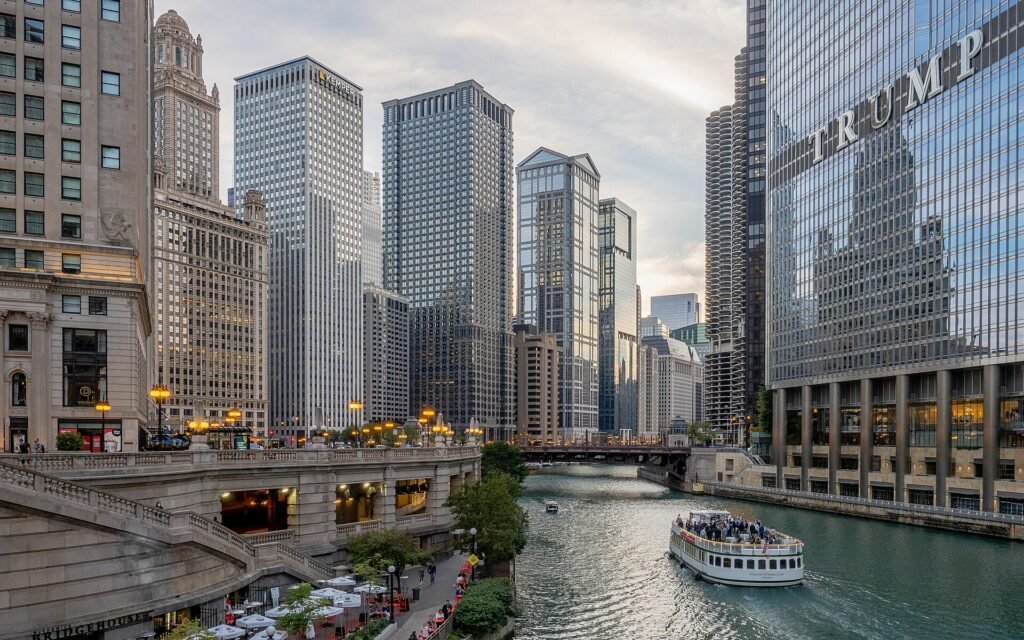
When locals talk about Chicago’s river, they don’t talk about the Riverwalk bars or the green dye on St. Patrick’s Day. They talk about the time the city reversed the entire flow of the river, and the reactions from people hearing this for the first time never get old.
Completed on January 2, 1900, the Chicago Sanitary and Ship Canal, stretching 28 miles, physically changed the direction of the Chicago River so that it flowed away from Lake Michigan instead of into it. The reason? Chicago’s sewage was flowing directly into its own drinking water supply. The solution was to dig a canal so massive that the river’s path of least resistance reversed entirely.
Workers broke through the final earthen dam at Kedzie Avenue in the predawn darkness. The project was later named a “Civil Engineering Monument of the Millennium” by the American Society of Civil Engineers. The chief engineer, Isham Randolph, went on to help build the Panama Canal. That’s the calibre of project this was.
One newcomer to Chicago posted that they’d moved to the city in 2020 and were still flabbergasted by the fact that the reversal even happened. The community’s response? “The water goes the other way now.”
That’s Chicago humour in one sentence.
Did you know? The river reversal caused legal battles with downstream cities that suddenly found themselves receiving Chicago’s waste. The city of St. Louis filed a Supreme Court case over it.
Local tip: The best place to understand the river’s history and engineering is the McCormick Bridgehouse & Chicago River Museum, built inside one of the Michigan Avenue bridge towers. It’s tiny, cheap, and most visitors have never heard of it.
The Grid and the Alleys, Two Systems Locals Brag About
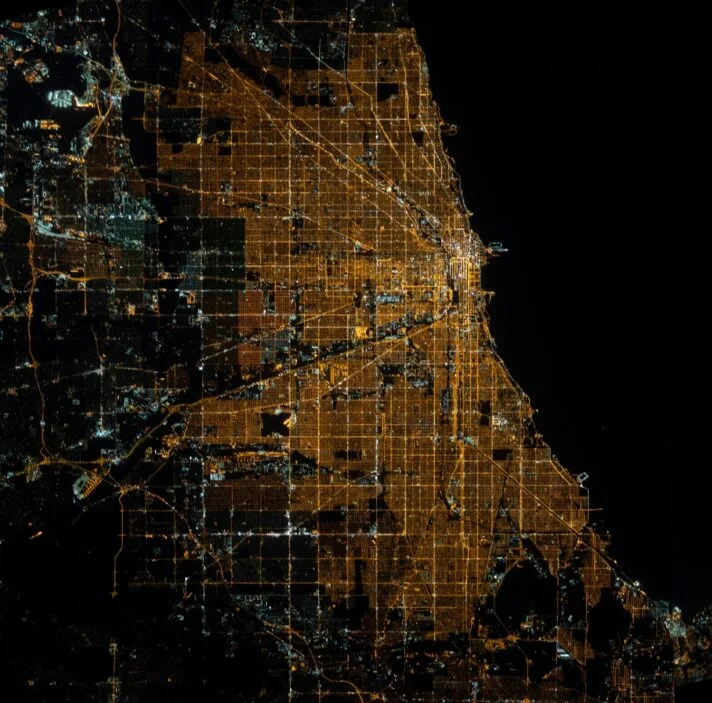
Here’s one that visitors would never guess. When we asked Chicagoans what they’re proud of, multiple people answered with two words: the grid.
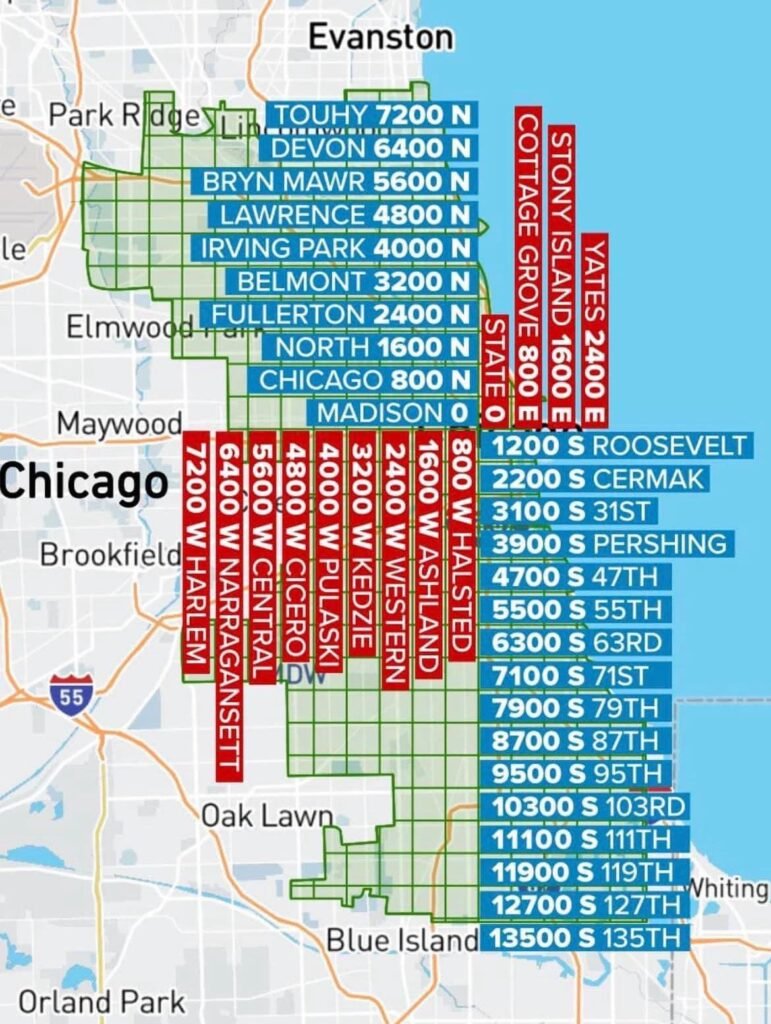
Chicago’s address system is built on a numbering grid centred at the intersection of State Street and Madison Street. Every eight blocks equals one mile. If someone tells you an address is at 1600 North, you know instantly that it’s exactly two miles north of Madison. The system is elegant, logical, and once you learn it, navigating the city becomes almost impossible to get wrong.
And then there are the alleys. Chicago has roughly 1,900 miles of alleys, more than any major city in the Western Hemisphere. They exist for practical reasons: garbage collection, utility access, and deliveries all happen behind buildings rather than on main streets. The result is cleaner sidewalks and less clutter than cities that lack alley systems.
One local who moved away put it best: not having alleys in other cities was as shocking as discovering that giardiniera isn’t everywhere.
Worth knowing: Chicago’s post-fire building codes were revolutionary for their era. The alley system was part of a broader vision tied to the City Beautiful movement, designed to keep urban life functional and sanitary.
Local tip: Chicago’s grid makes it easy to estimate travel time on foot. If you know the block numbers of where you are and where you’re going, every 800 numbers equals roughly one mile, or about a 20-minute walk.
House Music, Invented on the South Side
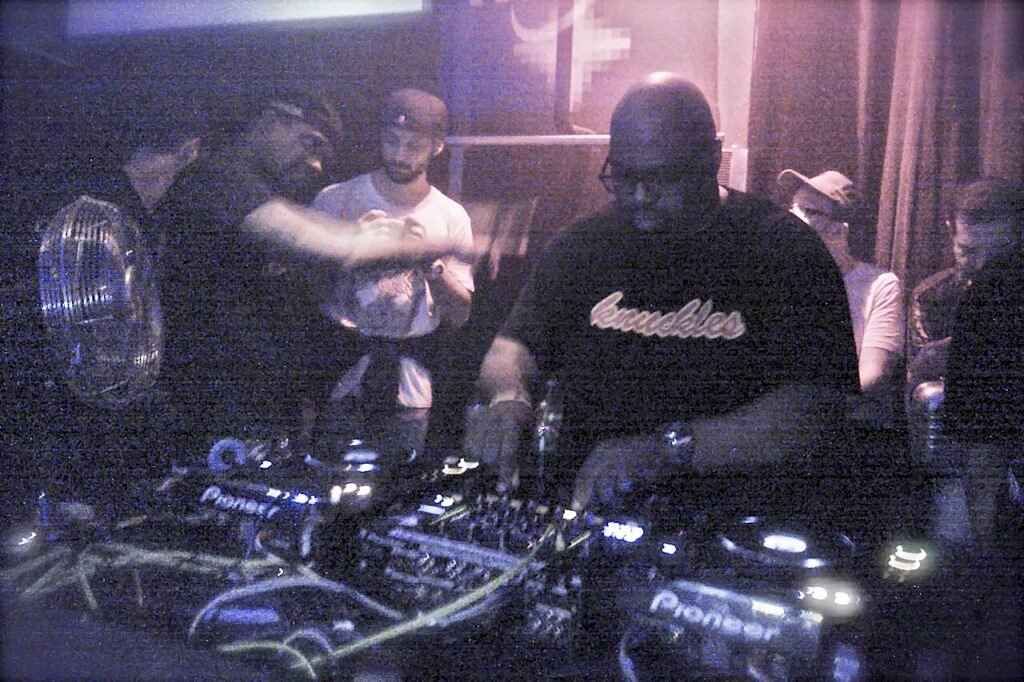
Chicagoans didn’t just mention house music. They claimed it the way other cities claim their sports teams. And they should, because this one is theirs.
House music was born in Chicago in the early 1980s, primarily at a nightclub called The Warehouse, where DJ Frankie Knuckles, now known as the “Godfather of House Music,” mixed disco, electronic, and soul records into something entirely new. The genre got its name from the club itself. It spread from Chicago to Detroit, to New York, to Europe, and eventually became the foundation of electronic dance music worldwide.
What’s remarkable is how many community members brought up house music without prompting. For a genre that went on to reshape global music culture, its Chicago roots are often overlooked in mainstream conversations. Locals haven’t forgotten, though.
One response summed it up: the community agreed that the best drink in Chicago is actually the worst drink ever invented. That’s a reference to the Chicago Handshake (a shot of Malört paired with a PBR), but the sentiment applies to house music too. Chicagoans love the things they created, especially the weird ones.
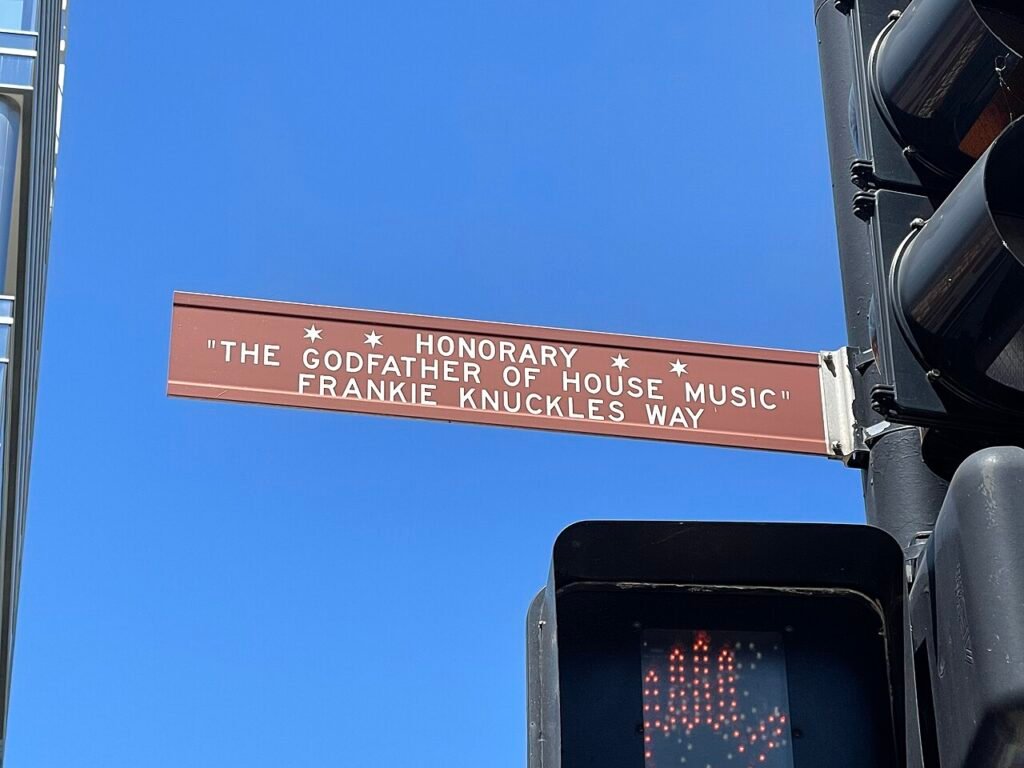
Did you know? Frankie Knuckles was honoured by the city of Chicago in 2004, when a section of Jefferson Street was officially renamed “Frankie Knuckles Way.”
Local tip: For a taste of the city’s music heritage, head to one of Chicago’s historic music venues. The Green Mill in Uptown has been open since 1907 and still hosts live jazz and poetry slams.
Julius Rosenwald, The Philanthropist Chicago Doesn’t Talk About Enough
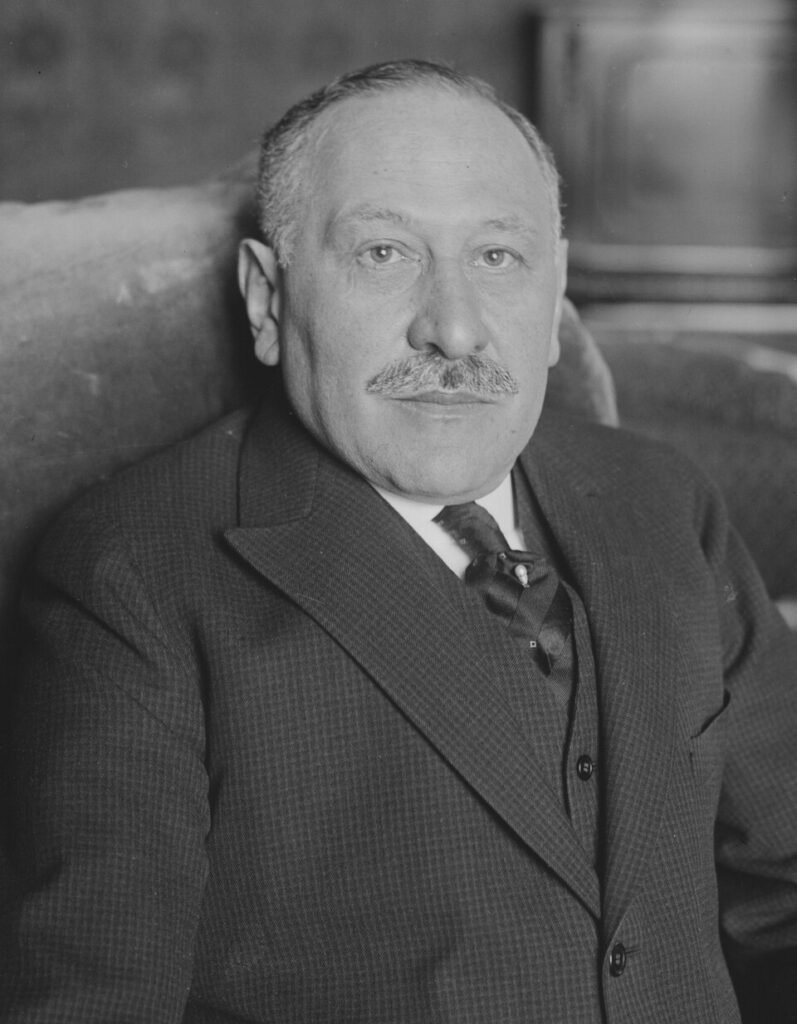
This entry is the one that taught us something. Several community members brought up Julius Rosenwald, and their passion for him was striking.
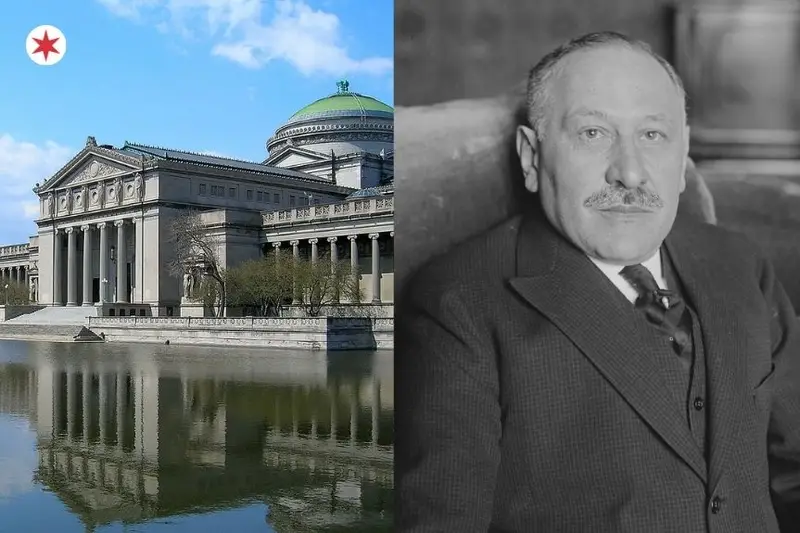
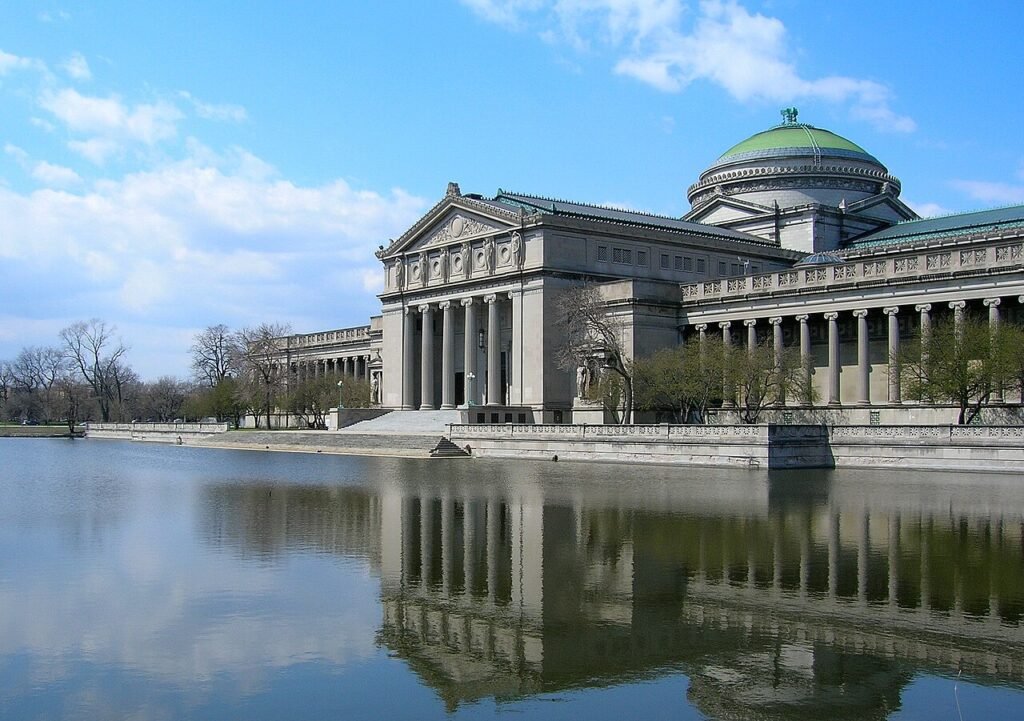
Rosenwald built Sears, Roebuck & Co. into one of the most powerful companies in America. Then he used that wealth to do something extraordinary: he funded the construction of over 5,000 schools for Black children across the rural South during the early 20th century. By 1928, roughly one in three rural Black schoolchildren in the South attended a Rosenwald School. He also helped establish the Museum of Science and Industry, housed in the former Palace of Fine Arts building from the 1893 World’s Columbian Exposition in Jackson Park.
What locals kept pointing out is that Rosenwald didn’t need to put his name on anything. He cared about the work, not the credit. One commenter noted that Rosenwald was unimpressed with other wealthy people, which made the community love him even more.
The museum was recently renamed the Griffin Museum of Science and Industry after a $125 million donation. Several community members made it clear they’d be continuing to call it the Rosenwald Museum.
Local tip: The Museum of Science and Industry building itself, the former Palace of Fine Arts, is the only surviving major structure from the 1893 World’s Fair. Even if you don’t go inside, the exterior is worth seeing for the architecture alone.
The Neighbourhoods, All 200+ of Them
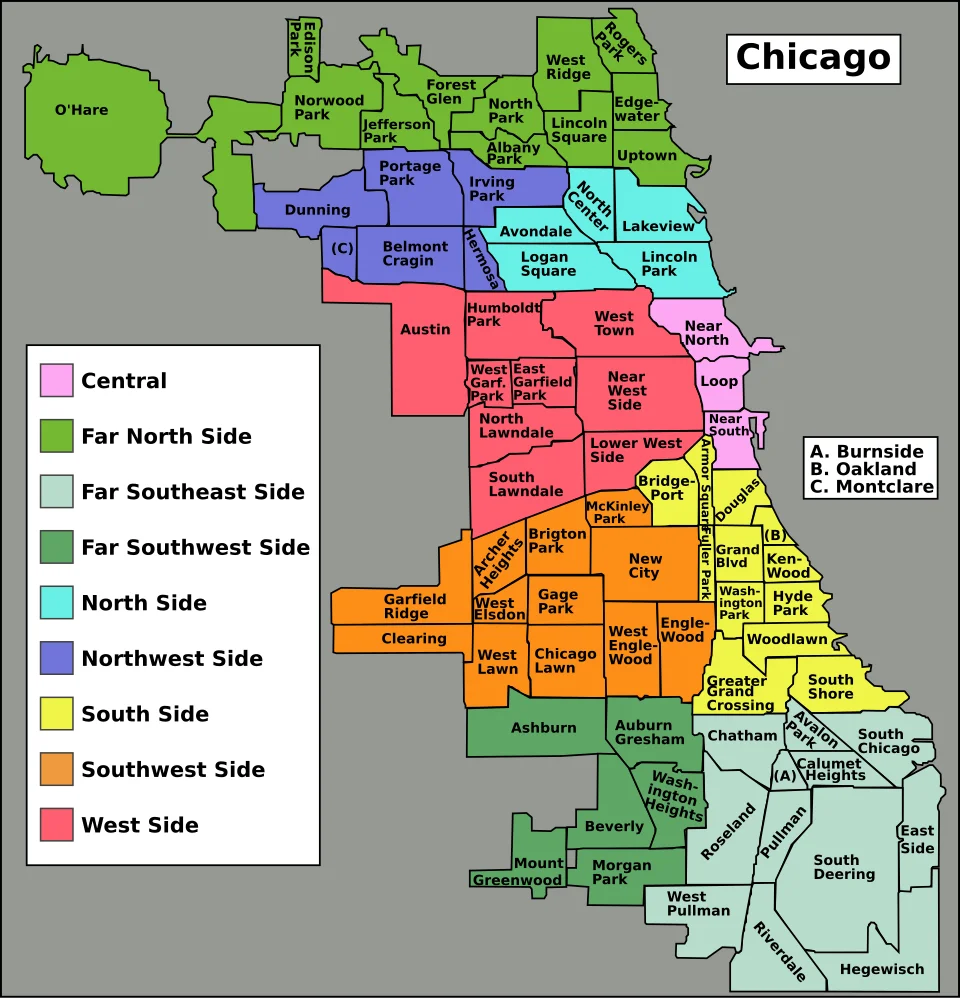
Chicago has 77 officially designated community areas and over 200 informally recognised neighbourhoods, and locals are proud of every single one of them. But it’s not just the number that matters. It’s the identity.
Each neighbourhood in Chicago functions almost like its own small town. Pilsen has its murals and Mexican food scene. Andersonville has its Swedish bakeries and indie shops. Bridgeport has the White Sox and generations of Irish Catholic history. Bronzeville carries the legacy of the Great Migration. Devon Avenue offers one of the most culturally diverse food corridors in North America, shifting from Indian to Pakistani to Bangladeshi to Middle Eastern cuisine within a few blocks.
The community’s pride in their neighbourhoods wasn’t generic. People named specific streets, specific blocks, specific corners. One person who grew up in Back of the Yards talked about its deep roots with the same reverence someone else used to describe the Gold Coast. That’s the thing about Chicago: the pride isn’t concentrated in one postcode.
What visitors often get wrong is assuming the city revolves around the Loop. Locals will tell you the real Chicago exists in the neighbourhoods, where the restaurants don’t have tourist menus and the bars don’t have cover charges. If you’re planning a trip, our neighbourhood guide covers the ones worth exploring beyond downtown.
Local tip: If someone calls the city “Chi-Town,” they’re not from here. Just “Chicago” is fine.
From Social Work to Stand-Up, The Improv Connection
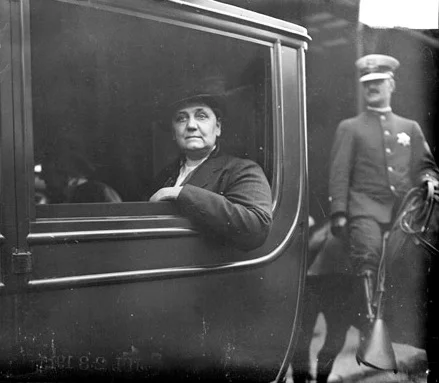
One community member dropped a fact that sent us down a research rabbit hole: the birthplace of social work in America led directly to the birth of improvisational theatre.
It sounds unlikely. But here’s how it happened. Jane Addams founded Hull House on Chicago’s Near West Side in 1889, creating a settlement house that helped immigrants assimilate into American life. At Hull House, a sociologist named Neva Boyd ran a programme that used games and play to teach social skills. In the 1920s, a young woman named Viola Spolin, the daughter of Russian Jewish immigrants, studied under Boyd and learned those techniques.
Spolin adapted Boyd’s methods into what she called “theatre games,” using them to teach immigrant children who didn’t share a common language. Those games became the foundation of modern improvisational theatre. Spolin’s son, Paul Sills, later co-founded The Compass Players in 1955, which evolved into Second City in 1959.
So the line runs directly from Jane Addams’s philosophy of helping immigrants find common ground, through Viola Spolin’s theatre games, to Second City’s stage, to Saturday Night Live, to Tina Fey and Steve Carell and Amy Poehler. All of it started in a Chicago settlement house.
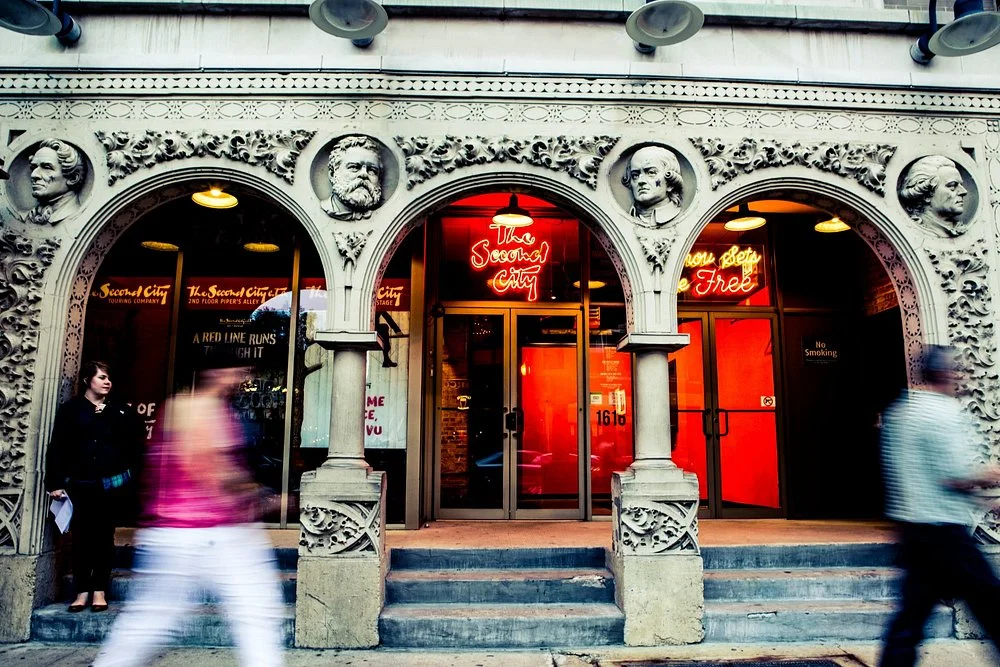
Local tip: Second City offers shows most nights of the week, and the improv sets after the main show are often free or heavily discounted. That’s where you’ll see the rawest, most experimental comedy.
George Streeter, The Con Man Who Got a Neighbourhood Named After Him
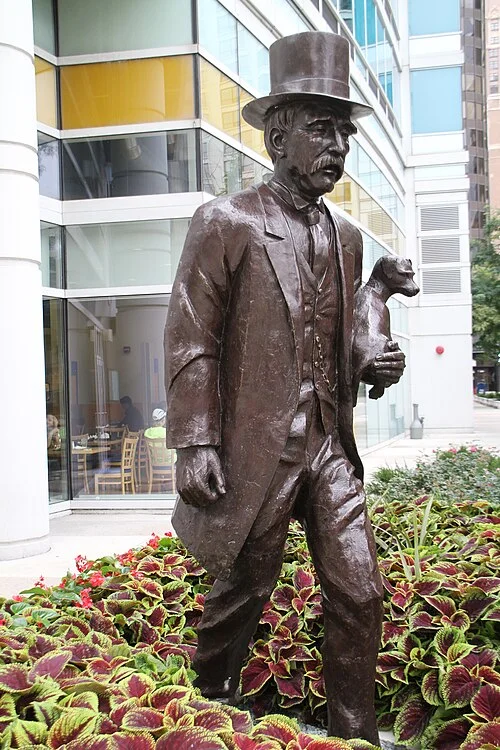
This next one caught us completely off guard. Several locals brought up George Streeter with the kind of affection usually reserved for a favourite uncle who happens to be a criminal.
In 1886, Streeter ran his steamboat onto a sandbar off Chicago’s north shore near Superior Street. Rather than move it, he claimed the land as his own, declaring it the independent “United States District of Lake Michigan,” not subject to Illinois or Chicago law. He even forged federal documents to back up his claim. For the next 30 years, he sold plots of land he didn’t own, fought off police with axes and gunfire, led armies of squatters, and was eventually convicted of manslaughter.
The city named the entire neighbourhood after him.
As one local explained, the culture of “he was an idiot and we love him” is exactly what they wish non-Chicagoans understood about why they love Chicago. Another person responded with two words: “Harry Caray.” Point taken.
What the Streeter story reveals is something deeper about the city’s character. Chicago doesn’t pretend to be polished. It celebrates the rough edges, the audacity, the people who tried something absurd and committed fully, even when it was probably illegal.
Did you know? The site of Streeter’s shanty is now occupied by 875 North Michigan Avenue (the former John Hancock Center), one of the most expensive addresses in the city.
The Blues, Electrified on the South Side
Chicago didn’t invent the blues. Mississippi did. But Chicago took acoustic Delta blues and ran electricity through it, creating a sound that changed popular music forever.
In the 1940s and 1950s, artists like Muddy Waters, Howlin’ Wolf, Willie Dixon, and Buddy Guy migrated to Chicago’s South Side and plugged in their guitars. Chess Records, at 2120 S Michigan Avenue, became the recording epicentre. The electric Chicago blues that came out of those sessions influenced rock and roll, soul, R&B, and every genre that followed.
The community’s pride in the blues wasn’t nostalgic. It was territorial. Locals see Chicago blues as fundamentally theirs, a sound that could only have come from the specific combination of Southern migration, South Side culture, and the raw energy of a working-class city.
Local tip: Rosa’s Lounge in Logan Square is one of the last authentic blues clubs in the city. It’s small, it’s packed, and the music is the real thing. Go on a weeknight to avoid the biggest crowds.
📍 3420 W Armitage Ave, Chicago, IL 60647 (Logan Square)
Honourable Mentions
These came up repeatedly in the community responses but just missed the main list.
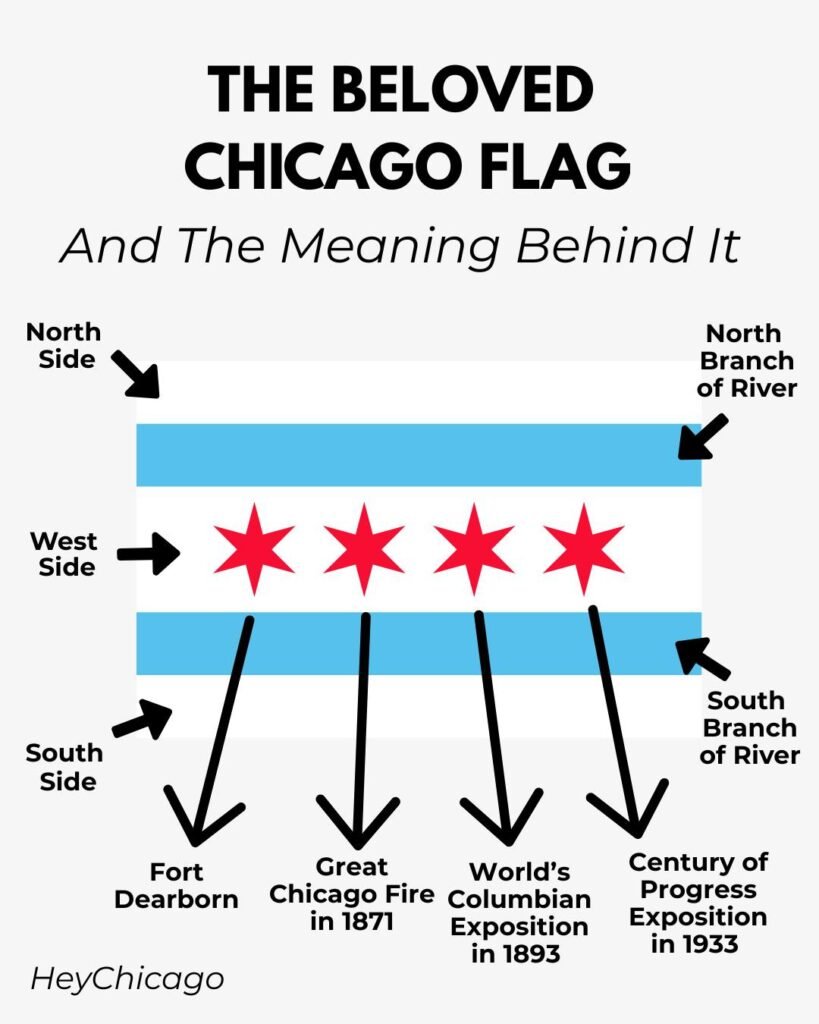
The Chicago Flag. Four red stars, two blue stripes, tattooed on more arms per capita than probably any other city flag in the world. Chicagoans don’t just recognise their flag. They wear it. It shows up on everything from bar signs to baby clothes.
16-Inch Softball. A uniquely Chicago sport played with a larger, softer ball and no gloves. Leagues run all summer in parks across the city. If you’ve never seen it, you’ve never seen real neighbourhood competition.
The Candy Capital Legacy. Chicago was once the candy capital of the world. Brach’s, Ferrara Pan, Wrigley, Mars, and Blommer Chocolate (whose factory made entire neighbourhoods smell like cocoa) all called the city home. Most have moved on, but the legacy remains.
Jean Baptiste Point DuSable. Chicago’s founder, a Black man of Haitian descent who established the first permanent settlement on the north bank of the Chicago River in the late 18th century. Several community members were proud that their city was founded by a Black man.
The Chicago Symphony Orchestra. Multiple locals claimed it as the best symphony orchestra in the world. Arguments about whether it tops the Berlin Philharmonic or Vienna Philharmonic are best had over a Chicago Handshake.
What Surprised Us Most
We expected architecture. We expected food. We expected someone to mention Michael Jordan within the first five responses. (They did.)
What we didn’t expect was how many Chicagoans named systems over spectacles. The grid, the alleys, the L train, the lakefront protection laws. These aren’t things you’d put on a postcard. They’re infrastructure. But when you’ve lived in a city where the address numbers tell you exactly how far you are from the centre, where the rubbish stays off your street because alleys handle it, where 26 miles of coastline belongs to everyone instead of to developers, you start to realise that the things Chicago got right aren’t glamorous. They’re functional. And that’s what makes them remarkable.
The other surprise was George Streeter. The fact that Chicagoans love a man who spent 30 years running a real estate scam tells you something about the city’s sense of humour that you won’t find in any guidebook. Chicagoans don’t just tolerate audacity. They celebrate it, then name a neighbourhood after it.
What The Community Agreed On
Across hundreds of responses, a few themes were unanimous. Chicago is a city that builds things, fights for things, and doesn’t care whether the rest of the country notices. The pride isn’t performative. It’s rooted in specific, tangible contributions: labour rights that changed the world, an architectural movement that redefined what buildings could be, a decision to keep 26 miles of shoreline public when every other major city sold theirs off.
The one thing locals argued about most? Whether the Chicago Symphony Orchestra is the best in the world, or merely one of the best. That was the closest thing to a real debate. On everything else, the community spoke with one voice: this city earned its pride.
Before You Go
If this article made you want to visit Chicago (and it should), here are the practical details.
Getting around: The L train is the fastest way to navigate the city. The Red and Blue lines run 24 hours. The Blue Line from O’Hare to downtown takes about 45 minutes and costs a fraction of a taxi.
Where to stay: Chicago’s hotel scene ranges from budget to luxury. Search Chicago hotels on Expedia for the best rates. September is the sweet spot: warm weather, smaller crowds, and better hotel prices than summer.
What to avoid: Before you go, read our guide to Chicago tourist traps so you don’t waste time on the stuff locals skip.
One more thing: If you visit and enjoy the experience, the best thing you can do is explore beyond the Loop. Take the Blue Line to Wicker Park. Eat in Pilsen. Walk Devon Avenue from end to end. That’s where the pride lives.
And if you’re a Chicagoan reading this, we know we missed something. Your neighbourhood. Your bar. Your thing. That’s the problem with this city. There’s always more.
Meta description: We asked Chicagoans what they’re most proud of. Labour history, the lakefront, and a con man who got a whole neighbourhood named after him. Here’s what they said.
Facebook caption: 🏙️ We asked Chicagoans one simple question: what are you most proud of about your city? The responses floored us. It wasn’t about landmarks or sports teams. One answer about a con man from 1886 might be the most Chicago thing we’ve ever read. What would YOUR answer be? 👇
First comment: Full list here 👇 [URL]