Are you planning a trip to the Midwest and wondering, exactly what is Chicago known for?
You are in the right place!
Chicago is a world-class destination that truly has it all.
From towering skyscrapers and stunning lakefront views to some of the most iconic comfort food in the world, this city leaves a lasting impression.
Whether you are visiting for a weekend getaway or just brushing up on your local Chicago slang, there is so much to learn about the third-largest city in the United States.
 JM
AK
Let’s dive into the amazing things that Chicago is famous for!
World-Class Architecture and Landmarks
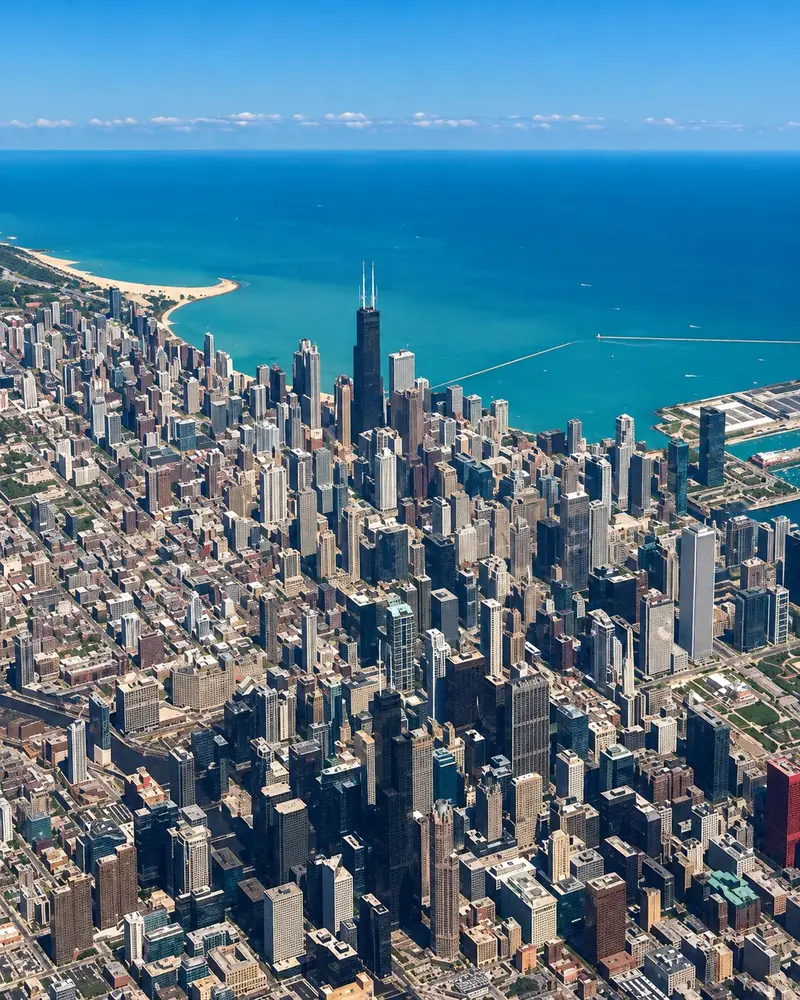
Chicago is widely considered the birthplace of the modern skyscraper.
After the tragic Great Chicago Fire of 1871, the city had to rebuild from the ashes.
This led to an explosion of engineering innovation that produced some of the most iconic buildings in Chicago.
1. The Willis Tower (Formerly Sears Tower)
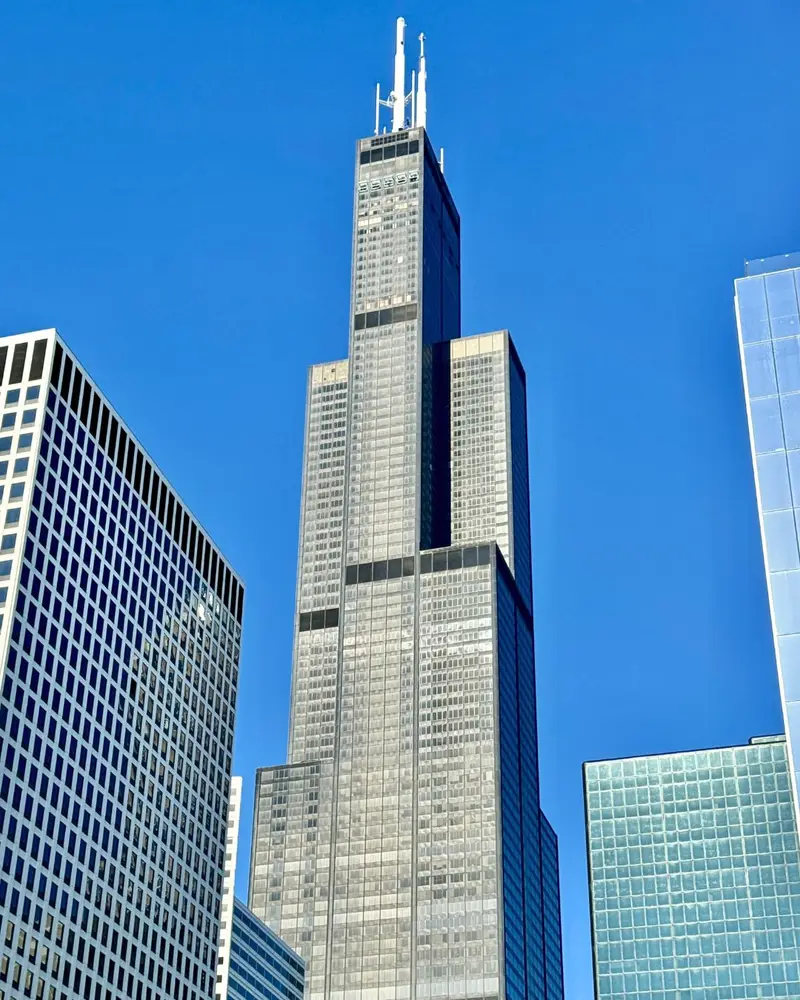
For nearly 25 years, this massive black skyscraper was the tallest building in the world.
While the name officially changed to the Willis Tower in 2009, most stubborn locals still call it the Sears Tower.
If you are brave enough, head up to the Skydeck on the 103rd floor. You can step out onto “The Ledge,” a glass box that extends four feet outside the building, offering a terrifying but thrilling view of the streets below.
2. Stunning Historic Lobbies
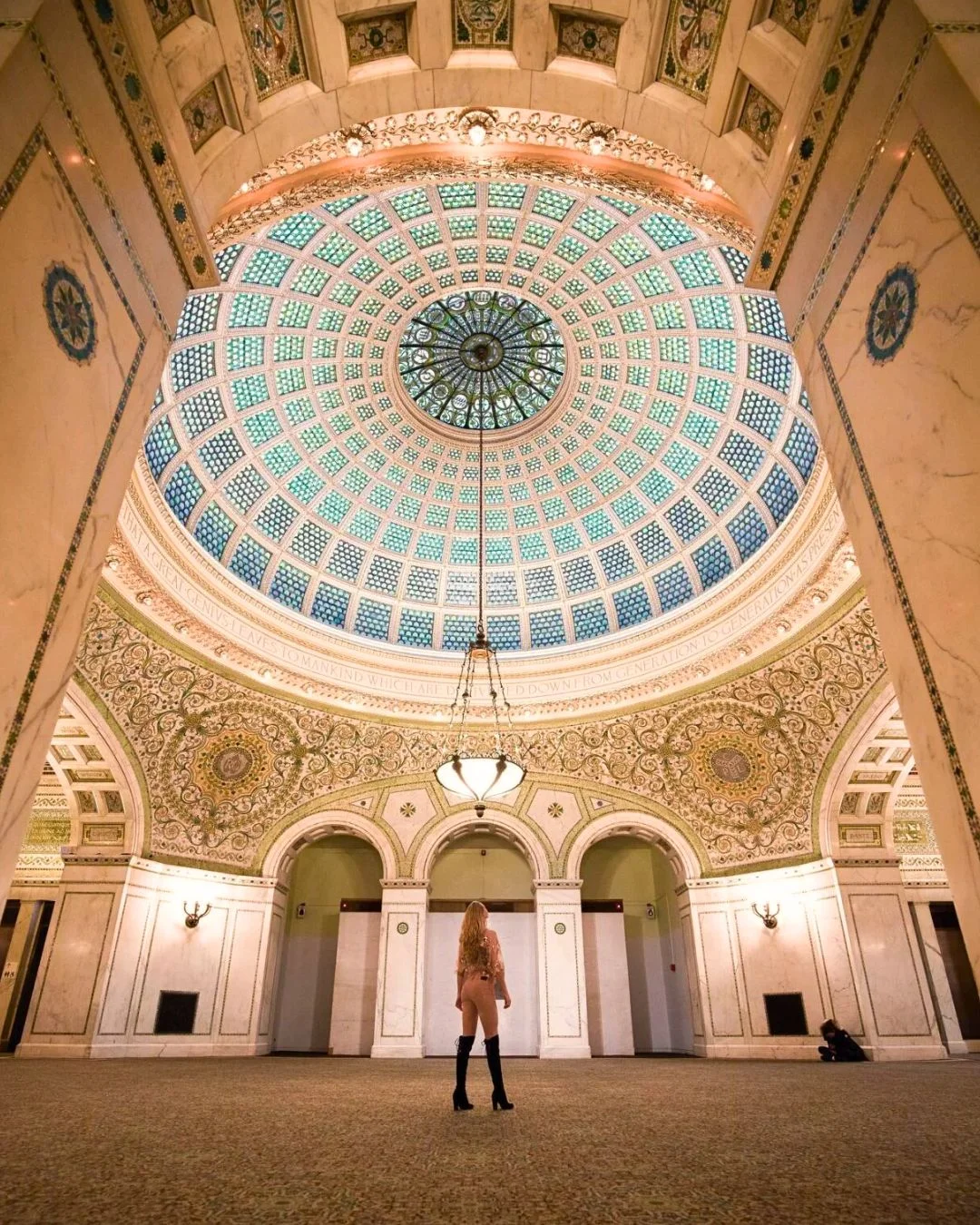
You don’t always have to pay for a high-rise ticket to see incredible Chicago architecture.
Much of the city’s beauty is hidden right at street level inside opulent office buildings and historic hotels.
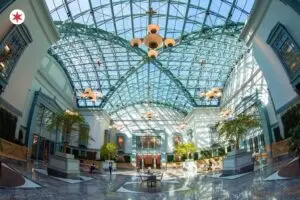
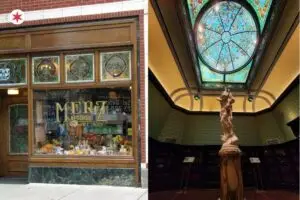
If you love exploring hidden gems on a budget, check out these 15 stunning lobbies in Chicago you can experience for free.
3. Cloud Gate (aka “The Bean”)
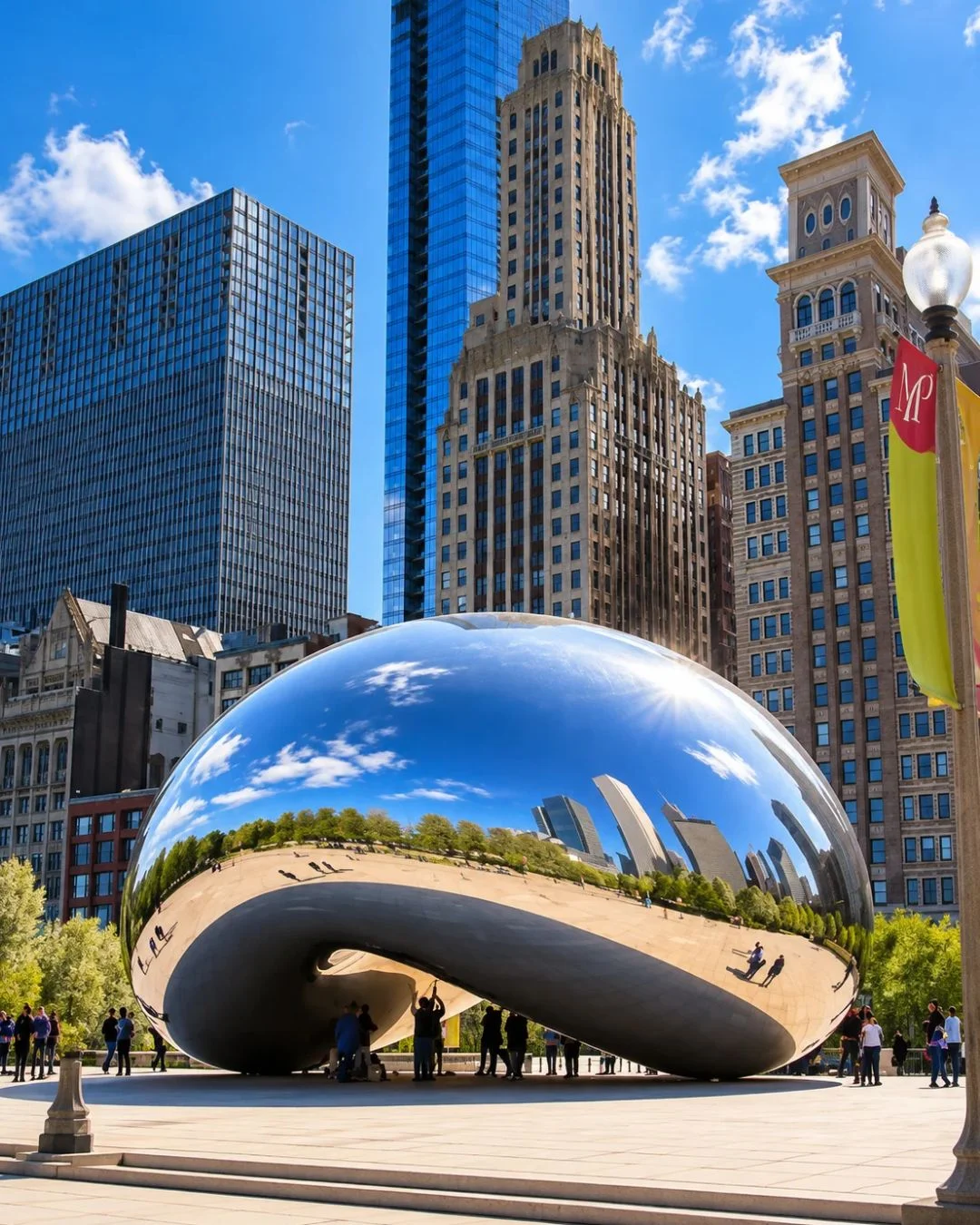
Located in the heart of Millennium Park, Cloud Gate is arguably the most photographed landmark in Chicago.
Designed by artist Anish Kapoor, everyone lovingly refers to this massive, reflective stainless steel sculpture simply as “The Bean.”
Walking underneath it and taking a distorted selfie in its mirrored surface is a must-do for any visitor.
4. The Chicago Riverwalk
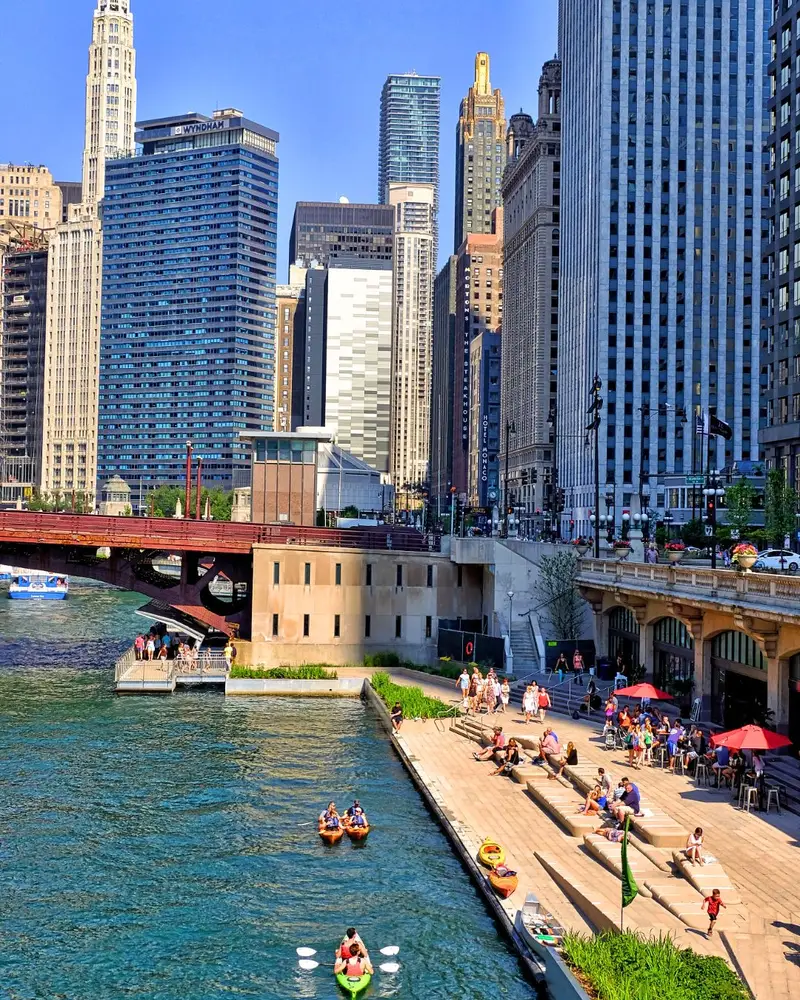
Unlike most cities where the river is an industrial afterthought, the Chicago River is the shining centerpiece of the downtown area.
The Chicago Riverwalk is a gorgeous pedestrian path that winds along the water, lined with restaurants and wine bars.
Taking an architectural boat tour down this river is widely considered the best tourist activity in the city. (Don’t overpay—here are 5 Chicago architecture boat tours locals actually recommend).
5. The Chicago Theatre Marquee
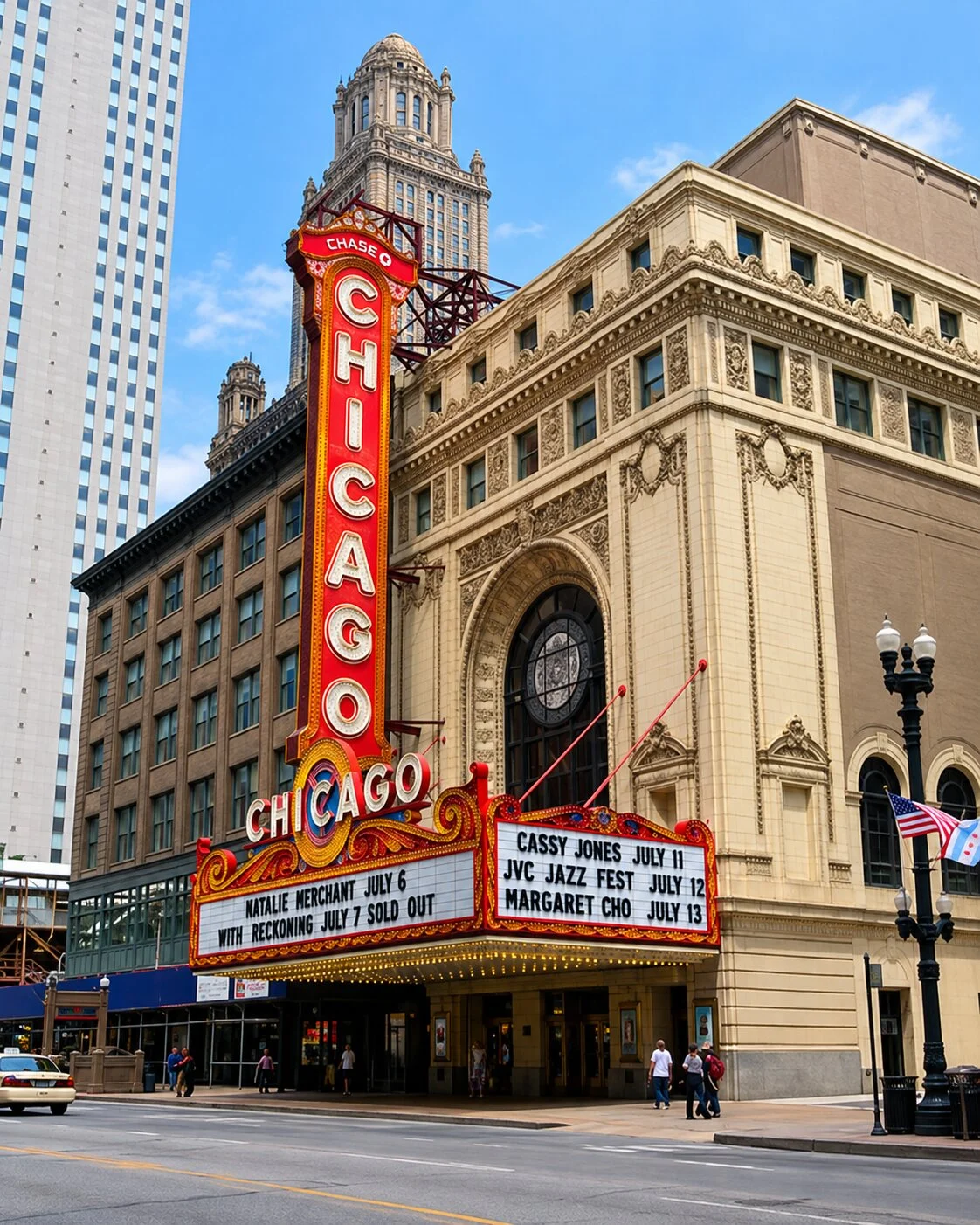
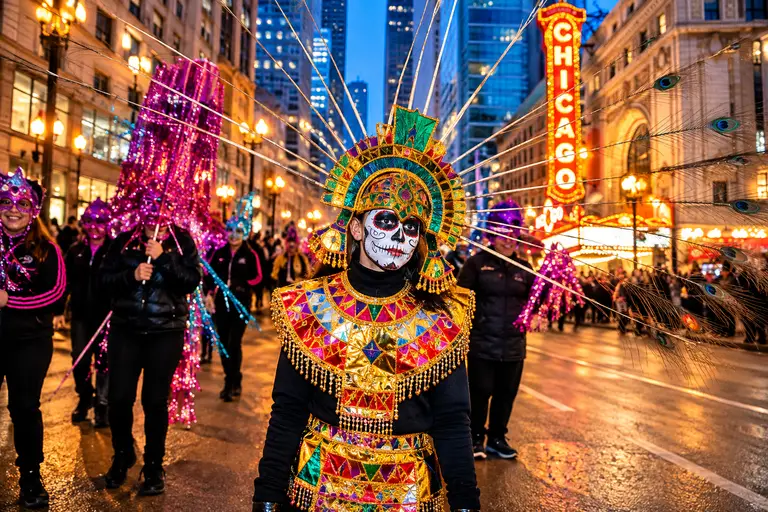
When you look up photos of Chicago, you will inevitably see the dazzling, six-story vertical “CHICAGO” sign.
This glowing marquee belongs to the historic Chicago Theatre on State Street.
Built in 1921, the French Baroque-style theater is a breathtaking venue that hosts major concerts, comedians, and Broadway shows.
6. Marina City (The “Corn Cobs”)
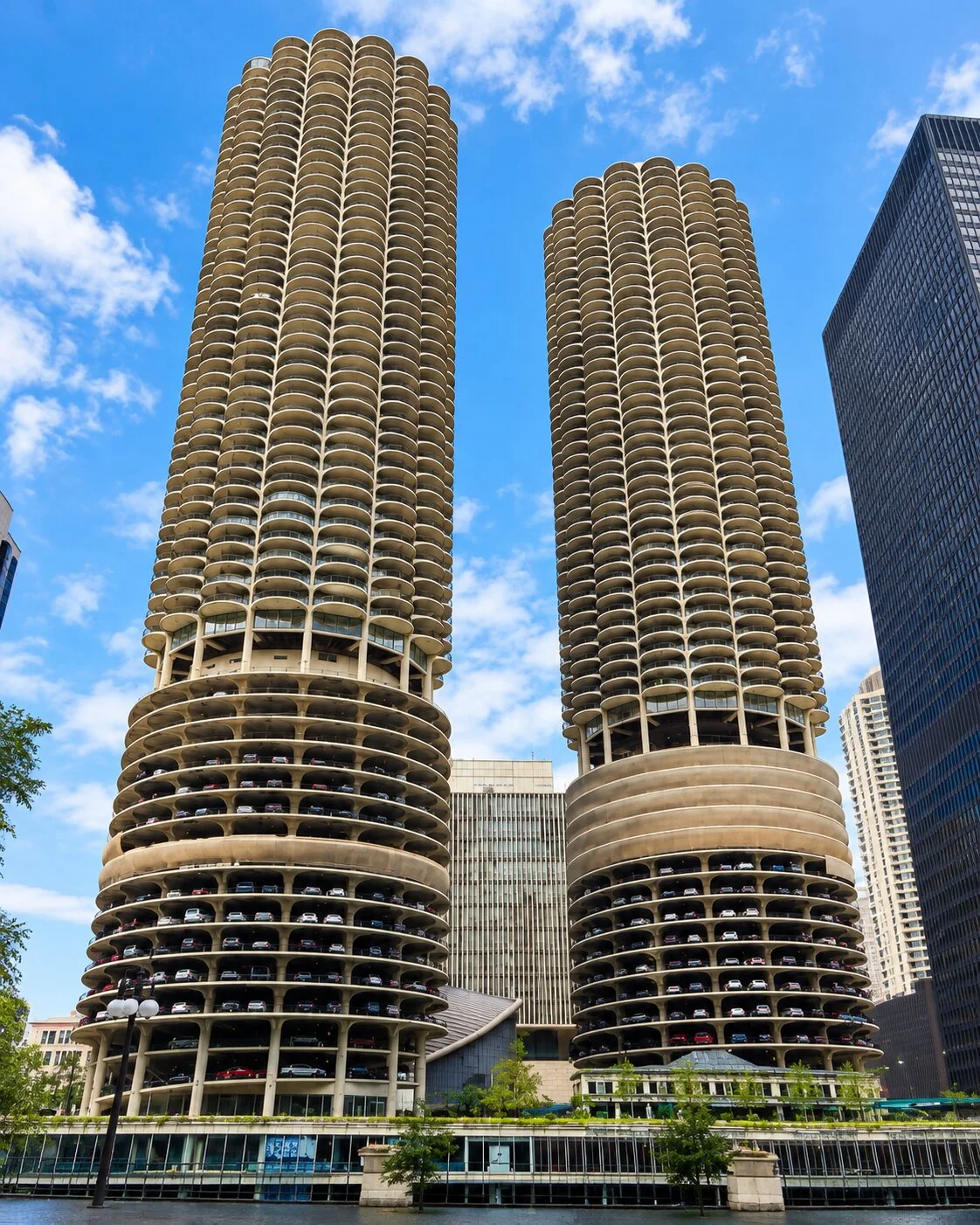
If you have ever seen a building in Chicago that looks exactly like two massive ears of corn, you are looking at Marina City.
These twin residential towers sit right on the Chicago River and are one of the most recognizable examples of mid-century modern architecture in the world.
Rich History and Fascinating Quirks
Chicago has a colorful past filled with gangsters, engineering marvels, and catchy nicknames.
7. “The Windy City”
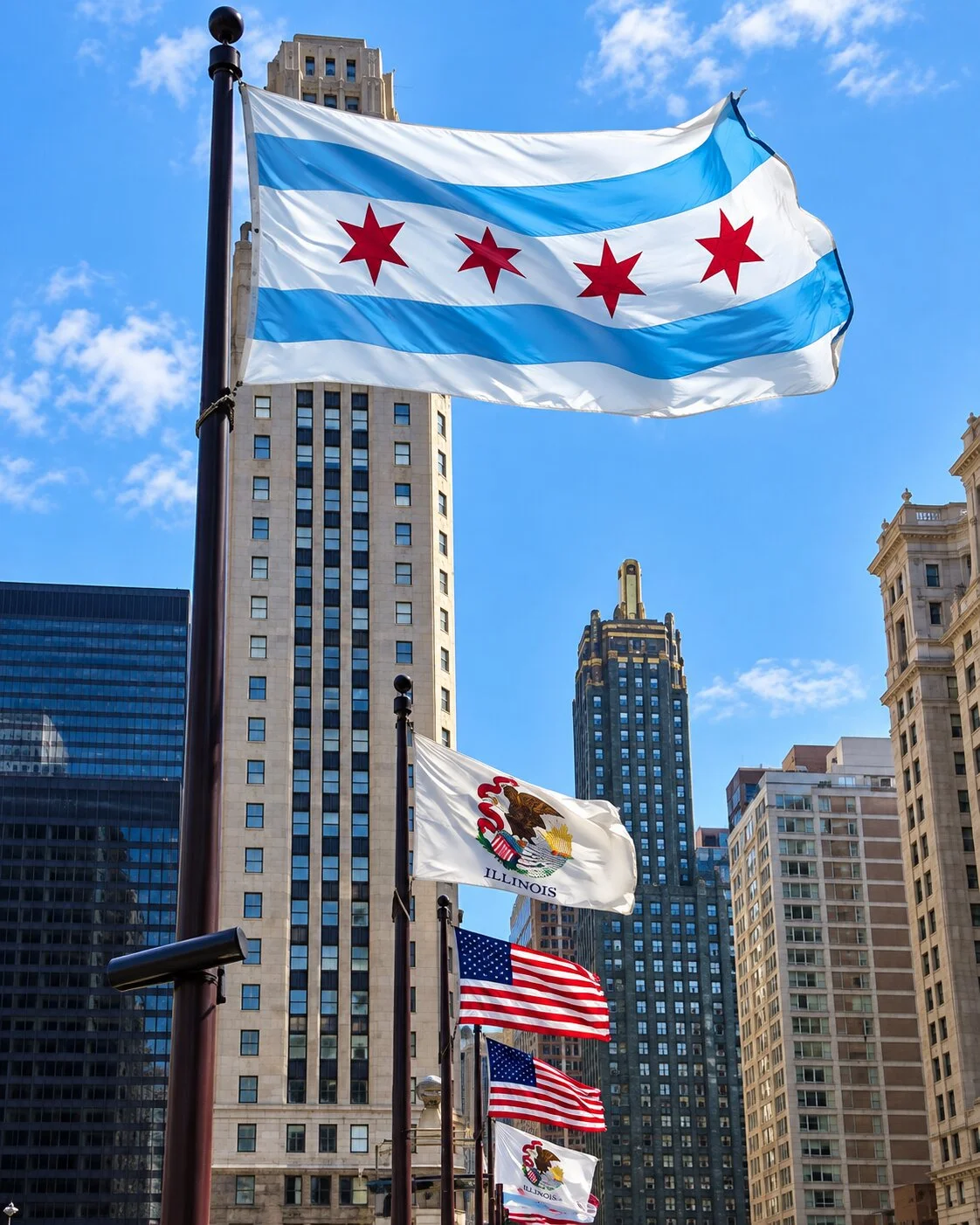
Why is Chicago called the Windy City?
While it does get quite breezy coming off Lake Michigan, the nickname’s origin is actually a mix of literal weather and local attitude!
It was heavily popularized in the 19th century by rival cities (like Cincinnati and New York) to mock Chicago’s politicians. They claimed Chicagoans were “full of hot air” and just blowing wind to brag about their city.
8. Al Capone and the Mob Era
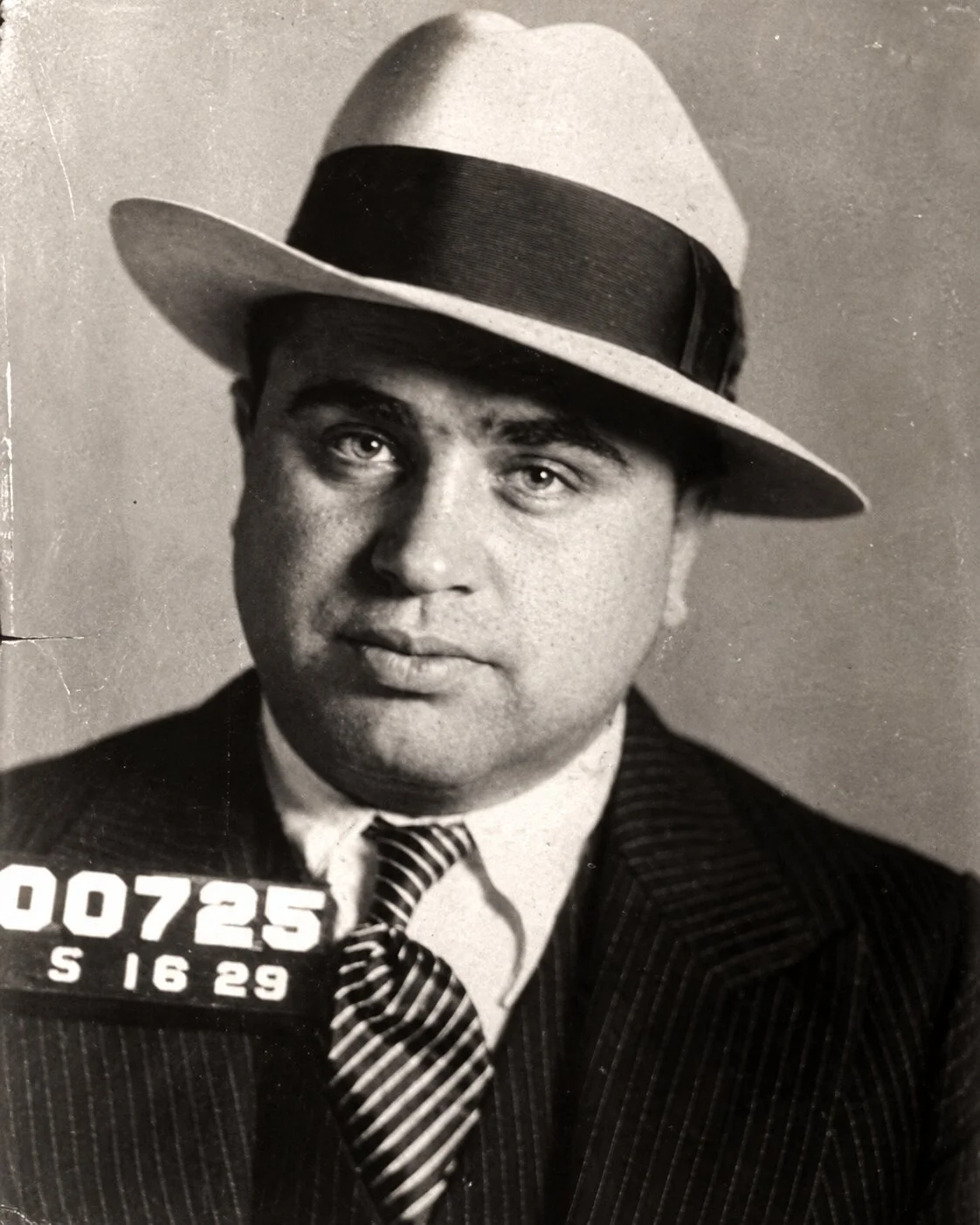
During the 1920s Prohibition era, Chicago became infamous for its organized crime.
The most notorious figure was Al Capone, who built a massive bootlegging empire.
While the city has long since moved past those days, you can still visit historic speakeasies, take gangster-themed bus tours, and see the old jazz clubs where mobsters used to hang out.
9. Reversing the Chicago River
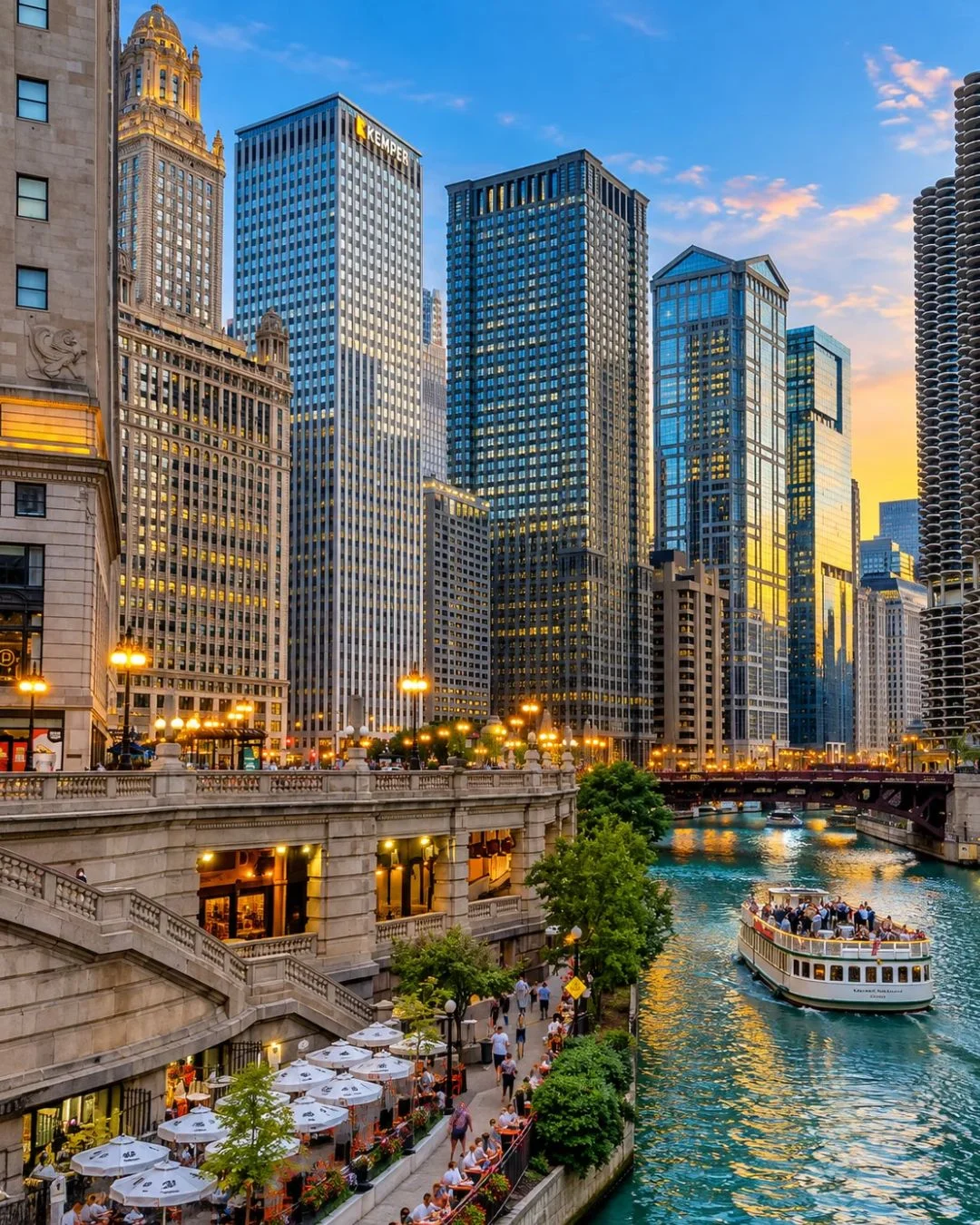
Here is an engineering marvel that Chicago is famous for: they actually reversed the flow of their own river.
In the late 1800s, the river was carrying pollution directly into Lake Michigan, which was the city’s source of drinking water.
In 1900, engineers completed a massive canal project that forced the river to flow backward, away from the lake and toward the Mississippi River. It is considered one of the greatest municipal engineering feats in history!
10. A City of 77 Neighborhoods
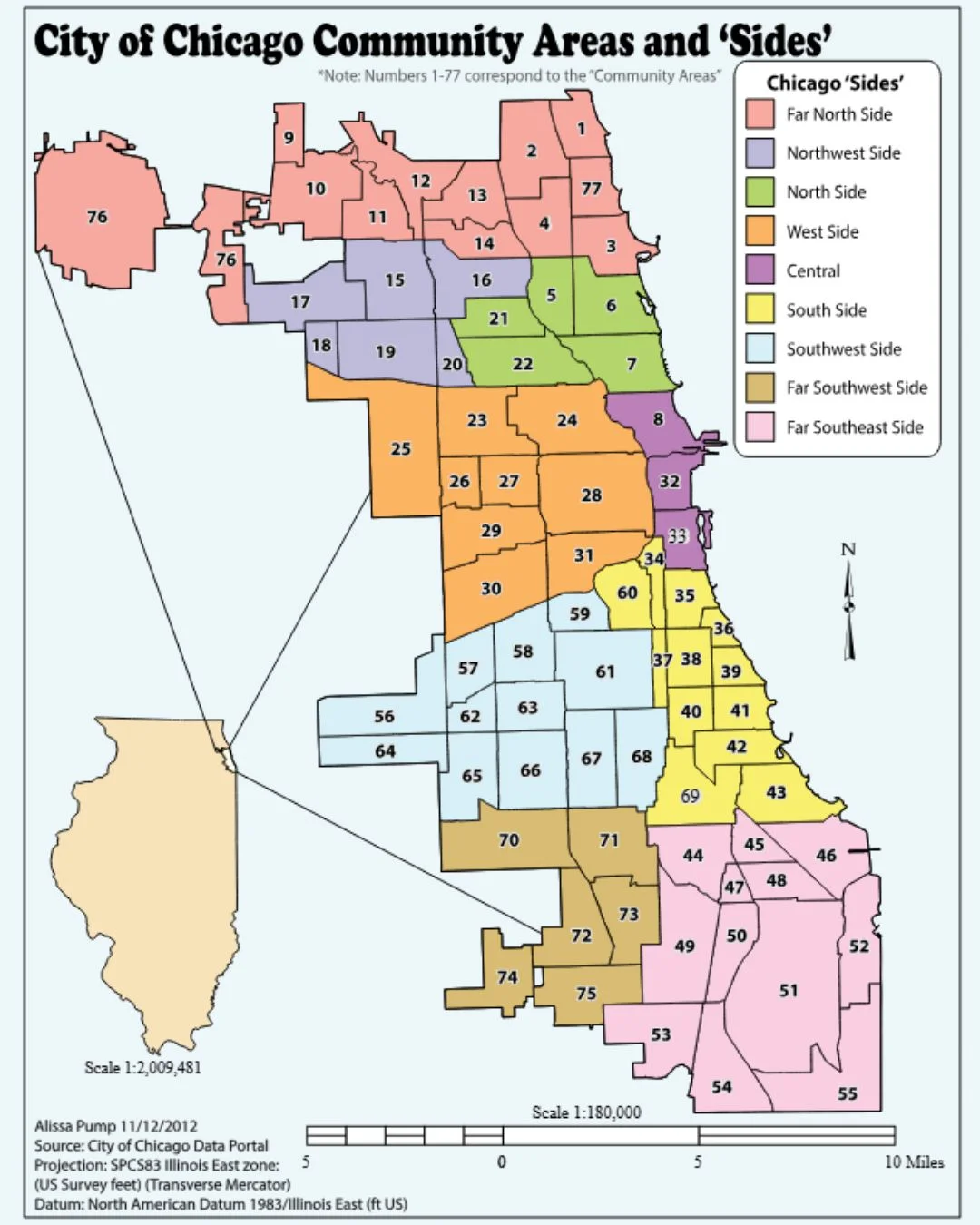
Unlike some cities that revolve entirely around a downtown core, Chicago is proudly a “city of neighborhoods.”
There are 77 distinct, officially recognized community areas in Chicago, each with its own culture, food scene, and vibe.
To really get to know the city, you have to leave the downtown Loop. If you don’t know where to start, check out the 9 Chicago neighborhoods where locals actually hang out.
A Hub for Arts, Entertainment, and Sports
Chicagoans work hard, but they play even harder. The city’s entertainment scene is second to none.
11. The Second City Comedy Club
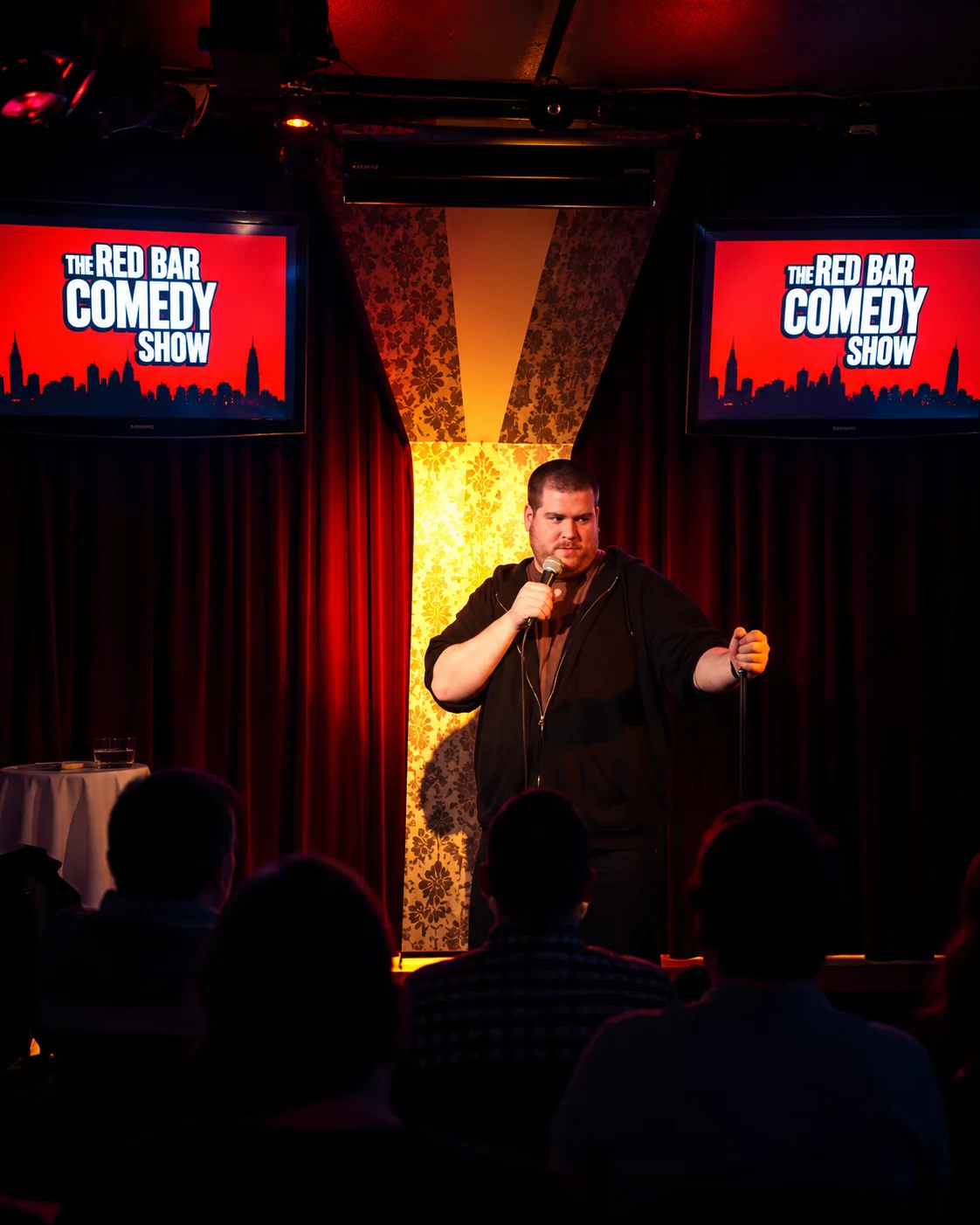
Chicago is the undisputed capital of improvisational comedy.
The Second City opened in 1959 and has produced some of the most famous comedians in the world.
Alumni include Bill Murray, Tina Fey, Steve Carell, Stephen Colbert, and Chris Farley. Catching a show here is a fantastic way to spend an evening laughing until your sides hurt.
12. Chicago Blues and Jazz
During the Great Migration, thousands of Black Americans moved from the South to Chicago, bringing their musical traditions with them.
This birthed “Chicago Blues,” an electrified, soulful style of music that changed the world.
Today, you can still catch incredible live music seven nights a week at legendary clubs like Buddy Guy’s Legends and the Green Mill Cocktail Lounge.
13. The Birthplace of House Music
Not only did Chicago revolutionize the blues, but it also invented a global dance phenomenon.
In the late 1970s and early 1980s, underground DJs in Chicago’s South Side clubs (like The Warehouse) created House music.
This deep, rhythmic, electronic sound completely changed the trajectory of global pop and dance music.
14. Legendary Sports Teams
Chicago is a massive sports town with incredibly loyal fans.
The city is globally known for the Chicago Bulls, thanks to the Michael Jordan era in the 1990s.
It is also famous for the Chicago Bears (NFL), the Blackhawks (NHL), and a fierce baseball rivalry between the North Side’s Chicago Cubs and the South Side’s Chicago White Sox.
Speaking of the Cubs, their home stadium, Wrigley Field, is one of the oldest and most beloved ballparks in America, famous for its ivy-covered outfield walls.
Unforgettable Annual Events
No matter what time of year you visit, there is likely a massive festival happening.
15. Dyeing the River Green
If you happen to be in Chicago for St. Patrick’s Day, you are in for a wild treat.
Every year, the local plumbers’ union uses a secret (and environmentally safe) dye to turn the entire Chicago River a vibrant, glowing shade of emerald green.
Hundreds of thousands of people line the bridges to watch this uniquely Chicago tradition.
16. Lollapalooza
Every summer, Grant Park is taken over by one of the largest music festivals in the world.
Lollapalooza brings in over 400,000 fans over four days to watch the biggest names in pop, rock, and hip-hop perform against the backdrop of the stunning city skyline.
World-Class Museums and Culture
Chicago is a haven for art lovers, history buffs, and science nerds. The museum campus alone is worth the trip.
17. The Art Institute of Chicago
Guarded by two massive bronze lions, the Art Institute of Chicago is one of the oldest and largest art museums in the world.
It is famous for housing iconic masterpieces like Grant Wood’s American Gothic and Georges Seurat’s A Sunday on La Grande Jatte.
If you want to know exactly what to look for, we made a list of the 15 masterpieces you need to see at the Art Institute.
18. Sue the T. Rex at The Field Museum
If you love dinosaurs, Chicago has a celebrity waiting for you.
The Field Museum of Natural History is home to “Sue,” one of the largest, most complete, and best-preserved Tyrannosaurus rex fossils ever discovered.
Standing face-to-face with this massive 40-foot-long predator is just one of the mind-blowing things to see at the Field Museum.
19. The Kenneth C. Griffin Museum of Science and Industry
Located in the Hyde Park neighborhood, this is the largest science museum in the Western Hemisphere.
It is famous for its hands-on, interactive exhibits.
You can walk through a real World War II German U-boat, explore a massive replica coal mine, and marvel at a 40-foot indoor tornado!
Iconic Chicago Foods You Have to Try
If there is one thing Chicago takes seriously, it is food.
The city is a massive culinary hub, boasting Michelin-starred restaurants and legendary street food alike. When people think of Chicago, a few specific dishes immediately come to mind.
20. Deep-Dish Pizza
You simply cannot talk about Chicago without mentioning deep-dish pizza.
Baked in a high-sided pan, this pizza is built backward. The crust is layered with thick slices of mozzarella cheese, followed by meat and veggies, and finally topped with a generous layer of crushed tomato sauce.
Locals will fiercely debate whether Lou Malnati’s, Giordano’s, or Pequod’s makes the best pie.
If you want to eat like a true Chicagoan, check out our guide to the best deep-dish pizza in Chicago to see who actually takes the crown!
21. Tavern-Style Pizza
Here is a local secret: most Chicagoans don’t actually eat deep-dish on a regular basis.
When locals order delivery on a Friday night, they get tavern-style pizza.
This is a distinctly Chicago invention featuring a crackery, ultra-thin crust that is cut into squares, not triangles. There is a fascinating history behind why real Chicagoans only eat square-cut pizza!
22. The Chicago-Style Hot Dog
Forget everything you know about hot dogs. The Chicago dog is an absolute masterpiece.
It starts with an all-beef frankfurter on a poppy seed bun. Then, it is “dragged through the garden.”
A classic Chicago dog includes:
- Yellow mustard
- Neon green sweet relish
- Chopped white onions
- A dill pickle spear
- Tomato slices
- Pickled sport peppers
- A dash of celery salt
Want to know who serves the best one? We asked locals for the best hot dog in Chicago and here is what they said!
Whatever you do, do not ask for ketchup. It is considered an absolute sin in the Windy City, and there is a hilarious history behind why Chicago banned ketchup on hot dogs.
23. Italian Beef Sandwiches
Thanks to the hit TV show The Bear, the entire world now knows about the magic of the Chicago Italian beef sandwich.
Thinly sliced, highly seasoned roast beef is stuffed into a long French roll. It is then topped with sweet peppers or spicy giardiniera.
The best way to eat it? Ask for it “dipped,” meaning the entire sandwich is dunked right into the savory beef au jus before being served.
If you are drooling, check out the 14 absolute best Italian beef spots in Chicago.
24. Legendary Steakhouses
Because of its history as the meatpacking capital of the world, Chicago knows its way around a cut of beef.
The city is packed with old-school, dimly lit steakhouses where waiters wear white jackets and serve massive martinis.
If you are looking to splurge on a luxurious dinner, we asked 60k locals for the best steakhouse in Chicago so you know exactly where to book a table.
25. Garrett Popcorn
If you walk down Michigan Avenue, you will likely smell Garrett Popcorn before you see it.
This iconic popcorn shop has been a Chicago staple since 1949.
You have to order the “Garrett Mix.” It is a perfectly balanced blend of savory CheeseCorn and sweet CaramelCrisp. It sounds a little strange, but the sweet and salty combination is incredibly addictive.
26. Jeppson’s Malört
If you want to drink like a true local, you have to take a shot of Malört.
Be warned: it is famous for tasting absolutely terrible.
This bitter, wormwood-flavored liqueur is a rite of passage in Chicago dive bars. Seeing the “Malört face” of someone trying it for the first time is a beloved city tradition.
The bizarre history of Jeppson’s Malört is just as wild as its flavor!
Unique Geography and Transportation
The layout of Chicago and how you get around it are a huge part of the city’s identity.
27. Lake Michigan Beaches
Yes, you read that right. Chicago has beaches!
Because Lake Michigan is so incredibly vast, standing on the shore feels exactly like looking out at the ocean. You cannot see the other side.
During the summer, locals flock to North Avenue Beach and Oak Street Beach to play volleyball, swim, and soak up the sun right next to the towering skyscrapers.
28. The Lakefront Trail
Connecting all of those beautiful beaches is the Chicago Lakefront Trail.
This paved, 18-mile path runs strictly along the shoreline of Lake Michigan, completely separated from car traffic.
Renting a bike and riding the trail on a summer morning is arguably the most beautiful way to view the city skyline.
29. The “L” Train
You cannot picture Chicago without visualizing its famous elevated trains rattling above the streets.
Affectionately known simply as the “L” (short for elevated), this rapid transit system has been operating since 1892.
Riding the Brown Line in a loop around the downtown area is a wonderful sightseeing hack. Before you hop on, read our tourist’s guide to using the Chicago ‘L’ Train so you don’t look like a rookie!
30. The Start of Historic Route 66
Before there were massive interstate highways, there was Route 66.
Known as the “Main Street of America,” this legendary road trip route stretches all the way to Santa Monica, California.
But where does it begin? Right in downtown Chicago! You can find the famous “Route 66 Begin” sign proudly displayed on Adams Street.
Unbeatable Shopping and Attractions
Bring your walking shoes and your credit card, because Chicago is a shopper’s paradise.
31. The Magnificent Mile
New York has Fifth Avenue, and Chicago has the Magnificent Mile.
This upscale, 13-block stretch of Michigan Avenue is packed with luxury boutiques, massive department stores, and high-end restaurants.
Even if you are traveling on a budget, window shopping along this beautiful, flower-lined street is a must.
32. Navy Pier & The Centennial Wheel
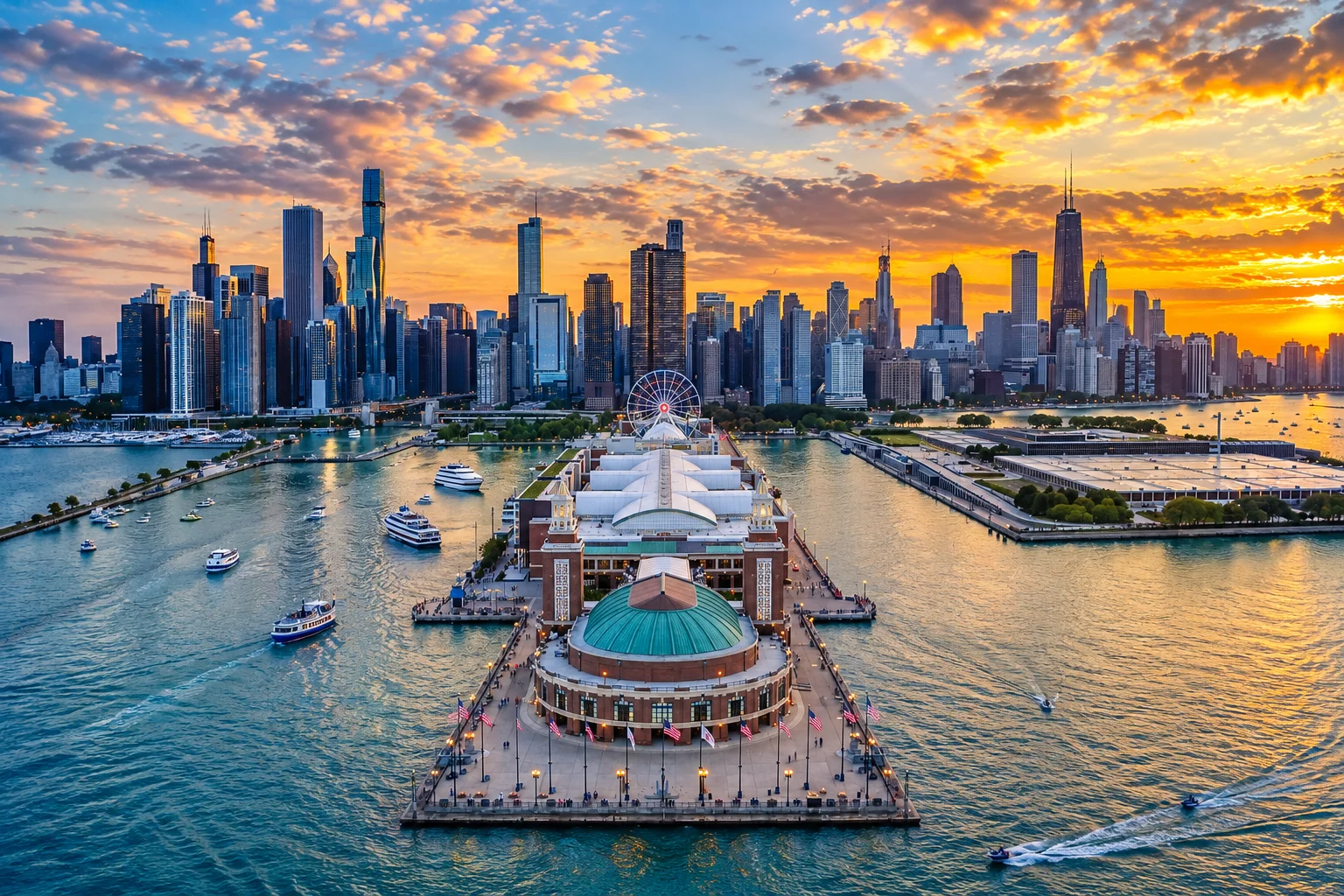
Jutting out into Lake Michigan, Navy Pier is one of the most visited tourist attractions in the Midwest.
The star of the show is the Centennial Wheel, a nearly 200-foot-tall Ferris wheel that offers climate-controlled gondolas and breathtaking 360-degree views of the city.
Fun fact: The very first Ferris wheel in the world was actually invented in Chicago for the 1893 World’s Fair!
33. A Vibrant Chinatown
Chicago is home to one of the largest and most active Chinatowns in the country.
Located just south of the downtown Loop, this neighborhood is famous for its stunning architecture, vibrant street art, and incredible food scene.
If you are planning a visit, make sure you don’t miss our guide on the 11 incredible things you have to do in Chicago’s Chinatown.
A Famous Hollywood Backdrop
Chicago’s gritty alleys and stunning architecture make it a favorite filming location for Hollywood directors.
34. John Hughes Movies
If you grew up in the 1980s or 1990s, your idea of an American suburb was likely shaped by Chicago.
Legendary director John Hughes filmed almost all of his iconic movies in the Chicago area.
Home Alone, The Breakfast Club, Sixteen Candles, and Ferris Bueller’s Day Off are all proud pieces of Chicago pop culture history.
35. Gotham City
When Christopher Nolan needed a moody, dramatic, and architectural city to serve as Batman’s home in The Dark Knight, he chose Chicago.
Many of the most famous scenes from the movie, including the epic flipping of the Joker’s semi-truck, were filmed right on the streets of the financial district.
Taking a walking tour to see these filming locations is a massive hit with superhero fans.
Final Thoughts: What is Chicago Known For?
From the stunning heights of the Willis Tower to the gooey cheese of a deep-dish pizza, Chicago is a city of massive proportions and endless charm.
It is a place where Midwestern hospitality meets big-city hustle.
Whether you come for the history, the comedy, or just to debate the rules of hot dog condiments, Chicago is a destination that will never bore you.
JM
AK