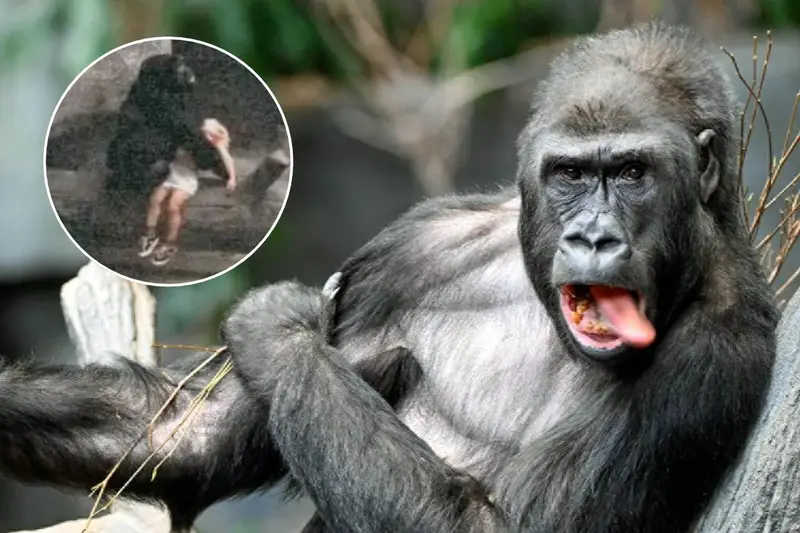
On a Friday afternoon in August 1996, a 3-year-old boy slipped away from his mother inside Brookfield Zoo’s Tropic World.
Seconds later he was lying motionless on the concrete floor of the gorilla habitat, about 18 feet below the railing, with seven gorillas around him.
The crowd screamed. Then a gorilla named Binti Jua, with her own baby clinging to her back, walked straight toward him.
What she did next made her one of the most famous animals in the world. What her own keeper said about it six months later is the part almost nobody remembers.
2:10 p.m. in Tropic World: The Scream Nobody Forgot
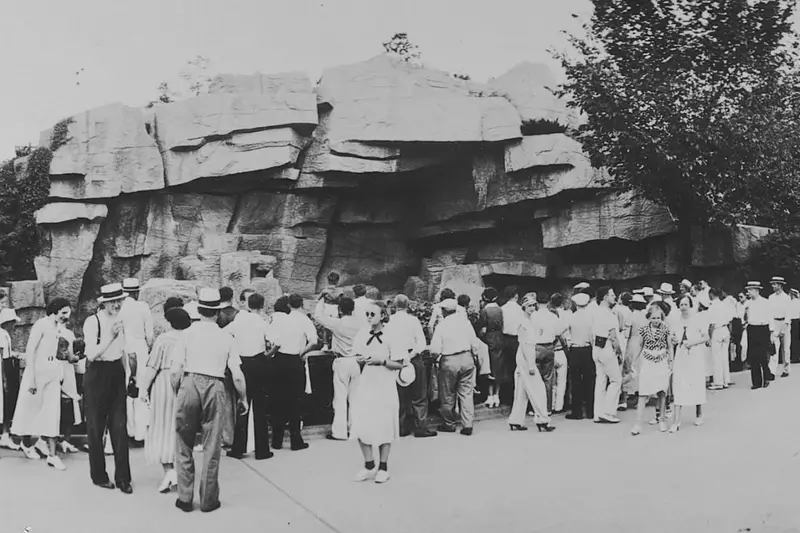
Tropic World was the zoo’s big showpiece in 1996, an indoor rain forest that opened in three sections between 1982 and 1984, complete with artificial trees, waterfalls and simulated thunderstorms.
For generations of Chicago-area kids, a Brookfield field trip also meant a warm wax souvenir from the Mold-A-Rama machines, which the zoo first installed in 1966. (It made our list of things you only learn by growing up in Chicago.)
August 16 was a summer Friday. Among the visitors that afternoon was Jeff Bruno, a fire captain from Kankakee, there for the day with two other families. Years later he could still recite the moment to the minute: “Aug. 16. 2:10 p.m.”
The boy, 3 years old, had run ahead of the adults he was with. According to reports at the time, he climbed onto a box on top of a railing about three and a half feet high and went over.
He fell about 18 feet onto concrete. (Later retellings stretch it to 24 feet.) He landed in the middle of a habitat with seven western lowland gorillas, and he didn’t move.
Then the boy’s mother screamed.
Bruno offered to help. His brother-in-law grabbed Bruno’s video camera, which was already recording, and pointed it into the pit. That amateur footage would be on TV around the world within days.
It was the first time anyone had fallen into the gorilla habitat in the 14 years it had been open. Nobody on that walkway knew what a gorilla would do with a human child.
One of them was already on her way over.
The Gorilla With a Baby on Her Back
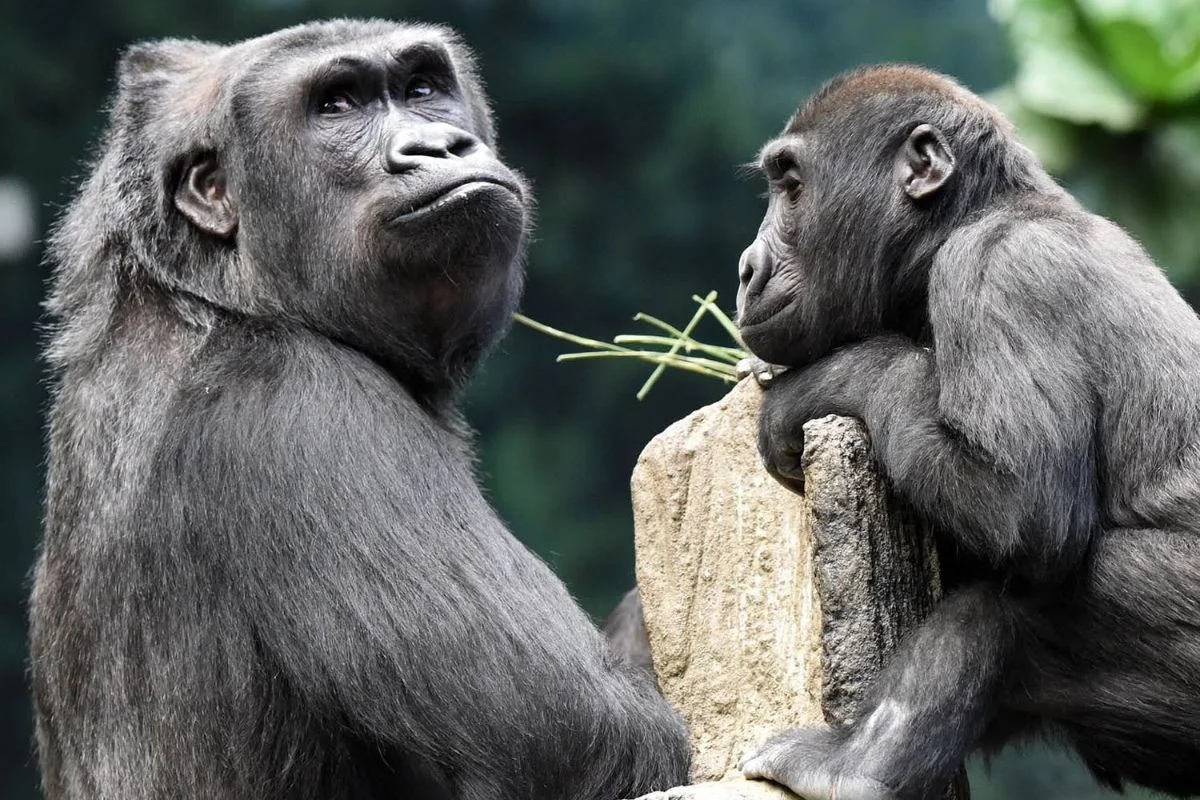
Her name was Binti Jua. She was 8 years old, weighed about 165 pounds, and her 17-month-old daughter, Koola, was clinging to her back.
 JM
AK
People on the walkway braced for the worst. Instead, Binti walked over to the boy, picked him up around the waist and cradled him in her arms.
When another gorilla came toward them, she turned away and kept walking. “She kind of turned around and walked away from the other gorillas and tried to be protective,” a visitor named Carrie Stewart told the Associated Press.
Years later, keeper Craig Demitros could still trace her exact route: “She carried him up around this part of the exhibit, through the river, made a right turn … went over to that log. She was gently kind of rocking the kid in her right arm.”
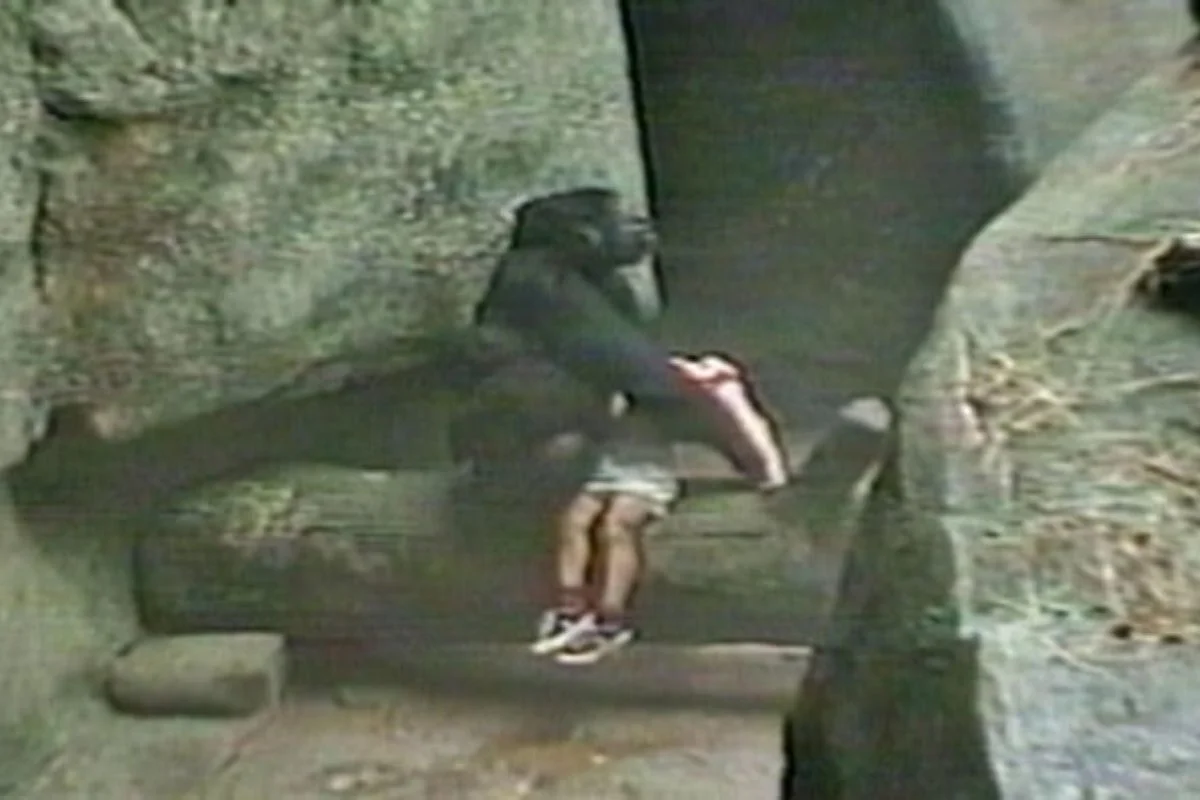
Meanwhile, keepers were turning high-pressure water hoses on the other gorillas’ feet to steer them out through another door. None of them acted aggressively.
Binti kept going until she reached the door she normally used to leave the habitat. She laid the boy down there and scurried off.
Did you know? Zoo worker Jay Petersen pointed out a detail most people miss in the video: at one point, with the boy in her arms, Binti turns a shoulder toward the other gorillas.
Paramedics were waiting. “We assessed him and we packaged him up,” Bruno said. “I think we used duct tape because that’s all that was there.”
The boy went to Loyola University Medical Center in Maywood in critical condition. He was upgraded the next day, spent four days in the hospital and recovered from a broken hand and cuts to his face.
Within hours, everyone wanted to know the same thing: who was this gorilla, and why did she do it?


A Gorilla Raised by Humans, Trained With a Doll
Binti Jua’s name means “daughter of sunshine” in Swahili. She was born on March 17, 1988, at the Columbus Zoo in Ohio, to a mother named Lulu and a father named Sunshine.
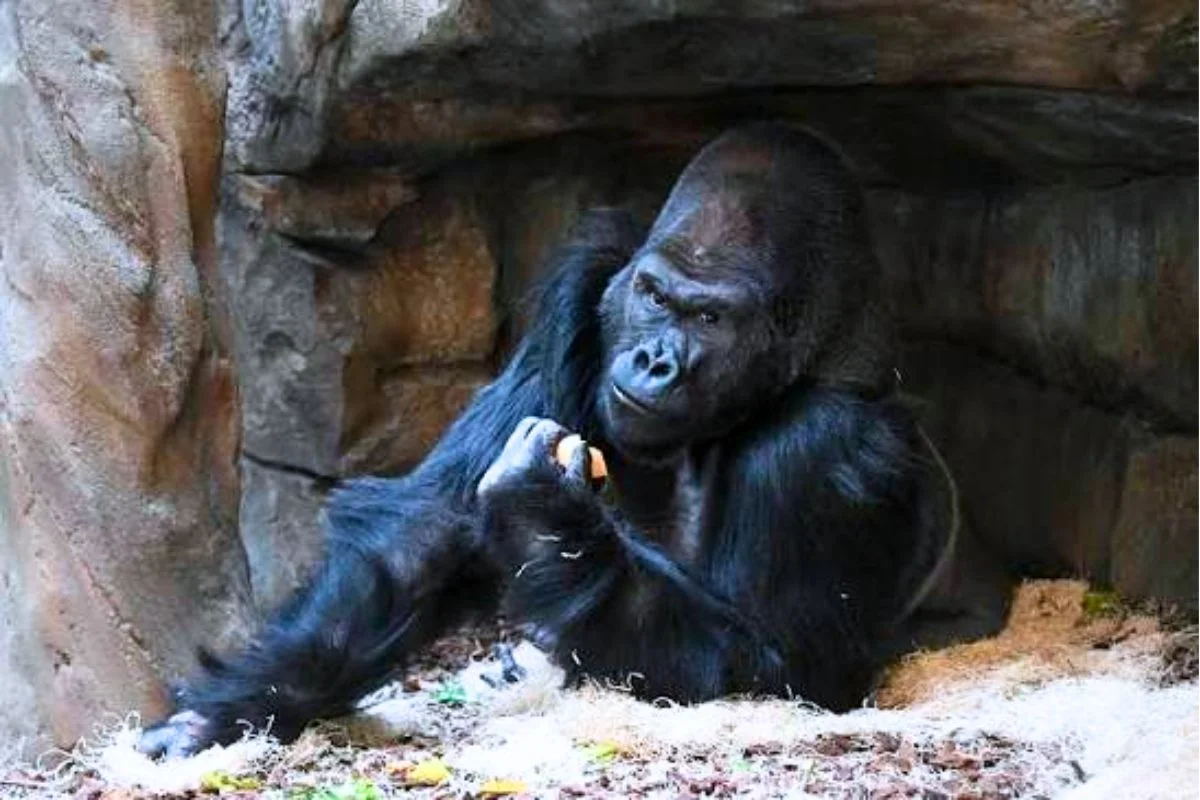
Her mother raised her for only about two months. After that, people took over. Binti was hand-reared at the San Francisco Zoo, bottle-fed, carried around in a sling and cuddled much like a human baby.
In February 1991 she moved to Brookfield on a breeding loan from San Francisco. And when she became pregnant, her keepers hit a problem: a gorilla raised by humans doesn’t necessarily know how to be a gorilla mother.
So they taught her. They gave her a stuffed gorilla doll to carry and rewarded any nurturing behavior.
They also trained her to bring the doll to her keepers, so that when the real baby arrived, the staff could check on it.
Koola was born in early 1995, and Binti raised her herself.
Now picture that crowded afternoon again. A small, motionless creature on the floor. A gorilla trained to pick up a baby and carry it to the keepers.
To millions of people, what Binti did looked like a miracle. To the people who knew her best, it looked a bit more complicated.
A Mailbox Next to the Zoo Director’s
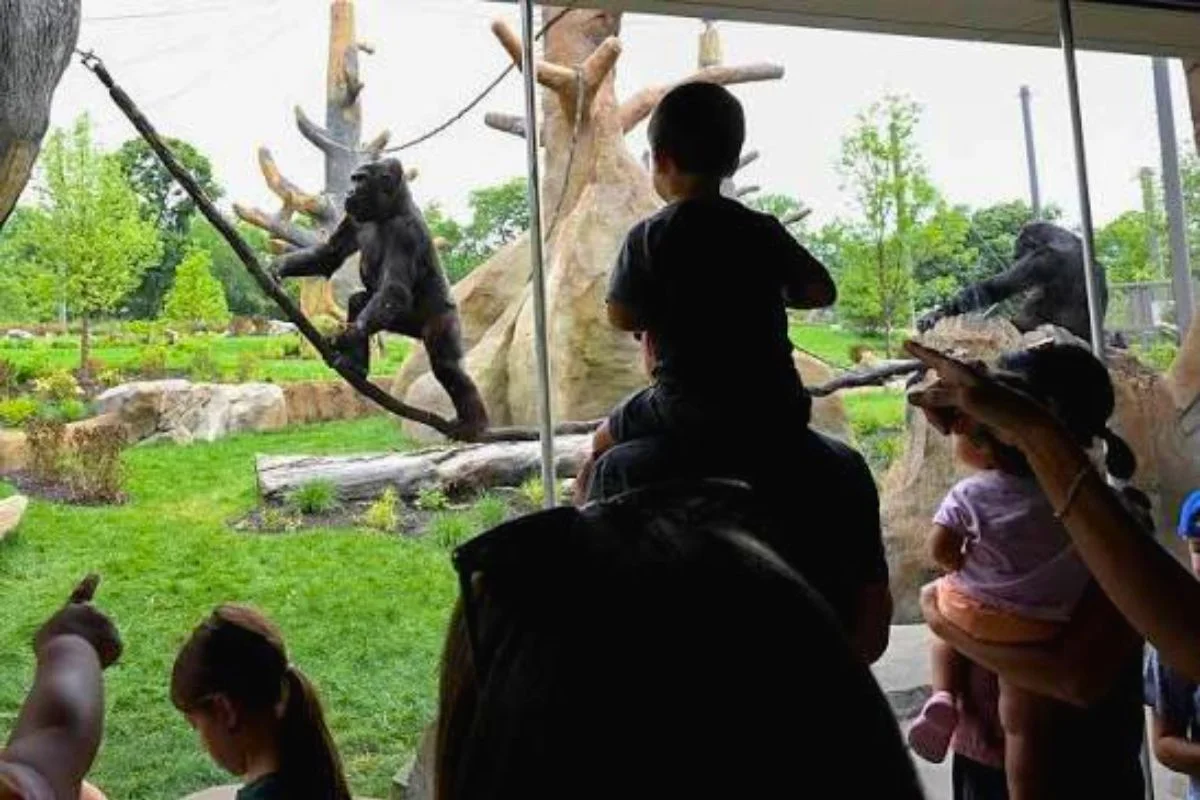
The Chicago Tribune put it on the front page: “GORILLA SAVES TOT IN BROOKFIELD ZOO APE PIT.” TV crews arrived from Britain, Germany and Australia.
By October, Binti had been the subject of about 700 newspaper and magazine stories and 2,000 TV and radio segments in the U.S. alone. She got so much fan mail that the zoo put up a mailbox for her, right next to the zoo director’s.
Schoolchildren in Argentina wrote asking about her “life and customs.” One letter from Florida was addressed to “Madame Binti Jua, Heroine Gorilla.” A grocer sent 25 pounds of bananas.
The zoo refused to make Binti T-shirts, buttons or plush toys. “I was approached by people who said, ‘The zoo could make big bucks off of this,’ but we just weren’t interested,” its media relations manager, Sondra Katzen, told the Tribune.
But not everyone at the zoo was buying the fairy tale. One of the people who knew Binti best was about to say so out loud.
“She Saved Him From What, Really?”
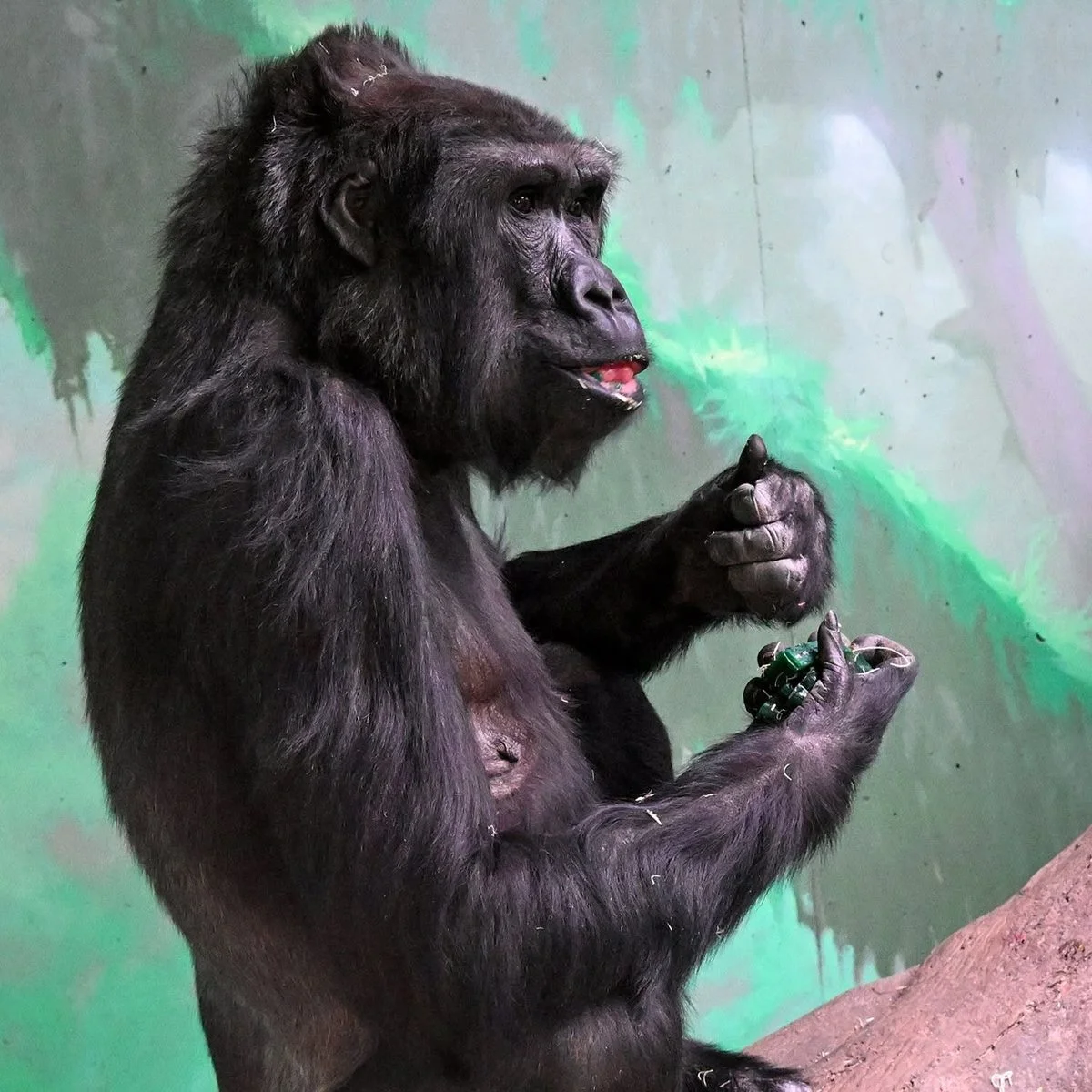
Six months after the rescue, at a workshop where zookeepers met to discuss gorilla mothering, lead keeper Craig Demitros said what nobody had wanted to hear.
“The media made it sound like Binti made a conscious decision to, quote unquote, ‘save the boy,’ but this is speculation,” he said. “She saved him from what, really? The other animals were not coming after him.”
It was the keepers, with three high-pressure hoses aimed at the other gorillas’ feet, who kept the troop away. And the boy being knocked out had almost certainly helped. “If he had been awake and screaming, he might well have elicited a different kind of response,” Demitros said.
It’s a familiar Chicago pattern: the true version of a legend often turns out to be stranger, and more human, than the one everybody tells. (We dug into a few more in the gritty truth behind Chicago’s urban legends.)
But the skeptics didn’t get the last word. Even if Binti was following the keepers’ cues to leave, that didn’t explain why she took the boy with her. “She was very gentle and she was very instinctively maternal,” said the zoo’s primate curator, Melinda Pruett-Jones.
The famous primatologist Frans de Waal went further, and used Binti as an example of empathy in apes in his books. As luck would have it, about 1,400 primatologists were at a symposium in Madison, Wisconsin, when it happened. “Everybody was very excited,” one of them, H. Lyn Miles, told reporters.
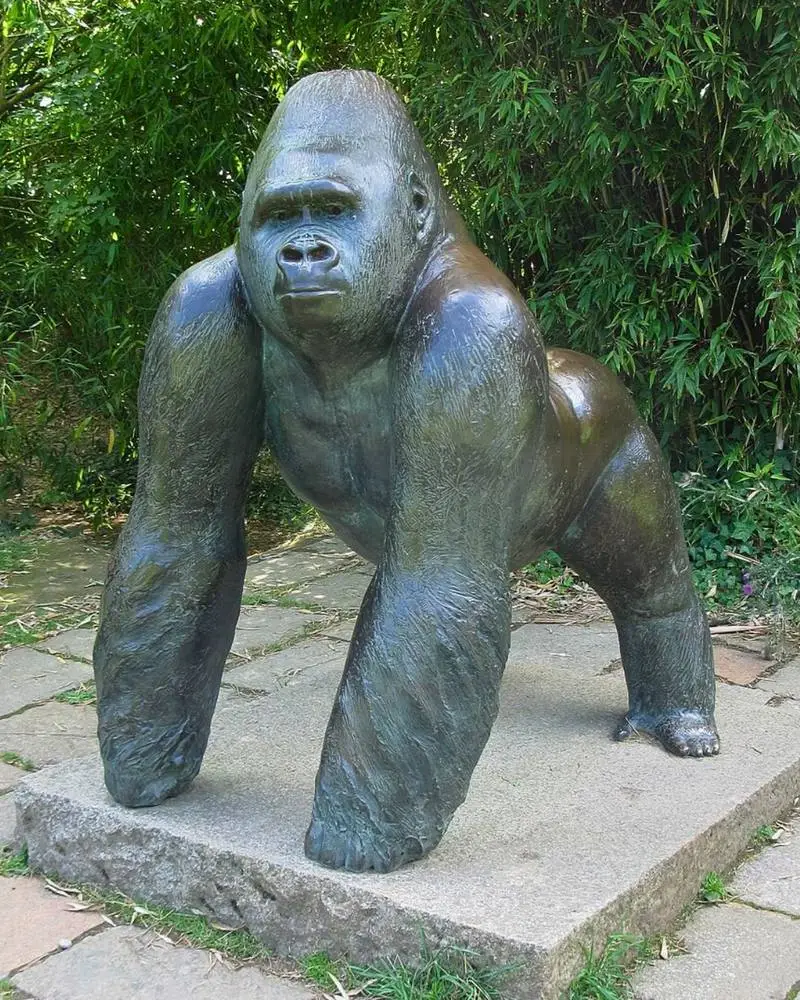
Did you know? Binti wasn’t the first. In 1986, a silverback named Jambo stood guard over a 5-year-old boy who had fallen into his enclosure at Jersey Zoo in the Channel Islands, and stroked his back.
The boy’s family never commented publicly, and his name has never been released. For almost 20 years, Binti’s story faded into a warm piece of 1990s trivia.
Then, in 2016, another little boy fell into another gorilla habitat, and it ended very differently.
Twenty Years Later, Cincinnati Made Binti Famous Again
On May 28, 2016, a 3-year-old climbed through a barrier at the Cincinnati Zoo and fell into the gorilla habitat. A 17-year-old silverback named Harambe was seen dragging him, and the zoo made the agonizing call to shoot him.
Within days, the old Brookfield video was everywhere again. Jeff Bruno, still a Kankakee fire captain, defended Cincinnati’s decision. “That day they made a decision to save a little boy’s life. It was the right decision,” he said.
He didn’t blame the parents, either. “It’s an accident. Accidents happen every day with our kids.” Bruno had stayed in touch with the Brookfield boy’s family for about a decade, and said he would love to meet him again.
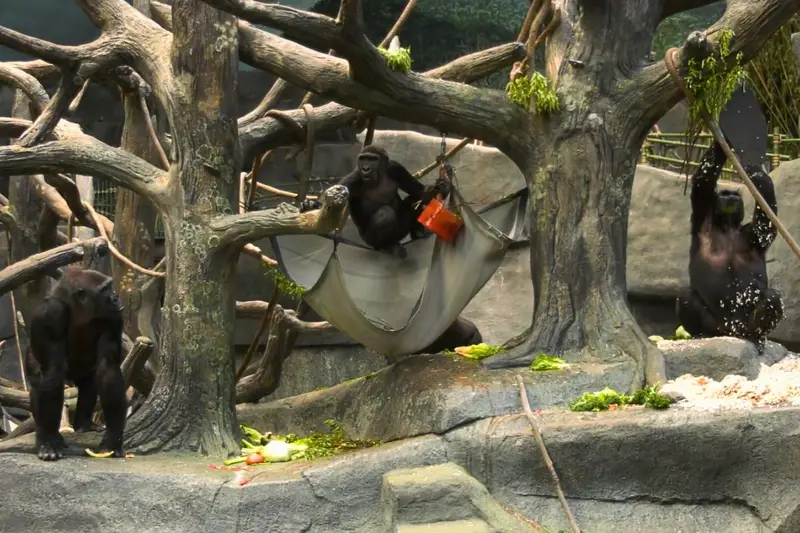
Binti, meanwhile, simply got older. She had a son, Bakari. Koola grew up and had three daughters of her own: Kamba, Nora and Ali.
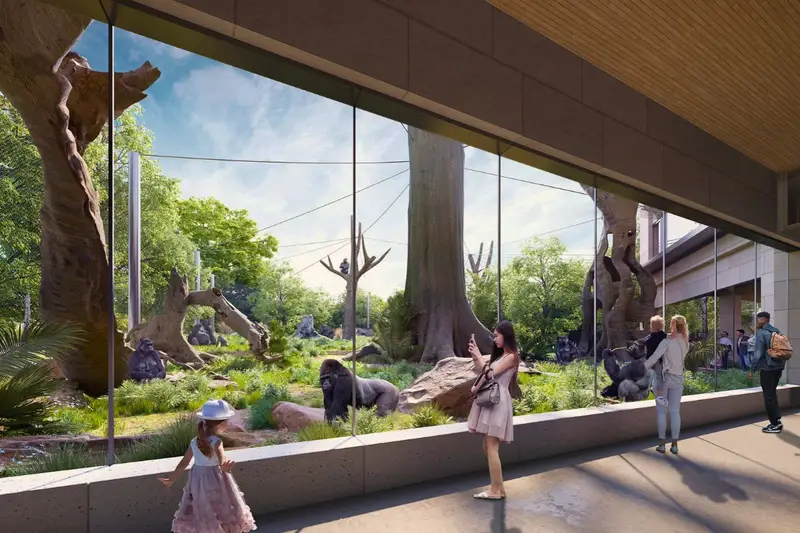
For more than three decades, Binti and her family lived indoors in Tropic World. Then, in summer 2025, the zoo finished Bramsen Tropical Forests, its biggest project ever, and the doors to the outdoor Gorilla Forests opened for the first time.
Koola, the baby who rode on Binti’s back in 1996, was the first gorilla to step outside. Zoo CEO Michael Adkesson said it was the first time some of the zoo’s apes could “feel the grass under their feet, the sun coming down on their face, and the breeze moving through their hair.”
This summer the family changed again. Kamba and Nora left for another accredited zoo, and two young females, Kamina and Zahra, arrived from the Columbus Zoo, the same zoo where Binti was born 38 years ago.
Did you know? Brookfield Zoo now calls Binti Jua, at 38, the matriarch of its gorilla family. Her troop is led by a 29-year-old silverback named Jontu.
Chicago has loved a gorilla like this before. In the 1930s and ’40s, crowds lined up at Lincoln Park Zoo to see Bushman, and you can still meet him at the Field Museum (he’s on our list of the most mind-blowing things to see at the Field Museum).
The difference is that Binti is still alive, and you can go and see her this winter.
Binti Jua Visitor Guide: How to See Chicago’s Hero Gorilla
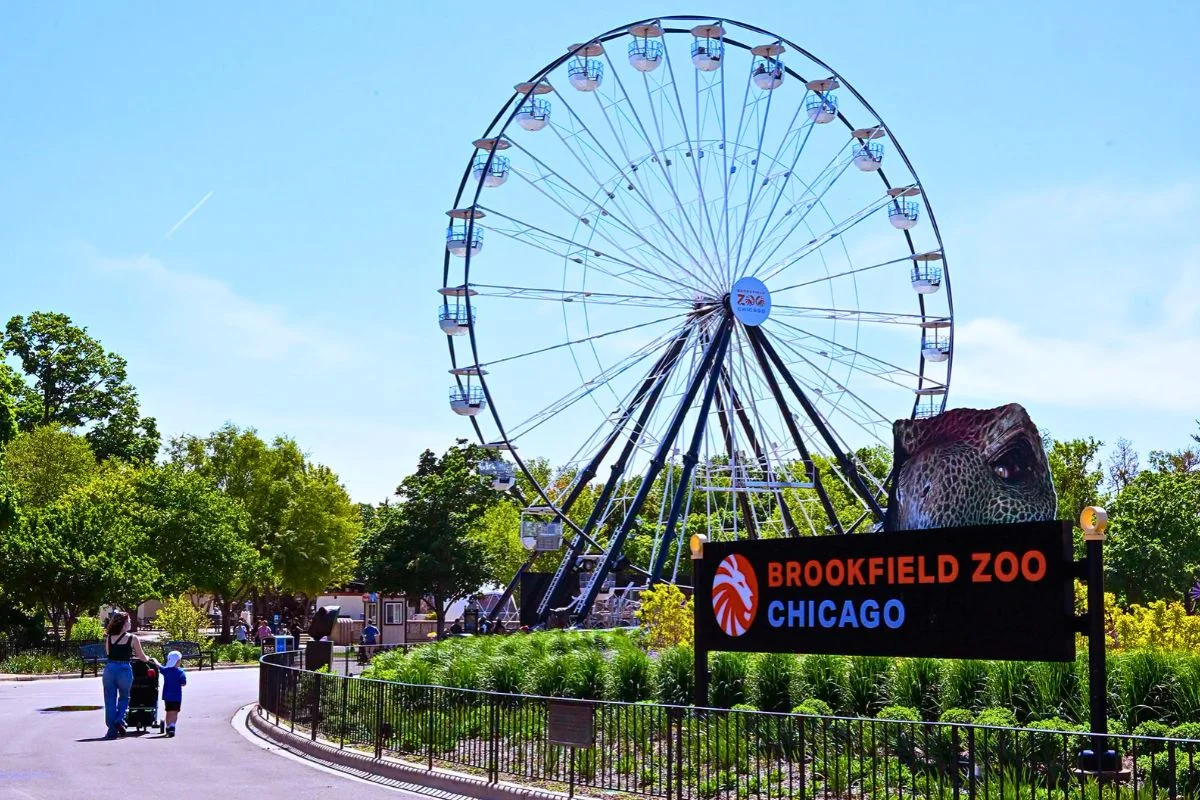
Binti lives with her family in Bramsen Tropical Forests, next to the old Tropic World building at Brookfield Zoo Chicago. Here’s everything you need to plan a visit.
- Where: Brookfield Zoo Chicago, Main Entrance (North Gate) at 31st St. and Golfview Ave., Brookfield, IL 60513. The South Gate is at 3300 Golf Rd.
- Hours: Normally daily 10 a.m.–5 p.m. (Tropic World closes at 3:30 p.m.). On Holiday Magic dates (Nov. 21–25 and 27–29; Dec. 3–6, 10–13, 17–23 and 26–31, 2026; Jan. 1–3, 2027) the zoo opens 3–9 p.m. only. Closed Thanksgiving and Christmas Day; open 10 a.m.–5 p.m. on Christmas Eve.
- Price: Adults $29.95, seniors (65+) $24.95, children 3–11 $20.95, kids 2 and under free. Parking is $17 at the North Gate and $20 at the South Gate.
- Nearest L stop: There isn’t one nearby. Take the Metra BNSF Line from Union Station to Hollywood (Zoo Stop), about a half-hour ride, then walk about 10 minutes. Trains run roughly hourly midday, so check the schedule first.
- Best time: A weekday morning on a non–Holiday Magic day. During Holiday Magic the gorillas aren’t on habitat and the Gorilla Conservation Center is a warming room only.
Insider tip: Holiday Magic nights are fun (they made our list of Chicago Christmas spots straight out of a Hallmark movie), but they’re the worst time to see Binti. If gorillas are the goal, go on one of the in-between weekdays (like Nov. 30, Dec. 1–2, Dec. 7–9 or Dec. 14–16) when the zoo keeps normal daytime hours. In 2026 the zoo also ran free admission days almost every day from Jan. 5 to Feb. 28 (parking still applies), so watch for a repeat in 2027. Chicago Public Library cardholders can also check out an Explore More Illinois pass for free general admission.
A 3-stop Binti Jua mini itinerary
- Stop 1: The Gorilla Forests at Bramsen Tropical Forests. Walk the outdoor trail past about 2,700 square feet of viewing glass. Binti’s family troop has one area, and bachelor brothers Shango and Barney have their own. Ask a keeper which gorilla is Binti. She’s the oldest female in the troop.
- Stop 2: The Gorilla Conservation Center, the indoor space next to the outdoor habitats. Around it, look for the sculpture of Koola and Kamba made from wire snares once set by poachers in Uganda, and a 3D-printed model of Nora’s heart-shaped nose that shows how researchers tell gorillas apart. Inside, there’s also a drop-off for old cellphones, which helps cut demand for coltan, a mineral mined in gorilla habitats.
- Stop 3: Tropic World. Finish next door in the 1980s rain forest building where the 1996 rescue happened. Its South America, Asia and Africa sections still have monkeys, orangutans, otters and birds. Go before it closes at 3:30 p.m.
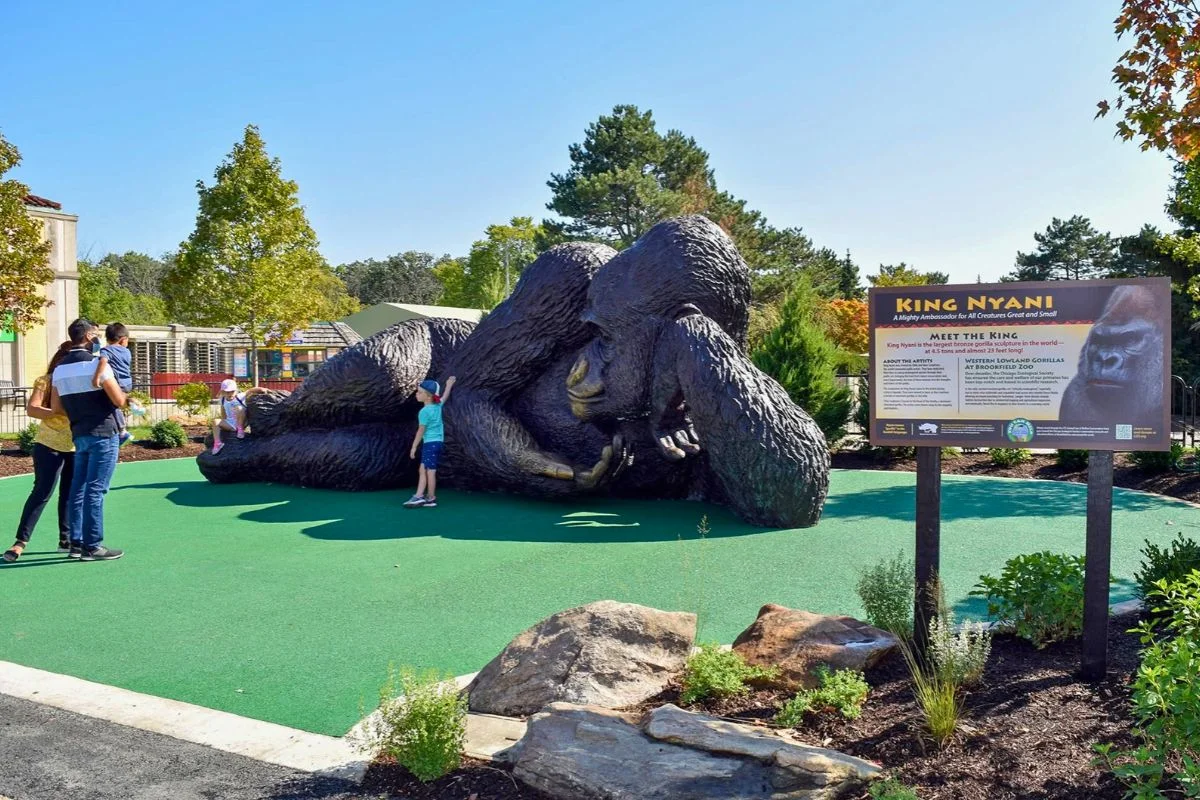
King Nyani Arrives at Brookfield Zoo – Long live the king—get an exclusive behind-the-scenes look as King Nyani, a massive 4,766-pound bronze gorilla statue, makes his grand entrance at Brookfield Zoo!
Love an indoor jungle in winter? On the way back into the city, Garfield Park Conservatory is another warm, green escape.

Where to stay and eat nearby
Taking the Metra out? Staying downtown near Union Station makes it easy. Our locals’ picks for the best downtown Chicago hotels are a good place to start, and if you’re bringing kids in winter, these Chicago hotels with indoor pools are a lifesaver after a cold day at the zoo. New to Chicago transit? Read how to ride the L like a local first.
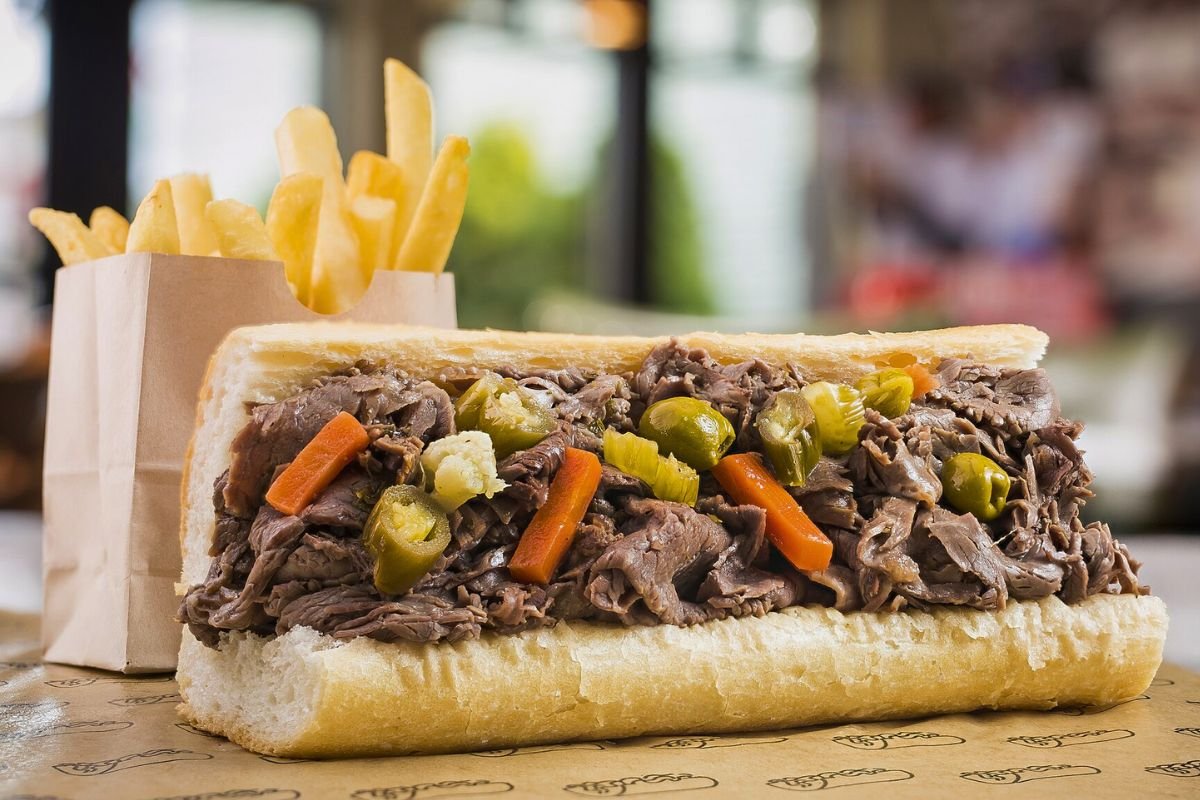
Driving? You’re in Italian beef country. Buona’s first stand opened in Berwyn in 1981, and Scatchell’s has been on Cermak Road in Cicero since 1953. Both are a short drive from the zoo, and both made our list of the best Italian beefs in Chicago.
Want more Chicago stories like this one? Join the free Hey Chicago newsletter at newsletter.heychicago.us.
Historical details sourced via contemporary reports from the Associated Press, UPI, the Chicago Tribune and Knight-Ridder, CBS Chicago, Stephen Budiansky’s If a Lion Could Talk and Brookfield Zoo Chicago. Photo courtesies from Brookfield Zoo Chicago, interestingasfck, The Buona Companies.
Sources
- Associated Press via Los Angeles Times: Zoo Gorilla Rescues Toddler Injured in Fall (Aug. 17, 1996)
- UPI: Boy saved by gorilla is improving (Aug. 17, 1996)
- The Independent: Gorilla’s maternal instinct saves baby boy (Aug. 19, 1996)
- Knight-Ridder via The Seattle Times: Gentle Binti Just Did What Gorillas Do (Aug. 28, 1996)
- Chicago Tribune via The Spokesman-Review: Ape Evolves Into Hero for Humans (Oct. 21, 1996)
- Stephen Budiansky, If a Lion Could Talk (Free Press, 1998), introduction
- CBS Chicago: 15 Years Ago Today, Gorilla Rescues Boy Who Fell in Ape Pit (2011)
- CBS Chicago: Brookfield Gorilla’s Cradling of Injured Boy Still Fresh in Mind of Paramedic (2016)
- ABC News: Gorilla Carries 3-Year-Old Boy to Safety in 1996 Incident (2016)
- Gorilla studbook record for Binti Jua (No. 1047)
- Brookfield Zoo Chicago: History timeline
- Brookfield Zoo Chicago: Say goodbye to gorillas Kamba and Nora (July 29, 2026)
- Brookfield Zoo Chicago: Studying the Gorillas’ Move (2025)
- Daily Herald via Shaw Local: $66 million Tropical Forests opens at Brookfield Zoo Chicago (2025)
- Brookfield Zoo Chicago: Bramsen Tropical Forests
- Brookfield Zoo Chicago: Tropic World
- Brookfield Zoo Chicago: Visit (hours, admission, parking)
- Brookfield Zoo Chicago: Holiday Magic 2026
- Brookfield Zoo Chicago: Discounts and Free Days
- Metra: Explore the BNSF (Hollywood/Zoo Stop)
- Metra: BNSF Line schedule
- Jambo (gorilla), Jersey Zoo, 1986
JM
AK