A post office in Englewood sells stamps on the exact property of H.H. Holmes’ Murder Castle. A River North nightclub pours bottle service inside a granite fortress that once stored the exhumed bones of a 19th-century murder victim. None of these buildings look like anything special at first glance, and that’s the point.
Below are 12 Chicago addresses, including theaters, a dive bar, a cathedral and a park, where something horrific happened and the city simply built over it or kept right on moving.
No recycled ghost stories or lazy tour-bus myths—just documented history, exact addresses, updated hours and what to look for when you get there. Fair warning: you will never walk down a Loop alley the same way again.
1. The Englewood Post Office (Englewood)
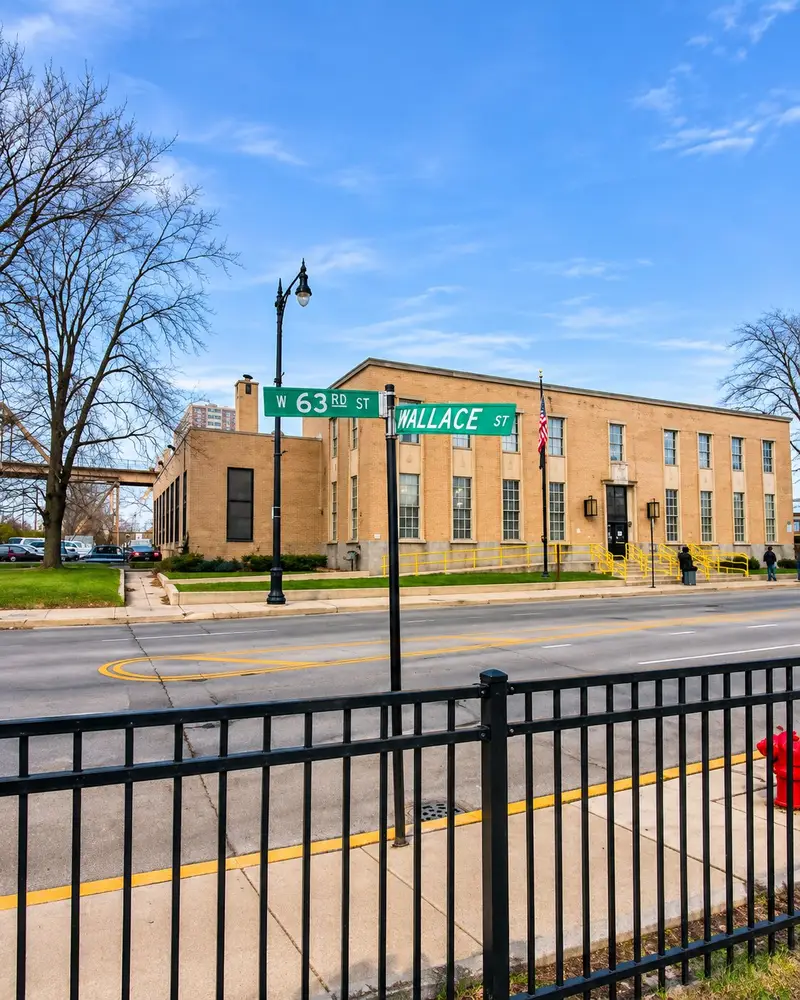
Nobody mailing a package at 606 W. 63rd St. is told they are walking across H.H. Holmes’ killing grounds.
 JM
AK
From the sidewalk at 63rd and Wallace, this is a completely unremarkable brick building: a standard United States Post Office where people buy stamps and drop off their utility bills.
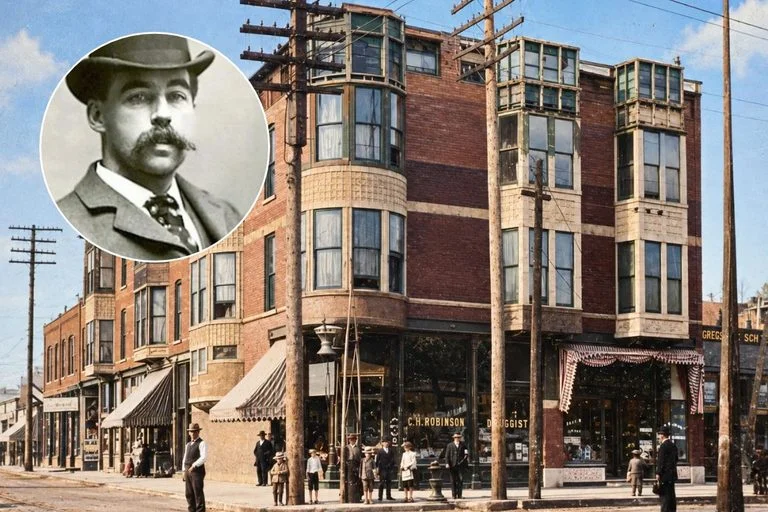
During the 1893 World’s Columbian Exposition, Dr. Herman Mudgett—better known as H.H. Holmes—operated his infamous “Murder Castle” on this exact parcel of land.
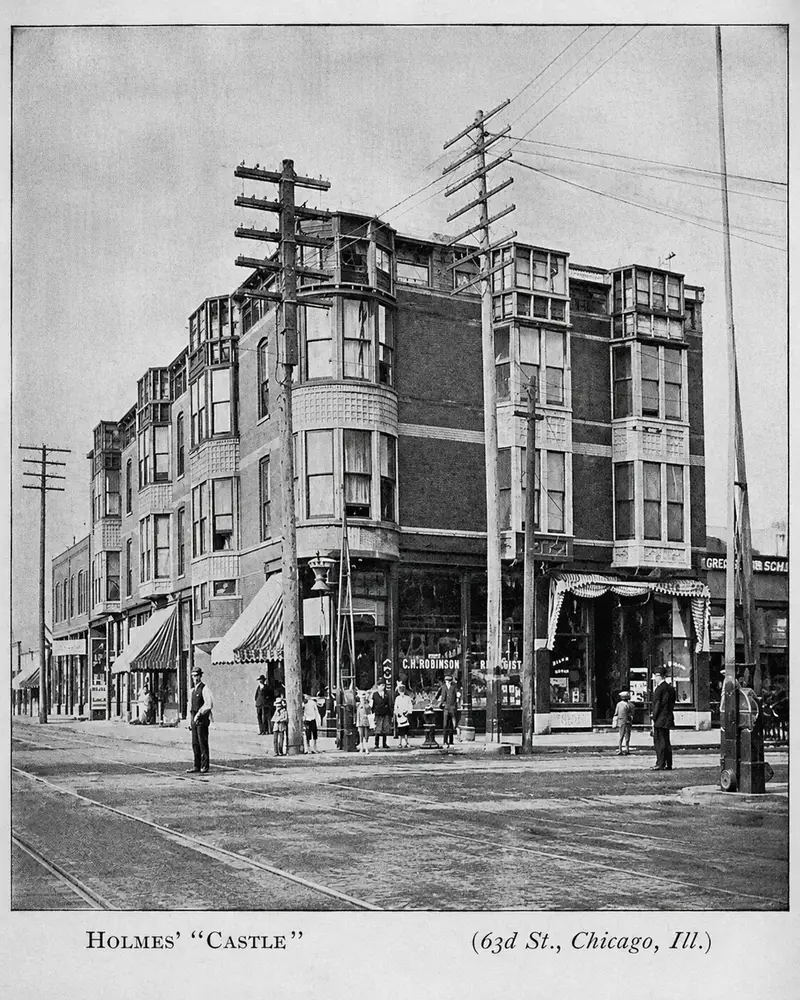
It was a massive, three-story labyrinth designed specifically for death and insurance fraud. Holmes repeatedly hired and fired construction crews so no single builder understood the floor plan. He installed soundproofed rooms, peepholes, gas lines controlled from his bedroom, greased metal chutes that dropped straight into the cellar, and a basement kiln alongside vats of quicklime and acid. While the city celebrated the World’s Fair just a few miles away, Holmes lured female employees, lovers and tourists inside—and even sold some of their stripped skeletons to local medical schools.
In August 1895, shortly after Holmes was arrested, two mysterious explosions gutted the building (police found a half-empty gas can near the back steps). What remained was remodeled and used until it was finally torn down in 1938 to make way for the post office. Today there are no plaques and no memorials.
Historians and neighborhood researchers point to one chilling detail: while the post office building sits mainly on the footprint of neighboring 1890s storefronts, the eerie, overgrown patch of grass sitting directly beside the building covers the exact footprint of Holmes’ original cellar foundation.
Exact Address: 606 W 63rd St, Chicago, IL 60621
Cost: Free
Access: Standard post office business hours (Mon–Fri 8:30am–5pm, Sat 9am–2pm); exterior lot visible 24/7.
Local Pro-Tip: Stand on the grassy lot immediately adjacent to the building. Because the 1938 demolition crews never fully excavated the sub-basement, you are standing directly over the buried brick remnants of Holmes’ cellar.
2. The Nederlander Theatre (The Loop)
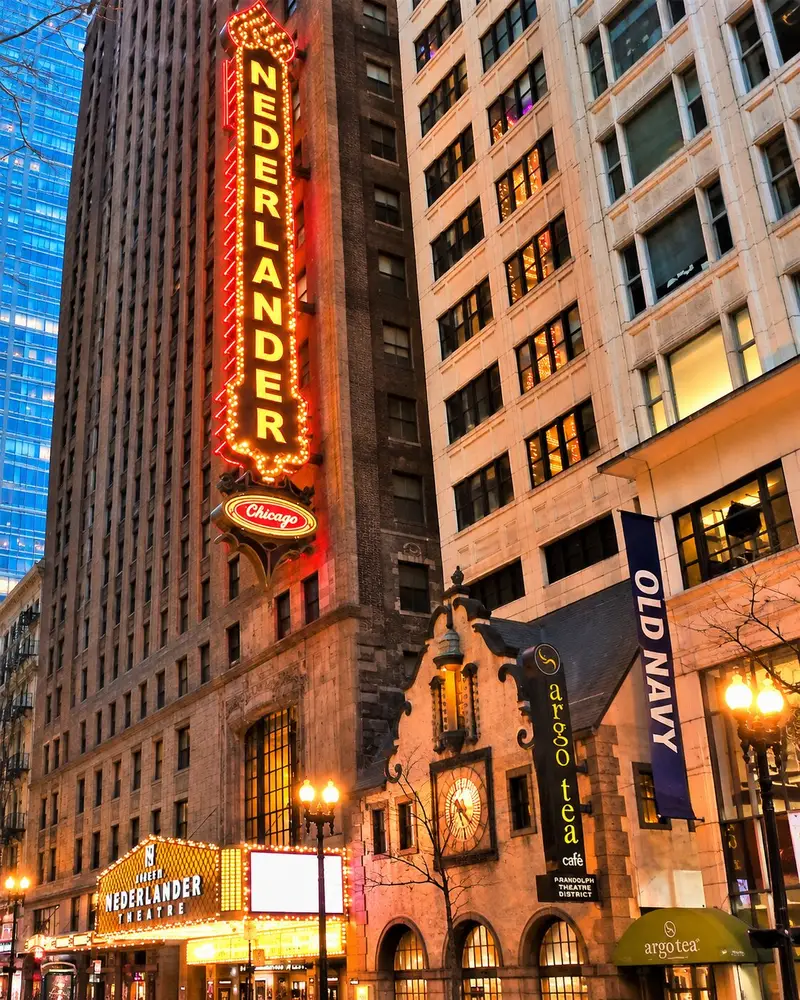
The alley behind this theater has a nickname locals still use instead of its real one: “Death Alley.”
Out front on Randolph Street, the James M. Nederlander Theatre (formerly the Oriental Theatre) is a gorgeous, lavishly restored Broadway palace. You walk past the glowing marquee and the excited crowds heading in to see a musical, with no hint that this exact site holds the grimmest record in the city.
In 1903, the building standing on this foundation was the brand-new Iroquois Theater, proudly advertised in playbills as “Absolutely Fireproof.”
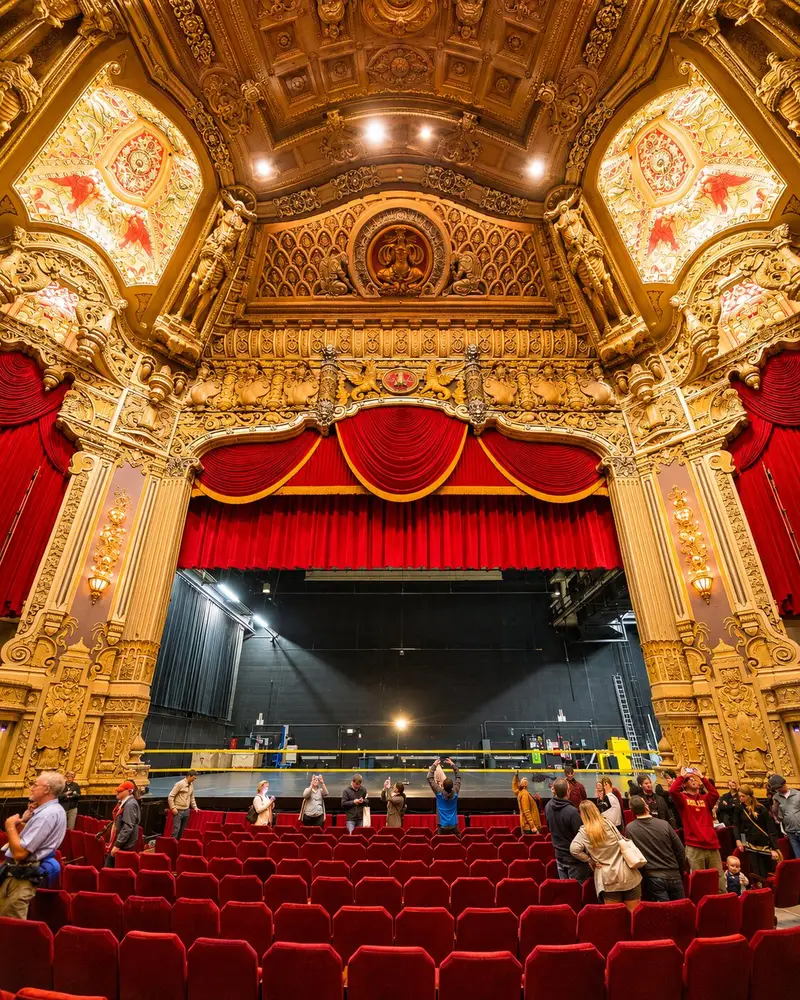
On December 30, 1903, during a sold-out holiday matinee of Mr. Blue Beard packed with 1,700 people, a broken arc light sparked a painted muslin curtain above the stage. The supposedly fireproof asbestos safety curtain snagged on a wire and failed to drop. Worse yet, theater owners had bolted the exit doors shut with unfamiliar European “bascule locks” to keep people from sneaking in, and unfinished iron fire escapes in the back alley had no ladders reaching the ground.
When a stagehand opened a rear stage door to flee, a massive backdraft turned the auditorium into a chimney, blasting a fireball directly into the upper balconies. In just 15 minutes, 602 people—mostly mothers and children on winter break—burned, suffocated or were trampled to death against the inward-opening doors. It remains the deadliest single-building fire in United States history, and it is the direct reason why every public building today has glowing exit signs and “panic bar” doors that push outward.
The sheer volume of casualties overwhelmed the city. Firefighters used the narrow alleyway directly behind the theater as a makeshift morgue, stacking bodies several feet high on the freezing cobblestones.
The street’s actual name is Couch Place. Downtown historians and theater stagehands alike still rarely call it that.
Exact Address: 24 W Randolph St, Chicago, IL 60601
Cost: Free to walk the alley, tickets required for shows.
Access: The alley (Couch Place, accessed via Dearborn St.) is open 24/7.
Local Pro-Tip: Walk into Couch Place and look up at the narrow gap between the theater and the building across the alley (formerly Northwestern University classrooms). During the fire, heroic ironworkers pushed wooden painters’ planks across that dizzying gap five stories up, allowing a handful of trapped women and children to crawl across to safety.
3. TAO Chicago (River North)
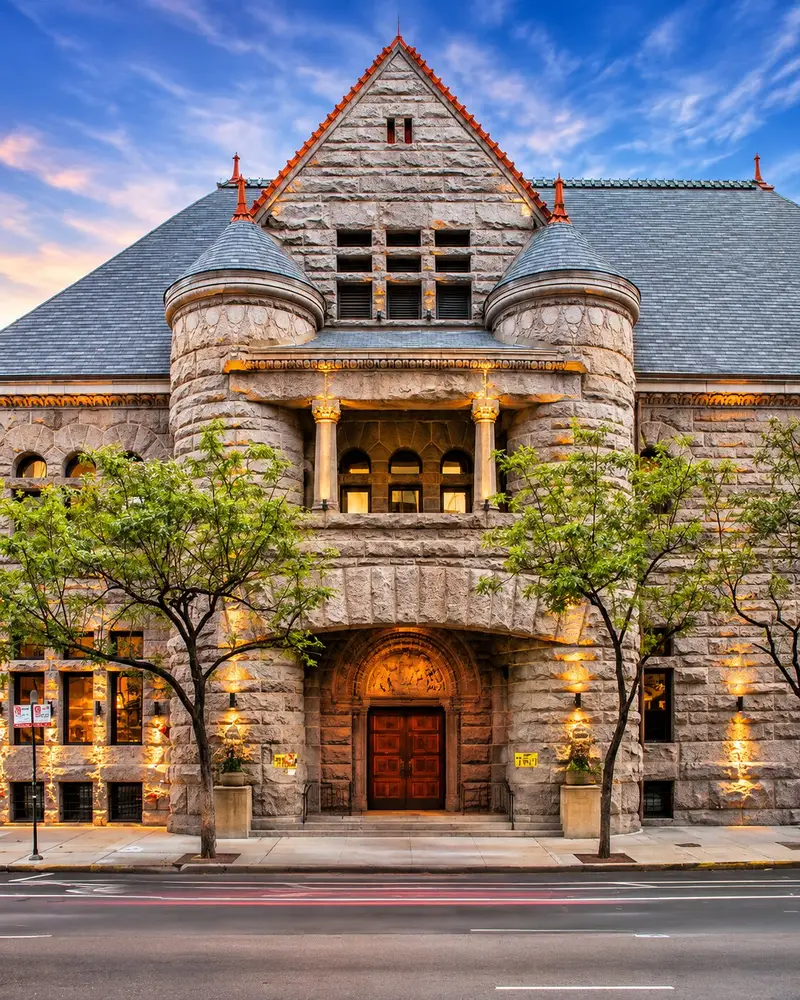
People routinely drop thousands of dollars on VIP bottle service here, dancing inside a granite fortress where the exhumed bones of Chicago’s first murder victim were once kept on display.
River North is packed with massive, celebrity-filled nightclubs, and TAO Chicago—occupying the legendary space previously known as Limelight, Excalibur and Castle—is the crown jewel of that scene.
Look closely at the building itself, though. Designed by renowned architect Henry Ives Cobb in 1892, it is a heavy, window-slit Romanesque Revival structure that looks far more like a 19th-century mausoleum than a nightclub.
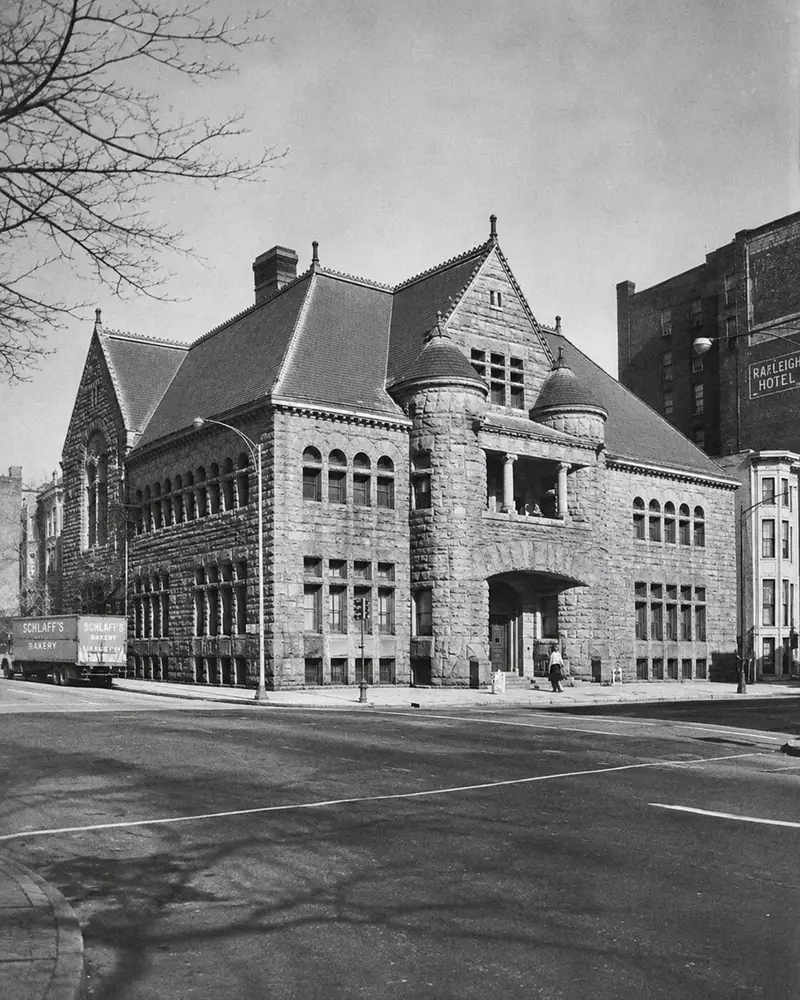
That’s because it was originally built to house the Chicago Historical Society, which had already lost two previous headquarters on this exact site to devastating fires (including the Great Chicago Fire of 1871). Determined never to burn again, they built this fortress entirely out of stone, concrete and iron.
Here is where the real history beats the tour-bus myths: ghost tours love to claim this building was used as a morgue for the 1915 SS Eastland disaster. In reality, historians proved that rumor started by accident—photos of the real morgue at the 2nd Regiment Armory (later Oprah’s Harpo Studios) were stamped “Courtesy of the Chicago Historical Society,” and confused writers assumed the bodies were inside this building!
The documented history inside 632 N. Dearborn is plenty macabre on its own. When construction crews were digging just blocks away in 1891, they unearthed the skeleton of Jean LaLime—an early fur trader who was stabbed to death in 1812 by John Kinzie in Chicago’s first recorded homicidal brawl. For years, LaLime’s actual skull and bones were stored inside this building alongside Abraham Lincoln’s deathbed and bloodied relics from the 1886 Haymarket Riot.
Bartenders and bouncers on local hospitality forums still trade stories about phantom footsteps on the grand staircase and the heavy, suffocating energy in the basement storage rooms—where even rockstar Post Malone once went on a late-night ghost hunt with staff after hours.
Exact Address: 632 N Dearborn St, Chicago, IL 60654
Cost: Expensive.
Access: Open for dinner (Wed–Sun starting at 5pm) and late-night club hours (Thu–Sat).
Local Pro-Tip: Before you walk in, look above the main arched entrance. Those weathered stone carvings feature the face of pre-colonial explorer René-Robert Cavelier, Sieur de La Salle, staring down at the velvet ropes.
4. L&L Tavern (Lakeview)
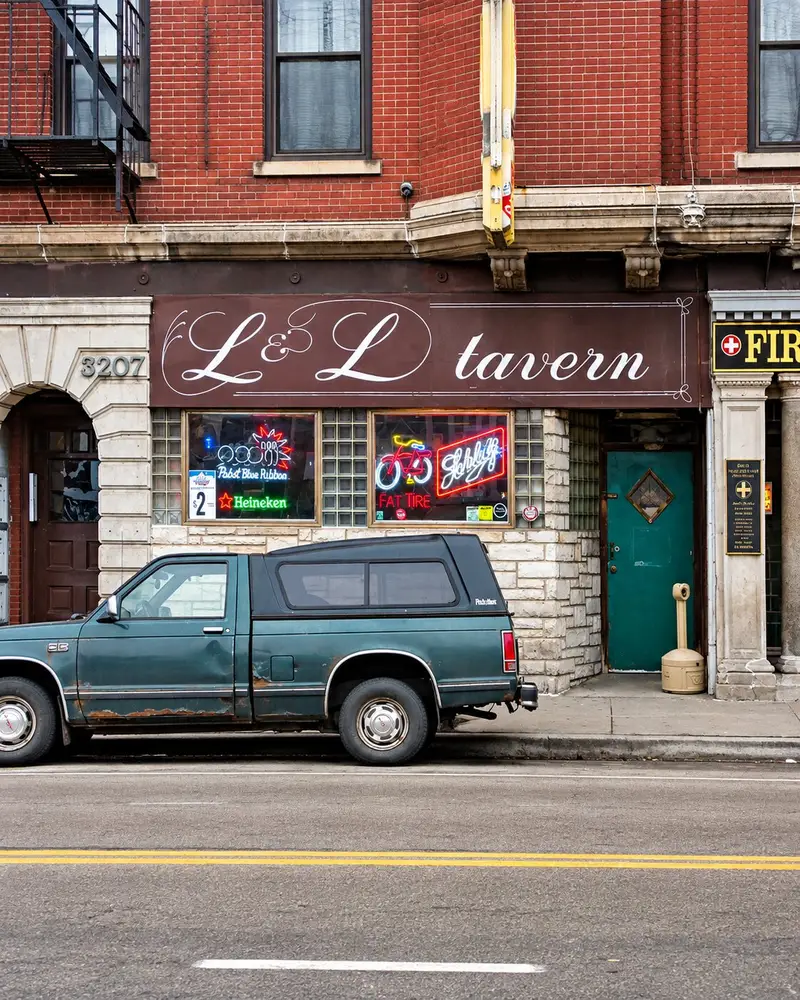
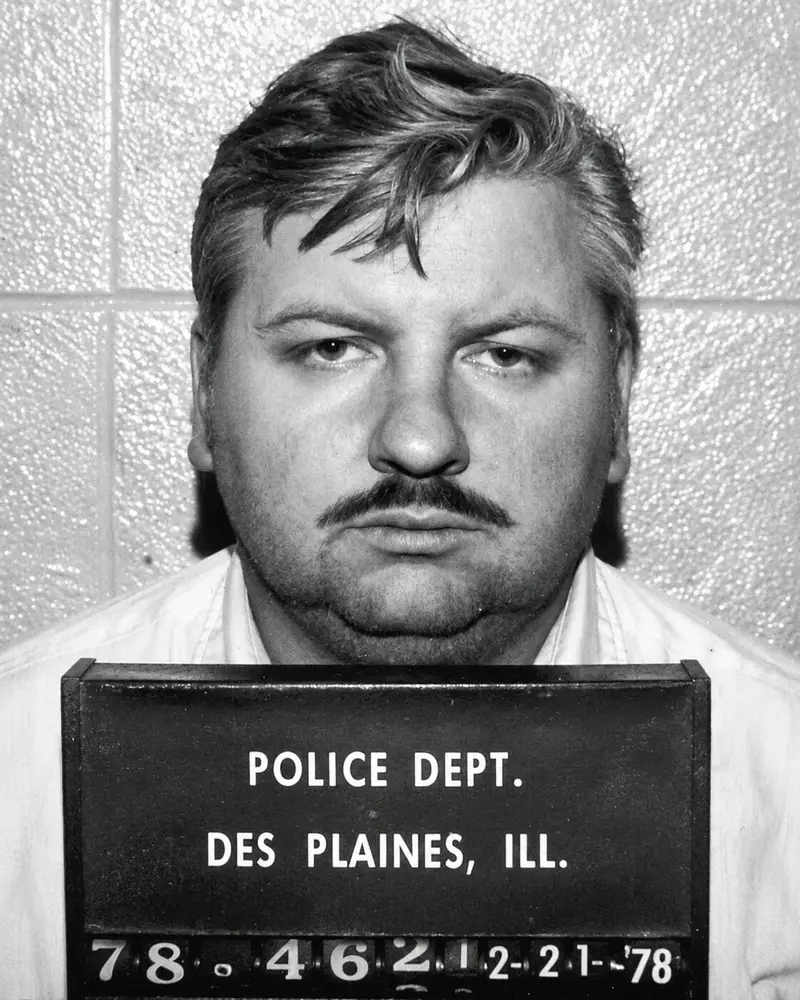
John Wayne Gacy reportedly sat at this bar and drank while fully dressed in his Pogo the Clown makeup.
Lakeview is packed with upscale sports bars and shiny corporate chains, and then there’s the corner of Clark and Belmont, where the L&L Tavern delivers a massive dose of old-school grit. Dating back to the end of Prohibition, it’s a classic, unapologetic neighborhood dive where you walk in for a cheap beer under a buzzing neon Old Style sign.
What you’re drinking in is a room with the darkest clientele history imaginable. Back in the mid-1970s, when the bar was still known as the Columbia Tavern, Gacy lived briefly at 3150 N. Sheridan Rd. before moving to Norwood Park, and he was a known patron here.
Long-time regulars say the stories get even worse. Over a decade later, before his 1991 arrest, Jeffrey Dahmer frequently took the train down from Milwaukee to prowl Chicago’s North Side nightlife—frequenting both the extinct Carol’s Speakeasy in Old Town and reportedly stopping into the L&L Tavern looking for victims.
The visual impact inside is heavy. The room still looks almost exactly like it did in the ’70s and ’80s: linoleum floors, wood paneling, zero pretension and a legendary punk-rock jukebox. Pull up a stool, order a shot and consider exactly who might have sat there before you.
Exact Address: 3207 N Clark St, Chicago, IL 60657
Cost: $4 – $6 for a cheap beer. Strictly cash only.
Access: Open daily 4:00 PM – 2:00 AM (until 3:00 AM on Saturdays).
Local Pro-Tip: Hit the ATM before you arrive, don’t ask for craft cocktails, and if you show up early in the evening, don’t talk over the TV—watching Jeopardy! with the bartender is a sacred daily ritual here.
5. Courthouse Place (River North)
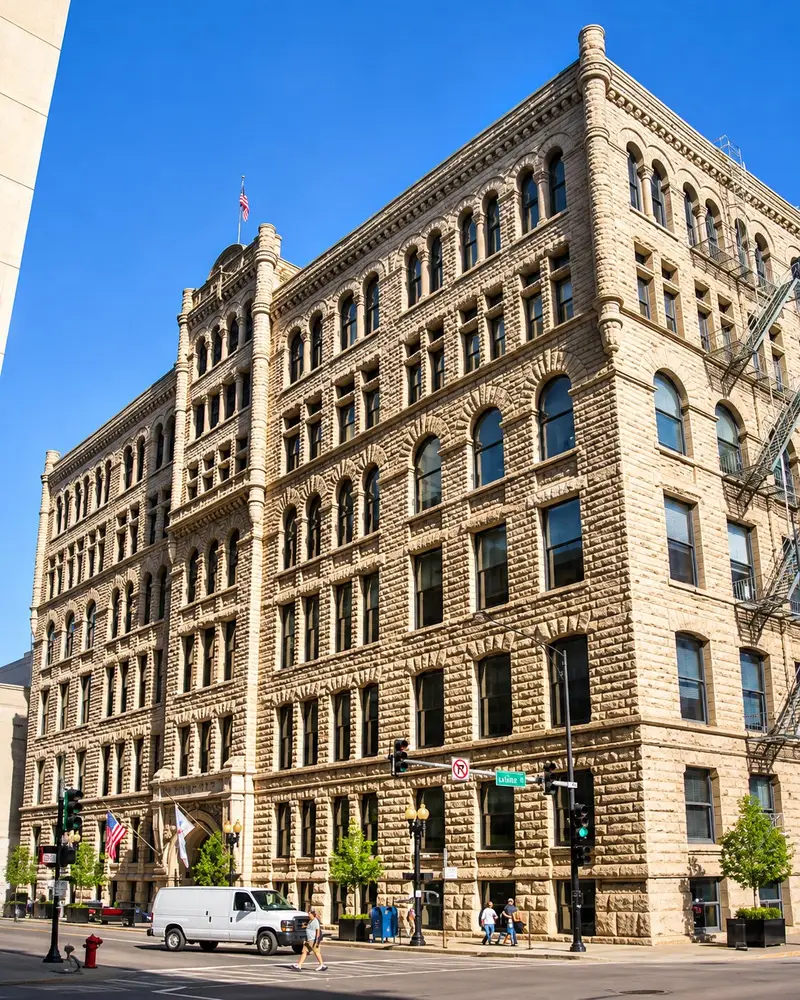
Delivery trucks and fire engines now idle on the exact footprint where Cook County’s wooden gallows once dropped nearly 90 men to their deaths.
River North is famous for high-end dining and sleek office buildings, and Courthouse Place at 54 W. Hubbard St. fits right in: a beautifully restored landmark housing law firms and tech companies.
Behind the polished marble and expensive suits, this was the Cook County Criminal Courts Building from 1893 to 1929. Every sensational Chicago trial of the era happened inside these walls: Clarence Darrow defended the “thrill killers” Leopold and Loeb here in 1924, the 1919 Chicago White Sox stood trial here for throwing the World Series, and the dramatic real-life murder trials of Beulah Annan and Belva Gaertner inspired the play and musical Chicago (whose playwright, Maurine Dallas Watkins, was a court reporter in the 4th-floor press room).
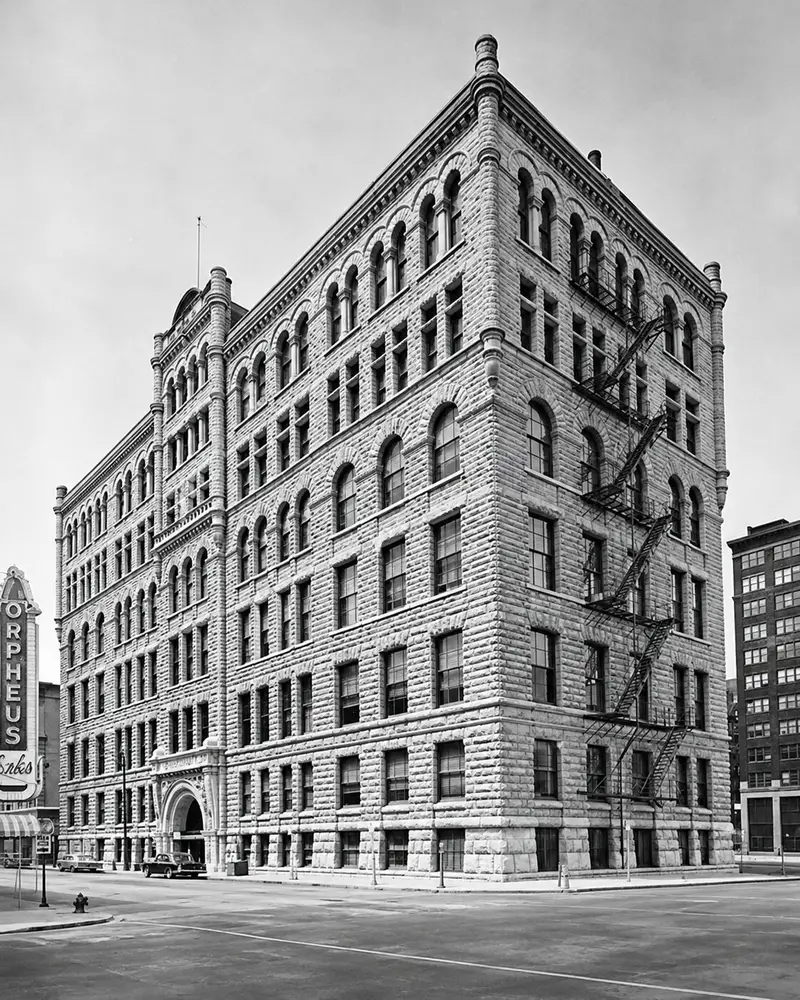
The darkest secret wasn’t inside the courtrooms—it was directly behind them. Attached to the rear of the courthouse (where the alley and Chicago Fire Department Station 42 sit today) was the old Cook County Jail and its execution courtyard. Dozens of convicted murderers—including serial bigamist Johann Otto Hoch—were hanged here.
Even after Illinois switched to the electric chair in 1928, the county was legally forced to keep the wooden gallows dismantled in storage for another 50 years. Why? Because in December 1921, convicted cop-killer “Terrible” Tommy O’Connor broke out of the jail just four days before his execution and was never caught. Because his original sentence specifically mandated that he be “hanged by the neck until dead,” the county couldn’t throw the gallows away until 1977, when a judge finally ruled O’Connor would be dead of old age.
When you’ve had enough dread for one afternoon, the Loop is full of lobbies you can wander into for free that are every bit as grand and considerably less morbid.
Exact Address: 54 W Hubbard St, Chicago, IL 60654
Cost: Free to view the exterior and step into the front vestibule.
Access: The exterior and rear alley are accessible 24/7; lobby open during weekday business hours.
Local Pro-Tip: Walk down the narrow alley to the west of the building toward Illinois Street. You are walking the exact boundary between the old courtrooms and the jail cells where Al Capone, Frank Nitti and the Haymarket anarchists were held.
6. Holy Name Cathedral (Near North Side)
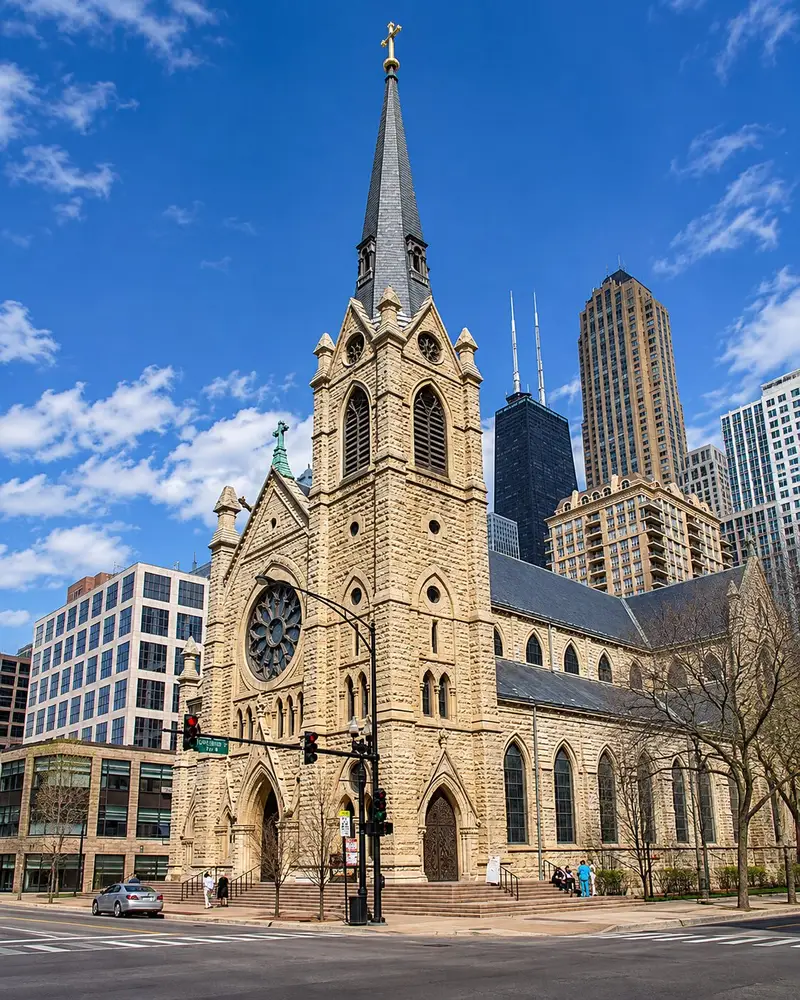
You can still trace your fingers over the marks Al Capone’s bullets left in the stone of Chicago’s most famous Catholic cathedral.
Holy Name is a breathtaking, peaceful Gothic Revival structure right on State Street and the seat of the Archdiocese of Chicago. It was also the backdrop for two of the most brazen mob hits of the Prohibition era.
First, in November 1924, North Side Gang boss Dean O’Banion was gunned down right across the street inside his flower shop at 738 N. State St. Then, on October 11, 1926, his successor, Earl “Hymie” Weiss, was crossing State Street toward the gang’s headquarters above the flower shop when two gunmen working for Al Capone opened fire from a second-floor boardinghouse window at 740 N. State St. The submachine-gun spray was relentless. Weiss collapsed dead in the gutter, and stray .45-caliber slugs ripped across State Street directly into the facade of the church.
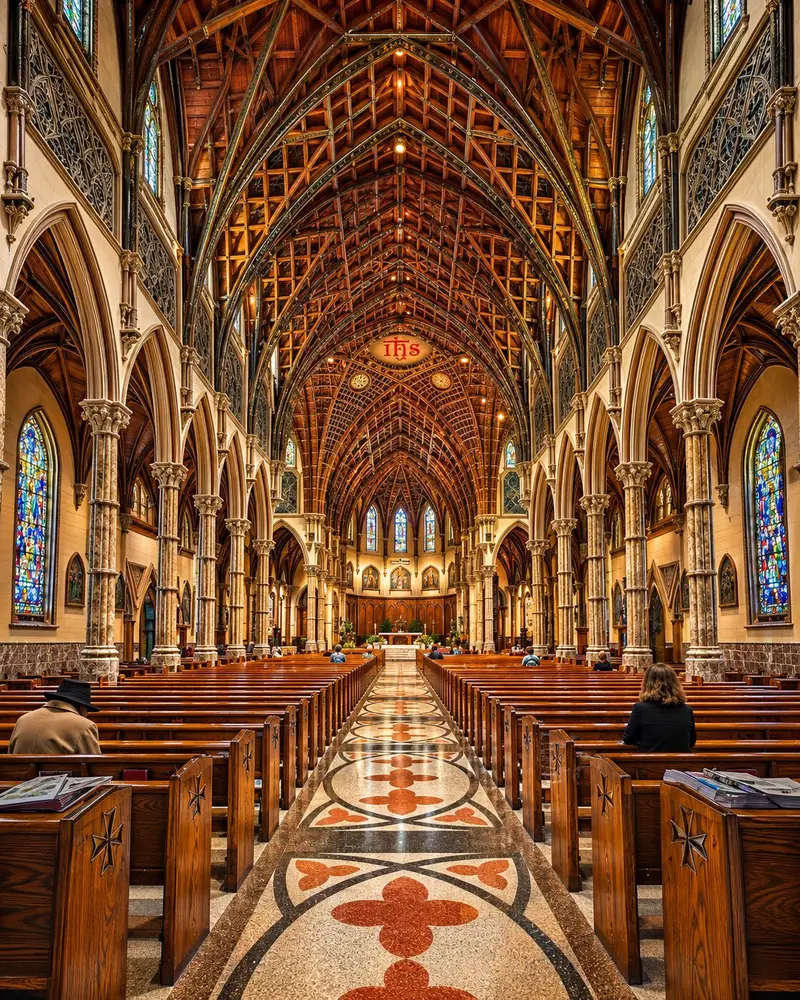
One of the bullets literally chipped off a piece of the carved Bible inscription on the cathedral’s 1874 cornerstone, which reads: “At the name of Jesus every knee should bow.”
Chicagoans guard their mob history closely, and this is one of the few places you can literally touch it. Walk up to the cornerstone at the southwest corner of the building on State Street. The church filled the holes with mortar decades ago, but the round, quarter-sized patches are unmistakable once you know where to look.
Afterward, keep the 1920s going with a drink at one of the speakeasies still hiding around town, a few of them within walking distance.
Exact Address: 735 N State St, Chicago, IL 60654
Cost: Free
Access: The exterior cornerstone is visible 24/7; cathedral open daily 8:00 AM – 7:00 PM.
Local Pro-Tip: Stand on the east sidewalk of State Street by the cornerstone, then look across the street at the red-brick parking garage. That garage sits on the exact footprint of O’Banion’s flower shop and the sniper’s nest that killed Hymie Weiss.
7. The Reid Murdoch Building (River North)
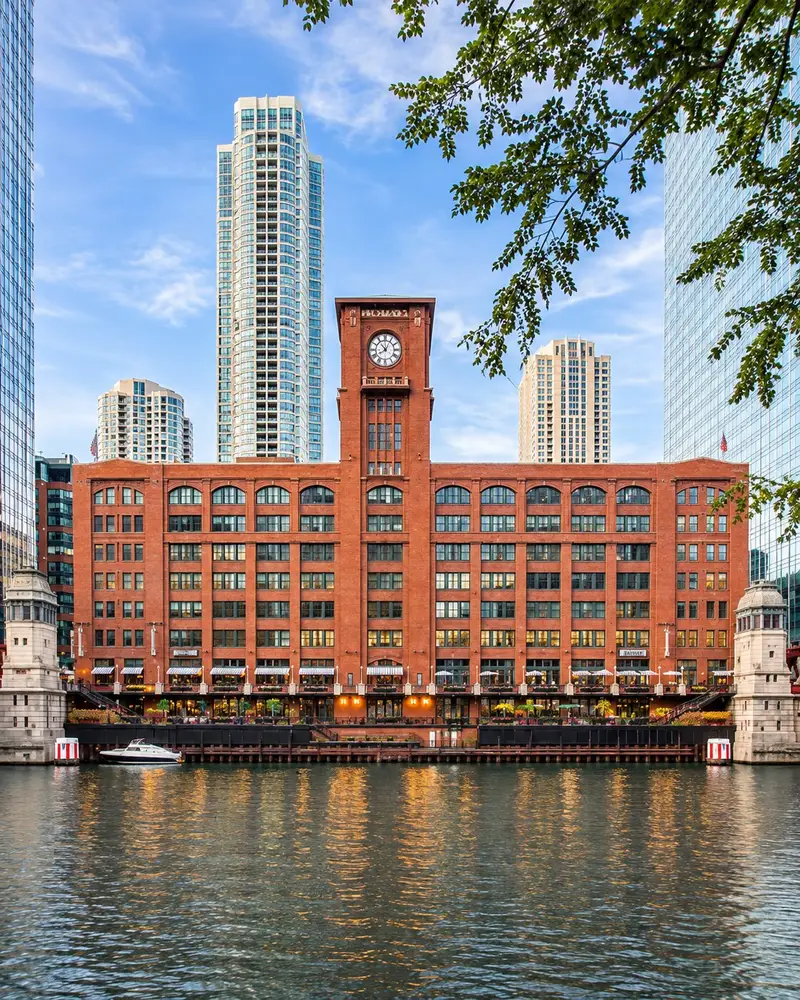
The ship was still tied to the dock, in just 20 feet of water, when it flipped on its side and killed 844 people.
The Chicago Riverwalk is packed with tourists taking selfies, and they stroll right past the Reid Murdoch Building—the massive 1914 red-brick landmark with the central clock tower between Clark and LaSalle—without a second glance.
On the morning of July 24, 1915, the water right in front of it was choked with over 2,500 Western Electric employees and their families boarding steamers for an annual company picnic. Top-heavy with extra lifeboats added after the Titanic disaster, the SS Eastland rolled over at its moorings on the south bank at 7:28 AM. Hundreds of women and children in heavy summer wool clothing were trapped below deck and drowned in minutes. The brand-new Reid Murdoch grocery warehouse directly across the river was immediately commandeered as a triage center and temporary morgue.
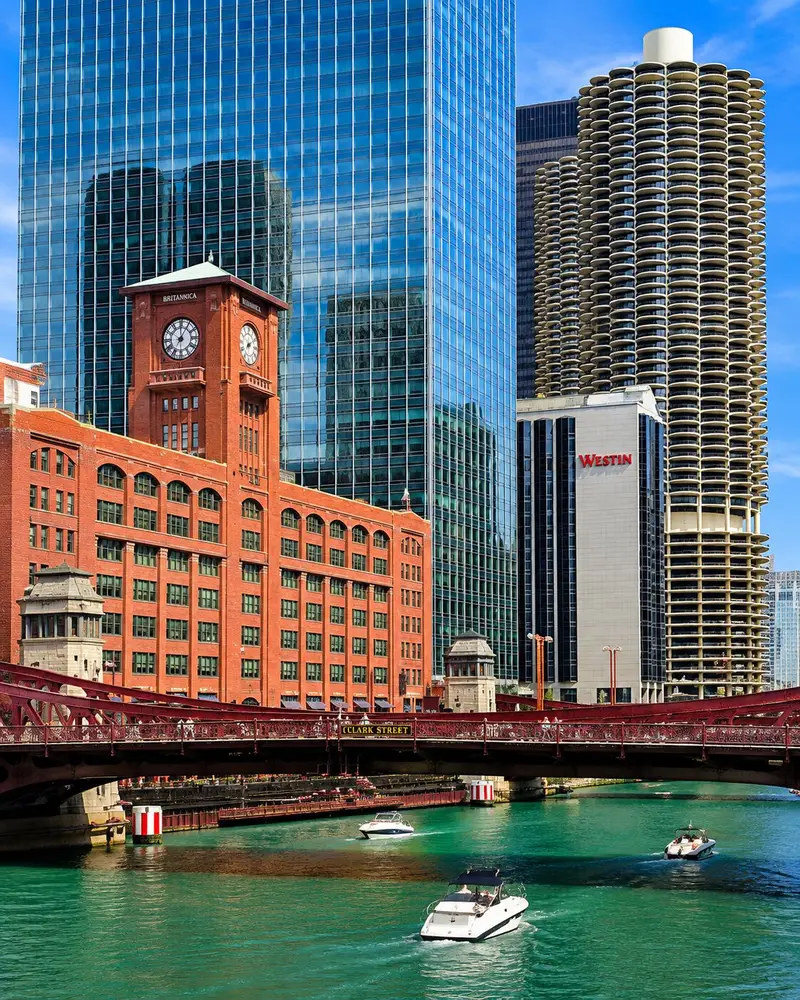
Historical archives preserve a deeply chilling detail: the river-level dock where people now sit, laugh and drink wine at waterfront restaurants is the exact spot where rescue boats unloaded the dead. Hundreds of bodies were carried off the Clark Street bridge and laid out across the basement and ground floors of what are now modern, high-end corporate offices.
Guides on the architecture boat tours locals recommend always lower their voices along this stretch of water. When the building was renovated in the late 1990s, construction workers noticed that an entire bay on the western side had originally been built one story shorter than the rest of the building—so trains could roll inside—and many still point to the eerie cold spots reported on the lower river level.
Exact Address: 325 N LaSalle Dr, Chicago, IL 60654
Cost: Free to view from the Riverwalk and bridges.
Access: The Riverwalk is open daily from 6:00 AM – 11:00 PM.
Local Pro-Tip: Walk across the river to the south bank at the LaSalle Street bridge. Look down at the brass historical marker embedded in the Riverwalk pavement—that exact wall is where the Eastland was tied when she rolled.
8. The Biograph Theater (Lincoln Park)
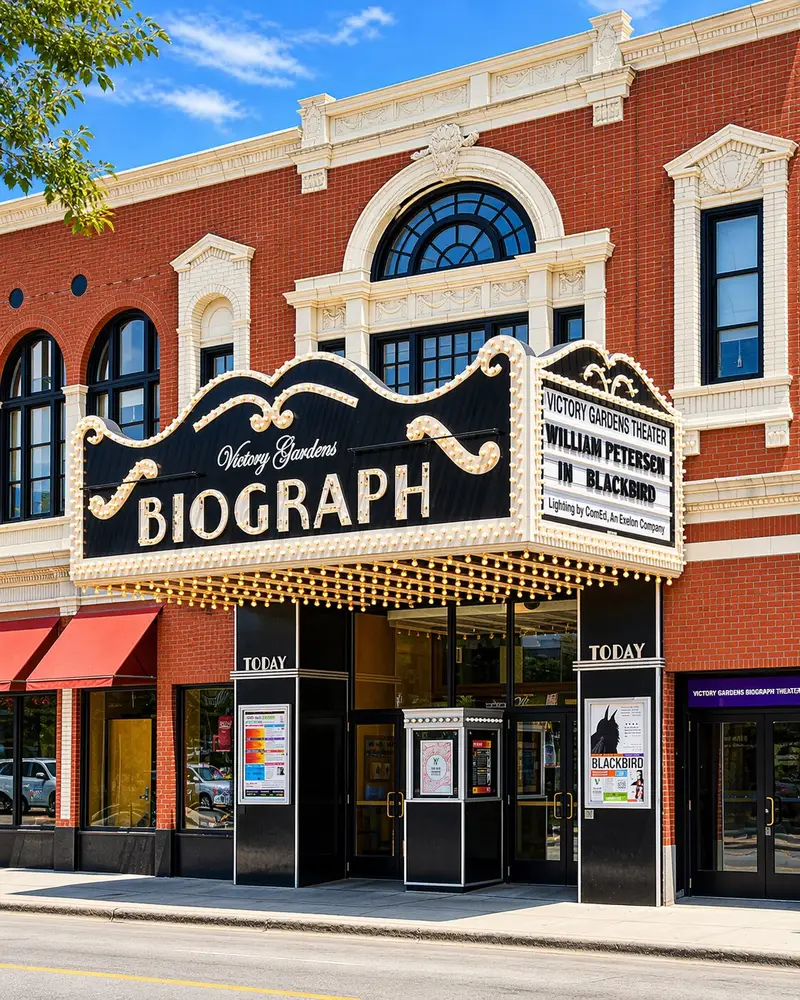
Minutes after the shooting stopped in the alley next to this theater, morbid bystanders were dipping their handkerchiefs and newspaper scraps into pools of John Dillinger’s blood.
Lincoln Park is one of the wealthiest, leafiest neighborhoods in the city, and the historic Biograph Theater (now home to the Victory Gardens Theater) sits right in the middle of it on Lincoln Avenue, sporting its classic red-and-gold marquee.
On the stiflingly hot night of July 22, 1934, it was the scene of the FBI’s most famous ambush. John Dillinger—the notorious Depression-era bank robber and “Public Enemy No. 1″—came here to enjoy the air conditioning and watch Clark Gable in Manhattan Melodrama. He was accompanied by his girlfriend, Polly Hamilton, and brothel madam Ana Cumpănaș (immortalized in folklore as the “Woman in Red,” though she was actually wearing an orange skirt that looked red under the marquee lights), who had tipped off the feds hoping to avoid deportation.
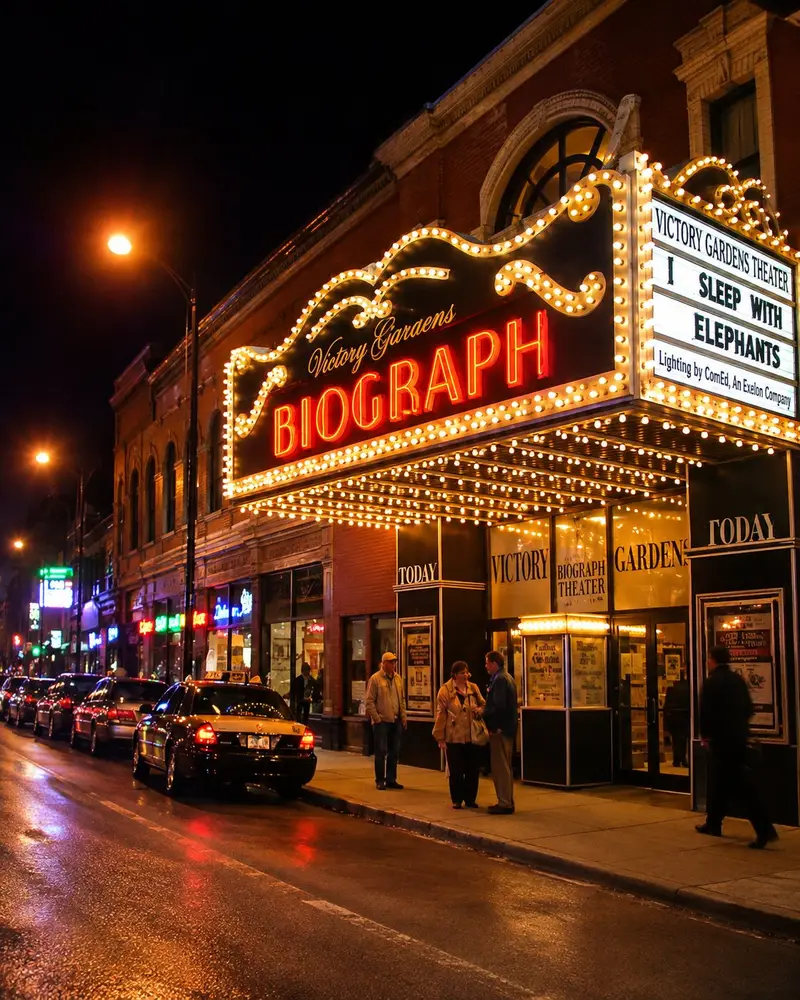
When Dillinger walked out at 10:30 PM and spotted Bureau chief Melvin Purvis lighting a cigar as a signal, he bolted left and reached for his Colt .380 pistol. Three agents fired six shots as Dillinger ducked into the narrow brick alleyway immediately south of the theater. The fatal bullet entered the back of his neck and exited just under his right eye, dropping him face-first into the alley dirt.
Walk that dark brick corridor before you rejoin the Lincoln Park brunch crowds. It is one of the neighborhoods where locals actually hang out, and the alleyway looks almost identical to how it looked when the 2009 Johnny Depp movie Public Enemies filmed on this exact block.
Exact Address: 2433 N Lincoln Ave, Chicago, IL 60614
Cost: Free to walk the alley.
Access: The alley is a public walkway open 24/7.
Local Pro-Tip: Look at the telephone pole and brick wall just inside the south entrance of the alley. A bullet from the FBI’s barrage grazed two innocent bystanders that night and chipped the brickwork right at the mouth of the passage.
9. The Jewelers’ Building (The Loop)
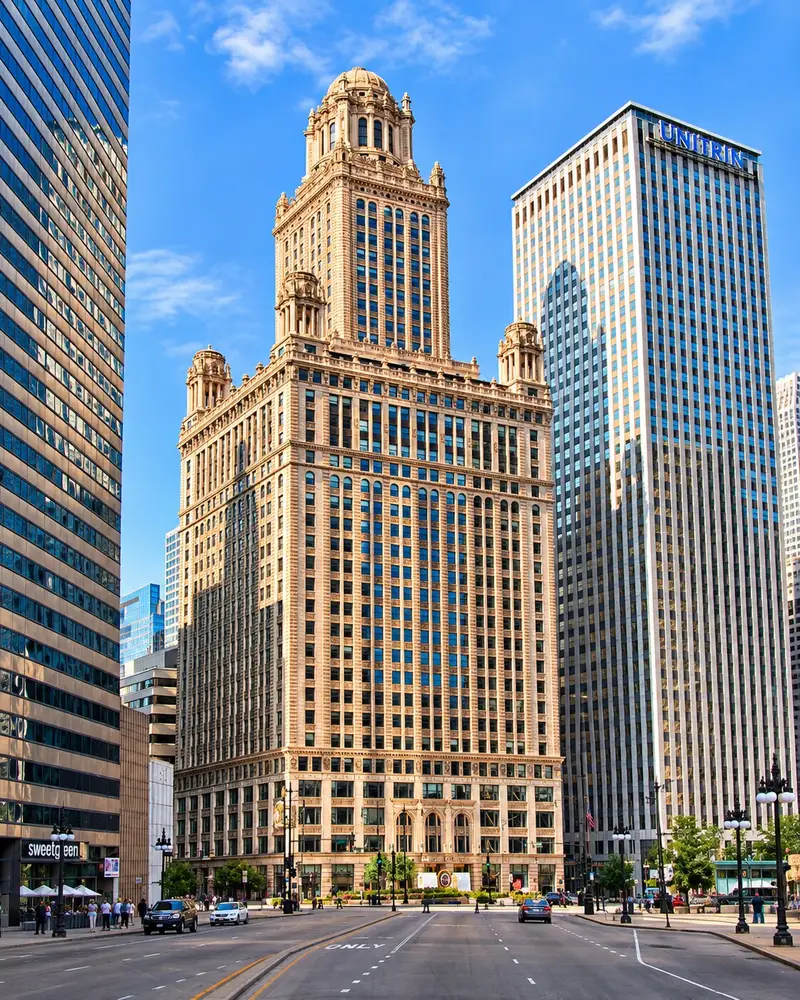
In 1926, crime in Chicago was so out of control that this skyscraper was built with a central elevator shaft designed to lift tenants’ entire automobiles up to the 22nd floor.
Look up from the Chicago River and you’ll see it: a gorgeous, 40-story Beaux-Arts tower at 35 East Wacker Drive, famous for its ornate turrets and copper-roofed dome. When it opened in 1926 as the tallest building in the world outside New York City, it wasn’t just an office tower—it was a literal fortress built to protect the city’s diamond merchants from Prohibition-era stickup men.
For the first 14 years of its life, the core of the building was a 23-story indoor parking garage. Jewelers drove their cars off Lower Wacker Drive straight onto hoisting platforms that lifted them to the exact floor of their office, ensuring they never had to walk down a Chicago sidewalk carrying a briefcase of gems.
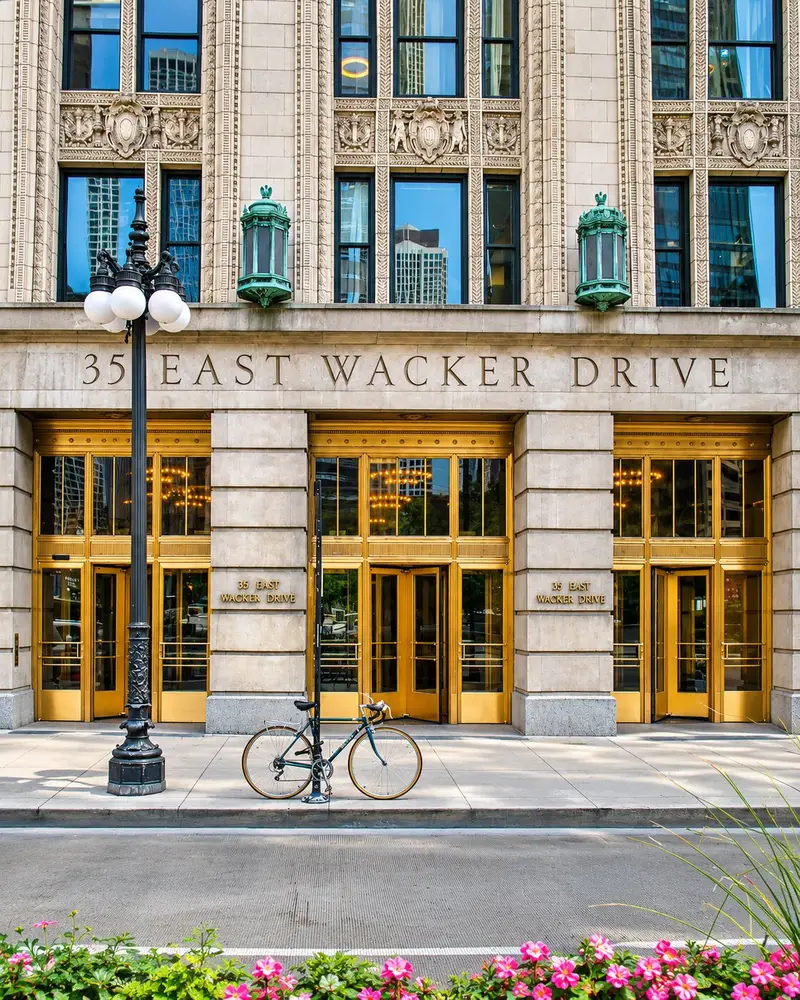
The most enduring legend sits at the very top of the building inside that three-story cupola. According to decades of Loop lore, Al Capone turned the anti-gangster building’s own crown into a high-altitude gambling den and speakeasy called the Stratosphere Lounge, using the private express elevator so his lookouts had plenty of warning before police could ever reach the 40th floor. While historians note the “Stratosphere Club” actually opened legitimately for the 1933 World’s Fair, the dome’s reputation as a sky-high Prohibition hideout became so iconic that Christopher Nolan later used the building as a backdrop in Batman Begins and Transformers: Dark of the Moon.
It is easily one of the most iconic buildings in Chicago, yet most commuters walk right under Father Time’s clock at the entrance without knowing the wild engineering inside.
Exact Address: 35 E Wacker Dr, Chicago, IL 60601
Cost: Free to view the exterior and ground-floor lobby.
Access: Private office building (the dome was long used as architectural offices and a showroom), but the lobby is accessible on weekdays.
Local Pro-Tip: The sharpest view of the dome isn’t from the street directly below. Cross the river to the Wabash Avenue bridge or Marina City and look south for a clean sightline to the cupola and its four smaller corner turrets (which originally hid the building’s water tanks).
10. The Congress Plaza Hotel (South Loop)
ajay_suresh.
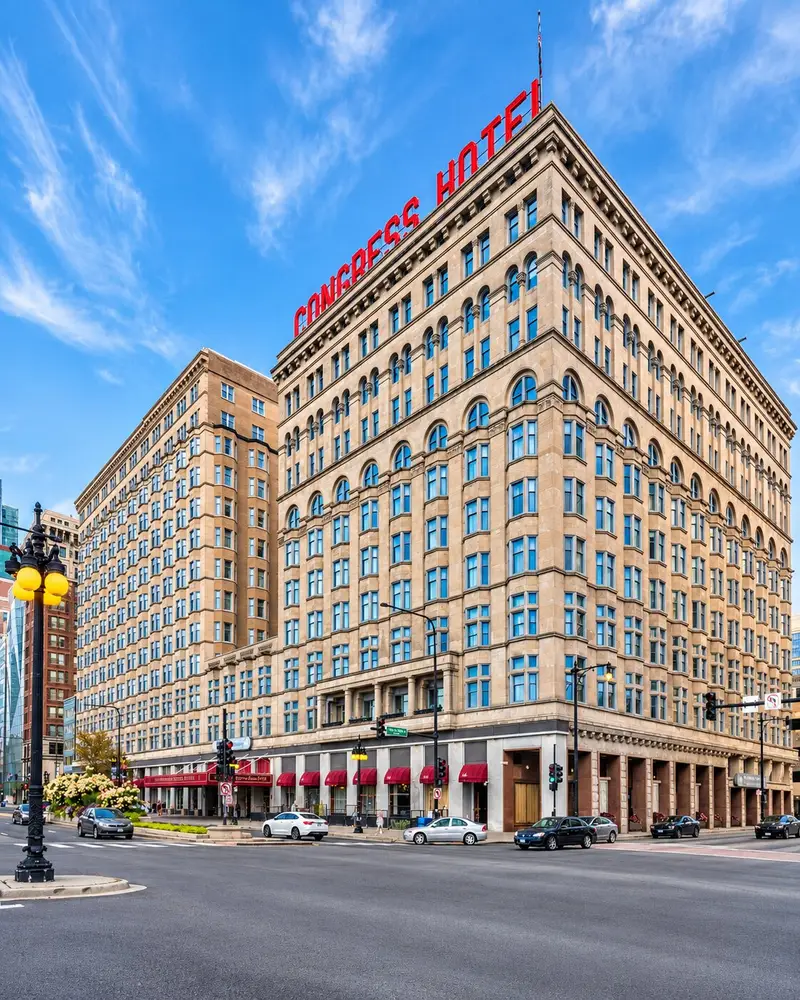
There is a mystery door behind the wallpaper on the 12th floor of this hotel that is permanently sealed shut from the outside—and the 4th floor is even worse.
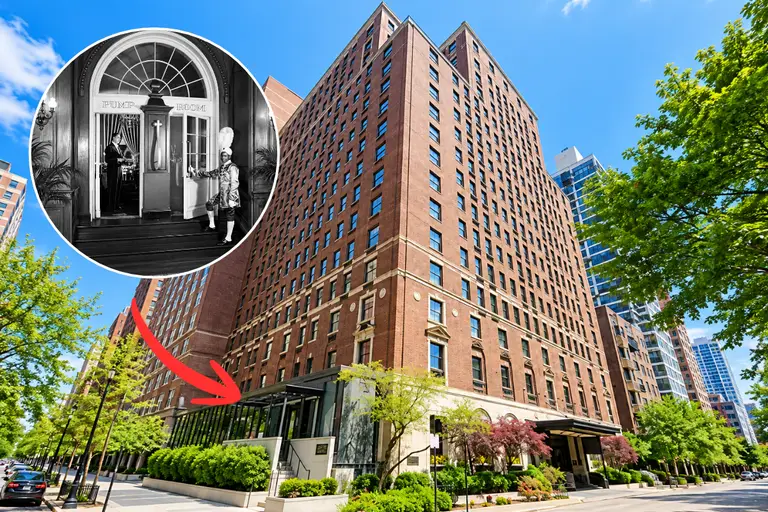
Grant Park is heavily photographed and packed with tourists, and directly across Michigan Avenue sits a massive, Gilded Age behemoth. The Congress Plaza opened in 1893 to house wealthy visitors for the World’s Fair, hosting four U.S. presidents (Teddy Roosevelt, William Howard Taft, Woodrow Wilson and Franklin D. Roosevelt) in the decades that followed.
It is also universally recognized as the most haunted building in Chicago. Not only did Al Capone frequently hold court here (though his true fortified headquarters were further south at the Lexington and Metropole hotels), and not only did H.H. Holmes allegedly troll the lobby’s grand Peacock Alley looking for wealthy out-of-towners in 1893, but the hotel has also witnessed documented, heartbreaking tragedies inside its guest rooms.
In August 1939, a desperate refugee mother from Prague named Adele Langer checked into the 12th floor with her two young sons, Karel (age 6) and Jan (age 7). Overwhelmed by grief and Depression-era despair, she threw both boys and herself out of a 12th-floor window. To this day, guests and night-shift security guards report seeing a confused little boy in 1930s clothing wandering the 12th-floor corridors.
Hospitality workers on downtown forums constantly share stories about two specific spots: Room 441, where guests call the front desk in the middle of the night terrified by a shadowy female silhouette shaking the foot of their bed, and a mysterious room on the 12th floor that was permanently boarded and wallpapered over—inspiring Stephen King’s famous haunted hotel tale, 1408.
If you’d rather sleep somewhere that doesn’t creak at 3:00 AM, locals have their own list of Chicago hotels they actually recommend.
Exact Address: 520 S Michigan Ave, Chicago, IL 60605
Cost: Free to walk the lobby and ground-floor corridors; rooms run $150 – $300+ a night.
Access: The lobby and Florentine Room corridor are open 24/7 (guest keycard required for elevators).
Local Pro-Tip: Walk through the grand lobby into “Peacock Alley,” the long marble promenade connecting the North and South towers, and look up at the original 1890s mosaics. If you book a stay for Halloween, you can actually request Room 441 at the front desk—if it isn’t already booked months in advance by paranormal investigators.
11. Jane Addams Hull-House (UIC Campus)
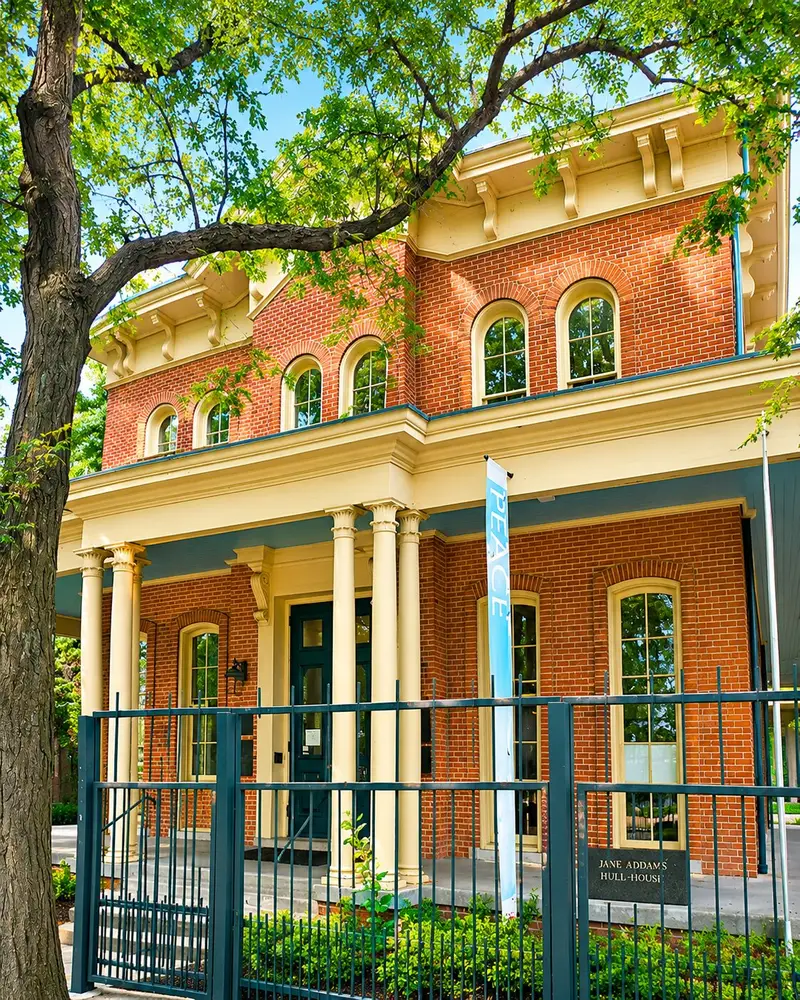
In the autumn of 1913, thousands of panicked Chicagoans swarmed this brick mansion for six straight weeks, offering cash at the front door because they genuinely believed Nobel Peace Prize winner Jane Addams was hiding a demonic, cloven-hoofed baby in the attic.
The University of Illinois Chicago (UIC) is a sprawling, Brutalist concrete campus, and sitting right near Halsted and Polk are the two surviving buildings of the legendary 1889 Hull-House settlement. Built in 1856 as the country home of real estate millionaire Charles J. Hull, the mansion was already rumored to be haunted by Hull’s deceased wife, Millicent, before Jane Addams and Ellen Gates Starr turned it into America’s most famous social-reform sanctuary for impoverished immigrants.
Its strangest historical episode is the 1913 “Devil Baby” panic. According to the viral rumor that swept the city, a devout immigrant woman had hung a religious picture in her tenement apartment, and her atheist husband tore it down, swearing he’d “rather have a devil in the house than that!” Soon after, she supposedly gave birth to a child with pointed ears, horns, scaly red skin and a tail—who could already curse and smoke cigars—and abandoned it on the steps of Hull-House.
There was never any baby, of course, though historians believe the rumor may have been sparked by a tragic birth defect in the neighborhood. Still, the hysteria was so intense that the switchboard nearly melted down, doctors demanded to examine the creature, and Addams wrote an entire sociological treatise about how the legend gave abused immigrant wives a folkloric weapon to scare their husbands into behaving. Decades later, author Ira Levin drew inspiration from the Hull-House hysteria when writing Rosemary’s Baby.
The Devil Baby isn’t even the strangest thing this city has produced; Chicago has a long list of facts that sound made up but are true.
Exact Address: 800 S Halsted St, Chicago, IL 60607
Cost: Completely free admission (donations welcome).
Access: Open Tue–Fri 10:00 AM – 4:30 PM, Sun 12:00 PM – 4:30 PM. Closed Mondays and Saturdays.
Local Pro-Tip: Before you walk out, look at the upstairs bedroom in the northwest corner (Jane Addams’ personal bedroom, where her cousin Charles Hull also died) and then look up at the upper eaves from the courtyard—the exact spot where UIC students still swear they see faces peering down at night.
12. The Couch Tomb (Lincoln Park)
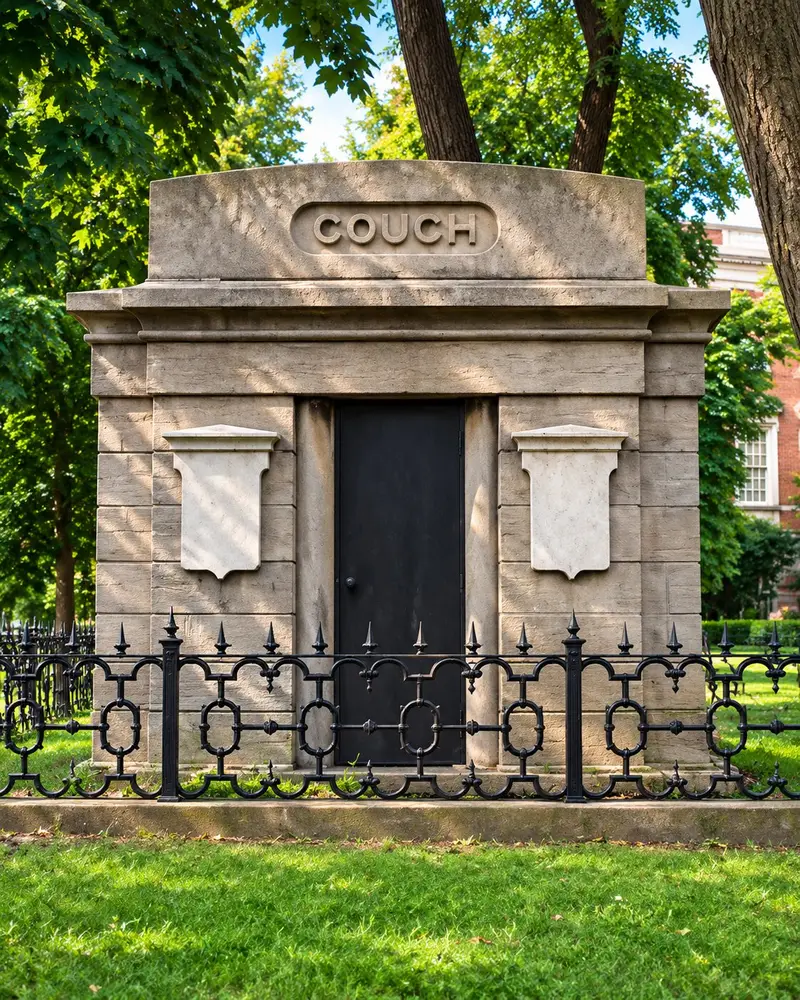
Every time you jog, picnic or walk your dog through the south end of Lincoln Park, you are stepping directly over an estimated 10,000 to 12,000 forgotten human skeletons.
Lincoln Park is Chicago’s premier lakefront green space, filled with beaches, a free zoo and manicured gardens. Sitting all by itself on the lawn just steps behind the Chicago History Museum, however, is a stark, bunker-like limestone structure: the Couch Tomb. It isn’t a decorative monument. It is an active 19th-century mausoleum that still contains human remains.
From 1843 until the late 1860s, the southern 120 acres of Lincoln Park served as the Chicago City Cemetery (and a potter’s field for the poor and Confederate prisoners of war from Camp Douglas). When doctors realized that burying bodies in shallow, sandy soil right next to the lake was contaminating the city’s drinking water, Chicago ordered the graves dug up and moved north to newer cemeteries. When crews got to the 50-ton tomb of hotelier Ira Couch—built in 1858 out of massive Indiana limestone blocks—the city realized it was too expensive to move and the family fought to leave it alone.
The story gets even darker because the Great Chicago Fire of 1871 swept right through the cemetery while disinterments were still underway, burning the wooden headboards and destroying the burial maps specifying where thousands of bodies lay. As historian Pamela Bannos documented in her research project Hidden Truths, more than 10,000 bodies in the pauper’s section were simply covered with fresh dirt and left behind beneath what are now baseball diamonds and jogging paths. (When the Chicago History Museum dug an underground parking garage in 1998, backhoes immediately hit 19th-century bones and pine coffins.) The wealthier remains that did make the move went mostly to Rosehill and Graceland, which is why Graceland now reads like a sculpture garden with an Egyptian pyramid.
Tracking down these forgotten cemetery remnants ranks high on the list of unusual things to do in Chicago that tourists walk right past.
Exact Address: 1601 N Clark St, Chicago, IL 60614 (In the park directly east/behind the Chicago History Museum)
Cost: Free
Access: The park is open daily from 6:00 AM to 11:00 PM.
Local Pro-Tip: Walk right up to the heavy bronze doors of the tomb and look at the raised lettering reading “COUCH” overhead. Ira Couch himself was actually the brother of James Couch—the exact man whom “Death Alley” (Couch Place) behind the Nederlander Theatre is named after!
Beautiful Architecture, Brutal History
Chicago isn’t just a postcard of gleaming skyscrapers and sunny lakefront views. It’s a city built on top of ghosts, gangsters and unbelievable grit.
The next time you walk these streets, pay closer attention to the chipped limestone and the details most people walk past. Look down the narrow, echoing alleys. You never know whose footsteps you are walking in—or what is still buried right beneath the grass.
To keep exploring the real city, it helps to know which tourist traps locals steer clear of. Skip the overpriced crowds. Stick to the hidden history.
We’ll see you out there.
JM
AK