There is a chunk of the Great Wall of China cemented into a wall on Michigan Avenue, and most people stroll right past it on their way to get a coffee.
Downtown Chicago makes everyone look up, and the skyline deserves it. But the best stories are often sitting right at eye level: fragments of ancient wonders, a carved funeral scene over an office door, a 182-year-old cow path, and Cold War fortresses disguised as everyday buildings.
The classic way to get the big-picture history is the Chicago Architecture River Cruise. For an on-foot scavenger hunt, though, these 16 hidden details are the ones that separate the people who visit Chicago from the people who actually see it—even if you’ve lived here your whole life.
1. The Ancient Relics Hiding on the Tribune Tower
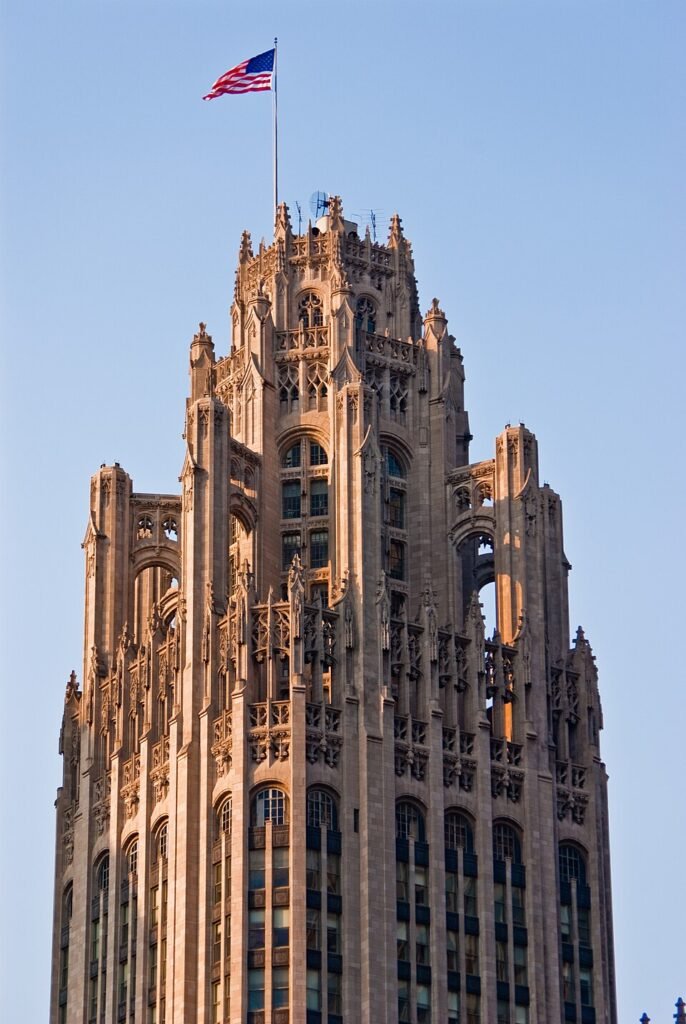
Nearly 150 pieces of world history are embedded in the base of this 36-story neo-Gothic skyscraper at 435 N. Michigan Avenue, and you can run your hand over almost every single one of them.
 JM
AK
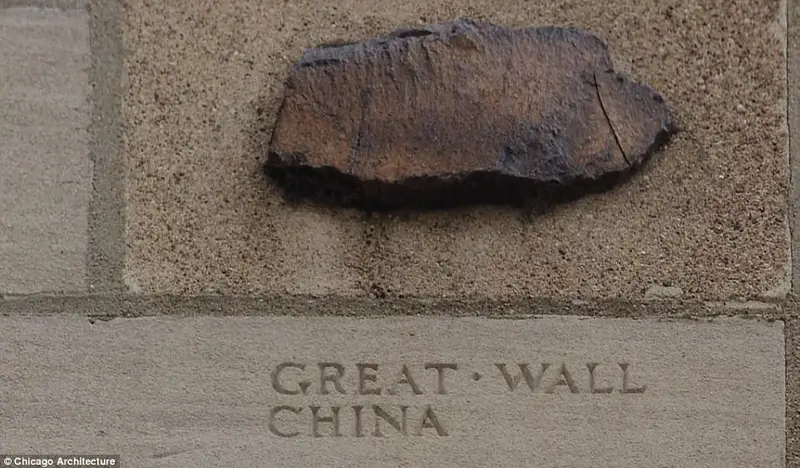
Before its 2021 conversion into luxury condominiums, the 1925 tower was the longtime headquarters of the Chicago Tribune. Its formidable publisher, Colonel Robert R. McCormick, was an obsessive historian and world traveler. After visiting ruined European cathedrals during World War I, he instructed his foreign correspondents to bring back fragments from famous historical sites around the globe to mortise into the building’s lower walls.
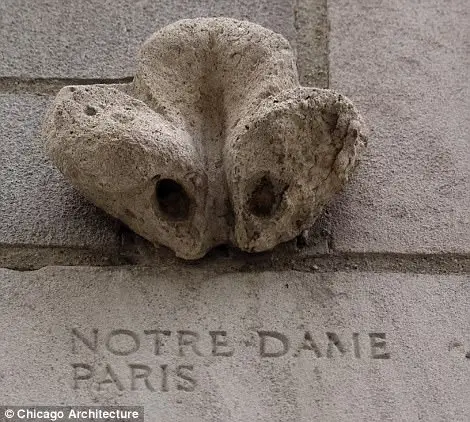
The haul includes a brick from the Great Wall of China, a medieval stone from Notre-Dame Cathedral in Paris, a chunk of the Great Pyramid of Giza, a stone from the Alamo, marble from the Parthenon, a stone from Abraham Lincoln’s Tomb, a brick from the Taj Mahal, and even a piece of twisted steel from the World Trade Center.
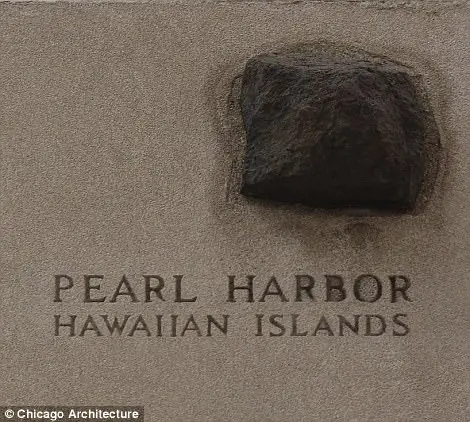
It may be the world’s strangest architectural scavenger hunt, and it sits in plain sight on one of the most famous buildings in the city. Walk the perimeter along Michigan Avenue and Pioneer Court and look for the chiseled labels next to each stone.
2. The “Death Lintel” on the Marquette Building
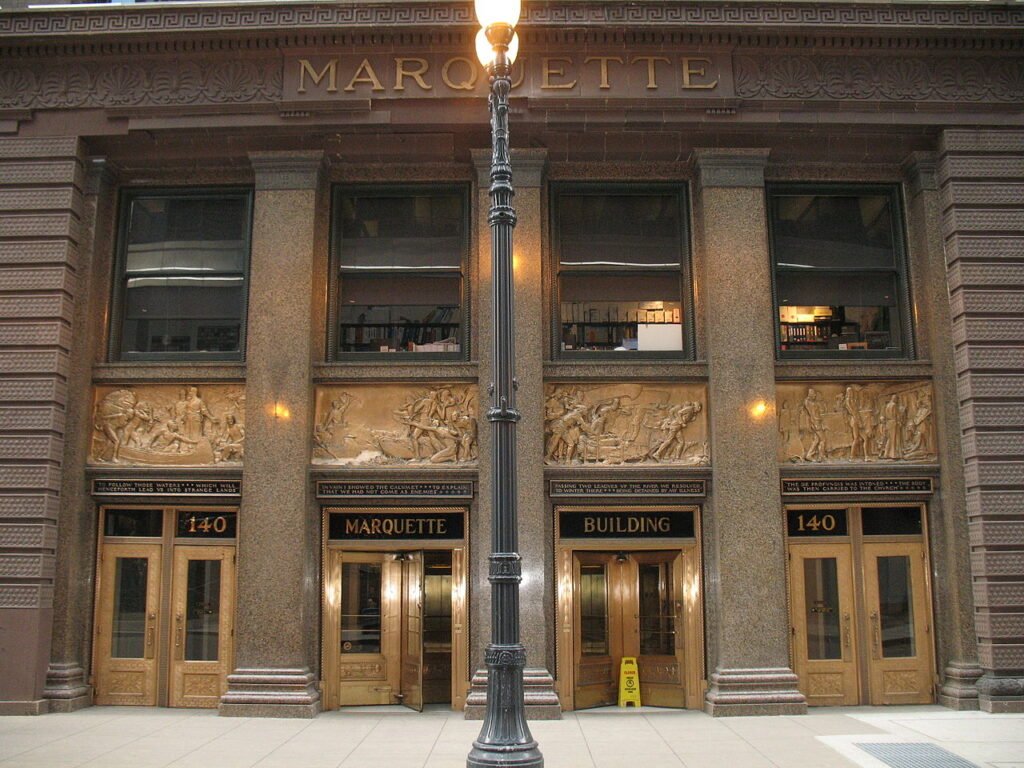
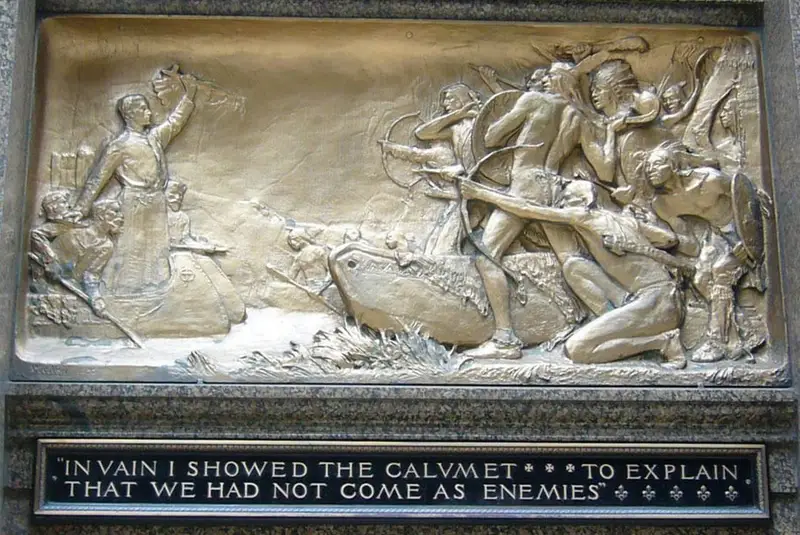
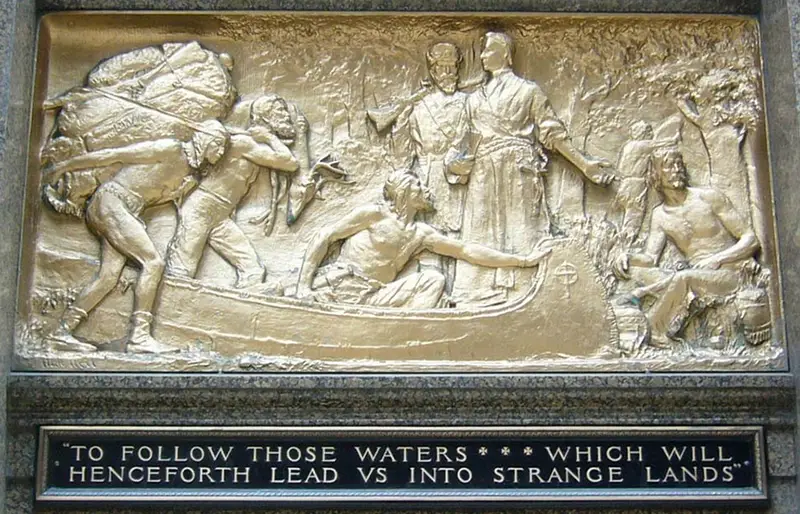
Directly above the front doors of one of the Loop’s most elegant 1895 office buildings is a bronze relief of a funeral procession.
The Marquette Building at 140 S. Dearborn Street is famous for its two-story rotunda lobby and its glittering Tiffany glass mosaics, so nearly everyone hurries straight inside. Stop on the sidewalk first and look up at the lintel above the revolving doors.
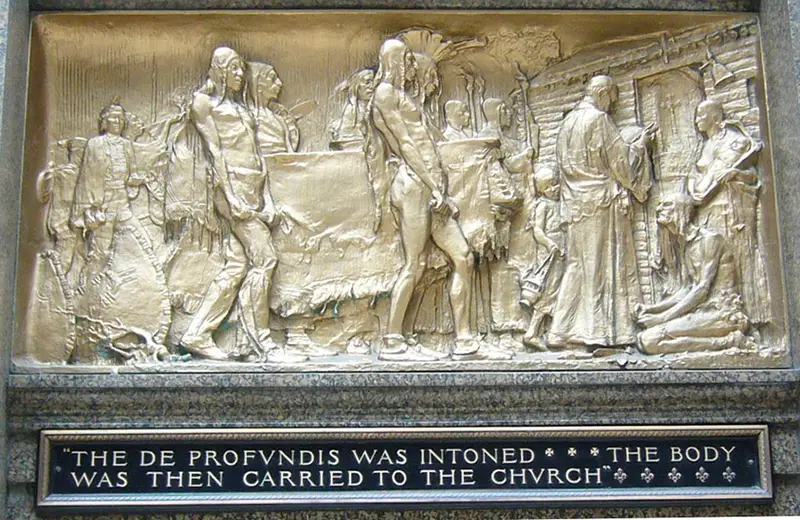
Sculpted by Hermon Atkins MacNeil (who later designed the U.S. Standing Liberty quarter), the four bronze panels above the main entrance trace the 1673–1675 Midwest expeditions of the building’s namesake, French Jesuit missionary Father Jacques Marquette.
Marquette died of dysentery at age 37 on the eastern shore of Lake Michigan in 1675. Two years later, Kiskakon Odawa Native Americans exhumed his remains, lovingly prepared his bones according to tribal custom, and paddled them in a convoy of 30 canoes back to his mission at St. Ignace—the exact funeral procession cast into the final bronze panel over the doorway.
It is a remarkably dramatic, somber monument for a commercial office building, and thousands of commuters pass beneath Marquette’s casket every day without noticing. If this kind of craftsmanship hooks you, downtown is full of historic entrances worth a second look.
3. The Secret Marina Underneath Marina City
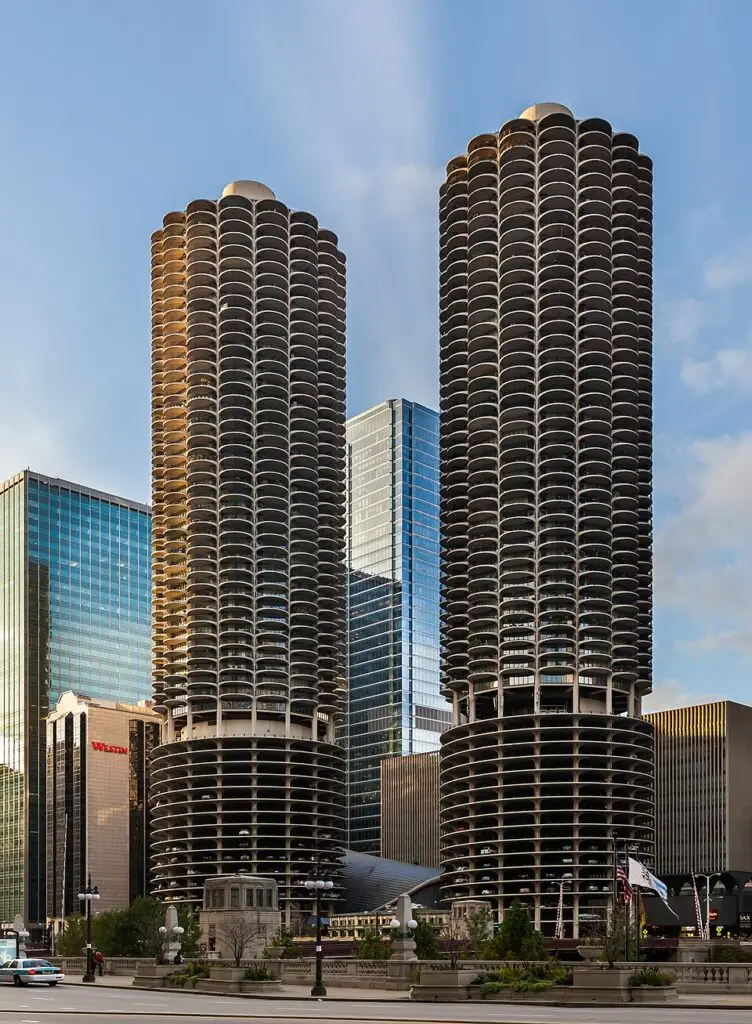
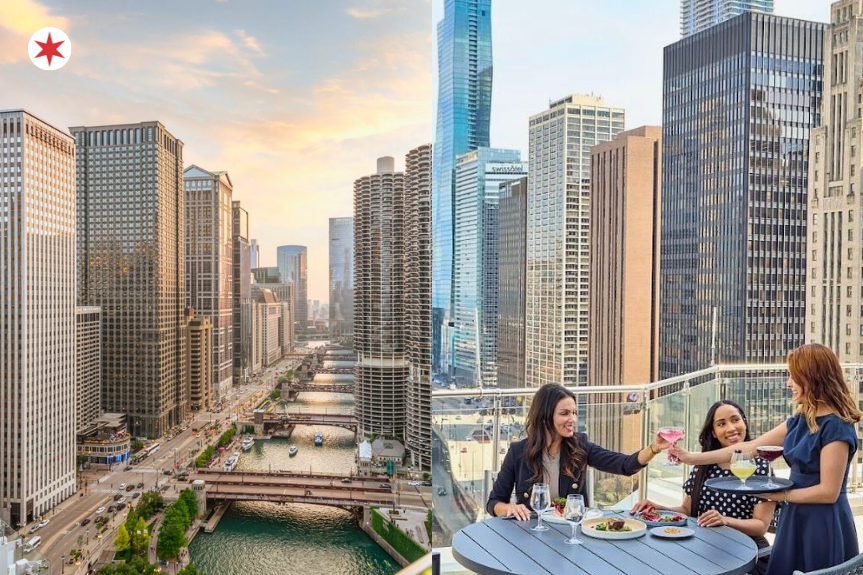
Everyone recognizes the twin 65-story towers at 300 N. State Street. The spiraling 19-story open-air parking garages have appeared in dozens of movies (most famously launching a car into the river in Steve McQueen’s The Hunter), and the petal-shaped balconies are an icon of mid-century design. What plenty of visitors never register is what’s happening at water level.
Architect Bertrand Goldberg’s 1960s vision was a self-contained “city within a city” designed to stem suburban flight—a place with its own bowling alley, theater, ice rink, grocery store, and subterranean boat dock where you could tie up your craft and ride an elevator straight up to your apartment.
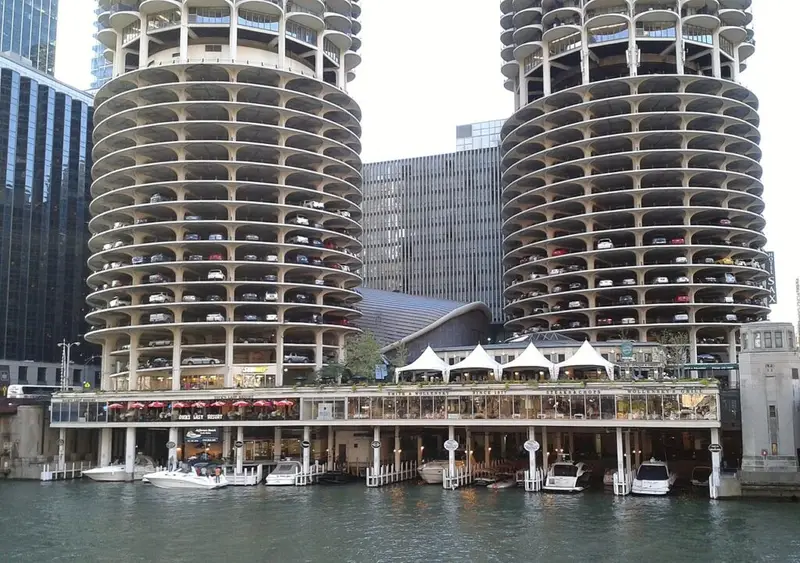
Stand on the State Street or Dearborn Street bridge, or walk along the Chicago Riverwalk across the water, and peer into the shadowy cavern beneath the plaza deck. Boats are still bobbing in a functional marina tucked right into the bedrock foundations, and you’ll get a prime view of it from any of the architecture boat tours gliding past.
4. The 1844 Cow Path at 100 W. Monroe
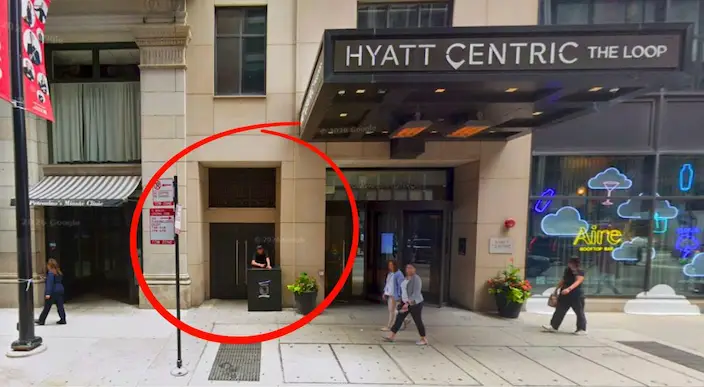
A farmer who has been dead for well over a century is still dictating how skyscrapers sit in the middle of the Loop.
Walk past the 22-story Art Deco high-rise at 100 West Monroe Street (now home to the Hyatt Centric The Loop Chicago) and look just west of the main entrance. Behind a pair of black service doors sits a narrow passageway cutting straight into the ground floor, marked by a 1937 bronze plaque from the Chicago Historical Society.
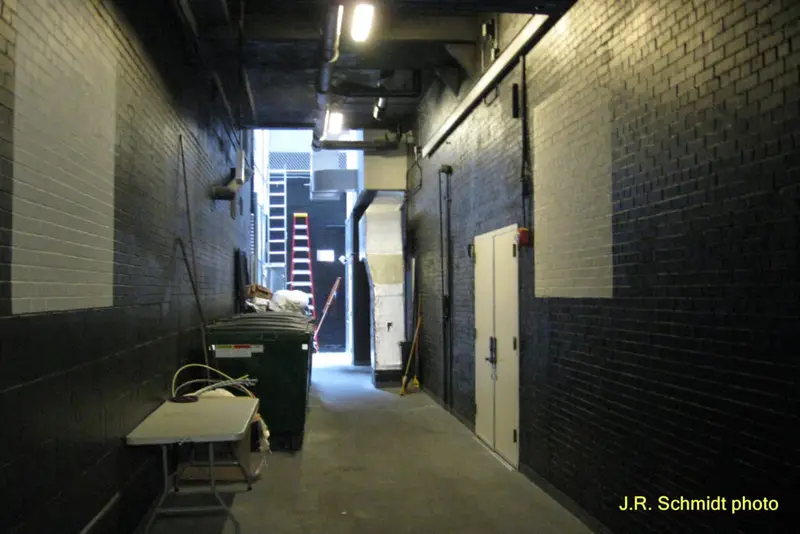
Legally, it is a 182-year-old cow path.
In 1844, an early settler named Willard Jones began selling off parcels of his downtown farm to real estate developers, but he wrote an ironclad clause into the deed: a strip of land 10 feet wide, 18 feet high, and 177 feet long had to remain open forever so his cows could walk from his barn to a pasture near where the Board of Trade stands today.
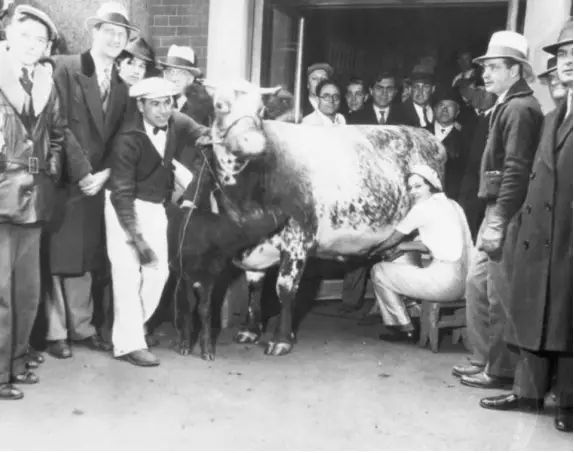
In the 1920s, the Illinois Supreme Court ruled that the easement was still legally binding. When the current tower went up in 1927, the developers were forced to build around the phantom livestock trail. The full story of the Loop cow path remains one of the funniest pieces of legal history in Chicago.
5. The Monadnock Building’s Six-Foot-Thick Brick Walls
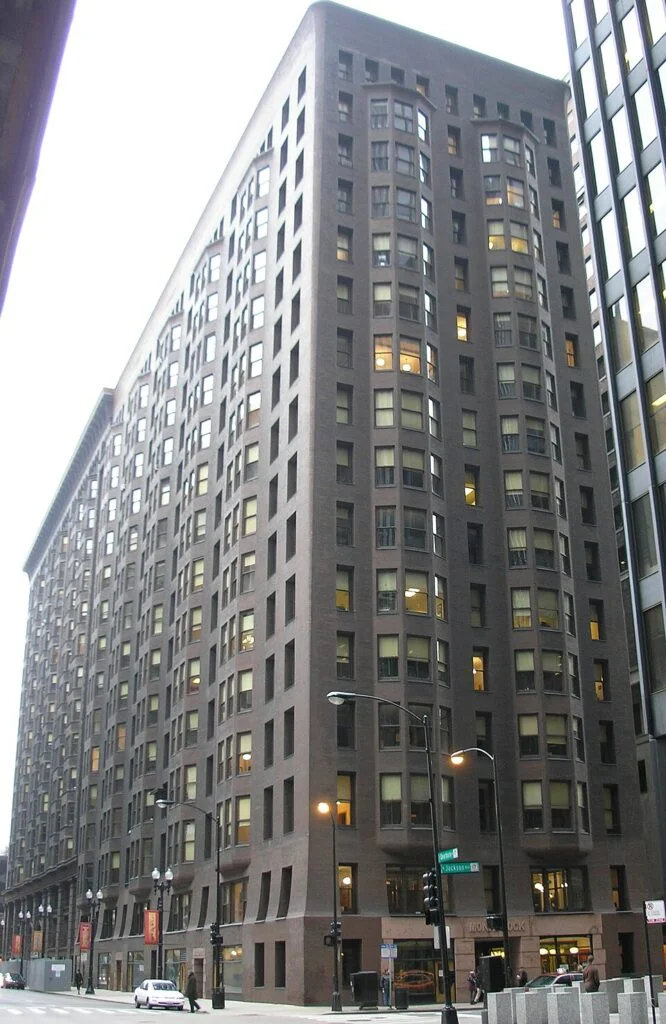
The northern half of the Monadnock Building at 53 W. Jackson Boulevard has no exterior steel skeleton holding it up—just purple-brown brick walls stacked 16 stories into the sky.
From across the street, it reads as an austere, brooding monolith. Architects from around the world make pilgrimages here, however, because the 1891 northern half (designed by Burnham & Root) represents the absolute physical limit of traditional masonry construction before steel framing took over completely (in fact, the building’s 1893 southern half uses a steel frame).
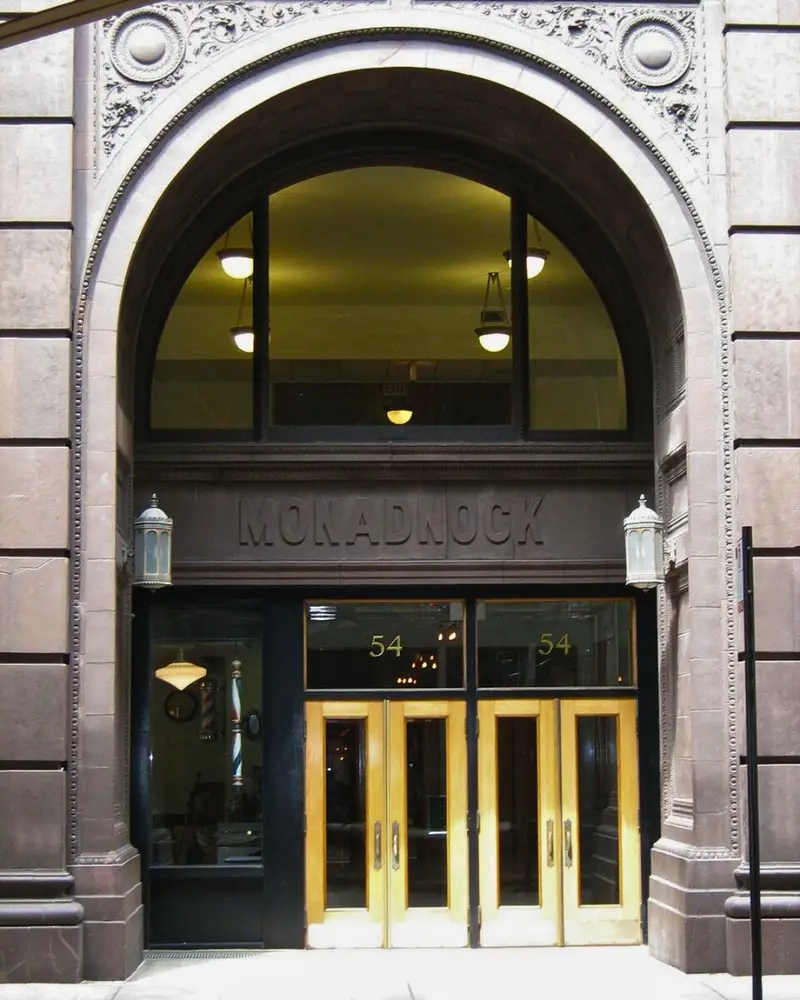
Lean in at sidewalk level and look at the depth of the ground-floor window sills. The brick walls at the base are six feet thick simply to keep the structure from collapsing under its own immense weight. The building was so heavy when constructed that it sank several inches into Chicago’s spongy clay soil, which is why you still step slightly down when entering from the sidewalk.
6. The Rookery Building’s Secret Oriel Staircase
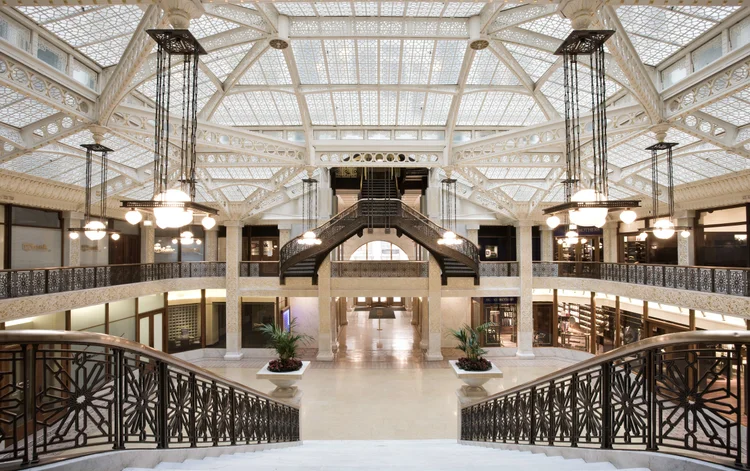
The staircase everyone photographs in the lobby of The Rookery (209 S. LaSalle St.) is not the only one worth seeing.
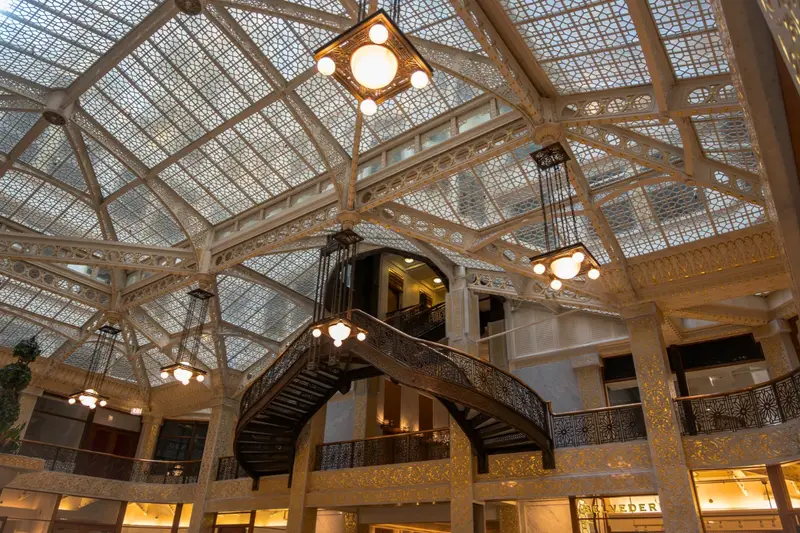
Step into the 1888 Burnham & Root landmark and its two-story iron-and-glass light court—redesigned with incised white marble and geometric electroliers by Frank Lloyd Wright in 1905—is breathtaking. Most visitors snap a photo of the double-curved grand staircase on the main floor and head back out to LaSalle Street.
Rising above the second floor in the western bay of the interior courtyard is a cantilevered, cast-iron double helix known as the Oriel Staircase.
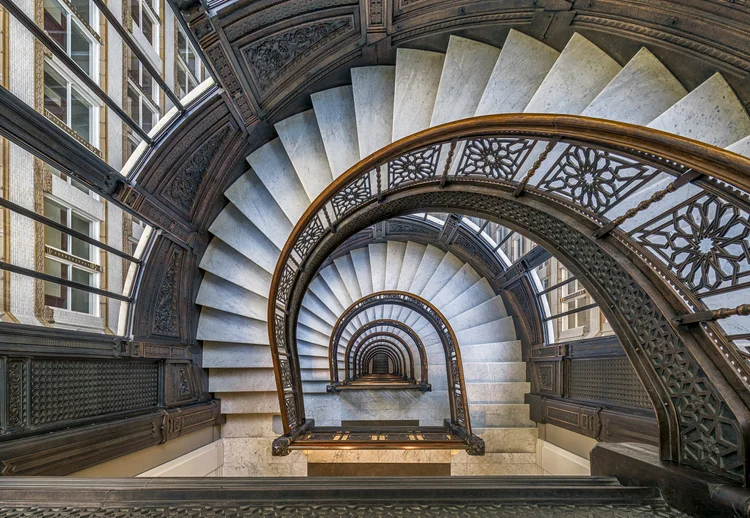
Designed by Root to connect the upper office floors from the 2nd story all the way to the 12th, the half-circle staircase projects out into the glazed central light well, offering a dizzying vertical perspective that is completely hidden from the ground-floor lobby.
Because those upper floors house private offices, seeing it requires booking an official guided tour through the Frank Lloyd Wright Trust or visiting during Open House Chicago.
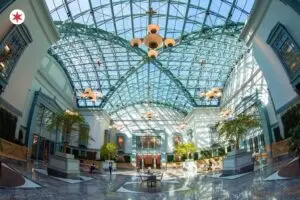
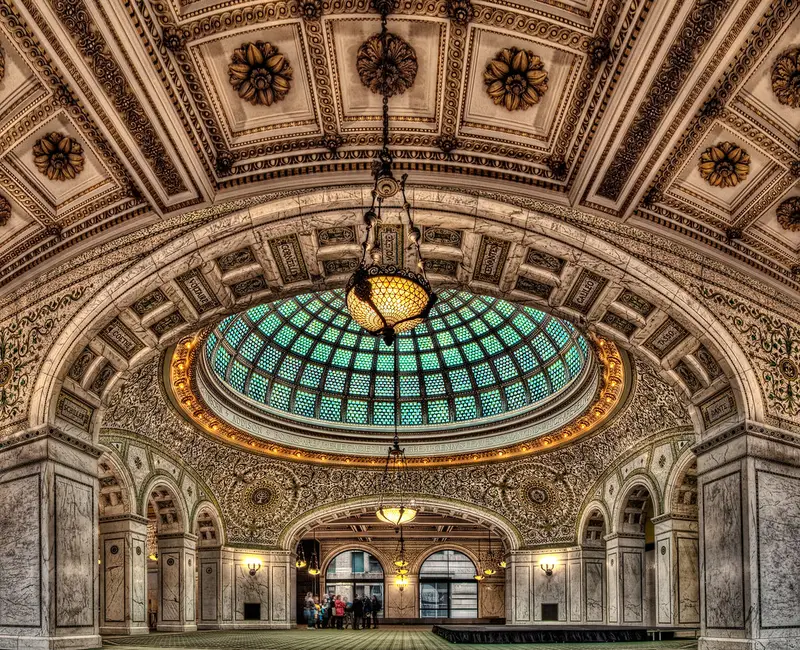
7. The World’s Largest Tiffany Dome at the Chicago Cultural Center
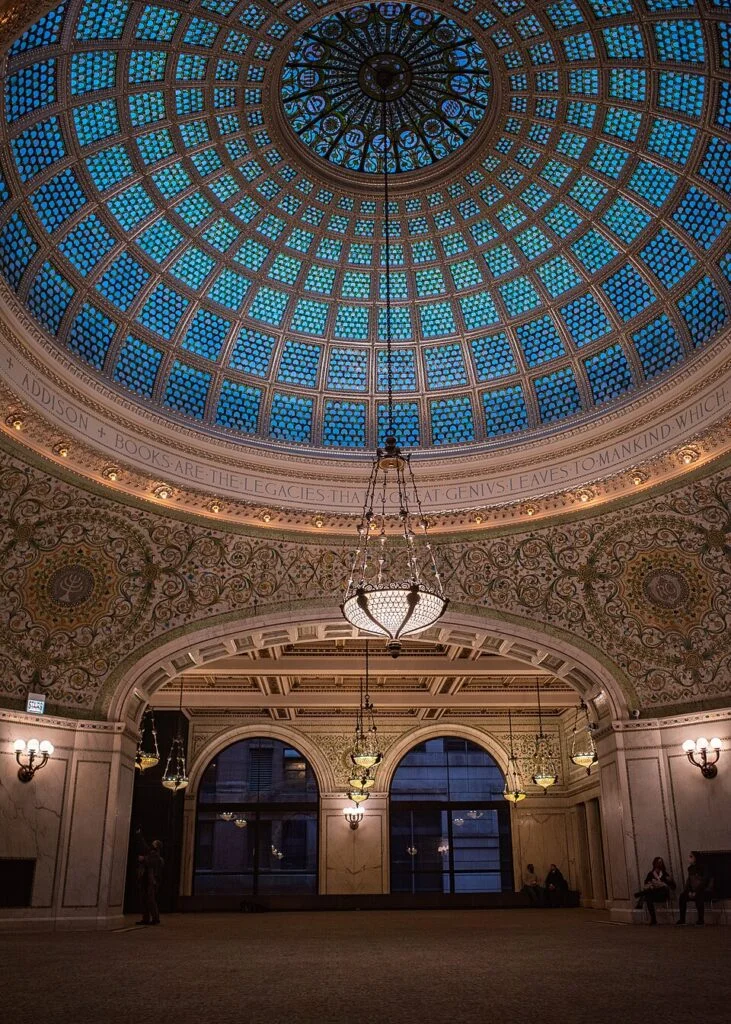
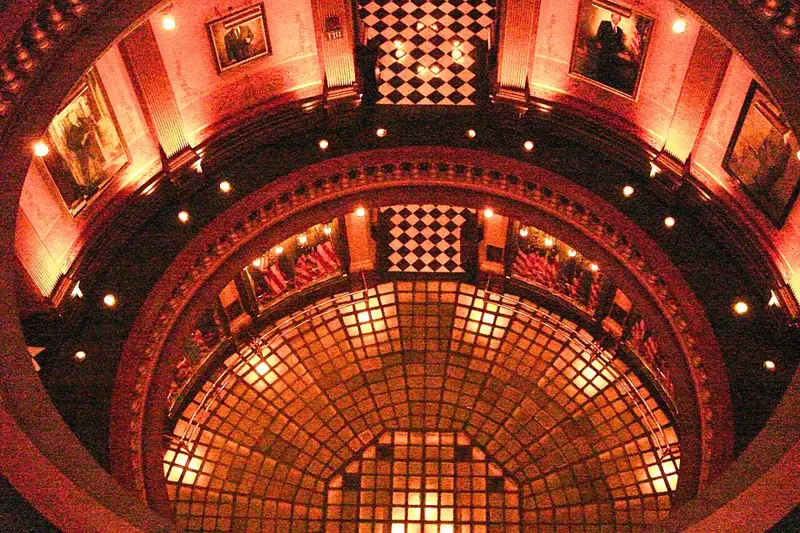
Thirty thousand pieces of luminescent Tiffany glass hang over a palatial hall that costs nothing to enter, yet thousands of tourists on Michigan Avenue march right past the front doors on their way to The Bean.
Step through the Washington Street entrance of the Chicago Cultural Center (78 E. Washington St.), climb the Carrara marble staircase inlaid with shimmering mosaics to the third floor, and walk into Preston Bradley Hall.
Joe L.
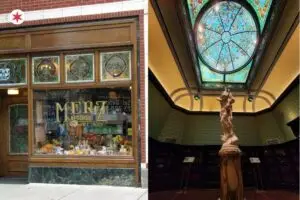
You are standing beneath the largest Tiffany stained-glass dome in the world. Completed in 1897 and restored to its original brilliance in 2008, it spans 38 feet in diameter and is valued at roughly $35 million. Even better: walk to the north end of the same building and you’ll find a second monumental stained-glass dome inside the Grand Army of the Republic Rotunda.
The building opened in 1897 as the city’s first central public library, which explains the Beaux-Arts opulence, and it remains one of the most breathtaking historic interiors in Chicago.
8. The Carbide & Carbon Building’s Prohibition Champagne Bottle
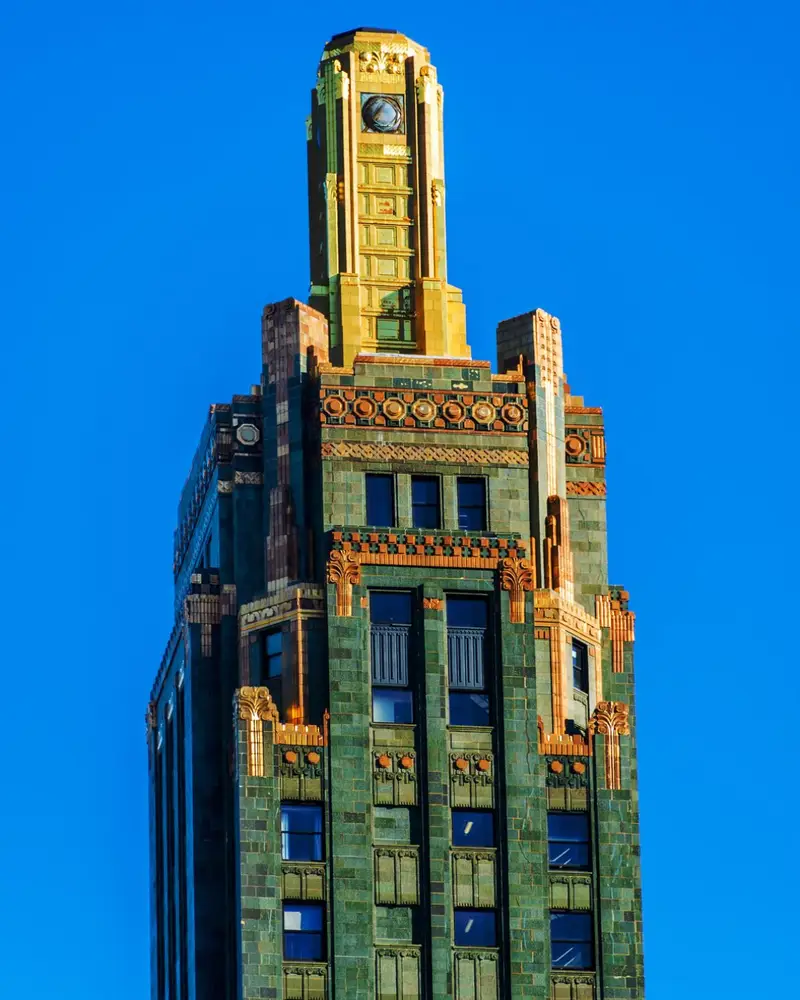
Folklore says this 37-story skyscraper at 230 N. Michigan Avenue is a giant, 24-karat-gold-topped champagne bottle built right in the middle of Prohibition.
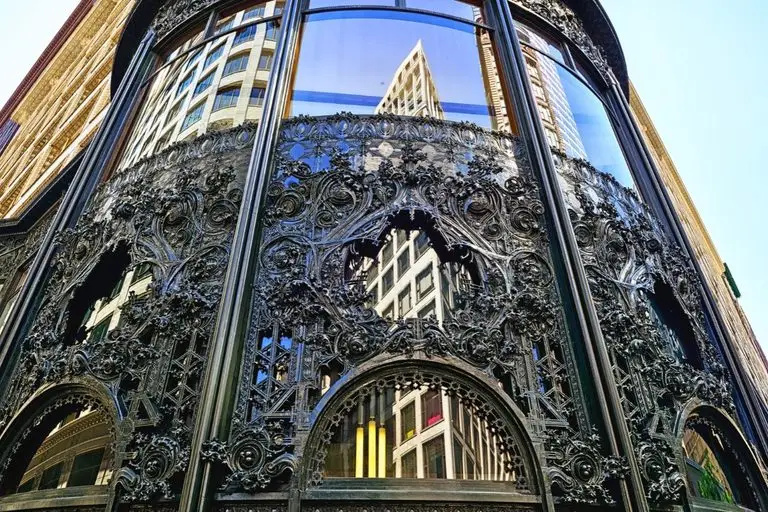
Completed in 1929 by the Burnham Brothers (sons of famed 1893 World’s Fair planner Daniel Burnham), the Carbide & Carbon Building—now home to the Pendry Chicago hotel—is a masterpiece of Art Deco design, wrapped in polished black granite, deep green terra cotta, and genuine gold leaf glittering on its slender campanile tower.
For generations, Chicagoans have claimed the architects modeled the tower after a dark green champagne bottle with gold foil wrapped around the neck—a cheeky, 503-foot middle finger to the Volstead Act and Prohibition. True or not, the hotel’s ground-floor bar leans right into the legend today, making it one of the most entertaining chapters among the city’s famous skyscrapers.
9. The Chicago Temple’s 400-Foot-High “Sky Chapel”
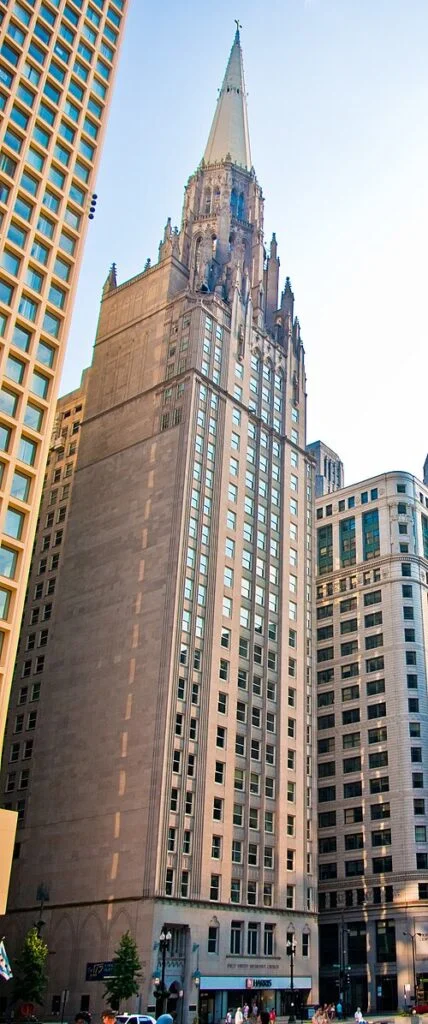
Thirty people can sit in a stained-glass sanctuary 400 feet above the Loop, and almost nobody walking past on Washington Street knows it exists.
Home to the First United Methodist Church of Chicago—the city’s oldest congregation, founded in a log cabin in 1831—the 1924 Chicago Temple at 77 W. Washington Street is the tallest church building in the world. While the first four floors hold worship spaces and floors 5 through 21 lease office space to attorneys and businesses, the neo-Gothic spire tops out at 568 feet.
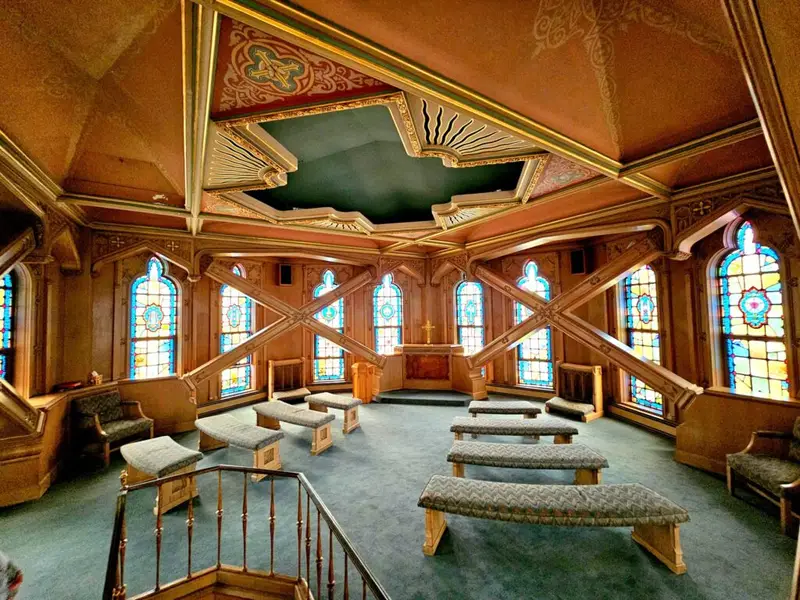
Tucked into the base of that spire, 400 feet in the air, is the Sky Chapel. Added in 1952 as a gift from the Walgreen drugstore family, the 30-seat sanctuary features 16 jewel-toned stained-glass windows and an altar carving of Jesus looking out over the Chicago skyline.
While drop-in tours are limited, visitors can still experience the church during Sunday services or special architectural events, cementing its place among the city’s most remarkable churches.
10. The Windowless Monoliths Hiding in Plain Sight
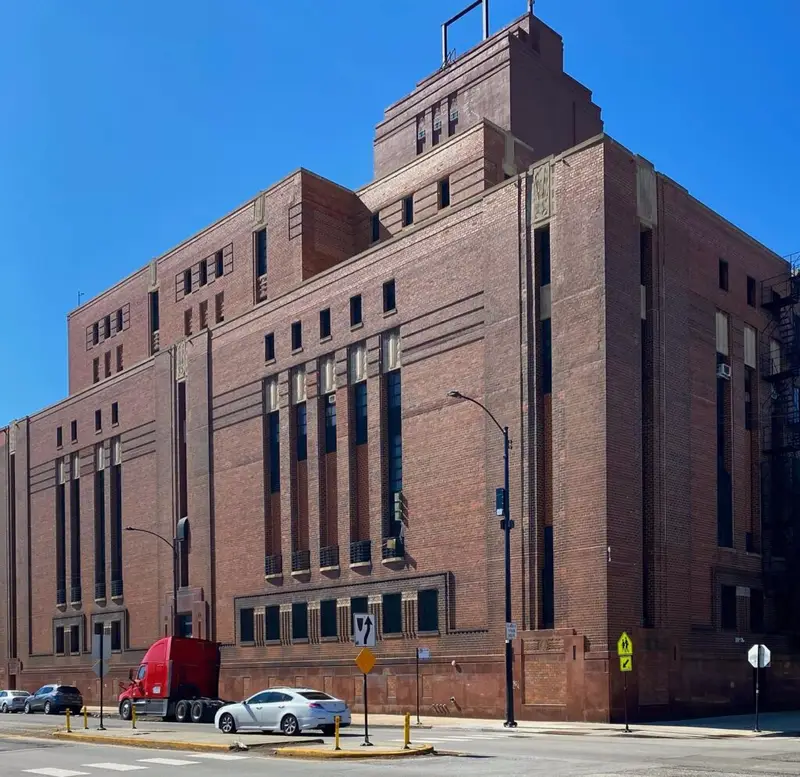
Several buildings in and around the Loop have no windows, no obvious lobby doors, and—in at least one case—walls engineered to survive atomic fallout.
Once you start looking for them, you’ll spot these “infrastructure buildings” everywhere. They aren’t abandoned, and they aren’t parking garages—they were custom-built to house and disguise the massive electrical, cooling, and telecommunications arteries that keep downtown alive.
Across from the Picasso sculpture at 117–121 N. Dearborn St. (wedged directly into the side of the Block 37 mall) sits a 1929 Commonwealth Edison Substation. Designed by Holabird & Root in handsome Indiana limestone so it wouldn’t look like an industrial eyesore, its windowless facade hides giant electrical transformers behind an Art Deco relief panel titled “The Spirit of Electricity.”
Just west of the Loop at 10 S. Canal St. looms an even more mysterious giant: the AT&T Switching Center. Completed in 1973 during the height of the Cold War, this beige, grooved-concrete fortress has zero windows and was engineered to withstand nuclear fallout, keeping transcontinental communication lines and massive battery banks running in the event of a catastrophe.
Next time you pass one of these silent giants, you’re looking at the hidden nervous system of the city—and plenty of other ordinary-looking buildings downtown conceal backstories just as wild.
11. The Secret London Street Hiding in Lakeview
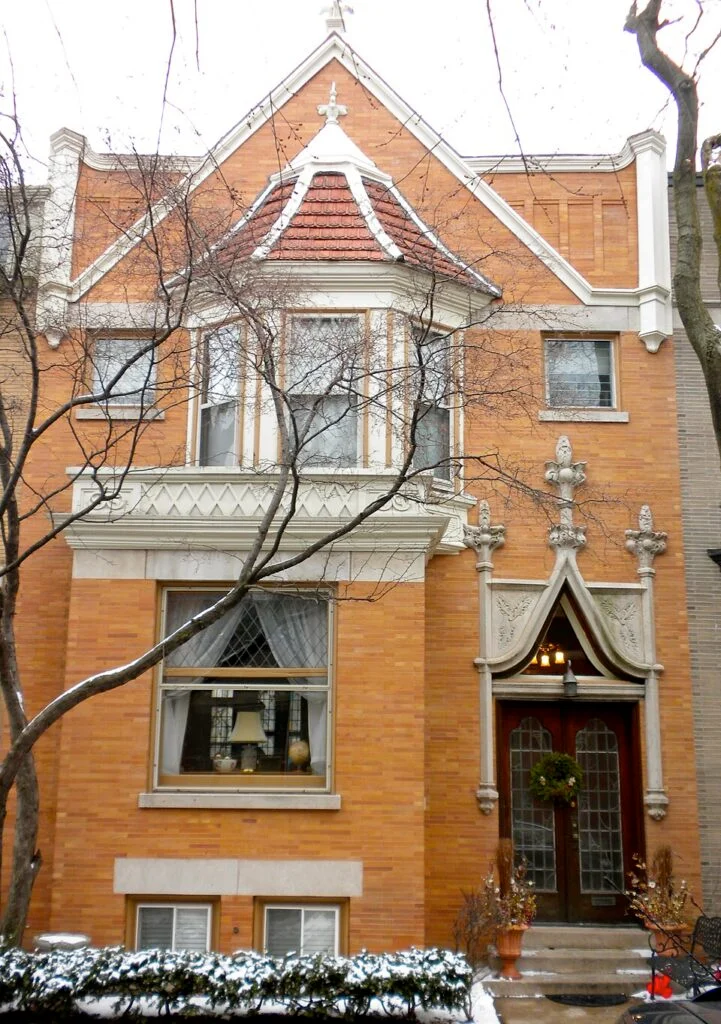
Just one block north of the roaring crowds at Wrigley Field, a narrow, one-block lane between Grace and Byron streets feels like you just stepped through a portal into Edwardian London.
Welcome to Alta Vista Terrace (3800 N. Alta Vista Terrace). Real estate developer Samuel Eberly Gross laid out this 255-foot-long street in 1904 as a romantic replica of the English rowhouse streets he admired during his travels in Europe.
At first glance, it’s simply a charming row of historic townhomes. Look closer, however, and a clever architectural puzzle emerges.
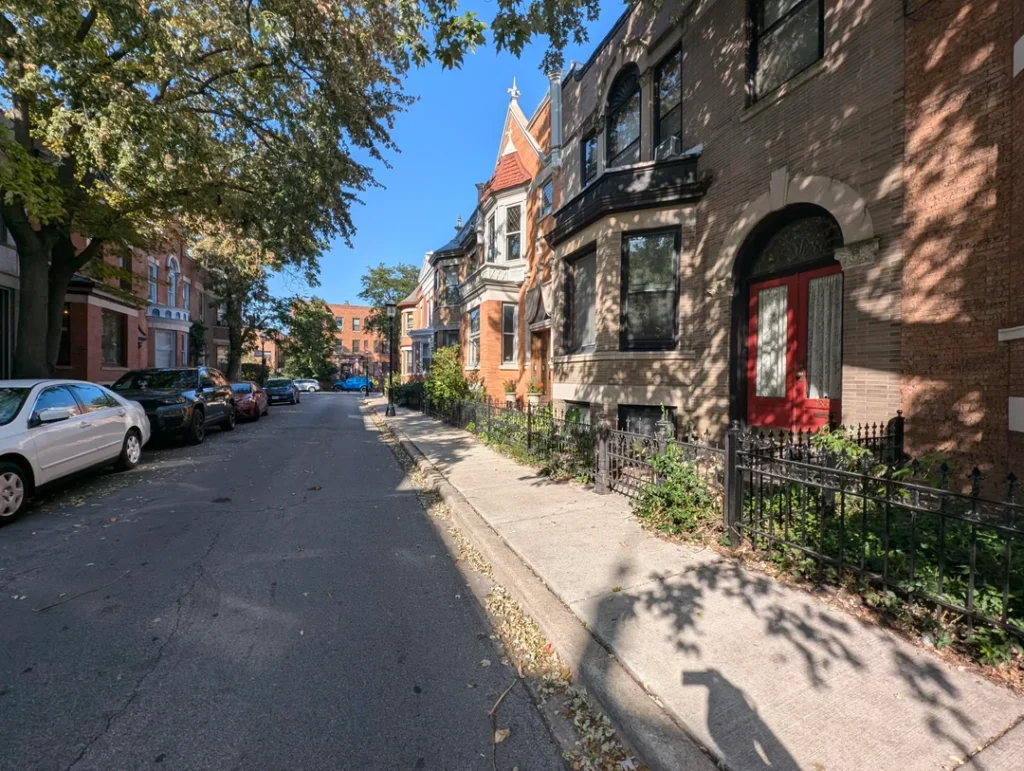
There are exactly 40 two- and three-story rowhouses on the block, and every single house has a near-identical twin standing at the opposite diagonal end of the street (the northernmost house on the west side matches the southernmost house on the east side, and so on toward the center).
Designated one of Chicago’s very first Landmark Historic Districts in 1971, the “Street of Forty Doors” remains one of the quietest, most photogenic blocks on the North Side.
12. The Underground Robotic Library Under a Glass Dome
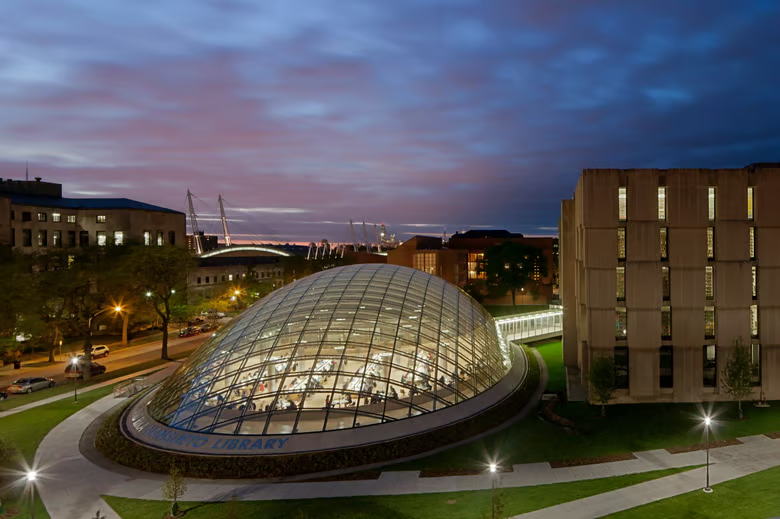
Request a book at the University of Chicago’s Joe and Rika Mansueto Library (1100 E. 57th St.), and a robotic crane fetches it from a pitch-black vault 50 feet underground in about five minutes.
Opened in 2011 and designed by legendary Chicago architect Helmut Jahn, the Hyde Park landmark looks from the quad like a futuristic glass-and-steel bubble floating on the grass.
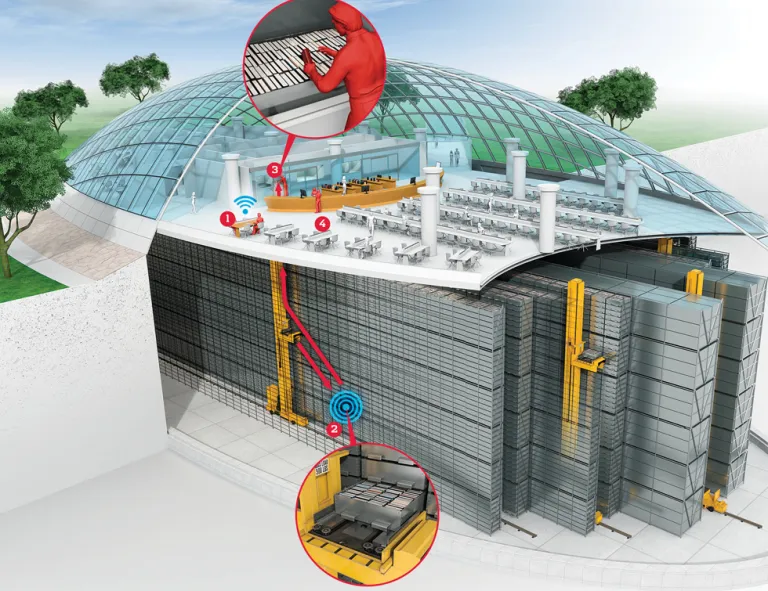
Students study in the sun-drenched, 180-seat grand reading room directly beneath the grid-shell dome. The real engineering marvel, though, is beneath their shoes.
Capacity for 3.5 million volumes sits in a climate-controlled subterranean cavern 50 feet deep. Instead of browsing open shelves, readers request titles online; automated cranes zip down the five-story underground aisles, pull the barcoded steel bin holding that exact book, and deliver it to the circulation desk in minutes—taking up just a fraction of the space of a traditional library.
13. The 1899 Purple Prism Vault Lights in the Michigan Avenue Sidewalk
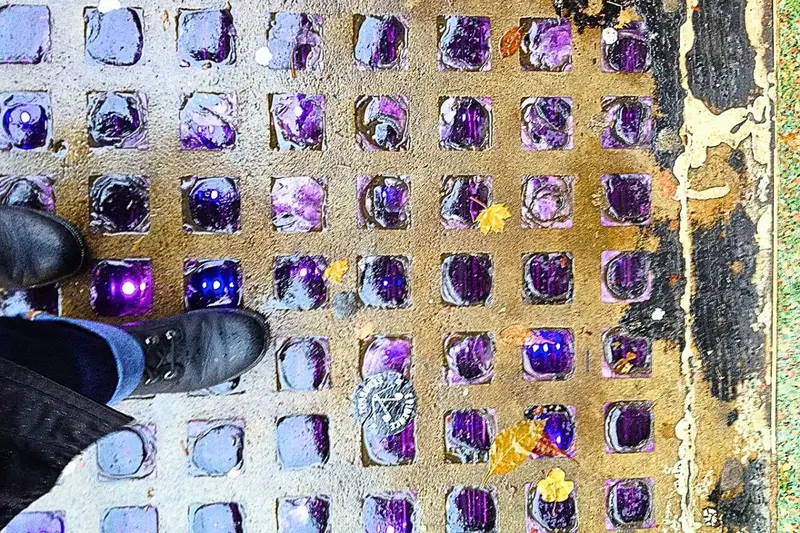
Next time you walk past the historic Fine Arts Building at 410 S. Michigan Avenue, stop looking at Grant Park and look straight down at your shoes.
Embedded directly into the concrete sidewalk in front of the entrance is a grid of small, amethyst-tinted glass squares set in a heavy cast-iron frame. Stamped into the iron border are the words: “LUXFER PRISMS – PAT. OCT. 3, 1899.”
Before cheap electric lighting was widespread, Chicago buildings had hollow “vaulted sidewalks” extending over basement storage rooms and coal chutes. These ridged glass prisms were engineered to catch daylight from the street above and refract it deep into the basement below—and exposure to ultraviolet sunlight over the past 125+ years has slowly turned the manganese dioxide in the glass a glowing shade of purple. (Bonus while you’re there: step inside the Fine Arts Building to ride one of the last manually operated, attendant-driven elevators left in Chicago!)
14. The “L” Train Track That Punches Straight Through a Building
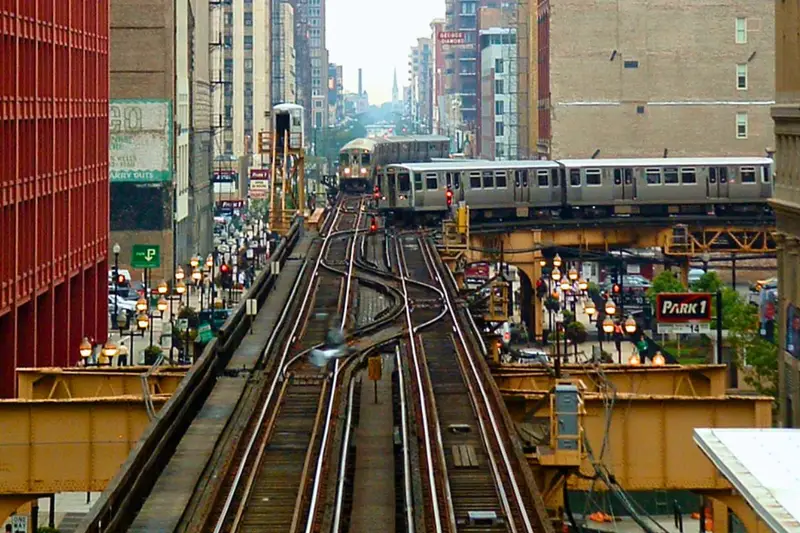
Head to the southwest corner of the Loop at 318–320 S. Wells Street (just north of Van Buren Street) and wait for a Brown, Orange, Pink, or Purple Line train to rumble by.
Instead of curving down the middle of the street, the elevated CTA tracks veer off the roadway and punch straight through the middle of a three-story brick commercial building.
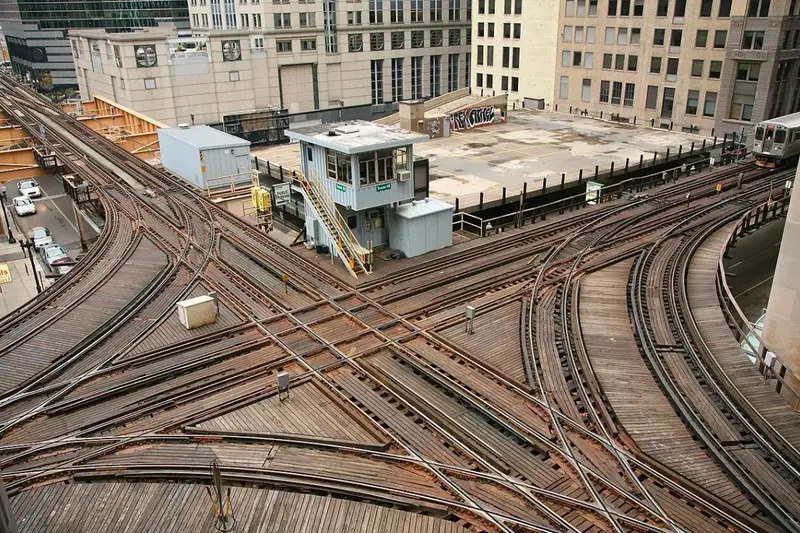
When railroad magnate Charles Tyson Yerkes connected the Union Loop elevated tracks in 1897, the tight turning radius between Van Buren and Wells was blocked by a brand-new four-story building. Rather than tearing the whole structure down, engineers simply bought an easement, gutted the second and third stories to create an open-air tunnel, and ran the tracks right through the building’s midsection. More than a century later, trains still roar through the upper floors while workers grab lunch at the sandwich shop on the ground floor directly underneath.
15. The Secret “Ice Code” on the Enwave Chiller Building
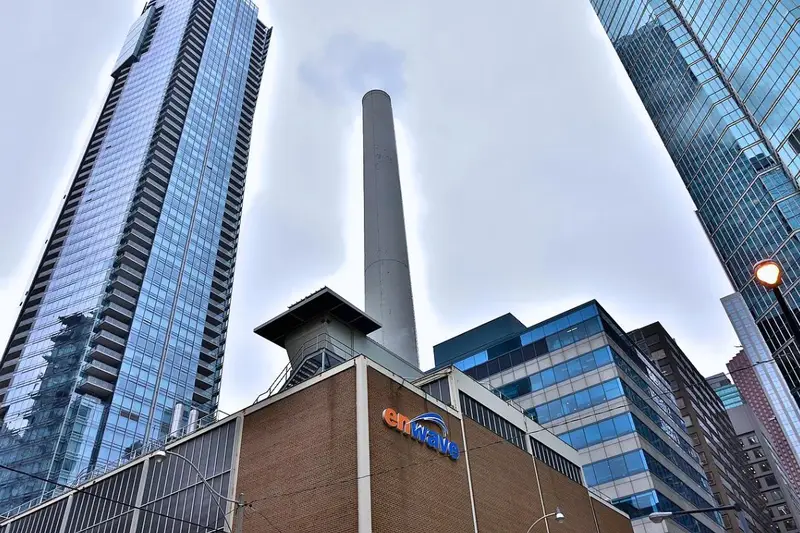
At the busy corner of State and Adams (24 E. Adams St.), a sleek, windowless limestone-and-concrete box sits amid the Loop’s historic retail stores. Most locals walk past its narrow vertical slits of blue and purple LED lights assuming it’s a modern art installation.
In reality, you are looking at one of the key hubs in the world’s largest urban district cooling system—and the lights are broadcasting a secret code.
Inside the windowless structure at 24 E. Adams, Enwave Chicago freezes millions of gallons of water into giant blocks of ice overnight (when electricity rates are lowest) and then pumps that chilled water through miles of underground pipes during the day to air-condition roughly 100 downtown skyscrapers, including City Hall and the Art Institute. Designed by Eckenhoff Saunders Architects, the vertical exterior light strips mimic cracks in a glacier and subtly shift their lighting patterns to show whether the plant inside is actively making ice or melting it to cool the city.
16. The “Screaming Toilet” Gargoyle at 632 N. Dearborn Street
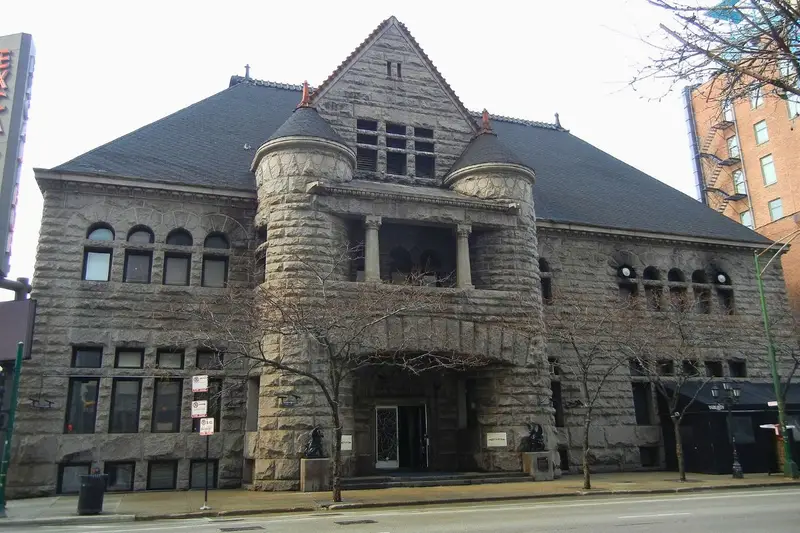
In River North at 632 N. Dearborn Street sits a dark, fortress-like Romanesque Revival castle completed in 1892 by famed architect Henry Ives Cobb as the original fireproof home of the Chicago Historical Society.
Because the building has housed everything from government offices to nightclubs and restaurants over the decades, crowds walk past its heavy granite arches every night without inspecting the stonework around the windows and entryway.
Cobb was famous for letting his stonecutters carve playful, weird grotesques into his buildings. Look closely at the carved brownstone faces flanking the lower facade and you’ll spot snarling beasts, mischievous imps, and—most famously—a wide-mouthed, oval-jawed creature that locals have affectionately dubbed the “Caffeinated Toilet Gargoyle” for its uncanny resemblance to a screaming porcelain bowl.
Now Go Explore Chicago’s Hidden Secrets
Chicago’s architecture isn’t only about 1,400-foot supertalls. It’s about the weird, human-sized stories waiting on every block if you slow down long enough to look.
Now that you know where to find them, you can walk the Loop and nearby neighborhoods like an architectural detective, catching details that tens of thousands of commuters walk past every single day.
If this street-level scavenger hunt has you wanting the full story behind the skyline, the best next step is to see it all from the water.
🎟️ Pro-Tip: The top-rated river cruises sell out fast, especially on warm weekends. You can check live availability and book the Chicago Architecture River Cruise right here.
And if you’re planning a trip to see these landmarks in person, stay somewhere as historic and memorable as the buildings on this list. Use the interactive map below to find the best deals on hotels and vacation rentals right in the heart of downtown Chicago.
Which of these hidden Chicago architectural details is your favorite—or did we miss a secret spot you walk past every day? Let us know in the comments below!
JM
AK