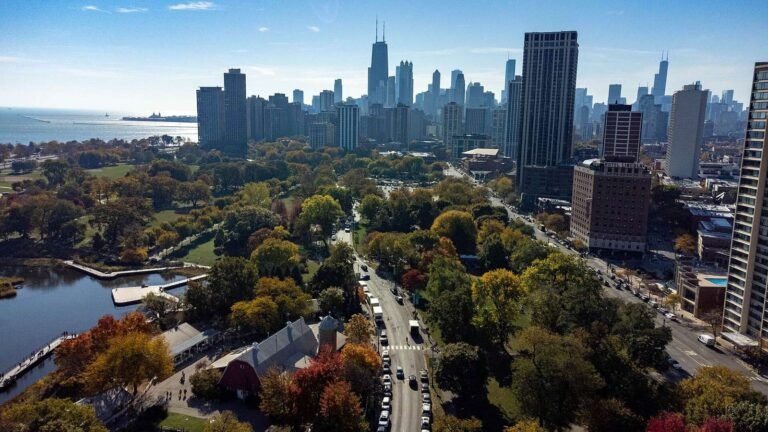
Chicago has a castle on Michigan Avenue, a gate guarded by stone monsters, and a reading room with ceiling arches nearly 50 feet high.
None of it is a film set. These are real buildings, designed a century or more ago by architects who copied Oxford, Cambridge and Venice. The University of Chicago’s own news site says its main reading room “tends to be likened to the Great Hall of Hogwarts.”
Here are 10 places, nine in Chicago and one just over the line in Evanston, where you can walk under Gothic arches, climb a bell tower or sit beneath a vaulted ceiling. Most are free.
One of them has 10 bells that an angry letter-writer once wanted dumped in Lake Michigan. Another was built to disguise a pipe. (We’ll get to both.)
If you’d rather have stained glass than gargoyles, our guide to 23 Chicago churches that could pass for European cathedrals has you covered. This list is about gates, towers and reading rooms, and it starts with a staircase of stone monsters.
1. Cobb Gate, University of Chicago: Stone Monsters Guarding the Quad
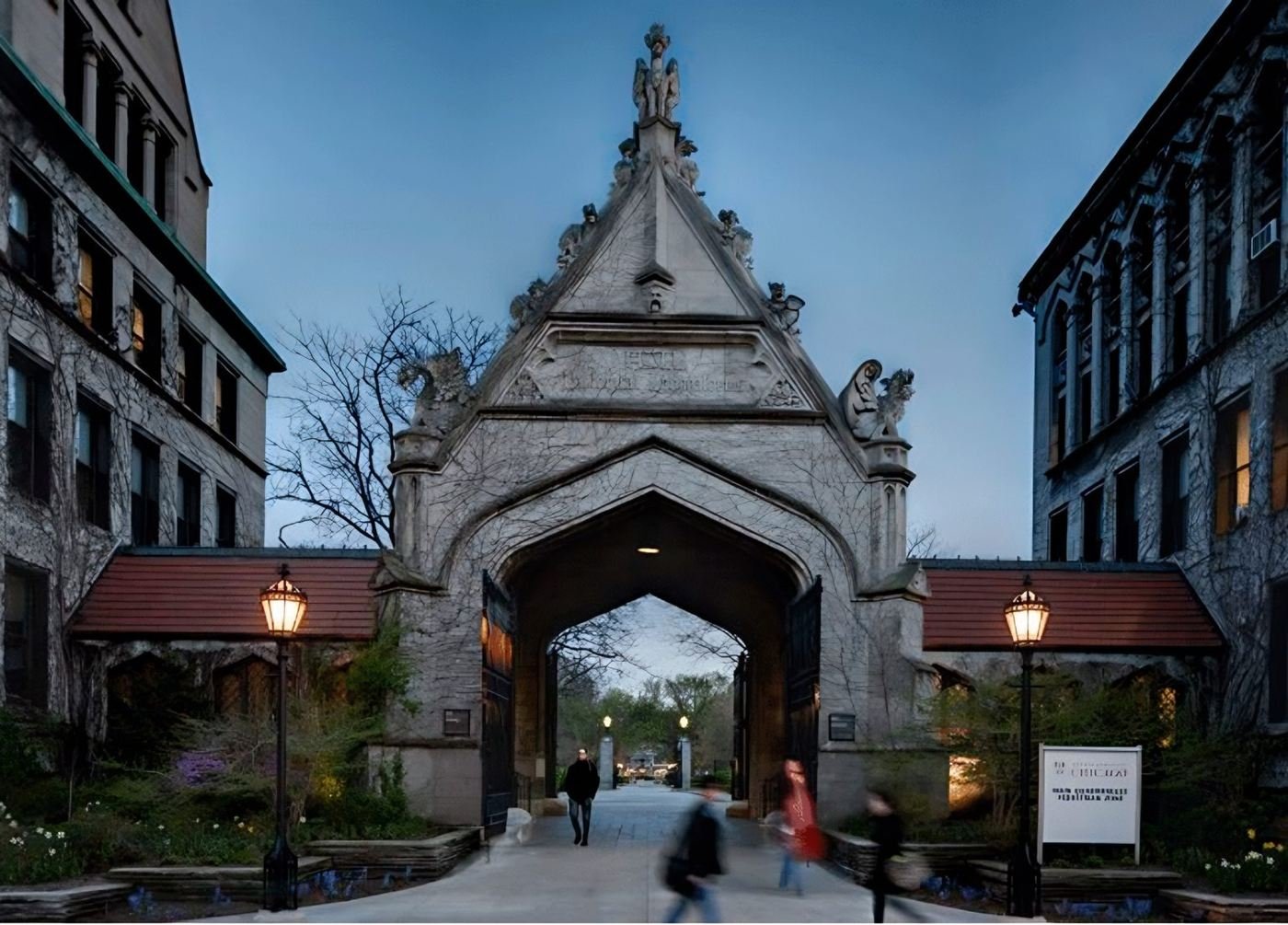
Walk under Cobb Gate at the University of Chicago and you pass beneath a staircase of stone monsters.
Architect Henry Ives Cobb designed the Gothic arch around 1900 as a gift to the university. It was his last campus design. The carvings are technically grotesques, not gargoyles, because none of them carries rainwater off a roof.
Campus lore gives each one a job. The figures climbing the peak are said to be first-, second- and third-year students, with a proud fourth-year on the throne at the top. The ones facing outward at the corners supposedly stand for admissions officers, deciding who gets in. The university admits the story isn’t in Cobb’s plans. It has stuck anyway.
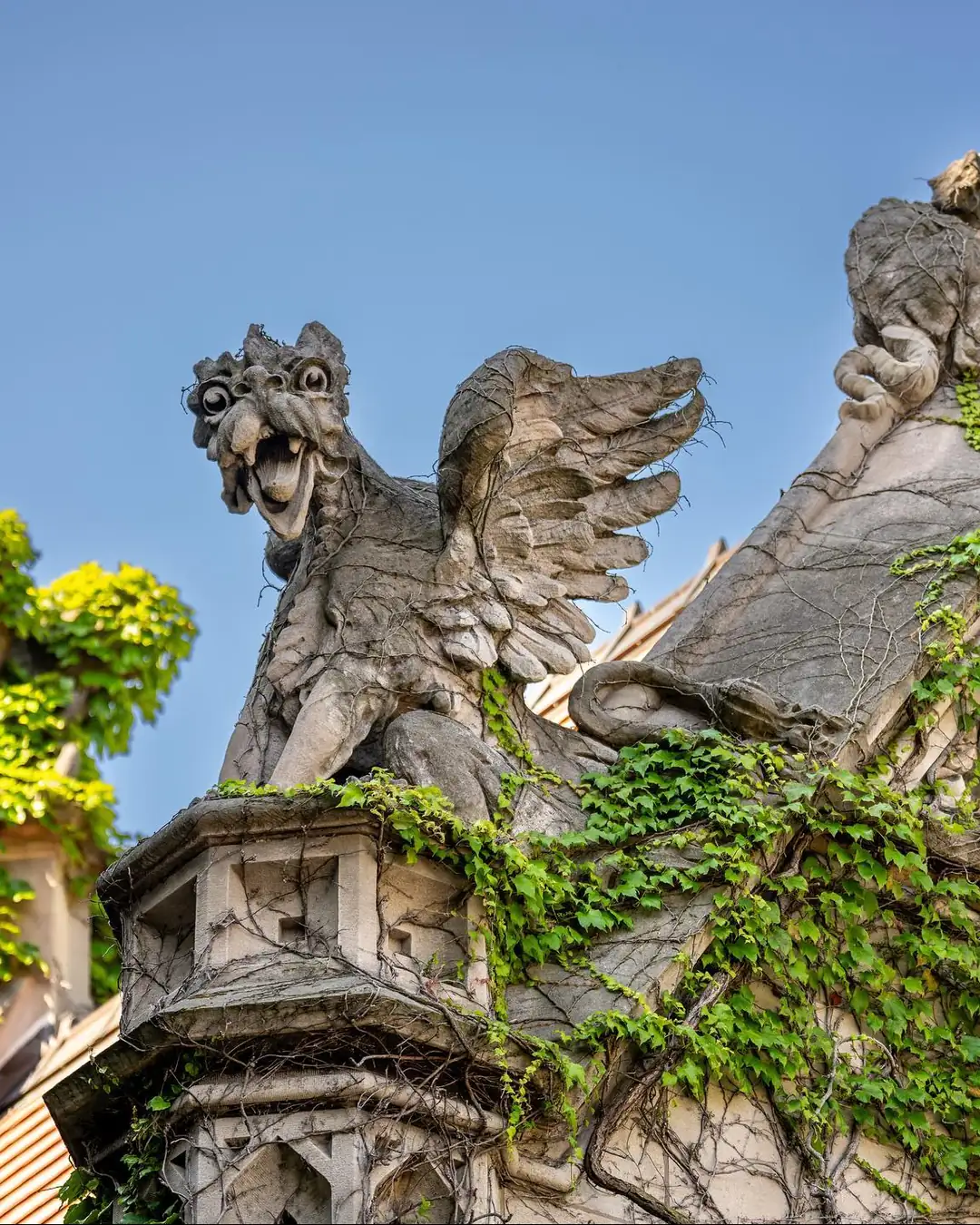
The figure at the top is no lightweight. When crews repaired the arch in 2000, a crane lifted the 3,000-pound-plus limestone creature down to the sidewalk, along with the junior figures climbing the southeastern corner, and then put them back.
- Where: 1101 E. 57th St., Hyde Park
- Hours: Outdoors, so visit in daylight
- Price: Free
Insider tip: Once you’re through the arch, look up at the roofline of Ryerson Physical Laboratory on the Main Quad. Winged, grimacing grotesques sit just below its crenellated roof, and its tower glows red at night. Then find the western basement entrance of Rosenwald Hall for an eye-level carving of a satchel, two hand picks and two shells with the motto “Dig and discover.”
Keep walking toward the center of the quad. The next stop is a room that people say looks like the Great Hall.
2. Harper Memorial Library: The Reading Room Everyone Compares to Hogwarts
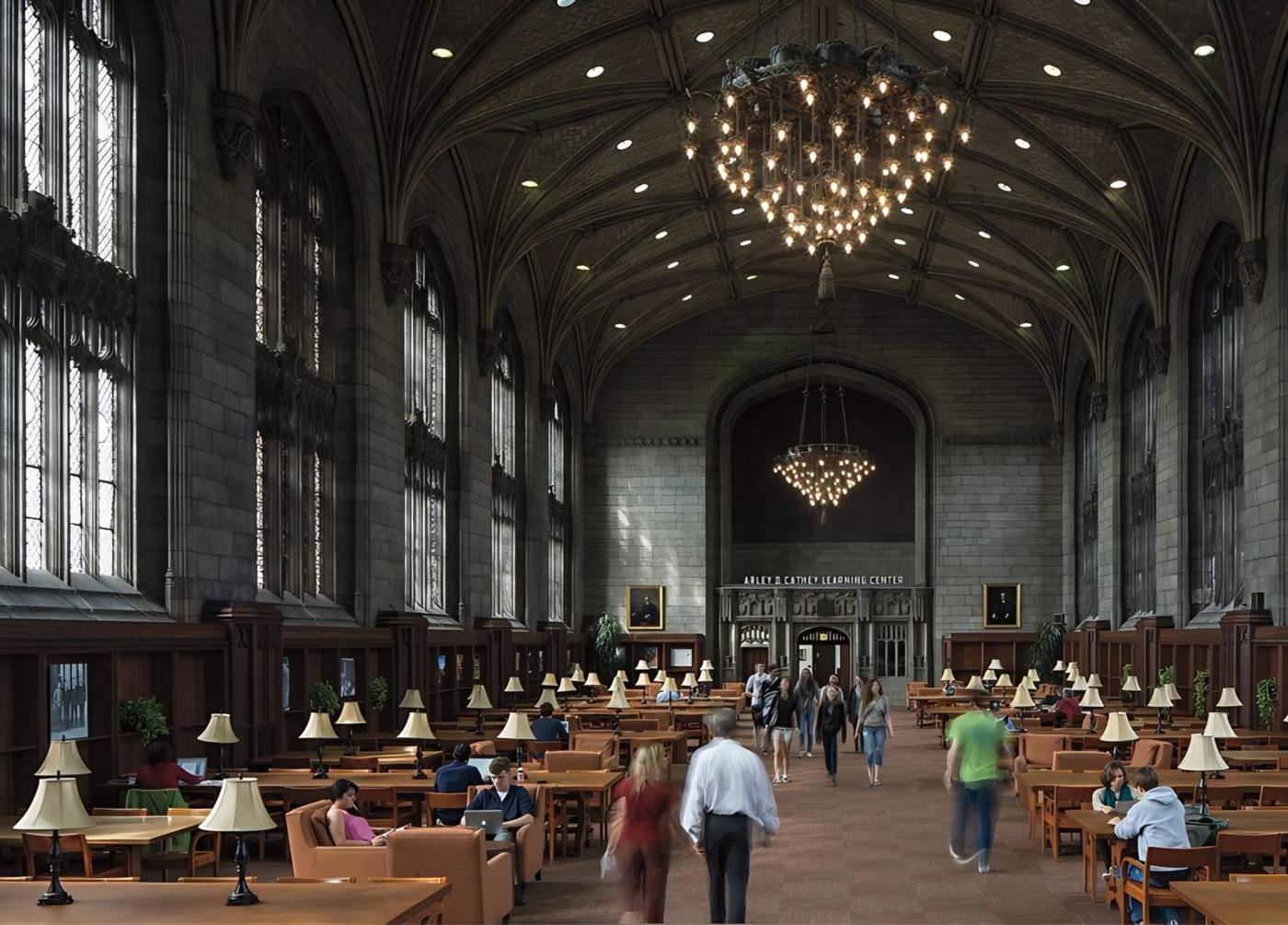
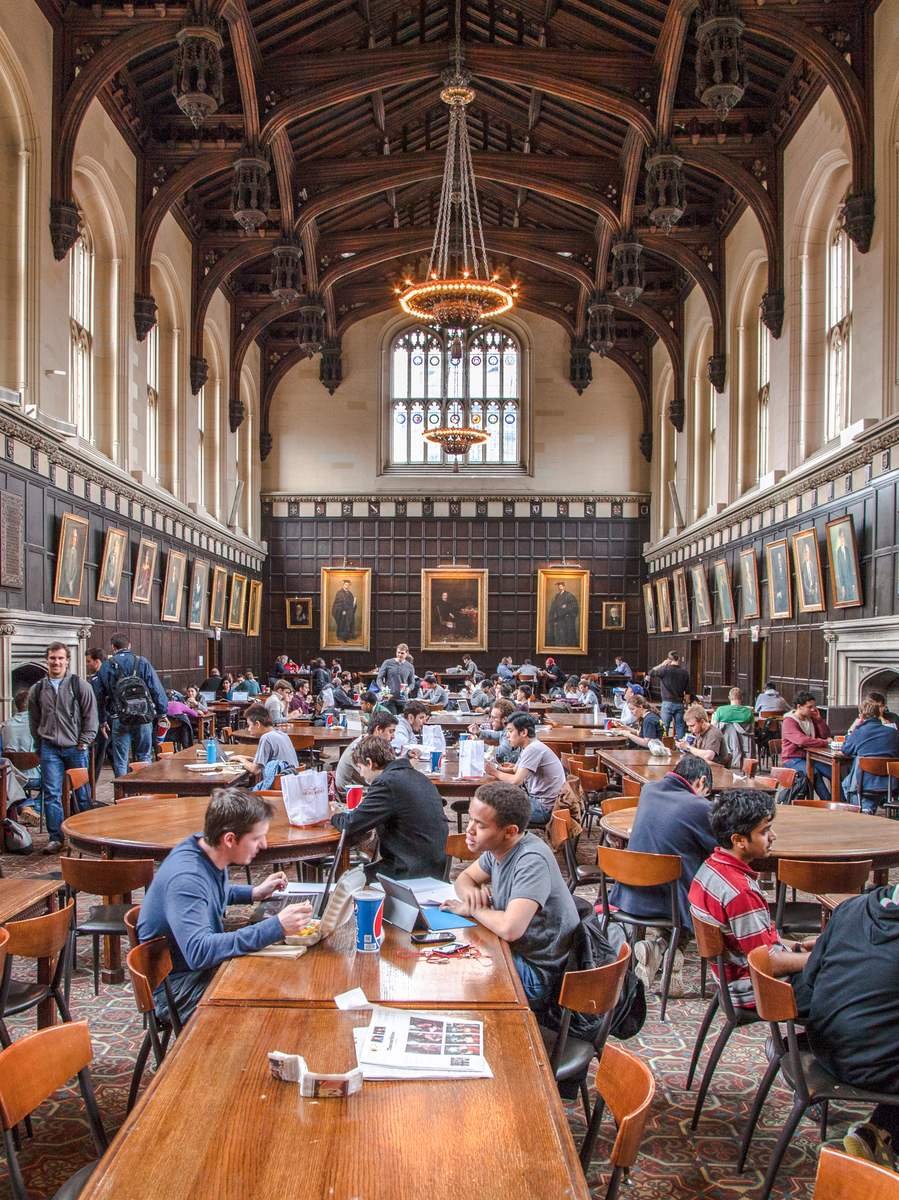
This is the room people mean when they say the University of Chicago looks like Hogwarts.
Harper Memorial Library opened in June 1912. It was cutting-edge for its day, with telephones and a system of pneumatic tubes that sent book orders around the building. The main reading room has ceiling arches nearly 50 feet high, stone walls, carved screens, a grand window and heavy chandeliers. A longtime dean of the College called it “the single most impressive room on campus.”
Building it wasn’t smooth. Part of the library’s west tower collapsed during original construction.
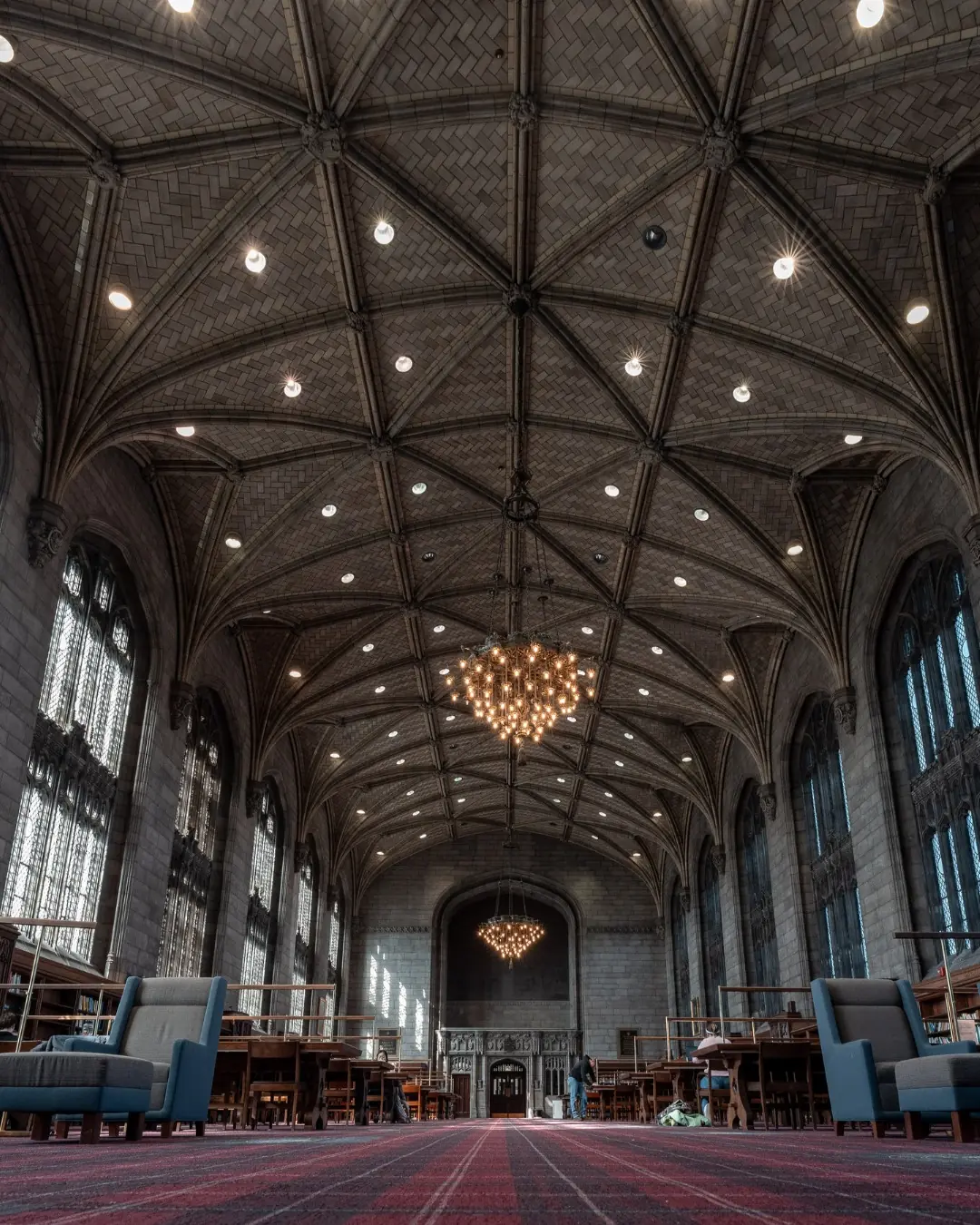
It isn’t a library any more. The room is now the Arley D. Cathey Learning Center, a study space, and its two big reading rooms originally held nearly 60,000 books.
- Where: Third floor of Harper Memorial Library, 1116 E. 59th St., Hyde Park
- Hours: Open to the public while classes are in session: Monday–Thursday 8 a.m.–6 p.m., Friday 8 a.m.–5 p.m., Saturday 10 a.m.–5 p.m., Sunday 10 a.m.–6 p.m. Hours shrink during school breaks, and it is closed on University holidays
- Price: Free
Insider tip: Students can study there until 1 a.m. on some nights, but the public hours end earlier, so go before 6 p.m. It’s a working study room, so keep your voice down, keep your camera quiet, and give yourself a few minutes just to sit and look up.
Step outside and look up at the tower next door. There’s a dining hall below it that was copied from Oxford.

3. Hutchinson Commons: A Dining Hall Copied From Oxford
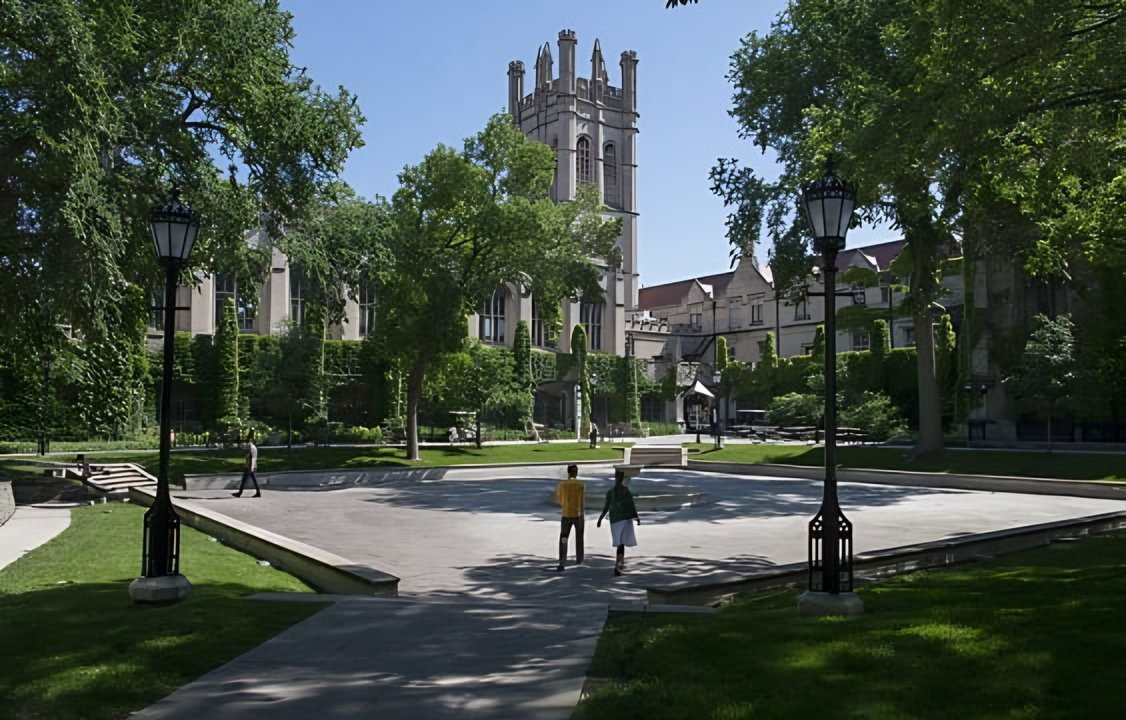
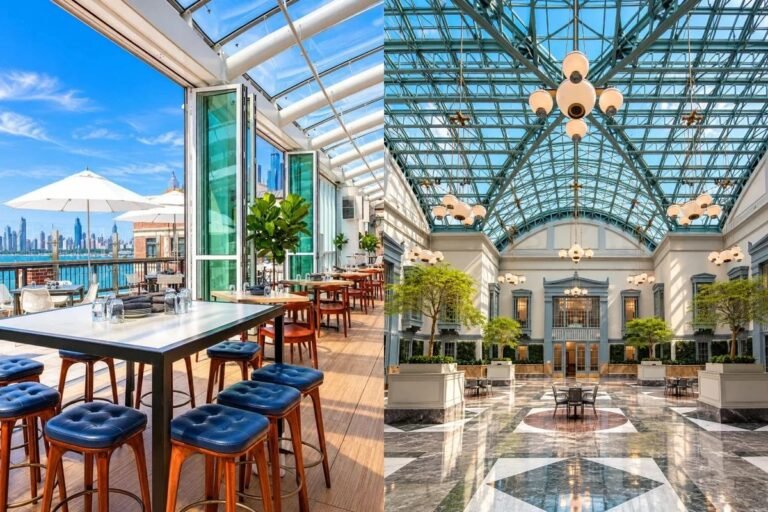
Hutchinson Commons was modeled almost exactly on the dining hall at Christ Church, Oxford. That’s the hall that inspired Hogwarts’ Great Hall in the Harry Potter films.
The Tower Group, finished in 1903, copied three Oxford buildings at once: Christ Church’s hall for the dining room, Magdalen College’s tower for the bell tower, and St. John’s College for the clubhouse.
Today the Commons is a student dining hall by day and a banquet space at night. It measures 113 by 37 feet and can seat 330 for a banquet.
Did you know? One architecture firm, Shepley, Rutan & Coolidge, designed Harper Library, Ida Noyes Hall and the Tower Group.
- Where: Reynolds Club, 5706 S. University Ave., Hyde Park
- Hours: A student dining hall by day, reserved for events in the evening and on some weekends. The easiest look is from Hutchinson Courtyard
- Price: Free to see from the courtyard; check with the University’s Student Centers about going inside
Insider tip: Climb to the second floor of the Reynolds Club for Hallowed Grounds, a student-run coffee shop with a carved dark-wood ceiling and walls and a marble-topped bar. It sits in the old Commons Cafe, the smaller dining hall in the original building.
Now tilt your head back. Above the dining hall is a tower with 10 bells that nobody can see.
4. Mitchell Tower: Ten Bells and One Very Angry Letter
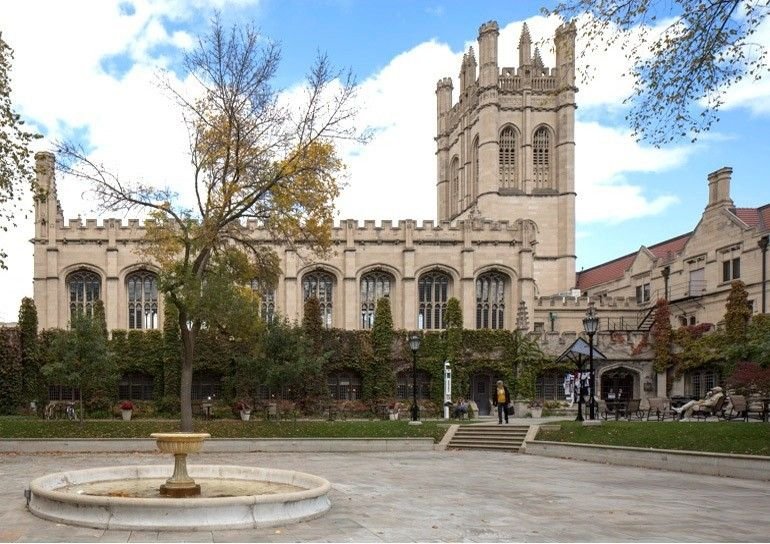
Mitchell Tower is a copy, too. It’s modeled on the 1509 tower at Magdalen College, Oxford, and like its original it holds 10 bells.
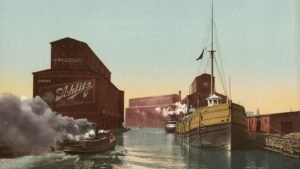
The first set, the Alice Freeman Palmer bells, went in in 1908. Athletic director Amos Alonzo Stagg chipped in because he missed the ten o’clock “good night” chime at Yale and wanted one for his athletes. (It’s the same Stagg whose football stands later hid the world’s first nuclear reactor. Here’s that story.) The bells weigh from 564 to 2,443 pounds.
Not everyone loved them. In 1910, a faculty member wrote that the ringing was “the maddening repetitious jangling of a boiler factory in Hades.” Another letter-writer suggested organizing an expedition to drag the bells down from the belfry “the next dark night” and dump them in Lake Michigan.
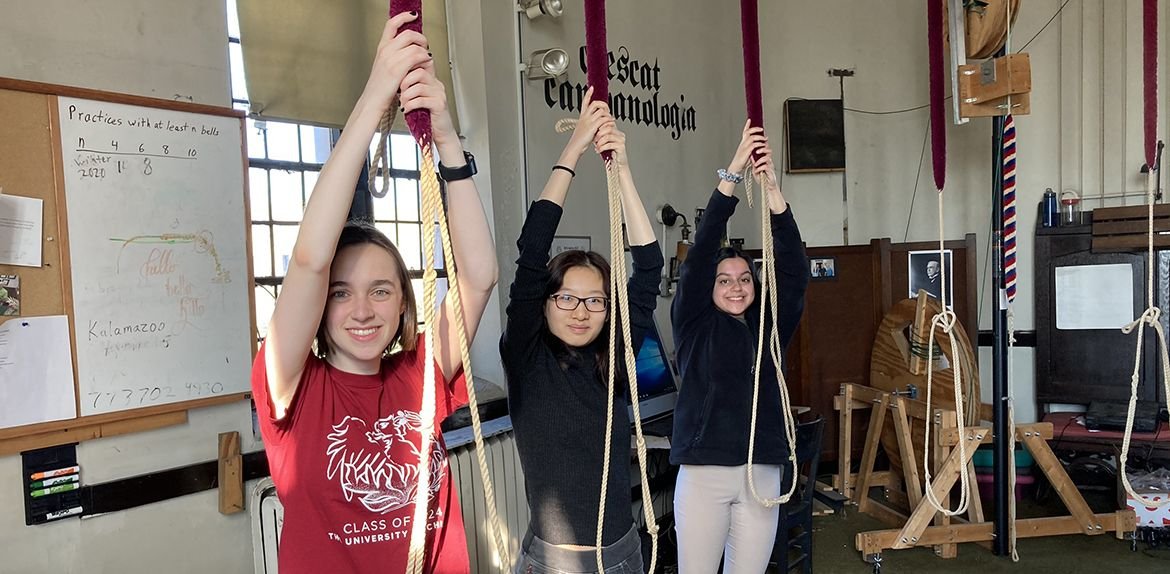
These are English-style change-ringing bells. Each one swings all the way around, pulled by a single ringer, and the team rings patterns instead of tunes. The ropes pass through a ceiling, so the ringers can’t see the bells they’re swinging.
- Where: Mitchell Tower, Reynolds Club, 1135 E. 57th St., Hyde Park
- Hours: The ringers’ guild says visitors can come to the bell tower on Wednesdays 4:30–8 p.m. and Saturdays 10:30 a.m.–1 p.m. Email ringers@uchicago.edu for the updated schedule
- Price: Free
Insider tip: Email first. If you go in, take the stairs toward the radio station WHPK. If you reach a locked door, use the phone beside it to call the bell tower (extension 24930) and someone will come down to let you in.
From the tower, head west along the Midway to a building that looks like a Tudor manor and hides a cinema in an old gym.
5. Ida Noyes Hall: A Tudor Manor With a Cinema in the Old Gym
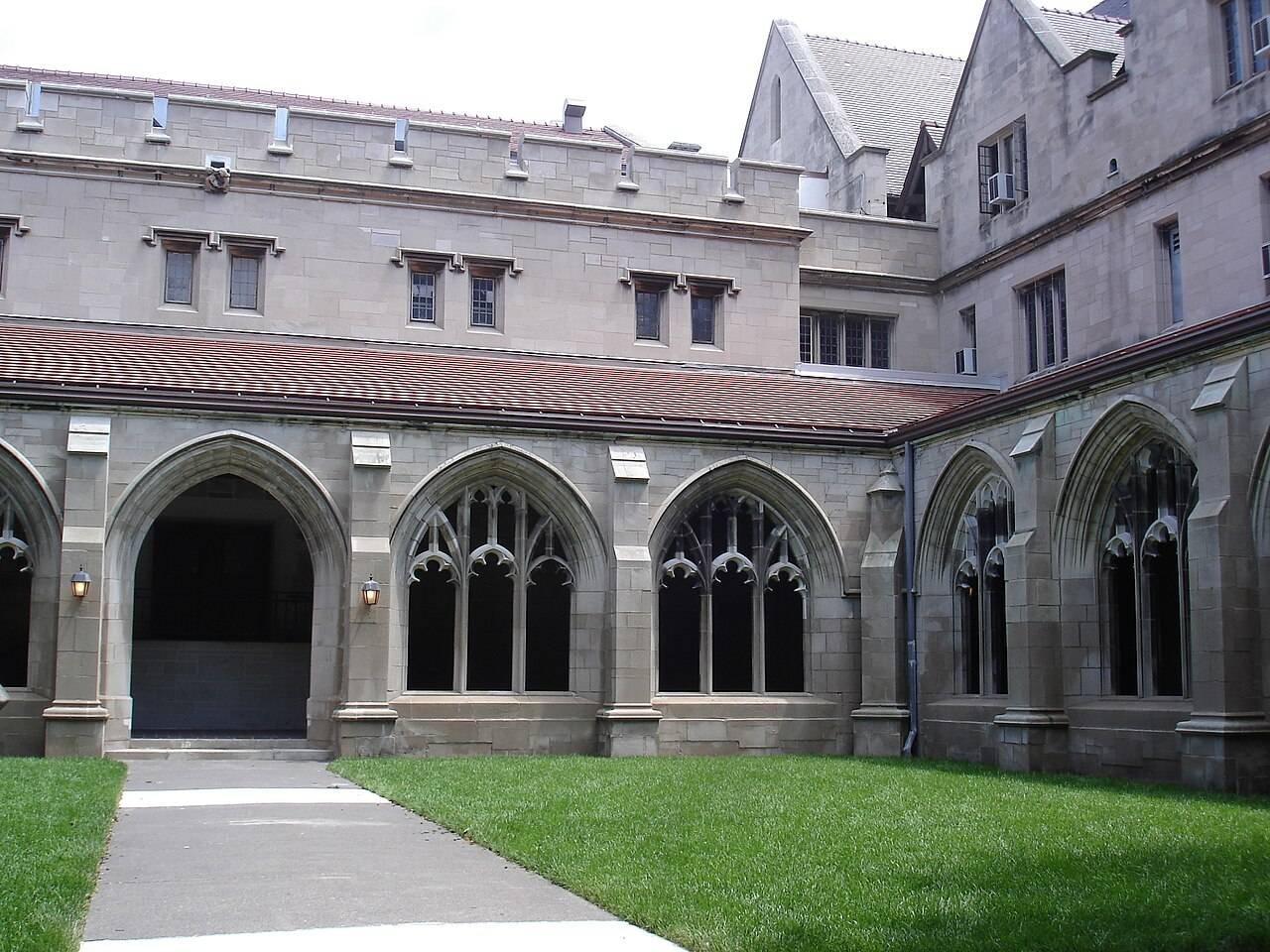
If Harper is the Great Hall, Ida Noyes Hall is the common room. A 1964 university description says it “resembles a Tudor English manor house, more domestic in feeling than some of the other Gothic buildings on campus.”
It opened in June 1916 as a women’s clubhouse and gym. Inside are a wrought-iron staircase, oak wainscoting, molded plaster ceilings and a cloister with vaulted ceilings and cathedral windows. A 1918 mural, The Masque of Youth, covers the walls of the third-floor theater.
At the dedication, university president Harry Pratt Judson was reportedly bothered by how splendid and expensive the interiors looked. Professor Edith Foster Flint replied that “its beauty ought to be educative.”
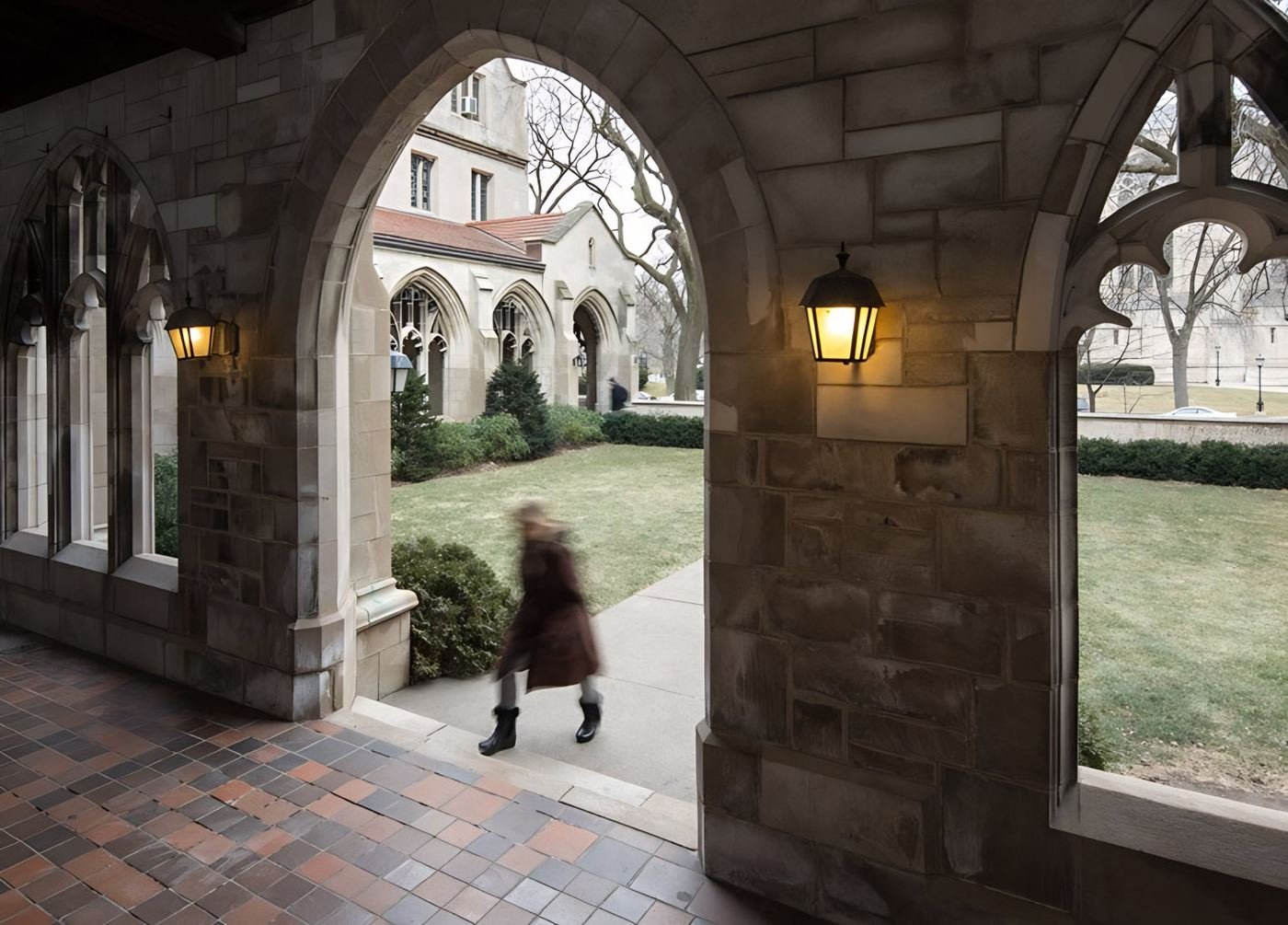
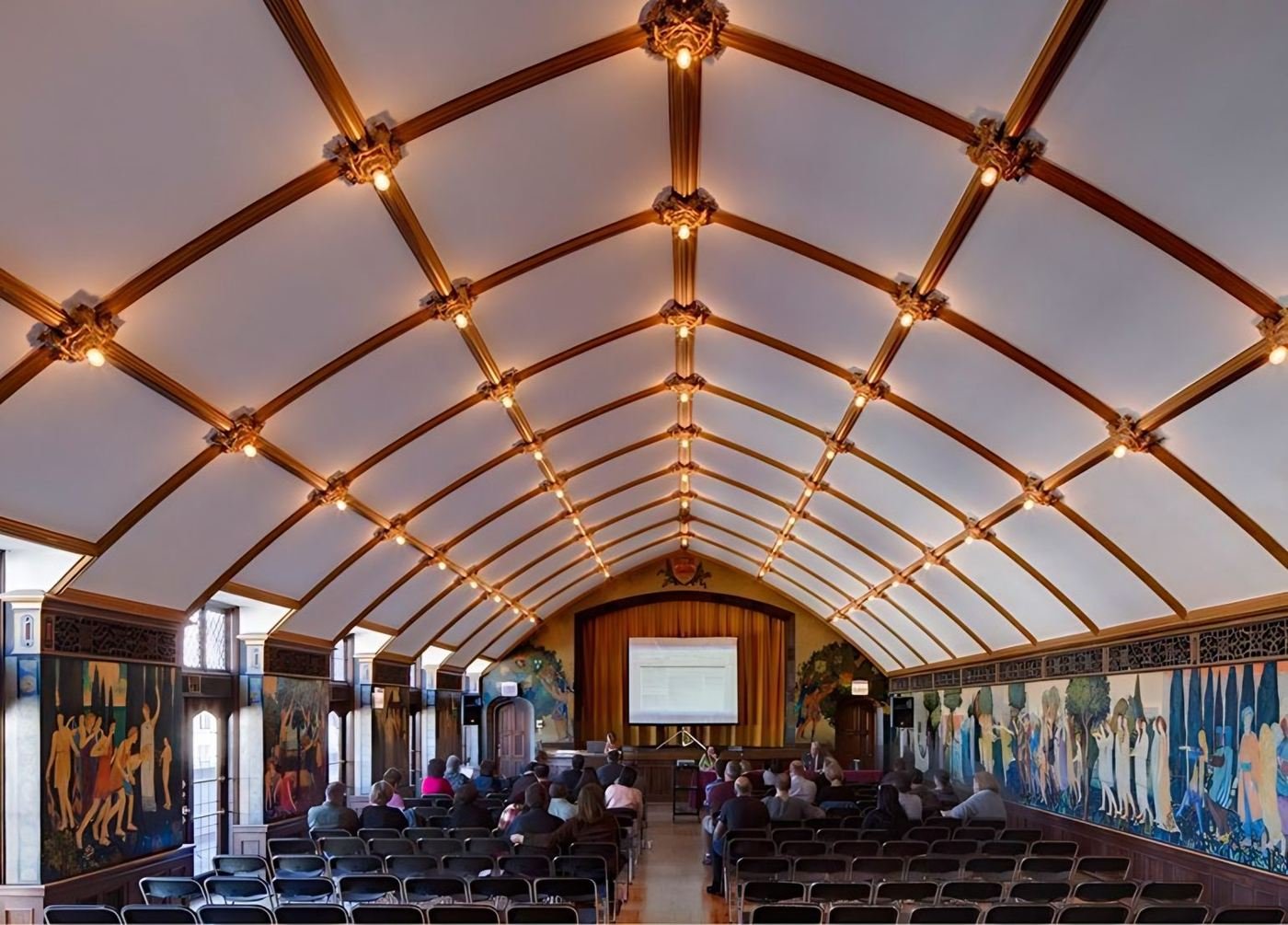
The old gymnasium became the Max Palevsky Cinema in 1987 and is now the home of Doc Films. Want more movie-night ideas? See our guide to 15 famous Chicago movie scenes you can visit for free.
- Where: 1212 E. 59th St., Hyde Park
- Hours: Doc Films has no set hours. The cinema doors open about 30 minutes before the day’s first screening
- Price: General admission to Doc Films is $7 (tickets sold at the theater starting 30 minutes before each show)
Insider tip: The easiest way into the building is a Doc Films ticket. Arrive early to see the staircase and lobby before the lights go down. You can reach Hyde Park on the Metra Electric (get off at 59th Street) or on the CTA #6 bus from State Street.
 JM
AK
Now leave Hyde Park. The next stop is downtown, in a clubhouse that once leaned 14 inches.
6. Chicago Athletic Association Hotel: A Gothic Clubhouse With Three Working Fireplaces
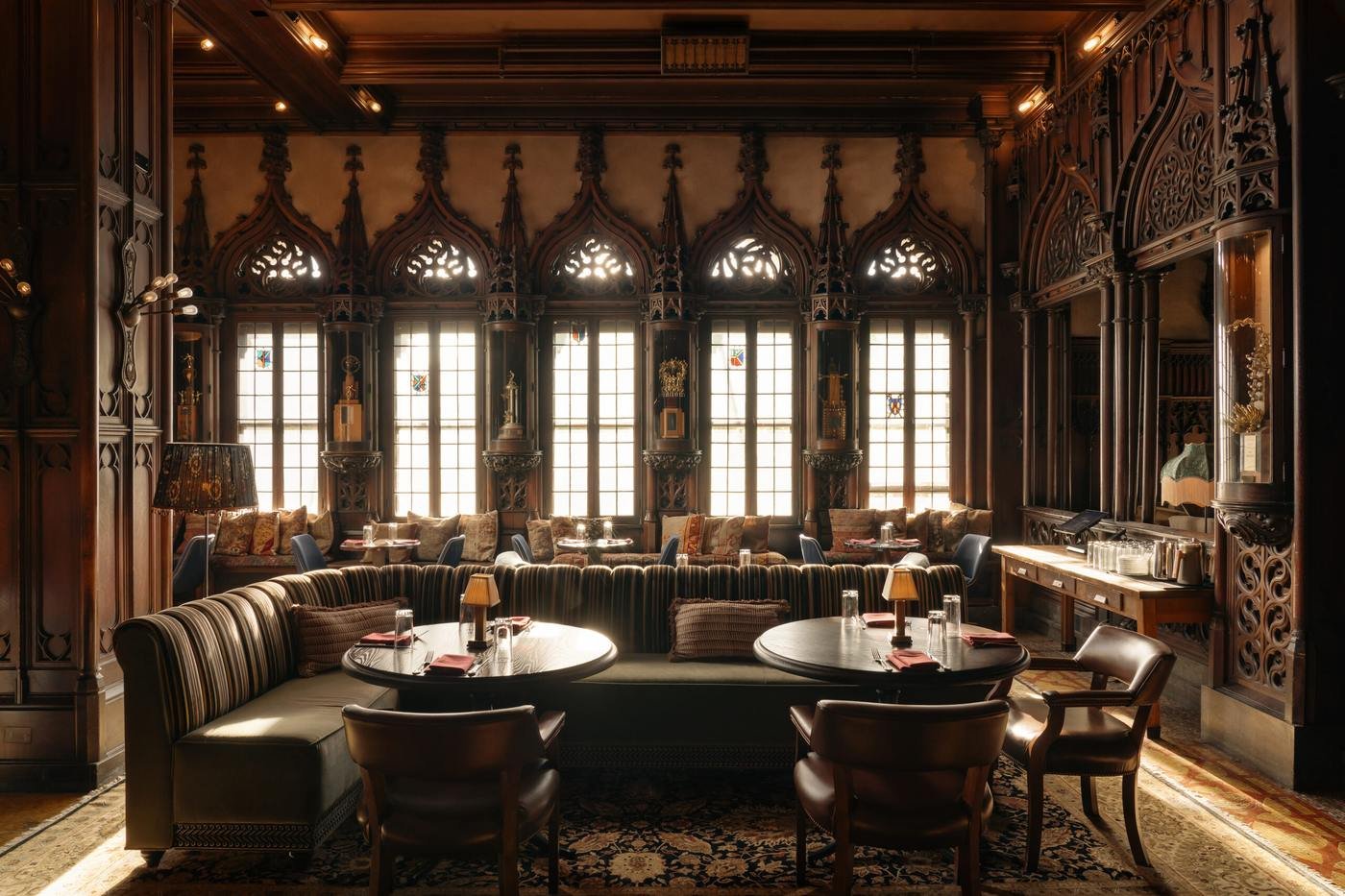
Henry Ives Cobb, the architect of Cobb Gate, designed this one too. In 1893 he gave Chicago’s business elite a Venetian Gothic clubhouse on Michigan Avenue, inspired by the Doge’s Palace in Venice and crowned with a 250-foot tower.
It opened with 3,000 members and a 10-year waiting list. Founders included A.G. Spalding, Cyrus McCormick and Marshall Field. Today it’s a hotel, and the old Drawing Room is the lobby, with its original millwork and three working fireplaces.
The restoration that reopened it in 2015 corrected a 14-inch lean from north to south.
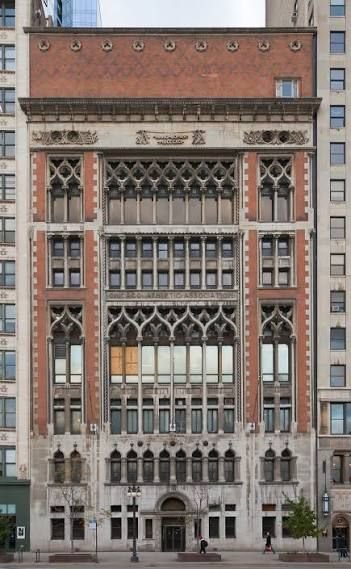
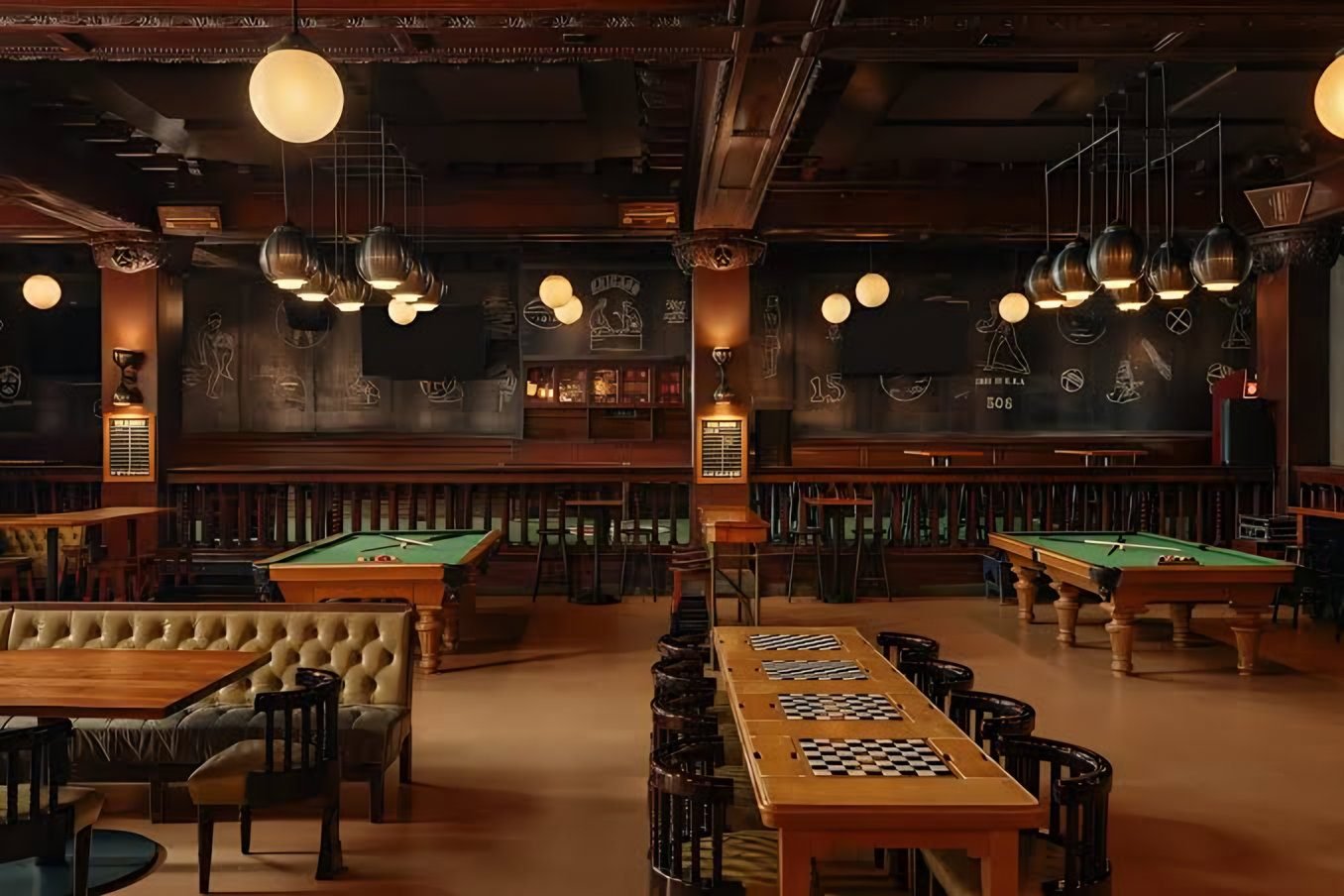
Did you know? The club’s red, white and blue circled “C” passed to the Cubs after longtime club member William Wrigley bought the team in 1917.
- Where: 12 S. Michigan Ave., the Loop
- Hours: The Drawing Room lobby and common spaces are open 5 a.m.–2 a.m. daily
- Price: Free to look; food and drinks cost extra
Insider tip: Buy a coffee or a drink and grab a chair by one of the fireplaces. The lobby is made for lingering. The building also has a rooftop, and our guide to 15 secret rooftops and terraces you can visit for free explains how to see it. Thinking of staying? See our list of the best downtown Chicago hotels.
Head north up Michigan Avenue, about a mile, to a castle that was built to hide a pipe.
7. Chicago Water Tower: The Castle Built to Hide a Pipe
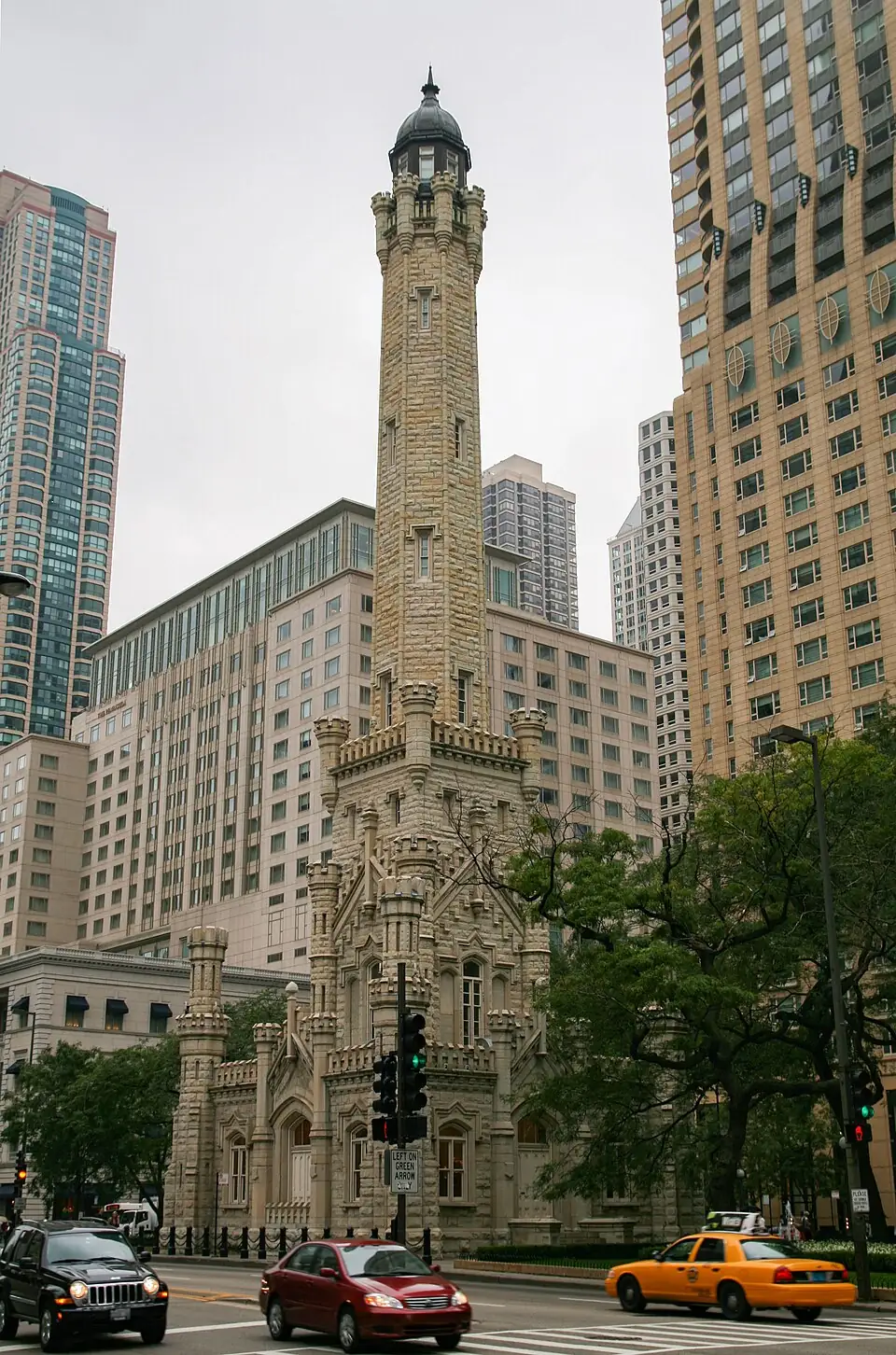
Chicago’s best-known little castle started as an engineering fix. By the late 1860s, the city’s new pumps were sending pressure surges through its water system, so engineers added a standpipe. Architect William W. Boyington then wrapped it in battlements, yellow Joliet limestone and turrets.
It survived the Great Fire of 1871, but not alone. The idea that it was the only building left standing is a myth. Large parts of the South and West Sides never burned. It did become the symbol of a city determined to rise from its ashes.
A Chicago Architecture Center docent credits a German immigrant fireman, Frank Trautman, who covered the tower and the pumping station in wet blankets and old sails.
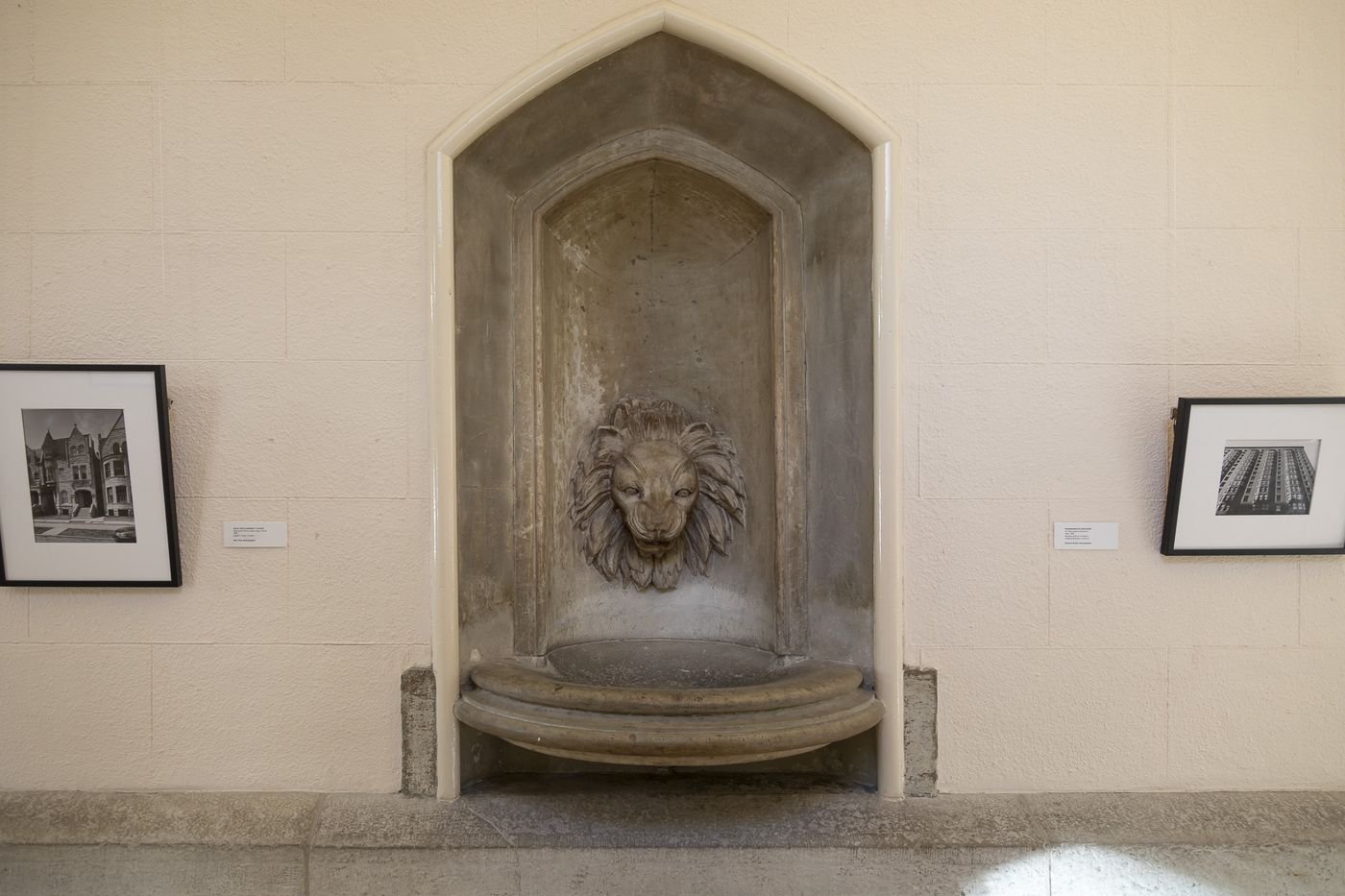
Today it houses the City Gallery, a free gallery of work by local photographers and artists. It also appears in our guide to the 14 most iconic buildings in Chicago.
Did you know? Boyington used the same castle style and Joliet limestone for Joliet Prison (1858) and the Rosehill Cemetery gates (1864). Both still stand.
- Where: 806 N. Michigan Ave., Streeterville
- Hours: City Gallery: Monday–Friday 10 a.m.–7 p.m., Saturday and Sunday 10 a.m.–5 p.m.
- Price: Free
Insider tip: Cross Michigan Avenue to see the matching pumping station, also by Boyington and also built of yellow Joliet limestone. Then pop into the gallery for a free warm-up stop. It’s a quick one, so allow 10 or 15 minutes.
A few blocks east, three more Gothic towers face a park. One of them is called the world’s first academic skyscraper.
8. Northwestern’s Chicago Campus: A Gothic Skyscraper With a Stained-Glass Doorway
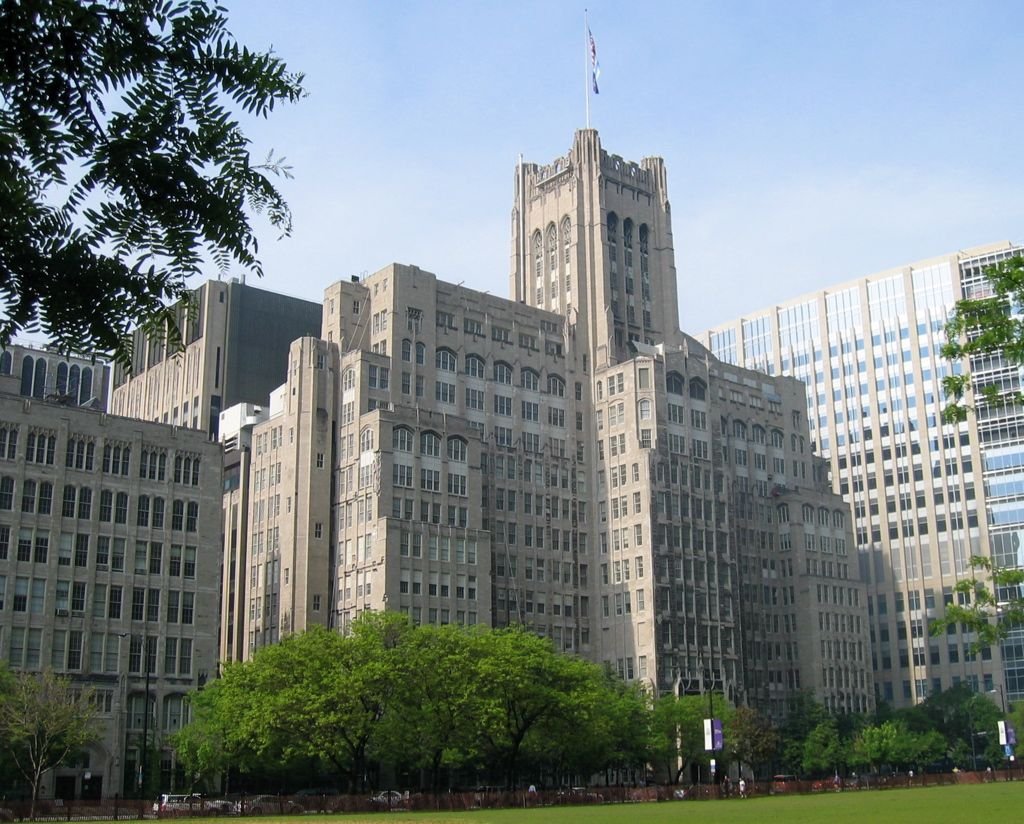
A few blocks east of the Water Tower, three limestone Gothic buildings face Lakeshore Park. They were the first buildings on Northwestern University’s Chicago campus, built in 1925–26 to a plan by architect James Gamble Rogers.
The biggest is the Montgomery Ward Memorial Building, 14 stories with a six-story tower on top. Northwestern calls it the world’s first academic skyscraper. Elizabeth Ward gave $4 million for it in 1923 in memory of her husband, the mail-order pioneer Aaron Montgomery Ward, who lost his first stock of goods in the Great Fire and relaunched his business 10 months later. His first catalog was a single page listing 163 items.
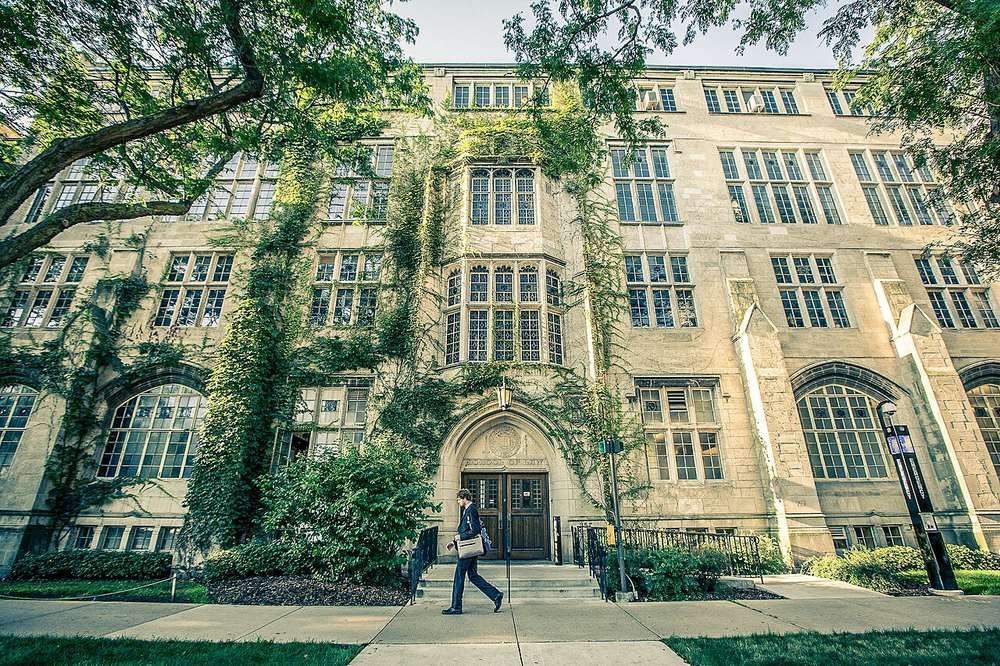
The smallest of the three, Levy Mayer Hall, is the prettiest, with an arched entry, a pair of wooden doors, stained-glass bay windows and carved stone. Behind the buildings is a landscaped courtyard. If you like a good library, see our guide to 12 stunning historic libraries in Chicago.
Rogers also designed Deering Library in Evanston (that’s #10) and Yale’s Sterling Memorial Library. The city made the three buildings a Chicago Landmark district in 2014.
- Where: E. Chicago Ave. between Lake Shore Drive and Fairbanks Court, Streeterville
- Hours: The exteriors can be seen any time. These are working university buildings, so treat it as an outdoor stop
- Price: Free
Insider tip: View them from across Lakeshore Park. The buildings face the park, which gives them an unobstructed view and gives you the best look at the tower.
Our next stop survived the Great Fire because of a promise, and nearly lost to a wrecking ball in 1990.
9. Church of the Holy Family: Seven Candles That Have Burned Since the Fire
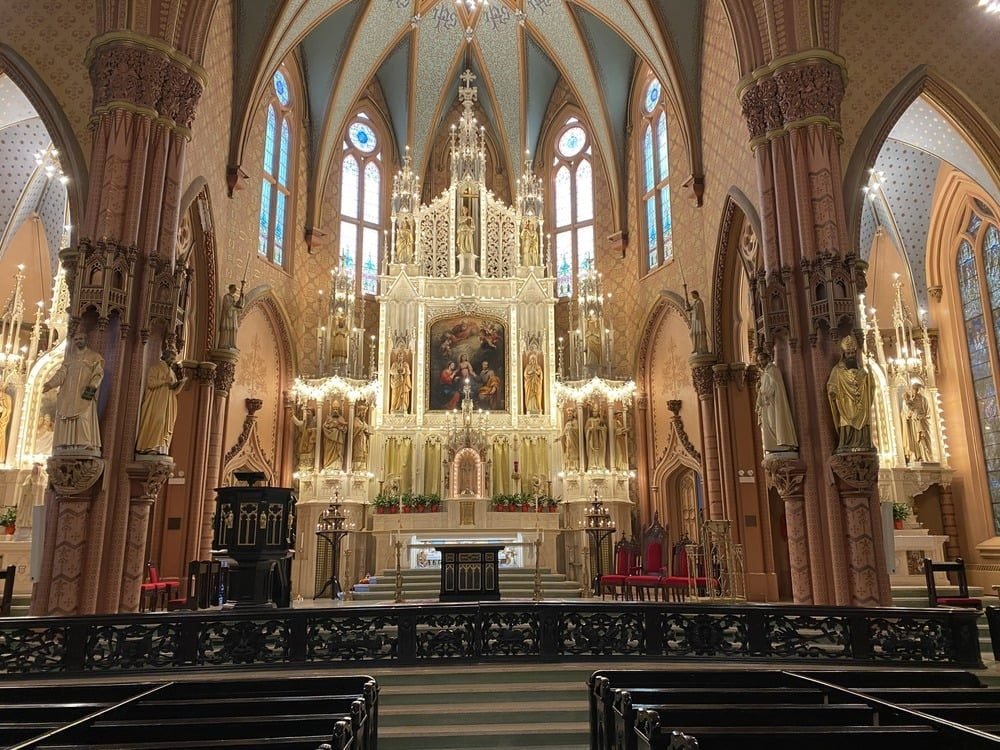
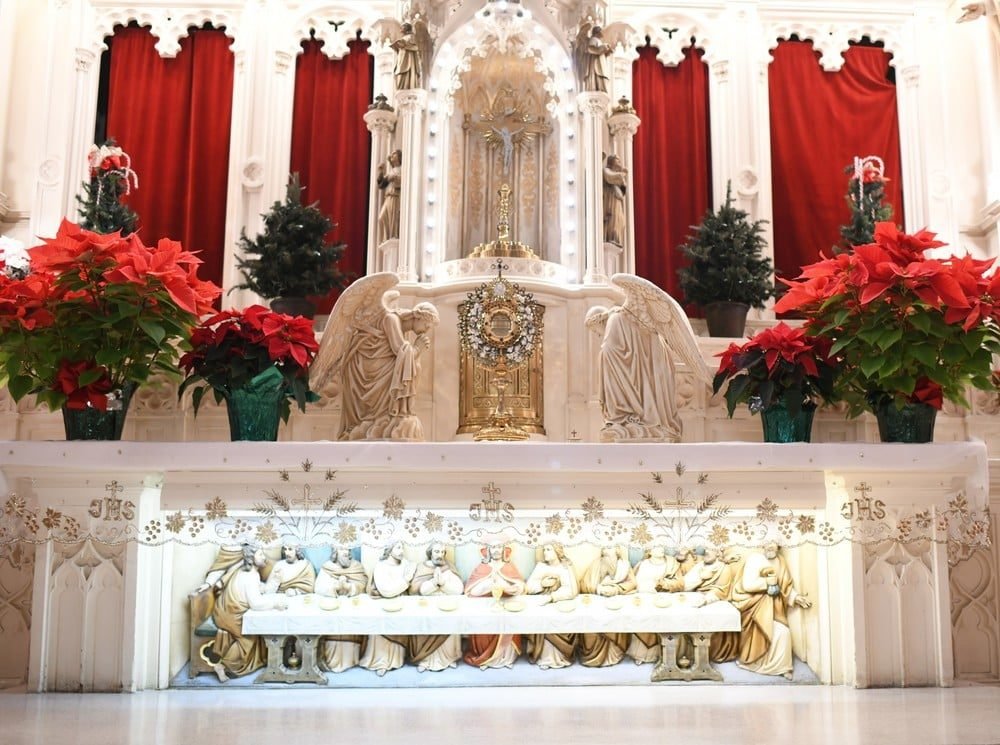
The Great Chicago Fire started a few blocks from Church of the Holy Family on Oct. 8, 1871. Father Arnold Damen, the Jesuit who had built it, prayed and made a promise: if the church and his parishioners’ homes were spared, he would light seven candles that would burn forever.
They were spared. The seven lights still glow in the east transept.
The parish says the church was built “with the nickels and dimes of poor people,” beginning in 1857 in the middle of a financial panic. It was dedicated in 1860, and it’s described as Chicago’s only surviving pre-Civil War Victorian Gothic church. John Van Osdel, Chicago’s first registered architect, designed the interior.
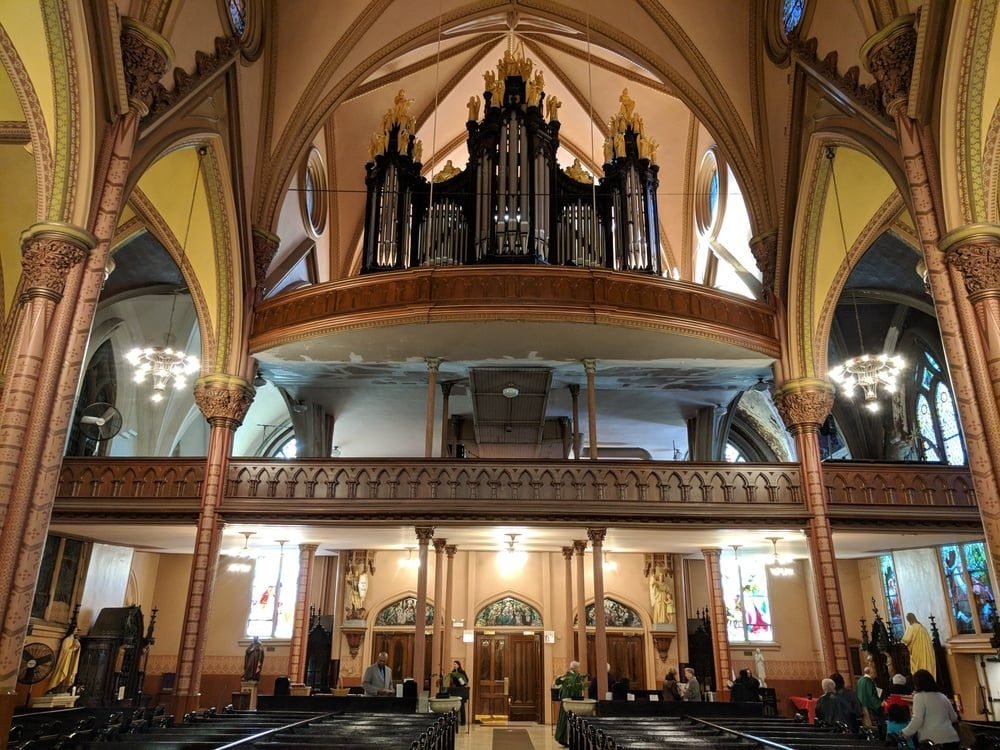
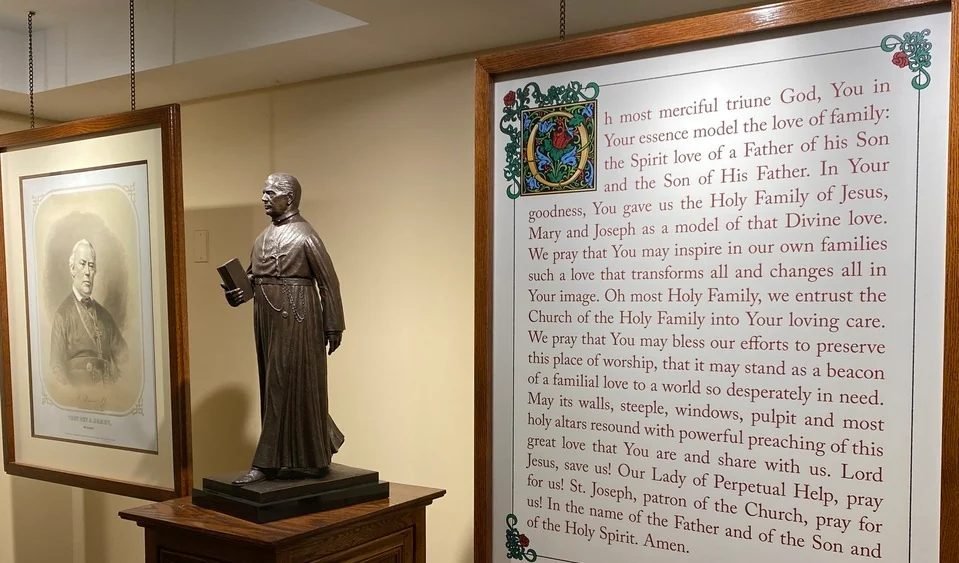
Look for Anton Buscher’s 1865 altar, first lit by gas jets and electrified in 1899, and an organ case with life-size carved figures holding musical instruments. The clerestory windows hold what Open House Chicago calls the oldest stained glass in Chicago. And the church survived the threat of a wrecking ball in 1990.
- Where: 1080 W. Roosevelt Rd., Near West Side
- Hours: No regular drop-in sightseeing hours are posted. It’s a working parish that has joined Open House Chicago in recent Octobers, and visits can be arranged by appointment
- Price: Free
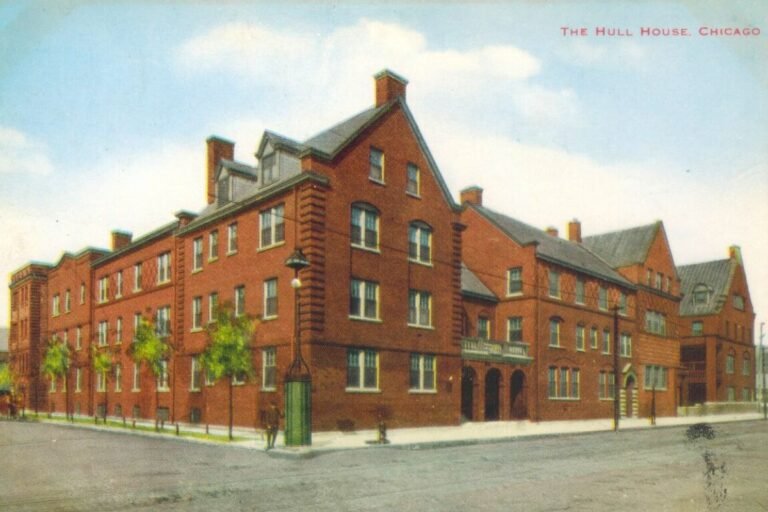
Insider tip: Plan around Open House Chicago weekend in October, when staff open the first floor for self-guided visits (in 2025 the hours were Saturday 10 a.m.–1 p.m. and Sunday noon–5 p.m.), or ask the parish about a visit through holyfamilychicago.org. If you like your Gothic with a spooky side, read about the 1913 Devil Baby panic at Hull-House, a short trip away on the UIC campus.
Last stop: cross the city line to a library built to look like a chapel.
10. Deering Library, Evanston: A Cambridge Chapel on Sheridan Road
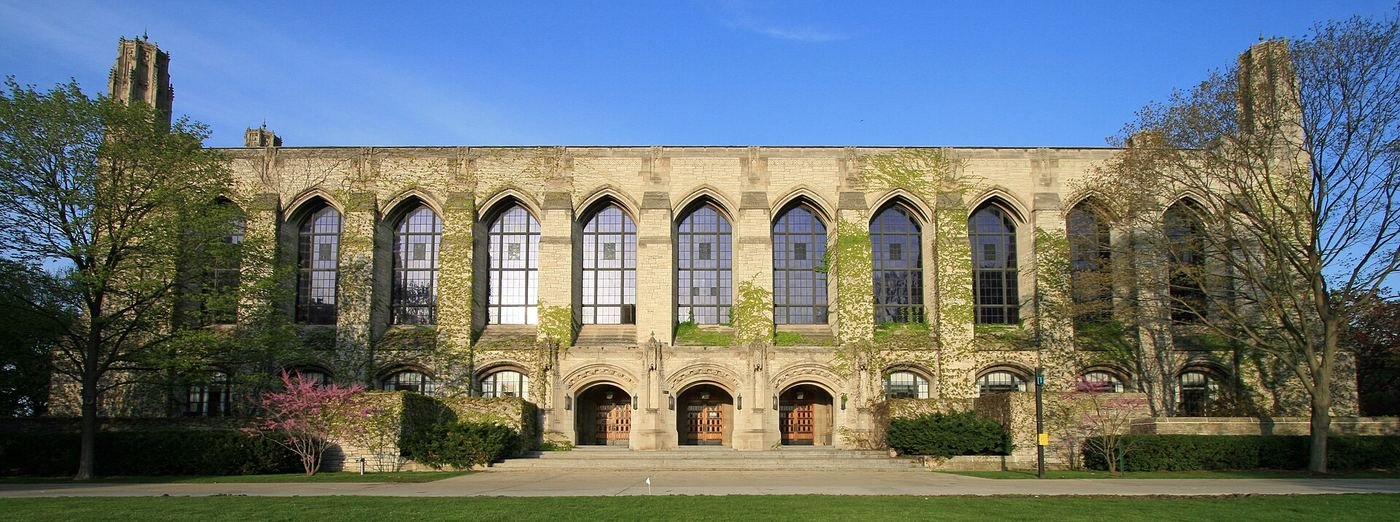
Cross the city line to Northwestern’s Evanston campus and you’ll find a library built to look like a chapel.
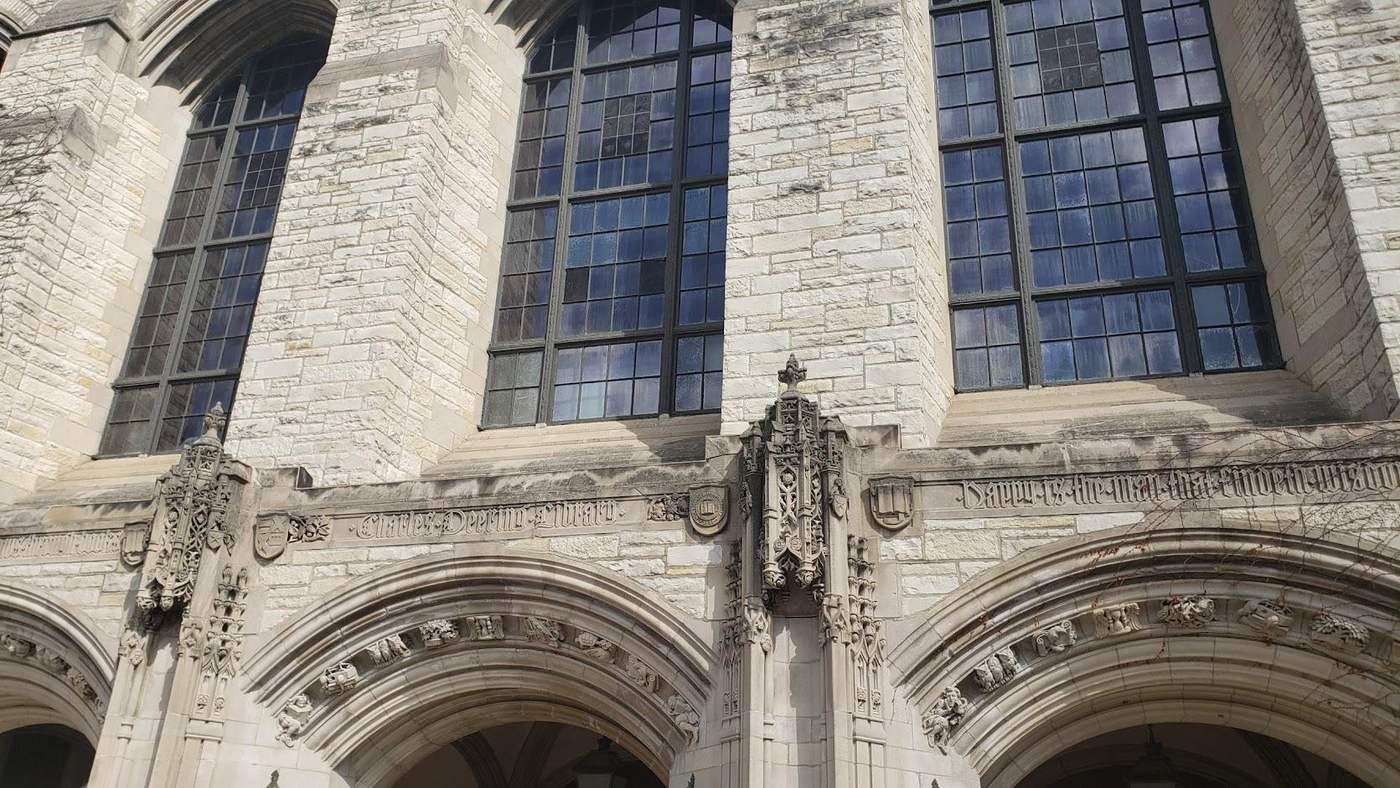
Deering Library opened in 1933. Architect James Gamble Rogers modeled it on King’s College Chapel in Cambridge, England. The towering stained-glass windows, vaulted ceilings and carved busts of Shakespeare and Rousseau were meant to inspire everyone who walked in.
The best part is outside. Look around the doorways and ledges for animals from Aesop’s fables, carved by sculptor René Paul Chambellan: a wolf and a crane, a tortoise and a hare, plus bears, birds and frogs. University Librarian Theodore Koch asked for them, bringing a sense of whimsy. Chambellan also carved the Aesop’s Screen at Tribune Tower, one of the buildings in our guide to 16 hidden architectural details Chicago locals walk past every day.
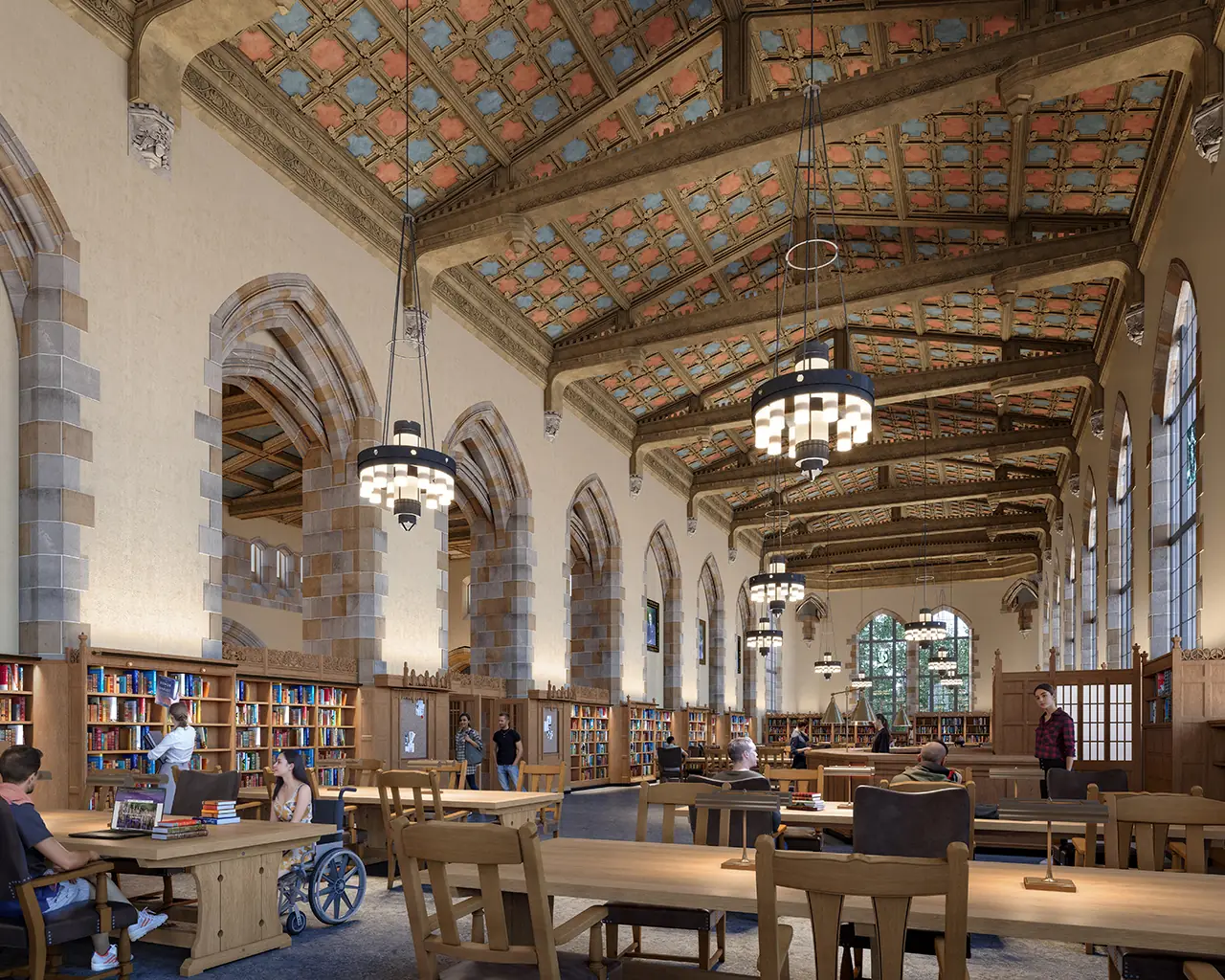
Inside, the Eloise W. Martin Reading Room reopened in fall 2025 after a 16-month renovation, and now seats 176. The cleanup had a surprise: because people used to smoke in the building, much of the stone had turned black. A gentle cleaning made the room brighter.
- Where: 1937 Sheridan Rd., Evanston (enter through the west-facing doors on Sheridan Road)
- Hours: Open to the general public Monday–Saturday until 6 p.m.; check Northwestern Libraries for opening times
- Price: Free
Insider tip: The Martin Reading Room is on Level 3 and is a working study space. On your way in, look for the inverted arched opening between the lobby and the reading room. The architects who restored the library say Rogers did “some strange things” to make the building’s grids work, and he wasn’t committed to everything being symmetrical.
Plan Your Hogwarts Day: 3 Easy Routes
- Route 1, Hyde Park (a half day): Cobb Gate, the Harper reading room (before 6 p.m.), Hutchinson Courtyard and Hallowed Grounds, Mitchell Tower (Saturday 10:30 a.m.–1 p.m. or Wednesday evening), then a Doc Films screening at Ida Noyes Hall. Take the Metra Electric to 59th Street or the CTA #6 bus from State Street.
- Route 2, downtown on foot: Start at the Chicago Athletic Association lobby, walk north up Michigan Avenue to the Water Tower, then head east along Chicago Avenue to Northwestern’s Gothic campus by Lakeshore Park.
- Route 3, Evanston add-on: Deering Library, Monday to Saturday before 6 p.m. Holy Family is best on Open House Chicago weekend or by appointment.
Haven’t ridden the “L” much? Our 17 tips for riding the Chicago “L” like a local will help.
Make a Day of It: Where to Stay and Eat
The Chicago Athletic Association is a hotel, so you can sleep in a Venetian Gothic clubhouse if you want to. For other options, see our lists of the best downtown Chicago hotels and the best boutique hotels in Chicago.
Hungry after all those stairs? Our guide to 17 beautiful restaurants in Chicago will help you eat somewhere that matches the mood, and the best downtown breakfast spots will start your day right.
Want more Chicago stories like these? Join the free Hey Chicago newsletter at newsletter.heychicago.us.
Sources
- UChicago News: Devils in the details, the gargoyles of UChicago
- UChicago architecture: Cobb Gate
- University of Chicago Magazine: Golden gate
- University of Chicago Chronicle: Down to earth (2000)
- UChicago College: The library that isn’t (Harper Memorial Library)
- UChicago College: Arley D. Cathey Learning Center
- UChicago Undergraduate Student Government: Harper Memorial hours (Sept. 2026)
- UChicago architecture: Tower Group
- UChicago Student Centers: Reynolds Club
- UChicago Student Centers: student-run coffee shops
- UChicago Center for Leadership and Involvement: history of the Reynolds Club
- University of Chicago Magazine: Goodnight tune
- UChicago News: new bells dedicated (2023)
- University of Chicago Guild of Change Ringers
- UChicago Student Centers: Ida Noyes Hall
- UChicago architecture: Ida Noyes Hall
- Doc Films: Visit
- Christ Church, Oxford: Meals at Christ Church
- Warner Bros. Studio Tour London: The Great Hall
- Chicago Athletic Association Hotel: history
- Chicago Athletic Association Hotel: Drawing Room
- Chicago Architecture Center: Chicago Water Tower
- Water Tower Arts District: City Gallery in the Historic Water Tower
- Northwestern Now: Chicago campus buildings approved for landmark status
- City of Chicago: Northwestern Chicago Campus District approved
- Northwestern Magazine: Montgomery Ward Memorial Building
- Church of the Holy Family: history
- Church of the Holy Family: home
- Open House Chicago: Church of the Holy Family
- Northwestern Libraries: Deering Library
- Northwestern Libraries: visitor access policy
- Northwestern Magazine: A New Era for a Campus Icon
- Northwestern Libraries Footnotes: Angles in the Architecture
- Northwestern Classicizing Chicago: Aesop’s Fables Grace Gothic Revival Buildings
 JM
AK